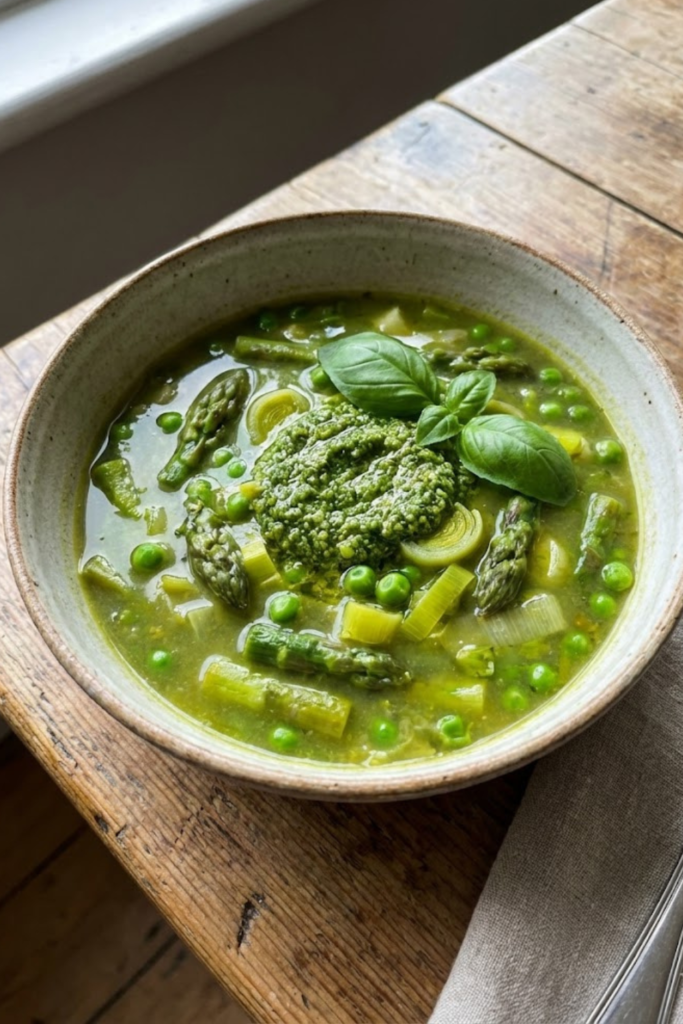
Did you know that over 75% of home cooks say they feel more energized when they switch to seasonal “green” recipes in the early months of the year? Honestly, I used to be the person who ate heavy stews until July, but my body was screaming for something lighter. That’s when I finally mastered the Spring Minestrone Soup with Basil Pesto. It’s not just a soup; it’s like a big, warm hug from a garden!
This recipe is all about the crunch of fresh asparagus and the sweetness of peas. I remember the first time I made this back in the day—I accidentally used way too much salt and it was like drinking ocean water! Talk about a fail. But I learned, and now, in 2026, I’ve got the balance down perfectly. You want it light, vibrant, and bursting with that herbaceous pesto finish. Let’s get into how you can make this at home without the salt-ocean drama!
Picking the Best Green Veggies for Your Spring Minestrone
Selecting the right produce is the most important part of this whole process. I’ve spent years trial-and-erroring my way through the vegetable aisle, and I’ve learned that spring vegetables are a bit finicky. You want things that are young, tender, and full of flavor. If you grab the wrong stuff, your Spring Minestrone Soup with Basil Pesto might end up tasting more like a compost bin than a fresh garden lunch. I want to help you avoid the mistakes I made when I was first starting out.
Why Leeks Are Better Than Onions
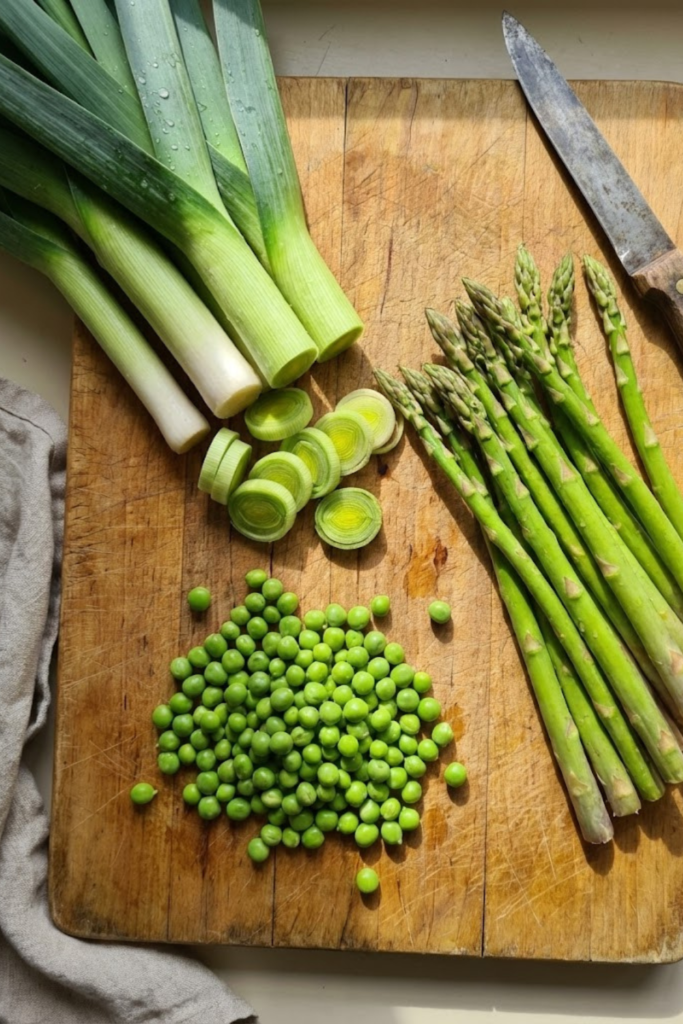
Most soup recipes start with a yellow onion, but for a spring soup, I always go for leeks. They have a much softer, sweeter taste that won’t hide the flavor of the fresh herbs. I learned a hard lesson about leeks early on, though. They grow in very sandy soil, and that grit gets trapped deep inside the layers. One time, I just chopped them up and threw them in. Every bite of that soup had a “crunch” that definitely wasn’t a vegetable!
Now, I slice the leeks first, then put them in a big bowl of cold water and swish them around. The dirt falls to the bottom, and you can scoop out the clean leeks from the top. It’s a bit of extra work, but it’s worth it to avoid a sandy dinner. Leeks give the broth a silky texture that you just can’t get from a standard white onion.
The Asparagus Snap Test
Asparagus is another staple for me. When you’re buying it, look for stalks that are bright green and firm. If the tips look “wet” or mushy, put them back! I prefer the thinner spears because they cook faster and stay tender. My favorite trick to teach my students is the snap test. Hold a stalk at both ends and bend it until it snaps. It will naturally break right where the woody, tough part starts. I usually cut the remaining good part into one-inch pieces so they fit perfectly on a spoon.
Fresh vs. Frozen Peas
Frozen peas are actually a great choice here. They are frozen so fast that they often taste sweeter than the “fresh” ones that have been sitting on a grocery shelf for a week. If you use frozen, just toss them in at the very last minute. They only need about sixty seconds to warm through. If you boil them too long, they lose that beautiful “pop” and turn a sad, dark olive color. We want that bright green look for a true spring vibe!
Why Fresh Basil Pesto Makes All the Difference
Pesto is basically the soul of this whole dish. Without it, you just have a nice vegetable soup, which is fine, but it isn’t special. With it, you have a Spring Minestrone Soup with Basil Pesto that people actually remember. I used to be really lazy about this part. I would just buy those little jars from the store and think I was doing a great job. But then I realized that store-bought pesto usually tastes more like oil and salt than actual basil. It lacks that “zing” you need to wake up the veggies.
The Jar vs. The Blender
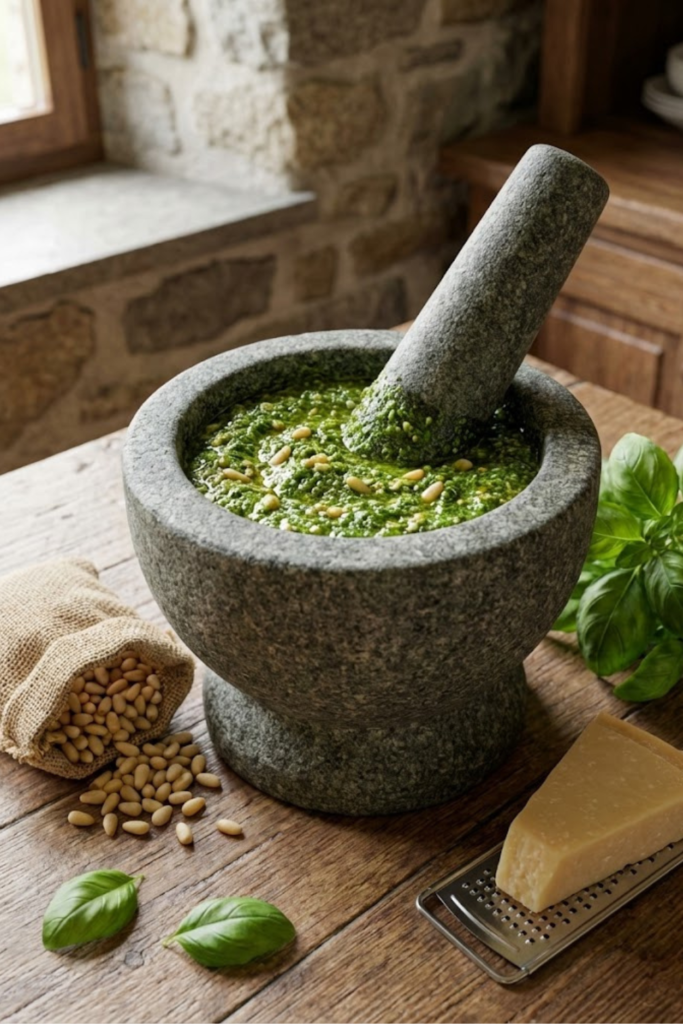
When you make your own pesto, the smell fills the whole house and it is amazing. I usually use a small food processor because it’s much faster than using a mortar and pestle, even though the old-fashioned way looks cooler. If you use the jar stuff, it often has a weird, metallic aftertaste because of the preservatives. Fresh basil has a peppery, sweet kick that just makes everything better. I’ve found that even if you’re tired after work, it only takes five minutes to throw basil, garlic, and oil into a blender. It’s a total game changer for the flavor and makes the soup feel much more expensive than it actually is.
Don’t Cheap Out on Cheese
One mistake I made for a long time was using that cheese in the green shaker can. You know the one I mean! It tastes like salty cardboard and doesn’t melt right. Now, I always buy a small block of real Parmesan and grate it myself. It melts into the soup much better and gives it a nutty taste. Also, let’s be real—pine nuts are really expensive. I often swap them for walnuts or even sunflower seeds. My students actually liked the walnut version better because it felt more “earthy.” Just make sure you toast your nuts in a pan for a minute first. It brings out the oils and makes the whole kitchen smell like a fancy Italian restaurant.
Keep the Color Bright
Timing is the biggest secret to a great pesto. If you stir the pesto into the boiling pot while it’s still on the stove, it turns a dark, muddy green. It looks pretty gross, to be honest. I always tell people to wait until the soup is already in the individual bowls. Put a big dollop of pesto right on top at the end. As it melts into the warm liquid, it creates these beautiful green swirls. I also add a tiny squeeze of lemon juice to my pesto. It helps keep the color bright green for longer. This trick is great if you’re serving guests and want your Spring Minestrone Soup with Basil Pesto to look like a photo from a magazine.
Common Mistakes When Making Seasonal Soups
Making a big pot of soup seems like the easiest thing in the world, right? You just throw things in a pot and let it go. Well, I’ve managed to mess it up more times than I care to admit. When you’re making a Spring Minestrone Soup with Basil Pesto, the ingredients are so fresh and light that they are actually pretty easy to ruin if you aren’t careful. I want to share some of my biggest “oops” moments so you don’t have to deal with a ruined dinner like I did.
The Pasta Mush Problem
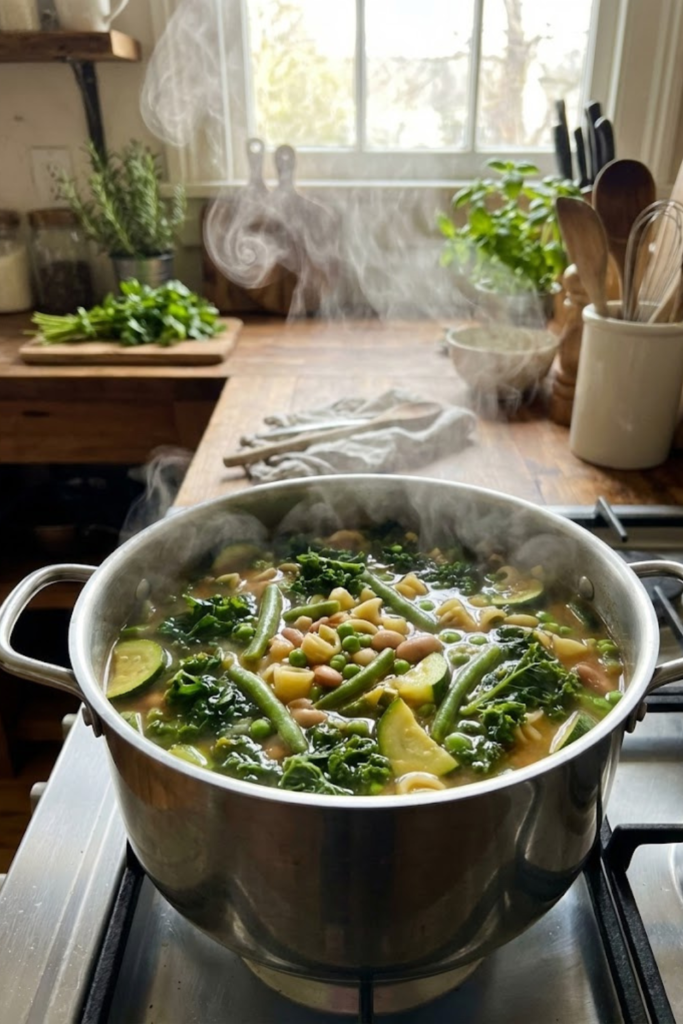
I used to think that throwing everything into one big pot was the smartest way to cook. I mean, why wash two pots when you can just wash one? But I quickly learned that pasta is like a little sponge. If you cook your noodles directly in the soup, they will suck up every single drop of that tasty broth. I remember making a big batch for a school potluck once. By the time I got there, the noodles had swollen up so much they looked like fat little worms, and there was no liquid left! It was basically a bowl of soggy pasta salad. Now, I always boil my pasta separately in a small pot with plenty of salt. I only add the noodles to the bowl right before I eat. This keeps them firm, and it means your leftovers won’t turn into a giant brick of dough in the fridge the next morning.
Choosing the Right Liquid Base
Another big error is picking a broth that’s way too strong. Since we are using light things like peas and leeks, you don’t want to drown them in a heavy, dark beef stock. I did that once because I was out of vegetable broth and was too lazy to go to the store. The soup ended up tasting like a winter roast, and it totally killed the fresh vibe of the spring greens. It was a total waste of good asparagus! You want a light vegetable broth or even just water with a bit of salt. Also, be careful with the salt in store-bought stocks. Some are so salty they make your mouth pucker. I usually buy the “low sodium” version so I can control the seasoning myself.
Seasoning in Layers
Finally, don’t wait until the very end to add flavor. I used to be scared of over-salting, so I wouldn’t add anything until the pot was finished. The result was that the veggies tasted bland on the inside, even if the liquid was salty. My grandma always told me to “season in layers.” This means you add a tiny pinch of salt every time you add a new ingredient. When the leeks go in, add salt. When the zucchini goes in, add salt. This builds a deep flavor that makes the whole thing taste better instead of just like salty water. It’s a simple trick, but it really makes a difference in the final bowl!
How to Meal Prep and Freeze Your Minestrone
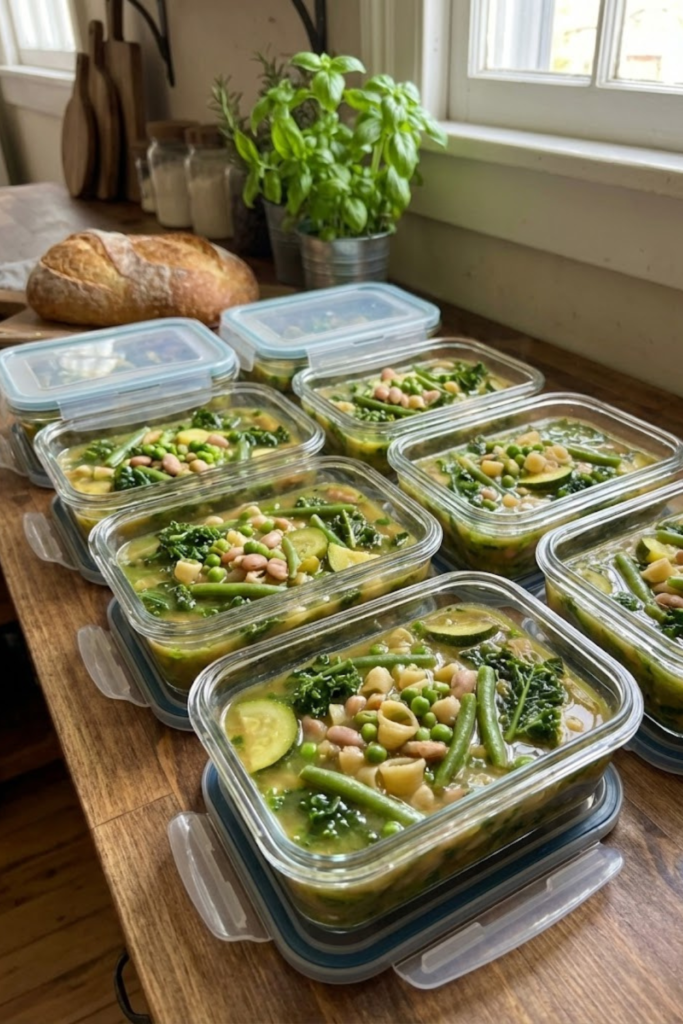
I’m a teacher, so my Sundays are usually spent in the kitchen getting ready for the week. I love making a big batch of Spring Minestrone Soup with Basil Pesto, but storing it can be a bit tricky if you want it to taste good by Thursday. If you just leave it in one big pot in the fridge, the veggies keep soaking up the liquid and they get really soft. I’ve found that taking twenty minutes on Sunday to portion everything out makes my whole week go much smoother. There’s nothing better than knowing I have a healthy, bright lunch waiting for me when the school bell rings.
The Freezer Space Rule
Regarding the freezing part, you have to be really careful about the containers you use. I prefer using glass jars because they don’t get those orange stains like plastic ones do, but you can’t fill them all the way to the top. I learned that the hard way when a glass jar exploded in my freezer last winter. What a mess! I had frozen soup and broken glass all over my bags of frozen fruit. I felt so silly because I should have remembered that liquid expands when it freezes. Now, I always leave at least an inch of space at the top of every jar. This simple rule saves so much trouble. Also, make sure the soup is totally cold before you put it in the freezer. If it’s still warm, it creates steam and you get those ice crystals that ruin the nice texture.
The Pesto Cube Secret
One of my favorite tricks is freezing the pesto separately. If you mix the pesto into the soup before freezing, the oil can get a bit funky and the basil loses its bright green color. Instead, I take an ice cube tray and fill the little spots with my fresh pesto. Once they are frozen solid, I pop them out and put them into a freezer bag. When I take my soup to work, I just grab one “pesto cube” and put it in a separate little container. After I heat up the soup, I drop the cube in. It melts instantly and makes the soup taste like I just made it five minutes ago. It’s a great way to keep that fresh herb taste alive!
Gently Reheating Your Lunch
To reheat your meal, I usually just use the microwave in the teacher’s lounge, but if I’m at home, the stove is much better. Don’t let it boil again! Just get it hot enough to eat. If you boil it for a long time, those pretty green veggies turn that “swamp color” that looks pretty gross. We want to keep it looking fresh and tasty. I usually keep my soup in the fridge for about four days. If you haven’t eaten it by then, just toss it in the freezer and save it for a rainy day. You’ll thank yourself on one of those nights when you are too tired to even think about cooking a real dinner!
Final Thoughts on Mastering Your Spring Minestrone
Wrapping up a big pot of Spring Minestrone Soup with Basil Pesto always makes me feel like I’ve finally conquered the winter blues. There is just something about that bright green color and the smell of fresh basil that makes the whole house feel lighter. As a teacher, I spend all day dealing with chaos, so coming home to a meal that feels this healthy and peaceful is a huge win for me. I really hope you give this a try in your own kitchen this year. Don’t worry if it isn’t perfect the first time. My first few tries were pretty messy, but that’s just how you learn to be a better cook!
Why You Should Share the Greenery
I’ve found that this soup is a great way to get people to eat their vegetables without them complaining about it. I once brought a big container of this to a faculty meeting, and even the teachers who usually only eat pizza were asking for the recipe. It’s light enough that you don’t feel like taking a nap right after lunch, which is a big deal when you have a classroom full of kids to get through in the afternoon. If you have picky eaters at home, let them help you “plop” the pesto into the bowls. It makes them feel like they are part of the process, and they are usually way more likely to actually eat the greens if they helped make the “magic green swirls.”
The Best Side Kick: Crusty Bread
You can’t really have a Spring Minestrone Soup with Basil Pesto without some good bread on the side. I usually grab a sourdough loaf or a baguette from the local bakery. If you toast it with a little bit of butter and garlic, it’s perfect for dipping into the broth and scooping up those last bits of pesto at the bottom of the bowl. Sometimes I even rub a raw garlic clove right onto the toasted bread for an extra kick. It’s those little things that turn a simple soup into a real meal that everyone looks forward to.
If you enjoyed this guide and want to save it for your weekend meal prep, please share this post on Pinterest! It helps other home cooks find fresh, seasonal recipes that actually taste good.