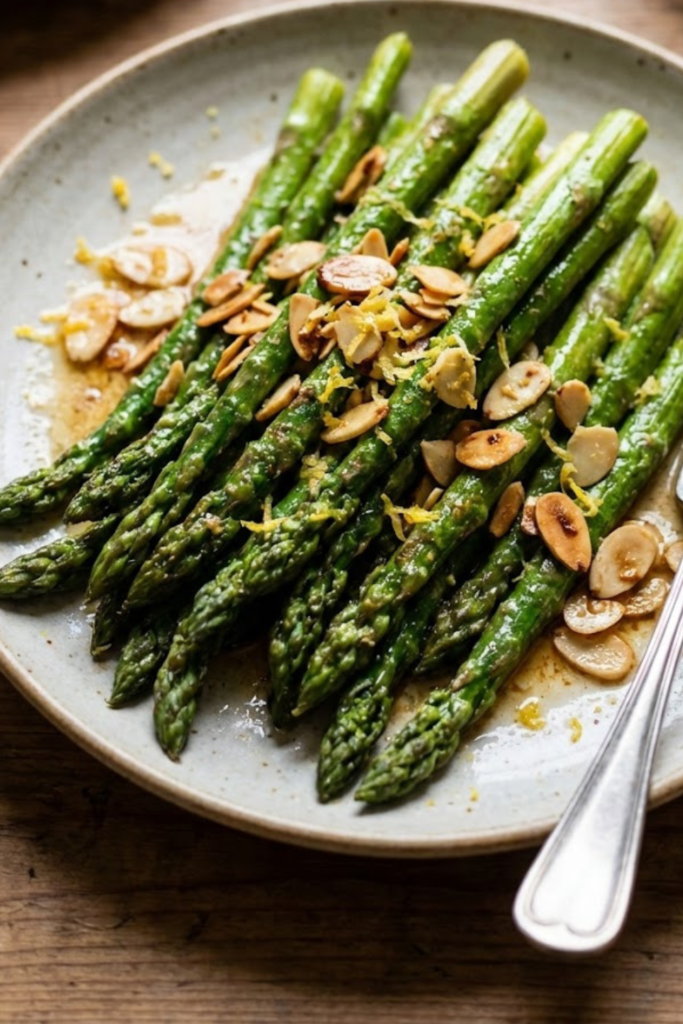
Honestly, for the first thirty years of my life, I thought I hated asparagus because my mom always boiled it until it was just a mushy, gray mess, but everything changed when I finally tried it sautéed with brown butter. It turns out that when you stop boiling the flavor away and start searing it in a hot pan with that nutty, rich butter and some crunchy almonds, you get a quick side dish that tastes amazing and is ready in like fifteen minutes. I’m telling you, this recipe is my favorite way to make veggies because it feels fancy enough for a dinner party but is easy enough for a random Tuesday, and even my kids will eat it—though they usually pick the almonds off first.
Why This Recipe Works (And Why Boiling is the Enemy)
Look, I’m not here to judge how you cook, but if you are still boiling your asparagus, we need to have a serious talk. When you boil veggies, a lot of the flavor just leaches out into the water, and let’s be real, who drinks asparagus water? Nobody.
Sautéing is where it’s at. When you use high heat, you get that nice caramelization on the outside of the stalks. That’s flavor town right there. But the real star here is the brown butter. I remember the first time I tried to make it, I was terrified I’d burn the house down. But it’s actually pretty chill.
Browning the butter toasts the milk solids, giving it this incredible hazelnut aroma that pairs perfectly with the green, grassy taste of the asparagus. Adding the almonds gives it a texture contrast that keeps things interesting. It’s just a better way to eat your greens, plain and simple.
Plus, have you noticed how boiled asparagus turns that sad, dull olive green color? It just looks tired on the plate. When you sauté it quickly, it stays bright and vibrant, which makes it way more appetizing to look at. And let’s talk about texture—boiling often leaves you with stringy, waterlogged stalks that are impossible to chew gracefully. Sautéing keeps the inside tender but the outside has that little bit of bite we all love. Also, my grandma used to tell me that veggies need a little fat to help you absorb the vitamins, so really, using butter is basically a health move, right? I am sticking with that logic. It turns a boring side dish into something that actually feels like a treat.
Choosing and Prepping Your Asparagus
Okay, let’s talk about the grocery store. You know how sometimes you see those asparagus bunches that look like giant tree trunks? And then sometimes they look like skinny pencils?
I used to think the thick ones were tough and gross. Turns out, I was wrong (again). The thick ones are actually really tender because they hold more water! But for this specific recipe, I usually grab the medium-sized ones. They cook evenly and have a nice snap to them. When you are picking them out, pay attention to the tips. You want the tops to be tight and compact. If they look like they are starting to open up, flower, or get mushy, put them back. That means they are old and won’t taste as sweet.
Also, if you aren’t cooking them the exact same day you buy them, don’t just throw them in the veggie drawer. They get sad and limp pretty fast. I treat them like fresh flowers: trim a tiny bit off the bottom and stand the bunch up in a jar with an inch of water in the fridge. It keeps them crisp for days.
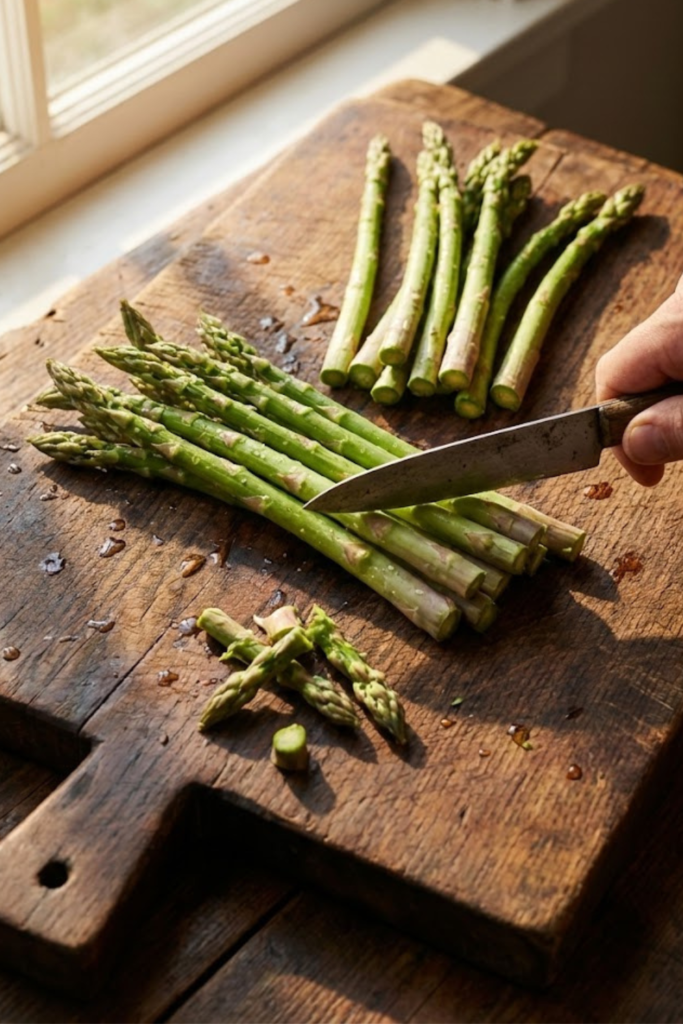
Here is a mistake I used to make: I would chop off half the stalk because I didn’t know where the “woody” part ended. I wasted so much food doing that!
The Trick: Hold a spear at the bottom third and bend it until it snaps. It will naturally break exactly where the tough, woody part ends. It’s kinda fun, actually. If you feel bad about throwing away the woody ends, you can toss them in a freezer bag and save them to make vegetable broth later. They still have a lot of flavor even if they are too tough to chew.
Also, please wash them. Asparagus grows in sandy soil, and nothing ruins a dinner faster than gritty teeth. But—and this is super important—you gotta dry them off. If they are wet when they hit the pan, they will steam instead of sauté, and we don’t want soggy veggies. I usually lay them out on a clean kitchen towel and roll them up like a burrito to get all the water out. Paper towels work too, but I feel like I have to use half a roll just to get them dry enough to get that nice sear we want.
How to Make Perfect Brown Butter (Without Burning It)
This is the part that scares people, but I promise, you got this. Brown butter moves fast. It goes from “just melted” to “burnt offering” in about 30 seconds if you aren’t paying attention.
I ruined my first batch because I walked away to check my phone. Don’t do that.
Here is the deal:
- Use a light pan: Put your butter in a light-colored pan or stainless steel skillet. If you use a black non-stick skillet, you can’t see the color change!
- Listen to it: Melt it over medium heat. It’ll start to foam up and hiss. That’s just the water cooking out.
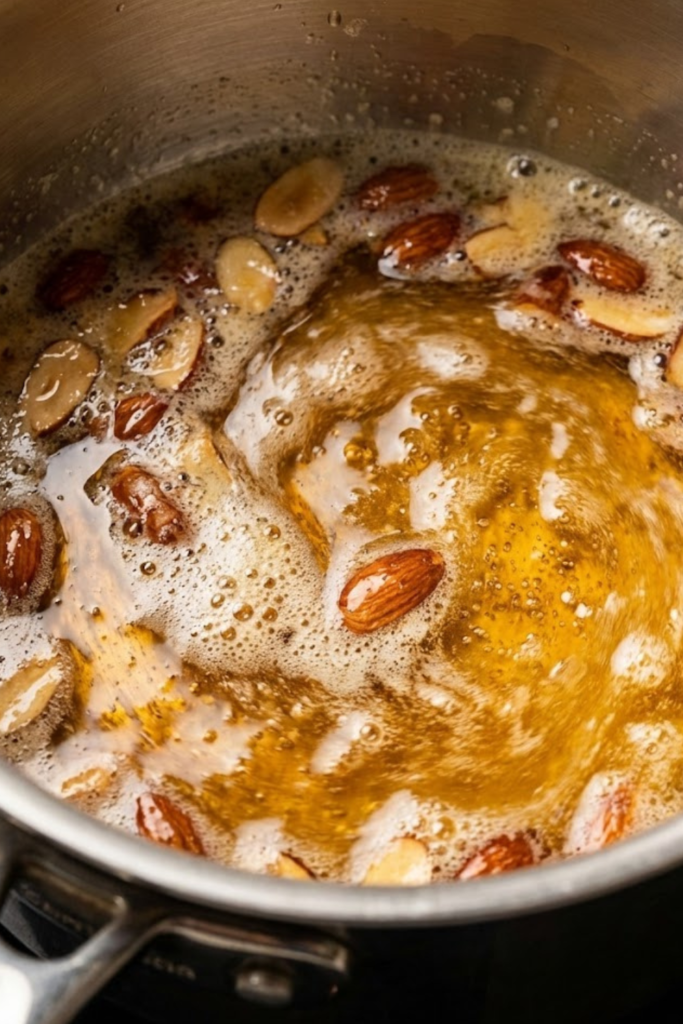
- Watch closely: Once the hissing stops, the butter will get quiet. You’ll start to see little golden-brown specks on the bottom. Don’t panic if it foams up a lot; that is normal. Just blow on the foam gently to see the color underneath so you aren’t flying blind.
- Smell it: This is the best indicator. When it smells like toasted nuts or movie theater popcorn, it’s done.
For this recipe, I like to throw the sliced almonds in right when the butter melts. This way, the nuts toast while the butter browns. It saves time and means fewer dishes to wash later. Just keep stirring it.
Crucial Tip: You have to keep the butter moving. I like to swirl the pan gently every few seconds so the milk solids—those little specks—don’t stick to the bottom and scorch. If you see it getting too dark too fast, pull the pan off the heat immediately.
Also, have a heat-proof bowl ready right next to the stove. If the butter reaches that perfect amber color and you leave it in the hot pan, the residual heat will turn it black in a blink. Pouring it into a cool bowl stops the cooking process instantly if you aren’t ready to drizzle it yet. Trust your nose more than your eyes; once that nutty smell hits, you are good to go.
Step-by-Step Cooking Instructions
Alright, let’s put it all together. You have your snapped, dry asparagus and your skillet ready to go.
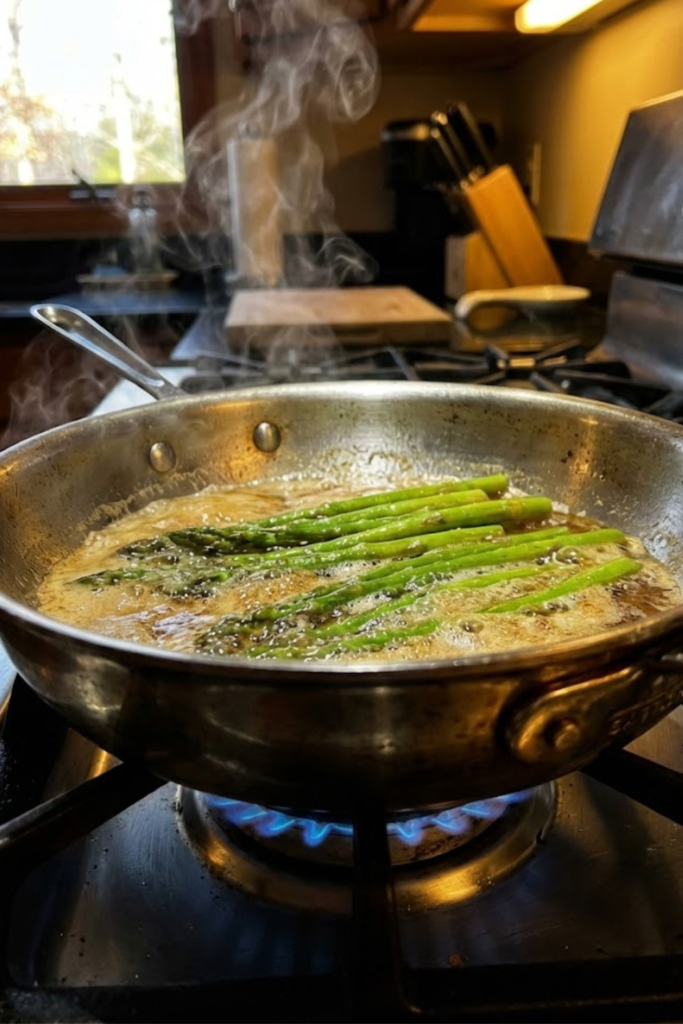
I like to use a large pan so the spears aren’t piled on top of each other. If they are crowded, they steam instead of searing, and we want them to sizzle, not sweat.
- Heat it up: Get your pan nice and hot over medium-high heat. You should be able to hold your hand a few inches above the surface and feel the heat radiating off it.
- Sauté: Toss in the asparagus with a little olive oil first (butter burns at high heat if used alone for a long time, so I start with oil or add the brown butter at the very end). Cook them for about 5-7 minutes.
- Resist the Urge to Stir: This is the hardest part, but try not to move them around constantly. Let the spears sit in the hot pan for a minute or two without touching them. This is how you get that delicious golden-brown char on the skin. If you move them every ten seconds, they just get hot without developing that grilled flavor.
- Check for Doneness: You want them bright green and tender-crisp. Poke the thickest spear with a fork; if it slides in with just a tiny bit of resistance, pull them off the heat immediately. They will keep cooking a little bit on their own even after you take them off the stove.
- Combine: Once the asparagus is looking good, I pour that magical brown butter and almond mixture right over the top in the pan. Give it a toss so everything gets coated.
- The Finisher: Squeeze a little fresh lemon juice on top. If you have a zester, grate a little yellow zest over it too. The acid cuts through the rich butter and makes the whole dish pop.
- Season: Sprinkle with sea salt. Taste it. Does it need more salt? Probably.
Serve it immediately. It doesn’t taste nearly as good cold. This goes great with chicken, fish, or honestly, I sometimes just eat a bowl of it for lunch with a fried egg on top.
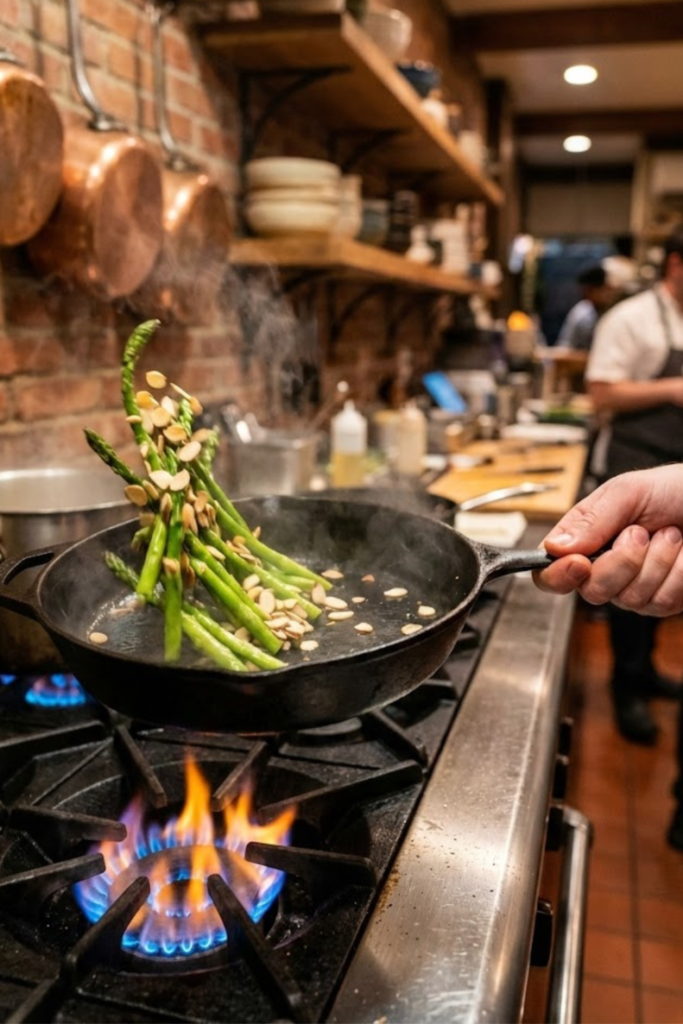
So there you have it. Sautéed Asparagus with Brown Butter and Almonds. It sounds fancy enough to serve to your in-laws, but it’s easy enough to make on a Tuesday when you are totally exhausted.
Don’t be afraid to mess up the butter once or twice; that’s how we learn. Once you get it right, though, you will probably start putting brown butter on everything. It is just that good.
If you loved this nutty, buttery recipe, please save this pin to your ‘Best Side Dishes’ board on Pinterest! It helps me out a ton.