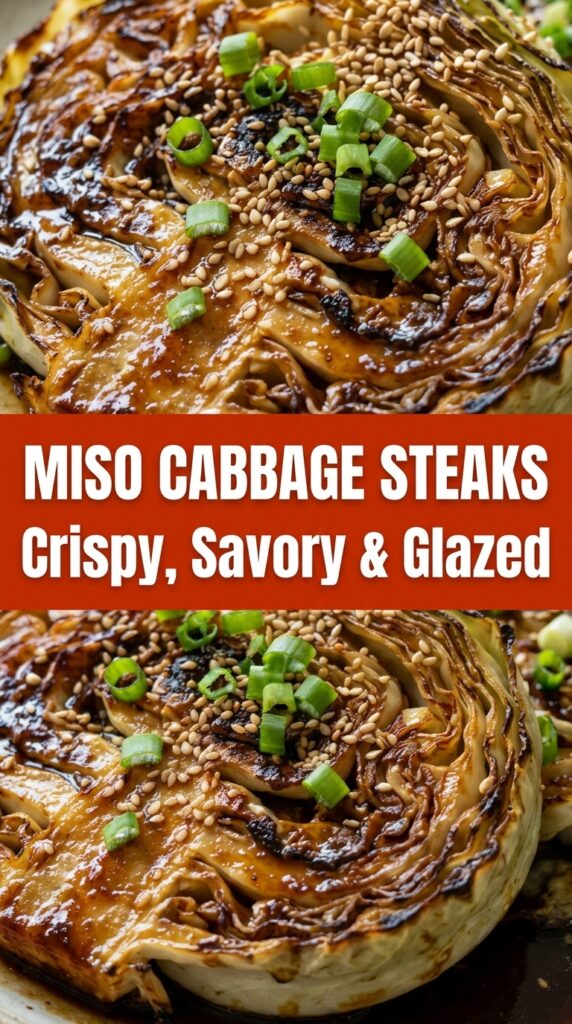
Miso cabbage steaks are thick-cut slices of roasted cabbage brushed with a savory miso glaze that transforms this humble vegetable into a restaurant-quality side dish. These miso cabbage steaks deliver crispy, caramelized edges with tender, melt-in-your-mouth centers, creating a dish that satisfies vegetarians and meat-eaters alike. The umami-rich miso coating adds depth and complexity that elevates simple cabbage into something truly special. Miso cabbage steaks work beautifully for weeknight dinners, meal prep, and impressive dinner parties, requiring minimal ingredients and basic cooking skills. Whether you’re looking for a healthy vegetable side or a plant-based main course, miso cabbage steaks deliver consistent, delicious results every time.
| Prep Time | Cook Time | Total Time | Servings | Difficulty | Cuisine |
|---|---|---|---|---|---|
| 10 minutes | 30 minutes | 40 minutes | 4 servings | Easy | Japanese-Inspired |
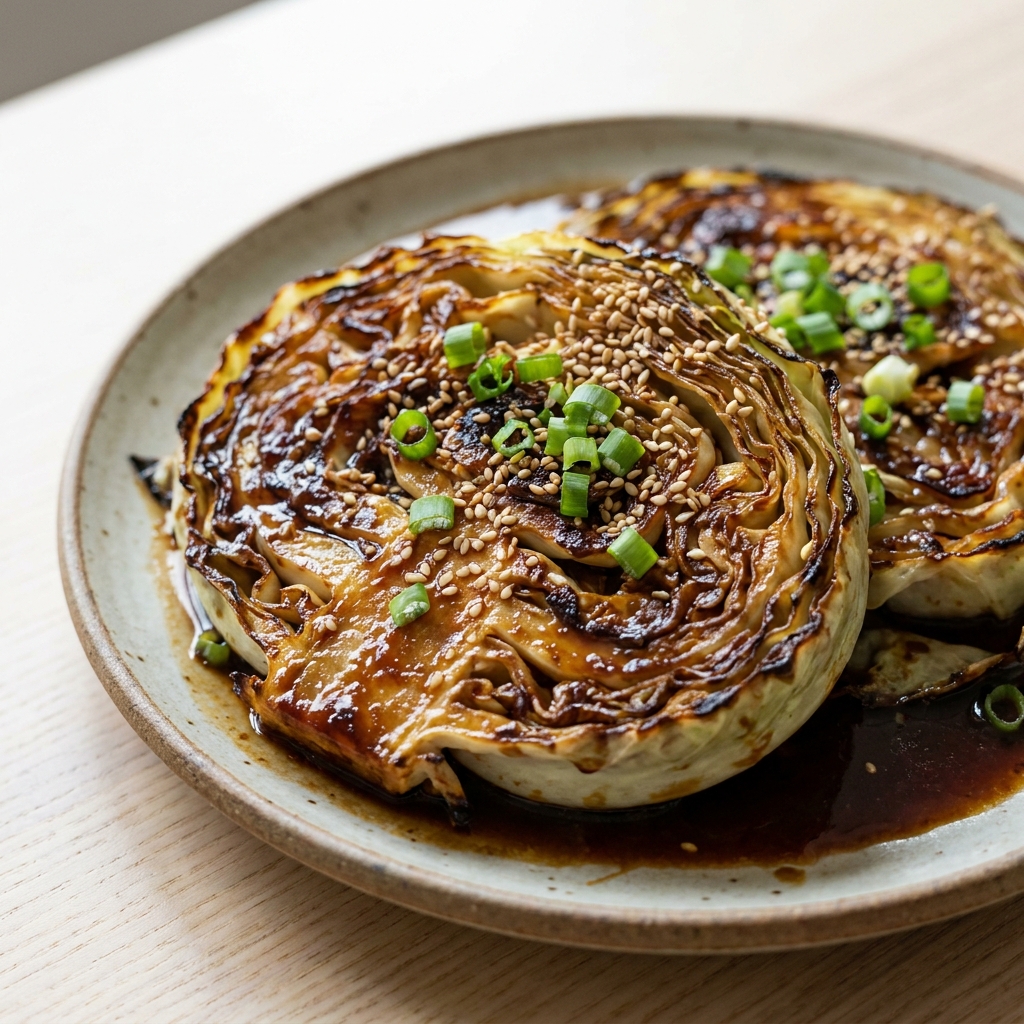
Table of Contents
Table of Contents
Why This Miso Cabbage Steaks Works
Miso cabbage steaks work because they combine simplicity with impressive flavor development that seems far more complicated than the actual cooking process. I’ve made these countless times for family dinners, and they’re consistently met with genuine enthusiasm from even the most vegetable-hesitant eaters. The magic happens when the miso glaze caramelizes in a hot oven, creating deeply browned edges while the cabbage underneath stays tender and slightly sweet.
The beauty of miso cabbage steaks lies in their versatility and nutritional profile. Cabbage is naturally low in calories but high in fiber, vitamins C and K, and beneficial plant compounds. The miso paste adds probiotics from fermentation along with essential amino acids and minerals, making these steaks a genuinely healthy choice that tastes indulgent. The umami from miso amplifies the cabbage’s natural sweetness, creating a flavor complexity that keeps people reaching for seconds.
Texture is another reason miso cabbage steaks succeed so consistently. Unlike typical steamed or boiled cabbage, roasting creates multiple textures in a single bite—crispy exterior edges, caramelized surfaces, and tender interior layers. This textural contrast makes the dish more interesting and satisfying than standard vegetable preparations.
Making miso cabbage steaks requires no special equipment or advanced techniques. A sharp knife, a baking sheet, and a basic oven are all you need to create restaurant-quality results. The hands-on time is minimal, making these steaks perfect for busy weeknights when you want vegetables that feel special without complicated procedures.
Miso cabbage steaks also offer incredible flexibility for different cuisines and dietary preferences. Serve them Asian-style with rice and vegetables, incorporate them into Mediterranean bowls, or pair them with grain dishes and proteins from any culinary tradition. This adaptability means you can make the same recipe multiple times throughout the month while enjoying completely different meals.
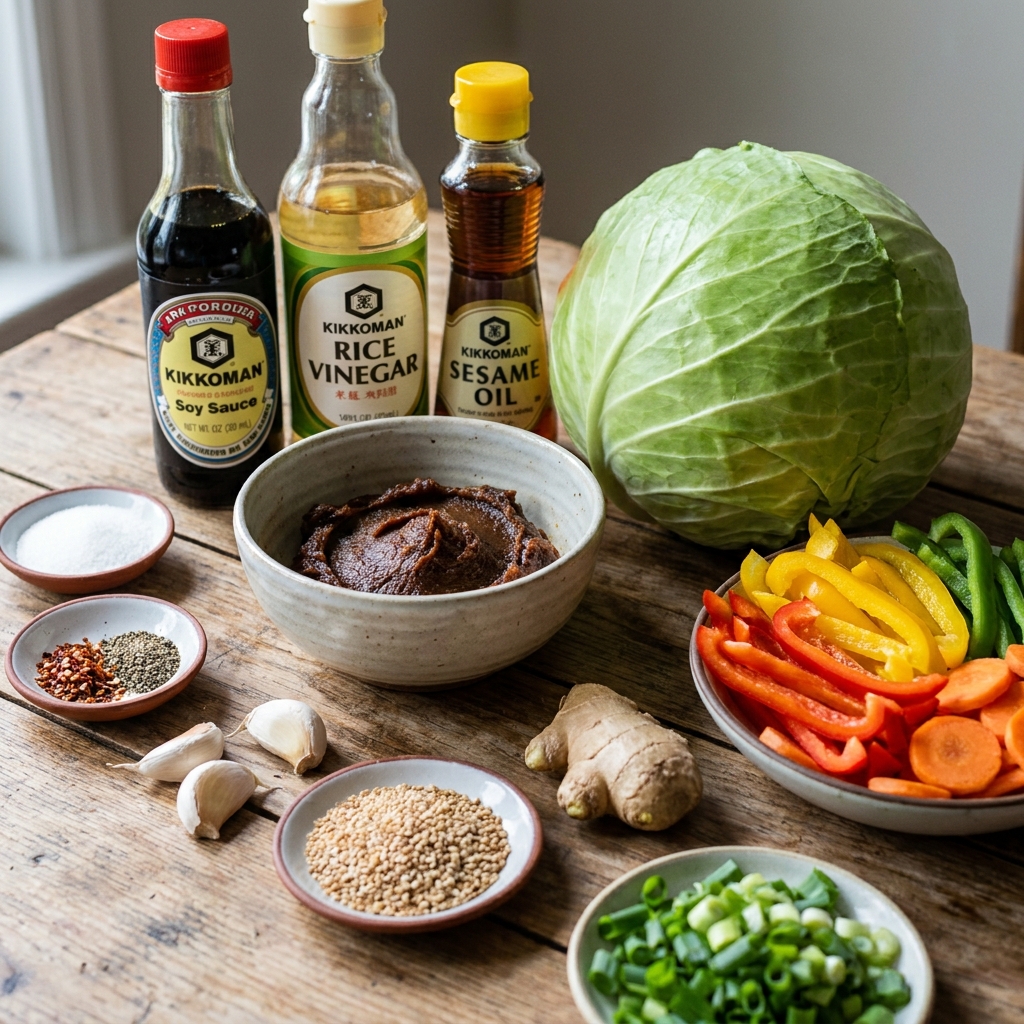
Miso Cabbage Steaks Ingredients
These miso cabbage steaks require straightforward ingredients that you can find at any grocery store or Asian market.
| Ingredient | Quantity | Notes with Alternatives |
|---|---|---|
| Green or Napa cabbage | 1 medium head (about 2 pounds) | Savoy cabbage works too; avoid red cabbage as it bleeds color. Choose heads that feel heavy and compact. |
| Miso paste (white or red) | 3 tablespoons | White miso is milder and slightly sweet; red miso is earthier and more pungent. Combine both for balanced flavor. Use high-quality, unpasteurized miso when possible. |
| Olive oil | 2 tablespoons | Extra virgin olive oil adds richness, but regular olive oil works fine. Avocado oil is a good alternative with a higher smoke point. |
| Soy sauce or tamari | 1 tablespoon | Use tamari for gluten-free miso cabbage steaks. Coconut aminos offers a lighter option with less sodium. |
| Rice vinegar | 1 teaspoon | Balances umami with acidity. Apple cider vinegar or white vinegar work as substitutes but may shift flavor slightly. |
| Sesame oil | ½ teaspoon | Essential for authentic flavor. Toasted sesame oil has stronger aroma than light sesame oil. |
| Garlic, minced | 2 cloves | Fresh garlic provides sharpness that mellows during roasting. Garlic paste works but use slightly less. |
| Fresh ginger, grated | ½ teaspoon | Adds warmth and complexity. Powdered ginger is less ideal but can substitute at ¼ teaspoon. |
| Maple syrup or honey | ½ tablespoon | Encourages caramelization and balances salty miso. Agave nectar works similarly; avoid this if avoiding sweeteners. |
| Water | 2 tablespoons | Thins the miso glaze to brushable consistency. Vegetable broth adds extra depth. |
| Sesame seeds, toasted | 1 tablespoon | Optional garnish for nutty flavor and visual appeal. Use black or white seeds based on preference. |
| Green onions, chopped | 2 stalks | Optional garnish for freshness and color. Cilantro offers an alternative fresh herb. |
| Sea salt and black pepper | To taste | Season the raw cabbage before roasting to enhance natural flavors. |
Understanding the role of each ingredient helps you create perfectly balanced miso cabbage steaks. The miso paste is the star, providing umami depth that makes cabbage taste extraordinary. Combining white and red miso gives you the best flavor balance—white miso contributes sweetness while red miso adds earthiness and intensity.
How to Make Miso Cabbage Steaks
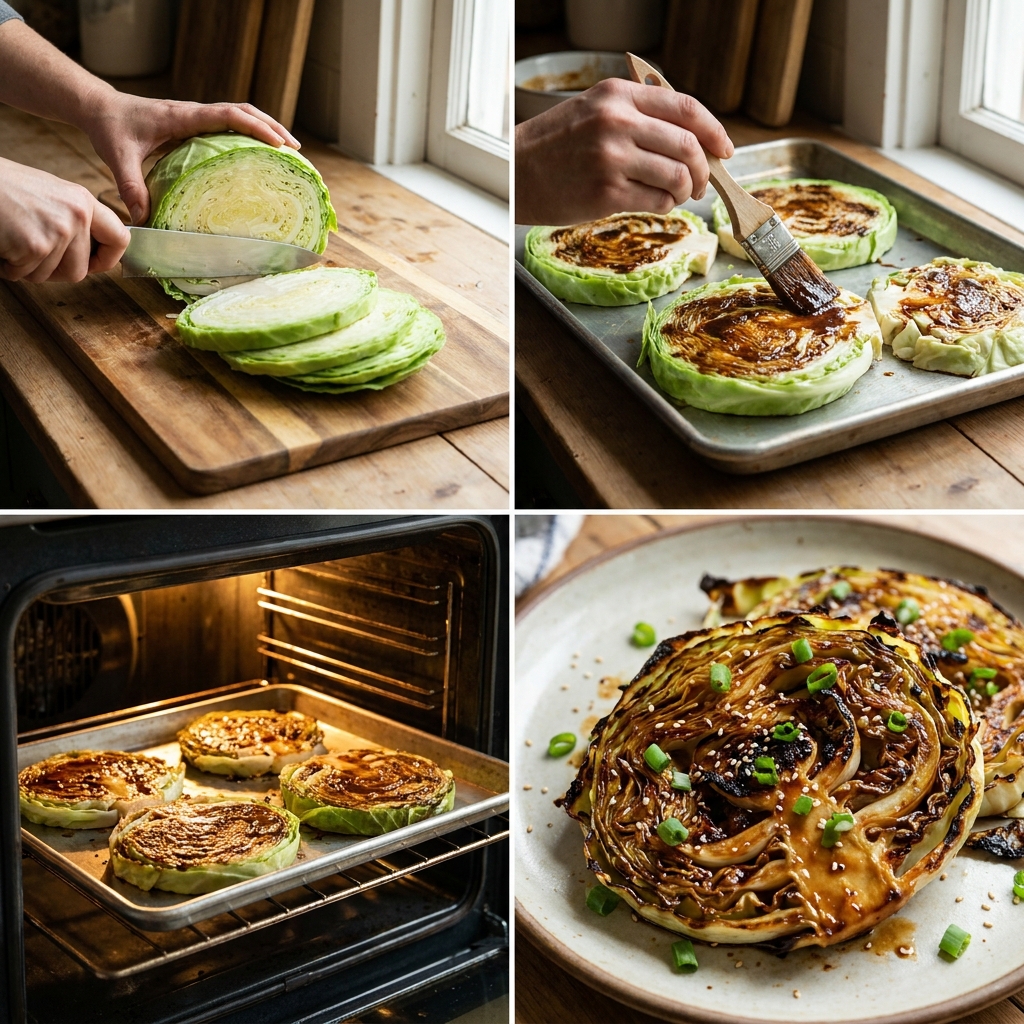
Creating perfectly roasted miso cabbage steaks requires proper technique at each stage, from cutting through the final garnish.
Prepare the Cabbage
- Preheat your oven to 400 degrees Fahrenheit and line a large baking sheet with parchment paper or lightly oil it.
- Rinse the cabbage head thoroughly under cold water and pat it completely dry with paper towels.
- Place the cabbage cut-side down on a cutting board and carefully slice it into steaks approximately ¾ to 1 inch thick.
- Aim to cut 4 to 6 even steaks from one medium head of cabbage by slicing through the core.
- Arrange the miso cabbage steaks in a single layer on the prepared baking sheet, cut-side up.
- Sprinkle both sides lightly with sea salt and freshly ground black pepper.
Make the Miso Glaze
- Combine the miso paste, minced garlic, and grated ginger in a small bowl.
- Add the soy sauce, rice vinegar, sesame oil, and maple syrup to the miso mixture.
- Whisk the ingredients together until you achieve a smooth, spreadable consistency.
- Add water one tablespoon at a time until the glaze reaches the right consistency for brushing.
- Taste and adjust seasonings—add more miso for deeper flavor or more water if too thick.
Roast the Miso Cabbage Steaks
- Brush the top side of each miso cabbage steak generously with the miso glaze.
- Use a pastry brush or the back of a spoon to ensure even coverage across the entire surface.
- Place the baking sheet in the preheated 400-degree oven on the middle rack.
- Roast for 20 to 25 minutes until the edges of the miso cabbage steaks are deeply browned and caramelized.
- Remove from the oven and carefully flip each steak with a sturdy spatula, being gentle to maintain structural integrity.
- Brush the second side of each miso cabbage steak with the remaining glaze.
- Return to the oven for an additional 8 to 12 minutes until the second side develops similar caramelization.
- The total roasting time for miso cabbage steaks typically ranges from 30 to 35 minutes.
Finish and Serve
- Remove the miso cabbage steaks from the oven when both sides are deeply caramelized and tender.
- Transfer to a serving platter while still warm to maintain their heat and texture.
- Drizzle any pan drippings over the top of the miso cabbage steaks for extra flavor.
- Sprinkle with toasted sesame seeds and chopped green onions for garnish.
- Serve immediately while the miso cabbage steaks are warm and their edges remain crispy.
Chef Tips for Perfect Miso Cabbage Steaks
These professional tips ensure your miso cabbage steaks achieve restaurant-quality results consistently.
- Pat the cabbage completely dry before cutting and roasting—excess moisture prevents proper caramelization of the miso glaze and leads to steaming rather than roasting. I use paper towels to thoroughly dry the cut surfaces after slicing.
- Cut miso cabbage steaks uniformly to ensure even cooking throughout the batch. Steaks that are significantly thicker cook through while thinner pieces burn, so consistent ¾-inch thickness is ideal for a 400-degree oven.
- Don’t skip the initial seasoning of raw cabbage with salt and pepper before applying the miso glaze. This seasons the interior and enhances the natural sweetness that emerges during roasting.
- Flip your miso cabbage steaks halfway through roasting for even browning and caramelization on both sides. This prevents soggy bottoms and ensures the glaze develops properly across all surfaces.
- Use a combination of white and red miso paste for depth and balance in your miso cabbage steaks. White miso alone produces slightly sweet results, while red miso alone can be overly intense and salty.
- Watch the edges carefully during the final minutes of roasting—deeply caramelized is delicious, but charred suggests the oven temperature was too high or cooking time too long. Aim for dark mahogany color on your miso cabbage steaks.
- Arrange miso cabbage steaks with adequate spacing on the baking sheet—crowding them together traps steam and prevents the desirable crispy edges that make this dish special.
Common Miso Cabbage Steaks Mistakes to Avoid
Learning what derails miso cabbage steaks helps you troubleshoot and improve your results.
- Wet cabbage steaks: Moisture on the cabbage surface prevents proper browning of the miso glaze. Always pat the cut surfaces dry with paper towels after rinsing. If your miso cabbage steaks come out pale and steamed rather than browned, insufficient drying was likely the culprit.
- Miso glaze too thick: A paste-like glaze doesn’t coat evenly and bakes on unevenly, creating thick crusty patches on miso cabbage steaks. Thin your miso mixture with water until it reaches a consistency similar to ranch dip—thick enough to stay on top but liquid enough to spread smoothly.
- Oven temperature too low: Roasting miso cabbage steaks at temperatures below 375 degrees produces steamed cabbage with minimal caramelization. The glaze won’t develop the desirable depth of flavor that makes this dish special. Ensure your oven is fully preheated to 400 degrees before adding the steaks.
- Skipping the flavor balancing: Miso paste alone tastes aggressively salty and one-dimensional on miso cabbage steaks. The soy sauce, rice vinegar, garlic, ginger, and touch of maple syrup create complexity that prevents saltiness from overwhelming the dish. Don’t omit or drastically reduce these supporting ingredients.
- Overcooking until soggy: While caramelization is desirable on miso cabbage steaks, leaving them in the oven too long produces mushy, falling-apart steaks. Aim for tender-crisp interior with deeply browned exterior—typically 30 to 35 minutes total. Check your steaks at 25 minutes if your oven runs hot.
- Using only raw garlic: While the miso glaze includes raw minced garlic, it mellows significantly during roasting. This isn’t a mistake per se, but knowing this helps you understand that your miso cabbage steaks won’t taste harshly garlicky despite the raw garlic in the recipe.
Best Miso Cabbage Steaks Variations and Substitutions
Miso cabbage steaks offer tremendous flexibility for adapting to different preferences and dietary needs while maintaining their essential character.
| Ingredient | Substitution | Impact on Flavor |
|---|---|---|
| White and red miso | All white miso or chickpea miso | Produces sweeter, milder miso cabbage steaks with less umami depth. Best for those sensitive to intense flavors. |
| Miso paste | Tahini mixed with tamari and garlic | Creates nuttier miso cabbage steaks without fermented ingredients. Less authentic but still delicious and works for those avoiding fermented foods. |
| Soy sauce | Tamari or coconut aminos | Tamari creates identical results with gluten-free miso cabbage steaks. Coconut aminos produces lighter, slightly sweeter steaks with less salt. |
| Rice vinegar | Ume plum vinegar or apple cider vinegar | Ume vinegar adds fruity depth to miso cabbage steaks. Apple cider vinegar produces earthier, slightly funkier flavor profile. |
| Sesame oil | Omit entirely or use extra virgin olive oil | Omitting sesame oil removes nutty aromatic quality from miso cabbage steaks. Olive oil produces milder, less Asian-inspired results. |
| Maple syrup | Brown sugar, honey, or coconut sugar | Brown sugar and honey create similar caramelization on miso cabbage steaks. Coconut sugar produces slightly less intense sweetness. |
| Fresh ginger | Ginger paste or powdered ginger | Powdered ginger at ¼ teaspoon works in a pinch but lacks the fresh brightness that ginger paste provides to miso cabbage steaks. |
| Green cabbage | Napa cabbage, Savoy cabbage, or Brussels sprouts halves | Napa produces milder, more delicate miso cabbage steaks. Savoy adds slight bitterness. Brussels sprouts create heartier steaks with different texture. |
| Toasted sesame seeds | Furikake seasoning or black sesame seeds | Furikake adds umami punch and seaweed notes to miso cabbage steaks. Black sesame seeds provide visual contrast and subtle earthiness. |
| Green onion garnish | Fresh cilantro or microgreens | Cilantro shifts miso cabbage steaks toward Southeast Asian flavor profile. Microgreens add delicate visual appeal and subtle bitter notes. |
Experimenting with variations keeps miso cabbage steaks interesting throughout the year. Try different miso pastes from Asian markets—black miso produces earthier steaks, while chickpea miso offers a milder option. Add sriracha or chili paste to the glaze for spicy miso cabbage steaks, or incorporate fresh lemongrass and lime for Southeast Asian-inspired versions.
For sweeter miso cabbage steaks that appeal to younger eaters, increase the maple syrup to one full tablespoon and reduce the miso paste slightly. Create savory-spicy miso cabbage steaks by adding Dijon mustard and cayenne pepper to the glaze. These variations maintain the essential roasting technique while adapting the flavor profile significantly.
Serving Suggestions for Miso Cabbage Steaks
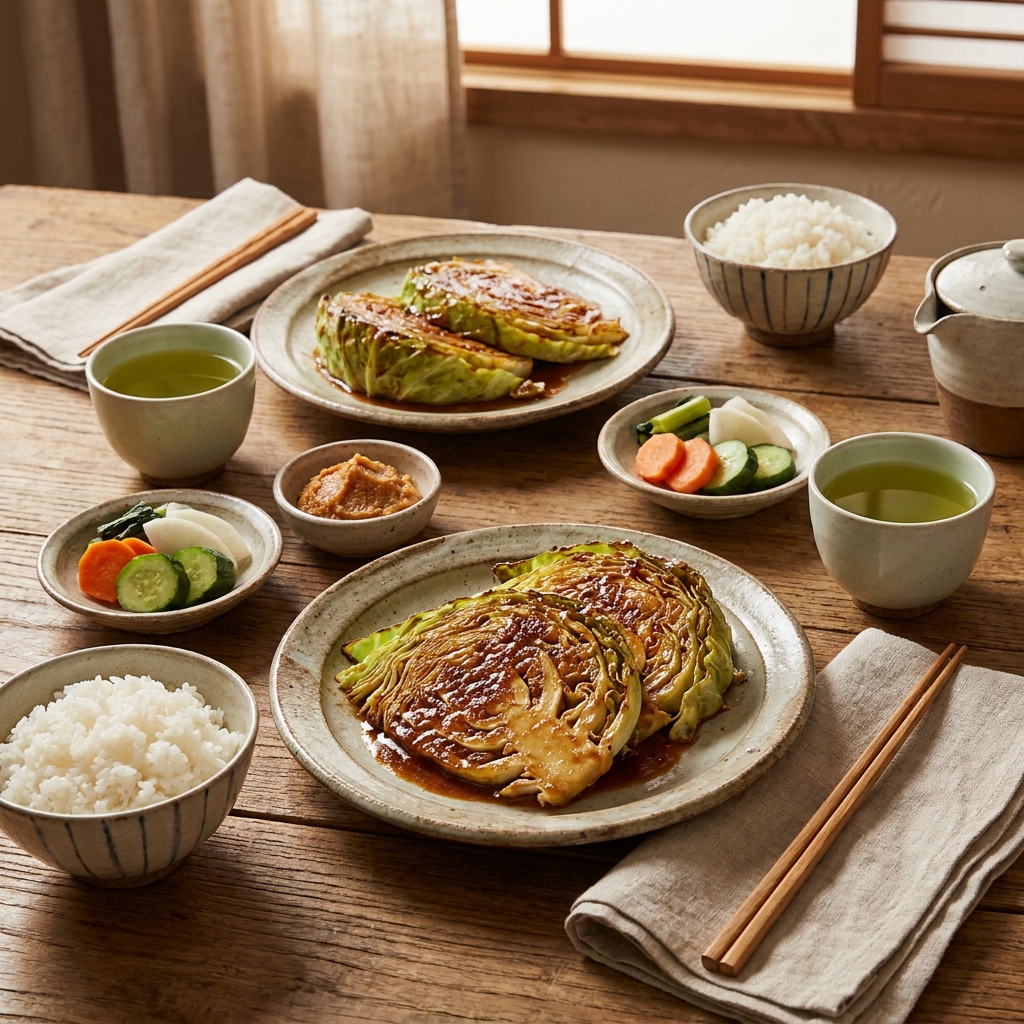
Miso cabbage steaks work beautifully across diverse cuisines and occasions, pairing with numerous complementary dishes.
For Asian-inspired dinners, serve miso cabbage steaks alongside steamed jasmine rice or sushi rice, stir-fried vegetables like broccoli and snap peas, and additional fermented sides like pickled vegetables or cucumber salad. Add grilled tofu or baked tempeh for a protein-forward meal. Drizzle everything with extra sesame oil and sprinkle with furikake seasoning for authentic flavor.
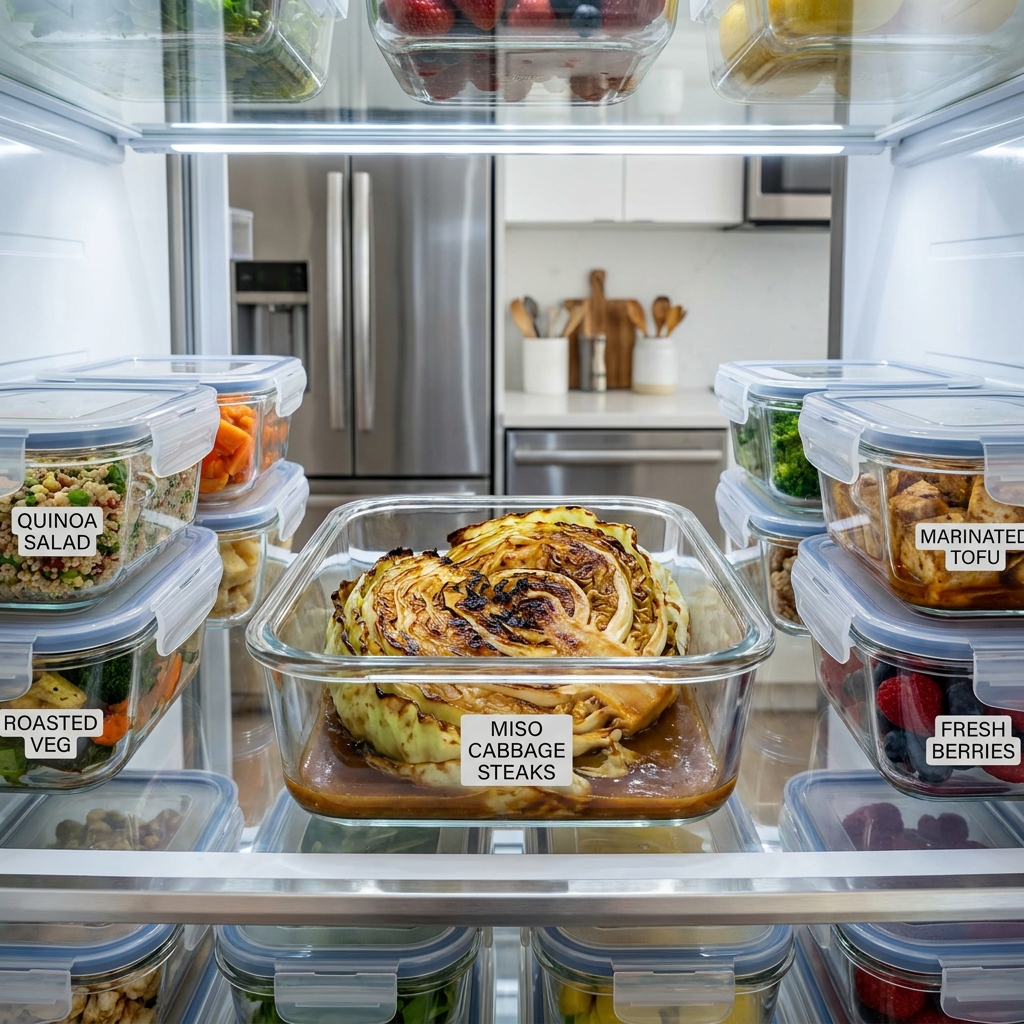
Create balanced grain bowls by placing miso cabbage steaks atop farro, quinoa, or brown rice, then adding roasted sweet potato, shredded carrots, cucumber, and fresh herbs. Drizzle with tahini dressing or miso-based vinaigrette to tie the bowl together. These miso cabbage steaks meal prep beautifully for weekday lunches when portioned into containers.
For Mediterranean dinners, position miso cabbage steaks on plates with roasted chickpeas, cherry tomatoes, cucumber, red onion, and olives, then dress everything with lemon vinaigrette. The umami from miso cabbage steaks balances the brightness of Mediterranean vegetables and herbs. Add feta cheese or nutritional yeast depending on dietary preferences.
Build impressive plant-based main courses by serving generous portions of miso cabbage steaks with sautéed mushrooms, crispy cauliflower steaks, and herb-roasted root vegetables. The variety of textures and roasted flavors creates a satisfying dinner that meat-eaters and vegetarians equally enjoy. These miso cabbage steaks work particularly well for dinner parties when you want to serve vegetables that feel special.
Try breakfast or brunch applications by incorporating cooled miso cabbage steaks into breakfast bowls with avocado, poached eggs, whole grain toast, and fresh herbs. The umami-rich steaks ground heavier breakfast dishes and provide substantial vegetable content. Drizzle with hot sauce or sriracha mayo for extra dimension.
For holiday gatherings and special occasions, serve miso cabbage steaks alongside traditional sides like roasted root vegetables, herb-stuffed mushrooms, and whole grains. Guests are often surprised and impressed by how sophisticated simple roasted cabbage becomes with miso glazing. Miso cabbage steaks demonstrate that vegetable-focused cooking can be restaurant-quality.
Storage and Reheating for Miso Cabbage Steaks
Proper storage extends the enjoyment of miso cabbage steaks well beyond the initial cooking day.
| Method | Duration | Instructions |
|---|---|---|
| Refrigerator | 4 to 5 days | Store cooled miso cabbage steaks in an airtight container on a plate lined with paper towels to absorb excess moisture. The steaks firm up as they cool but remain tender inside. |
| Freezer | 2 to 3 months | Cool miso cabbage steaks completely, arrange in a single layer on a baking sheet, freeze for 2 hours until solid, then transfer to freezer-safe containers or bags. Frozen steaks can go directly into the oven or microwave. |
| Reheat in oven | 12 to 15 minutes at 350°F | Place refrigerated miso cabbage steaks on a baking sheet, cover loosely with foil, and warm in a 350-degree oven until heated through. This method restores some crispiness to the exterior. |
| Reheat from frozen | 20 to 25 minutes at 375°F | Place frozen miso cabbage steaks directly on a baking sheet without thawing, cover with foil, and bake at 375 degrees until heated through. Remove foil for the last few minutes to re-crisp the exterior. |
| Microwave reheating | 2 to 3 minutes | Arrange miso cabbage steaks on a microwave-safe plate, cover with a damp paper towel, and microwave on 50 percent power. This method is fastest but doesn’t restore exterior crispiness as effectively as oven reheating. |
| Make-ahead preparation | Up to 1 day before serving | Prepare miso cabbage steaks through the glaze stage, cover and refrigerate, then roast fresh when ready. This speeds up dinner preparation on busy evenings. |
| Room temperature storage | 2 to 4 hours | Miso cabbage steaks are delicious at room temperature for summer meals and picnics. Store loosely covered to prevent condensation and sogginess. |
Miso cabbage steaks maintain their appeal through multiple reheating cycles, making them excellent for meal prep throughout the week. I recommend storing them separately from wet components like sauces or dressings to prevent the exterior from becoming soggy. When you’re ready to eat stored miso cabbage steaks, brief oven reheating at 375 degrees restores much of their original crispy texture.
The miso glaze on refrigerated steaks may harden slightly, which is completely normal. As miso cabbage steaks warm, the glaze softens and the interior cabbage steams slightly, restoring the overall texture. This transformation occurs within minutes of reheating, so don’t worry if they look stiff when cold.
Nutritional Information for Miso Cabbage Steaks
Understanding the nutritional profile of miso cabbage steaks helps you incorporate them confidently into balanced meals.
| Nutrient | Amount per Serving |
|---|---|
| Calories | 85 to 95 |
| Total Fat | 5 to 6 grams |
| Saturated Fat | 0.5 to 1 gram |
| Trans Fat | 0 grams |
| Cholesterol | 0 milligrams |
| Sodium | 420 to 480 milligrams |
| Total Carbohydrate | 10 to 12 grams |
| Dietary Fiber | 2 to 2.5 grams |
| Total Sugars | 5 to 6 grams |
| Protein | 2 to 3 grams |
| Vitamin C | 25 to 30% of Daily Value |
| Vitamin K | 80 to 90% of Daily Value |
| Potassium | 180 to 200 milligrams |
Approximate values per serving based on one medium head of cabbage yielding four miso cabbage steaks. Nutritional content varies slightly depending on specific miso brands used and precise portion sizes. Miso cabbage steaks are naturally low in calories while providing substantial fiber and micronutrients, making them an excellent choice for health-conscious eating.
The fermented miso paste in miso cabbage steaks provides beneficial probiotics that support digestive health, along with essential amino acids from the fermentation process. Cabbage itself is rich in antioxidants, sulforaphane, and anti-inflammatory compounds that contribute to overall wellness. These steaks align well with plant-forward nutrition approaches and fit seamlessly into Mediterranean, Asian, and whole-food-focused diets.
Frequently Asked Questions About Miso Cabbage Steaks
Can I make miso cabbage steaks without an oven?
Yes, you can pan-sear miso cabbage steaks on the stovetop using a large skillet or cast iron pan over medium-high heat for 4 to 5 minutes per side until golden brown, then finish by steaming covered with a lid for 5 to 8 minutes until tender. This stovetop method produces excellent results though the caramelization differs slightly from oven roasting. You can also grill miso cabbage steaks over medium heat for similar browning and a subtle smoky flavor.
How do I know when miso cabbage steaks are properly cooked?
Properly cooked miso cabbage steaks have deeply caramelized, mahogany-brown exteriors with a fork-tender interior that yields easily when pierced. The edges should be crispy and slightly curled while the center layers remain soft and melt-in-your-mouth. The miso glaze should look dark, shiny, and slightly caramelized rather than light brown or burnt.
Can I make miso cabbage steaks without miso paste?
While miso paste is central to authentic miso cabbage steaks, you can create a similar umami-rich glaze by combining tahini, soy sauce, garlic, ginger, and a touch of sweetener. The result differs from true miso cabbage steaks but still delivers satisfying roasted cabbage with deep flavors. Another option involves using miso powder if you cannot find paste, though fresh paste delivers superior results.
Are miso cabbage steaks suitable for make-ahead meal prep?
Absolutely, miso cabbage steaks are excellent for meal prep since they maintain quality throughout refrigeration and reheat beautifully. Prepare them fully, cool completely, store in airtight containers, and reheat briefly in the oven when ready to eat. You can also prepare the steaks and glaze them the day before, refrigerate, then roast fresh for maximum texture and flavor.
What’s the best way to serve miso cabbage steaks to picky eaters?
Miso cabbage steaks are surprisingly well-received by vegetable-hesitant eaters because the caramelized edges taste almost like crispy chips, and the umami-rich glaze makes cabbage taste substantially different from plain steamed versions. Serve alongside familiar comfort foods and let the steaks speak for themselves—most people are pleasantly surprised when they try them.
Can I freeze miso cabbage steaks for later?
Yes, miso cabbage steaks freeze beautifully for two to three months when properly stored in freezer-safe containers or bags. Flash-freeze them on a baking sheet first to prevent sticking, then transfer to storage containers. Reheat directly from frozen in a 375-degree oven for 20 to 25 minutes until heated through and re-crisped.
How do I prevent miso cabbage steaks from becoming mushy?
Prevent mushy miso cabbage steaks by ensuring your oven is fully preheated to 400 degrees, arranging steaks with adequate spacing to allow proper air circulation, and roasting for the specified 30 to 35 minutes rather than longer. Using completely dried cabbage before roasting also prevents excess moisture that leads to mushiness. Monitor your steaks starting at 25 minutes if your oven runs hot.
Can I use red cabbage instead of green cabbage for miso cabbage steaks?
While you technically can use red cabbage, it’s not recommended for miso cabbage steaks because the deep purple pigments bleed into the miso glaze and surrounding ingredients, creating an unappealing gray or murky appearance. Green cabbage and Napa cabbage produce far more visually appealing miso cabbage steaks while maintaining superior flavor.
What vegetables pair well as sides to miso cabbage steaks?
Miso cabbage steaks pair beautifully with stir-fried broccoli, roasted Brussels sprouts, sautéed bok choy, pickled cucumber, steamed asparagus, roasted carrots, or grilled zucchini. Choose vegetables with contrasting colors and textures to create visually balanced plates alongside your miso cabbage steaks.
Can I double the glaze recipe to ensure miso cabbage steaks are extra flavorful?
While extra glaze adds flavor to miso cabbage steaks, doubling the entire recipe creates excessively salty, overpowering results since miso paste is concentrated. Instead, make the standard glaze and brush it generously multiple times during roasting, or add a second glaze application halfway through cooking for miso cabbage steaks with deeper, more complex flavor.
Conclusion
Miso cabbage steaks represent a transformative approach to everyday vegetable cooking that proves simple ingredients and proper technique create restaurant-quality results at home. These steaks showcase how the umami power of fermented miso paste elevates humble cabbage into a dish that impresses dinner guests and satisfies daily meal needs alike. The combination of caramelized exteriors, tender interiors, and savory-sweet glaze makes miso cabbage steaks something you’ll want to make repeatedly throughout the year. Whether you’re embracing plant-based eating, seeking impressive side dishes, or exploring Asian-inspired flavors, miso cabbage steaks deliver consistent excellence. Try this recipe this week and discover why miso cabbage steaks have become a staple in kitchens everywhere—the crispy edges and melt-in-your-mouth centers speak for themselves.
Related Recipes You’ll Love
Rose tteokbokki recipe
Hot honey cottage cheese sweet potato beef bowl
Addictive cabbage recipe
Chili crisp carrot ribbon salad recipe
baking soda recipe for weight loss
Eggplant parmesan soup recipe
Whipped beef tallow recipe
Expert Resources and Food Safety
For authoritative information about cabbage nutrition and health benefits, consult Healthline’s comprehensive vegetable nutrition guides. Learn more about fermented foods and digestive health from Mayo Clinic’s evidence-based nutrition resources.
Print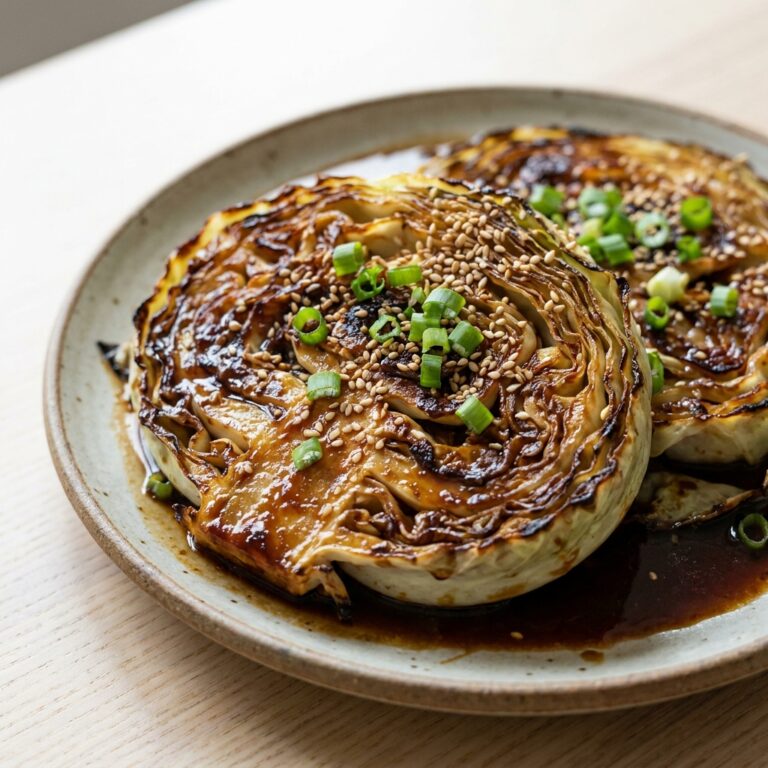
Miso Cabbage Steaks Recipe 2026
These miso cabbage steaks feature thick slices of roasted cabbage brushed with a savory miso glaze that caramelizes beautifully in the oven, creating crispy edges and tender centers.
- Total Time: 40 minutes
- Yield: 4 servings 1x
Ingredients
- 1 medium green or Napa cabbage
- 3 tablespoons miso paste (white or red)
- 2 tablespoons olive oil
- 1 tablespoon soy sauce or tamari
- 1 teaspoon rice vinegar
- 1/2 teaspoon sesame oil
- 2 garlic cloves, minced
- 1/2 teaspoon fresh ginger, grated
- 1/2 tablespoon maple syrup or honey
- 2 tablespoons water
- 1 tablespoon toasted sesame seeds
- 2 green onions, chopped
- Sea salt and black pepper to taste
Instructions
- Preheat the oven to 400°F and line a baking sheet with parchment paper.
- Rinse and dry the cabbage thoroughly.
- Slice the cabbage into 3/4 to 1-inch thick steaks through the core.
- Arrange the cabbage steaks on the prepared baking sheet.
- Season lightly with sea salt and black pepper.
- In a bowl, whisk together miso paste, garlic, ginger, soy sauce, rice vinegar, sesame oil, maple syrup, and water until smooth.
- Brush the miso glaze generously over the top side of each cabbage steak.
- Roast for 20-25 minutes until the edges begin to caramelize.
- Carefully flip the cabbage steaks and brush with the remaining glaze.
- Return to the oven and roast for another 8-12 minutes until deeply caramelized and tender.
- Remove from the oven and transfer to a serving platter.
- Garnish with toasted sesame seeds and chopped green onions before serving.
Notes
Pat the cabbage dry before roasting for the best caramelization. Use a mix of white and red miso for balanced flavor. Avoid overcrowding the pan so the cabbage roasts instead of steams.
- Prep Time: 10 minutes
- Cook Time: 30 minutes
- Category: Side Dish
- Method: Roasting
- Cuisine: Japanese-Inspired
- Diet: Vegan
Nutrition
- Serving Size: 1 serving
- Calories: 95
- Sugar: 5g
- Sodium: 460mg
- Fat: 6g
- Saturated Fat: 1g
- Unsaturated Fat: 4.5g
- Trans Fat: 0g
- Carbohydrates: 11g
- Fiber: 2.5g
- Protein: 3g
- Cholesterol: 0mg