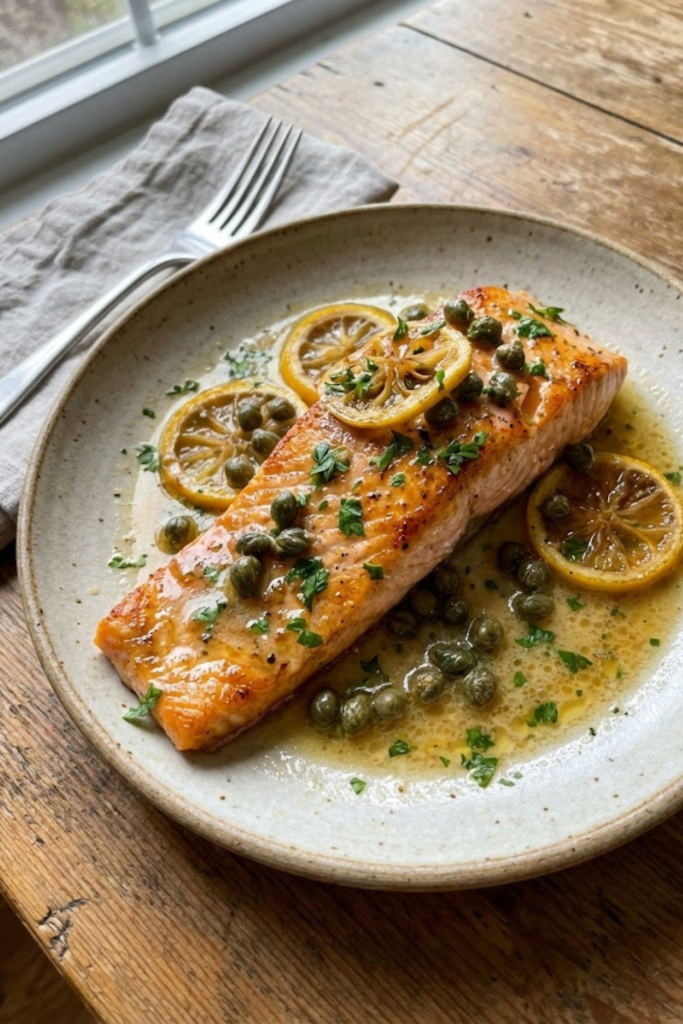
Did you know that salmon is the second most popular fish in the U.S., but most home cooks are terrified of overcooking it? I get it! For years, I turned beautiful fillets into hockey pucks until I discovered the magic of salmon piccata with capers. This dish is a total game-changer because the acidic lemon and salty capers cut right through the richness of the fish. It’s fast. It’s elegant. Honestly, it’s the kind of meal that makes you feel like a pro chef even on a Tuesday night!
Choosing the Right Fillet for Your Salmon Piccata with Capers
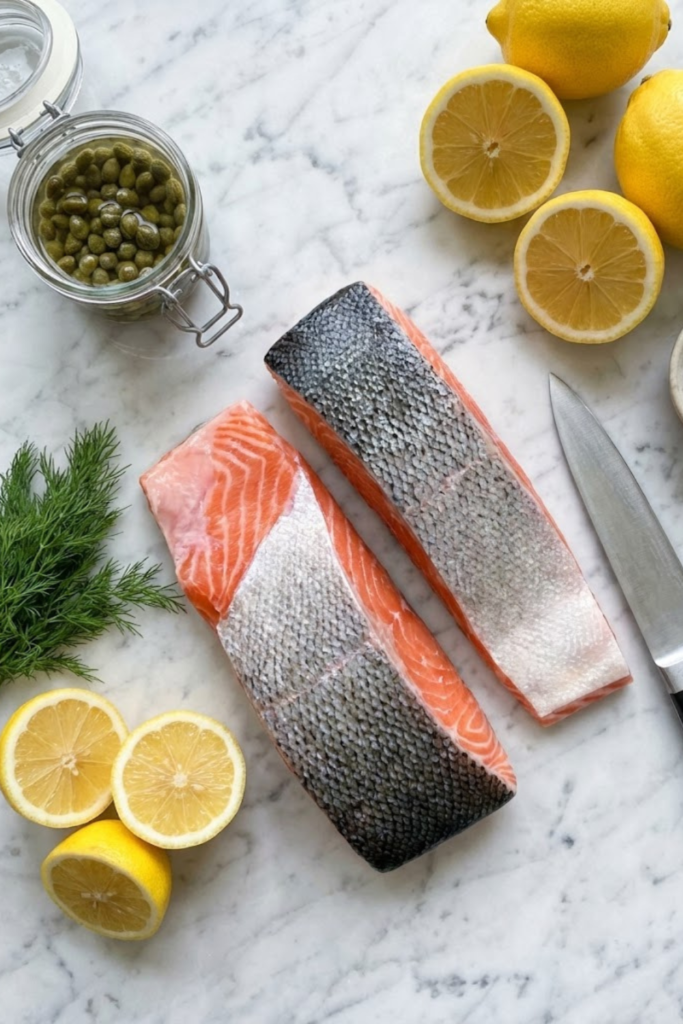
I remember one time I went to the grocery store in a huge rush and just grabbed the first piece of fish I saw in the case. It looked okay through the plastic, but once I got it home, it was a total mess. It was all thin at one end and super thick at the other. When I tried to cook it for my family, the tail part turned into a dry piece of wood before the middle was even warm. That was a big lesson for me! Picking your fish is actually the most important part of this whole recipe. If you start with bad fish, even the best lemon butter sauce in the world won’t save your dinner.
Fresh or Frozen?
You might think fresh is always better, but that’s not always the case these days. A lot of the fish at the counter has been sitting there for a few days, and you don’t really know how old it is. I actually prefer buying high-quality frozen sockeye salmon. They flash-freeze it right on the boat, so it’s actually “fresher” than the stuff sitting on ice at the store. My kids used to complain that fish tasted too “fishy,” but once I switched to good frozen wild-caught fillets, they stopped whining and actually finished their plates.
Why You Should Keep the Skin On
I used to try and peel the skin off before cooking because I thought it was a bit gross. But a friend of mine who cooks at a nice place told me I was doing it all wrong. The skin acts like a little shield for the meat. It keeps the moisture inside the fish while you’re searing it in the pan. Even if you don’t like eating the skin, leave it on while it’s cooking. You can always peel it off right before you put it on the plate. It makes a huge difference in how juicy the salmon stays.
Picking the Best Shape
When you are looking at the fillets, try to find ones that are about an inch thick. You want them to be pretty much the same size and shape. If one is huge and one is tiny, you’ll be stressing out trying to get them done at the same time. I usually look for center-cut pieces because they are more square. They cook much more evenly, which makes your life so much easier when you’re standing over a hot stove on a Tuesday night!
Look at the Color
Look at the color of the meat. You want a nice, vibrant pink or deep orange. If it looks pale or has weird brown spots, just put it back. I tell my students all the time: “You can’t make an A+ meal with C- ingredients.” It’s the same with your salmon. Look for clear flesh with no bruising. If it smells like the ocean, it’s good. If it smells like a wet dog or “fishy,” stay away from it! Using these tips will make sure your meal turns out great every single time.
The Secret to a Perfectly Golden Sear
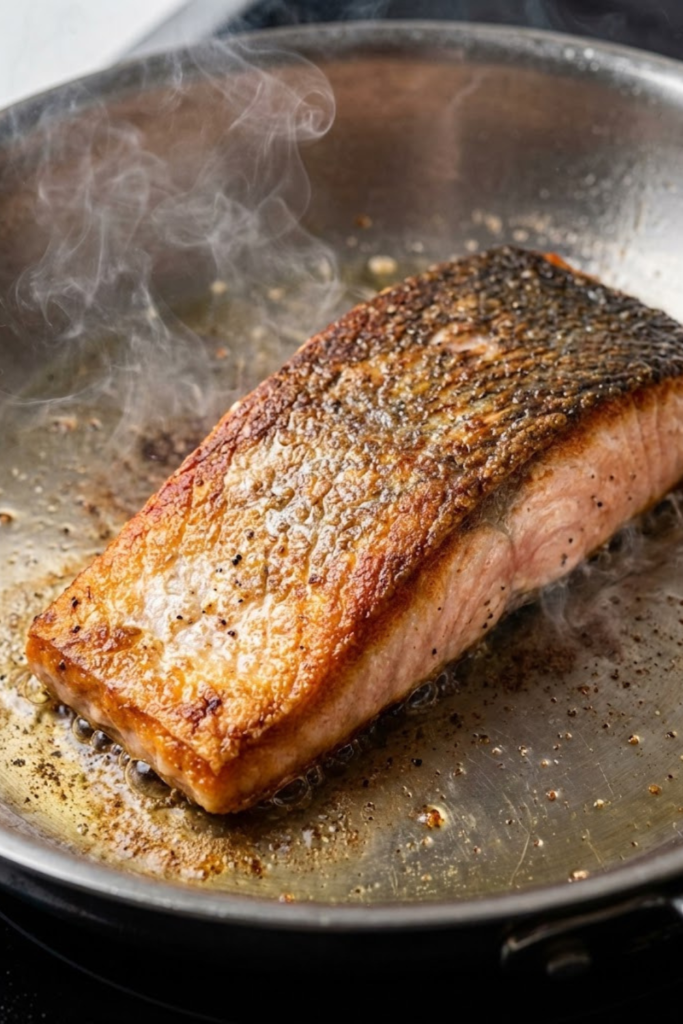
Getting that crispy, brown top on your fish is what makes a professional meal stand out from a basic home dinner. I used to be so scared of searing fish. I thought I would set off the smoke alarm and wake up the whole neighborhood! One time, I tried to cook salmon for a neighbor, and it just stuck to the bottom of the pan like glue. I had to scrape it off in chunks. It looked like cat food. It was so embarrassing! But after doing this for years, I finally figured out how to get that crispy, golden crust that makes everyone think you’re a genius.
Use Those Paper Towels!
This is the most important thing, and it’s the part people always forget. You have to make the fish really dry. I mean, really dry. I use about four paper towels for two pieces of fish. I press down on the top and the bottom until there is no moisture left. If the fish is wet, it won’t get brown. It will just boil in its own juices and look gray. Nobody wants to eat gray salmon. It takes about thirty seconds to do this, so don’t skip it! It’s the easiest way to make sure your salmon piccata with capers looks like it came from a fancy restaurant.
A Little Flour Goes a Long Way
I like to give the salmon a very light dusting of flour. I just put some flour on a plate with salt and pepper and press the fish into it. Then I shake it off really well. You don’t want a thick crust like fried chicken. You just want a tiny layer. This helps the fish not stick, and it also helps the lemon sauce stick to the salmon later. If you don’t eat wheat, you can use almond flour or even cornstarch. I’ve tried both, and they both give that nice crunch we all love.
The Shimmering Pan
You have to wait for the pan to get hot. Don’t be impatient! My students are always trying to rush through things, but you can’t rush a good sear. I usually put my oil in the pan and wait until I see it start to shimmer. It looks like little waves on the surface. If you put the fish in too early, it will soak up the oil and get greasy. When you drop the fish in, it should make a loud sizzle. That’s the sound of success!
Hands Off the Fish
Once the salmon is in the pan, leave it alone. I see people moving the fish around every ten seconds. Stop it! Let it sit there for about three or four minutes. This lets the crust form. If you try to flip it and it feels stuck, it’s not ready yet. Just wait another minute. When it’s ready, it will pop right off the pan easily. This is how you get that perfect look for your salmon piccata with capers without breaking the fish into pieces.
Crafting the Silky Lemon Butter Sauce
Once you take that salmon out of the pan, you might be tempted to go ahead and wash the skillet. Don’t you dare do it! See those little brown bits stuck to the bottom? In the cooking world, we call that “fond,” but I just call it the secret sauce. I used to be such a neat freak in my kitchen—just like I am with my grading pens at school—and I would scrub the pan clean because I thought it looked messy. My brother, who actually went to culinary school for a bit, caught me doing that once and nearly had a heart attack! He told me that by washing the pan, I was literally throwing the best part of the meal down the drain.
Deglazing is Easier Than It Sounds
Deglazing is just a fancy word for pouring liquid into a hot pan to loosen up those tasty brown bits. I usually use a splash of dry white wine, like a Pinot Grigio. If you don’t want to use alcohol, chicken broth works just fine too. When the liquid hits the hot pan, it’s going to steam and bubble like a science experiment! Use a wooden spoon to scrape the bottom. It feels really satisfying to see the pan come clean while the liquid turns into a dark, flavorful base. I tell my students all the time that sometimes the best results come from the messiest starts, and this sauce is proof of that.
Finding the Right Zing
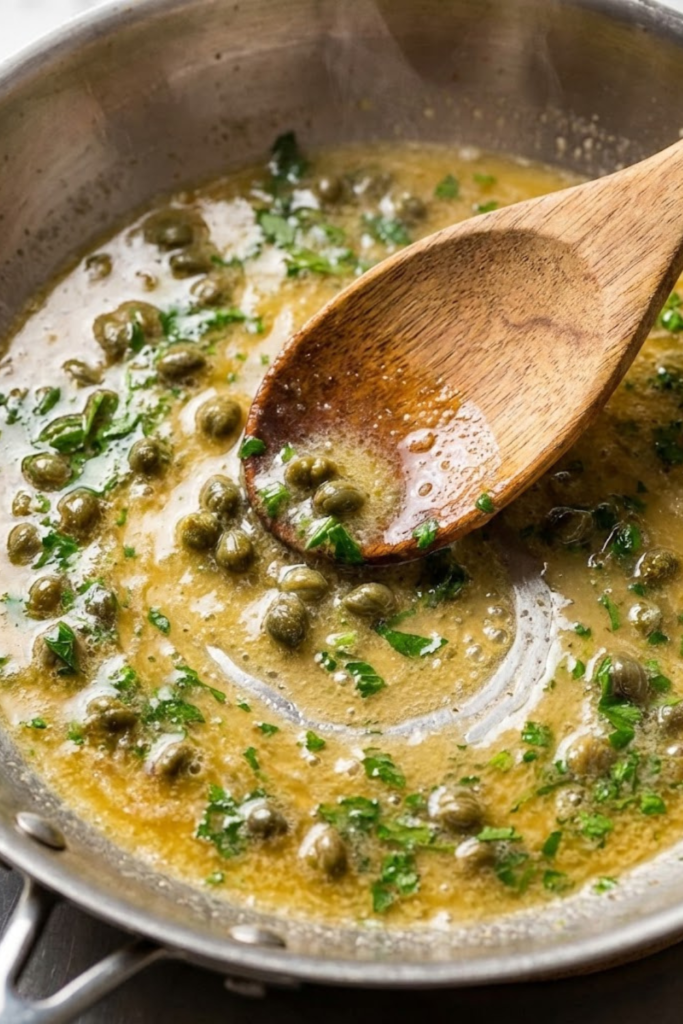
Now it’s time for the stars of the show: the lemon and the capers. I like to squeeze a whole fresh lemon right into the pan. Don’t use that plastic lemon juice from the green bottle; it just doesn’t taste the same. Then, toss in your rinsed capers. If you like things extra salty, you can add a spoonful of the brine from the jar, but be careful! I’ve made this too salty before and had to chug water for the rest of the night. Let the liquid simmer for a minute or two until it reduces by about half. You want it to look a bit thicker, like a light syrup.
The Magic of Cold Butter
This is the part where most people mess up. If you just throw a big hunk of room-temperature butter into a boiling pan, it will just melt into oil. It won’t be creamy. The trick I learned is to use very cold butter cut into small cubes. Turn the heat down to low, or even turn it off completely. Whisk the cold butter in one piece at a time. This makes the sauce get thick, glossy, and smooth. It should look like a rich velvet blanket. If it looks shiny and stays together, you’ve done it! This sauce is what makes salmon piccata with capers so special, so take your time with this part.
What to Serve with Your Piccata
Now that you have this beautiful, zesty salmon ready to go, you might be wondering what to put on the plate next to it. You can’t just eat the fish by itself, right? Well, you could, but you’d be missing out on a big chance to soak up all that extra lemon butter sauce. In my house, choosing the side dish is almost as big a deal as the main course. I’ve tried a million different things over the years, and some worked way better than others. It’s a lot like finding the right seating chart for my classroom—you want to put things together that make the whole environment better without any drama!
The Classic Pasta Pairing
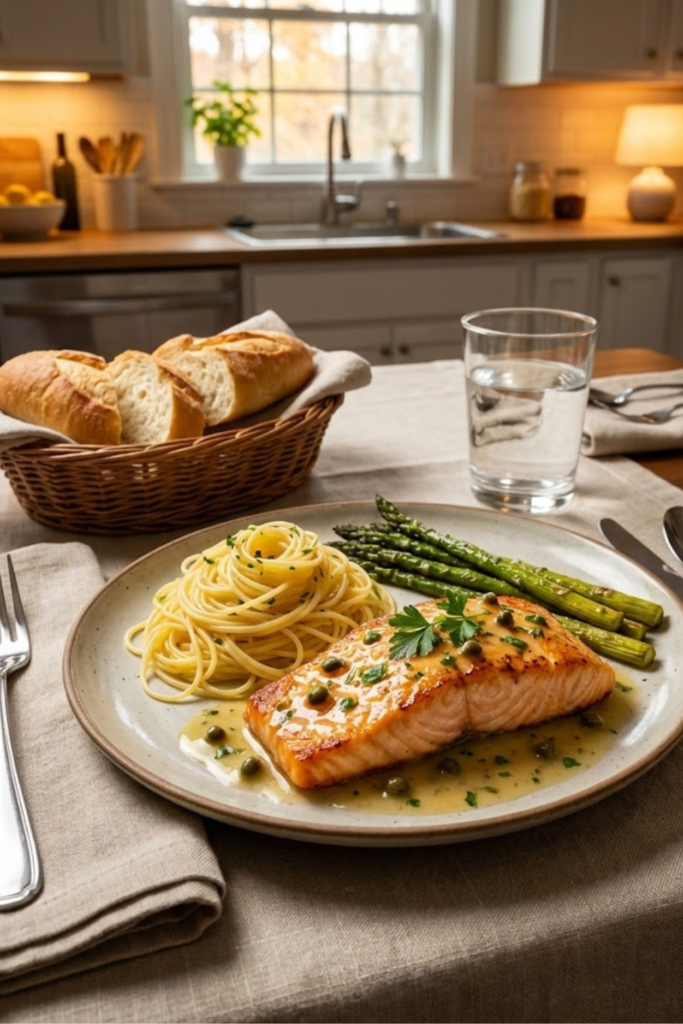
Most people think of pasta right away when they hear the word “piccata.” My personal favorite is angel hair pasta. It’s very thin and light, so it doesn’t feel too heavy next to the fish. My husband loves it because the thin strands act like little mops for the sauce. I usually boil the pasta while the salmon is resting on a plate. Here is a little trick I learned: don’t overcook it! If the pasta gets mushy, it ruins the whole meal. I like to toss the cooked pasta right into the pan with the leftover sauce and capers before I put it on the plate. It makes everything taste like it belongs together.
Low-Carb and Healthy Options
If I’m trying to be a bit more careful with my diet—especially after a week of eating too many snacks in the teacher’s lounge—I go for veggies. Sautéed spinach is a winner because it wilts down in seconds and the leaves catch all those tiny capers. Roasted asparagus is another great choice. You can just toss it with a little oil and salt and pop it in the oven while you are prepping the salmon. The crunch of the asparagus goes so well with the flaky fish. Some of my friends even use “zoodles” (zucchini noodles), and they say it’s great, though my kids still prefer the real pasta!
Don’t Forget the Bread
You definitely need some crusty bread on the table. No matter how much pasta or spinach you have, there is always a little bit of that gold sauce left on the plate. You don’t want to waste a single drop of it. I usually just grab a baguette from the store and toast it for a minute. It’s the best part of the meal for me. There is something so satisfying about dipping a warm piece of bread into that lemon and butter mixture. It’s the perfect way to finish off your salmon piccata with capers dinner. Just make sure you have enough for everyone, or people might start fighting over the last piece!
Final Thoughts on Your Salmon Piccata Success
I really hope you feel ready to get into the kitchen and give this a try. Cooking fish can feel a bit scary at first, especially if you’ve had a few bad experiences in the past. But once you do it a few times, it really becomes second nature. I remember the first time I actually made a successful salmon piccata with capers, I was so excited that I took a picture and sent it to my mom right away! I was so proud of myself. She always used to tell me that the best food is made with a bit of patience and a lot of butter, and she definitely wasn’t wrong about that.
Learning from the Burnt Bits
In my classroom, I tell my students all the time that if they aren’t making any mistakes, then they probably aren’t learning anything new. The same thing is true for your dinner. If you accidentally burn the first piece of salmon or if your sauce ends up a little too tart, please don’t sweat it. Just take a deep breath and think about what you can do differently next time. Maybe you need to turn the heat down a notch, or maybe you need to rinse those capers for a few more seconds. Each time you cook this, it is going to get better and better. I have been making this for years, and I still have days where the sauce doesn’t look as pretty as I want it to. But guess what? It still tastes amazing, and my family still clears their plates.
A Meal for Any Night of the Week
What I love most about this dish is how it works for almost anything. You can make it for a fancy date night when you want to feel a bit “extra,” or you can whip it up on a random Tuesday when you are exhausted from work and just want something that tastes good. It looks like you spent hours standing over a hot stove, but we know the truth—it only took you about twenty minutes from start to finish. That is the kind of secret I love to keep! In 2026, we are all so busy, so finding a win like this is a big deal. It’s great when you can put a healthy, high-protein meal on the table without feeling like you just ran a marathon.
Time to Get Cooking!
So, go ahead and grab those fresh lemons and that jar of briny capers. Your kitchen is going to smell like a dream, and whoever you are cooking for is going to be so impressed. If you end up trying this recipe, I would love to hear how it went for you. Did you use the white wine or did you stick with the chicken broth? Did you serve it with a big pile of pasta or some crunchy green veggies? There are so many ways to make this dish work for your own tastes. If you enjoyed this guide, please make sure to save it to your Pinterest boards so you can find it later! Sharing it helps me a lot and lets me keep sharing these tips with all of you.