You know that feeling when you open the oven and the scent of roasting rosemary just hits you? It’s pure magic! I used to be intimidated by roasting a whole bird—I was terrified of drying it out—but this Lemon Herb Roasted Chicken with Baby New Potatoes changed the game for me. It is vibrant, incredibly juicy, and honestly, a total lifesaver for busy weeknights when you still want to feel fancy. Whether you are a kitchen novice or a seasoned pro, this dish delivers massive flavor with minimal cleanup. Let’s get cooking!
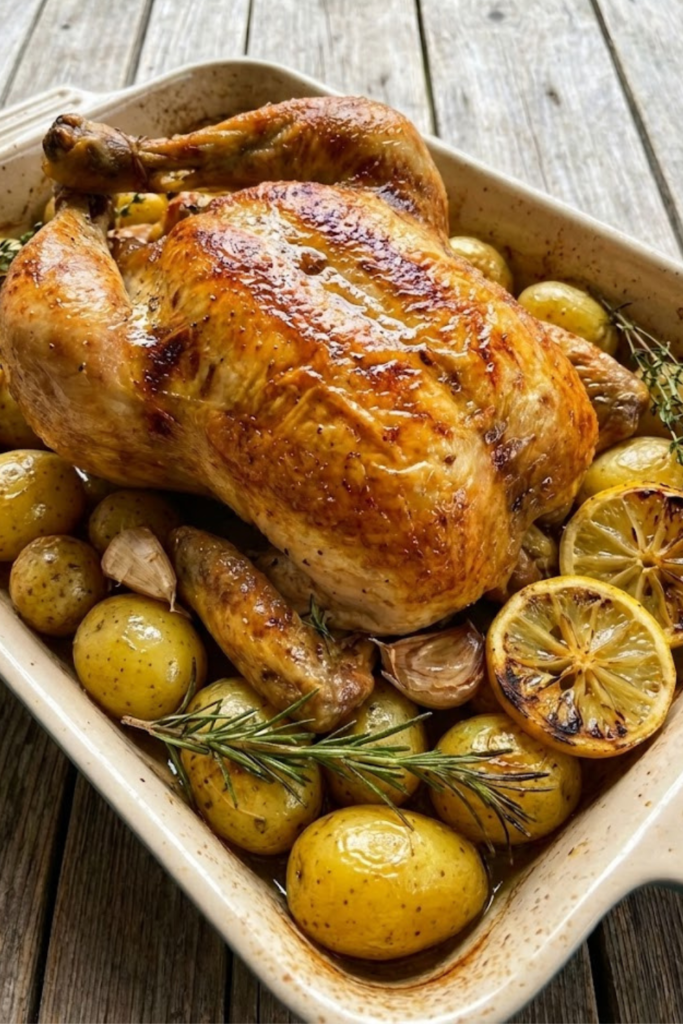
Choosing the Perfect Ingredients for Roasting
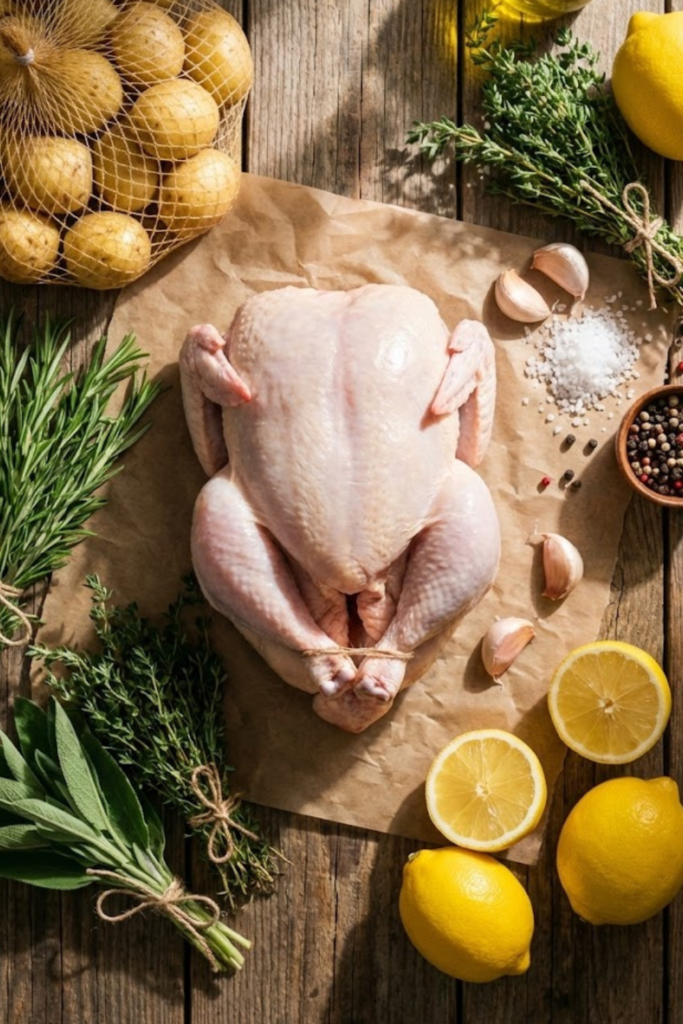
To get that restaurant taste at home, you really have to start with the right stuff. I used to just grab whatever was cheapest, but I learned the hard way that quality matters here. It makes a huge difference in how the final dish turns out.
The Chicken
If you can find it, get an “air-chilled” chicken. I know, it sounds a bit fancy, but it just means the bird wasn’t soaked in water to cool it down. Less water means the skin gets way crispier in the oven. If air-chilled isn’t there, just pat your regular chicken really dry with paper towels. I try to get organic or free-range when the budget allows; the flavor is just a bit more “chicken-y,” if that makes sense.
The Potatoes
For this recipe, I stick to baby new potatoes. Who wants to spend twenty minutes peeling potatoes on a Tuesday? Not me. Look for Yukon Gold or Red Bliss varieties. The Yukon ones get super creamy inside, while the red ones hold their shape really well even when the heat gets high. Just wash them and toss them in whole or halved.
Fresh Herbs vs. Dried
Okay, I am usually all for shortcuts, but please try to use fresh herbs here. Fresh rosemary and thyme have oils that dried herbs just don’t have anymore. When you roast them, they release this smell that fills the whole kitchen. If you absolutely have to use dried, use half the amount because they are stronger, but fresh is definitely the winner for that lemon herb marinade.
The Lemons
Since we are using the zest (the yellow skin) and the juice, try to grab organic lemons. Regular ones often have a wax coating on them that tastes kinda funny. If you only have regular lemons, scrub them real good under warm water before zesting. You want that bright, sour kick, not a waxy aftertaste.
Mastering the Lemon Herb Marinade
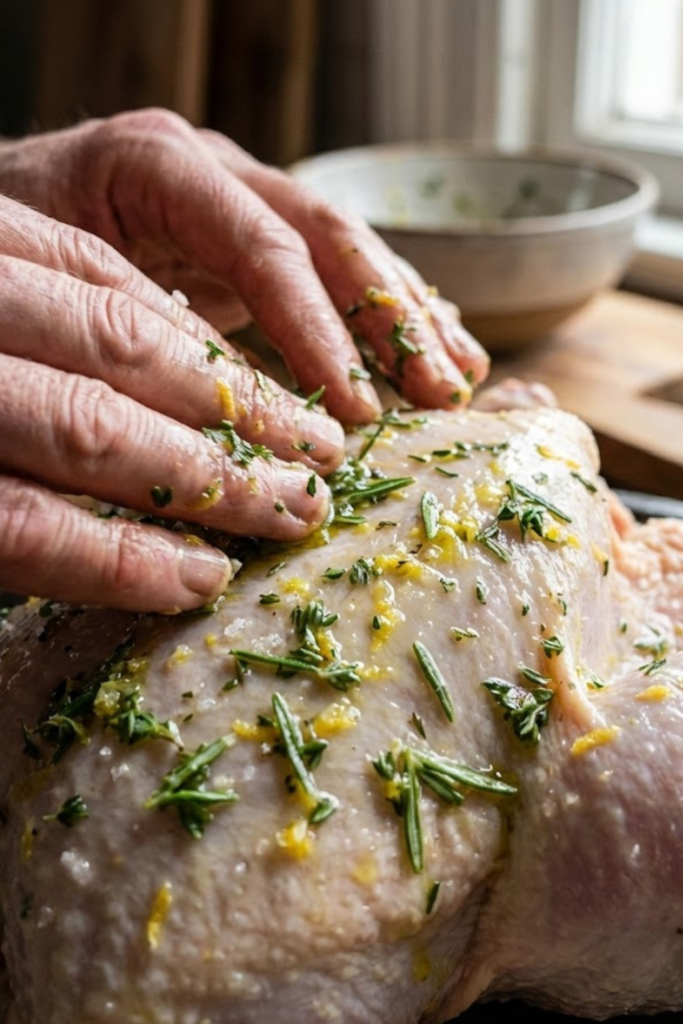
You can’t just throw herbs on a chicken and hope for the best. The marinade is really the most important part to get right. I learned that getting the flavor under the skin is just as important as what goes on top.
Butter or Oil?
I used to strictly use olive oil because it is easier. But then I tried making a compound butter—that’s just soft butter mixed with herbs and garlic. You shove it under the skin of the breast. It bastes the meat while it cooks so it doesn’t dry out. If you want a crispy skin though, rub a little olive oil on the outside too. It helps it brown up nice.
Getting the Most Flavor
For the garlic, don’t just mince it tiny. Smash the cloves with the side of your knife. It releases the oils better. And with the lemon, you need the zest. That yellow part of the peel has way more lemon flavor than the juice does. I use a microplane to get it off, but the small side of a box grater works too.
Timing Matters
If you are rushing (which happens to me a lot), let the chicken sit with the rub for at least 30 minutes while the oven heats up. If you have time, do it the night before. It makes the meat so much tastier.
Don’t Forget the Salt
This is the big mistake I see people make. Chicken needs salt. Kosher salt is best because the grains are big and it sticks well. Sprinkle it inside the cavity and all over the skin. If you think you used enough, add just a little bit more. It really wakes up the lemon flavor.
Preparing the Baby New Potatoes
Okay, let’s get the potatoes ready. This part is pretty simple, but there are a few tricks to make sure they come out perfect and not just mushy or hard in the middle.
Cut Them Evenly
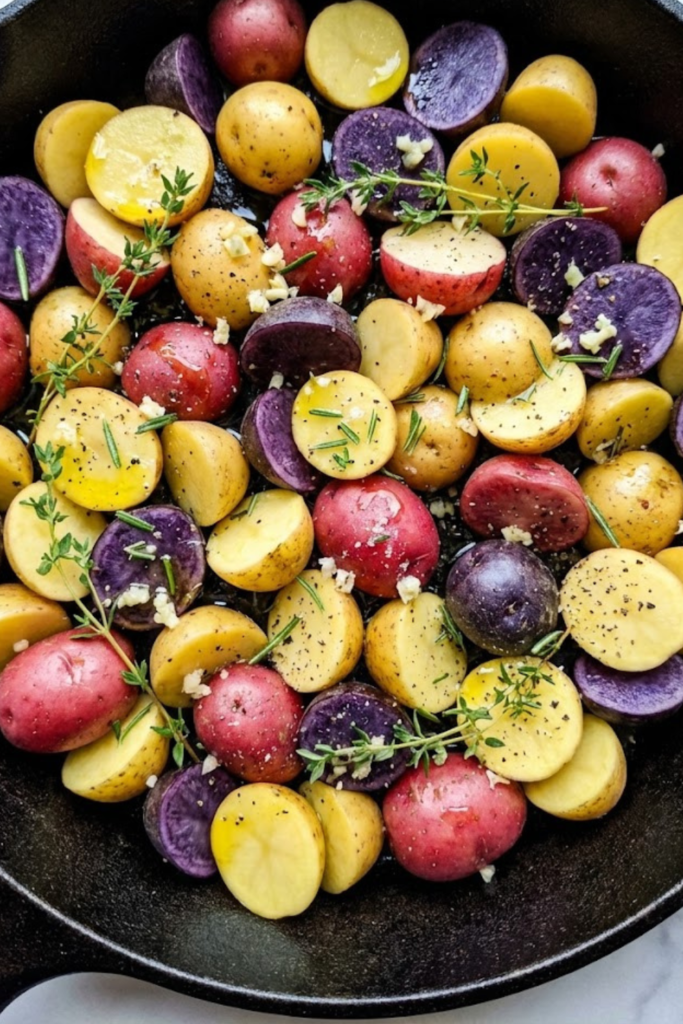
Try to make sure all your potatoes are roughly the same size. If you leave some whole and cut others in half, the small ones will burn while the big ones are still raw. Nobody likes a crunchy potato. I usually grab the bigger ones and cut them in half or quarters so they match the tiny ones.
To Boil or Not to Boil?
I used to boil my potatoes a little bit before roasting them because I was scared they wouldn’t cook in time. You really don’t need to do that here. Since the chicken is going to be in the oven for about an hour, the potatoes have plenty of time to get soft. Plus, if you put them in raw, they soak up the chicken juices better. It adds way more flavor than boiling them in water.
Seasoning the Veggies
Don’t just throw the potatoes in the pan plain. Put them in a bowl first and toss them with a little olive oil, salt, and pepper. If you have any leftover chopped herbs, throw those in too. You want the potatoes to taste good on their own, not just rely on the chicken drippings.
Where to Put Them
This is important: spread the potatoes around the chicken, not underneath it. If you pile the chicken on top of the potatoes, they just steam and get soggy. You want them spread out in a single layer around the bird so the hot air can hit them. That is how you get those crispy brown edges we all love.
Step-by-Step Roasting Technique
Now for the actual cooking part. This is where the magic happens, but you gotta keep an eye on things. It’s not hard, just requires a little bit of attention.
The Oven Trick
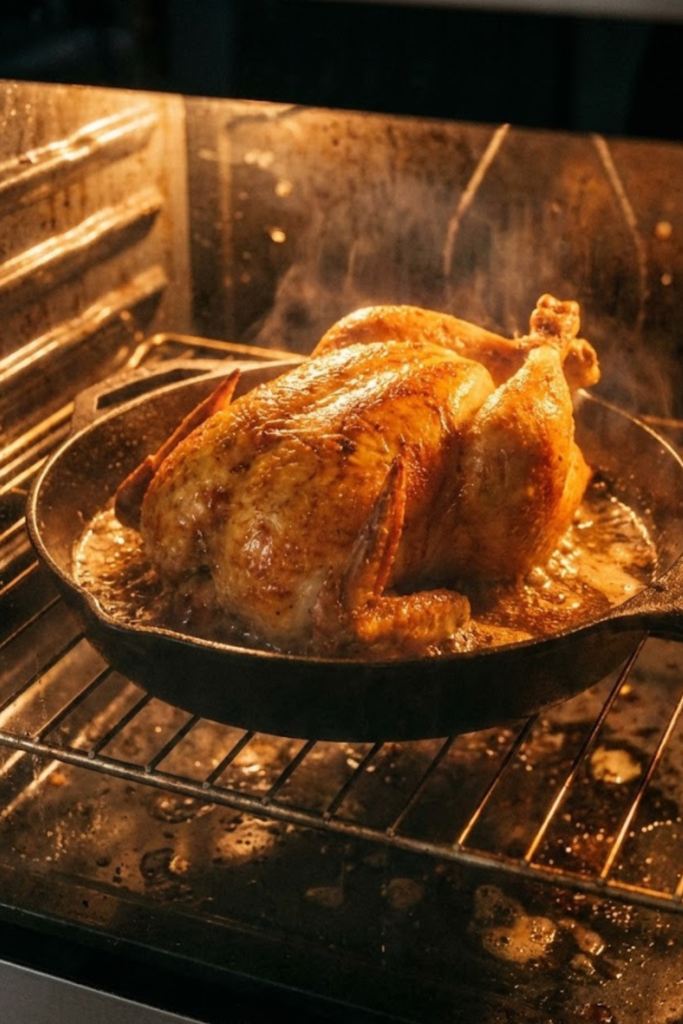
Here is a trick I learned that changed everything. Start your oven hot. I mean really hot, like 425°F (220°C). Put the chicken in for the first 15 or 20 minutes. This blasts the skin and makes it crispy and golden. After that, turn the heat down to 375°F (190°C) for the rest of the time. This helps the inside cook through without burning the outside to a crisp.
Tying It Up (Trussing)
You don’t need to be a fancy chef to do this. I just take a piece of kitchen string and tie the legs together. It looks nicer for sure, but it also helps it cook evenly. If the legs are splayed out, they get done way faster than the breast, and then they dry out. Just a simple knot at the ankles works fine.
Basting Is Your Friend
About halfway through cooking, open the oven and carefully pull the rack out a bit. Use a large spoon or a baster to scoop up those juices from the bottom of the pan and pour them over the bird. It adds flavor back onto the skin and keeps things moist. Do this maybe two times during the cooking process. Don’t do it too much though, or you let all the heat out of the oven.
Checking if It’s Done
Please, do not just guess. I used to cut into the chicken to see if it was pink, but that just lets all the juice run out. Buy a cheap meat thermometer. Stick it into the thickest part of the thigh, but try not to hit the bone. You are looking for 165°F (74°C). Once it hits that number, take it out immediately. It will keep cooking a little bit while it sits on the counter.
Resting and Serving Your Feast
The smell is going to drive you crazy, but you have to wait. This is the hardest part of the whole recipe, honestly. You just pulled this beautiful bird out of the oven, and you want to dig in, but patience is key here.
Why You Must Rest It
If you cut into the chicken right away, all those juices inside are going to run out onto the cutting board. Then your meat ends up dry, and nobody wants that. I cover mine loosely with a piece of foil and let it sit on the counter for at least 15 to 20 minutes. It lets the juices settle back into the meat. Trust me, it makes a huge difference.
Carving Without the Stress
I used to be so bad at carving. I would just hack at it until it fell apart. The trick is to take the legs and thighs off first. Pull the leg away from the body and slice through the joint. Once those are out of the way, you can slice the breast meat nice and clean. It doesn’t have to look perfect; it just has to taste good.
Don’t Waste the Pan Drippings
See that brown stuff stuck to the bottom of the pan? That is liquid gold. While the chicken rests, I usually put the pan on the stove (be careful, the handle is hot!). Pour in a little chicken broth or white wine if you have it, and scrape up those brown bits with a wooden spoon. It makes a quick, salty sauce that is perfect for pouring over the potatoes.
Making It Look Nice
When I serve this, I like to put the chicken pieces on a big platter and pile the potatoes around them. I save a fresh lemon to squeeze over everything right before we eat—it really brightens the flavor. Throw some chopped fresh parsley on top if you want to feel fancy. It adds a pop of green that makes the whole dish look like a magazine photo.
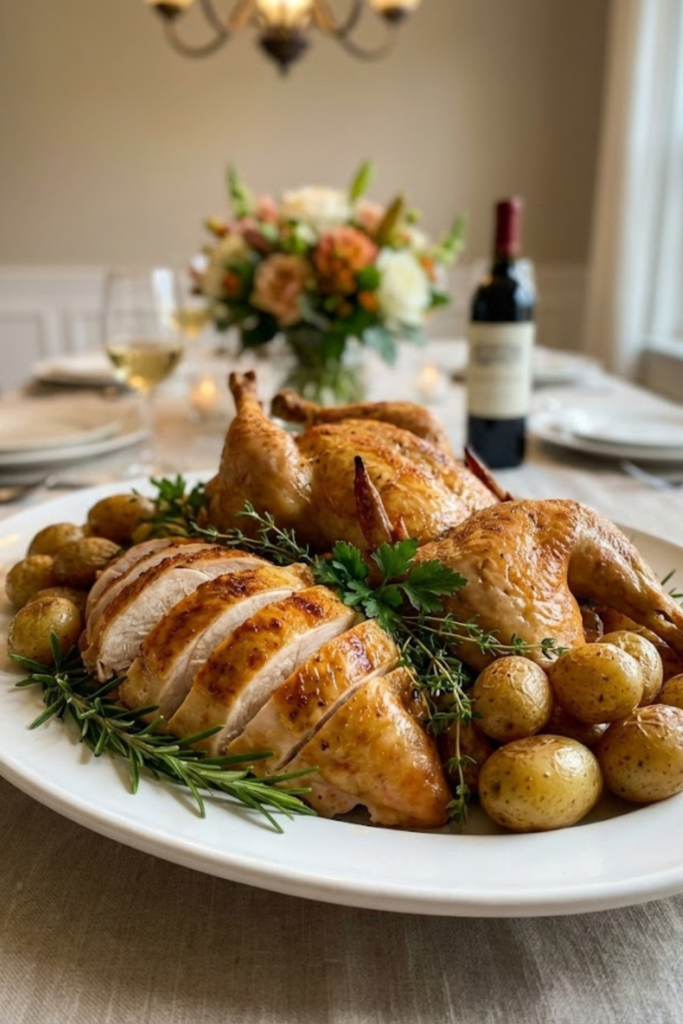
Honestly, making this Lemon Herb Roasted Chicken with Baby New Potatoes is one of those things that looks hard but is actually super easy. You just need good ingredients and a little bit of time. It is perfect for a Sunday dinner when you want the house to smell amazing and you don’t want to wash a million pots and pans.
I really hope this guide helps you feel a little more confident in the kitchen. I know roasting a whole bird can feel like a big deal, but once you do it once, you will see it’s not scary at all. If you make it, I bet your family is going to love it as much as mine does. It really is a complete meal in one pan. Don’t forget to pin this recipe on Pinterest to save it for later so you can find it next time you need a good dinner idea!