I’ve taught hundreds of students how to bake, and let me tell you, nothing beats a classic! Did you know that German chocolate cake isn’t actually from Germany? It was named after Sam German, who created a specific type of baking chocolate in 1852! I remember my first attempt at this cake back in my twenties—it was a dry, crumbly mess that looked more like a brick than a dessert. But don’t worry, I’ve spent years refining this process so you don’t have to make the same mistakes I did. Today, we are going to dive into the world of rich cocoa, crunchy pecans, and that signature caramel-like frosting that makes this the king of birthday treats!
The Secret to a Moist Cocoa Sponge
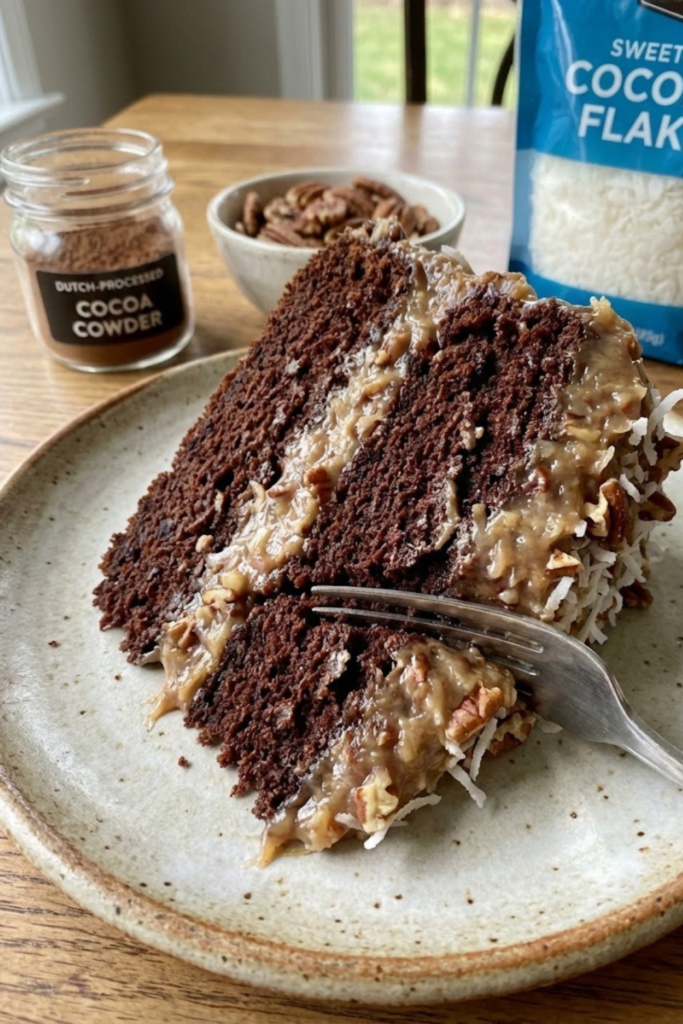
Getting a cake that stays moist for days isn’t just about luck. I’ve seen so many of my students get frustrated because their German chocolate birthday cake looks great on the outside but tastes like dry cardboard on the inside. Usually, it is because of a small mistake in how they prep the wet stuff or how they handle the cocoa. After baking for twenty years, I’ve learned that the science of the sponge is actually pretty simple if you don’t overthink it.
Start with Warm Ingredients
If you take eggs straight from the fridge and drop them into your batter, you are asking for trouble. I used to do this all the time because I was in a rush to get the cake in the oven. What happens is the cold eggs make the fat in your butter seize up and get hard again. This makes your batter look lumpy and broken. When the batter is lumpy, it won’t bake into a smooth, even crumb. I recommend setting your eggs and butter on the counter at least an hour before you start. You want everything at room temperature so the liquids and fats blend together perfectly. This makes the cake rise better and keeps it feeling soft for the big party.
Use Real Buttermilk
A lot of folks think they can just use regular milk, but buttermilk is the real hero here. The acid in the buttermilk reacts with the baking soda to create millions of tiny air bubbles. This is what gives the cake that light “sponge” feel instead of a dense, heavy texture. If you realize you’re out of buttermilk, you can make a quick version by adding a teaspoon of lemon juice to a cup of regular milk. Let it sit for five minutes until it gets a bit thick. I’ve done this dozens of times when I didn’t want to run to the grocery store, and the result is almost the same.
The Sifting and Mixing Rule
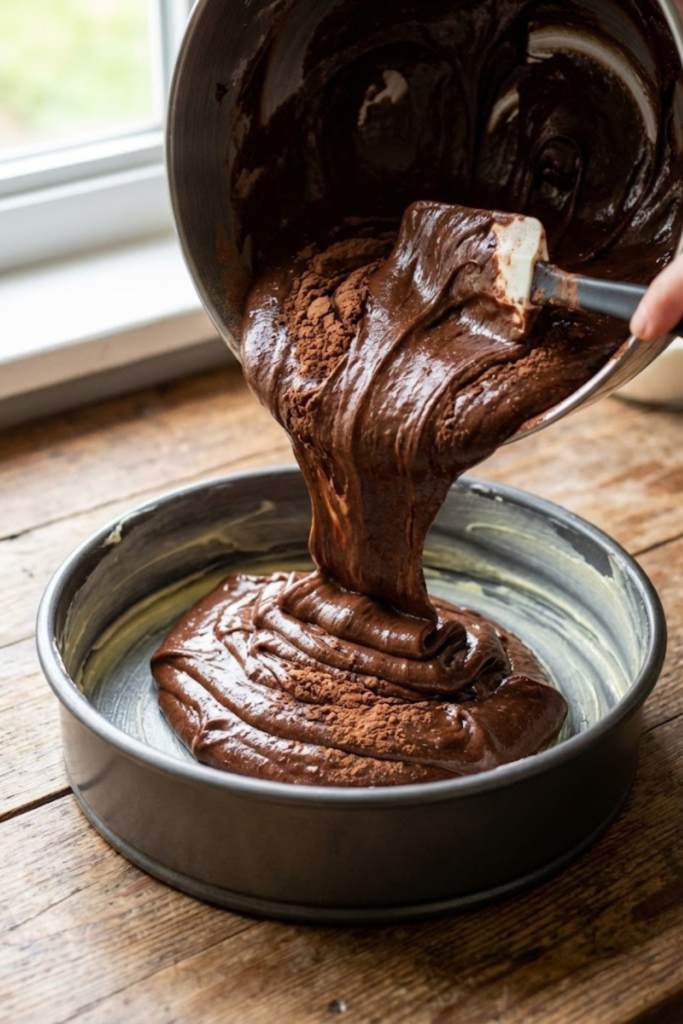
Sifting your flour and cocoa together is a step you really should not skip. Cocoa powder loves to clump up into little balls that don’t want to dissolve. If you find a dry lump of cocoa in your finished German chocolate birthday cake, it’s bitter and ruins the experience. Also, you have to stop mixing once the white streaks of flour are gone! Over-mixing is the fastest way to get a tough, rubbery cake. I tell my kids to put the electric mixer away and use a big rubber spoon for those last few turns. This keeps the air in and the crumb tender, making every bite of your birthday treat melt in your mouth.
Mastering the Iconic Coconut-Pecan Frosting
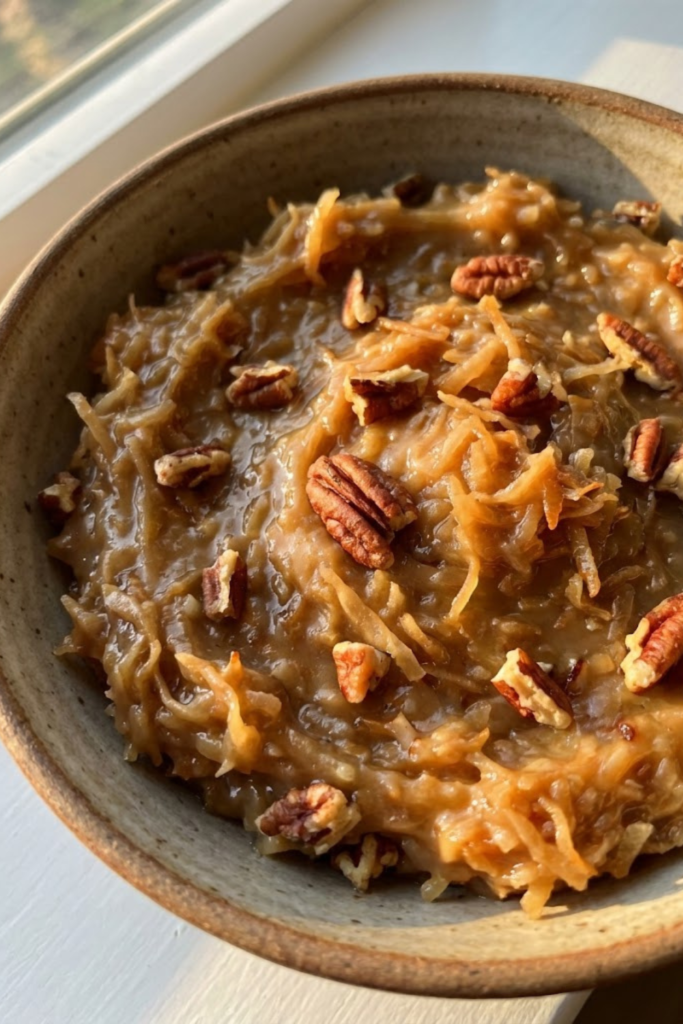
This frosting is the soul of any German chocolate birthday cake, but I’ve seen it go wrong more times than I can count. It is not like a regular buttercream where you just whip sugar and butter together and call it a day. This is a cooked custard, which means you have to treat it with a bit of respect. I remember one time I was trying to finish a cake for a friend’s party and I was running way behind. I turned the stove up to high because I thought it would make the frosting thicken faster. Big mistake! I ended up with sweet, coconut-flavored scrambled eggs. It was a total mess and I had to start all over again while I was sweating and stressed out.
Stick to Low and Slow Heat
The biggest tip I can give you is to keep your stove on medium-low. You are mixing evaporated milk, sugar, and egg yolks, and those yolks are very sensitive to heat. You need to stir the pot almost the whole time. It usually takes about ten or twelve minutes for the mix to get thick and golden. If you see little yellow bits starting to form, your heat is too high! You want a smooth, gooey sauce that looks like liquid gold. Once it coats the back of your spoon and doesn’t run off, you know you are in a good spot. It’s better to take an extra five minutes than to ruin the whole batch of ingredients.
Don’t Skip Toasting the Pecans
While your custard is cooking, you should really take the time to toast your pecans. I used to just dump them in raw because I was lazy, but the flavor is so much better when they are toasted. Put them in a dry pan for a few minutes until you can smell that nutty aroma. It gives the German chocolate birthday cake a much better crunch and a deeper flavor. I also like to use sweetened shredded coconut because it adds that extra bit of moisture to the frosting. If you use the unsweetened kind, the frosting might end up feeling a little dry and won’t have that classic sticky texture everyone loves.
Patience During the Cooling Phase
The hardest part of this whole process is waiting for the frosting to cool down. If you try to put it on your cake while it is still warm, it will just slide right off the sides and make a huge puddle on your counter. I’ve seen cakes that looked like they were melting because someone was too impatient to wait. I usually let mine sit on the counter for a while and then pop it in the fridge for twenty minutes. You want it to be thick enough that it stays where you put it but soft enough to spread easily. This makes sure your layers stay together and look great for the birthday photos.
Assembling Your Birthday Masterpiece
Once you have your cake layers cooled and that sticky frosting ready, it is time for the fun part. Putting everything together can be a little scary if you have never done it before. I remember my first German chocolate birthday cake looked like the Leaning Tower of Pisa because I didn’t take the time to fix the layers. My family laughed about it for years! But with a few simple tricks, you can make yours look like it came from a fancy bakery. It just takes a little patience and a steady hand.
Leveling Your Layers for a Flat Top
Cakes usually bake with a little dome on the top. If you just stack them like that, the top layer will likely slide right off the bottom one. I use a long bread knife to gently saw off the very top of each cake. You want them to be flat so they sit perfectly on top of each other. Don’t throw those cake scraps away, though! I usually eat them with a little leftover frosting while I work. It’s my “baker’s tax” for doing all the hard work in the kitchen. If your layers are level, your cake will stand up straight and won’t fall over when you carry it to the party table.
The “Naked” Style vs. Full Frosting
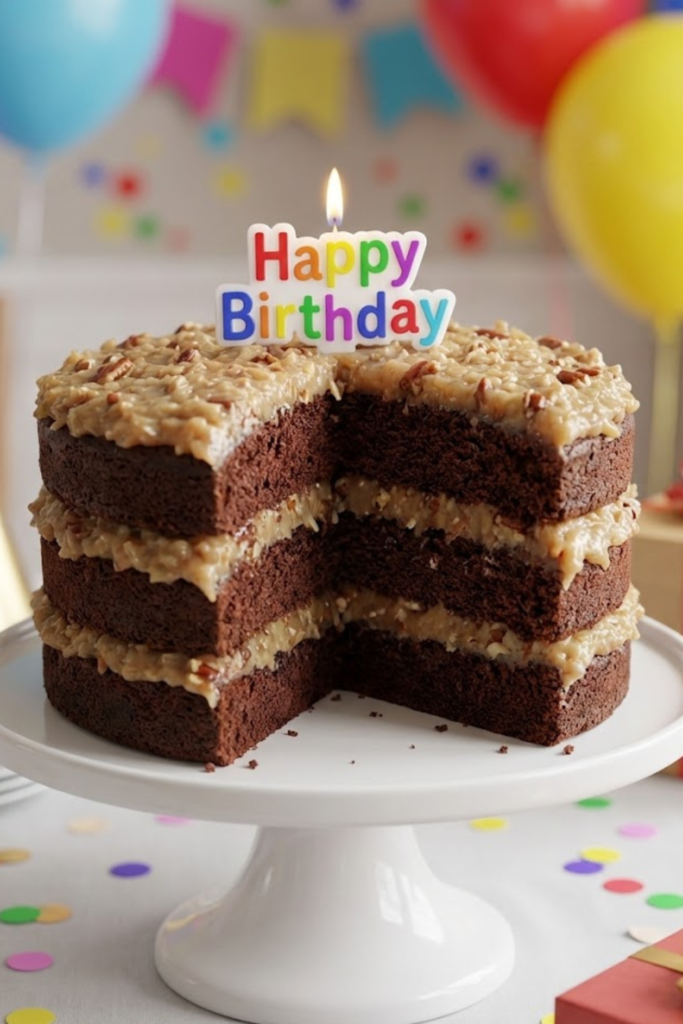
Traditional German chocolate birthday cake usually doesn’t have frosting on the sides. You just pile that thick coconut and pecan mix between the layers and on the very top. This is great because it shows off those dark chocolate layers and looks very rustic. But sometimes, people like to cover the whole thing. If you want to do that, you might need to make a quick batch of chocolate buttercream for the sides. I personally like the classic look because the coconut frosting is so heavy and rich. If you put too much on the sides, it can be a bit overwhelming for some folks. Just spread it thick in the middle and let it peek out for a nice effect.
Keeping Your Cake Fresh
Since this cake is so moist, you want to make sure it stays that way for as long as possible. If you have any leftovers—which doesn’t happen often at my house—put them in an airtight container. You can keep it on the counter for a day, but I think it stays better in the fridge. The cold makes the frosting set up even more and keeps the coconut from getting weird. Just make sure to take a slice out and let it sit for ten minutes before you eat it. Cold cake is okay, but room temperature cake is where the flavor really shines! If you follow these steps, your birthday treat will be the star of the show.
Sharing the Joy of Your German Chocolate Birthday Cake
I really hope you feel ready to tackle this German chocolate birthday cake now. Baking is one of those skills that just keeps giving back the more you do it. I remember how nervous I used to get when I had to bake for a big crowd. I would check the oven every two minutes and worry that the middle wasn’t cooking right. But over time, I realized that even if a cake isn’t perfect, people still love it because you made it with your own hands. This specific recipe has been a staple in my kitchen for a long time, and it never fails to make someone’s birthday feel a little more special. It is that mix of the deep chocolate and the crunchy, sweet frosting that really hits the spot.
We talked about a lot of important steps today. Remember to keep your ingredients at room temperature so your batter stays smooth. Don’t forget that buttermilk is your best friend for getting that fluffy texture we all want. When you are making the frosting, just stay patient with the heat so you don’t end up with a mess. And of course, take your time when you are putting the layers together. If you follow these small tips, you are going to have a dessert that looks like it belongs on the cover of a magazine. It is all about the little details that help everything come together in the end.
I love seeing photos of what my students and friends bake in their own kitchens. There is something so satisfying about seeing a finished German chocolate birthday cake sitting on a table ready for a party. It reminds me of why I started baking in the first place—to bring people together for a happy moment. Whether you are making this for a kid’s party or a 50th anniversary, it is going to be a hit.
If you found this guide helpful and you want to save it for your next big celebration, please share it on Pinterest! It helps other bakers find these tips and keeps the tradition of homemade birthday cakes alive. Thank you for spending some time with me in the kitchen today, and I can’t wait to hear how your cake turned out. Happy baking!