Can you believe that nearly 60% of the natural sugar in peas turns to starch within just a few hours of picking? That’s why capturing them fresh is an absolute game-changer! I still remember the first time I tossed fresh spring peas into a sizzling pan of garlic butter—the aroma alone was enough to make me forget about the main course. This isn’t just another veggie side; it’s a celebration of the season.
In this article, I’m going to walk you through exactly how to make the most mouthwatering Garlic Butter Sautéed Spring Peas and Pearl Onions you’ve ever tasted. We’re talking tender, popping peas, sweet caramelized onions, and a rich buttery finish that ties it all together. Whether you are prepping for a holiday dinner or just a Tuesday night, this dish is your new secret weapon. Let’s get cooking!
Selecting the Best Ingredients for Spring Vegetable Sauté
I have to confess something embarrassing. The first time I tried to make a fancy spring vegetable sauté for a dinner party, I used a bag of generic frozen peas and jarred garlic. I thought, “Who’s gonna know the difference?”
Well, everyone knew. The peas were mushy, the garlic tasted weirdly metallic, and the whole dish was just sad. It was a total flop. That’s when I learned that for a simple dish like Garlic Butter Sautéed Spring Peas and Pearl Onions, there is nowhere to hide. You can’t mask bad ingredients with heavy cream or cheese here.
Since then, I’ve gotten pretty obsessive about picking the right stuff. It makes all the difference in the world.
Why Fresh Peas Are Worth the Hassle
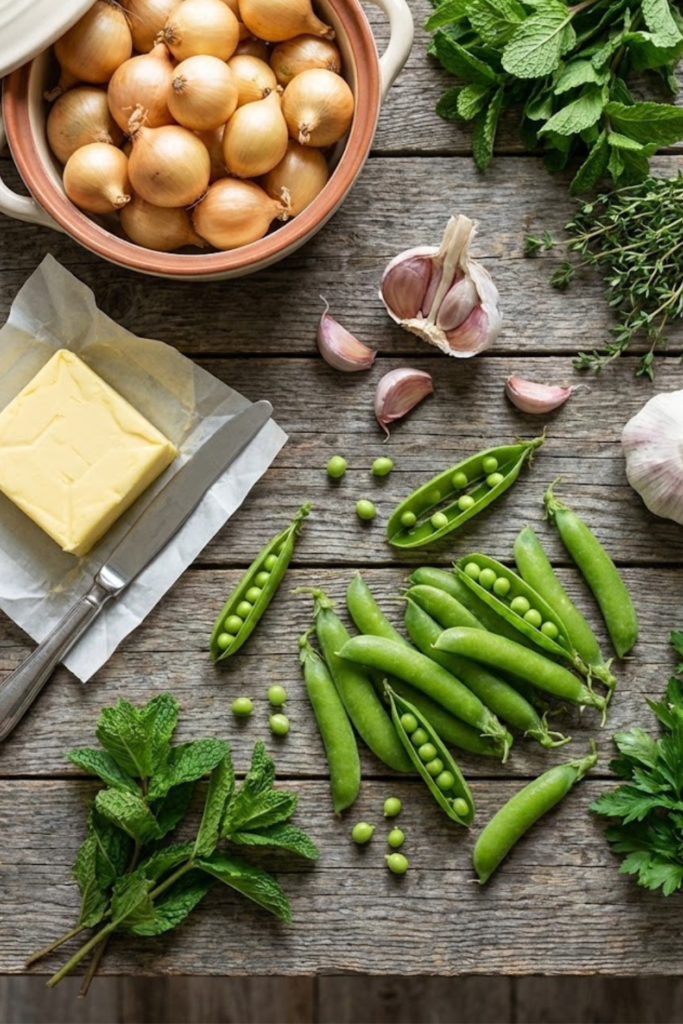
If you can find them, fresh English peas or sugar snap peas are the way to go. I know, shelling peas takes time. I usually drag my kids into the kitchen to help me pop the pods open (bribery with screen time helps). But the texture you get is crisp and snappy, unlike the squishy texture of frozen ones.
When you are at the market, look for pods that are bright green. They should feel full and make a little squeaking sound when you rub two together. If they look dull or yellowish, put them back. They’re old and the sugar has already turned to starch.
If you absolutely have to use frozen peas—hey, we all have busy Tuesdays—go for the “petite” variety. They tend to be sweeter and hold their shape better than the standard ones.
Picking the Perfect Pearl Onions
Pearl onions can be a pain in the neck if you get the wrong ones. I used to buy the bagged sets without looking closely, and half of them would be soft or sprouting.
Now, I pick them individually if I can. You want them to feel rock hard. If there is any give when you squeeze them, they are starting to rot inside. I usually grab a mix of white and red pearl onions just for the color, but white ones are more traditional for this spring vegetable sauté.
Also, don’t stress about the peeling part yet. I’ve got a trick for that coming up later that doesn’t involve crying over the sink for twenty minutes.
The Butter and Garlic Situation
Since garlic butter is the main flavor here, use the good stuff. I switched to European-style unsalted butter a few years ago and I haven’t looked back. It has a higher fat content and less water, which means it coats the veggies better. Plus, using unsalted lets you control the salt level. There is nothing worse than an accidentally salty side dish.
For the garlic, please put down the jar. Fresh minced garlic has a spicy kick and aroma that the jarred stuff just doesn’t have. Jarred garlic is preserved in citric acid, which adds a sour note that clashes with the sweet peas. Grab a fresh bulb that feels heavy and firm.
Don’t Forget the Herbs
Finally, fresh herbs are non-negotiable. Dried herbs just get lost in the butter. I usually grab a bunch of fresh mint or dill. It brightens up the whole plate and smells amazing when it hits the hot pan. Just make sure the leaves aren’t wilted or black around the edges.
Trust me, spending an extra ten minutes picking out good produce turns this from a “eat your veggies” chore into something people actually want seconds of.
Step-by-Step Preparation Guide
Cooking this dish happens fast. Like, really fast. The first time I made this without prepping properly, I ended up with burnt garlic because I was too busy trying to peel onions while the butter was foaming. It was a mess.
So, I’ve learned that getting everything ready before you even look at the stove is the only way to do it right. Here is how I get set up so the actual cooking part is a breeze.
Blanching the Peas
First things first, you gotta blanch those peas. If you just throw raw fresh peas into a sauté pan, they take too long to cook and get wrinkly.
I bring a medium pot of salted water to a boil. I drop the shelled peas in for literally just 60 to 90 seconds. You want them to turn that super bright green color but still have a crunch.
Right after that, I drain them and dump them straight into a bowl of ice water. This stops them from cooking instantly. If you skip the ice bath, they turn a dull olive color by the time you serve them. Nobody wants mushy, gray peas.
The Trick for Peeling Pearl Onions
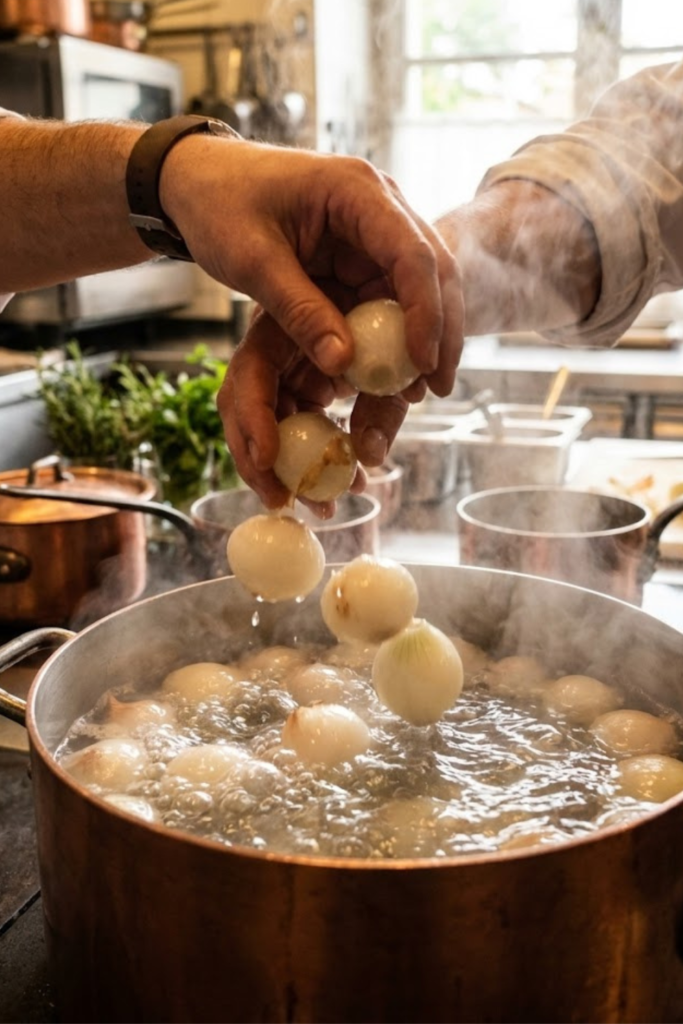
Peeling pearl onions by hand is torture. My fingers are clumsy with that tiny papery skin. The best way to do it is to blanch them too.
I use the same boiling water I used for the peas (waste not, want not, right?). I drop the unpeeled onions in for about two minutes. Then, into the ice water they go.
Once they are cool, I just slice off the root end and give the onion a little squeeze. The skin slips right off. It’s actually kinda satisfying to see them pop out. This saves me so much time compared to peeling them raw.
Getting Your Stuff Together (Mise en Place)
“Mise en place” is just a fancy chef term for “putting everything in its place.” Since garlic burns in seconds, you can’t be chopping it while the pan is hot.
I mince my garlic cloves and chop my mint or dill beforehand. I put them in little bowls or just separate piles on my cutting board. I also cut my butter into cubes so it melts evenly. Having everything lined up next to the stove stops me from panicking halfway through.
Choosing the Right Pan
I always reach for my wide cast-iron skillet for this. You need a pan that is wide enough so the veggies aren’t piled on top of each other. If they are crowded, they steam instead of sautéing, and you miss out on that nice browning on the onions.
If you don’t have cast iron, a large stainless steel frying pan works great too. Just avoid using a deep pot; it traps too much moisture.
Now that everything is chopped, blanched, and ready, the actual cooking only takes a few minutes.
How to Cook Garlic Butter Peas and Onions Perfectly
Okay, now for the fun part. The prep work is done, so this part goes really fast. I usually wait until the main dish—like a roast chicken or fish—is resting before I even turn the stove on for this. That way, the peas hit the table piping hot.
Here is exactly how I cook it to get that perfect balance of sweet onions and snappy peas.
Sautéing the Onions First
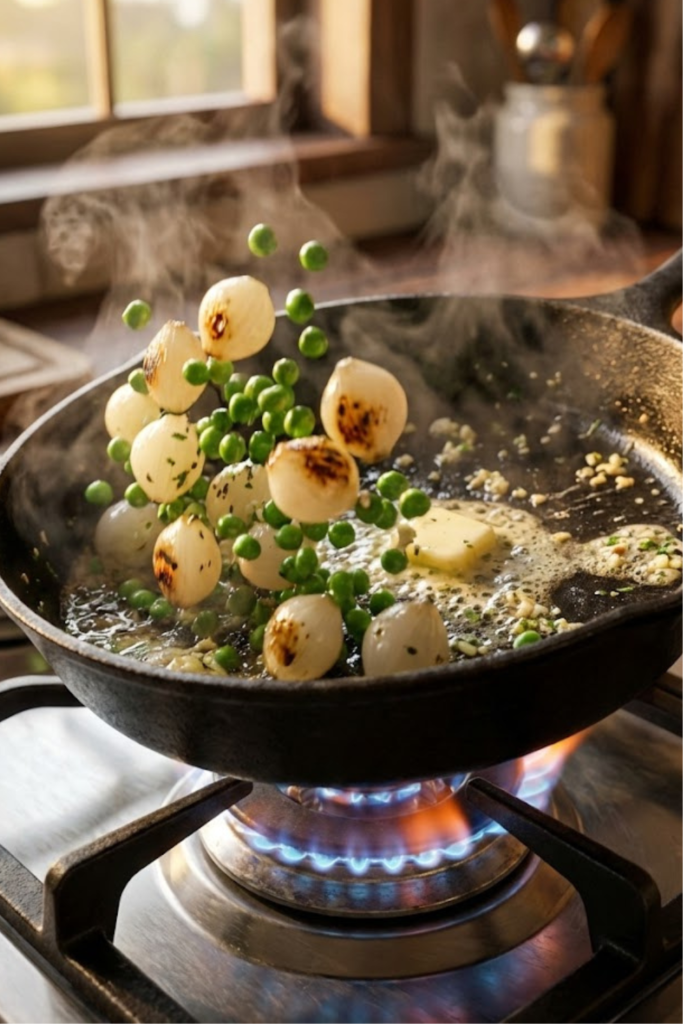
I start by melting about a tablespoon of butter in my skillet over medium heat. Once it foams a little, I toss in the peeled pearl onions.
They need a head start because they are denser than the peas. I let them cook for about 5-6 minutes. I try not to move them around too much at first. I want them to get nice and golden brown on the sides. That caramelization brings out the sweetness that makes this dish so good. If you stir them constantly, they just steam and stay pale.
Infusing the Butter
Once the onions look golden and tender, I lower the heat a bit. This is crucial. If the pan is too hot, the garlic will burn the second it hits the metal, and burnt garlic tastes bitter and ruins everything.
I add the rest of the butter and the minced garlic. I stir it constantly for just about 30 seconds. You just want to smell that garlic hitting the air. As soon as it smells fragrant, it’s time for the next step.
Tossing the Peas
Now, I dump in the blanched peas. Since we already cooked them in the boiling water, we aren’t really “cooking” them here. We are just warming them through and coating them in that delicious garlic butter.
I toss everything together for maybe 2 minutes. You want every single pea to look glossy and shiny. If you cook them too long here, they start to wrinkle and lose that pop when you bite into them.
Finishing Touches
Right before I take the pan off the heat, I stir in my fresh mint or dill. I never add the herbs earlier because the heat kills their fresh flavor.
Finally, I season with a good pinch of flaky sea salt and some cracked black pepper. I always taste a pea right then and there (cook’s treat!) to see if it needs more salt. It usually needs a little more than you think to balance the sweetness of the peas. Then it goes straight into the serving bowl.
Flavor Variations and Dietary Swaps
Cooking is personal. Sometimes you don’t have all the ingredients, or you have a guest with a specific diet. I’ve tweaked this recipe a dozen ways over the years. Here are a few of my favorite changes that actually work.
Vegan Option
My sister-in-law is vegan, so I had to figure this out fast. You can easily swap the dairy butter for a high-quality plant-based butter. Honestly, some of the new ones taste just like the real thing.
Or, you can just use good olive oil. It changes the flavor a bit—makes it more Mediterranean—but it is still delicious. If you use oil, just watch the heat carefully. Oil gets hot faster than butter, so the garlic can crisp up quicker than you expect.
Add Some Crunch
I’m a big texture person. Soft peas and soft onions can be a little… one-note sometimes. To fix that, I like tossing in some toasted pine nuts or slivered almonds right at the end.
I usually toast them in a dry pan for a few minutes until they smell nutty. It adds a nice little crunch that surprises people. Just don’t add them too early, or they get soggy.
Citrus Zest
If the garlic butter feels a bit too heavy, lemon is your best friend. I keep a microplane zester in my drawer just for this.
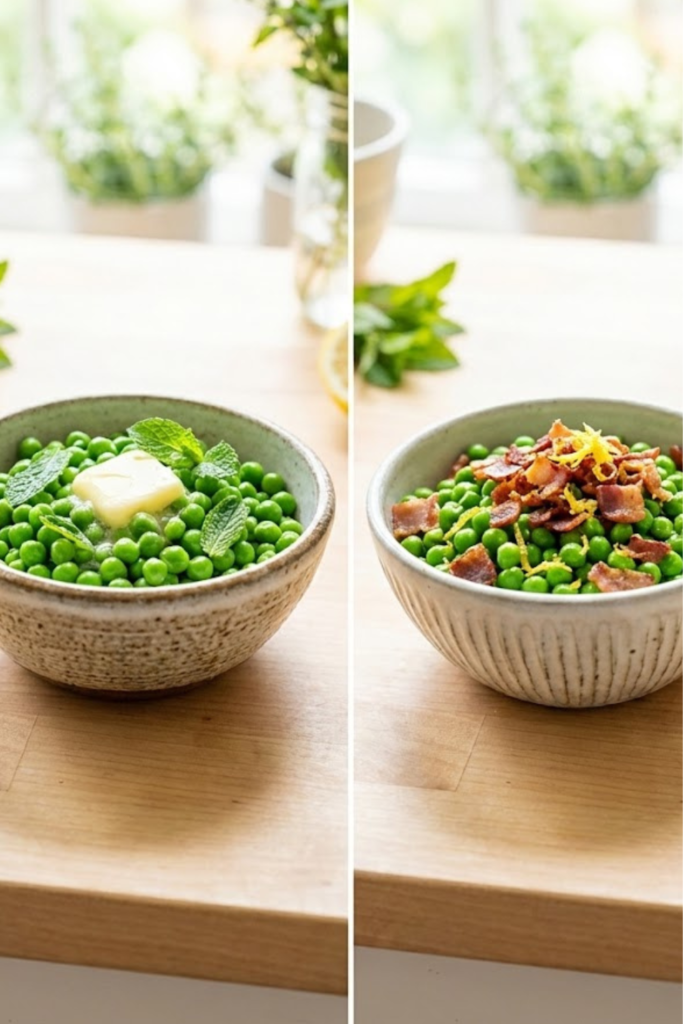
Right before serving, I grate a little fresh lemon zest over the top. It adds a fresh “zing” that cuts right through the rich butter. It makes the dish taste lighter and even more like spring.
Meat Lovers
Okay, if you want to go all out, bacon makes everything better, right? Sometimes I start by frying up some diced pancetta or bacon bits until they are crispy.
I take them out, drain most of the fat, and then use the little bit of leftover bacon grease to cook the onions instead of butter. Then I sprinkle the crispy bits back on top at the end. It adds a smoky, salty flavor that pairs perfectly with the sweet peas.
Serving Suggestions and Pairings
You’ve made this beautiful green dish, now what do you put it next to? I used to just plop it on the plate next to whatever, but I’ve learned that some things just go better together.
What to Serve as the Main Dish
For me, spring peas scream “lamb.” Whether it’s a roast leg of lamb for a holiday or just some simple lamb chops, the sweetness of the peas balances out the rich meat perfectly.
If you aren’t into red meat, grilled salmon is my runner-up. The lemon zest I mentioned earlier really ties the fish and the peas together. And honestly, you can never go wrong with a simple roast chicken. The garlic butter sauce from the peas kind of mixes with the chicken juices on the plate, and… wow. It’s just good eating.
Perfect for Holidays
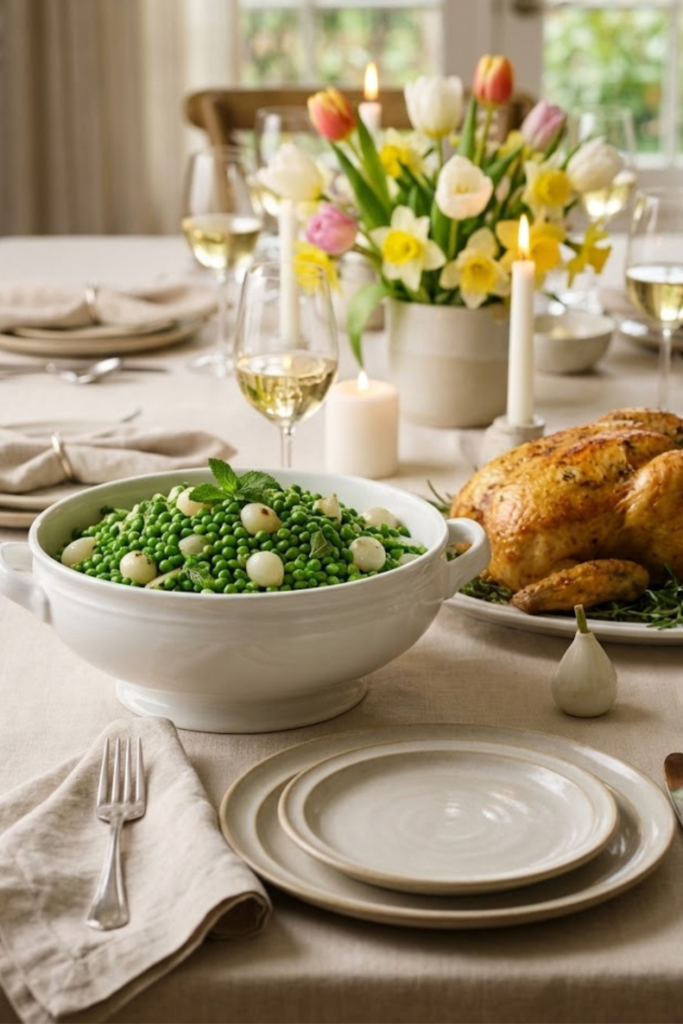
This is my go-to side for Easter brunch or dinner. It looks so festive because of the bright green color. Plus, it’s light enough that you don’t feel weighed down if you’ve been eating chocolate eggs all morning (we’ve all been there).
Since it cooks so fast, it’s great for dinner parties too. You aren’t stuck in the kitchen for an hour while your guests are waiting. You can chat, drink some wine, and just finish the peas right before serving.
What to Do with Leftovers
If you actually have leftovers—which is rare in my house—don’t throw them out! Cold peas and onions are surprisingly good in a pasta salad the next day. Just toss them with some bowtie pasta and a little vinaigrette.
I’ve also thrown them into an omelet for breakfast. The onions are already caramelized, so it adds a ton of flavor to plain eggs.
Making it Look Good
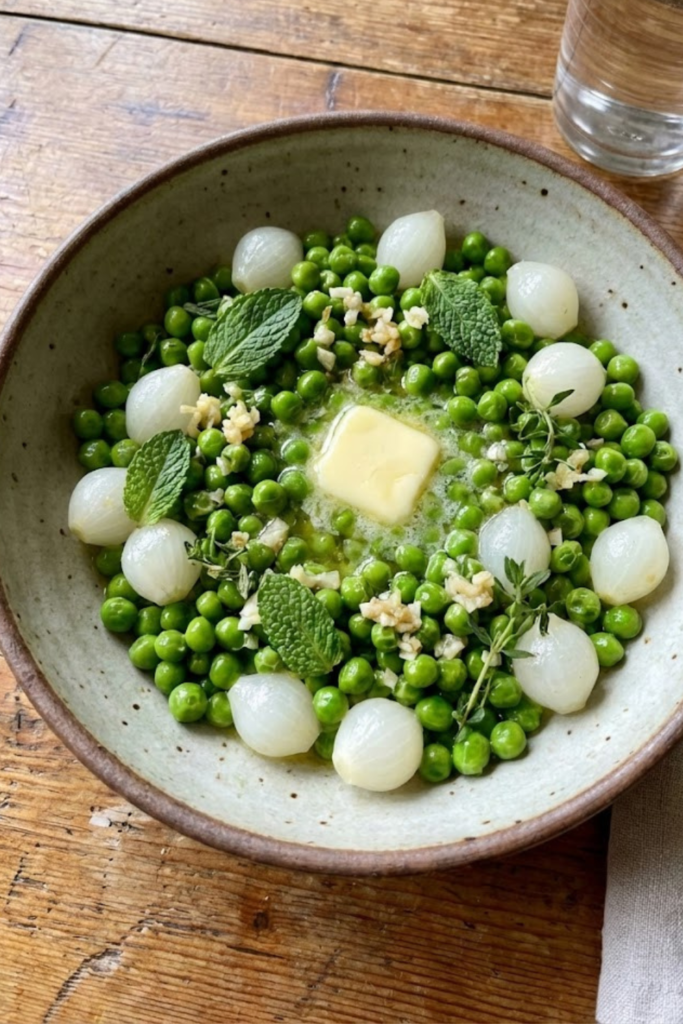
We eat with our eyes first, right? I always serve this in a plain white bowl. The contrast between the bright green peas, the white pearl onions, and the white dish looks really sharp. It makes it look like restaurant quality without trying too hard.
Just make sure to spoon all that extra garlic butter from the pan over the top before you bring it to the table. You don’t want to leave the best part in the sink!
So, that is pretty much it. It really is that simple to make something that looks so fancy. Making these Garlic Butter Sautéed Spring Peas and Pearl Onions is really just about letting the fresh veggies shine and not messing with them too much. The rich garlic butter does all the hard work for you.
I really hope you give this a try for your next family dinner or holiday meal. It has definitely become a staple in my house, and I think you are going to love it too.
If you found this helpful, do me a huge favor and pin this recipe to your Spring Side Dishes board on Pinterest. It helps other people find the recipe, and it saves it so you can find it again next spring! Happy cooking!