Good soup is one of the prime ingredients of good living.” That old Louis P. De Gouy quote hits different when it’s pouring rain outside, doesn’t it? I’ve honestly lost count of how many times a simple bowl of soup has turned my whole week around! This isn’t just another bland vegetable broth; it is a hug in a bowl. We are talking about a creamy spring onion and potato leek soup that balances the sharp bite of scallions with the earthy, buttery goodness of russet potatoes.
Whether you are looking for a vegetarian weeknight meal or a sophisticated starter for a dinner party, this recipe delivers. We’re going to dive deep into how to get that perfect silky texture without relying heavily on cream, making it a surprisingly healthy comfort food. Ready to get chopping? Let’s make your kitchen smell absolutely incredible.

Why You Will Love This Potato Leek Soup
I have to be honest with you, my wallet has been feeling a little light lately. Maybe you can relate? That is exactly why I fell in love with this recipe in the first place. This Creamy Spring Onion and Potato Leek Soup is honestly a lifesaver when you are trying to stretch a dollar but still want to feel like you are eating at a fancy bistro.
Potatoes are dirt cheap, and leeks, while they look fancy, are actually pretty affordable when they are in season. I remember the first time I made this, I looked at the receipt and realized dinner cost me less than a fancy coffee. It’s wild.
Texture That Does Not Feel Like Glue
Okay, let’s talk about texture for a second because I have messed this up big time in the past. Years ago, I tried to make a potato soup and I got impatient. I threw the potatoes in a high-speed blender for way too long.
Big mistake.
It turned into this weird, gummy paste that was basically inedible wallpaper paste. I learned the hard way that potatoes have a lot of starch, and you have to treat them nice. The trick with this soup is gently blending it or using an immersion blender so you get that silky, creamy texture without activating all the starch and making it gluey. It should be velvety, not sticky.
It Is Surprisingly Flexible
Another reason this recipe stays in my rotation is because I can feed it to almost anyone. I had a dinner party last month where one friend was gluten-free and another was vegan. Usually, that makes me want to pull my hair out trying to plan a menu.
But this soup saved the day.
Since potatoes are naturally gluten-free, I just had to swap the butter for some good olive oil and use vegetable broth. For the creaminess, I skipped the heavy cream and used a little coconut milk—though honestly, the potatoes make it so creamy you barely need it. It’s the perfect vegetarian weeknight meal that doesn’t feel like you are sacrificing anything.
The Leftovers Are Even Better
I am a huge fan of batch cooking because, let’s face it, cooking every single night is exhausting. Some soups get weird in the fridge, but this one? It actually gets better.
I think the flavors of the spring onions and leeks just need some time to really get to know each other. I usually make a huge pot on Sunday. By Tuesday, the flavors are deeper and the hearty soup feels even more satisfying. Just a heads up, though: it might thicken up a bit in the fridge.
Don’t panic if it looks like pudding when you take it out. Just add a splash of water or broth when you reheat it, and it snaps right back to life. It is the ultimate healthy comfort food waiting for you after a long day at work.

Ingredients for the Perfect Creamy Soup
You know, the best meals usually start with the simplest stuff. You don’t need a pantry full of weird spices you’ll only use once. For this soup, it really comes down to just a few key players, but you have to treat them right.
The Deal with Leeks
I used to be kind of intimidated by leeks. They look like giant scallions on steroids, right? The first time I ever bought them, I made a huge rookie mistake. I just chopped them up and threw them straight into the pot without washing them properly.
It was a disaster. We were literally crunching on sand with every spoonful. It was so embarrassing.
So, here is the trick: dirt loves to hide in those layers. You have to slice them down the middle and rinse them really well under running water. Fan out the layers with your thumb to get all the grit out. Also, stick to the white and light green parts. The dark green tops are super tough and fibrous—they never really break down enough to be pleasant to eat.
Spring Onions vs. Scallions
I know what you are thinking—why use leeks and spring onions? Isn’t that onion overkill? Trust me on this. The leeks give you that deep, sweet, cooked-down flavor. The spring onions (or scallions, whatever you call them at your store) bring a fresh, peppery bite.
I use the white parts of the spring onions right in the pot to sauté with the leeks. Then, I save the bright green tops to sprinkle on at the very end. It adds a pop of color so your soup isn’t just a bowl of beige, and that fresh crunch cuts through the creaminess perfectly.
Picking the Right Potato
Not all potatoes are created equal. For a soup like this, I always grab Russet potatoes. They are high in starch and basically fall apart when you cook them. This is great because they naturally thicken the soup for you.
If you use a waxy potato like a Red Bliss, they hold their shape too well and you won’t get that velvety texture when you blend it. Yukon Golds are a decent middle ground, but if you want that fluffy, melt-in-your-mouth vibe, go with Russets.
Broth and Cream
Don’t overthink the broth. A solid boxed vegetable stock works great. If you aren’t vegetarian, chicken bone broth adds a really nice richness, but veggie broth keeps it light and fresh.
And for the creamy part? Look, I am a sucker for heavy cream. You don’t need a whole carton, just a splash at the end makes it feel luxurious. If you are trying to be good, half-and-half works, or even coconut milk if you need to be dairy-free. But honestly, a little real cream goes a long way.
Finally, don’t forget fresh thyme and a bay leaf. Dried herbs are okay in a pinch, but fresh thyme really makes the kitchen smell incredible while it simmers.

Step-by-Step Instructions
Alright, let’s actually make this thing. I promise it is not complicated. You can get this creamy spring onion and potato leek soup on the table in about 45 minutes, maybe less if you chop fast.
Prep Work is Everything
First things first: wash those leeks! Seriously, slice them down the middle and rinse them really well. I cannot stress this enough—gritty soup is the worst. Once they are clean, chop the white and light green parts into thin slices.
Then, grab your Russet potatoes. Peel them and chop them into cubes. Try to make them all roughly the same size, maybe an inch or so. If you have some giant chunks and some tiny ones, the small ones will turn to mush before the big ones are even cooked. Uniformity is key for even cooking.
Sautéing the Aromatics
Grab a big pot—I use my trusty Dutch oven, but any heavy-bottomed pot works. Melt some butter over medium heat. If you are doing the vegan thing, olive oil is totally fine.
Toss in your sliced leeks and the white parts of the spring onions. Here is the secret: you want to “sweat” them, not brown them. We aren’t making caramelized onions here. Just let them cook gently for about 5-7 minutes until they are soft and smell amazing. If they start turning brown, turn the heat down. We want to keep that fresh, sweet flavor.
Add a minced garlic clove right at the end for like 30 seconds. You don’t want to burn garlic; it gets bitter fast.
Simmering Down
Now, dump in your potato cubes. Give them a quick stir so they get coated in that buttery, oniony goodness. Pour in your vegetable stock (or chicken broth) until the potatoes are just covered.
Toss in a bay leaf and a sprig of fresh thyme if you have it. Bring it up to a boil, then turn the heat down to low. Put the lid on and let it simmer. It usually takes about 15 to 20 minutes. You’ll know it’s done when you can easily squish a potato piece against the side of the pot with a spoon.
Blending Time
Remove the bay leaf and thyme stems. Now you have a choice.
If you like a rustic, chunky soup, use a potato masher right in the pot. But for that smooth, restaurant-style vibe, grab an immersion blender (stick blender). I love mine because I don’t have to transfer hot soup to a blender and risk exploding it all over my kitchen ceiling (yes, I have done that).
Just blend it right in the pot until it is smooth. If you are using a regular blender, do it in batches and be careful with the hot liquid!
Finishing Touches
Once it is blended, stir in your heavy cream or coconut milk. This is where the magic happens. The color will turn this beautiful pale creamy green.
Taste it. This is important! Potatoes soak up salt like crazy, so you might need more than you think. Add plenty of salt and some cracked black pepper.
Here is my final secret weapon: squeeze in a tiny bit of fresh lemon juice. Just a teaspoon. It sounds weird, but the acid wakes up all the heavy flavors and makes the soup taste brighter. Sprinkle the green tops of your spring onions on top, and you are ready to eat.

Tips for Extra Creaminess (Without Heavy Cream)
Sometimes you open the fridge and realize you are totally out of heavy cream. Or maybe you are trying to cut back on dairy. Don’t worry, you can still get that rich, velvety texture without it. I’ve had to improvise plenty of times, and these tricks actually work.
Let the Potatoes Do the Work
The type of potato you use matters a lot here. Like I mentioned earlier, Russets are full of starch. When they cook down and you blend them, they release all that starch which naturally thickens the soup. If you use enough of them, you honestly might not even need cream. It is a simple trick, but it works every time. I’ve made this mistake using waxy potatoes, and it just never gets thick enough, so stick with the starchy ones.
The Cauliflower Hack
This is a trick I use when I want to sneak more veggies into my kids’ meals. Toss in some cauliflower florets with the potatoes. They cook in about the same amount of time. When you blend it all up, the cauliflower gets super creamy and you can barely taste it. It adds this nice body to the soup without the heavy calories of cream. Plus, it is a great way to use up that half-head of cauliflower sitting in your crisper drawer that you forgot about.
Cashew Cream for the Win
If you are vegan or dairy-free, cashews are your best friend. Soak a cup of raw cashews in hot water for like 30 minutes. Then, blend them with a little bit of the hot broth until it looks like milk. Stir that into your soup pot. It gives you this rich, nutty creaminess that is honestly delicious. I was skeptical the first time I tried it, but now I do it all the time.
Just Let It Simmer
If your soup looks too thin, just let it cook a little longer with the lid off. The liquid will evaporate—chefs call this reducing—and the flavor gets way more concentrated. It is an easy fix that doesn’t cost a dime. Just keep an eye on it and stir it so it doesn’t burn on the bottom.
Serving and Pairing Ideas
Honest opinion? Soup is great, but it gets lonely in the bowl. You need the right partners to turn it into a full meal. I usually stare at the pot and wonder, “Okay, what else?” because just soup doesn’t always cut it for my hungry family.
You Need the Crunch
This is non-negotiable in my house. You have to have crusty bread. I usually pick up a loaf of sourdough bread from the bakery because I am definitely not baking my own on a Tuesday. Slice it thick and toast it.
If the bread is a few days old, don’t throw it out! Cut it into cubes, toss them in olive oil and garlic powder, and bake them. Homemade garlic croutons are way better than the rock-hard ones from the store. They soak up the soup and it is just heaven.
Dress It Up
A plain bowl of white soup looks kind of sad. You eat with your eyes first, right? I always tell my students that presentation matters, even if it is just for yourself.
I love frying up some bacon until it is super crispy. Crumble that on top for a salty crunch. Crispy bacon bits make everything better. If you want to keep it vegetarian, try roasted pumpkin seeds or just a drizzle of really good olive oil. And don’t forget the green parts of the spring onions we saved earlier!
The Salad Balance
Since this soup is pretty rich and creamy, you want something fresh to cut through that heaviness. I usually make a simple arugula salad with a lemon vinaigrette. The peppery bite of the arugula and the acid from the lemon balances out the richness of the soup perfectly. It stops you from feeling like you just ate a bowl of heavy cream.
The Ultimate Combo
If you want to go all out for a comfort meal, there is one pairing that beats them all: a grilled cheese sandwich.
Seriously, dipping a hot, gooey grilled cheese into this potato leek soup? It changes your life. It is like the grown-up version of tomato soup and grilled cheese. If you are serving this as a side dish for a dinner party, it goes really well with roasted chicken too, but honestly? I’d take the sandwich any day.

Storage and Freezing Leftovers
I used to just shove the whole pot in the fridge and wonder why it tasted funky three days later. Don’t be like me. Storing soup properly actually makes a huge difference.
The Fridge Situation
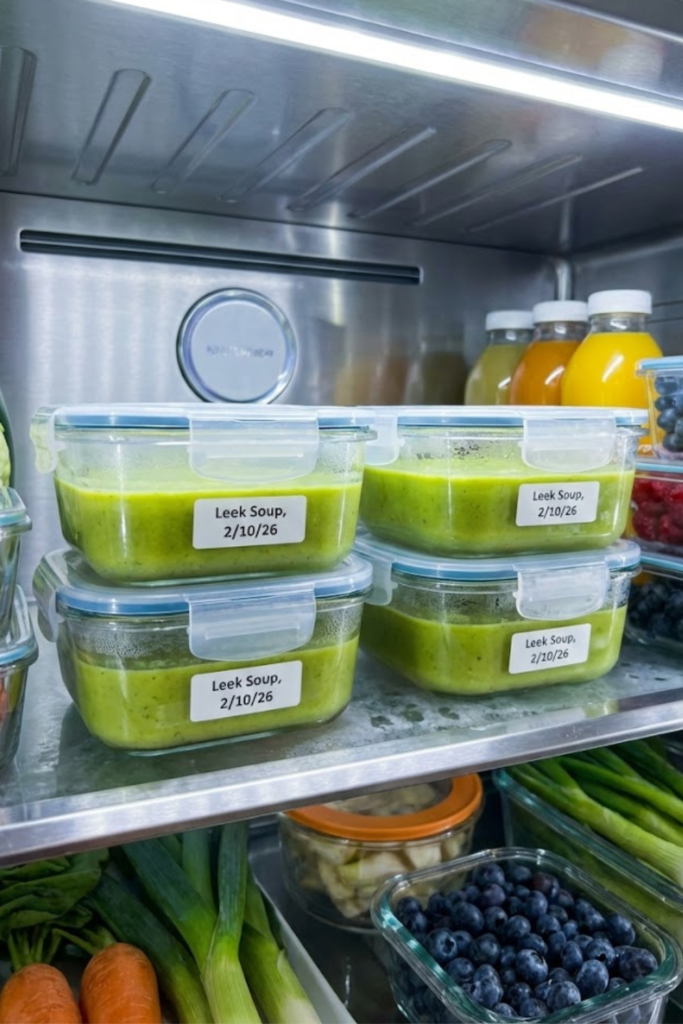
First, let it cool down completely. Putting hot soup in the fridge is a recipe for disaster (and bacteria). Once it is cool, transfer it to an airtight container. I like glass ones because plastic stains forever with some soups.
It will stay good for about 4 days. Like I said before, the flavors actually meld together better overnight, so it is perfect for lunch the next day. If you notice a weird film on top, just stir it back in when you reheat it.
Freezing: Proceed with Caution
Okay, here is the tricky part. Soups with cream don’t always freeze well. The dairy can separate and get weirdly grainy when you thaw it. It still tastes fine, but the texture is… not great.
If you are planning to freeze it, I suggest freezing the base before you add the cream. Just ladle out the portion you want to freeze, let it cool, and pop it in the freezer. When you are ready to eat it, thaw it, heat it up, and then stir in your fresh cream or milk. It tastes way fresher that way.
Reheating Rules
Don’t just blast it in the microwave on high. That is how you get explosive soup splatters. Reheat it gently on the stove over low heat. If it got too thick in the fridge (which happens with potatoes), add a splash of water or broth to loosen it up. Stir it often so it doesn’t scorch on the bottom.
If you do use the microwave, cover it with a paper towel and do it in short bursts, stirring in between. Nobody likes cold spots in their soup.
Portion Control
I love meal prep lunches, so I freeze individual portions in those silicone soup cubes or just small containers. It makes grabbing lunch so easy when I am rushing out the door. Just grab a container, let it thaw in the fridge while I am at work, and heat it up for lunch. It saves me from buying expensive takeout, which is always a win.
So, that is basically it. You have got a big pot of soup that tastes like a hug. It is honestly one of my favorite things to make when the weather gets gross outside or I just had a long week at school. It is simple, it is cheap, and it tastes way better than anything you can get in a can.
I really hope you give this Creamy Spring Onion and Potato Leek Soup a shot. It is hard to mess up, I promise. If you do make it, let me know! Did you use the bacon? Did you keep it vegan? I love hearing how you guys tweak these recipes.
Oh, and if you liked this, do me a huge favor and pin it on Pinterest. It helps me out a ton and saves it for when you need a rainy day dinner idea. Happy cooking!