Have you ever found yourself standing in the kitchen, spoon in hand, eating Biscoff spread straight from the jar? (I definitely have, no shame here!) If you love that deep, caramelized, spicy flavor of Speculoos cookies, you are going to fall absolutely head over heels for this cake. It isn’t just a vanilla cake with a hint of flavor; it is a full-blown explosion of cookie butter goodness!
We are talking about moist, tender sponge layers infused with spread, covered in a frosting so creamy it melts in your mouth. Whether you are baking for a special occasion or just because it’s Tuesday, this recipe is a game-changer. Let’s preheat those ovens and get ready to bake the best cake of your life!
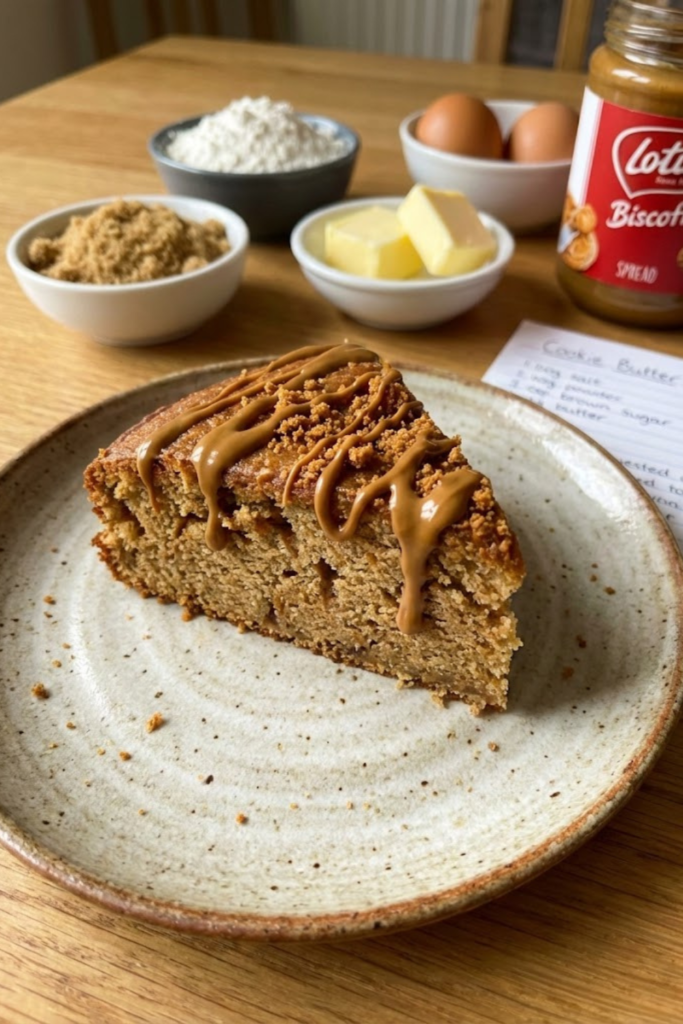
Why You’ll Love This Speculoos Layer Cake
You know those days when you just need something that tastes like a warm hug? That was me last week. I was craving something spicy and sweet, but not just a regular cinnamon roll. I wanted a cookie butter cake that would actually knock my socks off.
I’ve gotta be honest with you, I’ve had my fair share of baking disasters. There was this one time I tried to make a spice cake for a friend’s party, and let’s just say it was dense enough to be a doorstop. I was mortified! But that failure taught me a ton about getting the texture right.
The Texture is a Total Game Changer
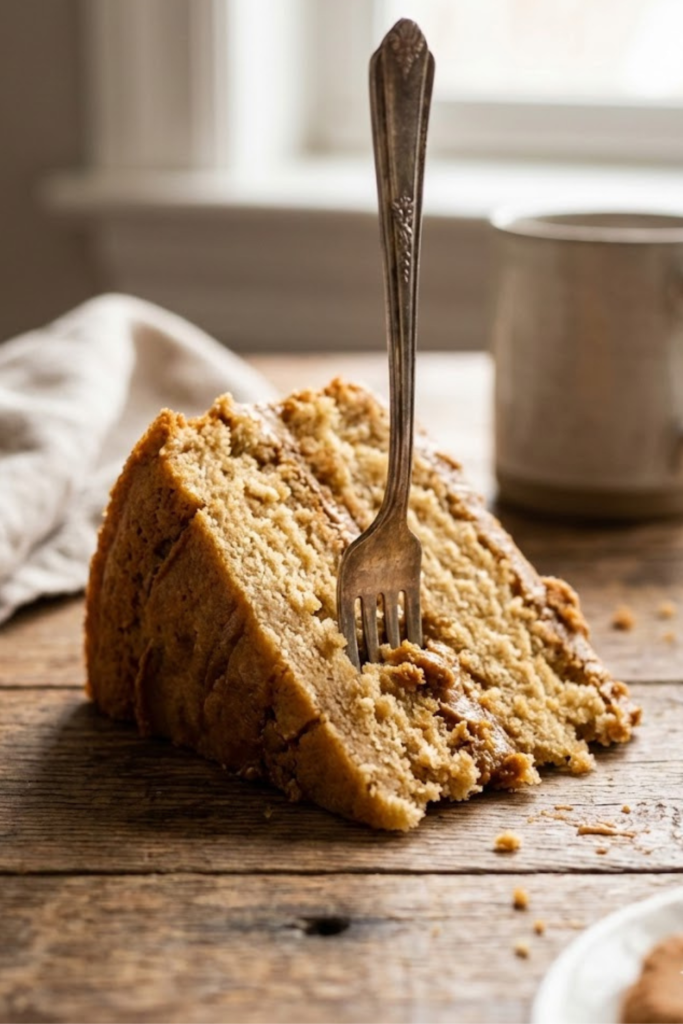
The crumb on this Speculoos layer cake is ridiculous. It’s not airy like angel food cake, but it’s definitely not heavy. It sits right in that sweet spot of being sturdy enough to stack but soft enough to melt in your mouth.
A lot of people think adding heavy spreads like Biscoff to a batter will weigh it down. And yeah, it can if you aren’t careful. The trick I learned the hard way? You have to beat the butter and sugar until it’s almost white.
Seriously, set a timer for five minutes. If you cheat on this step, your cake is gonna be dense. The air bubbles created during the creaming process are what gives this moist cake recipe its lift. Don’t skip it!
It’s Easier Than It Looks
I know layer cakes can feel a bit scary. I used to look at those perfect cakes on Instagram and think, “Yeah right, I’d probably drop that.” But this Lotus Biscoff cake is surprisingly forgiving. The frosting is thick and covers up a multitude of sins.
If your layers aren’t perfectly straight? Who cares. Just slap some more buttercream on there. It’s gonna get eaten anyway!
That Flavor Profile Though
Let’s talk about the taste because that is why we are here. If you love that caramelized, deep flavor of those little red-package cookies, you are gonna flip for this. It’s got that signature warmth from the cinnamon and ginger, but the brown sugar in the batter deepens it.
I feel like a cookie butter cake is perfect for people who find vanilla too boring but chocolate too rich. It’s the Goldilocks of cake flavors. It works for a birthday, but it’s also chill enough for a Sunday afternoon coffee.
I really hope you give this a shot. It took me a few tries to get the ratios perfect, but now? It is my go-to whenever I want to impress someone without pulling my hair out. Trust me, if I can pull this off, you definitely can.
Essential Ingredients for Cookie Butter Sponge
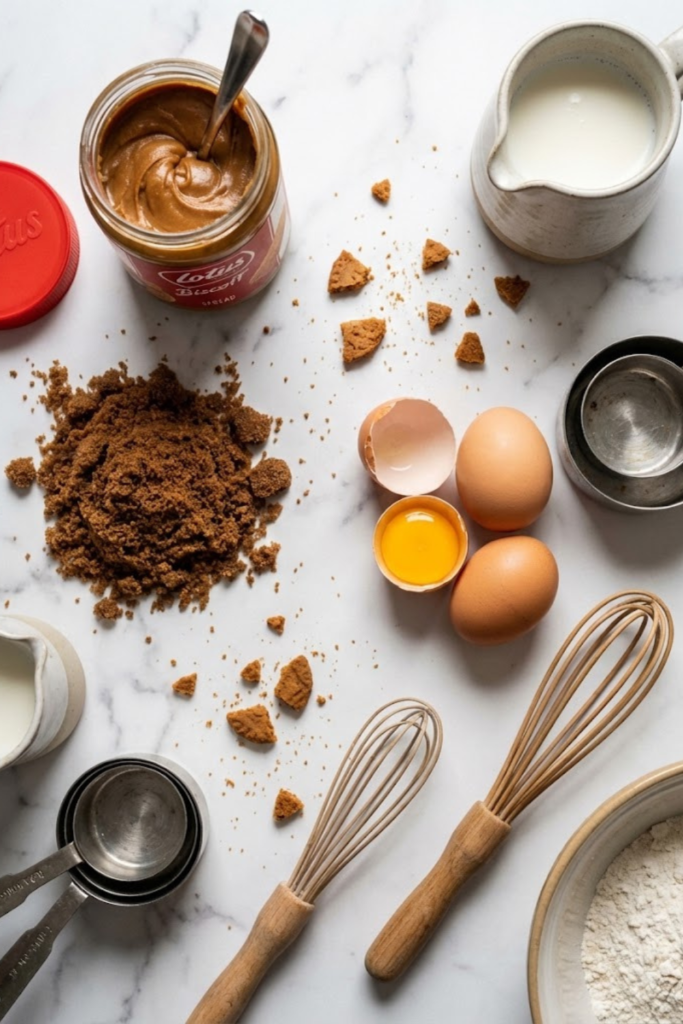
Okay, let’s get into the nitty-gritty of what goes into this bad boy. I remember when I first started baking from scratch, I thought all ingredients were basically the same. Flour is flour, right? Wrong. So wrong.
I once tried to make a cookie butter sponge using whatever random stuff I had in the pantry because I was too lazy to go to the store. The result was… interesting. And by interesting, I mean it tasted like a sweetened brick. I was so mad I actually cried a little bit (don’t judge).
So, learn from my disasters. Here is exactly what you need to make this cake actually taste good.
The Star: Biscoff Spread
Obviously, you can’t make a cookie butter sponge without the spread. But here is the kicker: do not use the crunchy kind for the cake batter. Just don’t do it.
I tried using crunchy once thinking it would add “texture.” It did add texture, but not the good kind. It made the cake hard to slice and the bits got weirdly chewy in the oven. Stick to the creamy version for the batter. You want that smooth, uniform flavor distribution.
If you want crunch, save it for the decoration.
Brown Sugar is Non-Negotiable
A lot of vanilla cakes use white granulated sugar. But for this recipe, we are leaning heavy on the brown sugar. Why? Because brown sugar has molasses in it.
That molasses does two things. First, it makes the cake incredibly moist. Like, stay-fresh-for-days moist. Second, it boosts those caramel notes in the Biscoff. I’ve tried doing a 50/50 split with white sugar, and honestly, the full brown sugar version just hits different. It gives it that deep, rich flavor that makes you want to close your eyes when you take a bite.
The Magic of Buttermilk
If you don’t have buttermilk in your fridge, go buy some. Or make that DIY version with milk and vinegar (though real buttermilk is always better).
I used to think regular milk was fine. But buttermilk brings the acid. That acid reacts with the baking soda to make the cake rise and get fluffy. Without it, your cake might end up dense. Plus, the tanginess cuts through the sweetness of the cookie butter so you don’t feel sick after one slice. It’s a total game changer.
Room Temperature Everything
Okay, I am guilty of this all the time. I decide to bake, and my butter is rock hard in the fridge. But you absolutely have to use room temperature ingredients.
If you throw cold eggs or cold butter into the mixer, the batter will curdle. It looks like gross, separated scrambled eggs. I’ve tried to just power through and bake it anyway, and the cake came out greasy and flat. It was a total waste of expensive ingredients.
So, take your butter, eggs, and buttermilk out like an hour before you start. If you’re impatient like me, you can put the eggs in a bowl of warm water for 5 minutes. But don’t microwave the butter unless you are super careful—melted butter is not the same as soft butter!
Getting these specifics right is half the battle. Once you have the right stuff, the actual mixing part is a breeze.
How to Make Fluffy Cookie Butter Buttercream
I have a confession to make. Sometimes, I bake the cake just so I have a vehicle for the frosting. Is that wrong? If it is, I don’t want to be right. But seriously, there is nothing worse than gritty, heavy frosting that tastes like straight sugar.
I remember the first time I tried to make cookie butter buttercream. I just dumped everything in the bowl at once and turned the mixer on high. Big mistake! I ended up with a kitchen covered in powdered sugar dust and a frosting that was dense and greasy. I was so frustrated I almost threw the bowl in the sink. But after a lot of trial and error, I figured out the secrets to getting that cloud-like texture.
Pick Your Butter Wisely
You might think butter is just butter, but for frosting, it matters big time. I always use unsalted butter now.
One time, I only had salted butter on hand and thought, “Eh, it’ll be fine.” It was not fine. The Biscoff spread already has some salt in it, so adding salted butter made the whole thing taste like a salt lick. It was inedible. By using unsalted, you control the flavor. If it needs salt, you can add a pinch later.
Also, quality matters. You don’t need the fanciest French butter, but get the decent stuff. The cheap generic brands sometimes have more water content, which can make your creamy frosting separate or look curdled. Nobody wants that!
The Whipping Marathon
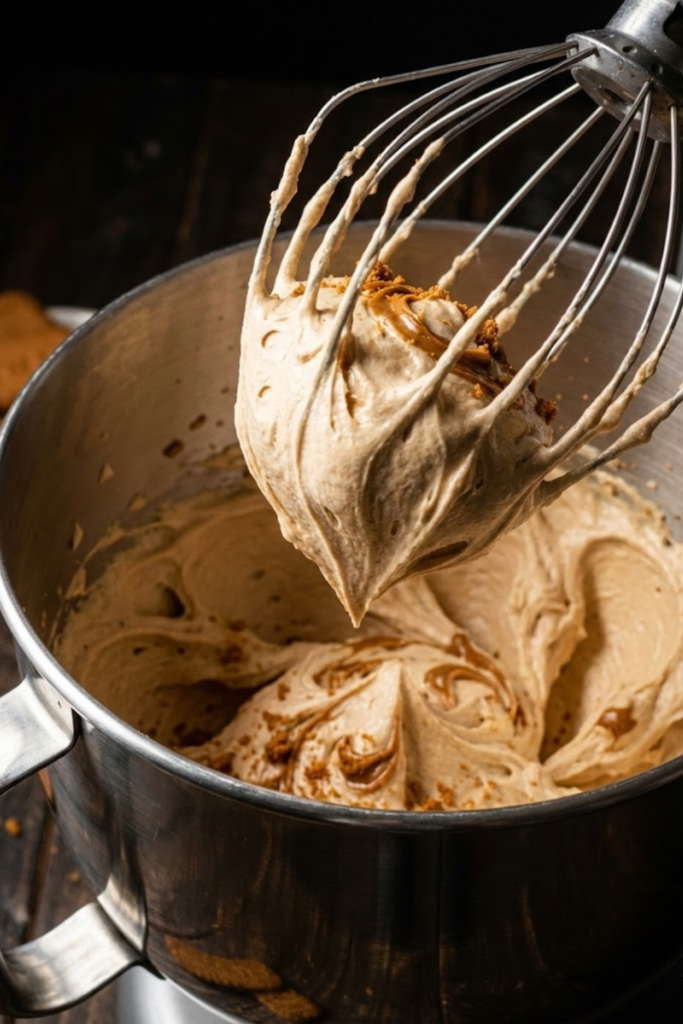
Here is the step that changed my life: you have to whip the butter by itself first. And I don’t mean for thirty seconds.
I’m talking about a full 5 to 7 minutes on high speed. I usually turn on my stand mixer and go unload the dishwasher while it runs. You want the butter to go from yellow to almost white. This incorporates air, which is the key to that fluffy texture.
If you skip this and add the sugar too early, your cookie butter frosting will be yellow and heavy. Trust me on this one. It feels like forever, but it’s worth it.
Getting the Ratio Right
Once your butter is pale and fluffy, it’s time for the good stuff. Adding the cookie butter is the best part. But you have to be careful with the ratio of spread to powdered sugar.
If you add too much spread, the frosting gets too soft and won’t hold its shape when you pipe it. If you add too much sugar, you lose that amazing cookie flavor. I found that adding the cookie butter after you’ve mixed in the sugar helps keep the structure better.
And here is a pro tip: sift your powdered sugar! I know, I know, it’s a pain. I hate doing it too. But finding a lump of white sugar in your smooth frosting is the worst.
The Secret Ingredient: Heavy Cream
Finally, if your frosting looks a bit stiff or dry, don’t panic. A splash of heavy cream is the fix.
Milk works okay, but heavy cream makes it luxurious. It adds a silkiness that you just can’t get with milk. Start with one tablespoon. You can always add more, but you can’t take it out. I learned that the hard way when I turned my buttercream into soup once.
This frosting is so good you’ll want to eat it with a spoon. Actually, go ahead. I won’t tell anyone. It’s the perfect topping for this moist cake recipe, adding just the right amount of sweetness without being overpowering.
Assembling and Decorating Your Biscoff Masterpiece
Okay, real talk. You can bake the most delicious cake in the world, but if it looks like a leaning tower of disaster, you’re gonna be pretty bummed. I used to get so stressed out during the assembly phase. My hands would shake, and I’d be sweating like I was running a marathon.
There was this one birthday where my layers slid right off each other while I was driving. I arrived with a box of sadness. It was tragic. But after ruining a few cakes, I finally learned the tricks to keep everything stable and looking sharp.
Leveling is Not Optional
First things first, those domes gotta go. When your cake layers come out of the oven, they usually have a hump in the middle. I used to just pile extra frosting on the sides to “even it out,” but that’s a rookie mistake. It makes the cake wobble.
Grab a long serrated knife—like a bread knife—and saw off the top to make it flat. I get down at eye level with the counter to make sure I’m cutting straight. And hey, don’t throw away those scraps! That is the baker’s tax. You get to eat those warm cake tops while you work. It’s the best part of the whole process.
The Ugly Layer (Crumb Coat)
If you take nothing else away from this, please listen to me on this: do not skip the crumb coat technique. This is basically a thin, ugly layer of frosting that locks in all the crumbs.
I was lazy once and tried to just do one thick layer of frosting. It was a nightmare. Little brown specks of cake got mixed into my beautiful smooth buttercream, and it looked like a mess. So, spread a thin layer of frosting all over the cake, then stick it in the fridge for 20 minutes. This chills the butter and creates a hard shell. Then, you can apply your final coat without any crumbs ruining your life.
Mastering the Drip
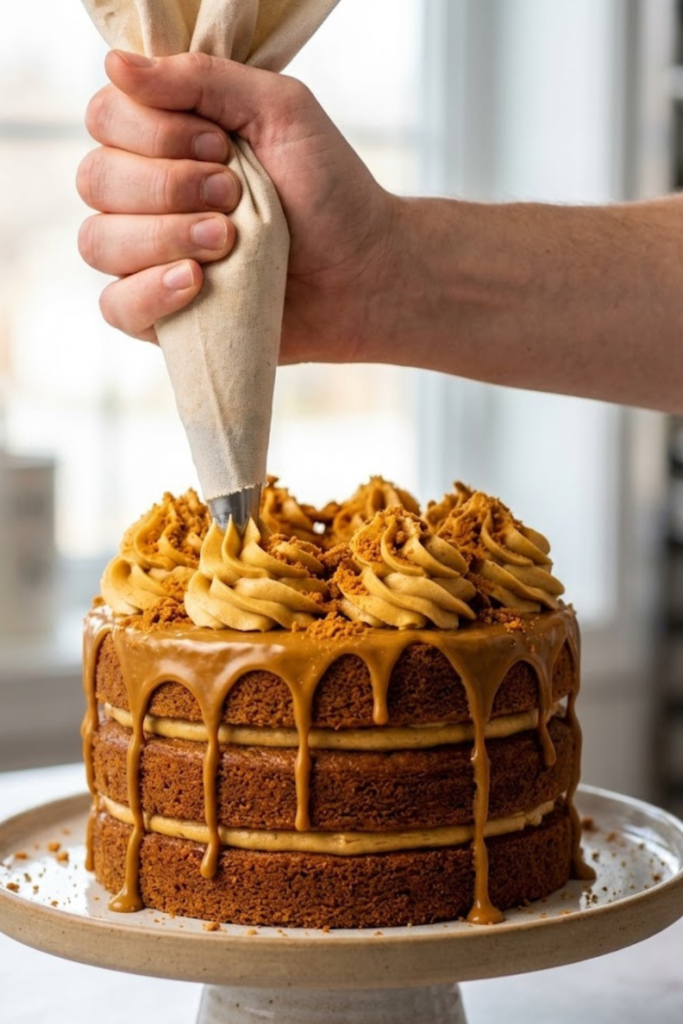
Now for the fancy part—the drip. You’ve seen those cake decorating ideas on Pinterest where the sauce drips perfectly down the sides? It looks hard, but it’s actually super easy with Biscoff.
Here is the trick: melt the cookie butter in the microwave for about 10 to 15 seconds. You want it runny, but not piping hot. If it’s too hot, it will melt your buttercream, and you’ll have a puddle at the bottom of your cake. I’ve done that, and it is not a fun cleanup.
Use a spoon or a squeeze bottle to gently push the melted spread over the edge. Let gravity do the work. It’s oddly satisfying to watch.
Garnish with Crunch
Finally, we need some texture. Since we used creamy spread inside, I like to use crushed Speculoos cookies on the outside. I usually take a handful of cookies and smash them in a ziplock bag (great for stress relief, by the way).
Press the crumbs into the bottom border of the cake or sprinkle them on top. It hides any messy edges at the bottom and gives people a hint of what flavor is inside. Stick a few whole cookies on top for height, and boom—you look like a pro baker.
Taking the time for proper layer cake assembly makes such a difference. It turns a homemade treat into something that looks like it came from a bakery. And trust me, when you cut into it and see those even layers, you’ll feel like a champion.
Storage and Freezing Tips for Leftover Cake
Okay, I know what you’re thinking. “Leftover cake? Is that even a real thing?”. In my house, it’s rare, but sometimes you bake a massive cake and just can’t finish it all in one sitting. Or maybe you want to be super organized and bake ahead of time.
I used to be terrible at this. I’d just throw the whole cake stand in the fridge uncovered and hope for the best. Big mistake!. The next day, the cake tasted like the onions I had cut for dinner, and the frosting was hard as a rock. It was gross. I literally had to scrape off the outer layer to eat it. So, let me save you from eating onion-flavored cookie butter cake.
Room Temp vs. The Fridge
Here is the deal: the refrigerator is actually not your friend for most cakes. Since this cake uses butter in both the sponge and the frosting, cold air makes it solidify.. If you eat it cold, it feels dry and heavy, even if it’s technically fresh.
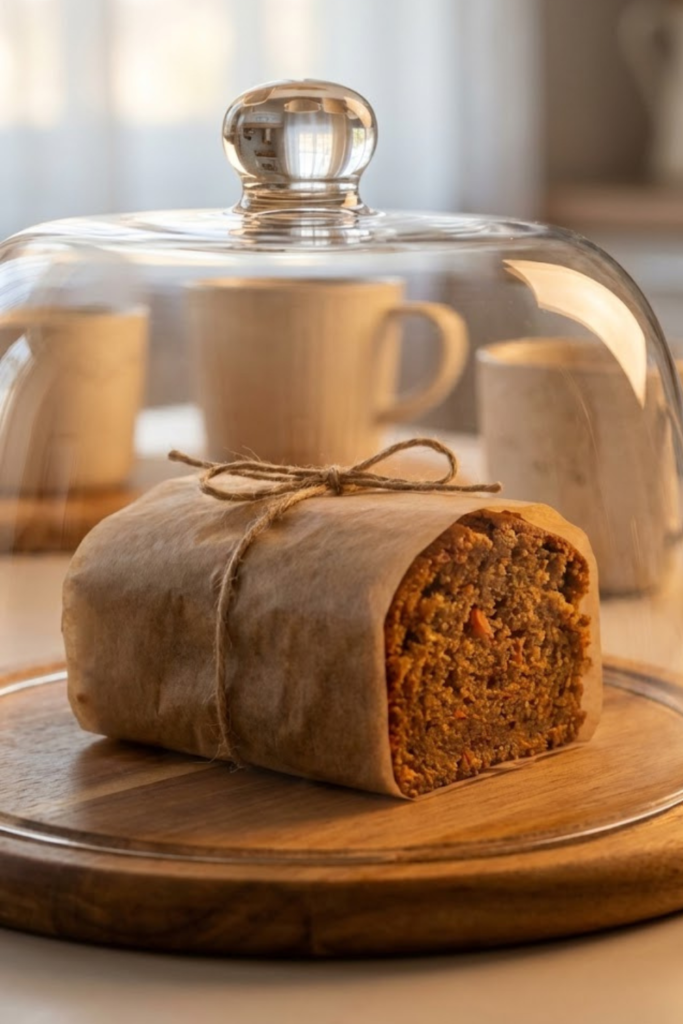
I usually keep my cake on the counter in a cake dome for up to 3 days. The sugar and fat act as preservatives, so it’s totally safe. However, if your kitchen is super hot—like in the middle of July—you might need to refrigerate it so the creamy frosting doesn’t melt off.. Just make sure to bring it back to room temperature before serving. I usually pull it out an hour before I want to eat it.
Freezing Layers Like a Boss
If you are planning make ahead desserts for a party, freezing your layers is a lifesaver.. I actually think freezing them makes the cake even more moist. It sounds crazy, but it works.
I once tried to freeze a fully decorated cake, and it got crushed in my freezer by a bag of frozen peas. Tragedy.. Now, I wrap the individual baked layers in plastic wrap—tightly! I do two layers of plastic wrap and then one layer of aluminum foil. This prevents that nasty freezer burn taste..
You can keep these freezing cake layers in there for up to 3 months. When you’re ready to decorate, don’t thaw them completely! It is way easier to frost a semi-frozen cake because it’s less crumbly..
Keeping the Cut Side Fresh
Once you cut into the cake, the clock starts ticking. The air hits that exposed sponge and dries it out fast..
My favorite trick? Take a piece of plastic wrap and press it directly against the cut part of the cake. It looks a little weird, but it seals in the moisture perfectly.. Some people use a slice of white bread attached with toothpicks, but honestly, I never have white bread, so plastic wrap it is.
By following these cake storage tips, you can enjoy a slice on Wednesday that tastes just as good as it did on Sunday.. And let’s be real, eating cake for breakfast halfway through the week is the ultimate form of self-care..
So, there you have it. We have made it to the end of this sugar-fueled journey, and honestly, I am kind of sad it’s over. But mostly, I am just excited for you to get in the kitchen.
Making this cookie butter cake has become one of my favorite traditions. I remember the first time I actually pulled it off successfully. I sat at my kitchen table with a giant glass of cold milk, took one bite, and literally did a happy dance in my chair. It is that good. The way the spices in the sponge mix with that creamy, rich frosting is just magic. It’s not just a cake; it’s an experience.
If you are still feeling a little nervous about the layers or the drip, please don’t be. Baking is supposed to be messy and fun. Even if your frosting isn’t perfectly smooth or your drip is a little wonky, it is still going to taste amazing. My first attempt looked like a leaning tower, and you know what? My family devoured it in ten minutes flat. No one cared about the aesthetics when it tasted like caramelized heaven.
I really hope this guide helps you feel confident enough to tackle this recipe. It’s a labor of love, for sure, but seeing the look on people’s faces when they take that first bite makes every minute of whipping butter worth it.
If you decide to make this Biscoff cake recipe, I would love to hear about it. Did you struggle with the crumb coat? Did you eat half the jar of spread before it made it into the batter? (I won’t judge!).
Final Request: If you enjoyed this post and found it helpful, could you do me a huge favor? Please share it on Pinterest! Pinning it to your “Best Desserts” or “Birthday Cakes” board helps other bakers find this recipe and keeps my blog running. plus, it saves the recipe for you so you don’t lose it!