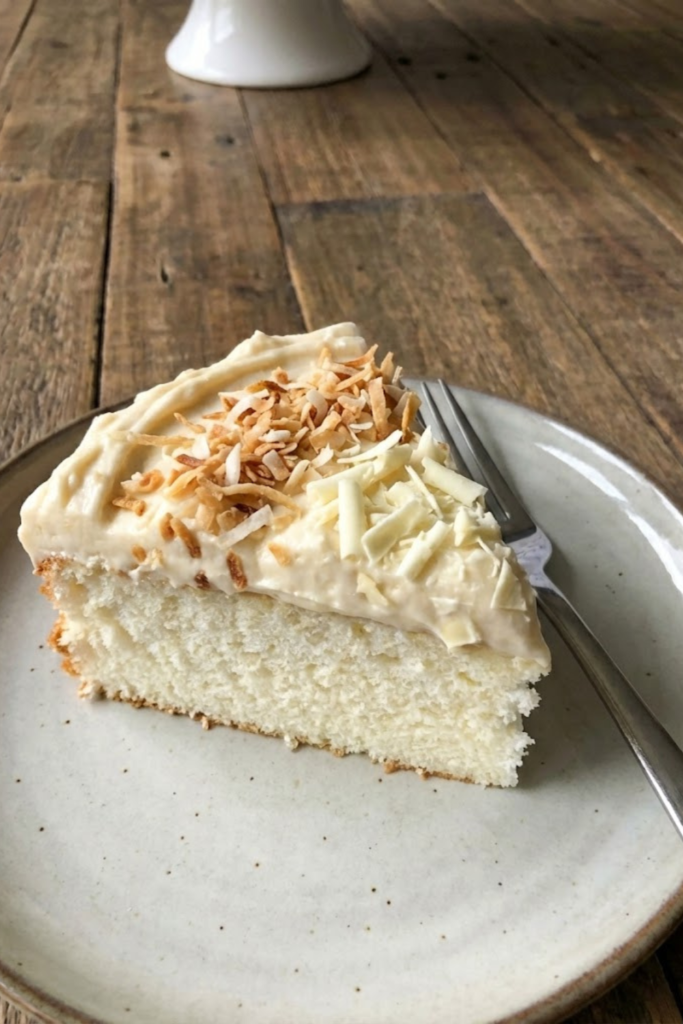
Have you ever wondered what a cumulus cloud tastes like? I’m willing to bet it tastes exactly like this Coconut Cloud Cake! I still remember the first time I whipped this up for a summer potluck; the plate was licked clean before I even grabbed a fork! This isn’t just another dense vanilla cake disguised with coconut flakes. Oh no, we are talking about an airy, melt-in-your-mouth masterpiece that truly lives up to its “cloud” name. If you are looking to bring a taste of the tropics into your kitchen, you have found the holy grail of desserts. Let’s get baking!
Why This Coconut Cloud Cake Texture Is Unique
I’ve got to be honest with you guys; for the longest time, I thought all cakes were basically the same. You throw some flour, sugar, butter, and eggs into a bowl, mix it up, and hope for the best, right? Well, that approach is exactly why my family politely declined my desserts for about five years. I remember baking a “light” vanilla cake for a school fundraiser back in 2018, and let me tell you, that thing was dense enough to hold a door open. It was embarrassing!
But then I discovered the science behind the chiffon cake technique, and it completely changed my baking game.
It’s Not Just a Sponge Cake
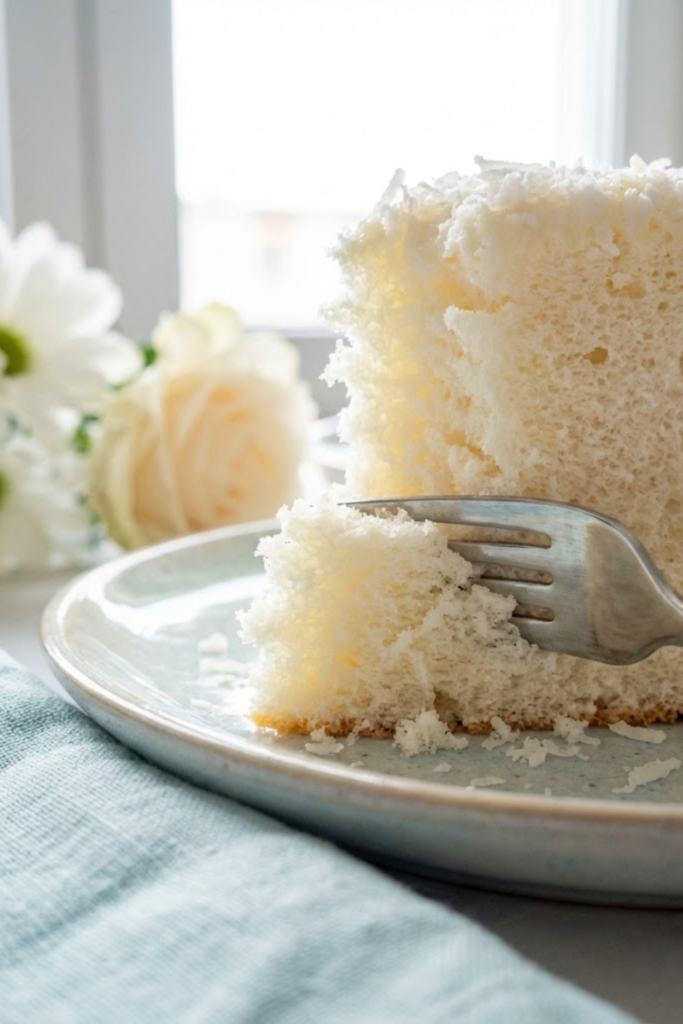
Most of us grew up making standard butter cakes. They are delicious, sure, but they are heavy. This coconut cloud cake is different because it ditches the butter for oil. I know, it sounds weird to put oil in a cake, but trust me on this one.
Oil stays liquid at room temperature, which keeps the crumb incredibly soft and moist. Butter hardens when it cools down, which is why your leftover birthday cake gets stiff in the fridge. By using oil, we get a texture that stays tender for days. It feels like eating a cloud because the fat doesn’t weigh down the flour.
The Secret is in the Eggs
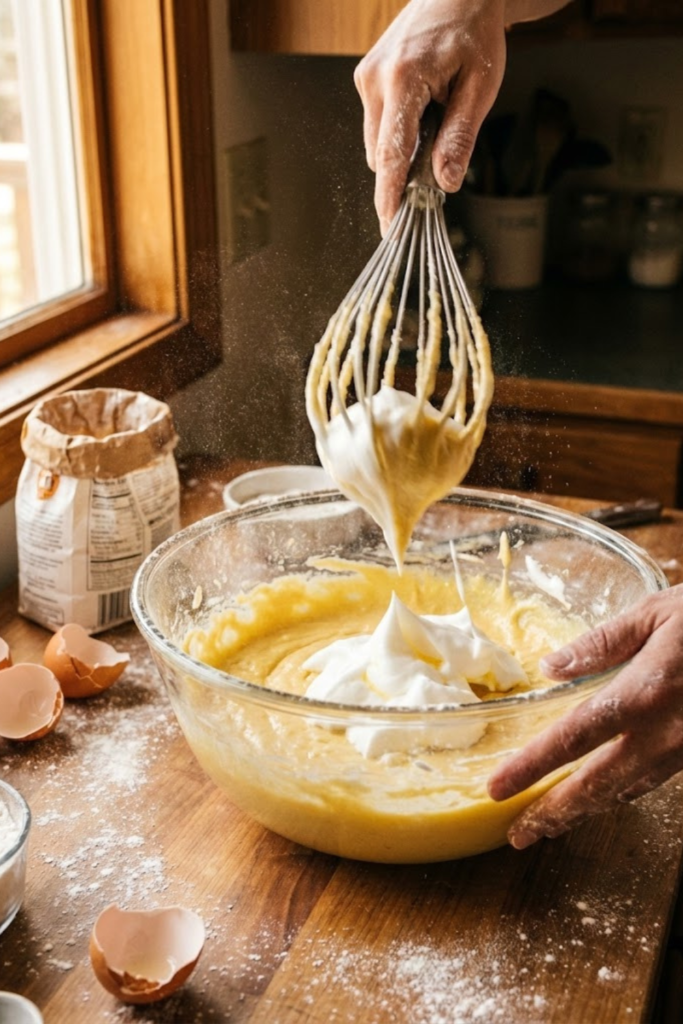
Here is where I used to mess up big time. The fluffiness doesn’t come from baking powder alone; it comes from the egg white meringue. You have to whip those whites until they are stiff and glossy.
I used to rush this part because my arm would get tired (and I was too cheap to buy a stand mixer). Big mistake. If you don’t whip enough air into them, your cake will collapse. But when you get it right? It’s magic. The air bubbles get trapped inside the batter, expanding in the oven to create that signature lift. It gives you that melt-in-the-mouth experience that a regular coconut milk dessert just can’t match.
Balancing the Coconut Milk
Another thing I learned the hard way is that coconut milk is heavy. It’s full of fat and water. If you just dump it into a delicate batter, it’s going to sink to the bottom like a stone.
For this recipe, we carefully emulsify the rich coconut milk with the yolks and oil before we even look at the egg whites. This creates a strong base that can hold the coconut flavor without sacrificing the fluffy cake texture. It took me a few tries—and a lot of wasted ingredients—to find the perfect ratio. But now that I have it, I’m never going back to regular sponge cakes. This isn’t just about sweetness; it’s about structure.
So, grab your whisk and let’s get messy. This texture is worth every bit of effort!
Essential Ingredients for Tropical Perfection
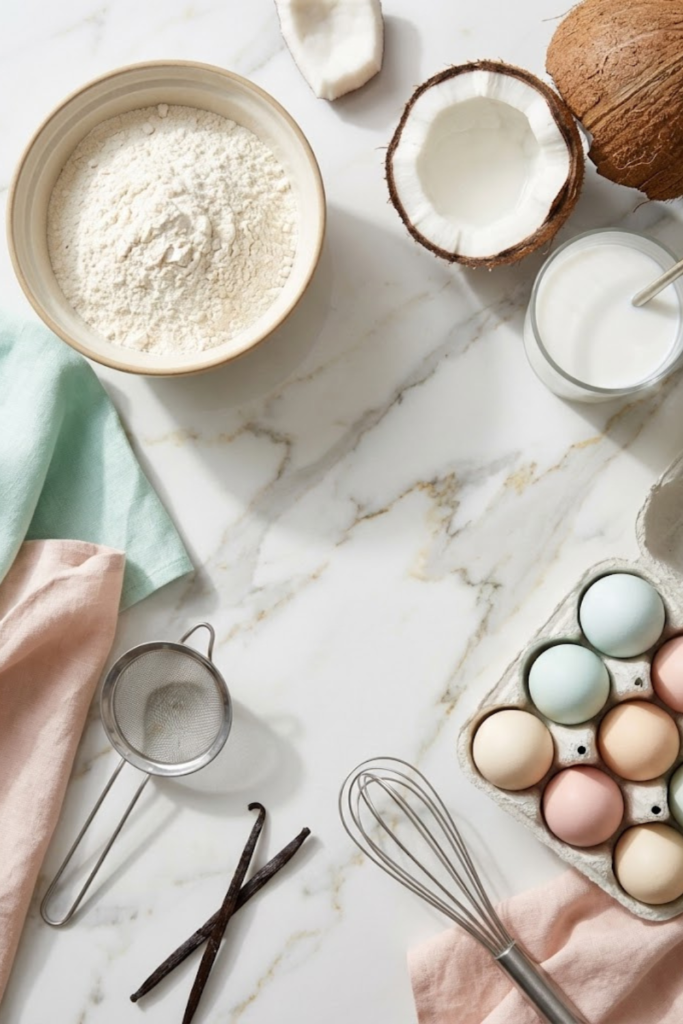
I used to be that person who thought, “Flour is flour, right?” Wrong. So very wrong. I remember standing in the grocery store aisle back in 2019, staring at the price difference between all-purpose flour and cake flour. I cheaped out. I bought the generic all-purpose stuff, went home, and baked what I thought would be a masterpiece.
It came out tasting like cornbread. Ugh! It was gritty and heavy.
If you want that melt-in-your-mouth texture for this coconut cloud cake, you have to respect the ingredients. It’s not about being fancy; it’s about chemistry.
Why You Can’t Skip Cake Flour
Here is the deal: All-purpose flour has too much protein. Protein creates gluten, and gluten makes things chewy. Great for bread, terrible for fluffy cake texture.
Cake flour is milled from soft wheat and has way less protein (usually around 7-9%). This is what gives you that tender, fine crumb that literally dissolves on your tongue. If you absolutely cannot find it, you can hack it by removing two tablespoons of regular flour from a cup and replacing it with cornstarch. But honestly? Just buy the box. It makes a huge difference.
The Coconut Conundrum: Milk vs. Cream vs. Beverage
Okay, listen closely because I messed this up so many times. Do not use the coconut milk sold in the refrigerated aisle next to the almond milk. That stuff is watered down!
For this recipe, you need full-fat, canned coconut milk. The thick kind. You want the fat because fat equals flavor and moisture. One time, I grabbed “light” coconut milk by mistake, and the cake tasted like sweetened cardboard. Never again. Look for brands that list organic baking ingredients if you can, as they tend to separate less. Shake that can like you mean it before opening!
The Secret Weapon: Cream of Tartar
“Do I really need this weird white powder?” Yes. You do.
When you are whipping egg whites to get those stiff peaks, they are fragile. They want to collapse. Cream of tartar is an acid that stabilizes the bubbles. It’s like insurance for your meringue. Without it, your beautiful cloud cake might deflate the second you open the oven door. I’ve cried over deflated cakes before, and I don’t want that for you.
Flavor Boosters
Finally, let’s talk flavor. Coconut can be subtle, sometimes too subtle. I always add a splash of coconut extract alongside high-quality vanilla bean paste. The vanilla rounds out the sharp sweetness.
And please, for the love of texture, use toasted coconut flakes for the topping. Toasting them in a dry pan for just 2 minutes brings out a nutty crunch that contrasts perfectly with the soft sponge. It’s the little things that take it from “good” to “whoa.”
Step-by-Step: Mixing the Batter Without Deflating It
This is the part where my palms usually start to sweat. You have done all the prep work, you bought the fancy flour, and now you have to mix it all together without ruining it. I can’t tell you how many times I have stood in my kitchen, staring at a bowl of perfect egg whites, terrified to make the next move.
It feels like one wrong stir and poof—there goes your fluffy cloud. But over the years, I’ve learned that baking science isn’t about luck; it’s about technique. And once you get the hang of it, it’s actually kind of therapeutic.
Separating Eggs: The High-Stakes Game
First things first: separating the eggs. This seems simple, right? Wrong.
I once tried to separate six eggs directly into my mixer bowl. The first five were perfect. The sixth one? The yolk burst. I tried to fish it out with a spoon, but the damage was done. Fat (yolk) is the enemy of meringue. If even a tiny speck gets into your whites, they will never reach those stiff peaks egg whites status.
Now, I use the “three-bowl method.” One bowl for the white I’m currently cracking, one for the yolks, and the big mixing bowl for the safe whites. It’s a pain to wash extra dishes, but it saves your sanity.
The “J” Fold Motion
When it’s time to combine your light-as-air meringue with the heavy yolk batter, put the electric mixer away. Seriously, hide it. You need a spatula and a gentle hand.
We use the folding batter technique. Cut down through the middle of the batter with the spatula, scrape along the bottom, and come up the side, folding the mixture over the top. It looks like you are drawing the letter “J.”
I used to stir it like I was making soup, and my cakes always came out flat. You want to be gentle but confident. Don’t overthink it, or you’ll knock all the air out. Stop mixing the second you don’t see any white streaks.
Room Temperature Is Not a Suggestion
Here is a mistake I made for years: ignoring the instruction for room temperature ingredients. I’m impatient. I’d pull the eggs and coconut milk straight from the fridge and start mixing.
Bad idea. Cold ingredients don’t emulsify well. The batter gets curdled and chunky, and the cake ends up with weird holes in it. I learned that if I just set everything out on the counter an hour before I start, the batter comes together smooth as silk. It’s a small detail, but in the world of chiffon cake technique, details are everything.
Baking and Cooling: Avoiding the Dreaded Collapse
I have a confession to make. The first time I made this cake, I cried. Actual tears. I had spent an hour separating eggs and folding batter, only to pull the cake out of the oven and watch it shrink into a dense, sad pancake right before my eyes. It was tragic.
If you are nervous about your cake flopping, don’t worry. I’ve made all the mistakes so you don’t have to. Baking a chiffon-style cake is a bit different than your standard birthday cake, but once you know the rules, it’s easy.
Your Oven Is Lying to You
I learned this the hard way: never trust the dial on your oven. My old oven claimed it was at 350°F, but it was actually hovering around 325°F. That twenty-five-degree difference is huge when it comes to baking science.
If the heat isn’t high enough, the air bubbles in the batter won’t expand quickly enough to set the structure. The result? A short, dense cake. I finally bought a cheap oven thermometer (seriously, they are like $7), and it changed my life. Now I know exactly when the heat is right for tube pan baking. Do yourself a favor and get one.
Resist the Urge to Grease
This goes against everything you’ve ever learned about baking. Usually, we are terrified of cakes sticking. But for this coconut cloud cake, sticking is actually a good thing.
The batter needs to “climb” the sides of the pan as it rises. If you grease the pan with butter or spray, the batter will slip and slide right back down. It can’t get a grip! I once greased my pan out of habit, and the cake barely rose two inches. It was tasty, but it definitely wasn’t a cloud. So, keep that butter wrapper away from your tube pan. We want friction here.
The Upside-Down trick
This is the part that freaks people out. The second that timer goes off and you pull the cake out, you have to flip it upside down immediately.
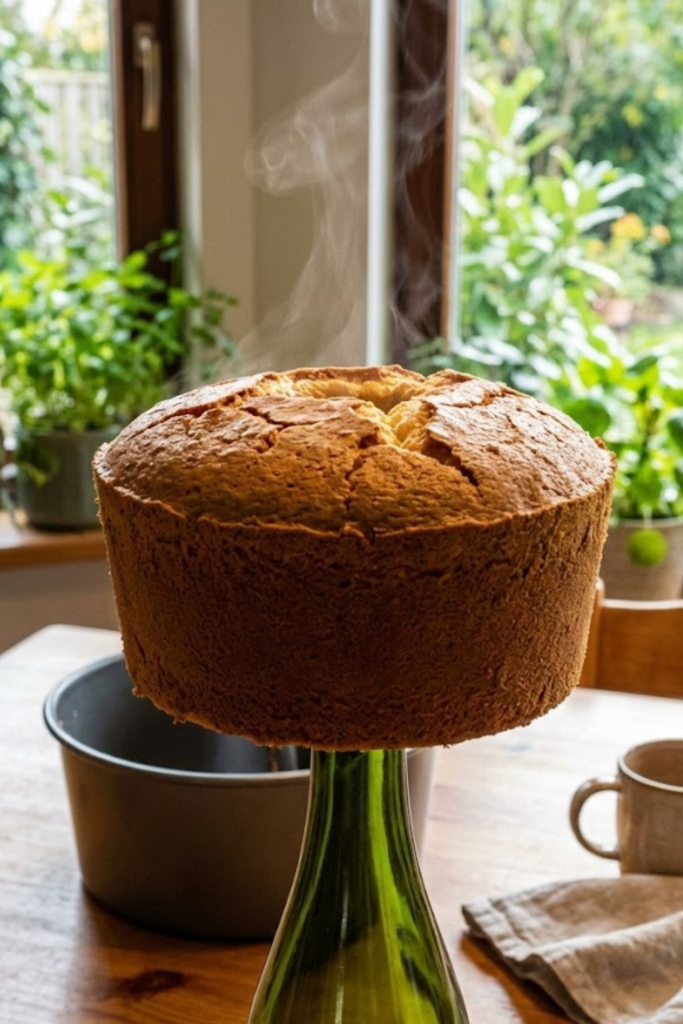
I know, it feels like it’s going to fall out. But if you don’t invert it, gravity will pull the hot, delicate structure down, compressing all that fluffy cake texture you worked so hard for. Cooling cake upside down stretches the cake as it sets, locking in that height.
Most tube pans have little feet for this exact purpose. If yours doesn’t, balance the center hole on a bottleneck (I use a wine bottle). Let it hang out there until it is completely cool. Not warm—cool. Patience is key!
The Frosting: Whipped Coconut Cream Delight
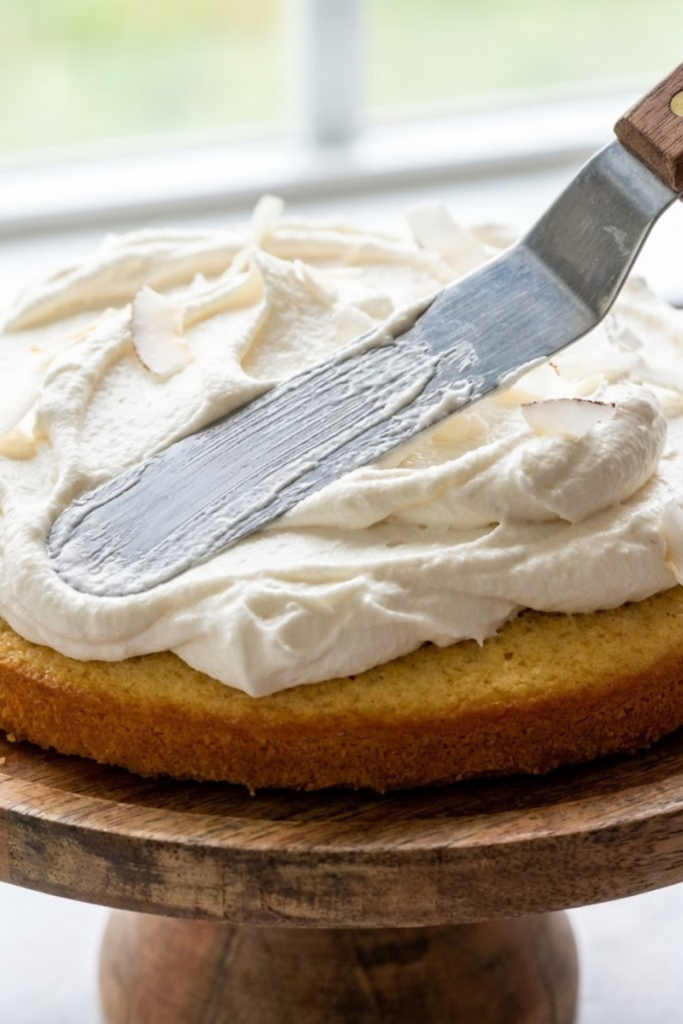
I have a love-hate relationship with frosting. For years, I avoided making anything other than American buttercream because it felt safe. It’s just butter and sugar, right? But this cake deserves something lighter. It needs a topping that feels like a cloud, not a brick of sugar.
The first time I tried to make a whipped cream frosting using coconut cream, it was a disaster. I was hosting a summer BBQ, and it was about 90 degrees in my kitchen. I whipped the cream, slapped it on the cake, and walked away. Five minutes later, I came back to find the frosting sliding off the sides like a sad avalanche. It was a hot mess, literally.
Cold Is Your Best Friend
Here is the trick I missed that day: temperature is everything. You can’t just grab a can of coconut milk from the pantry and expect it to whip. It won’t happen.
The fat in coconut milk needs to be solid to hold air. I now buy my cans at least two days before I plan to bake and stick them in the coldest part of my fridge. Do not shake them! We want the cream to separate from the water.
Also, put your mixing bowl and whisk attachment in the freezer for 15 minutes before you start. It sounds like overkill, but it makes a huge difference. If your equipment is warm, the fat melts, and you end up with soup instead of fluffy frosting recipe perfection.
The Mascarpone Miracle
Even when you chill everything, coconut cream can be a bit unstable. It likes to weep after a few hours. I learned this the hard way when my beautiful cake turned into a puddle by dessert time.
My secret weapon now is mascarpone cheese. Adding just a half-cup of cold mascarpone to the coconut cream stabilizes it instantly. It gives you a stabilized whipped cream that holds its shape for days. Plus, the slight tang of the cheese cuts through the sweetness. If you want dairy free cake options, you can use a teaspoon of dissolved gelatin instead, but the texture won’t be quite as rich.
Controlling the Sweetness
Most frosting recipes call for way too much sugar. Since the cake itself is sweet, I like the topping to be fresh and light.
I only use powdered sugar, and I add it one tablespoon at a time. Taste as you go! I usually stop at about half a cup. You want to taste the tropical coconut, not just sugar.
Also, start your stand mixer speed on low. If you crank it to high immediately, you’ll splash coconut water everywhere. Increase the speed gradually until you see soft billows forming. Don’t over-whip, or it will turn into butter. It’s a fine line, but once you find it, you’ll want to eat this stuff with a spoon.
Serving and Storage Tips for Freshness
You have spent the afternoon baking, whipping, and frosting. Your kitchen probably looks like a bomb went off—mine always does—but you have this gorgeous coconut cloud cake sitting on the counter. It’s a moment of triumph! But don’t drop the ball now. I used to think the hard work was done once the frosting was on, but how you treat the cake after it’s finished makes a huge difference.
I remember leaving a cream-filled cake out on the counter overnight back in 2021. I woke up excited for a breakfast slice (don’t judge me), only to find the frosting had turned sour and wept all over the plate. It was a heartbreaking waste of a weekend baking project.
The Fridge Is Non-Negotiable
Here is the thing about this recipe: because we used fresh coconut cream and maybe some mascarpone in the frosting, this cake is perishable. You can’t just leave it under a glass dome on the counter like a box-mix brownie.
It needs to stay cold. However, the fridge can be a bit of a bully to cakes. The cold air sucks the moisture right out of the sponge, turning your fluffy cloud into a dry sponge. To fight this, I always press a piece of plastic wrap directly against the cut side of the cake. It looks a bit messy, but it seals in the moisture.
Also, cold cake doesn’t taste as sweet as room-temperature cake. It’s just a fact of biology. So, if you want the full flavor experience, pull the cake out of the fridge about 20 minutes before you plan to serve it. It lets the crumb relax and the frosting soften up just enough.
Pairing It Up
I’m usually a purist when it comes to tea time desserts. I like to taste the cake and nothing else. But I have experimented with toppings, and I have definitely made some mistakes.
One time, I drizzled heavy dark chocolate ganache over a slice. It looked fancy, but the chocolate completely overpowered the delicate coconut flavor. It was a total mismatch. You want something bright and acidic to cut through the richness of the coconut cream.
Fresh mango slices are my absolute favorite pairing. The tartness of the mango highlights the creamy coconut perfectly. If you are feeling fancy, a drizzle of passion fruit coulis looks amazing and adds a zing that wakes up your taste buds. These dessert presentation tips aren’t just for looks; they balance the flavor profile.
Freezing for a Rainy Day
If you somehow manage not to eat the whole thing in two days—which is rare in my house—this cake freezes surprisingly well. But don’t just shove the whole thing in the freezer unwrapped.
I like to slice the leftovers individually. I place them on a baking sheet to freeze solid for about an hour (so the frosting doesn’t get squished), and then I wrap each slice tightly in plastic wrap, followed by a layer of foil.
It’s the best feeling in the world to find a slice of summer hidden in the back of the freezer on a gloomy Tuesday. Just unwrap it and let it thaw in the fridge for a few hours. It tastes almost as good as the day it was baked.
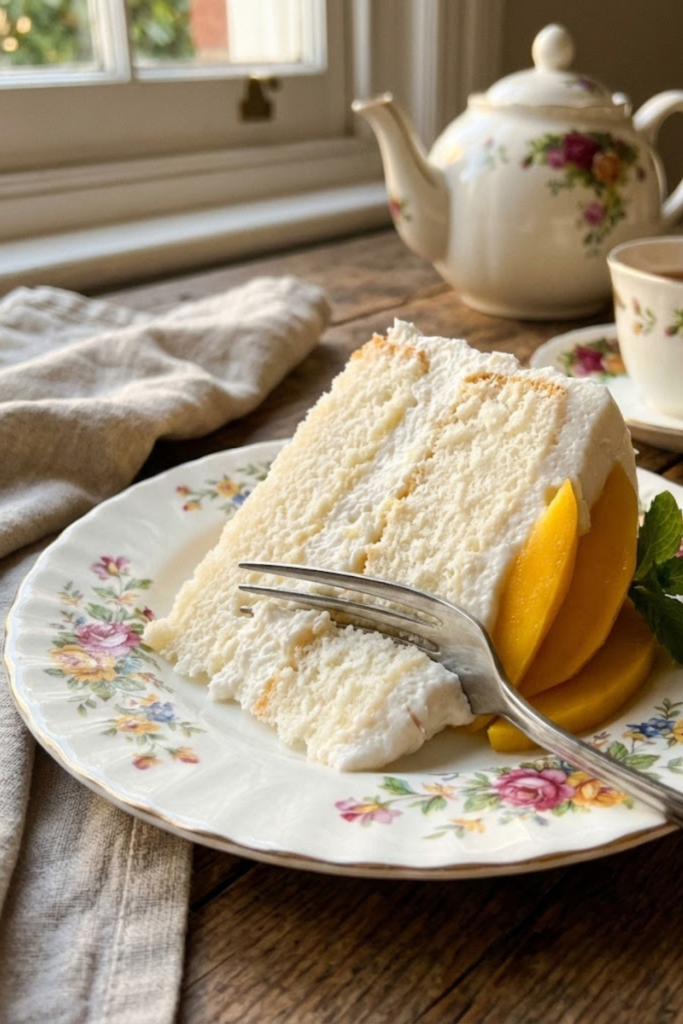
There you have it—the blueprint to the dreamiest dessert you will bake this year! We have conquered the fear of chiffon cake technique, learned why temperature matters more than we thought, and discovered that whipped cream frosting is totally worth the extra effort.
Let’s be real for a second. Baking can be intimidating. I used to look at photos of tall, fluffy cakes and think, “I could never do that.” But you can. You really can. This coconut cloud cake is more than just a sweet treat; it’s a little personal victory sitting on a plate. Whether you are celebrating a birthday or just need a pick-me-up on a random Tuesday, this recipe delivers pure joy.
It’s light, it’s not too sweet, and it brings a taste of the tropics right into your kitchen.
Don’t let this recipe get lost in the digital abyss! You are going to want to make this again when the craving hits. Pin this recipe to your “Dreamy Desserts” board on Pinterest so you never lose it! And hey, if you snap a photo of your masterpiece, tag me. I’d love to see your fluffy clouds!