Did you know that chocolate is actually the number one flavor choice for people all over the world? I totally believe it, because nothing beats that rich taste after a long day of grading papers. I used to struggle with dry cakes, like that one time I baked a birthday treat that ended up tasting like a cardboard box. That’s why I’m so excited to share this chocolate fudge sheet cake with you today. It’s incredibly moist, super easy for beginners, and you won’t have to worry about any layers sliding off. This recipe is my secret weapon for school potlucks or just a quiet Friday night treat at home.
Why This Chocolate Fudge Sheet Cake is a Crowd Favorite
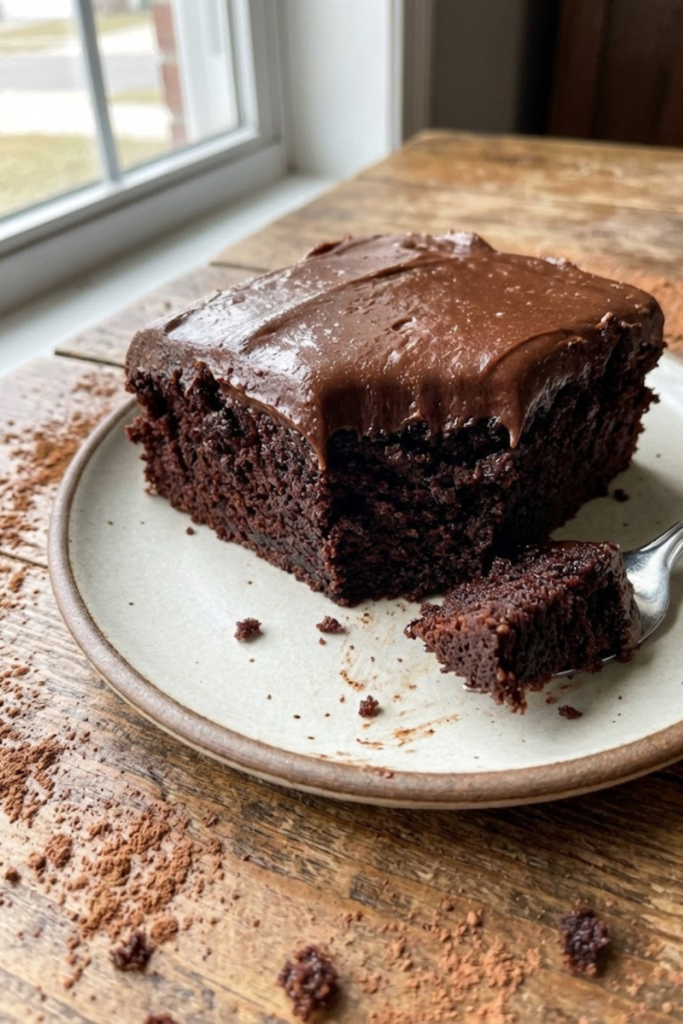
Every time there’s a school potluck or a big family reunion, I’m the person who gets asked to bring the dessert. I used to try and make those fancy three-layer cakes with the smooth frosting, but let me tell you, that was a disaster waiting to happen. Carrying a tall cake in a car is one of the most stressful things I’ve ever done! That’s why I switched to this chocolate fudge sheet cake. It’s just so much more reliable, and honestly, people seem to like the taste even better because it’s so rich and fudgy. It is my go-to for basically every event now.
It’s Built for Sharing with Large Groups
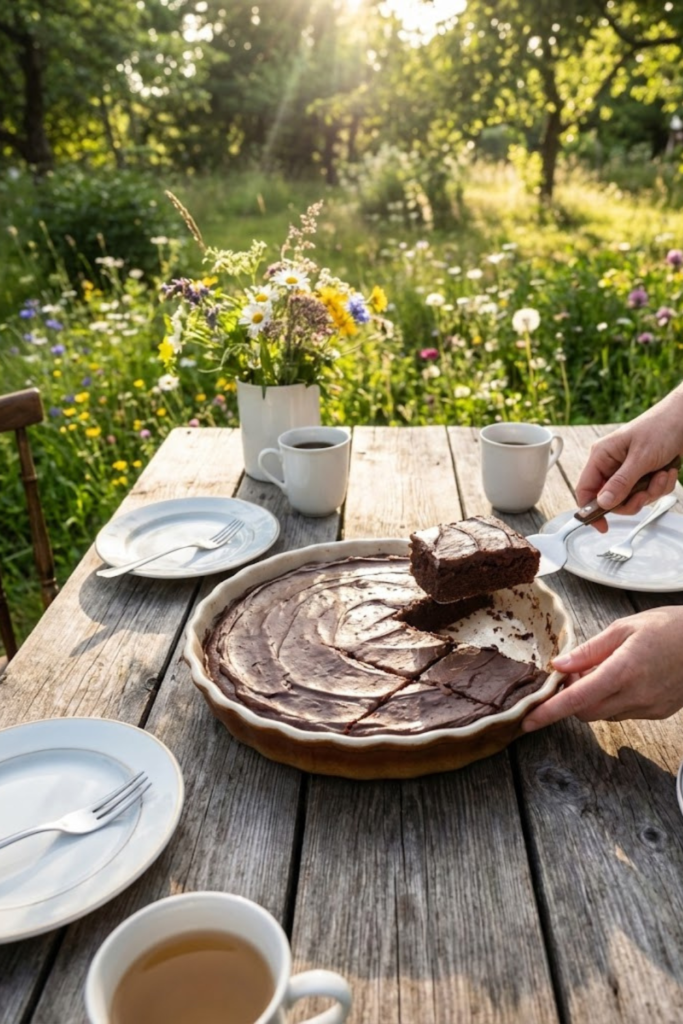
One thing I love about this cake is how much it actually makes. Since you bake it in a big sheet pan, you can cut it into tiny squares or big chunky pieces depending on how many people you have. I usually get about twenty-four good-sized servings out of one pan. If I’m bringing it to my classroom for a student’s birthday, I can even cut them smaller so everyone gets a taste. You don’t get that kind of flexibility with a round cake. Plus, it’s so much easier to serve. You just leave it in the pan and let people grab a square. No messy slicing or cakes falling over on the plate.
The Texture is Way Better Than Box Mix
A lot of people think they can just use a box mix, but they’re wrong. This homemade version has a texture that is so much denser and more like fudge. It’s moist because of the buttermilk, and it doesn’t get dry after sitting out for an hour. I’ve noticed that kids and adults both love how it almost melts in your mouth. It’s not airy like a sponge cake; it’s thick and satisfying. Whenever I bring it to a faculty meeting, the other teachers always ask if I bought it at a bakery. I just laugh and tell them it’s actually easier than it looks.
No-Fuss Decorating That Still Looks Great
I really appreciate that I don’t have to spend hours trying to make the frosting look perfect. Since it’s a sheet cake, you just pour that warm frosting over the top and let it spread out. It fills in all the little holes and makes a shiny, smooth top all on its own. It’s great because it looks good without me having to use any special tools or fancy techniques. Even if the top isn’t perfectly flat, the chocolate looks so dark and inviting that nobody cares. It’s a real win for anyone who wants a delicious dessert without all the extra work. I think that’s why it stays a favorite year after year.
Essential Ingredients for the Perfect Fudgy Crumb
Getting the right ingredients together is the most important part of this whole baking project. I’ve learned over the years that if you start with cheap or old stuff, the cake usually tastes a bit flat. You don’t need the most expensive items in the store, but you definitely have to know what each thing does for the batter. For a long time, I just grabbed whatever flour was on sale, but then I realized that the way the wet and dry stuff interacts is what makes that “fudgy” texture we all want. It’s all about the chemistry, even if I’m just a teacher and not a scientist!
The Cocoa Powder Choice Makes a Difference
One big thing I had to learn the hard way was about cocoa powder. There’s natural cocoa and then there is Dutch-processed cocoa. I used to think they were the same thing, but they really aren’t! Natural cocoa is a bit more acidic and usually lighter in color. Dutch-processed cocoa is treated so it is darker and much smoother. For this sheet cake, I really like using the Dutch-process because it gives it that deep, dark color that looks like professional fudge. If you use natural, your cake might be a bit lighter and have a slightly different tang. I once mixed them because I ran out of one, and it actually wasn’t bad, but the dark one is definitely my favorite for a rich look.
Don’t Skip the Buttermilk
Then there’s the buttermilk. Please, don’t just use regular 2% milk from the fridge! Buttermilk is thicker and it has a special acid that reacts with the baking soda to make the cake rise just right. It also keeps the crumb really tender and soft. I remember one time I was out of buttermilk and tried using lemon juice in regular milk. It worked okay in a pinch, but the real stuff is way better for the flavor. It adds a little bit of fat and a whole lot of moisture. This is why the cake stays good for a few days without getting hard like a piece of wood.
The Magic of Boiling Water and Vanilla
My grandma always told me to use boiling water at the very end. I thought she was crazy for putting hot water in cake batter, but it’s actually a genius move. The hot water “blooms” the cocoa powder, which means it releases all that hidden chocolate flavor that’s locked inside. Also, try to use real vanilla extract if you can. The fake stuff just doesn’t have that same amazing smell. When you pour that boiling water in, the whole kitchen starts smelling like a chocolate factory. It makes the batter really thin, which feels like you made a mistake, but trust me, it’s the secret to that velvety feel. Just stir it slow so you don’t splash yourself!
Step-by-Step Guide to Baking Success
Now that you’ve got all your stuff together, it is time to actually get baking. I usually start by clearing off my kitchen table because I tend to make a huge mess when I’m working with flour. My husband always says I look like a ghost because I get white powder everywhere! But honestly, that is just part of the fun of being a home baker. You want to make sure your oven is actually hot before you put the pan in. I have this old oven in my house that takes forever to heat up, so I turn it on way before I even start measuring the sugar. If the oven isn’t at the right temperature, the cake won’t rise properly and you’ll end up with a flat, sad chocolate pancake instead of a fluffy cake.
Prep Your Pan and Preheat Early
The first thing I do is grab my 12×18 inch sheet pan. Some people call it a jelly roll pan. I like to spray it really well with non-stick spray, or sometimes I use a bit of butter and a dusting of cocoa powder. Using cocoa instead of flour for the pan is a great trick because you won’t have white spots on your dark cake. Set your oven to 350 degrees. While that is warming up, I get my big bowls ready. I use one for the dry things and a smaller one for the eggs and buttermilk. It keeps things organized so I don’t forget the baking soda. Trust me, forgetting that is a mistake you only make once!
Mixing Without Overworking the Batter
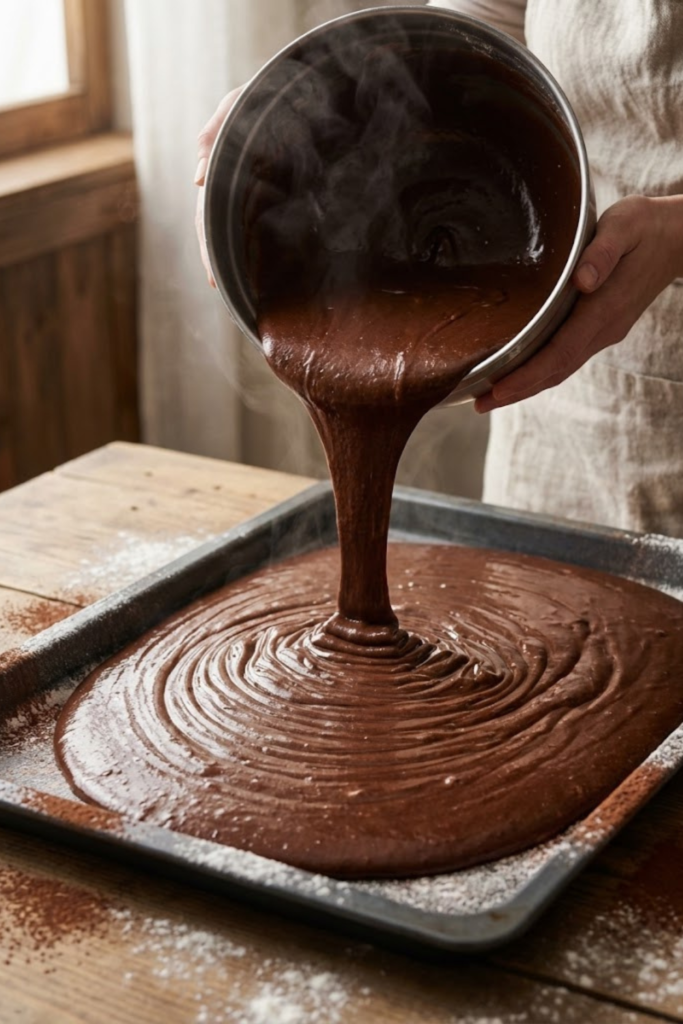
When you start mixing, you want to whisk the flour, sugar, and cocoa together first. Then you add your melted butter and the liquids. I always tell my students that you shouldn’t beat the batter like it’s a drum. If you mix it too much, the cake gets tough and chewy. You just want to stir until you don’t see any big white streaks of flour anymore. Then comes the scary part—adding that boiling water. It makes the batter look like chocolate soup, but that is exactly what you want. It’s going to be very thin, so be careful when you pour it into the pan so it doesn’t splash.
Knowing When It Is Actually Done
Slide that pan into the middle of the oven. Since it’s a thin cake, it bakes pretty fast—usually about 20 minutes. I start checking it at 18 minutes just to be safe. I use a toothpick and poke the center. If it comes out clean or with just a few tiny crumbs, it’s done. Don’t overbake it! If you leave it in too long, it loses that fudgy goodness. I usually set a timer on my phone and then stay in the kitchen so I don’t get distracted by a book or the TV. Once it’s out, let it sit on a wire rack. You want it to be warm but not hot when you start the frosting.
The Secret to Silky Chocolate Fudge Frosting
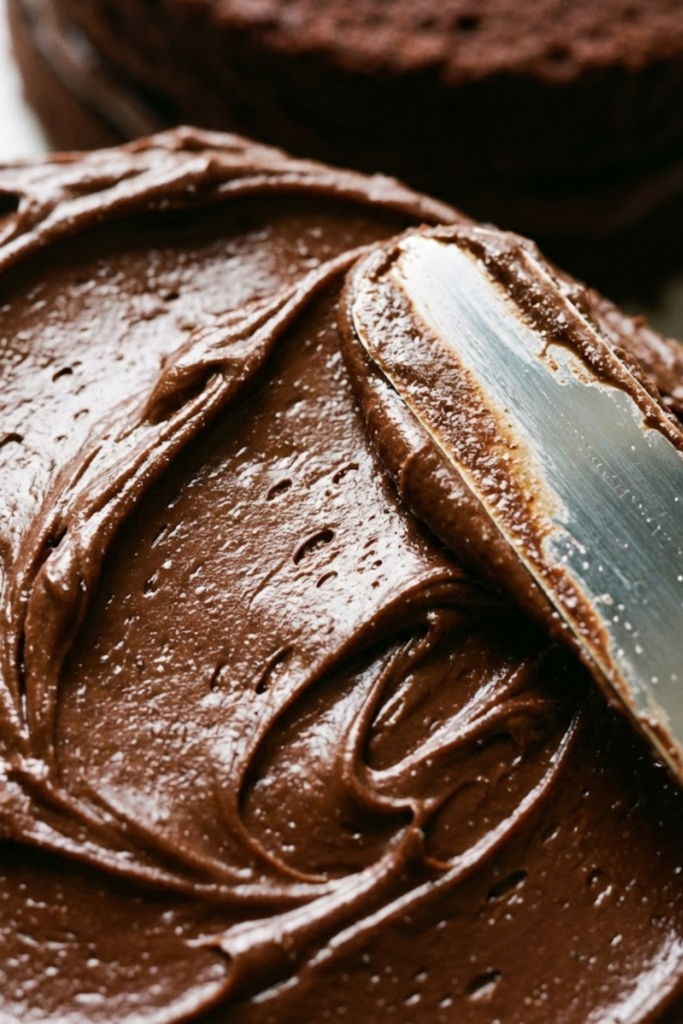
Now, we have to talk about the absolute best part of this whole process—the frosting. If the cake is the body, then this frosting is definitely the soul. I remember my first year teaching, I brought a cake to the end-of-year staff party and I totally messed up the icing. It was grainy and just looked really weird. I was so embarrassed sitting there while the principal took a bite! But I’ve practiced a lot since then, and I’ve figured out the trick. This frosting isn’t like that thick stuff you buy in a can. It is more like a warm, pourable glaze that hardens into a soft, velvety fudge. It is so good that I sometimes find my kids trying to lick the pot before I even finish pouring it onto the cake.
Mixing It While It’s Hot
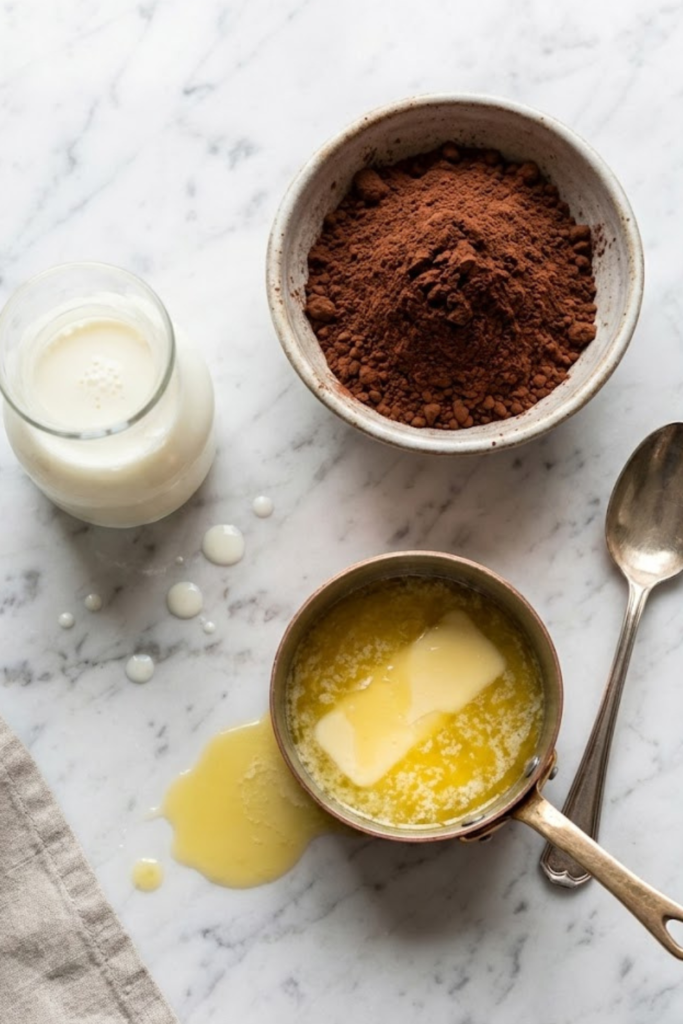
You start by melting your butter in a medium saucepan on the stove. Don’t let it get too hot or the butter might start to brown or separate. Once it is all melted, stir in your cocoa powder and a bit of milk. You want to whisk it until it is nice and smooth. I usually keep the heat on medium-low. If you try to rush it and turn the heat up high, the chocolate can burn, and let me tell you, burnt chocolate smells terrible and tastes even worse. It should eventually look like a glossy, dark chocolate river in your pot. This part always makes me feel like a professional chef, even if my kitchen sink is currently full of dirty dishes.
Why Sifting Is Actually Necessary
This is the part that people usually want to skip because it’s an extra step, but please don’t! You really have to sift your powdered sugar. I used to be lazy and just dump the sugar straight from the bag, but then you get these little white lumps that never go away no matter how hard you whisk. It looks like your cake has tiny sugar freckles, and they don’t taste great. Sifting makes the sugar light and airy so it melts right into the warm butter mixture. It takes an extra minute of your time, but it makes a huge difference in the final look. I always tell my students that shortcuts usually just lead to bigger problems later on.
Pouring and Spreading the Magic
The real secret to that “fudge” feel is pouring the frosting while the cake is still slightly warm. You don’t want it straight out of the oven, or the frosting will just run off the sides, but it shouldn’t be cold either. When the cake is warm, it lets a tiny bit of the frosting soak into the top layer. It creates this amazing fudgy barrier that is just incredible to bite into. Once you pour it on, use a spatula to quickly push it toward the edges of the pan. It sets pretty fast because of all that sugar, so don’t dawdle! If you wait too long to spread it, it won’t stay smooth and shiny. Just pour it, spread it, and let it sit. It’s the most satisfying part of the whole baking day.
Storage, Freezing, and Serving Suggestions
Once you have this big, beautiful pan of chocolate fudge sheet cake sitting on your counter, the biggest challenge is actually not eating the whole thing in one sitting! I’ve definitely had those days where I kept “leveling off” the edge of the cake with a knife until suddenly a quarter of it was gone. But if you have better self-control than I do, you are going to need to know how to keep it tasting just as good on day three as it did on day one. Since I’m usually making this for school events or family get-togethers, I’ve had to figure out the best ways to store it so it stays moist. There is nothing worse than a dry cake, and I’ve certainly made that mistake plenty of times by leaving things uncovered on the kitchen table overnight.
Keeping That Fudgy Texture Fresh
For the best results, I usually just leave the cake right in the baking pan. There is no need to move it and risk breaking that thin, fudgy crust on top. I just wrap the whole pan really tightly with plastic wrap or a big piece of aluminum foil. You want to keep the air out so it doesn’t get stale. I usually keep mine on the counter at room temperature. Believe it or not, I think putting it in the fridge actually makes it go dry faster. The cold air tends to pull the moisture out of the crumb. If your kitchen is really hot, like in the middle of summer, then the fridge might be okay, but otherwise, the counter is your best friend. It should stay perfectly soft for about three or four days, if it even lasts that long!
Can You Freeze a Whole Sheet Cake?
People ask me all the time if they can freeze this, and the answer is a big yes! I love doing this because I can sneak a piece out whenever I’m having a rough afternoon at work. I usually cut the cake into individual squares first. Then, I wrap each square in plastic wrap and put them all into a big freezer bag. This way, the frosting doesn’t get smashed. When you want a piece, you just let it thaw on the counter for about an hour. It tastes just like you baked it that morning. I’ve even popped a frozen square into my lunchbox, and by the time my lunch break rolls around, it is perfectly thawed and ready to go. It’s a nice little treat to look forward to between classes.
The Best Ways to Serve Your Masterpiece
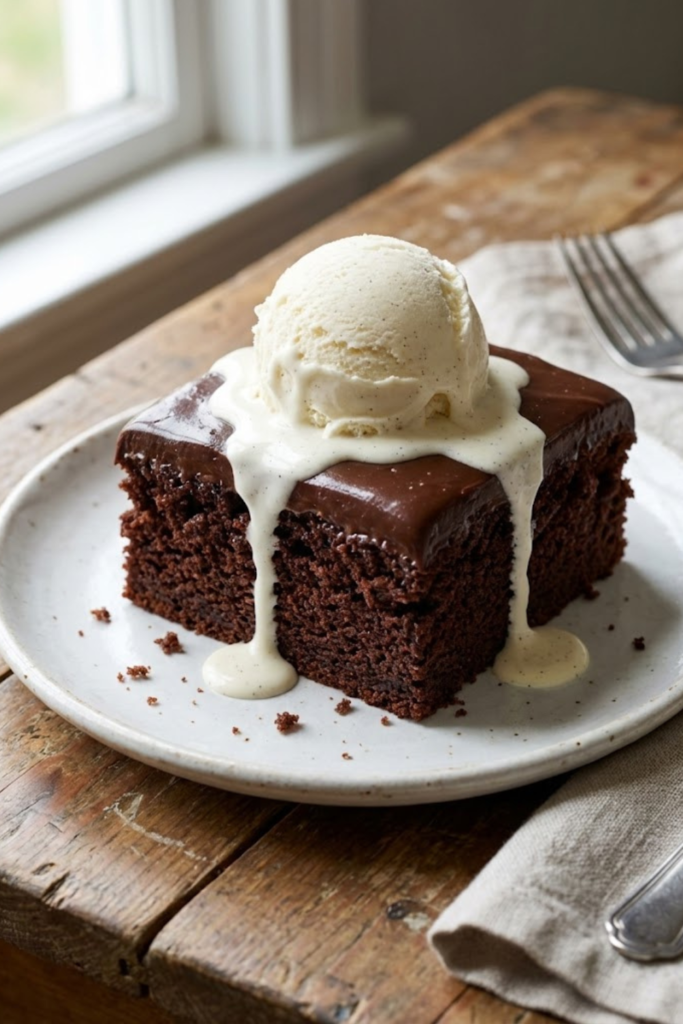
When it comes to actually serving the cake, I’ve found that a little bit of prep goes a long way. If you want those perfect, clean squares you see in pictures, try dipping your knife in a tall glass of hot water and wiping it dry between every single cut. It keeps the frosting from sticking to the blade and making a mess. For a real crowd-pleaser, I like to serve a warm square with a big scoop of vanilla bean ice cream right on top. The way the ice cream melts into that fudge frosting is just heaven. Sometimes I’ll even sprinkle a few extra chocolate chips or some crushed pecans on top if I’m feeling fancy. No matter how you serve it, people are going to love it. Just be ready to hand out the recipe!
Bringing It All Together
I’ve spent a lot of years baking treats for my students and my family, and if there is one thing I have learned, it is that you don’t need a fancy kitchen to make something amazing. This chocolate fudge sheet cake is the perfect example of that. It is simple, honest, and just plain good. Whenever I feel a bit stressed out after a long week of grading papers, I find that getting into the kitchen and measuring out some cocoa and sugar really helps me relax. There is something so satisfying about watching those basic ingredients turn into a decadent dessert that everyone is going to love. I really hope that you give this recipe a shot and see for yourself how easy it is to become the star of the next potluck.
I know that baking can sometimes feel like a lot of work, especially if you are worried about making a mistake. But honestly, even if the cake isn’t perfect, it’s still going to taste like chocolate fudge, and that is a win in my book! I’ve had my fair share of kitchen disasters—like the time I used salt instead of sugar—but those are just stories to tell later. This cake is very forgiving, so don’t be afraid to just jump in and try it. Just remember to keep an eye on that oven timer and don’t skip the sifting part for the frosting. Those little steps are what make the difference between a good cake and a great one.
I really believe that food is meant to be shared, and this sheet cake is the ultimate sharing dessert. It brings people together in a way that fancy, complicated dishes sometimes don’t. I love seeing the look on people’s faces when they take that first bite and realize it’s even better than it looks. It’s been a favorite in my house for a long time, and I’m really happy to be able to share my tips with you today.
If you enjoyed this recipe and think it looks delicious, please do me a huge favor! Save this post to your “Dessert Goals” or “Baking Recipes” board on Pinterest. It really helps me out and makes it easier for other people to find this chocolatey goodness. I’d love to hear how your cake turned out, so don’t be a stranger. Now, go grab your apron and get that oven preheated—you’ve got a cake to bake!