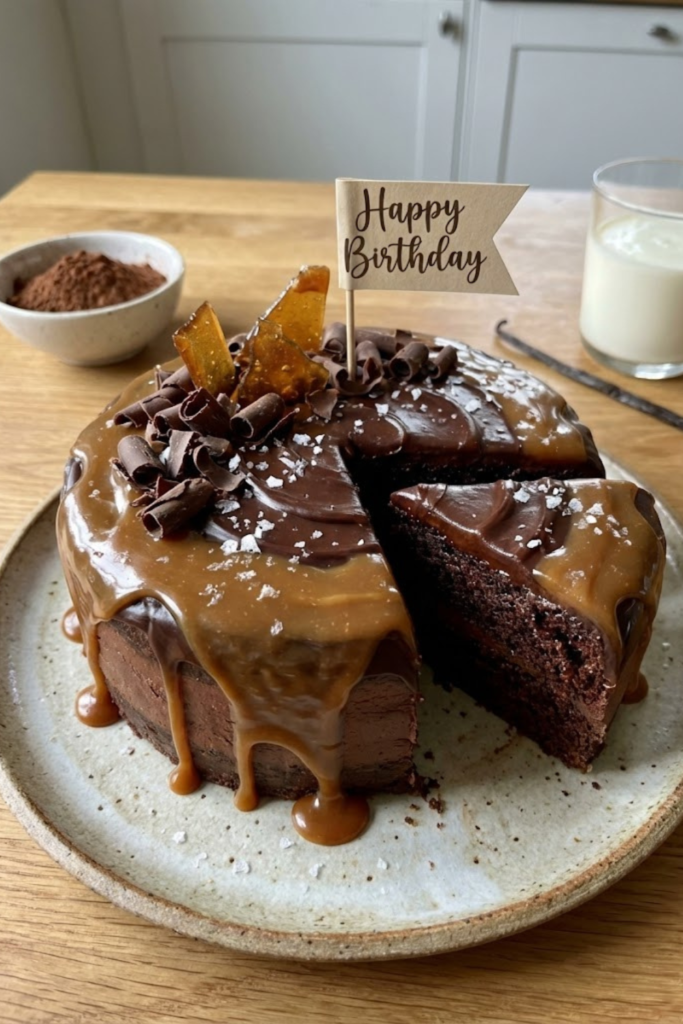
Did you know that nearly 25% of all birthday parties feature a chocolate cake? I totally believe it because chocolate is just the best, period. I remember when I first tried making a caramel chocolate birthday cake for my brother’s big 40th. It was a total mess! I didn’t let the layers cool enough, and the whole thing slid off the plate like a melting snowman. I felt so bad, but we just ate it with spoons anyway.
Now, I’ve learned a few things since that kitchen fail. You want a cake that’s super moist but strong enough to hold that heavy caramel. My 2026 version uses a few tricks I picked up after many burnt sugar incidents. It’s sweet, it’s salty, and it’s honestly the only cake my family asks for anymore! Let’s get into how you can make this without losing your mind like I did.
Pick the Right Cocoa for Deep Flavor
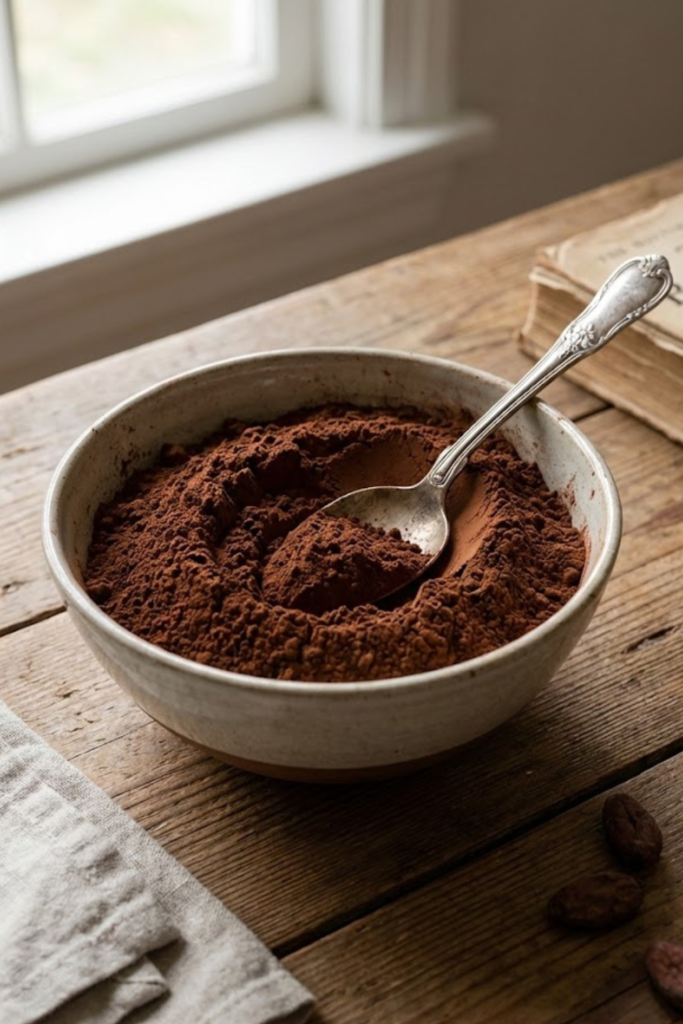
I used to think all cocoa powder was basically the same stuff. I would just grab the cheapest tub at the grocery store and hope for the best. That was a big mistake! My cakes always came out tasting like dry cardboard, and I couldn’t figure out why. As a teacher, I tell my students all the time that having the right tools for a project is half the battle. In baking, your cocoa powder is your most important tool. For a caramel chocolate birthday cake, you need a flavor that is strong enough to stand up to that heavy, sweet caramel filling. If the chocolate is weak, the whole cake just tastes like sugar.
Choosing Between Natural and Dutch-Processed
You usually have two main choices when you go to the store: natural cocoa or Dutch-processed cocoa. Natural cocoa is lighter in color and a little bit acidic. It reacts with baking soda to help the cake rise. However, for this specific birthday cake, I always reach for the Dutch-processed kind. It has been treated with an alkali to take away the sharp bitterness. This process makes it dark, rich, and very smooth. It gives your cake that professional, deep look that makes everyone go “wow” when you cut a slice. If you use the natural stuff, your cake might taste a bit tangy. That tanginess doesn’t always play nice with homemade caramel.
Why the Fat Content Really Matters
Here is a little secret I learned after many failed kitchen experiments. Look at the back of the cocoa tin at the nutrition label. You want to find a brand that has a higher fat content. Many cheap brands strip out all the cocoa butter, which leaves the powder very dry. You want to see at least 20% to 22% fat if you can find it. This fat is what makes the cake stay moist for days. I once made a cake with low-fat cocoa for a staff meeting, and it was so crumbly I couldn’t even get a clean slice. It just fell apart like a dry sandcastle. Higher fat makes the cake feel much better when you eat it.
How to Use the Blooming Trick
I always “bloom” my cocoa before I add it to the cake batter. This sounds like a fancy science term, but it is actually very simple. You just mix your cocoa powder with a hot liquid, like boiling water or hot coffee, before you put it in with the flour. The heat wakes up the chocolate flavor and gets rid of any lumps. It is similar to how a warm cup of tea smells much stronger than dry tea leaves in a bag. I like using hot coffee because it makes the chocolate taste even deeper. The cake won’t taste like a latte, I promise! It just makes the chocolate flavor pop. Taking these few extra minutes makes a massive difference in how the final cake tastes.
How I Finally Stopped Burning the Caramel
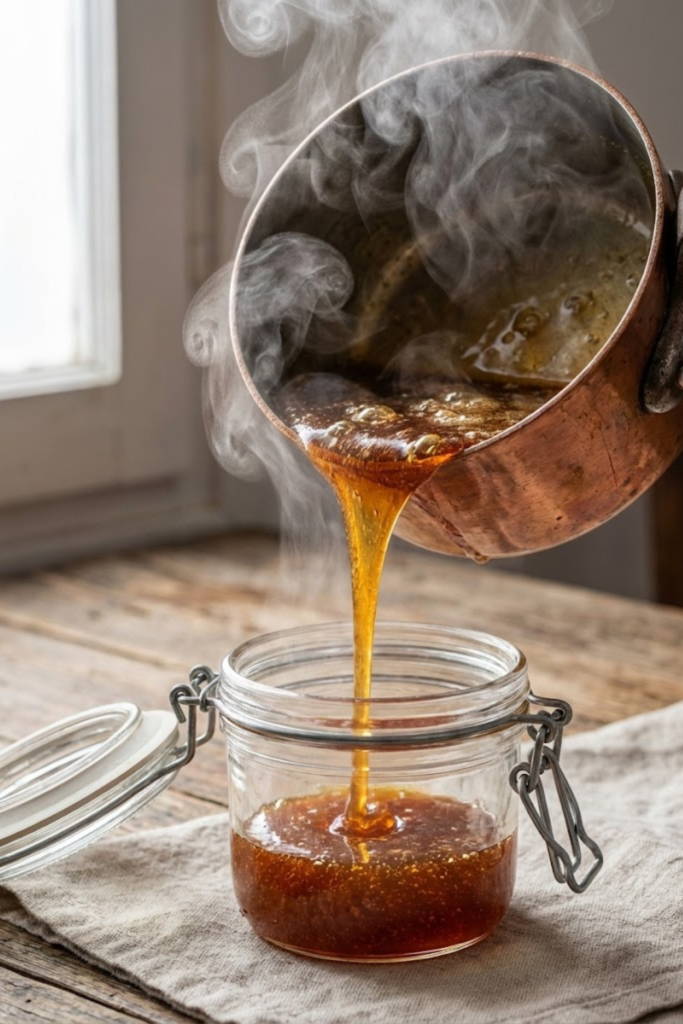
Making your own caramel can be really scary at first. I remember the first time I tried it, I ended up with a rock-hard lump of black sugar that stuck to my pan like glue. I had to throw the whole pot away! It was so frustrating and honestly, I wanted to cry a little bit. But after a lot of practice and a few ruined pans, I found out that it’s actually pretty simple if you just follow a few basic rules. You don’t need to be a professional chef to get it right for your birthday cake, you just need a little bit of patience. It’s one of those things where you have to watch it like a hawk.
Why You Should Put the Spoon Down
The biggest mistake I ever made was stirring the sugar while it was melting. I thought I was helping it melt faster, but I was actually ruining the whole batch. When you stir melting sugar, it splashes up on the sides of the pan. Then those little drops turn into hard crystals and makes your whole batch of caramel feel like sand in your mouth. It is a terrible texture! Now, I just put the sugar in the pan and let it sit. If I see it melting unevenly, I just gently swirl the pan around by the handle. Never put a spoon in there until the sugar is completely melted and turned a nice amber color. It feels weird to just watch it and do nothing, but it works much better.
The Secret of the Heavy Pot
I used to use a thin, cheap pot because I didn’t think it mattered what kind of metal I used. Boy, was I wrong about that! Thin pots have “hot spots” where the heat is way too high in one place and too low in another. This is how you end up with burnt sugar in one corner and dry, white sugar in the other. I finally bought a heavy-bottomed stainless steel pot, and it changed my life. The thick bottom spreads the heat out so the sugar melts at the same speed. It makes the process way less stressful. If you have a cast iron or a heavy Dutch oven at home, those work great too for making caramel.
Warming Up Your Cream
Another thing I learned the hard way is that cold cream and hot sugar don’t mix well. If you pour cold cream from the fridge into that hot melted sugar, it will bubble up like a volcano. I actually got a small burn on my hand once because the sugar jumped out of the pot. Now, I always put my heavy cream in the microwave for about 30 seconds so it’s warm before I use it. When I pour it in, it still bubbles, but it stays inside the pot where it belongs. Plus, it keeps the sugar from seizing up into a hard, giant ball. It makes the caramel much smoother and easier to pour over your cake layers. Taking this small step will keep your kitchen much cleaner and your hands much safer!
Stacking Your Cake Without It Sliding
Stacking a caramel chocolate birthday cake is probably the part that makes people the most nervous. I used to be so scared that the whole thing would just fall over like a stack of wet books. Like I mentioned earlier, I actually had a cake slide right off the stand one time because the caramel was too slippery and the cake wasn’t flat. It was a huge bummer! Since then, I’ve found a few ways to make sure my cakes stay tall and straight every single time. It really just takes a bit of planning and not rushing through it. If you take your time, you won’t have to worry about your hard work ending up on the floor.
Level Those Tops
Most cakes come out of the oven with a little hill on the top. If you leave that hill there and try to put another cake on top of it, the top layer is going to wobble. It’s like trying to balance a plate on a basketball. I take a long bread knife and carefully saw off the very top part of the cake until it’s perfectly flat. My kids usually eat the scraps, so they don’t mind at all! Once the cake is flat, the layers have a lot more surface area to grip onto each other. This is a simple step, but it makes the whole structure much stronger and helps it look professional.
Build a Frosting Dam
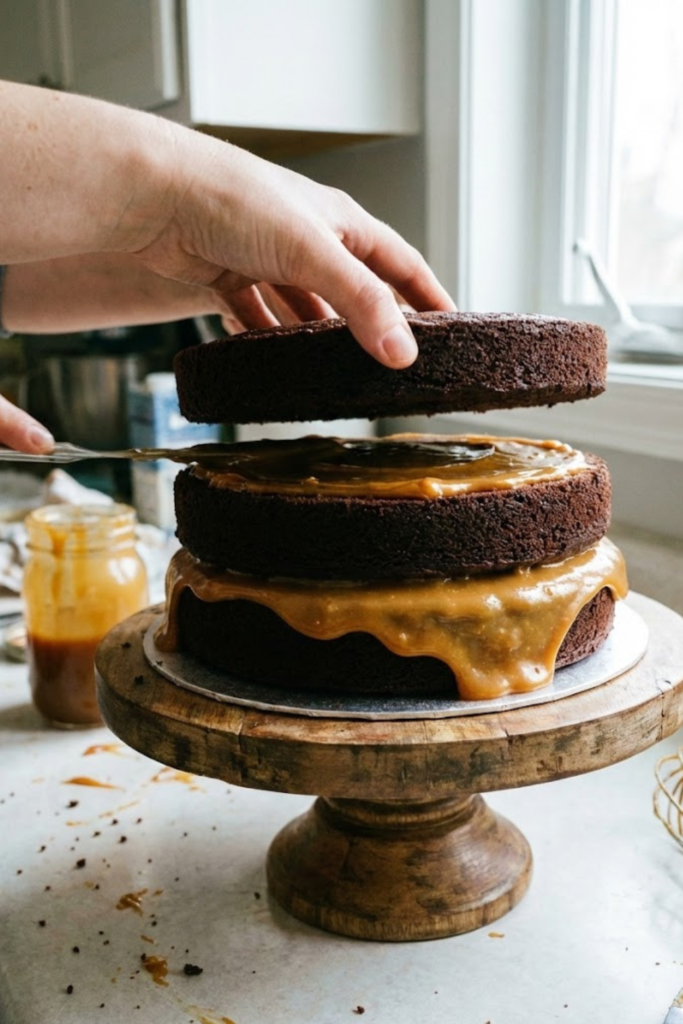
This is the most important part when you are using caramel. Caramel is very runny, even when it’s thick. If you just pour it on the cake, it will leak out the sides and make your frosting slide right off. To stop this, I put my frosting in a bag and pipe a thick ring all the way around the outside edge of the cake layer. It looks like a little wall or a dam. Then, I pour the caramel inside that wall. The frosting holds the caramel in place like a pool. It’s a great trick that I wish someone had told me years ago! It keeps the layers from slipping around on a sea of caramel and keeps the outside of your cake looking clean.
The Cold Fridge Trick
Finally, I always put my cake in the fridge for at least thirty minutes after I add a layer. When the frosting and caramel get cold, they get much harder. This acts like glue for your cake. If you try to do the whole thing while the cake is room temperature, it’s going to be very soft and hard to move. I like to assemble the layers, do a thin “crumb coat” of frosting, and then let it chill. By the time I’m ready for the final layer of frosting, the cake is solid and won’t go anywhere. It makes the whole job way easier and much less stressful for you.
Perfecting the Chocolate Ganache Drip
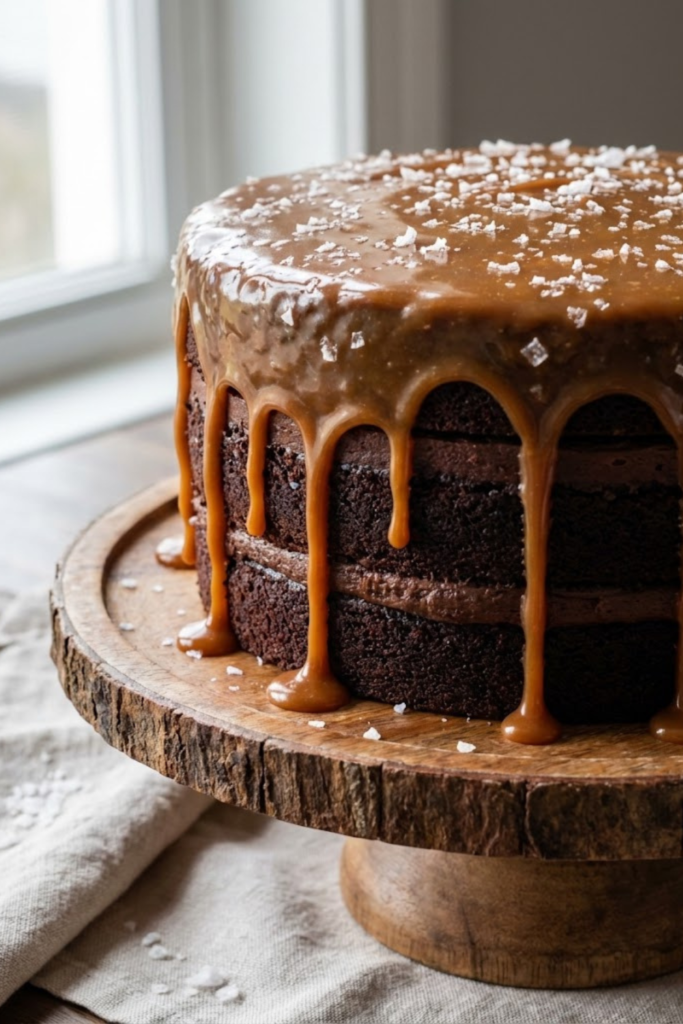
The drip is the part that really makes a cake look like it came from a fancy bakery window. For a long time, I was way too scared to even try doing it. I honestly thought you needed a special machine or some kind of professional degree to make it look right. But after I messed up a bunch of times—one time the chocolate was so thin it just pooled at the bottom of the plate like a big muddy puddle—I finally figured out the trick. It’s mostly about getting the chocolate and the cream to behave and work together. Once you get the hang of it, you might find yourself wanting to put a chocolate drip on every single dessert you make!
The 1:1 Ratio Rule
When you are making a ganache, you have to be really careful about how much of each ingredient you use. I always stick to a 1:1 ratio. All this means is that I use the exact same amount of chocolate as I do heavy cream. If you have a kitchen scale, this is super easy to do. I usually use about 100 grams of chocolate chips and 100 grams of cream. If you end up using too much cream, the drip won’t ever stop and it will just run all the way down the sides and make a huge mess on the cake board. But if you use too much chocolate, it gets too thick and looks like a lumpy brown blanket instead of a smooth drip. Just keep the amounts even and you will be in good shape.
Check the Temperature
The most common mistake I see people make—and trust me, I’ve done it plenty of times myself—is being too impatient. You melt the chocolate and you just want to pour it on the cake right away. But if the ganache is still too hot, it is going to melt the buttercream frosting on your cake instantly. Then you have a giant, sugary mess that is almost impossible to fix. I usually let my ganache sit on the counter for about ten or fifteen minutes after mixing it. You want it to feel just barely warm when you touch the side of the bowl. If it gets too cold and starts to get hard, just put it in the microwave for five seconds to loosen it back up.
Practice on a Glass
Before I ever touch my actual cake with the chocolate, I always do a test run first. I grab a cold glass from the kitchen cupboard and do just one single drip down the side. This shows me exactly how fast the chocolate is moving at that temperature. If the drip stops halfway down the glass, I know it is perfect and ready to go. If it hits the bottom of the glass in one second, I know I need to let it cool down a little bit more. I also think using a plastic squeeze bottle is way easier than using a spoon. It gives you so much more control so you don’t accidentally dump way too much chocolate in one spot. It’s always better to be safe when you have spent all day in the kitchen!
Wrapping Up the Birthday Magic
Well, we made it to the end! Making a caramel chocolate birthday cake is a lot of work, but I promise it is worth every single dirty dish in your sink. Every time I bring this cake out to a party, the room goes quiet for a second because it just looks so good. As a teacher, I love seeing that “aha!” moment when someone tastes the salty caramel and the dark chocolate together for the first time. It is a flavor combo that just works, like peanut butter and jelly or summer break and sunshine. Even if your drips aren’t perfect or your layers are a little bit crooked, the people you love are going to be so happy that you spent the time to make something from scratch for them.
What to Do with Leftovers
If you actually have any cake left over—which doesn’t happen very often at my house—you need to store it the right way so it stays yummy. I usually put my leftover slices in a plastic container and keep them in the fridge. Because of the butter in the frosting and the caramel, the cake gets a bit firm when it is cold. I always tell my friends to let their slice sit on the counter for about fifteen minutes before they eat it. This lets the caramel get gooey again and the chocolate cake gets its soft texture back. If you are in a real hurry, you can put it in the microwave for five seconds, but be careful! You don’t want to turn your beautiful cake into a soup.
Why Baking for Others Matters
I think the reason I keep baking, even when I have a busy week at school, is because it’s a way to show people I care without having to say a lot of words. A birthday is a big deal, and having a special cake makes the day feel different than any other Tuesday. I’ve seen kids’ faces light up and adults get really excited over a simple slice of chocolate. It reminds me that the small things we do in the kitchen can really make a big impact on someone’s mood. Don’t worry about making it look like a picture in a magazine. The “perfect” cake is the one that tastes good and is shared with friends.
Share Your Baking Success
I would really love to see how your cake turns out! If you found these tips helpful, please share this post on Pinterest so other home bakers can find it too. It helps me out a lot, and it lets more people learn how to make their own caramel without burning their favorite pots. If you have any questions or if you ran into a problem with your ganache, just let me know. We are all learning together, and even after years of baking, I still make mistakes sometimes. That is just part of the fun of being in the kitchen. Happy baking, and I hope the birthday celebration is absolutely wonderful!