Did you know that salmon is the second most consumed seafood in the U.S., yet 40% of home cooks say they are intimidated by cooking it perfectly?
I used to be one of them! There is nothing worse than dry, rubbery fish. But today, we are changing that narrative. This baked salmon with garlic and dijon is my absolute go-to weeknight savior. It’s vibrant. It’s incredibly fast. And honestly? It tastes like a restaurant-quality meal without the hefty price tag! We are going to dive into how a simple glaze can transform a humble fillet into a masterpiece. Get your apron on, because we are about to make some magic happen in the kitchen!
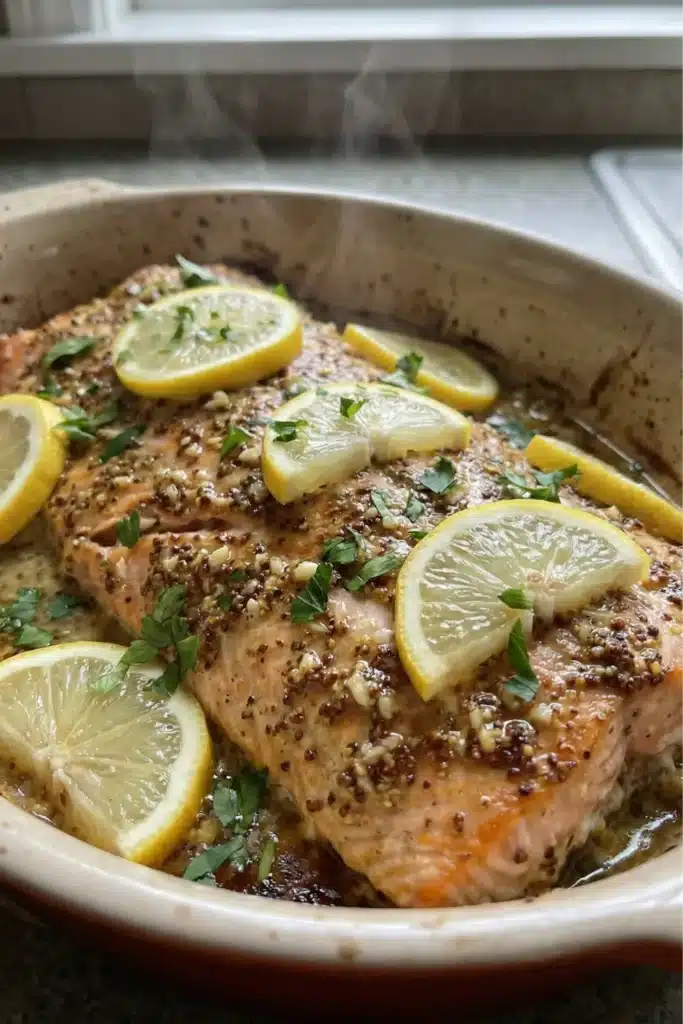
Gathering the Essential Ingredients for the Perfect Glaze
Honestly, I used to dread the seafood counter. Standing there staring at the ice bed, wondering if I should get the expensive wild-caught stuff or the budget-friendly option, was a total nightmare. I remember one time I just grabbed the cheapest fillet I could find, and it tasted like actual cardboard. Lesson learned the hard way. When you are making baked salmon with garlic and dijon, the quality of your ingredients does about 90% of the work for you.
You don’t need to break the bank, but you do need to be smart about what you pick.
Picking Your Fish Without Panic
Here is the deal with salmon: fat is flavor. I personally love Atlantic salmon for this recipe because it has a higher fat content, which makes it much more forgiving if you accidentally leave it in the oven a minute too long. Sockeye or Coho are leaner and healthier, sure. But they dry out faster than a puddle in the Sahara.
If you are new to cooking fish, stick with the farm-raised Atlantic variety. It stays juicy and takes the dijon mustard glaze really well. Just ask the fishmonger to smell it for you—it should smell like the ocean, not like fish.
The Mustard Situation
Do not, and I repeat, do not use that bright yellow stuff you put on hot dogs. It just doesn’t work here. I tried it once when I was out of the good stuff, and the result was weirdly sour and just sad. You want a mix if possible.
I grab a jar of coarse-ground mustard for texture and a smooth Dijon for the creamy factor. The grains pop in your mouth and add this fancy restaurant feel to the dish. It helps the sauce cling to the oven baked fish instead of sliding right off onto the pan.
Garlic and The Acid Trip
Okay, I’m going to sound like a snob, but put the garlic powder away. I love the convenience of powder too, but for this, it just gets lost in the mustard. You need fresh cloves.
Smashing a few cloves of garlic adds a punch that cuts through the richness of the fish. And please, use a real lemon. That plastic lemon squeeze bottle in your fridge door? It has a weird preservative taste that can ruin your savory salmon glaze.
Oils and Sweeteners
You might think oil is just oil, but I stick to extra virgin olive oil here. It blends with the mustard to make an emulsion.
Sometimes, if I’m feeling wild, I add a teaspoon of honey. It helps the top caramelize and get that beautiful golden color we all want on our healthy seafood recipes. It’s a small trick I picked up after burning a few batches—sugar burns fast, so don’t go crazy with it!
Just get these basics sorted, and you are already halfway to a killer dinner.

Prepping Your Salmon Fillets for Maximum Flavor Absorption
I have ruined more dinners than I care to admit simply because I was rushing the prep. There is nothing worse than pulling your baked salmon with garlic and dijon out of the oven, expecting a masterpiece, and finding a watery, sad mess. I used to think I could just throw the fish from the fridge package straight onto the pan. Big mistake.
If you want that restaurant-quality finish, you have to treat the fish right before it even sees the heat.
The Paper Towel trick
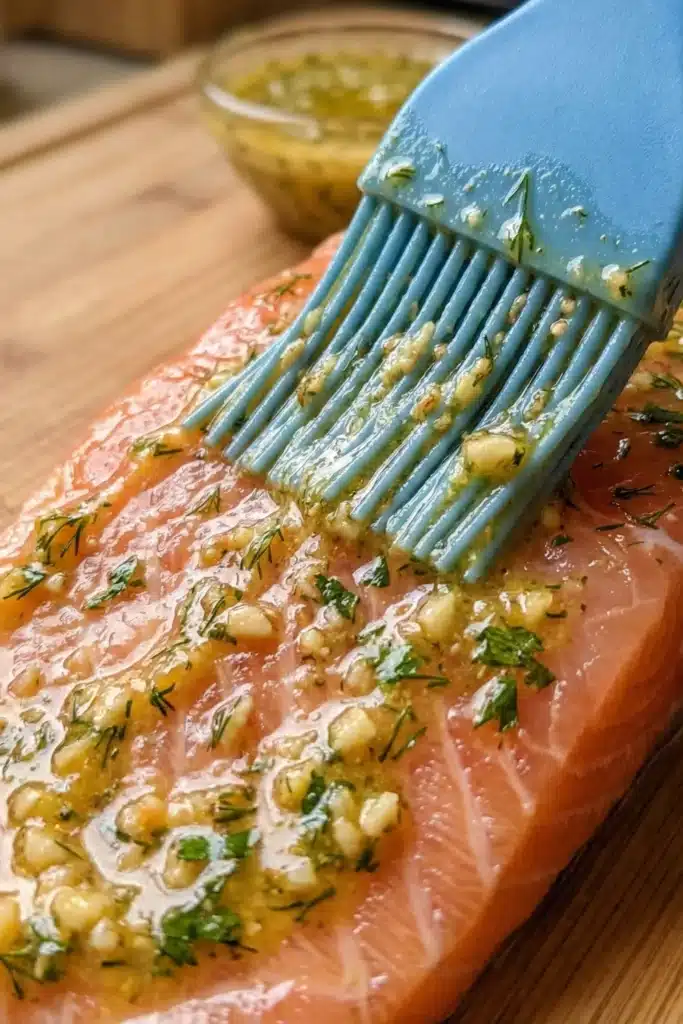
This is the number one rule I broke for years. Fish is wet. It sits in juices in the package. If you try to slather your sauce on wet salmon fillets, it just slides right off. It’s like trying to put lotion on wet skin—it just doesn’t work.
You need to grab a few paper towels and pat that fish down until it is bone dry.
I mean really dry it off. When the surface is tacky, the savory salmon glaze actually sticks to the meat rather than pooling on the baking sheet. It makes a huge difference in the final flavor.
The Temperature Mistake
Here is a little science for you, but I promise to keep it simple. If you cook cold fish in a hot oven, the muscles seize up. You know that white, creamy stuff that sometimes oozes out of salmon? That is called albumin.
It usually happens when the fish is shocked by the heat difference. It’s totally safe to eat, but it looks gross and usually means the fish is going to be tough.
I let my salmon sit on the counter for about 10 to 15 minutes before baking. Taking the chill off allows it to cook more evenly. It’s a total game changer for getting that buttery texture we are all chasing.
Layering the Flavor
I used to mix salt into my sauce and think that was enough. It wasn’t. You need to season the naked fish first.
Sprinkle kosher salt and black pepper directly onto the pink flesh before you brush on the sauce. This seasons the meat itself, not just the topping. When you bite into it, you get flavor all the way through, not just on the crust.
To Cut or Not to Cut?
If you bought a whole side of salmon, cut it into portions before you bake it. I tried baking a whole side once to save time. Serving it was a nightmare. I butchered it trying to get pieces off the skin with a spatula, and it looked like a crime scene on the plates.
Pre-cutting ensures every piece has nice, clean edges. Plus, the heat circulates better around each piece of oven baked fish.
Taking these extra five minutes for prep feels like a hassle when you are hungry, I get it. But trust me, the result is so much better. You don’t want to waste good ingredients on bad prep habits!
Mastering the Bake: Temperature, Timing, and Doneness
I have a confession to make. For the longest time, I was absolutely terrified of cooking fish. I used to stare at the oven window like a hawk, paralyzed by the fear that I was about to serve my family raw sushi or, even worse, fish jerky. There is a very fine line between “melt-in-your-mouth” and “dry-as-a-bone.”
I once served salmon to guests that was so dry they had to chug water between bites. It was mortifying. But after trial, error, and a lot of takeout pizza backups, I finally cracked the code.
finding the Sweet Spot
Many recipes tell you to bake low and slow, but I disagree for this dish. You want that dijon mustard glaze to bubble and get sticky, not just melt off.
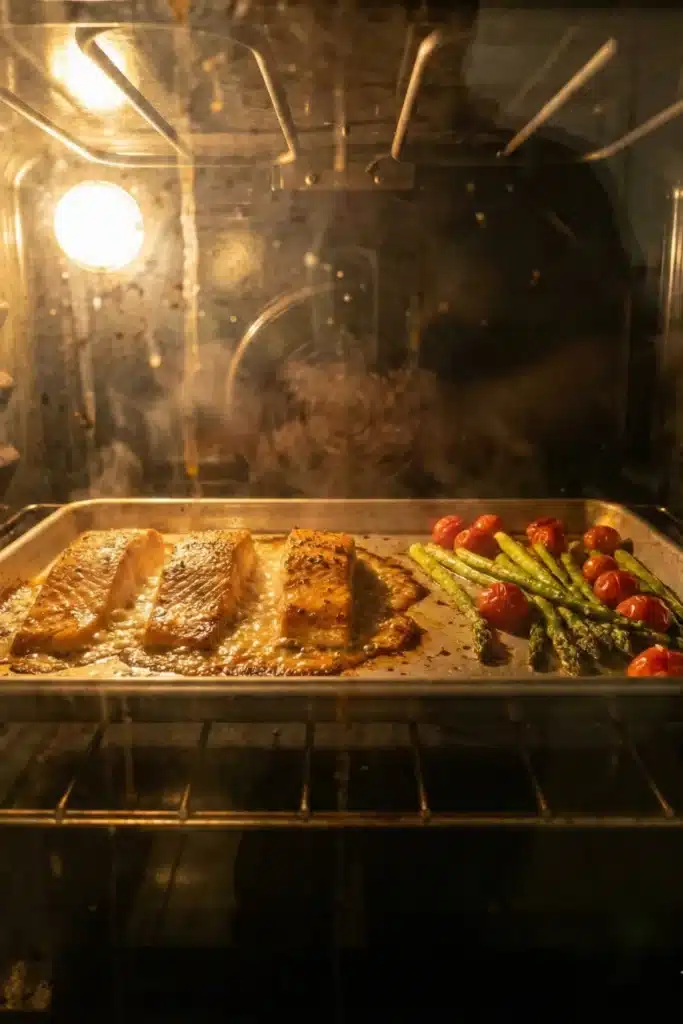
I crank my oven to 400°F (200°C). This high heat sears the outside quickly while sealing the juices inside the oven baked fish. It creates that lovely contrast between the savory topping and the tender meat.
If your oven runs hot, you might want to check it with an oven thermometer. I found out mine was off by 20 degrees, which explained a lot of my early kitchen disasters.
The 10-Minute Rule
Here is a general rule of thumb that saved my sanity: cook salmon for about 10 minutes for every inch of thickness.
But here is the catch. Salmon fillets are rarely even. The tail end is thin, and the center is thick.
If I have pieces of different sizes, I actually check the smaller ones at the 8-minute mark. Don’t be afraid to pull the thin ones out early! Leaving them in just because the timer hasn’t dinged is a rookie mistake I made for years.
Trust the Thermometer, Not the Clock
Honest advice? Buy a digital meat thermometer. It is the best twenty bucks you will ever spend.
Cooking is not a guessing game. You are looking for an salmon internal temp of 125°F to 130°F. This gives you a perfect medium finish where the fish is blushing slightly in the center.
Remember, the fish keeps cooking for a few minutes after you take it out of the oven. If you pull it out at 145°F, it’s going to be overdone by the time it hits the plate.
The Flake Test
If you don’t have a thermometer, you can use the “flake test.” Take a fork and gently twist it into the thickest part of the fish.
If the flakey fish recipe lives up to its name and the meat separates easily along the white lines, it is done. If it resists or looks rubbery and translucent, it needs another minute.
The Broil Finish
This is my secret weapon for baked salmon with garlic and dijon. When the fish is almost done, I switch the oven to “Broil” for the last 90 seconds.
You have to watch it carefully—I mean, do not walk away to check your phone! This blasts the top heat and turns the garlic and mustard into a golden, caramelized crust. It adds a texture that makes people think you ordered takeout from a fancy bistro.
Just don’t burn it. I’ve turned a beautiful dinner into charcoal in literally 30 seconds of distraction.
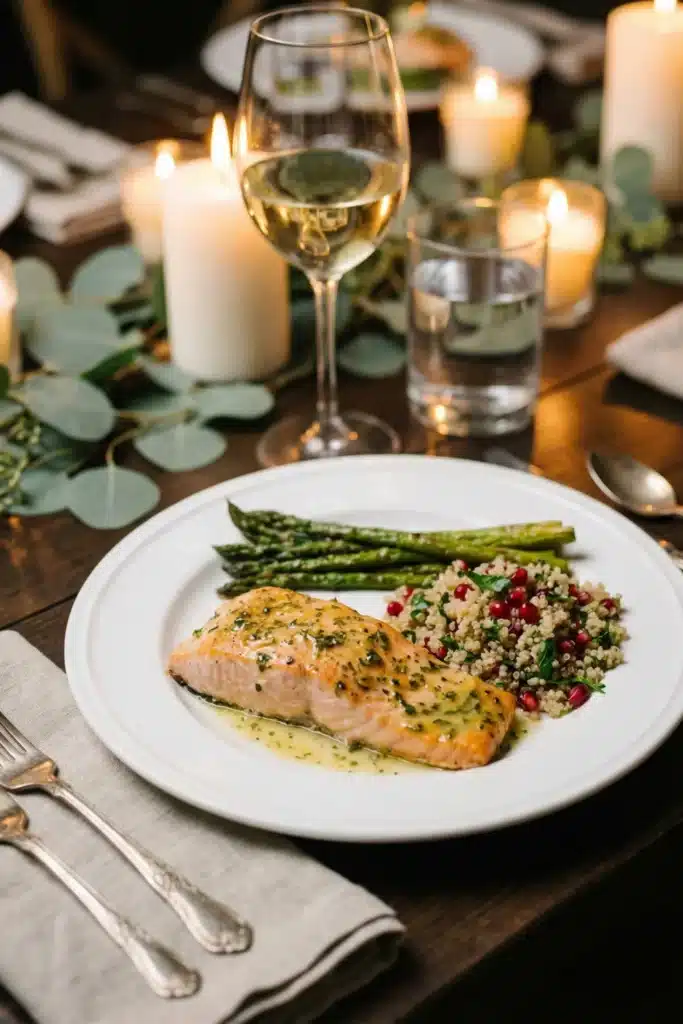
Serving Suggestions and Wine Pairings
I used to be the kind of cook who put all my energy into the main dish and completely forgot about sides until the timer went off. There were so many nights where we ate amazing baked salmon with garlic and dijon with… a handful of baby carrots straight from the bag. It was tragic.
A great piece of fish deserves a supporting cast that doesn’t steal the show but makes the whole plate look fuller. Over time, I learned that the sides need to be easy, or I just won’t do them.
The Green Stuff
Since the salmon cooks at 400°F, you want veggies that like high heat. My absolute favorite is a roasted asparagus side.
I just toss the spears in a little olive oil, salt, and pepper, and shove them in the oven on a separate rack for the last 10 minutes of the salmon’s cooking time. They come out crispy right when the fish is done. It’s a timing miracle.
If asparagus isn’t in season, fresh green beans work just as well. Just don’t boil them to death! I made that mistake once, and serving mushy grey beans next to vibrant pink salmon is a visual disaster.
Starchy Comforts
If you aren’t watching your carbs, you need something to soak up that extra sauce. The dijon mustard glaze that drips off the fish is liquid gold. You do not want to waste it.
I usually whip up a quick pot of lemon-herb rice. It’s bright and zesty, which matches the lemon in the fish.
If I have more time, roasted baby potatoes are amazing. But heads up: potatoes take way longer than fish. You have to start them at least 20 minutes before the salmon goes in. I learned that the hard way when we ate the fish first and ate the potatoes as a “dessert” because they were still raw in the middle.
Keeping it Light
For my low-carb friends, this dish is already a winner. To keep it a strict keto salmon recipe, I skip the rice and do cauliflower rice instead.
Honestly, sometimes I just throw the warm salmon on top of a big, cold arugula salad with a vinaigrette. The peppery arugula fights back against the rich garlic butter. It makes me feel incredibly healthy, which usually justifies the cookie I eat later.
What to Drink?
Okay, I am not a fancy wine snob. I usually just drink whatever is cold and open in the fridge. But I have learned that certain wines actually make the food taste better.
For this recipe, you want a white wine pairing that has high acidity. Think of it as a squeeze of lemon in a glass.
A crisp sauvignon blanc food pairing is classic because it cuts right through the fatty oils of the salmon. It refreshes your palate after every bite of that garlicky goodness.
If you prefer something fuller, an oaked Chardonnay works too, especially with the buttery dijon sauce. It mimics the creaminess of the dish.
Just avoid heavy reds. I tried a Cabernet with this once, and the metallic taste in my mouth was awful. Stick to the whites or a light Rosé, and you can’t go wrong.
Storage and Reheating Without Drying Out
I used to think that fish was a “one night only” kind of meal. The few times I tried to save it, I ended up with something that smelled like a fishing boat and tasted like an old shoe. It was gross. But then I started getting into meal prep because, honestly, who has time to cook every single night?
Learning how to store and reheat baked salmon with garlic and dijon changed my lunch game completely.
The Fridge Rules
First off, you have to get that fish into the fridge fast. Don’t let it sit out on the counter while you clean the kitchen. Bacteria love room temperature food.
I put my leftovers in an airtight glass container. It stays good for up to 3 days.
If you push it to day 4 or 5, you are playing a dangerous game with your stomach. I’ve done it, and let’s just say I regretted it immediately.
Cold is Gold
Here is a secret: reheating salmon is usually where things go wrong. So, why bother?
My favorite way to eat leftover salmon ideas is straight out of the fridge. It sounds weird, but the texture is actually firmer and less flaky when cold. I flake it over a salad or mix it with a little mayo and capers for a quick sandwich filling.
It’s way better than risking drying it out. Plus, it makes meal prep fish lunches super easy since you don’t have to find a microwave.
The Microwave is the Enemy
Speaking of microwaves… please, for the love of everything holy, do not microwave your leftover salmon. Just don’t do it.
I once warmed up fish in the staff breakroom. The smell was so strong that my coworkers were giving me side-eye for the rest of the week. It was humiliating.
Beyond the smell, microwaves zap the moisture right out of the fillet. You end up with rubber.
The “Low and Slow” Reheat
If you really need a hot meal, use the oven. I know, it takes longer, but it is worth it.
Preheat your oven to 275°F. Place the fish on a baking sheet and splash a tiny bit of water or vegetable broth on it. Then, cover it loosely with foil.
This creates a little steam bath that wakes the fish up without cooking it all over again. It takes about 15 minutes. It comes out almost as good as it was fresh. It requires patience, but your tastebuds will thank you.
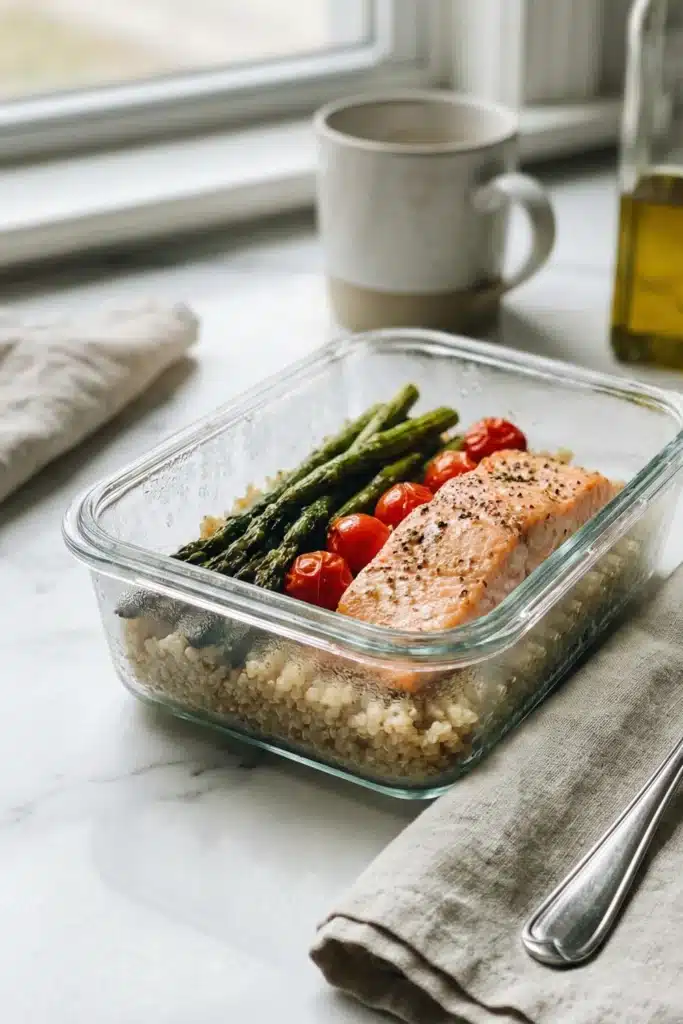
So, there you have it. You don’t need to be a professional chef to make a killer seafood dinner. This baked salmon with garlic and dijon is proof that you can have something healthy, fast, and incredibly tasty on the table in under 30 minutes.
I really hope you give this a shot. It has saved me from ordering pizza on so many busy weeknights. The mix of tangy mustard and savory garlic is just addictive.
If you mess it up the first time, don’t stress! We have all been there. Just scrape off the burnt parts and keep going. Cooking is all about learning.
If you enjoyed this recipe, please do me a huge favor and share it on Pinterest! It helps other home cooks find these easy recipes.
Enjoy your dinner!