Can you believe it’s already spring? I absolutely adore this time of year when the farmer’s markets explode with fresh green colors! There is something truly magical about the combination of sweet, popping fresh peas and the salty, savory crunch of crispy prosciutto. It’s a match made in heaven. In fact, did you know that peas lose up to 40% of their sugar content within a few hours of harvest? That’s why fresh is best! This Spring Pea and Prosciutto Linguine isn’t just a meal; it’s a celebration of the season on a plate. I’ve made this for date nights, quick family dinners, and even solo nights in with a glass of wine. It never fails to impress. Let’s dive into this vibrant bowl of goodness!
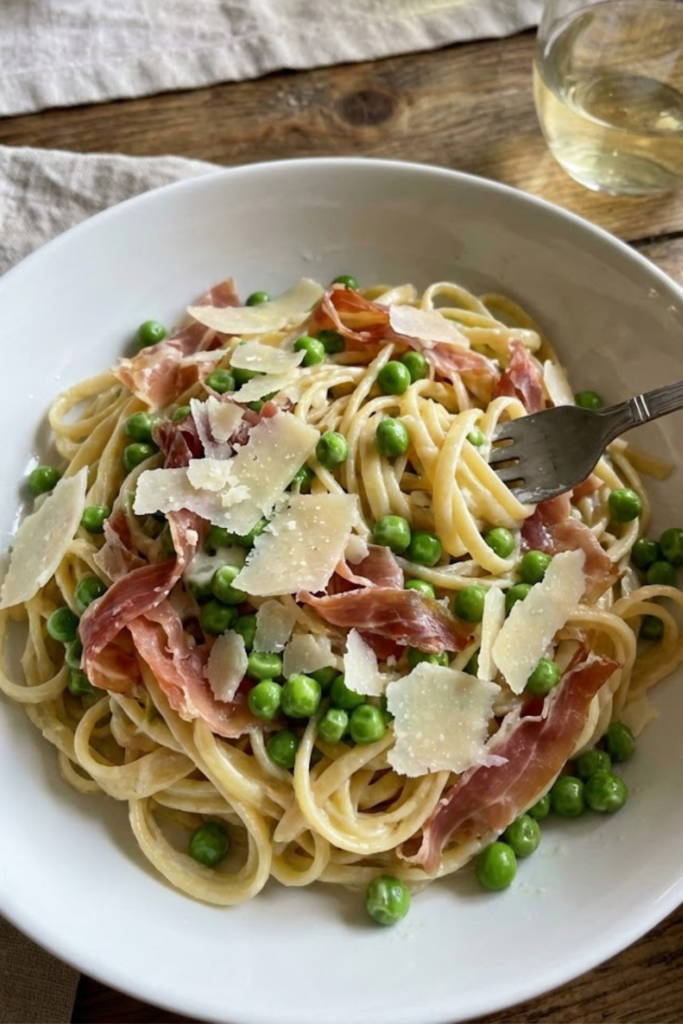
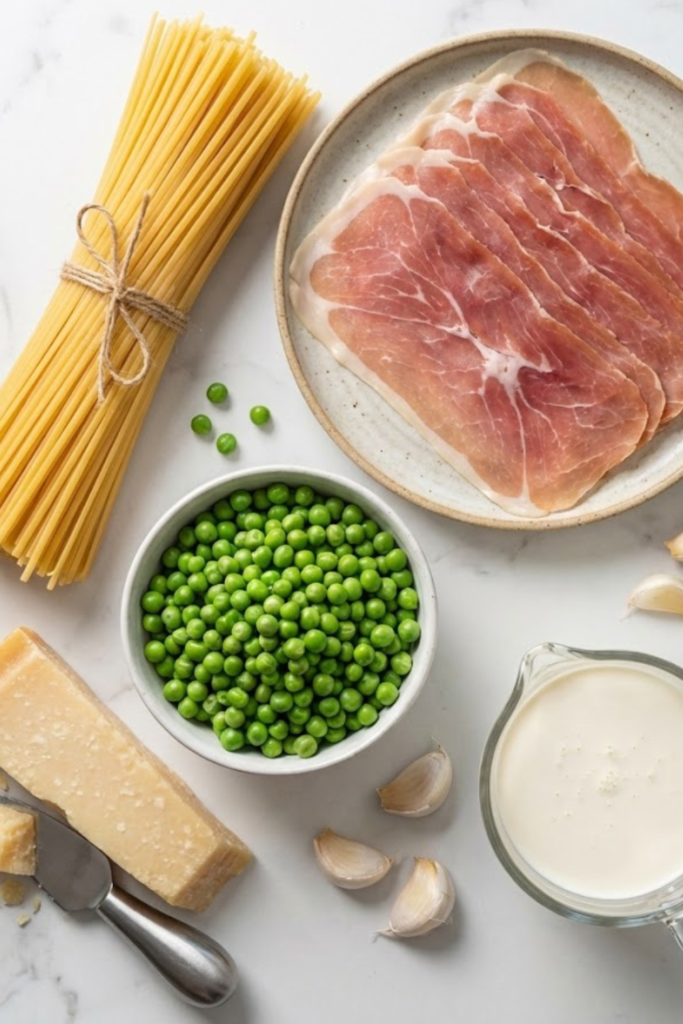
Ingredients for Fresh Spring Pasta
You know, for the longest time, I honestly thought the sauce was the only thing that mattered in a pasta dish. I’d grab whatever box of noodles was on sale, throw in some frozen veggies that had been sitting in the back of my freezer since 2019, and wonder why my dinner didn’t taste like the ones at that fancy Italian spot downtown. It took me a few disastrous dinner parties to realize that for a dish like Spring Pea and Prosciutto Linguine, the ingredients are doing all the heavy lifting. If you skimp here, there’s nowhere to hide.
I remember one specific time I tried to make this with that “parmesan” that comes in a green shaker can. Big mistake. The sauce turned gritty and salty in a bad way, and I was so embarrassed I ordered pizza instead. So, let’s talk about what you actually need to make this sing.
The Pasta Situation
Listen, dried pasta is fine for a Tuesday night spaghetti, but if you want to impress, you gotta go fresh. Fresh linguine has this incredible egg-rich flavor and a texture that dried pasta just can’t replicate. It absorbs the sauce differently. I usually grab the refrigerated kind at the store if I don’t have time to make it myself (which, let’s be real, is most of the time).
If you absolutely must use dried, look for bronze-die cut pasta. It has a rougher surface that grabs onto the cream sauce better. Slippery noodles are the enemy here.
The Green Stuff
Let’s talk about the peas. I used to think a pea was a pea. Nope.
I learned the hard way that peas lose their sugar content super fast after they get picked. Like, within hours. I once bought unshelled peas that looked a bit tired, and they tasted like starchy chalk. It was gross.
For this Spring Pea and Prosciutto Linguine, find the brightest, squeakiest pods you can. If you snap one open and taste a raw pea, it should be sweet like candy. If you can’t find good fresh ones, honestly, just use high-quality frozen petite peas. They are flash-frozen right at harvest, so they’re actually sweeter than “fresh” peas that have been sitting on a truck for a week. Just don’t use canned peas. Please. That mushy texture will ruin everything.
The Salty and Savory
Now for the prosciutto.
Don’t buy the pre-packaged stuff that’s all stuck together in a impossible-to-open plastic brick. Go to the deli counter. Ask for Prosciutto di Parma, and ask them to slice it paper-thin. You want it to basically dissolve on your tongue. When we crisp this up later, the fat needs to render out quickly, and thick slices just turn into ham leather. We want crispy, salty shards that shatter when you bite them.
The Creamy Binder
Finally, the cheese and cream.
As I mentioned earlier, put the green can down. You need a block of real Parmigiano-Reggiano. The real stuff has these little crunchy crystals in it that are just pure umami flavor. You have to grate it yourself. Pre-grated cheese is coated in potato starch to keep it from clumping, and that starch makes your sauce gloopy instead of silky.
We are also using heavy cream here. Don’t try to swap it for milk or half-and-half to save calories. It won’t reduce properly, and the sauce will break (separate into oil and water). I’ve cried over a broken sauce before, and I don’t want that for you. Just commit to the heavy cream; it’s worth it.
How to Crisp the Prosciutto Perfectly
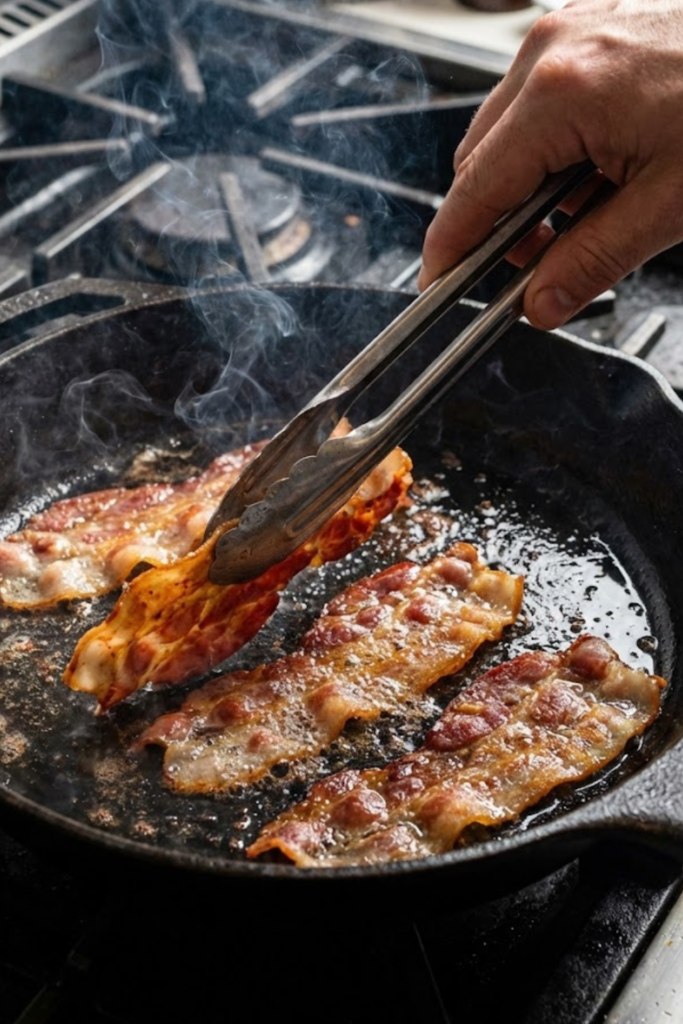
Okay, moving on to the meat of the matter—literally. This is the step where things can go wrong if you aren’t paying attention. I remember the first time I tried this recipe, I cranked the heat up high because I was hungry and impatient. Bad idea. The meat seized up immediately and turned into these tough little chewy knots. It was impossible to eat gracefully.
Through a lot of trial and error in my own kitchen, I found that patience is actually the secret ingredient here. Here is how to get that restaurant-quality crunch without burning the house down.
Start With a Cold Pan
This might sound backward, but you have to trust me. Lay your thin slices of prosciutto out in your skillet before you even turn the knob on the stove. Seriously, put them in a cold pan.
Then, turn the heat to medium-low. This allows the fat to melt slowly—chefs call this “rendering”—before the meat starts to crisp up. If you throw cold meat into a hot pan, it shocks the muscle fibers and they tighten up. By starting cold, the fat turns into liquid grease that fries the meat from the inside out.
Give It Room to Breathe
I know you want to cook it all at once to save time, but don’t do it. If you pile the slices on top of each other, the steam gets trapped between the layers. Instead of frying, the meat steams, and you end up with what I call “soggy ham towels.” It’s gross.
Cook it in batches if you need to. You want a single layer so the heat hits every part of the slice evenly.
The Texture Test
You will know it is done when the color changes from pink to a deep, brownish-red. But the real test happens outside the pan. Pull a piece out and let it sit on a paper towel for a minute. As it cools, it should stiffen up.
When you break it, it should shatter almost like a piece of thin glass. That is exactly what we want. Soft pasta plus crunchy, salty shards of prosciutto is the texture combo that makes this Spring Pea and Prosciutto Linguine so good.
Save the Liquid Gold
Once you take all the meat out, stop! Do not put that pan in the sink. Look at that grease left in the bottom. That is liquid gold. It is full of salty, savory flavor from the cured pork. We are going to cook our onions and garlic right in that fat. If you wash it away, you are washing away the best part of the flavor base. Just set the pan aside on a cool burner until we are ready for the veggies.
Cooking the Linguine and Peas
This part seems easy, right? I mean, it is just boiling water. But honestly, this is where a lot of home cooks mess up the texture. I used to just throw noodles in a pot and walk away to watch TV, coming back to a pot of mush. For this Spring Pea and Prosciutto Linguine, we need everything to be snappy and fresh.
Here is how I manage the pot so everything comes out perfect at the exact same time.
Salt the Water Like the Ocean
I tell my students this all the time: water is the only chance you have to flavor the actual pasta noodle itself. If you don’t salt the water, your linguine will taste plain no matter how much sauce you put on top.
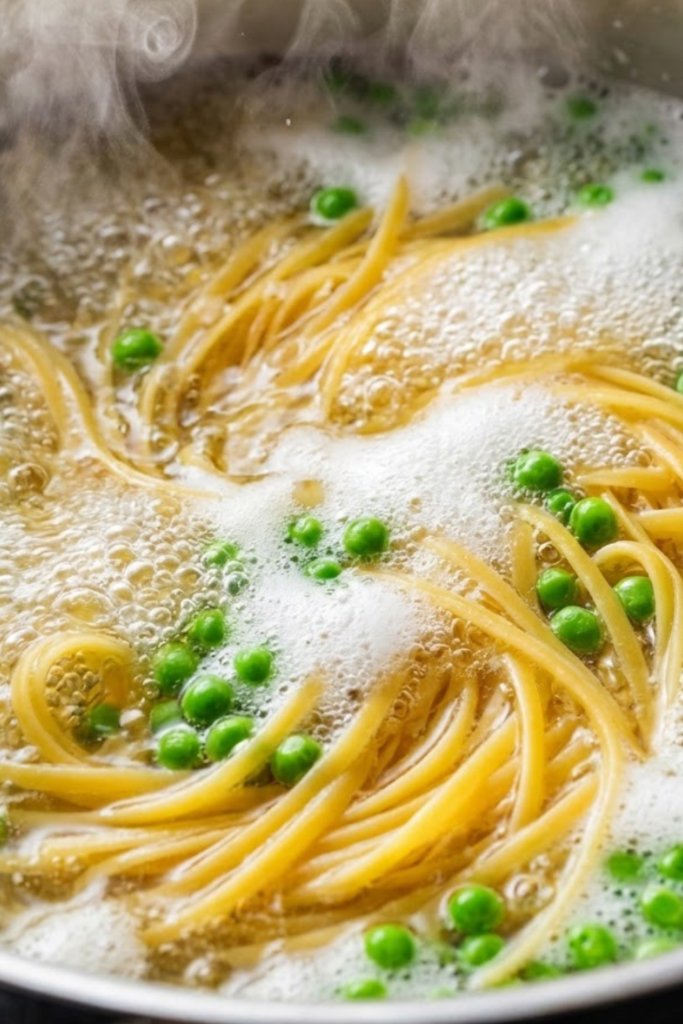
Get a big pot of water boiling. When it’s rolling, add a big handful of salt. It should taste salty like sea water. I know it seems like a lot, but most of it goes down the drain anyway. Also, please don’t put oil in the water! I see people do this thinking it stops sticking, but all it does is make the sauce slide right off the noodles later. We want the sauce to stick!
The Two-Minute Drill for Peas
Here is a trick to save you from washing an extra pot. We are going to cook the peas right in the pasta water.
Drop your fresh linguine into the boiling water. Fresh pasta cooks fast, usually in about 3 to 4 minutes. If you are using dried, look at the box time.
When there are exactly 2 minutes left on the timer, dump your fresh shelled peas right into the boiling water with the pasta. That is it. If you cook them longer, they turn a sad, army-green color and get squishy. We want them bright green and popping with flavor.
The Mug Trick (Do Not Skip This!)
Before you even think about carrying that heavy pot to the sink to drain it, grab a coffee mug.
Dip it carefully into the pot and scoop out about a cup of that cloudy, starchy water. Set it aside. Do not forget this! I have poured the water down the drain so many times and then realized I forgot to save some. I literally shouted “No!” in my empty kitchen.
That starchy water is the glue that makes the cream sauce stick to the noodles. Without it, your pasta will be dry.
Drain It Early
Drain the pasta and peas into a colander, but don’t shake it too dry. You want it a little wet. Also, make sure the pasta is al dente, which just means “to the tooth.” It should still have a little white bite in the center. It is going to cook for another minute or two in the hot sauce pan, so if it is fully cooked now, it will be overcooked later.
Making the Creamy Parmesan Sauce
Alright, we’re in the home stretch! This is my favorite part because the kitchen starts to smell absolutely amazing. When I first started making this Spring Pea and Prosciutto Linguine, I was terrified of cream sauces. I thought they were these complex, chef-y things that I’d surely mess up. But honestly? It’s way simpler than it looks. It’s all about timing and heat control.
Let’s get that rich, velvety sauce going.
Sauté the Aromatics
Remember that pan with the leftover prosciutto fat? Put it back on medium heat. If it looks a little dry, add a tiny splash of olive oil or a small knob of butter. We’re going to toss in our finely chopped shallots first.
Let them sizzle and soften for about 2-3 minutes. You don’t want them brown or crispy, just translucent (that means see-through). Then, add the minced garlic. Garlic burns fast—like, blink-and-you-miss-it fast—so only let it cook for about 30 seconds until you can smell it. If you burn it, it tastes bitter and ruins the whole dish. I’ve done it, and it’s tragic.
The Creamy Base
Now, pour in the heavy cream. It’s going to bubble up, so be careful. Turn the heat down to low. We want a gentle simmer, not a rolling boil. If you boil it too hard, the cream can separate, and you’ll get a greasy mess instead of a smooth sauce.
Let it bubble gently for about 3-4 minutes. You’ll see it start to thicken slightly. It should coat the back of a spoon. Run your finger through the sauce on the spoon (careful, it’s hot!); if the line stays and doesn’t drip, it’s ready.
The Cheesy Finish
Here is the most important rule of cream sauce: Turn off the heat before adding the cheese.
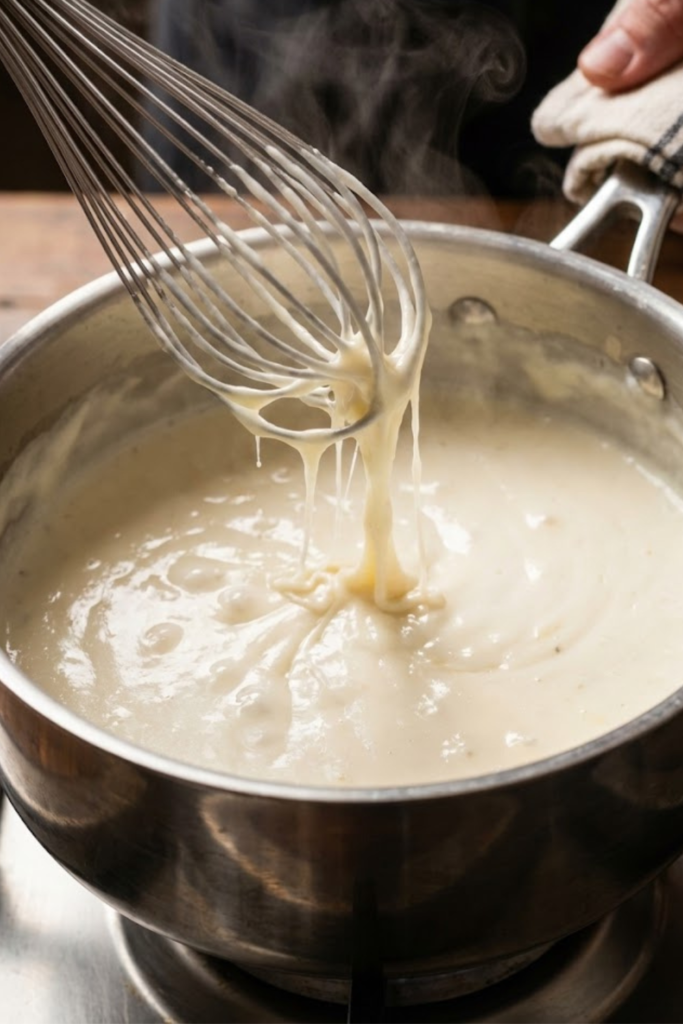
I cannot stress this enough. If the pan is too hot when you add the Parmesan, the cheese will seize up and turn into a stringy, clumpy nightmare. Remove the pan from the burner completely. Then, gradually whisk in your freshly grated Parmesan.
Keep whisking until it’s melted and smooth. It should look glossy and luxurious. If it looks a little too thick, don’t panic! Remember that mug of pasta water we saved? Splash in a little bit—maybe a tablespoon at a time—and whisk it in. This is where the magic happens. The starch in that water smooths everything out and makes the sauce perfectly creamy.
Bringing It All Together
Now, dump your drained linguine and peas right into the sauce. Use tongs to toss everything together gently. You want every single noodle coated in that cheesy, creamy goodness. If it seems dry, add another splash of pasta water.
Finally, crumble that crispy prosciutto we made earlier right on top. I like to keep a few big pieces for garnish, but crush the rest so you get a salty crunch in every bite. And there you have it—a sauce that looks like it came from a 5-star kitchen, made right in your pajamas.
Serving Suggestions and Wine Pairings
Okay, so the hard work is done. You have a pan full of beautiful pasta. Now, we just need to get it on the table without it looking like a school cafeteria lunch. I used to just scoop it onto a plate and call it a day, but I learned that we eat with our eyes first. Making it look nice actually makes it taste better, I swear.
Plating Like a Pro
You know how at restaurants the pasta is always in this perfect little mountain? It’s actually really easy to do. Grab a meat fork or a pair of tongs. Grab a bunch of noodles, lift them up, and then twirl the fork while you slowly lower it into the bowl. It creates this nice height.
If it falls over, who cares? It’s still going to taste good. But give it a try.
The Finishing Touches
Once it’s in the bowl, don’t stop there. I always crack a bunch of fresh black pepper on top. It adds a little heat that cuts through the creamy sauce. If you want to be really fancy, you can sprinkle on some pea shoots. I found them at the farmer’s market once and felt so professional using them. They taste just like fresh peas!
Also, grate a little more of that Parmesan on top. You can never have too much cheese, right?
What to Drink
Now, for the best part—the wine. I am definitely not a wine expert, but I know what I like. Since this dish is rich and creamy, you want a wine that is crisp and acidic to wash it down.
I usually go for a Pinot Grigio or a Sauvignon Blanc. They are light and zesty. A heavy red wine like Cabernet would just overpower the sweet peas and the delicate prosciutto. Stick to the white wines for this one. If you don’t drink alcohol, a sparkling water with a squeeze of lemon is really refreshing too.
What to Serve on the Side
Since the pasta is pretty heavy with the cream and cheese, I like to serve something light on the side. A simple arugula salad is perfect. The peppery taste of the arugula goes so well with the salty ham.
I just toss the greens with a little olive oil, lemon juice, and salt. That’s it. You don’t need a heavy ranch dressing here. The acid in the lemon juice helps clean your palate between bites of the creamy pasta. It’s all about balance!
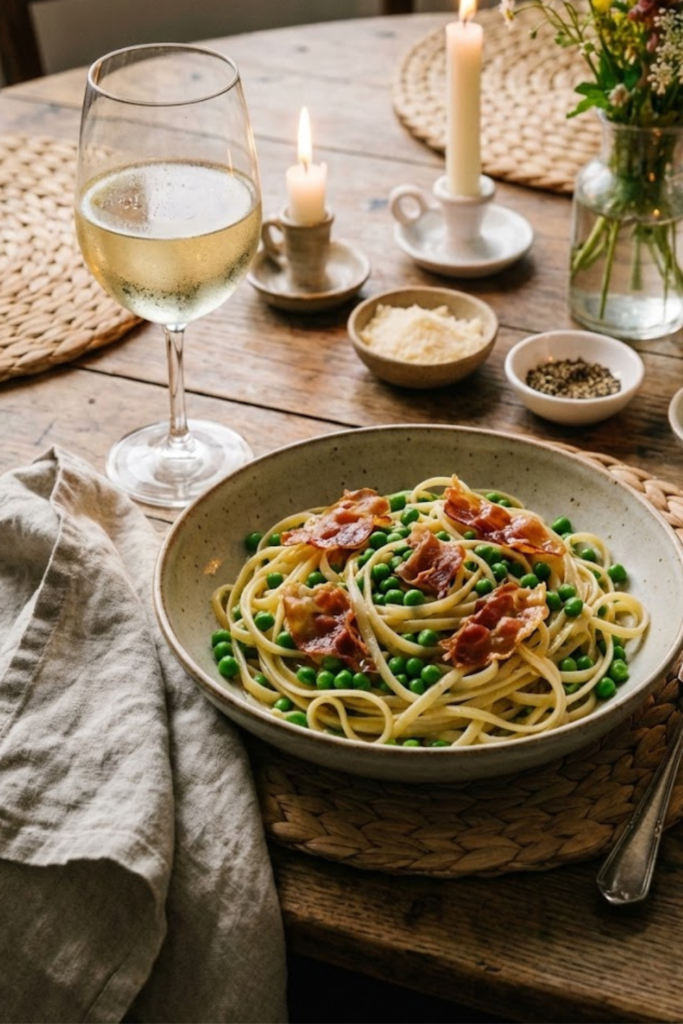
Well, there you have it, friends. That is my absolute favorite way to welcome spring. I know it might seem like a lot of steps when you read it all out, but honestly, once you get that water boiling, it really does fly by. My kids even asked for seconds last time I made this, which is the real win in my book because they are usually picky about “green stuff.”
I really hope you give this Spring Pea and Prosciutto Linguine a try. It is one of those meals that makes you feel like a fancy chef without all the stress. It is creamy, it is salty, and those fresh peas just pop in your mouth. If you make it, please let me know how it turned out! I love hearing from you guys.
Call to Action: Did you love this recipe? Do me a huge favor and Pin this image to your favorite Pasta or Spring Recipes board on Pinterest! It helps me out a ton, and that way you can find it easily whenever you are hungry.