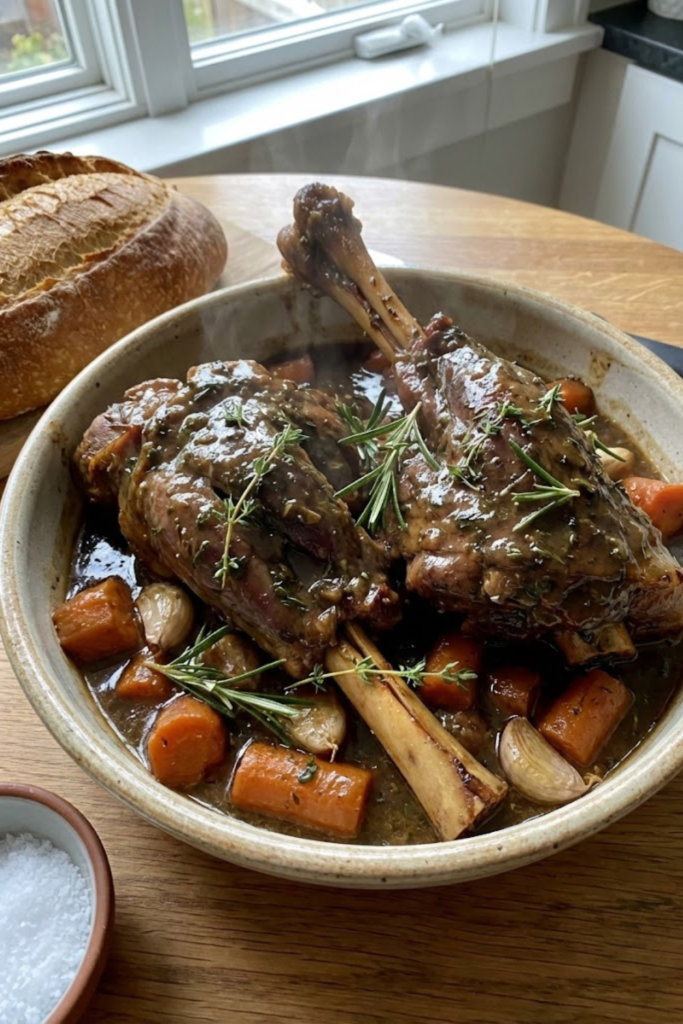
I’ve had so many people ask me if they can make a great braised dish without using alcohol. Maybe you’re cooking for a big family with kids, or maybe you just don’t want to run to the store for a bottle of red. I remember one Sunday when I realized I was out of wine right as I started cooking—I was so worried the dinner would be bland! But I found out that a good beef stock and a splash of balsamic vinegar actually makes the meat taste even more savory. These Slow Roasted Lamb Shanks with Rich Herb Gravy are a total game changer for your cozy weekend dinners.
Choosing the Right Cut: Why Lamb Shanks?
I remember the first time I walked into a butcher shop specifically looking to make Slow Roasted Lamb Shanks with Rich Herb Gravy. I felt so lost! I stood there looking at all the different piles of meat, and I almost walked out with a leg of lamb instead because it looked easier to cook. Luckily, the butcher saw the confused look on my face. He told me that if I wanted that meat that just falls off the bone, I had to get the shanks. He was totally right. Shanks might look like tough, bony pieces of meat that nobody would want at first, but they are actually the secret to the best dinner you’ll ever have. They just need a little love and a lot of time in the oven.
Hindshanks vs. Foreshanks
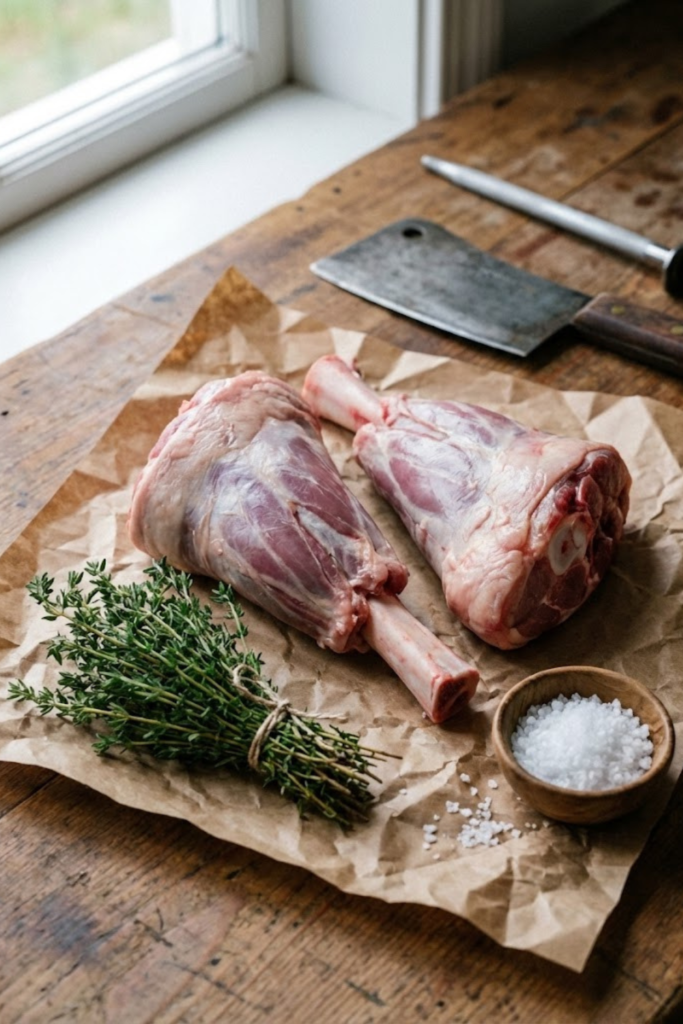
Did you know there are actually two different kinds of shanks? I didn’t for a long time. You have the foreshanks, which come from the front legs, and the hindshanks from the back. If you can, try to get the hindshanks for this recipe. They are usually much bigger and have way more meat on them. Since we are skipping the wine and using a thick beef stock, you want as much meat as possible to soak up that savory flavor. When they sit in that gravy for hours, the meat stays right on the bone until you touch it with a fork. Foreshanks are fine too, but they are a bit skinnier and might not fill up your guests. If you’re feeding hungry adults, the hindshanks are the way to go so everyone gets a good portion. I’ve found that the extra meat really helps make the sauce taste better as it cooks down.
The Magic of Collagen
In my classroom, I always tell my students that sometimes the hardest things in life just need a little time and heat to turn into something beautiful. Lamb shanks are just like that! They are full of things called connective tissue and collagen. If you grilled a shank like a steak, it would be like chewing on a rubber tire. No thanks! But when you cook them “low and slow” in a liquid like beef stock, all that tough stuff melts. It turns into a silky gelatin that makes the meat incredibly tender and makes your gravy feel thick on your tongue. It’s science, but it tastes like magic once it’s done.
What to Look for at the Butcher
When you are at the store in 2026, don’t be afraid to be a bit picky. Look for meat that is a nice rosy-red color. You don’t want it looking grey or super dark. I always try to find ones that have a little bit of white fat on the outside, but not a giant thick layer that covers the whole thing. I’ve noticed more shops have pasture-raised lamb now, and I really think it tastes better. It has a more natural flavor that goes great with rosemary. Also, ask the butcher to trim the “silver skin” for you. That’s the shiny white part on the outside that doesn’t melt. It saves you a lot of work at home. If you see a shank that looks very lean with no fat at all, skip it. You need that fat to keep the meat moist while it roasts for hours!
Building Flavor Without Wine: The Power of Umami
I honestly used to be a bit of a snob when it came to braising meat. I thought if you didn’t have a bottle of red wine, you might as well just make a sandwich instead. But I’ve learned over the years that you can get just as much flavor—maybe even more—by focusing on umami ingredients. Umami is just a fancy word for that savory, meaty taste that makes your mouth water. When we make Slow Roasted Lamb Shanks with Rich Herb Gravy, we are building layers of flavor without needing a single drop of alcohol. It’s all about using what’s in your pantry to create something that tastes like it came from a five-star restaurant. It took me a few tries to get the balance right, but once I did, I never looked back!
Using High-Quality Beef Bone Broth
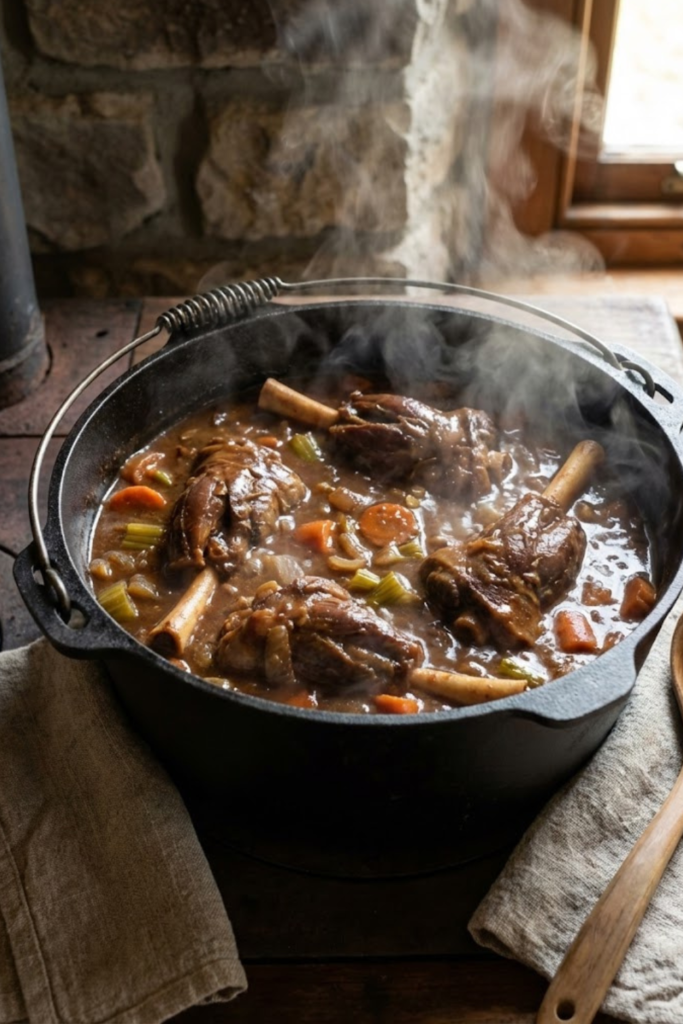
The biggest secret to a great sauce without wine is your base liquid. Instead of just buying a cheap carton of beef stock, I really suggest looking for beef bone broth. In 2026, it’s pretty easy to find at most stores. Bone broth is cooked for a much longer time than regular stock, so it has more natural gelatin and a much darker color. This is what gives your gravy that “stick-to-your-ribs” feeling. When it reduces in the oven, it gets thicker and more intense. If you use a thin stock, your gravy might end up tasting a bit watery, and nobody wants that for a big Sunday dinner. I always look for the darkest broth I can find to get that deep look.
Balancing Acidity with Balsamic Vinegar
The reason people usually use wine is for the acidity. It cuts through the heavy fat of the lamb. Since we aren’t using wine, we need to find that “zing” somewhere else. My favorite trick is using a splash of balsamic vinegar. You don’t need much—just a tablespoon or two. The vinegar has a natural sweetness and a sharp bite that mimics the profile of a good red wine. It helps balance out the richness of the meat so the dish doesn’t feel too heavy. I’ve tried apple cider vinegar before, but it’s a bit too fruity for my liking. Balsamic is definitely the winner here for a deep flavor.
The Pantry Umami Bombs
Lastly, you need to add what I call “umami bombs.” This means using things like tomato paste and Worcestershire sauce. I always sauté my tomato paste for a minute with the vegetables before adding the liquid. This gets rid of that raw metallic taste and makes it sweet and dark. A couple shakes of Worcestershire sauce adds a salty, savory kick that ties everything together. When these ingredients simmer for three hours, they blend into a sauce that is so dark and rich, your guests will swear there’s a secret ingredient. Just make sure you let it reduce enough so the flavors really concentrate and get thick.
Essential Herbs and Vegetables for a Savory Base
I used to think that the meat did all the work in a big roast like this. I figured if I bought a expensive piece of lamb, it would just taste good on its own. Boy, was I wrong! The first time I tried to make Slow Roasted Lamb Shanks with Rich Herb Gravy, I just threw the meat in a pot with some water and salt. It was so boring! My husband actually asked if we were eating “wet cardboard” for dinner. That was a big wake-up call for me. I realized that the vegetables and herbs you put in at the beginning are like the foundation of a house. If the foundation is weak, the whole meal falls apart. Now, I spend more time chopping my veggies than I do anything else because I know it’s where all that “homestyle” flavor comes from.
The Three Musketeers: Carrots, Onions, and Celery
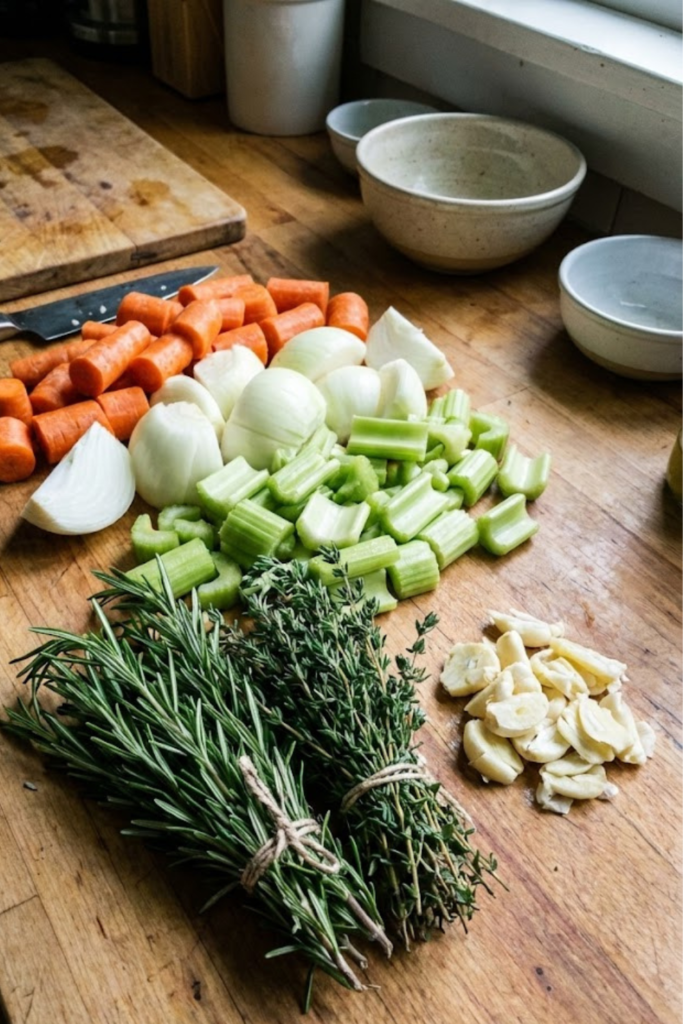
In the cooking world, they call this a “mirepoix,” but in my house, we just call it the starter kit. You need a good amount of yellow onions, sweet carrots, and crunchy celery. Don’t cut them too small! Since these shanks are going to be in the oven for about three hours, tiny pieces of vegetable will just disappear into mush. I like to keep mine in big, rustic chunks. As they roast alongside the lamb, they release their natural sugars and get all caramelized. This is what makes the gravy taste sweet and savory at the same time. If you leave these out, your sauce will feel thin and like it’s missing a “soul.”
Why Fresh Herbs Make a Huge Difference
I know it is tempting to just grab that dusty jar of dried rosemary from the back of your pantry. Please, don’t do it! For a long braise like this, fresh herbs are a total must. I always use big sprigs of rosemary and thyme. I don’t even take the leaves off the stems; I just toss the whole branch into the pot. The heat from the oven slowly pulls the oils out of the leaves. By the time the meat is done, you can just pull the bare woody stems out with some tongs. The smell in your kitchen will be incredible—it’s better than any candle you can buy at the store.
Don’t Be Shy with the Garlic
Lastly, let’s talk about garlic. I used to be afraid of using too much, but with lamb, you really can’t overdo it. I usually take a whole head of garlic, smash the cloves with the side of my knife, and throw them in. I don’t even bother chopping them finely. The garlic gets soft and buttery as it cooks in the beef stock. By the time you’re ready to serve your Slow Roasted Lamb Shanks with Rich Herb Gravy, those garlic cloves will have melted right into the sauce. It gives the whole dish a punchy flavor that really wakes up your taste buds without being too spicy for the kids.
The Searing Secret: Getting a Perfect Crust
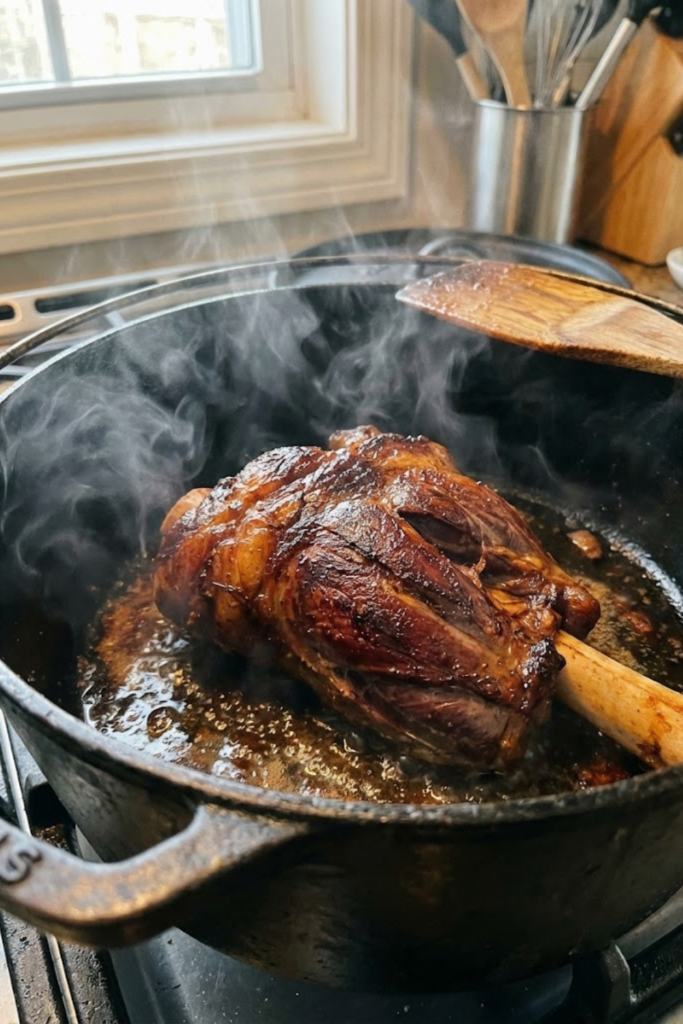
I used to think I could just throw the meat in the pot with the broth and it would turn out great. But when you make Slow Roasted Lamb Shanks with Rich Herb Gravy, you really can’t skip the searing step. If you do, your meat will look gray and boiled instead of that beautiful deep brown we want. I learned this the hard way one night when I was in a rush to get dinner on the table. The food tasted okay, but it didn’t have that rich, deep flavor that makes your mouth water. Searing the meat is what starts the “Maillard reaction”—which is just a fancy way of saying the proteins are browning and making everything taste better. It takes an extra ten minutes, but it is the most important part of the whole process!
Pat the Meat Dry First
One big mistake I made for years was taking the lamb straight from the package and putting it in the pan. Don’t do that! Meat has a lot of moisture on the outside, and if you don’t get rid of it, the lamb will just steam in the pan. You’ll end up with a gray, soggy mess. I always use a few paper towels to pat the shanks until they are really dry. It’s a bit of a pain, but it makes a huge difference in how the crust forms. If the meat is wet, it can’t get hot enough to brown properly. I tell my students that water is the enemy of a good sear!
Don’t Crowd the Pan
Another thing I had to learn was patience. If you try to sear all four shanks at the same time in a small pot, the temperature drops too fast. You have to do them in batches. I put a little bit of oil in the bottom of my heavy pot and wait until it’s almost smoking. Then, I put two shanks in and leave them alone! Don’t keep moving them around. Let them sit for about three or four minutes until they develop a dark, crispy crust on one side, then flip them. You want every single side to be brown. It might get a bit smoky in your kitchen, but that’s a good sign.
Saving the “Brown Bits”
When you take the meat out, you’re going to see a bunch of dark, stuck-on bits at the bottom of the pot. Don’t you dare wash that out! Chefs call that “fond,” and it’s basically concentrated flavor. Since we are making Slow Roasted Lamb Shanks with Rich Herb Gravy without wine, these brown bits are even more important for the color. I pour a little bit of my beef stock into the hot pan and use a wooden spoon to scrape all those bits up. They dissolve into the liquid and turn it into a dark, rich gold. That is where the “soul” of your gravy comes from, so make sure you get every last bit.
What to Serve: Pairing with Comforting Sides
I spent years thinking the meat was the only star of the show. I figured if I got the lamb right, nothing else mattered. But I learned that a big plate of Slow Roasted Lamb Shanks with Rich Herb Gravy needs a good partner. If you just put the shank on a plate by itself, all that delicious gravy you worked so hard on just runs away and puddles at the bottom. You need something on the plate that acts like a sponge to catch every single drop. I’ve tried a lot of things over the years—some were good, and some were pretty messy—but I have a few favorites that my kids always ask for when I make this.
The Battle of the Mashed Potatoes
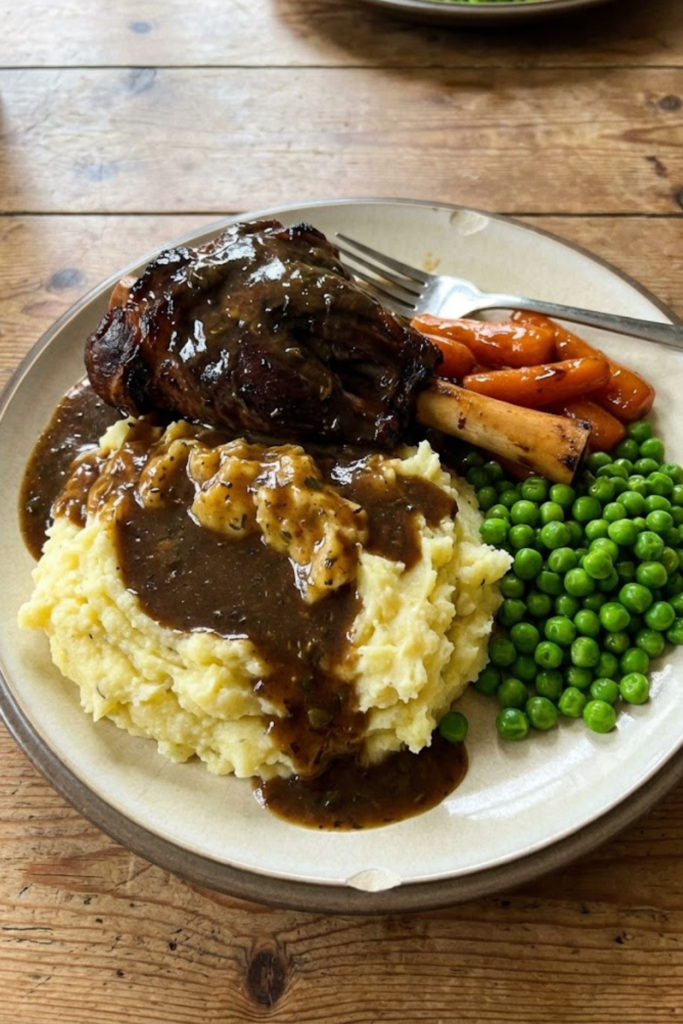
Most people go straight for mashed potatoes. And honestly? It is a classic for a reason. But I have learned that you don’t want those thin, whipped potatoes you get at some fancy restaurants. You want them thick and buttery. I like to leave some small lumps in mine because it feels more “homey” and real. When you put that big lamb shank right on top of a mountain of potatoes, you can make a little “well” in the middle with your spoon. Then, you pour that rich herb gravy over the whole thing. It is like a warm hug for your stomach. In 2026, I’ve started using more Yukon Gold potatoes because they have a natural buttery taste that works so well with the savory lamb.
Polenta: The Secret Sauce Carrier
If you want to try something a little different, go for creamy polenta. I didn’t even know what polenta was until a few years ago! It is basically just boiled cornmeal, but when you add enough parmesan cheese and butter, it becomes the most delicious, smooth base for your meat. The best part is that polenta doesn’t get soggy like bread might. It holds onto the gravy really well. I have noticed that if I’m having people over for a nice dinner, polenta always looks a little more fancy on the plate, even though it is actually really easy to make. Just keep stirring it so it doesn’t stick to the bottom of your pot and get burnt!
Adding a Pop of Color and Freshness
You can’t just have brown meat and white potatoes on a plate. It looks a bit sad and boring. I always like to add something green or bright to finish it off. Sometimes I will just do some quick steamed peas with a bit of butter and mint—mint and lamb are best friends, after all. Or, if I have some extra time, I will roast some carrots with a little bit of honey. The sweetness of the carrots goes great with the salty, savory gravy. It makes the whole meal feel balanced. I also like to sprinkle a little fresh parsley on top right at the end. It makes the dish look like you spent all day on it, even if you were just relaxing while the oven did the hard work.
Braising Techniques for Fall-Off-The-Bone Meat
I have a hard time waiting for things. My students know that if they are taking a test, I am the one tapping my foot at the front of the room because I want to see how they did! But when you are making Slow Roasted Lamb Shanks with Rich Herb Gravy, you have to learn to be patient. You can’t rush a good braise. I remember one time I tried to turn the oven up to 400 degrees because I wanted dinner to be ready in an hour. That was a huge mistake! The meat ended up being as tough as a leather boot. I learned that day that the oven does all the hard work while you go do something else. You just have to let it happen.
Finding the Temperature Sweet Spot
In my kitchen, I have found that 300°F (about 150°C) is the magic number. Some people try to cook at a higher heat, but that just tightens up the meat. When you keep it at a lower temperature, the heat slowly goes into the center of the shank and starts melting all that collagen we talked about earlier. I usually put my heavy pot in the middle of the oven and just leave it alone for at least three hours. I make sure the lid is on tight so the steam doesn’t escape. If the liquid all dries up, your meat won’t get soft. It needs that wet heat to break down.
The Famous Fork-Tender Test
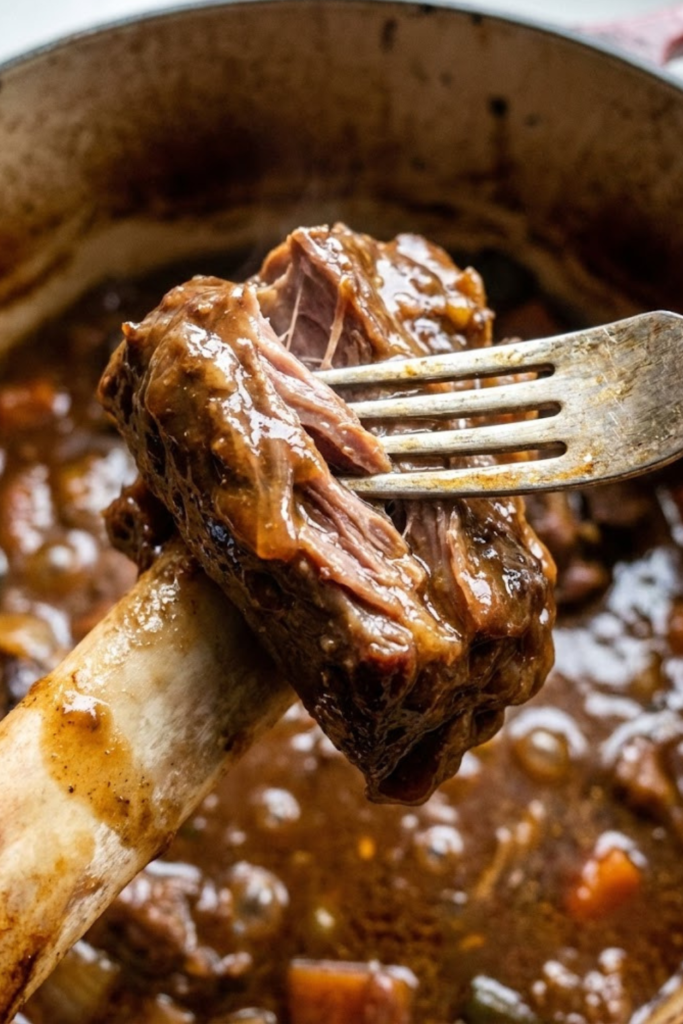
How do you know when it’s actually done? I don’t usually use a meat thermometer for this. Instead, I use what I call the “fork test.” After about three hours, I take the pot out and try to pull at the meat with a fork. If the meat resists or feels bouncy, it isn’t ready yet. Put it back in for another thirty minutes! You want the meat to literally slide off the bone with almost no effort. It should feel like butter. If you can pick up the whole bone and the meat just falls back into the gravy, you have hit the jackpot. That is the goal every single time.
The Importance of the Big Rest
I know you are going to be hungry by the time the timer goes off. The smell in your house is going to be amazing, and you’ll want to eat right away. But please, give the meat about fifteen minutes to rest before you serve it. I usually just leave the shanks in the pot with the lid off for a bit. This lets the meat soak up some of that extra gravy. If you cut into it too fast, all the juices just run out and the meat can feel a bit dry. A little bit of waiting at the end makes a huge difference in how juicy it tastes.
There you have it—your full guide to making a meal that people will be talking about for weeks! Making these Slow Roasted Lamb Shanks with Rich Herb Gravy is one of my favorite things to do when it’s cold outside and I want the house to feel cozy. It proves that you don’t need fancy wine or a professional kitchen to make something that tastes like a dream. It just takes some good meat, some fresh herbs, and a lot of patience.
I really hope this helps you feel more confident in the kitchen. Cooking for the people you love is one of the best things you can do, and this recipe is a great way to show them you care. If you tried this out and loved how it turned out, please save this recipe to your “Comfort Foods” or “Sunday Dinner” board on Pinterest! It helps other home cooks find these tips, and I would love to see how your dinner looks. Happy roasting!