Did you know that Americans consume roughly 26 billion pounds of beef annually, with a massive spike every March? Honestly, I used to be terrified of making this. My first attempt resulted in a “meat brick” so tough we probably could have used it as a doorstop! But after years of trial and error in my own kitchen, I’ve finally cracked the code to getting that perfectly flaky, juicy brisket every single time. Whether you’re a seasoned pro or a total newbie, this slow-cooked method is going to change your holiday game.
Selecting the Best Brisket Cut for Maximum Flavor
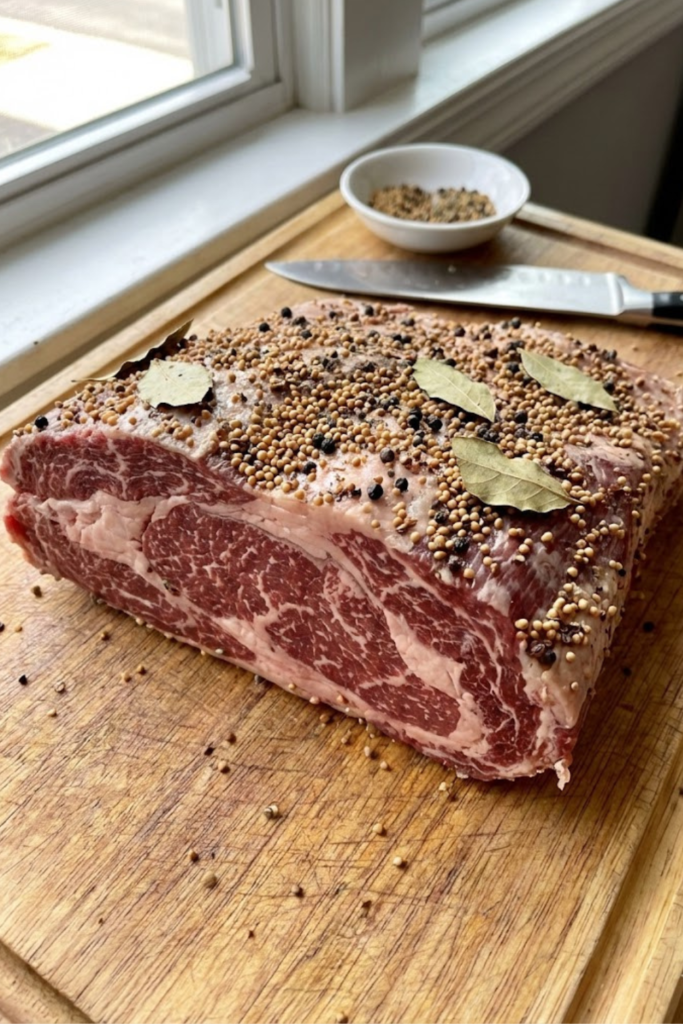
I remember my first time standing in the meat aisle at the grocery store, staring at two different packages of beef like they were written in a foreign language. One said “Flat Cut” and the other said “Point Cut.” I just grabbed the cheapest one, which was a big mistake because I didn’t know what I was doing back then. It turns out, that choice makes or breaks your dinner. Picking the right meat is the most important part of the whole process. If you start with a bad piece of beef, no amount of slow cooking is going to save it. You want something that will get tender without falling apart into a dry pile of strings.
Point Cut vs. Flat Cut: Which One is Better?
The flat cut is the one you usually see in those pretty magazine pictures. It’s lean and slices into those perfect, neat rectangles that look great on a plate. But honestly? It can get a bit dry if you aren’t careful because it doesn’t have much fat inside. On the other hand, the point cut is the “ugly duckling” that tastes like heaven because it has way more fat marbling. It’s more of a shredded vibe than a sliced vibe. I usually pick the point cut because I like my meat to melt in my mouth, even if it doesn’t look as “perfect” when I cut it up for the family.
Don’t Be Afraid of the Fat Cap
One year, I tried to be “healthy” and trimmed off all the fat before putting it in the crockpot. Big mistake. Huge! The fat is where all that flavor lives, and it helps keep the meat from turning into leather while it cooks. Now, I always leave at least a quarter-inch of that white fat cap on there. You can always trim it off later after it’s done cooking, but you need it for the journey. This layer helps the beef stay juicy while it sits in the slow cooker for eight hours.
The “Squeeze Test” at the Market
When you are picking out your corned beef brisket, give the package a little squeeze through the plastic. You want it to feel somewhat flexible, not like a stiff board. Look for a piece that has a nice, even thickness so it cooks at the same rate. If one end is super thin, it’ll be overcooked by the time the middle is ready. Trust me, nobody wants crunchy beef. Also, check for the spice packet! Most brands tuck a little bag of seeds and peppercorns inside the meat package. Make sure you can see it or feel it in there, because those spices are what give the beef that classic holiday smell. If it’s missing, you’ll have to make your own mix, and that’s just extra work you don’t need.
Prepping Your Vegetables: The Layering Secret
I used to think you could just toss everything into the slow cooker at once and call it a day. I mean, that is the whole point of a “one-pot meal,” right? But my first few tries at this recipe ended up with vegetables that looked like baby food. The potatoes were falling apart, and the carrots were so soft they didn’t even need teeth to eat. It took me a few years of teaching home economics and cooking for my own family to realize that the order you put things in the pot is actually the most important part of the whole process.
Why the Bottom Layer is for the Hard Stuff
The heating element in a slow cooker is usually on the bottom and around the lower sides. This means the stuff sitting at the very bottom gets the most direct heat for the longest time. Because of this, you always want to put your “hard” root vegetables down there first. I’m talking about your potatoes and your carrots. They act like a little booster seat for the meat, keeping the brisket from sitting directly on the bottom where it might get too tough. Plus, since they are submerged in the juices the whole time, they soak up all that salty, beefy flavor from the spice packet.
Picking the Best Potato for the Job
Now, let’s talk about potatoes. I’ve tried them all—Russets, Reds, and Yukon Golds. If you use a Russet (the kind you use for baking), it will basically disappear into the broth by the time the meat is done. It’s just too starchy. I always tell my students to stick with Yukon Golds or small Red Bliss potatoes. Yukon Golds are my favorite because they have a buttery texture that stays firm even after eight hours of cooking. If you use the red ones, leave the skin on! It adds a nice pop of color to the plate and helps the potato hold its shape so it doesn’t turn into a mushy mess.
The Great Cabbage Timing Trick
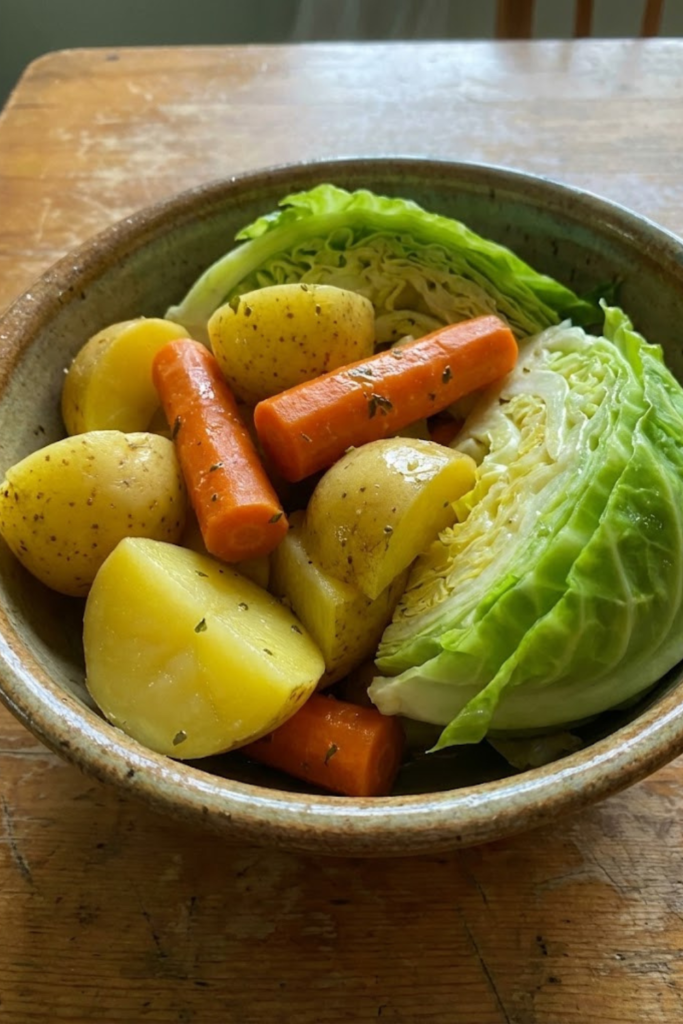
The biggest mistake people make is putting the cabbage in at the start. If you do that, the cabbage will turn gray and smell… well, let’s just say it won’t smell like a delicious dinner. Cabbage only needs about 90 minutes to two hours to get tender. I usually wait until the meat is almost done, then I wedge the cabbage and shove it right on top of the beef. It steams in the vapors without getting soggy. This keeps it bright green and gives it a little bit of a bite, which is exactly what you want when you are eating it next to that rich, fatty corned beef.
The Low and Slow Cooking Process
I used to be the kind of cook who was always in a rush. If a recipe said eight hours on low, I’d try to “hack” it by doing four hours on high. I figured heat is heat, right? Wrong. I learned the hard way when I served a St. Patrick’s Day dinner that felt like chewing on a rubber band. My poor family was polite about it, but we ended up ordering pizza that night. When you are dealing with a tough cut of meat like brisket, you can’t bully it into being tender. You have to be patient and let the slow cooker do the heavy lifting while you go about your day.
Why “High” Heat is the Enemy of Brisket
Most slow cookers have two main settings: low and high. For a lot of meals, like chili or soup, switching between them doesn’t matter much. But for corned beef, the “high” setting is actually your worst enemy. Brisket has a lot of connective tissue—that’s the tough stuff that makes meat chewy. To get that “melt-in-your-mouth” feel, that tissue needs to slowly melt into gelatin. If you cook it too fast on high, the muscle fibers tighten up and squeeze out all the moisture before the tough parts have a chance to soften. I always tell my students: if you want it to flake apart with a fork, “low” is the only way to go. Set it for 8 to 10 hours and just walk away.
Choosing Your Liquid: Beer or Broth?
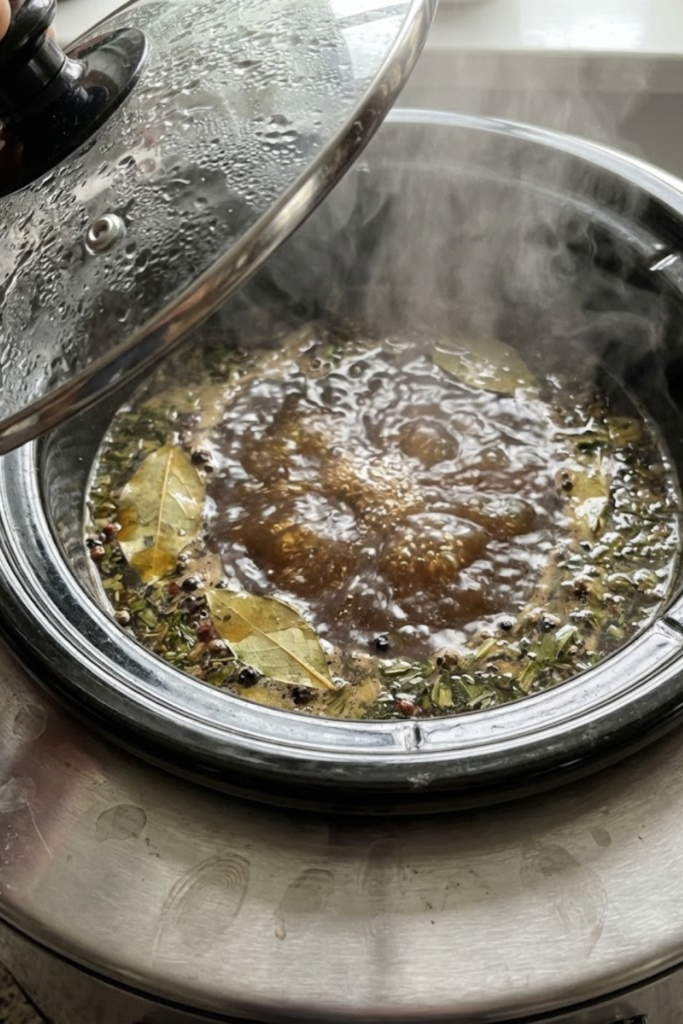
What you pour over the meat matters just as much as the heat. I’ve experimented with everything from plain water to fancy stocks. Plain water is okay, but it’s a missed opportunity for flavor. I usually go for a mix of beef broth and a bottle of dark beer, like a Guinness or any stout. The alcohol in the beer actually helps break down the meat fibers even more, and the malty sweetness balances out the saltiness of the corned beef. If you don’t like using beer, just stick with a low-sodium beef broth. Don’t use regular broth, because the meat is already sitting in a salt brine, and you don’t want your dinner to taste like a salt lick.
The “Don’t Peek” Rule
I know it’s tempting to keep lifting the lid to see if the meat is getting soft or to smell that amazing aroma filling up your kitchen. But every time you lift that lid, you are letting out all the steam and dropping the temperature inside the pot. It can add an extra 20 or 30 minutes to your cook time every single time you peek! I learned to just trust the process. I set my timer, make sure there is enough liquid to cover at least halfway up the meat, and I leave it alone. The best part of this method is that your house will smell like a cozy Irish pub by the time the timer goes off, and you didn’t have to do a lick of work all afternoon.
Slicing and Serving Like a Pro
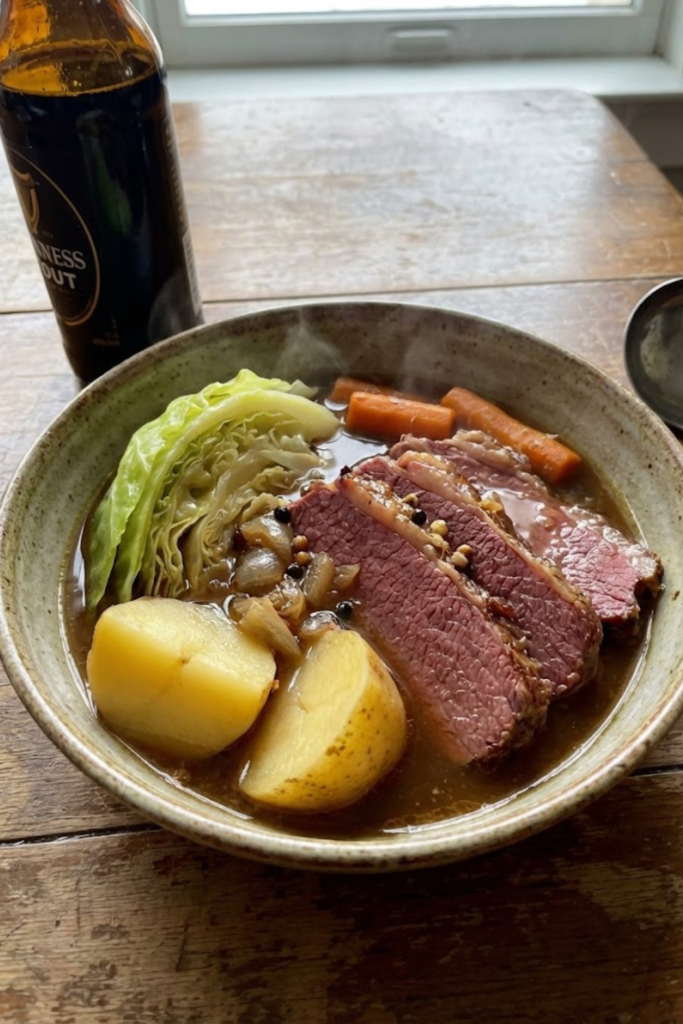
I have seen so many home cooks work hard on their beef for ten hours only to ruin it at the very end. You take this beautiful, tender meat out of the pot and then just hack away at it because you’re hungry and tired. I did this once for a big family gathering, and the meat looked like a pile of messy pulled pork instead of nice, clean slices. It still tasted fine, but it was hard to eat and didn’t look great on the plate. To get those perfect slices that you see in the pictures, you have to follow a few simple rules once the timer goes off.
Always Slice Against the Grain
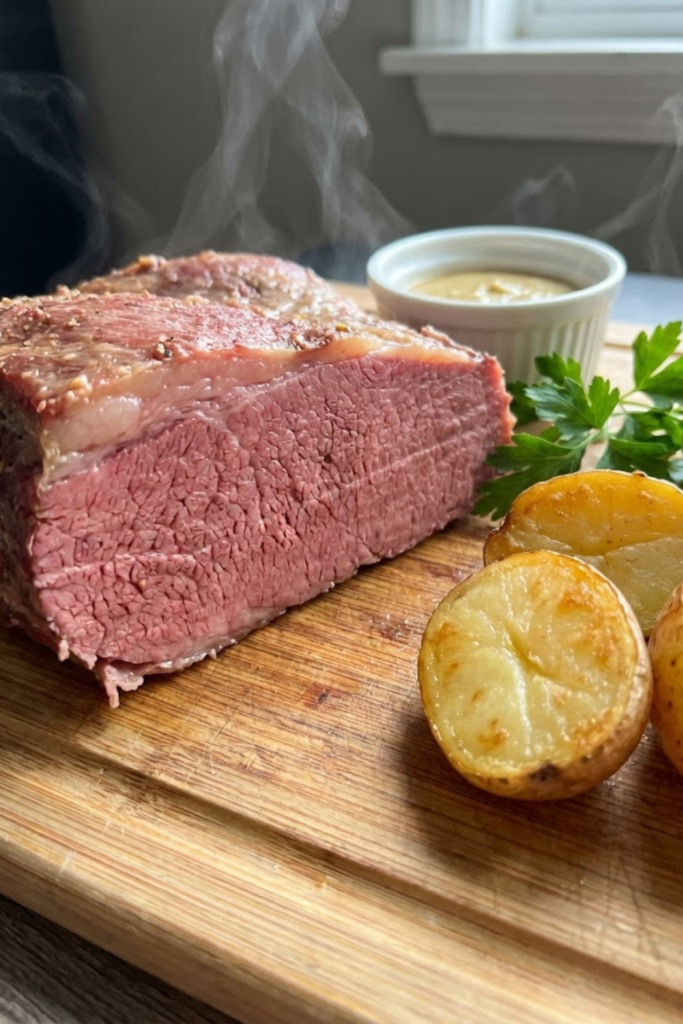
The biggest secret to tender meat is finding the “grain.” If you look closely at the brisket, you will see long lines running through it. These are the muscle fibers. If you cut along those lines, the meat will be chewy and stringy, no matter how long you cooked it. You want to turn the meat and cut across those lines. Think of it like a bunch of rubber bands. If you cut them into short pieces, they are easy to chew. I always tell my students to look really closely before they start cutting. If you aren’t 100% sure which way the lines go, just cut a tiny piece off the corner to check the texture.
Let the Meat Rest
Don’t start cutting the second it comes out of the slow cooker! I know it smells amazing and you probably want to dive right in, but you need to wait. Let the meat sit on a cutting board for at least 15 minutes. This lets the juices settle back into the beef. If you cut it too fast, all that tasty flavor just runs out on the board, and the meat gets dry almost instantly. While the meat rests, I usually use a slotted spoon to get the potatoes and carrots out of the pot. I put them on a big platter and cover them with a little bit of the warm broth so they stay hot.
The Best Toppings for Your Feast
Corned beef is naturally very salty and rich, so you need something sharp to balance it out on your tongue. In my house, we always make a quick horseradish cream. It is just sour cream mixed with a bit of prepared horseradish and a tiny splash of lemon juice. If you don’t like spice, a good grainy Dijon mustard is a great choice too. I like to put little bowls of both on the table so people can pick what they like. Also, don’t throw away the leftovers! If you have any meat left, keep it in the fridge with a little bit of the cooking liquid. It makes the absolute best Reuben sandwiches with rye bread and Swiss cheese the next day.
Bringing the Luck of the Irish to Your Table
Well, there you have it. That is my whole routine for making a slow cooker corned beef and cabbage dinner that actually tastes good and won’t break your teeth. I know it seems like a lot to remember, but once you do it a couple of times, it becomes second nature. It’s funny because I used to be so nervous about this specific meal. I thought there was some big secret that only grandmas knew about getting beef that tender. But really, it just comes down to being patient and not trying to rush the pot. If you pick a good piece of meat and give it the time it needs, you are going to look like a hero in your kitchen.
I love seeing my family’s faces when I put that big platter in the middle of the table. Even my kids, who usually complain about anything green, actually eat the cabbage because it’s soaked up all that savory broth. It’s one of those meals that makes the whole house feel warm and cozy, especially if it’s a rainy or cold day outside. Plus, the fact that I didn’t have to stand over a hot stove all afternoon is the real win for me. I usually spend that extra time catching up on my favorite shows or finally grading those papers I’ve been putting off.
Before you go and start your own crockpot, just remember those few main things we talked about. Get the point cut if you want the best flavor, put the potatoes on the bottom so they cook right, and please, for the love of good food, wait until the end to add the cabbage! If you follow those steps, you’ll have a dinner that people will be talking about until next year. It really is the best way to celebrate, and it’s so much better than the salty, tough meat you get at those cheap buffets.
If this guide helped you feel more confident about your holiday cooking, please pin this recipe to your favorite Pinterest board! It helps me out a lot, and it means you won’t have to go searching for these tips when March rolls around again. I really hope your dinner turns out amazing and your family enjoys every single bite. Happy cooking, and I hope you have a great feast!