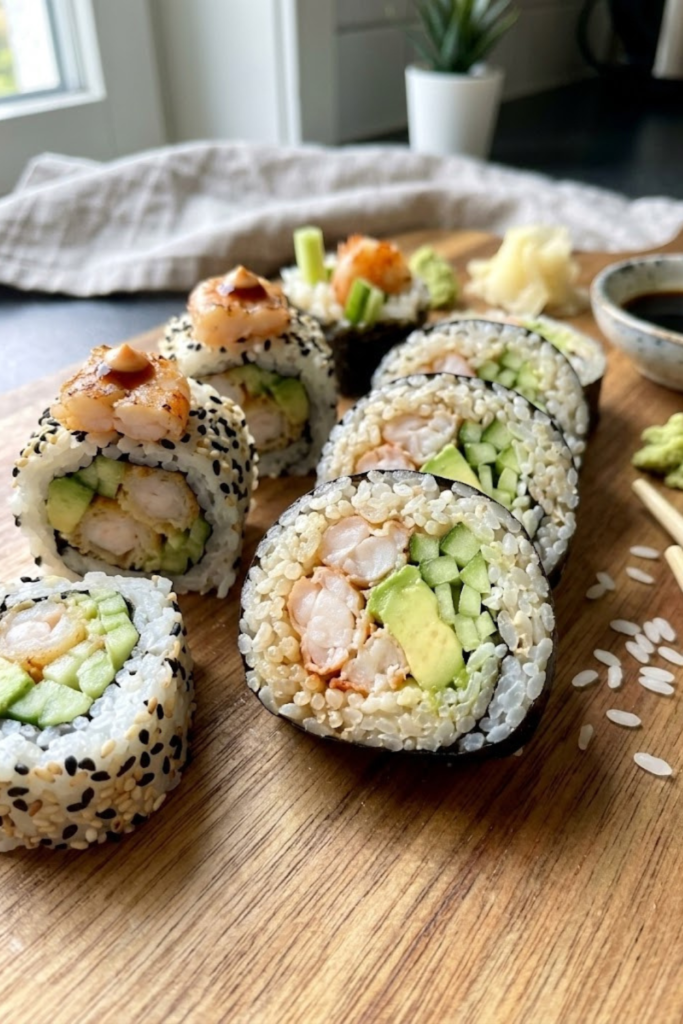
Did you know that nearly 70% of sushi lovers rank shrimp as their favorite cooked topping? I used to be absolutely terrified of making my own shrimp sushi rolls because I thought I’d just end up with a sticky, vinegared mess on my kitchen floor! But honestly, once you get the hang of it, it is so much fun. I’ve spent years tweaking my rice-to-shrimp ratio, and let me tell you, there is nothing like that first bite of a roll you made with your own two hands! In this guide, we are going to dive into the world of ebi, nori, and the perfect rolling technique to make your 2026 dinner parties legendary. Let’s get rolling!
Selecting the Freshest Shrimp for Your Sushi
Let’s get real for a second. If you start with bad shrimp, your shrimp sushi rolls are going to taste like a sad mistake. I remember one time I tried to save five bucks by buying the “manager’s special” at a local shop. Big mistake! The house smelled like a salty pier for three days. Since then, I’ve learned that the best sushi starts at the seafood counter, not in the kitchen. When you are looking for shrimp, your nose is actually more important than your eyes. Fresh shrimp should smell like a clean ocean breeze, not like old fish. If there is even a tiny whiff of ammonia, just put it back and walk away. You want shells that are shiny and firm. If they feel slimy or look dull, they aren’t fresh enough for your dinner.
Knowing Your Ebi from Your Tempura
Before you buy anything, you need to know what you’re making. In my kitchen, we usually go for two main styles. First, there is “Ebi,” which is just the Japanese word for shrimp. For sushi, this is usually boiled and then flattened out. It’s great if you want a clean, healthy taste. Then you have the “Tenpura” style. This is for those nights when you want that deep-fried, crunchy goodness inside your roll. For shrimp sushi rolls, I usually pick up large tiger shrimp. They have a nice snap when you bite into them, and they don’t get mushy. If you buy the tiny ones, they just get lost inside the rice and you won’t even taste them.
Shopping Smart in 2026
Things have changed a lot lately, and in 2026, we have to be smarter about where our food comes from. I always look for the “wild-caught” or “sustainably sourced” stickers on the bag. It’s better for the planet and usually tastes a whole lot better too. If you are buying frozen, look for a bag that doesn’t have a lot of ice crystals inside. If you see a lot of frost, it means the shrimp thawed out and then froze again. That makes the meat tough and rubbery. Nobody wants to chew on a rubber band while they eat sushi!
Getting the Prep Right
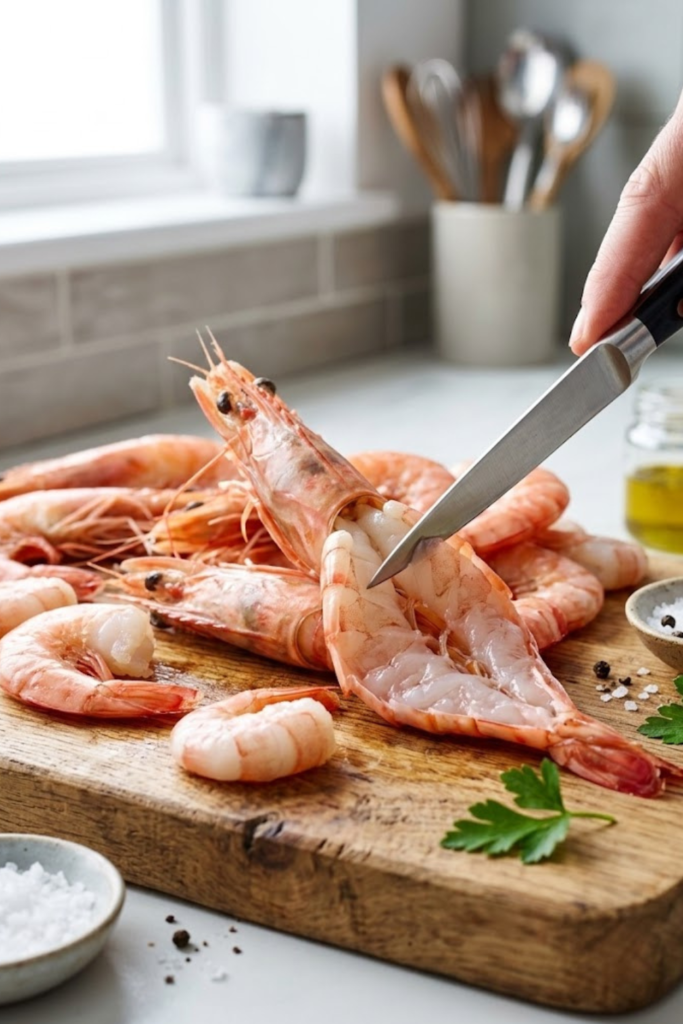
Once you get your prize home, keep it on ice until the very second you are ready to cook. To make them fit perfectly in your roll, you have to “butterfly” them. You just take a small knife and slice along the back. Don’t go all the way through! You want it to open up like a little book so it sits flat. This makes the rolling part way easier. If the shrimp is all curled up, your sushi will look lumpy and weird. It takes a little practice, but you’ll get the hang of it after a few tries. Don’t worry if you mess up the first one—it still tastes the same!
Prepping Your Sushi Rice: The Foundation of Flavor
Listen, I have seen a lot of people try to make shrimp sushi rolls with regular long-grain rice from a giant bag. Please, do not do that to yourself. It is like trying to build a house with sand instead of bricks. The rice is actually what holds everything together, and if it is not sticky enough, your beautiful shrimp will just tumble out onto the plate. I remember when I first started, I thought any white rice would work. I ended up with a plate of loose grains and shrimp—it was more like a messy salad than a roll! To get it right, you have to treat the rice like it is the star of the show.
Why Short-Grain is the Only Way
You really need to look for short-grain rice at the grocery store. Sometimes the bag just says “Sushi Rice,” and that is perfectly fine for us. This type of rice has a lot of starch, which is what makes it sticky. If you try using Basmati or Jasmine, the grains stay separate and dry. You want your rice to be able to clump together when you press it, but you do not want it to turn into a gummy paste. I usually wash my rice about four or five times until the water runs clear. It takes a few extra minutes, but it is worth it so the rice stays fluffy and clean.
My Secret Seasoning Blend
Once the rice is cooked, you have to add the flavor while it is still hot. I make a mixture of rice vinegar, a little bit of sugar, and a pinch of salt. A lot of people buy the pre-seasoned stuff, but making it yourself is way better. I usually do about four tablespoons of vinegar for every two cups of dry rice I started with. I just warm it up in a small pan until the sugar disappears. Just a tip: do not let it boil! If it gets too hot, the vinegar loses its bite, and your shrimp sushi rolls will taste kind of bland.
The Cooling Trick for Shiny Rice
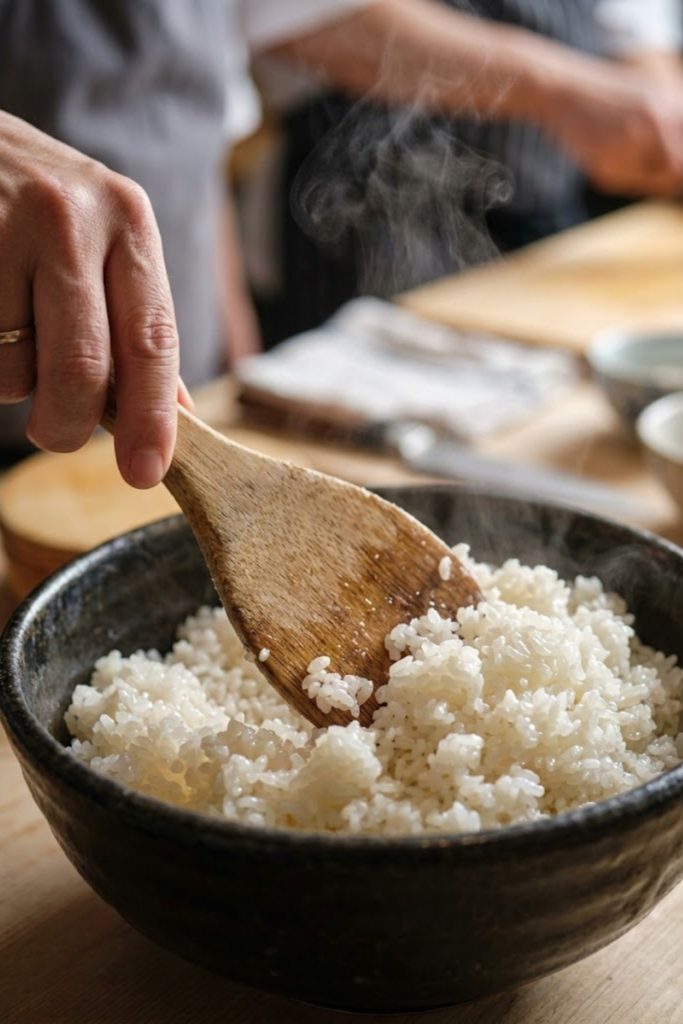
This is where most people get tired and stop, but do not quit yet! You need to move the hot rice into a big flat bowl. If you have a wooden one, use it. While the rice is hot, pour your vinegar mix over it and use a wooden paddle to “slice” through the rice. Do not stir it like a cake batter or you will mash the grains. I like to use a small hand fan to cool it down while I am flipping it. This is what gives the rice that pretty, glossy look you see at the fancy restaurants. Also, keep a small bowl of water nearby to dip your fingers in—we call this “hand water.” It stops the rice from sticking to your skin like glue!
Rolling Like a Pro: A Step-by-Step Guide
Alright, class, this is the part where everyone gets a little nervous. Making shrimp sushi rolls can feel like you’re trying to fold a tiny, delicate sleeping bag made of seaweed, but I promise it gets easier with a little practice. I remember my first time—I tried to roll it without a bamboo mat, and it looked like a flat, squished pancake. It was a disaster! You really need a bamboo mat, which is also called a makisu. It gives you the even pressure you need to keep everything tucked inside. Before you start, make sure you have everything ready on your counter. You don’t want to be reaching for a knife while your hands are covered in sticky rice grains.
Setting Up Your Station
First, lay your bamboo mat down on a flat surface like a clean cutting board. I usually like to wrap my mat in plastic wrap because it makes cleaning up a whole lot faster later on. Plus, it stops the rice from getting stuck in the little cracks of the wood. Put a sheet of nori on the mat with the shiny side facing down. You should see little lines on the seaweed—make sure those are running the same way as the bamboo sticks. Keep your bowl of “hand water” right next to you. If you don’t dip your fingers in the water first, the rice will stick to you more than the seaweed, and you’ll end up with a huge mess.
Spreading the Rice
Grab a handful of that seasoned rice we made earlier. Gently spread it over the nori sheet. You want a thin layer—about a quarter-inch thick is usually perfect. Leave a little space at the top edge of the seaweed, maybe about half an inch. This bare spot acts like glue to seal the roll once you finish. Whatever you do, don’t press down hard! If you squash the rice, your shrimp sushi rolls will be heavy and dense. Use your fingertips to lightly push the grains to the edges so it’s nice and even.
The Tuck and Roll
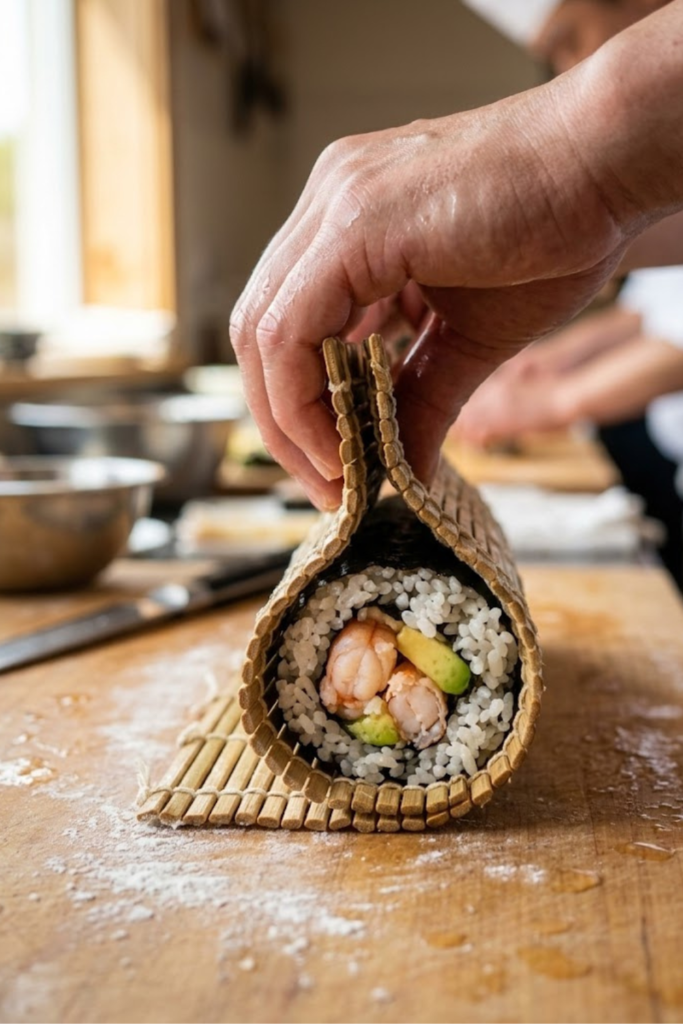
Now, place your butterflied shrimp in a straight line across the center of the rice. Add a slice of avocado or a thin cucumber spear if you want some extra crunch. Use your thumbs to lift the edge of the mat while your other fingers hold the shrimp in place. Fold the mat over the filling and give it a firm squeeze. You want it tight so it doesn’t fall apart, but don’t crush it. Pull the mat back a little, roll it forward again to finish the shape, and then use that bare strip of nori to stick it shut. Let it sit for a minute before you slice it with a very sharp, wet knife. You just made your first roll!
Creative Variations: Beyond the Basic Roll
Once you get the hang of the basic roll, you might start feeling like a bit of a kitchen rockstar. I know I did! After making about ten of the same exact shrimp sushi rolls, I started lookin’ at my fridge and wondering what else I could throw in there. You really don’t gotta stick to the rules every single time. Honestly, some of my favorite rolls were actually total accidents because I had a leftover mango or a stray jalapeño sitting on the counter. Sushi is really just a blank canvas for whatever flavors you like. If you want it spicy, make it spicy! If you want it crunchy, add some crunch. That is the best part about cooking at home.
The Firecracker Roll
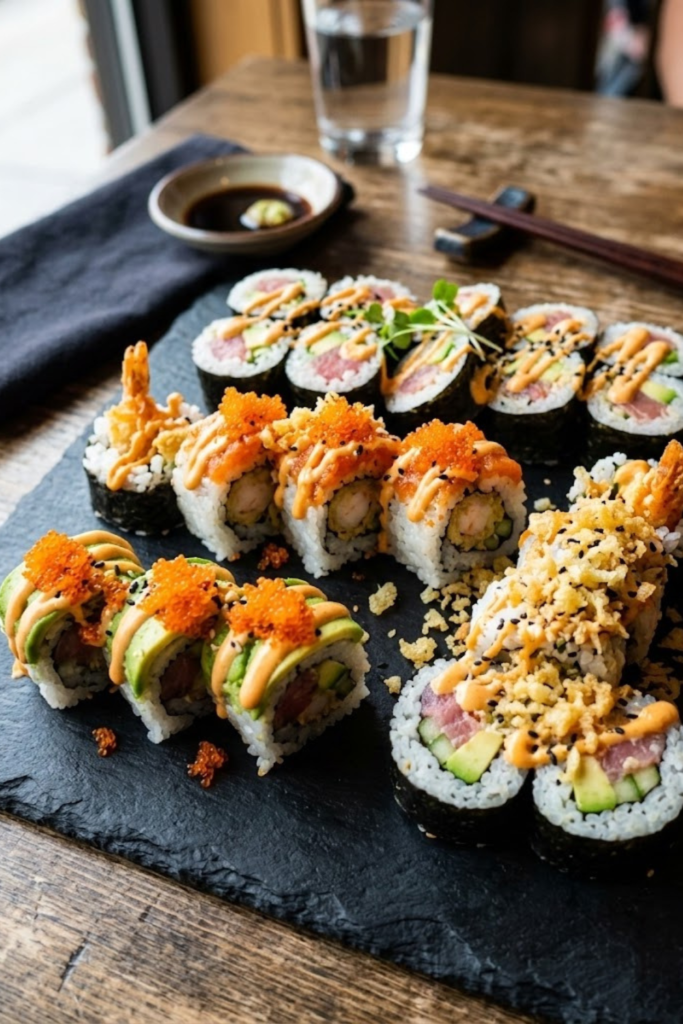
One of the first things I tried was making what I call a “Firecracker Roll.” If you like a bit of heat, this one is for you. I take my cooked shrimp and toss them in a little bowl with some sriracha and a tiny drop of sesame oil before I put them on the rice. Then, after I roll it up, I drizzle some spicy mayo right over the top. It gives the shrimp sushi rolls a real kick that wakes up your taste buds. My kids actually love this one because it is not too crazy, but it definitely has more flavor than the plain version. Just be careful with that sriracha—a little bit goes a long way and you don’t want to ruin the whole thing!
Getting That Extra Crunch
If you have ever been to a fancy sushi spot, you know that “crunch” they put on top of the rolls. I used to think it was some secret ingredient, but it’s usually just tempura flakes. You can buy these in a bag at the store, or you can even use toasted panko breadcrumbs if you are in a pinch. I like to roll the whole sushi cylinder in the crumbs before I slice it up. It gives every single bite a nice texture that makes the shrimp pop. It makes your shrimp sushi rolls feel way more professional, like you actually spent years learning how to do it. Plus, it is just really satisfying to hear that crunch when you bite down.
Trying Out Fusion Flavors
In 2026, everyone is trying weird new food combos, so why not do it with your sushi? I tried putting thin slices of mango inside with the shrimp once, and it was incredible. The sweetness of the fruit goes so well with the salty shrimp. Or, if you want something with a bit of a bite, try a tiny sliver of fresh jalapeño. It adds a fresh, green heat that is totally different from the spicy mayo. Don’t be afraid to experiment with whatever you have in the drawer. Some people even put cream cheese in there! It might sound a bit weird to a purist, but if it tastes good to you, then it is a win in my book. Just have fun with it and see what happens!
Wrapping Up Your Sushi Adventure
So, there you have it! We have covered a lot of ground today, haven’t we? From picking out the best little sea creatures at the market to finally slicing that perfect roll. I know it might seem like a lot of steps at first, but once you get into the rhythm of making shrimp sushi rolls, it really becomes second nature. I remember my first month of trying this. I was so worried about every little grain of rice. Now? I can whip up a batch while I’m chatting with my friends in the kitchen. It is all about that practice and not being afraid to make a little bit of a mess.
First off, let’s talk about those shrimp one last time. Remember, fresh is always the best choice. If you start with good, snappy shrimp that you have prepped with that butterfly cut, you are already halfway to a great meal. Don’t let the seafood counter guy talk you into something that doesn’t smell like the ocean. You are the boss of your kitchen! And that rice? Man, I can’t say it enough. Take your time washing it. That starch is your enemy if you want clean grains, but your friend if you want them to stick. That balance of vinegar and sugar is what makes people go ‘wow’ when they take a bite. It really is the glue that keeps the whole dream together.
When you get to the actual rolling part, just stay calm. If your first roll looks like a squished bug, who cares? It is still going to taste like a million bucks. Use your bamboo mat, keep your fingers wet with that hand water, and just keep at it. I have found that the more relaxed I am, the better my rolls turn out. If you tense up, you end up squashing the rice and making the whole thing too heavy. Just a light touch is all you need. Don’t forget that little strip of bare nori at the end to seal it up tight.
And hey, don’t be afraid to get weird with your flavors! Whether you want to add some spicy mayo or maybe some sweet fruit like mango, just go for it. Cooking should be fun, not a test you are scared of failing. I really hope this guide helps you feel like you can own the sushi game in 2026. If you finally made a roll you are proud of, please share this article on Pinterest! It helps me out a ton and it lets your friends know they can make great sushi at home too. Happy rolling!