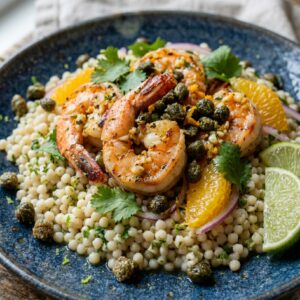
Did you know that according to 2025 food trends, over 65% of home cooks are now choosing “no-heat” meals to save time and energy? I totally get it! Last Tuesday, it was so hot in my kitchen that I thought my toaster might actually melt, so I decided to throw together this shrimp mango salad. It’s funny because I used to be scared of mixing fruit with seafood, thinking it would taste like a weird dessert gone wrong. But wow, was I wrong!
This dish is like a vacation on a plate, filled with tropical vibes and enough protein to actually keep you full until dinner. We’re using fresh lime juice, crunchy bell peppers, and succulent shrimp to create a balance that’s just… chef’s kiss. If you want a meal that feels fancy but takes zero effort, you are in the right place. Let’s dive into how to make this staple of 2026!
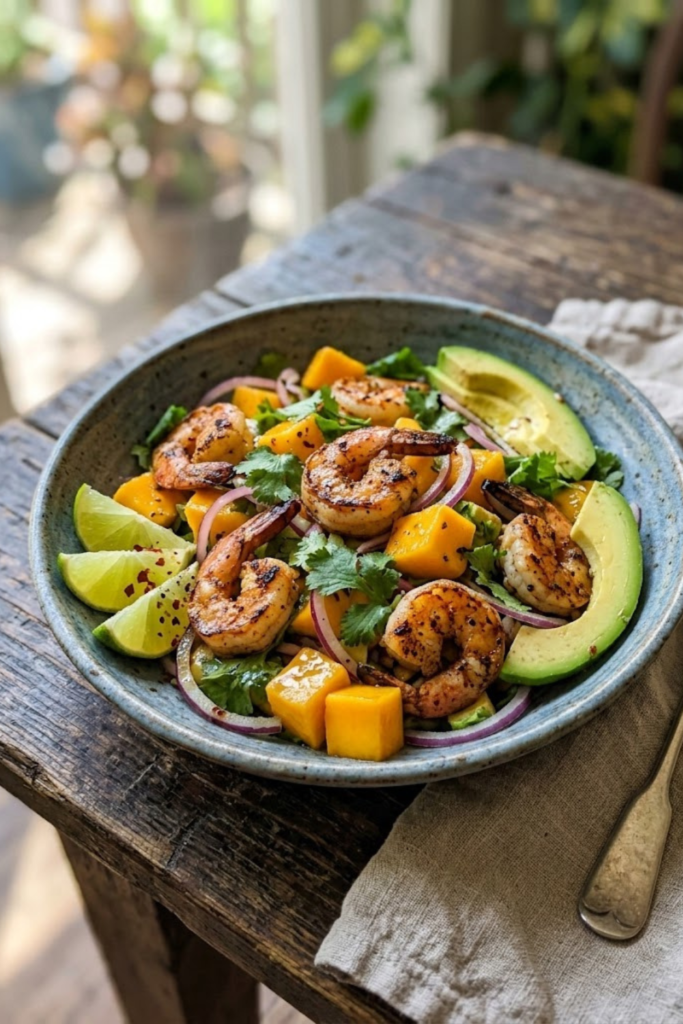
Picking the Perfect Mango for Your Salad
I’ve got to be honest with you—I wasn’t always a mango expert. Back when I first started making this salad, I would just grab the prettiest looking red mango in the bin at the grocery store. I thought red meant ripe. Boy, was I wrong. I ended up with a bowl of fruit that tasted more like a pine tree than a tropical treat. It was so tough my kids wouldn’t even touch it. Now that I’ve been cooking for a few decades and teaching others how to do it, I’ve realized that picking a mango is more about using your senses than just looking at the skin. You really have to get in there and feel the fruit if you want that juicy, sweet flavor that makes the shrimp really pop.
Forget the Color and Use Your Hands
Most people think a red mango is a sweet mango, but that’s a total myth. Some types of mangoes stay green even when they are ready to eat, and others turn bright red while they are still hard as a rock. The best way to tell if it’s ready is to give it a gentle squeeze. It should feel like a ripe peach or a soft avocado. If it’s too firm, it’s not ready for your salad yet. If it’s super squishy or your thumb leaves a dent, it’s probably overripe and will turn into mush when you try to mix it with the shrimp. You want that middle ground where it gives just a little bit under your hand. If you buy them hard, just leave them on the counter for a few days. Don’t put them in the fridge until they are soft, or they won’t ripen right.
The Stem Sniff Test
Another trick I tell my students is to use your nose. Go ahead and sniff the stem end of the fruit. A ripe mango will have a really strong, sweet, and floral smell right at the top. If you can’t smell anything at all, it needs more time to sit on your counter. If it smells a bit sour or like alcohol, put it back! That means it has started to ferment and won’t taste good in a fresh salad. I always look for a little bit of sap near the stem too, because that usually means it’s packed with sugar and ready to go. Regarding the varieties, I usually look for the yellow Honey mangoes because they are less stringy than the big red and green ones.
How to Cut It Without the Mess
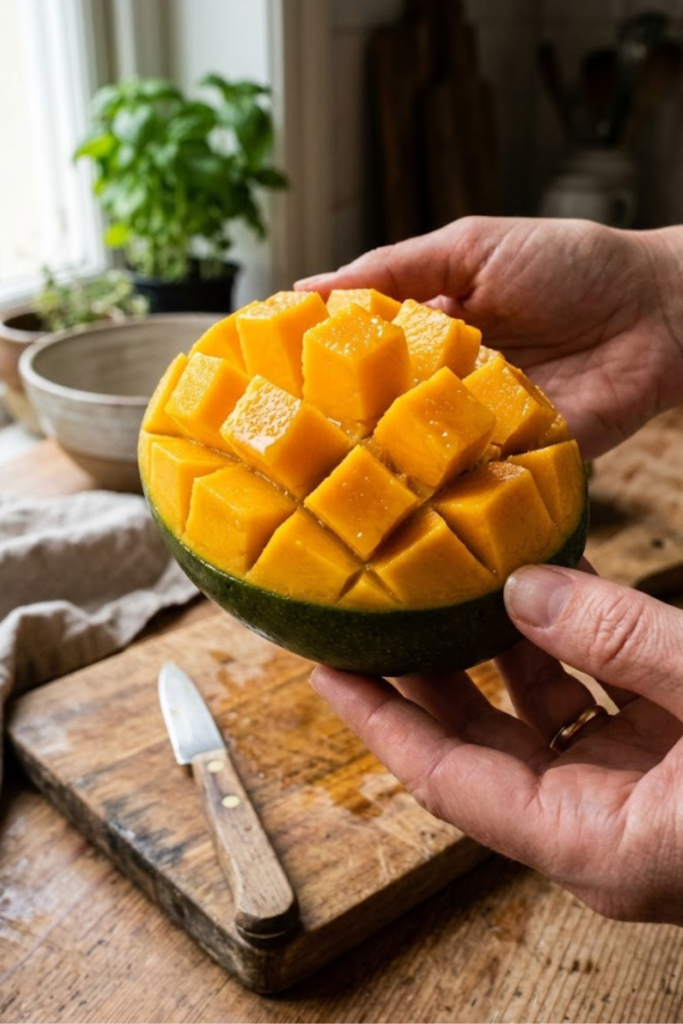
The biggest hurdle for most people is the giant flat pit in the middle. I used to hack away at it until I had a pile of shredded fruit and juice all over my shirt. Here is the easy way: slice off the “cheeks” by cutting about a half-inch away from the center on both sides. Then, use a knife to cut a grid pattern into the flesh, but don’t go through the skin. You can then push the skin side up so the cubes pop out like a little hedgehog. It’s so much easier than peeling the whole thing first, and it keeps your kitchen from looking like a sticky crime scene! It makes the pieces the perfect size to grab with a fork alongside a piece of grilled shrimp.
How to Cook Shrimp so They aren’t Rubbery
I have spent a lot of time in my kitchen trying to get seafood just right for my family. There is nothing that ruins a good shrimp mango salad faster than biting into a piece of shrimp that feels like a pencil eraser. I’ve served many “rubber balls” over the years before I finally figured out the trick to keeping them tender. When you are making this salad, the texture of the protein is just as important as the sweetness of the fruit. You want the shrimp to be snappy and juicy, not tough enough to bounce off your dinner plate. Most people overcook them because they are scared of raw fish, but shrimp actually cook in the blink of an eye. If you take your eyes off the pan for even a minute, you might miss the perfect window.
Watch the Shape for the Alphabet Rule
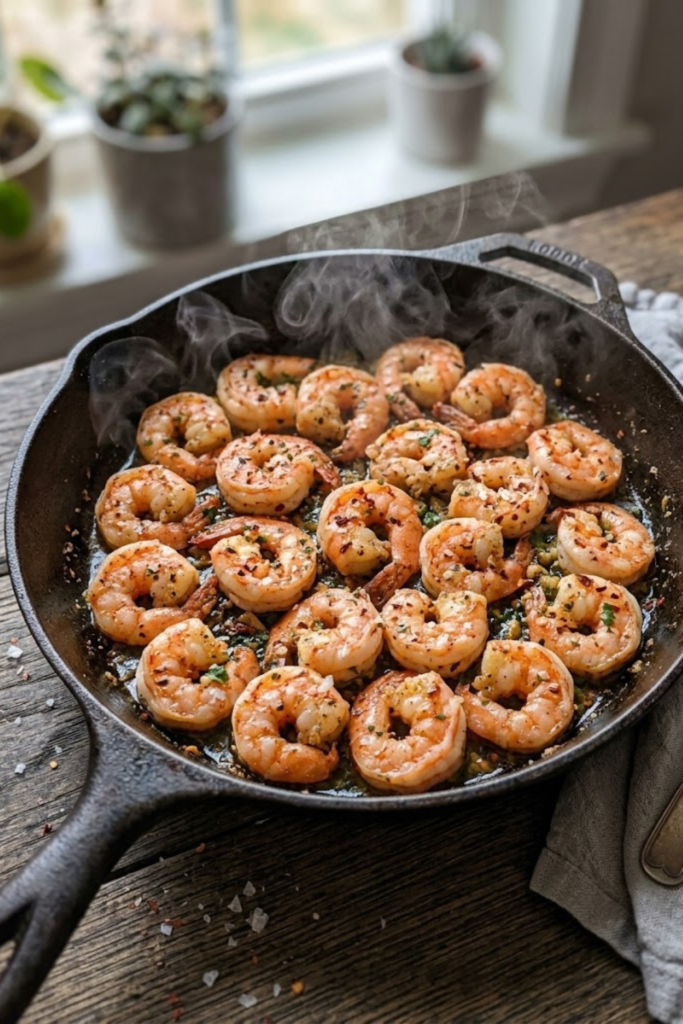
I always tell my students to look at the shape of the shrimp while they are in the pan. I call it the “alphabet rule.” It is a simple way to know exactly when to turn off the burner without needing a thermometer. When the shrimp are still straight or just slightly curved, they are still raw and undercooked. As they start to turn pink, they will curl into a “C” shape. That “C” stands for “cooked” and that is exactly when you need to pull them off the stove. If they keep curling until the head and tail touch to look like an “O,” they are overdone and will be tough. It usually only takes about two or three minutes total. If you wait until they look “done” in the pan, the heat trapped inside them will keep cooking them until they are way too hard.
High Heat and Proper Thawing
For this shrimp mango salad, I like to use a very hot skillet with just a tiny bit of coconut oil. You want to hear that loud sizzle the moment they hit the metal. I usually season them with a bit of salt and maybe some lime zest right at the very end. If you are using frozen shrimp, make sure they are completely thawed first. I learned the hard way that throwing frozen shrimp into a hot pan just makes them soggy and watery. Put them in a bowl of cold water for about fifteen minutes instead. Never use the microwave to thaw them—it starts cooking the edges while the middle stays like an ice cube, and that’s a recipe for a bad lunch.
The Magic of the Ice Bath
If you prefer to boil or poach your shrimp for a lighter feel, you have to use an ice bath. The second those shrimp turn pink and hit that “C” shape, scoop them out and drop them into a big bowl filled with ice and cold water. This stops the cooking process instantly so they stay soft. If you just put them on a plate, they will keep getting hotter and tougher for several minutes while you are busy chopping veggies. Plus, putting warm shrimp into your shrimp mango salad will make the mango get slimy and the lettuce wilt. Keeping the shrimp cold helps everything stay crisp and fresh, which is exactly what you want on a hot afternoon.
The Secret Zesty Lime Dressing
The dressing is the part that brings this whole shrimp mango salad together. For a long time, I just grabbed whatever bottle was in the fridge door. I was tired after work and didn’t think it mattered much. But I learned my lesson after using a heavy balsamic dressing once that made my beautiful mangoes look like they were covered in mud. It tasted okay, but it looked gross and the heavy oil totally drowned out the light seafood. That is when I realized that a light, citrus-based dressing is the only way to go. You want something that highlights the fruit, not hides it. Making it yourself is so much better than the store-bought stuff that is full of sugar and thickeners.
Finding the Sweet Spot with Lime
The base of this dressing is fresh lime juice. Please, don’t use the stuff that comes in a little plastic lime-shaped bottle. It has a weird chemical aftertaste that will ruin your meal. I always buy a big bag of limes from the store. You want them to feel heavy for their size—that means they have lots of juice inside. I also add a bit of honey. One time I forgot the honey and my husband made a face like he was sucking on a penny because it was so sour! The honey balances out that sharp acid. If you don’t have honey, you can use agave or maple syrup instead. It does the same job of mellowing out the citrus so it doesn’t hurt your teeth.
Shake It Up in a Jar
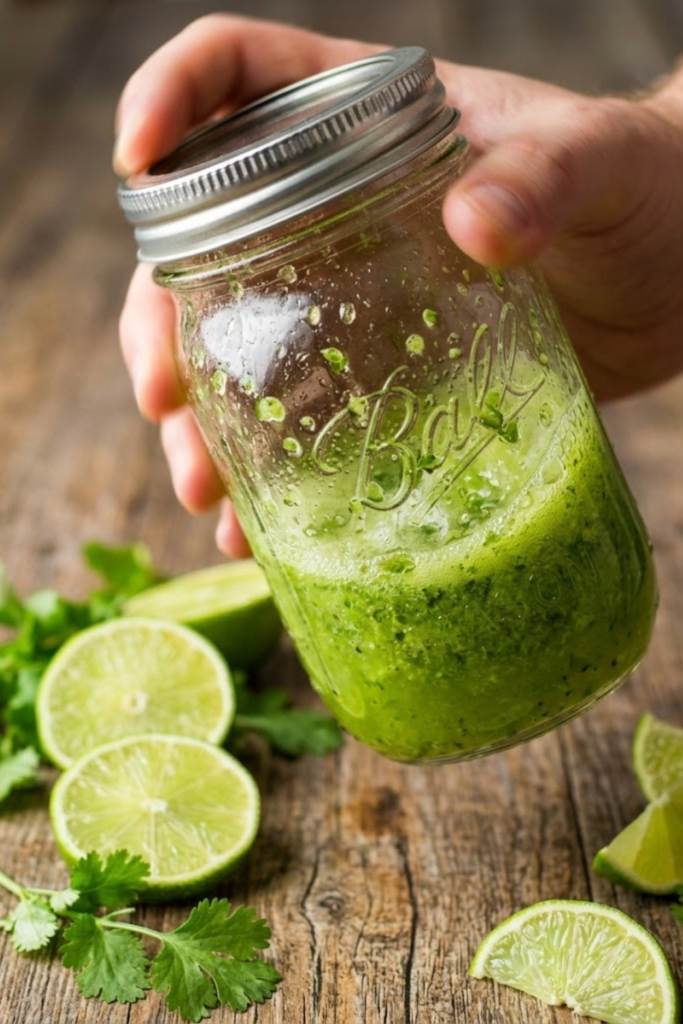
I don’t bother with fancy bowls or whisks anymore. I just use an old jam jar that I washed out. I put the lime juice, olive oil, honey, and a pinch of salt inside and screw the lid on tight. Then I shake it like crazy for about thirty seconds. This makes the dressing get thick and creamy without needing any dairy. I call it an emulsion, which is just a fancy teacher word for making oil and juice play nice together. It is way faster than whisking and you can just put the leftovers in the fridge right in the same jar. It’s one less bowl to wash, which is always a win in my book.
Flavor Boosts for the Bold
If you want to get a little wild, you can add other things. I love adding fresh cilantro, but I know some of my friends think it tastes like soap. If that is you, just use mint or flat-leaf parsley. I also like to throw in a tiny bit of grated ginger or even some red pepper flakes. It gives the salad a little bit of warmth that feels really good with the cold mango. Just taste a tiny bit on a spoon before you pour it over the whole bowl. You can always add more salt or honey, but you can’t take it out once it is already on there!
Pro Tips for Meal Prepping Shrimp Mango Salad
I’m a big fan of making my life easy during the work week. I usually spend my Sunday afternoons in the kitchen getting everything ready so I don’t have to think about what to eat on Tuesday. But let me tell you, I’ve had some pretty bad luck with salads in the past. If you just toss everything in a big bowl and stick it in the fridge, you’re going to have a bad time. By the time lunch rolls around, the shrimp gets weird and the fruit makes everything soggy. It took me a few tries to figure out how to keep this shrimp mango salad looking and tasting like I just made it. I want to share what I’ve learned so you don’t have to eat a sad, wet lunch like I did.
Keep the Avocado for Later
The biggest problem with prepping this meal is the avocado. We all know that as soon as you cut one open, it starts turning that ugly brown color. I used to try and save half an avocado by wrapping it in foil, but it never worked. Now, I just wait. I don’t even put the avocado in the meal prep container. I keep the whole fruit in my bag and slice it up right when I’m sitting down to eat. If you really have to cut it ahead of time, try squeezing a bunch of extra lime juice on it. The acid helps slow down the browning. Also, make sure you press some plastic wrap right against the green part so no air can touch it. Air is what makes it turn brown, so if you keep the air out, you’re in good shape.
The Dressing Stays on the Side
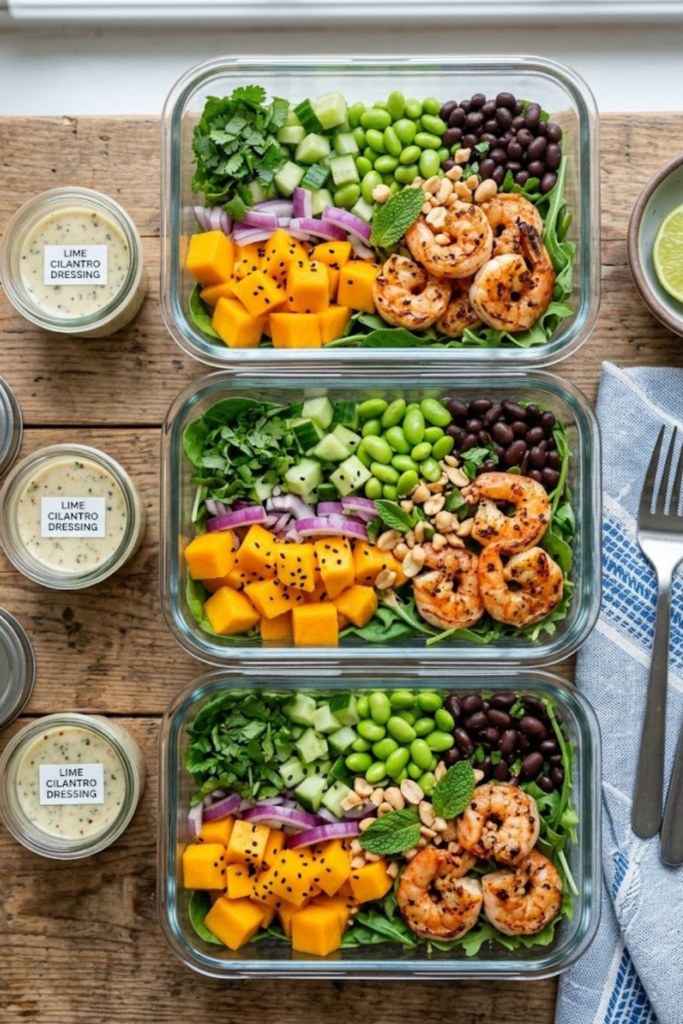
This is the most important rule of meal prepping any salad. Never, ever put the dressing on until you are ready to take your first bite. I learned this the hard way when I ended up with a pile of wilted, slimy leaves that looked like they came out of a pond. I use those tiny little plastic cups with lids for my dressing. They fit right inside the bigger salad container. It keeps the greens crisp and the shrimp from getting too mushy. If you pour the lime juice on too early, it actually starts to break down the proteins in the shrimp, and that makes the texture really weird and chewy.
Use the Right Containers
I’ve found that glass containers are way better than plastic for anything with seafood. Plastic tends to hold onto smells, and nobody wants their lunch box to smell like old fish forever. Glass is also easier to clean and keeps things a lot colder in the fridge. For the base of the salad, I actually stopped using soft lettuce like spinach. I use shredded cabbage or kale instead. Those greens are much tougher and can handle sitting in the fridge for two or three days without turning into a mess. Just make sure you eat the shrimp within two days. After that, it starts to lose its flavor and it’s just not worth the risk.
Final Thoughts on Making the Best Shrimp Mango Salad
So, we have gone over a lot of ground today! From figuring out which mango is actually ready to eat to making sure your shrimp don’t turn into rubber, you are now ready to tackle this shrimp mango salad like a pro. I know it can feel like a lot of steps when you first read through a recipe, but once you get into the rhythm of it, everything just flows. I remember the first time I made this for a big family BBQ. I was so nervous that people would think the fruit and fish combo was weird, but the bowl was empty in less than ten minutes. It’s funny how a few simple ingredients can turn into something that feels so special and fancy without actually being hard to do.
Why This Recipe is a Keeper
The reason I keep coming back to this specific salad is because it is just so versatile. You can serve it as a main dish for a light dinner, or you can scoop it into little cups for a party. It’s healthy, it’s bright, and it always makes me feel like I’m sitting on a beach somewhere instead of in my kitchen in the suburbs. Plus, as a teacher, I love any meal that I can prep on Sunday and still enjoy on Tuesday. It saves me so much stress during those busy mornings when I’m trying to get out the door. Just remember the tips we talked about—keep that dressing on the side and don’t be afraid of the “C” shape rule for your shrimp.
Sharing the Love
I really hope you give this one a try soon. If you do make it, please take a photo and let me know how it turned out! I love hearing about how people tweak the recipes to fit their own tastes. Maybe you added some extra spice or found a new type of mango that works even better. Cooking is all about experimenting and finding what makes you and your family happy. If you enjoyed this guide and found these tips helpful, please share it on Pinterest so others can find it too. It helps me keep sharing these stories and recipes with all of you.
Whether you are making this for a quick lunch or a fancy dinner party, this shrimp mango salad is sure to be a hit. It’s fresh, it’s zesty, and it’s exactly what you need when you want something light but filling. Thanks for hanging out in my kitchen today, and I can’t wait to see what you cook up next! Happy eating, and I’ll talk to you in the next post.