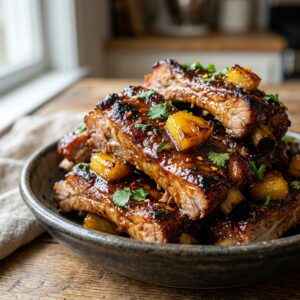
“Did you know that zucchini is actually a fruit, botanically speaking?” I remember the first time I realized how easy it is to turn a boring vegetable drawer into a five-star side dish. Honestly, I used to overcook these until they were just… mush. Gross! But once you nail the high-heat sear and that hit of fresh lemon juice, your dinner game changes forever. It’s zesty, it’s snappy, and it’s the ultimate way to use up that summer garden haul.
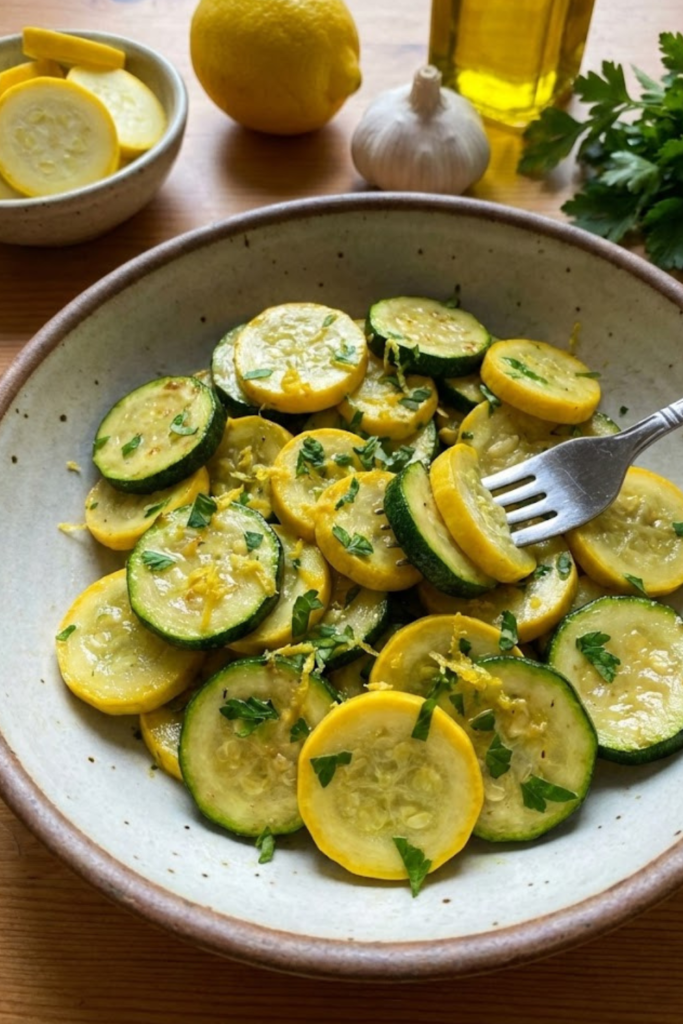
Choosing the Best Zucchini and Summer Squash
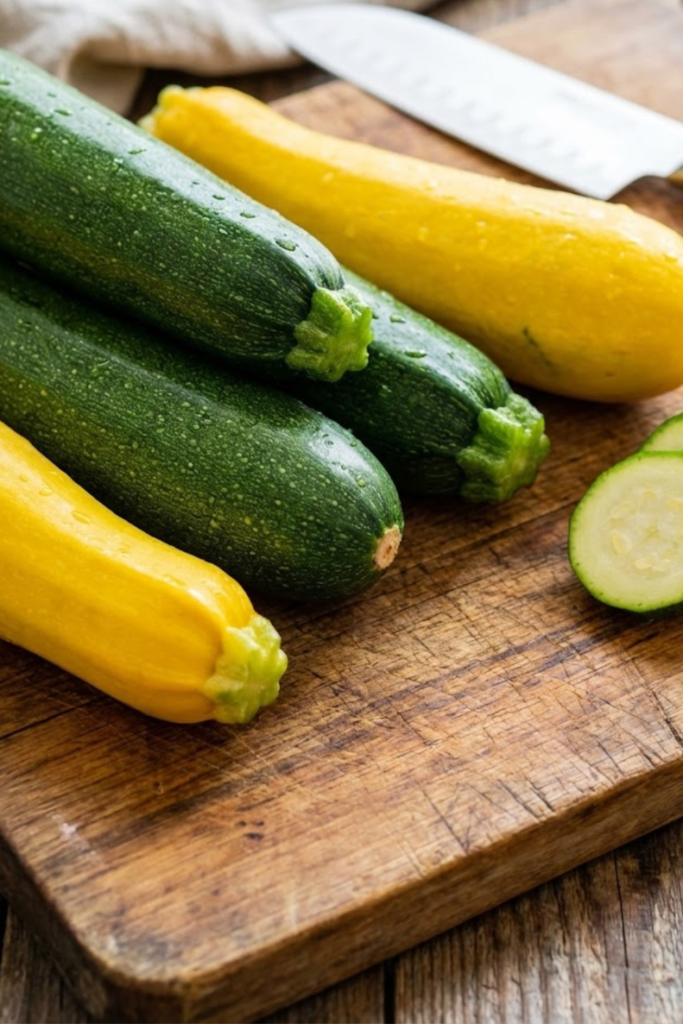
I’ve spent way too much time standing in the produce aisle, squeezing vegetables like I actually know what I’m doing. But honestly, picking the right squash is the biggest secret to this whole dish. You want to look for zucchini and yellow squash that feel heavy for their size and have skin that looks shiny and smooth.
If you see those giant zucchinis that are the size of a baseball bat? Leave those for zucchini bread. For a sauté, you want the smaller ones—about 6 to 8 inches long. The big ones are full of seeds and have way too much water, which just turns into a soggy mess in your pan. Small squash are much more firm and have a slightly sweet, nutty flavor that really pops when you hit them with the lemon.
When you get them home, don’t wash them until you are ready to cook. Moisture is the enemy of a good sear! I usually just give them a quick scrub, pat them bone-dry with a paper towel, and slice them into uniform half-moons. Keeping the size consistent means they all finish cooking at the same time, so you don’t end up with some pieces that are crunchy and others that are mush.
I always try to look at the stem end of the squash too. If it looks all shriveled up or dark brown, that squash has been sitting on the grocery shelf way too long and probably won’t taste very fresh. I like to find ones where the stem still looks a bit green and juicy. Also, don’t be scared of a few little scratches on the skin; that’s just normal from growing in the garden. Just stay away from anything with deep gashes or soft, brown spots that feel like they might cave in when you touch them.
If you can find them at a local farm stand during the summer, that’s even better. Those haven’t spent days sitting in a hot truck, so the flavor is much brighter. When you are getting ready to slice them, try to keep your pieces about a quarter-inch thick. If they are too thin, they’ll disappear in the hot pan, but if they’re too thick, the outside will burn before the inside is even tender. I also try to keep the zucchini and the yellow squash slices the same size so they finish at the same time. If the yellow squash is way thicker, it’ll still be hard while the green ones are already getting soft. It’s all about keeping things even so every bite is good. This makes it so much easier for you to get a result that looks like it came from a fancy restaurant.
The Secret to Avoiding Soggy Sautéed Squash
If there is one thing that ruins a good vegetable side dish, it’s when it turns into a watery, limp mess the second it hits the plate. I’ve made that mistake more times than I’d like to admit! The trick to getting that perfect, golden-brown crust while keeping the inside snappy is all about managing moisture.
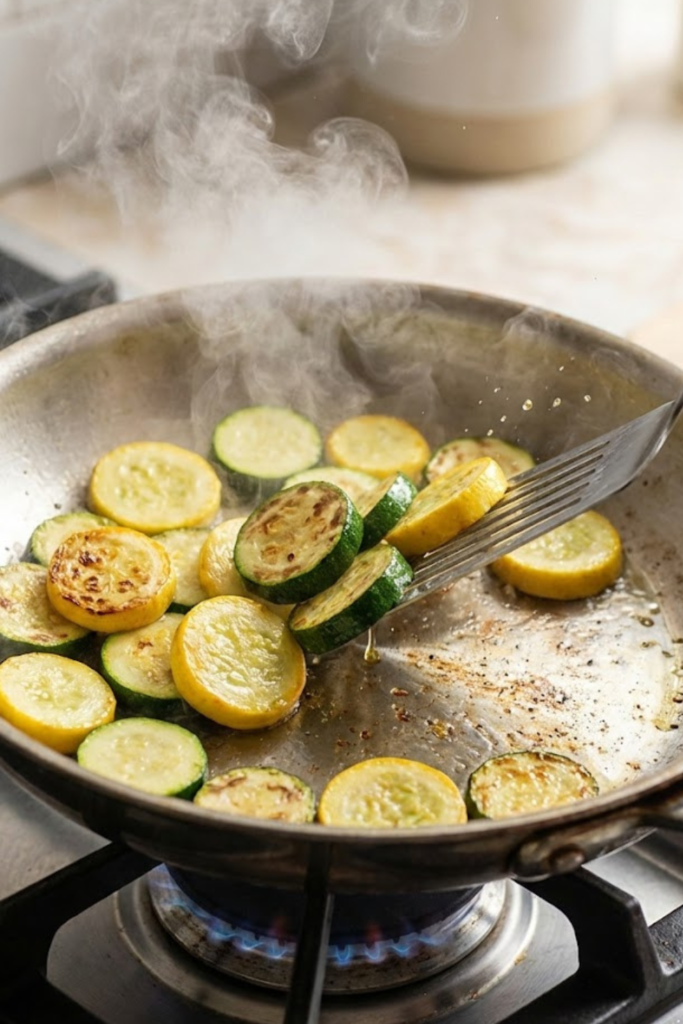
First, you have to get your pan really hot before you even think about adding the veggies. I prefer a big cast iron skillet because it holds heat so well. Use an oil with a high smoke point—like avocado oil or even a light olive oil—and wait until it’s shimmering. When you drop the squash in, it should sizzle immediately. If it doesn’t make a sound, your pan isn’t hot enough.
Also, don’t crowd the pan. I know it’s tempting to dump everything in at once to save time, but if the slices are overlapping, they’ll just steam each other instead of browning. Work in batches if you have to! And here is the biggest tip: don’t salt the squash until the very end. Salt draws out water, and if you do it too early, you’ll end up boiling the veggies in their own juices. Save the salt for the last minute of cooking to keep that texture perfect.
I used to be a chronic stirrer, standing over the stove and moving the pieces around every three seconds. Don’t do that! You need to let them sit there and face the heat for at least two or three minutes without touching them. If you keep moving them, they never get that pretty brown color that actually carries all the flavor. It’s a lot like making a grilled cheese sandwich; you have to leave it alone to get that nice crunch on the outside.
Also, keep an eye on how much oil you are using. You don’t want your veggies swimming in a pool of grease, but you need enough to coat the bottom of the pan so nothing sticks and burns. Usually, a tablespoon or two is plenty for a full skillet. If the pan starts looking bone-dry halfway through, just add a tiny splash more around the edges.
Another thing I learned the hard way is that your slices need to be dry before they hit the oil. If you just washed them and they’re still dripping, that extra water is going to turn into steam the second it gets hot. I like to lay my sliced rounds out on a clean kitchen towel and give them a quick pat down. It feels like an extra step, but it really helps you get that sear we are looking for.
Lastly, if you are cooking for a big group, don’t try to cram four whole squashes into one small pan. It actually takes more time because the pan temperature drops too fast. Just do it in two turns. The veggies will cook much faster and stay way crispier when they have some breathing room. Trust me, once you see those golden edges, you’ll never go back to the old way of just tossing them all in at once!
Mastering the Lemon and Garlic Infusion
Now, this is where the magic really happens. Garlic and lemon are like the best friends of the vegetable world, but you have to be careful not to treat them poorly. I used to throw my garlic in at the very beginning with the squash, and by the time the veggies were browned, the garlic was burnt, bitter, and honestly pretty gross.
The trick is to wait until your zucchini is almost done. Push the veggies to the outer edges of the pan and drop your minced garlic right in the center with a tiny extra splash of oil if it looks dry. Let it sizzle for just about 30 to 45 seconds—until you can really smell it—and then toss everything together. This keeps the garlic sweet and fragrant. If you have a garlic press, use it here because it gets the pieces small enough to stick to every single slice of squash.
Once you take the pan off the heat, that’s when the lemon comes in. I use both the juice and the zest. The juice adds that bright tang that cuts through the oil, but the zest? That’s where the “wow” factor is. It has all those citrus oils that make the dish smell incredible. You’ll want to zest the lemon before you cut it in half to squeeze it; it’s much easier on your knuckles that way!
Toss in a handful of fresh parsley at the same time, and you’ve got a side dish that tastes like summer on a plate. It’s so simple, but the flavors are really bold. If you want a little kick, a tiny pinch of red pepper flakes right at the end goes a long way. I usually keep a few extra lemon wedges on the table too, just in case someone wants an extra hit of acid. It really wakes up the whole meal!
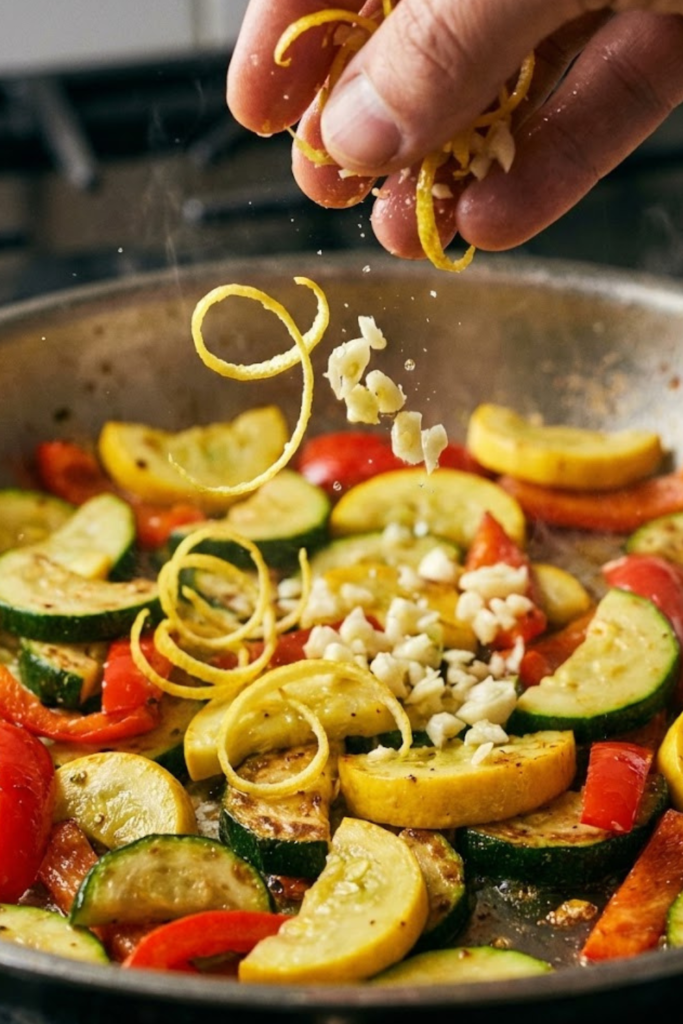
Wrapping this up, I really hope you give this Sautéed Zucchini and Summer Squash with Lemon a try. It is such a simple way to make a healthy side dish that doesn’t taste like “diet food.” Just keep that pan hot, don’t crowd the veggies, and wait until the very end to add that lemon and salt. You’ll be amazed at how much flavor you can get out of a couple of basic squashes!
This has become a total staple in my house, especially during those busy weeknights when I only have ten minutes to get something green on the table. If you end up making it, I’d love to hear how it turned out for you. Please pin this recipe to your Pinterest boards so your friends can find a way to use up their summer garden squash too!