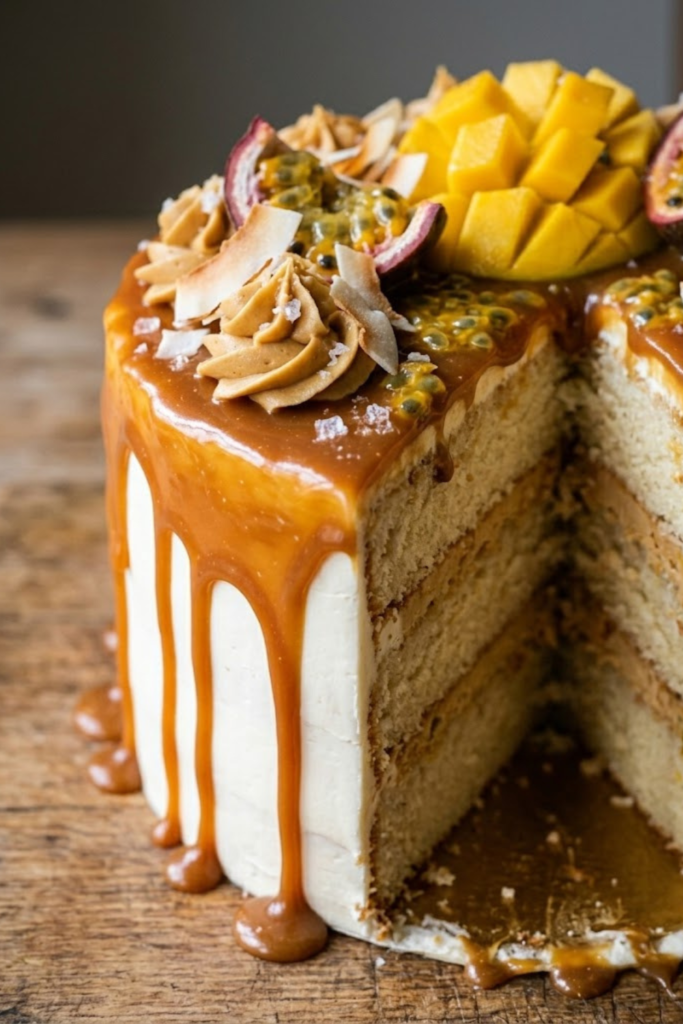
I have a confession to make: I used to be absolutely terrified of making a salted caramel drip cake! It looked so fancy and difficult, like something you’d only see in a high-end bakery window. But then I realized that most home bakers—about 65% of us—actually struggle more with the “drip” than the baking itself!
I remember my first attempt; it was a total disaster, and the caramel just pooled at the bottom like a sticky swamp. But don’t worry, I’ve made all the mistakes so you don’t have to. We’re going to walk through this together, and I’ll show you how to get those perfect, slow-moving golden streaks every single time. Let’s get our aprons on and make something delicious!
The Secret to a Perfect Salted Caramel Sauce
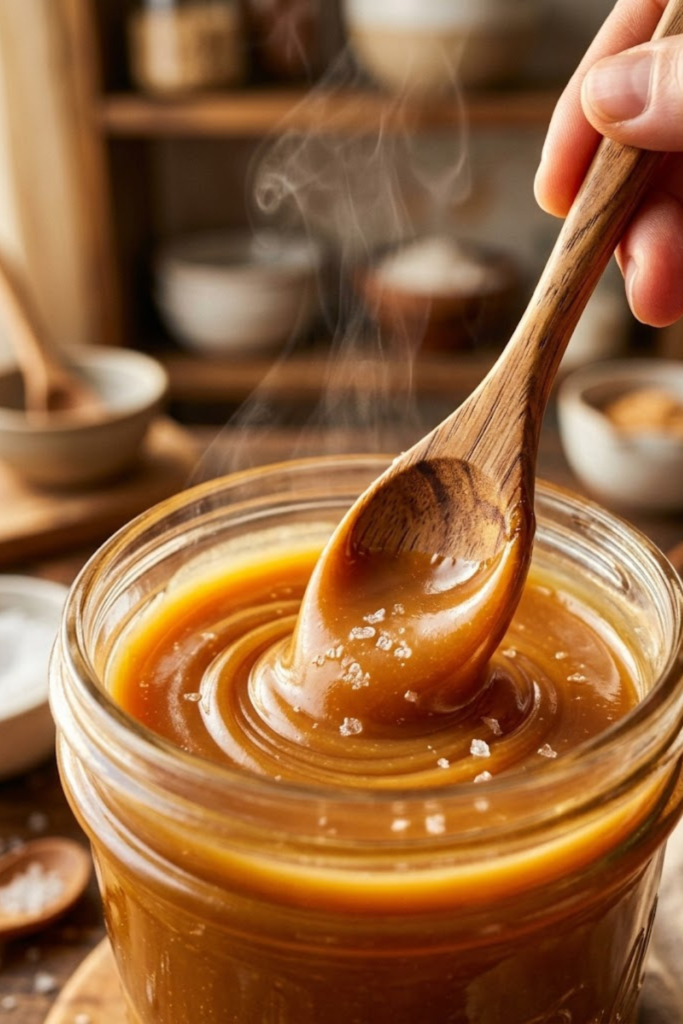
I have a big confession to make: I used to be totally terrified of making caramel. I thought it was some kind of weird magic that only fancy chefs knew how to do. My first three tries ended up right in the trash because I either undercooked it or turned my kitchen into a giant smoke house. But honestly, once you get the hang of it, it is the most important part of your salted caramel drip cake. You really can’t just buy the stuff in the jar from the grocery store. That store-bought stuff is way too thick and usually tastes like fake chemicals. Making it yourself at home is always better and it’s actually pretty fun.
Watching for the Golden Glow
The hardest part of this whole thing is just sitting there and watching the sugar melt. You are going to want to stir it, but please don’t! If you stir the sugar too much while it’s melting, it gets all clumpy and weird. You just have to let it sit there on medium heat and do its thing. I like to gently swirl the pan a little bit once the edges start turning brown. You are looking for a deep amber color. Think of a shiny new penny or a dark jar of honey. If the color is too light, it won’t have that rich, deep taste we want. If it gets too dark, it starts to smell bitter and you have to start all over again. It happens real fast, so don’t look away to check your phone!
The Warm Cream Trick
One time, I poured cold cream right out of the fridge into my hot melted sugar. It was like a science experiment gone wrong! The caramel bubbled up so high it almost came right out of the pot and onto my stove. Now, I always make sure my heavy cream is a little bit warm before I add it. I just pop it in the microwave for about thirty seconds. When you pour the warm cream in, it will still bubble and hiss, but it won’t be as scary or dangerous. This is what makes the sauce smooth and easy to pour so you get those perfect drips.
Getting the Salt Just Right
The salt is really what makes this sauce special. Without it, the cake is just way too sweet and hard to eat. I like to use sea salt flakes because they don’t just melt away into the sugar. You get these tiny little bursts of saltiness that make the caramel taste amazing. I usually start by adding about a half teaspoon and then I taste it—but be real careful because it stays hot for a long time! If it still feels too sugary, I add a tiny bit more. It is the best way to make your cake taste like it came from a professional bakery instead of just being a pile of sugar. Adding cold butter at the very end also helps. It makes the sauce shiny and thick, which helps it stay on the cake instead of running off the plate. Just keep practicing and you will be a pro in no time. Even if you mess up a batch, your whole house will smell like a candy shop, and that’s a pretty good win!
Building the Ultimate Salted Caramel Drip Cake
I really used to struggle with getting my cakes to stand up straight. I remember this one time I was making a cake for a big family dinner. I was in such a rush that I tried to stack the layers while they were still a little bit warm. Within ten minutes, the frosting started melting and the top layer just slid right off the side! It looked like a total mess and I felt so silly. Now, I always tell my students that patience is the most important ingredient in any salted caramel drip cake. You really have to make sure those layers are completely cold before you even think about touching them with frosting.
Pick a Sturdy Cake Base
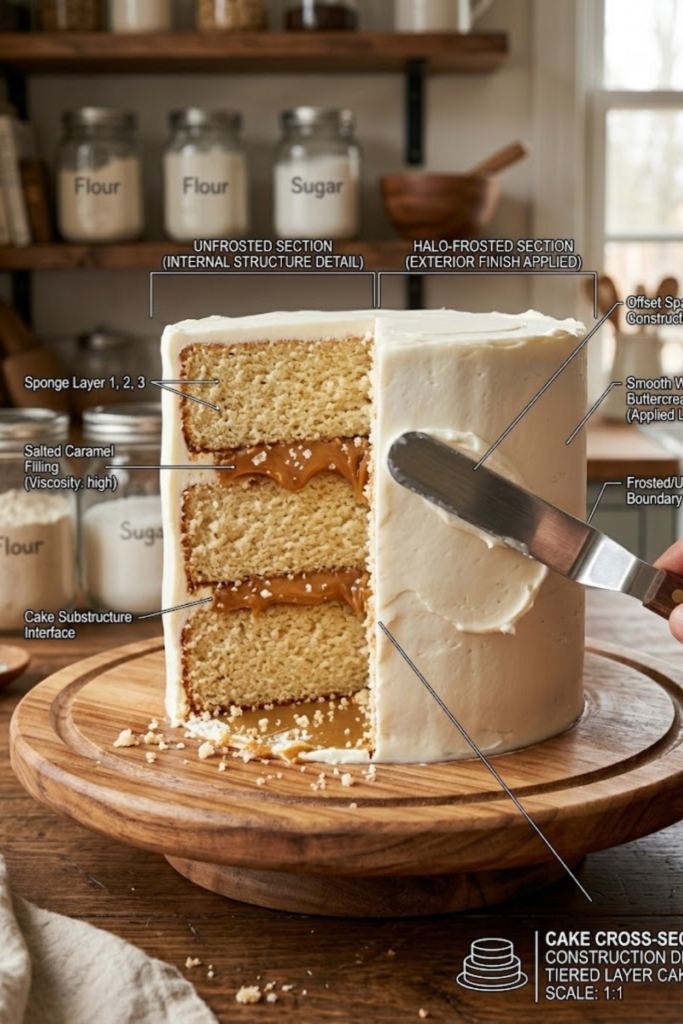
When you are making a drip cake, you can’t just use any old recipe. Some cakes are way too soft and fluffy to hold up all that heavy caramel and thick buttercream. I usually stick with a good vanilla or chocolate butter cake. These are strong enough to stay together when you start stacking them up high. If the cake is too light, it might just squish under the weight of the layers above it. I also like to wrap my cake layers in plastic wrap and put them in the fridge overnight. It makes them much easier to handle and they won’t crumble into a million pieces when you try to move them around. Cold cake is just much friendlier to work with.
Leveling Your Layers
Most cakes come out of the oven with a little dome on top. If you try to stack those domes, your cake will be super wobbly and might even tip over. I use a long serrated knife, like a bread knife, to gently saw the tops off so they are perfectly flat. It feels a bit sad to cut off part of the cake, but you can just eat those scraps with a little leftover frosting while you work! Having flat surfaces makes everything so much more stable. If your layers are flat, your cake will look straight and tall, which is exactly what we want.
Why You Need a Crumb Coat
The crumb coat is a thin layer of frosting that goes on before the final look. It acts like a glue that holds all the loose crumbs in place. If you skip this, you will get little brown specks all over your beautiful frosting. After I put the crumb coat on, I put the whole cake back in the fridge for about thirty minutes. This makes the surface nice and firm. When you finally put the last layer of buttercream on, it stays perfectly smooth. This smooth surface is exactly what you need so your caramel drips look like they were done by a professional baker. Just take your time and don’t rush it!
Mastering the Drip Technique Without the Mess
I remember the very first time I tried to do a drip on a salted caramel drip cake. My hands were shaking so bad! I had spent all afternoon baking the layers and getting the frosting just right. I was so scared that I would ruin the whole thing in five seconds. It is definitely the part of the process that makes most of my students the most nervous. I once saw a student get so frustrated that she just poured the whole bowl of caramel over the top and called it a “flood cake.” It still tasted good, but it wasn’t exactly the look she wanted.
Temperature is Everything
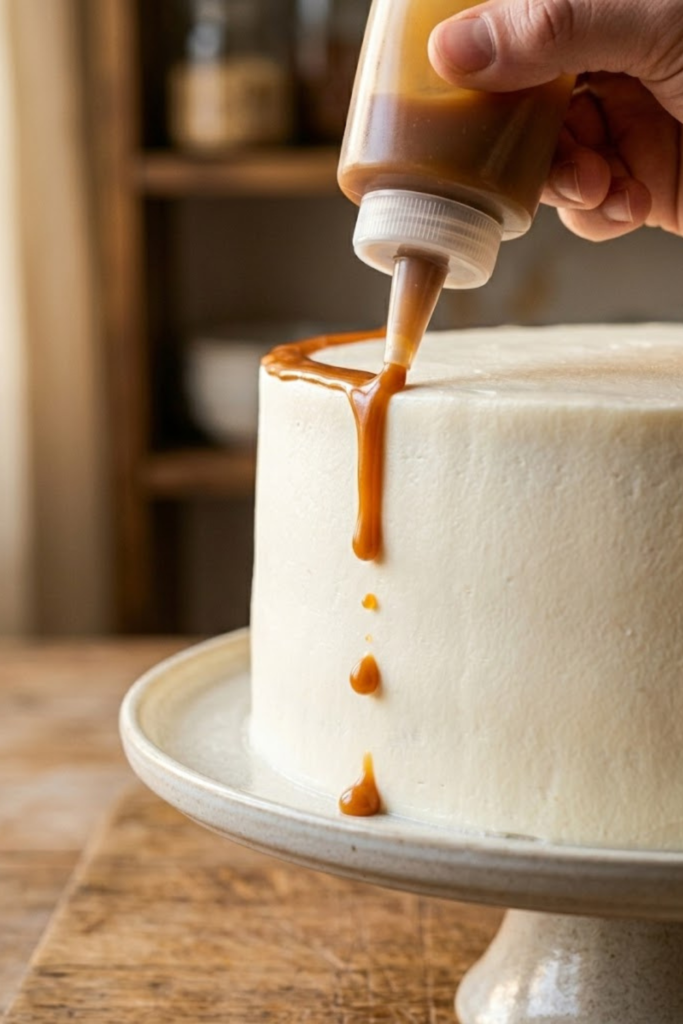
If your cake is sitting at room temperature, the caramel is going to act like a runaway train. It will just keep running down the sides until it hits the plate and makes a big sticky puddle. The best thing you can do is make sure your cake is cold—like, really cold. I usually leave mine in the fridge for at least two hours before I even touch the caramel sauce. When that slightly warm sauce hits the chilly frosting, it stops moving pretty quickly. That is how you get those pretty little teardrop shapes that stay right where you put them instead of sliding all the way off the board.
Ditch the Spoon for a Squeeze Bottle
A lot of old recipes tell you to use a spoon to pour the drips over the edge. I think that is way too hard to control for a beginner. Instead, I always use a cheap plastic squeeze bottle that you can find at any craft store or even the grocery store. It gives you so much more power over the sauce. If you want a long, dramatic drip, you just squeeze the bottle a little harder. If you want a short, cute one, you just give it a tiny little tap. It makes the whole thing feel more like a fun art project and less like a stressful chore.
Always Do a Practice Run
This is my favorite trick that I tell everyone in my classes. Get a cold glass from the cupboard and try dripping a little bit of your sauce down the side of it. If the caramel runs too fast and hits the bottom of the glass, you know you need to let the sauce sit on the counter for five more minutes to thicken up. If it’s too thick and won’t move at all, just pop it in the microwave for three or four seconds. Doing this on a glass first means you won’t mess up your actual cake. It gives you a lot of confidence before you start the real work! Just take a deep breath and go for it. Even if it isn’t perfect, it’s still going to be the best thing people eat all week.
Storing and Serving Your Sweet Masterpiece
So, you finally finished your salted caramel drip cake and it looks like something from a TV show. Honestly, give yourself a pat on the back because that is a big win! But now comes the part that a lot of people forget about: keeping it fresh and actually eating it. I remember the first time I made a really tall one for a friend’s birthday. I was so proud of it, but I didn’t think about how to get it to her house. I just put it on the seat of my car and turned a corner too fast. The whole thing tipped over and hit the door. I literally sat in my driveway and cried for ten minutes! It was a total disaster, but I learned a lot about how to handle these big treats.
The Best Way to Keep it Fresh
Because this cake has a lot of butter and cream, you really need to keep it in the fridge if you aren’t eating it right away. But here is the thing: the fridge is like a vacuum that sucks all the moisture out of your cake. If you just leave it sitting in there uncovered, it will turn into a dry sponge by the next morning. I always use a big plastic cake carrier that seals up tight. If you don’t have one, you can gently wrap the whole thing in plastic wrap once the frosting is hard. This keeps the air away from the sponge so it stays soft and yummy for days.
Getting the Perfect Slice
When it’s finally time to eat, don’t just grab a knife and start hacking away. If the cake is cold, the caramel is going to be a bit stiff. If you try to cut it right out of the fridge, you might squash the layers. I like to let the cake sit on the counter for about thirty minutes before I cut it. This lets the buttercream soften up just a little bit. Another trick I use is to get a tall pitcher of real hot water. Dip your big knife in the water, wipe it dry with a towel, and then make your cut. The heat from the metal melts through the caramel and frosting like butter. You get those perfect, clean lines where you can see every single layer.
Moving the Cake Without a Mess
If you have to take your salted caramel drip cake to a party or a school event, please learn from my mistakes! Never, ever put a cake on the seat of a car. Car seats are always tilted, and that’s how cakes slide. The best place for a cake is actually on the floor of the car on the passenger side. It’s the flattest spot you have. I also like to put a little piece of that rubbery shelf liner under the cake box. It stops the box from sliding around when you hit the brakes. Just drive slow and take the corners like you have a giant bowl of soup in the back! It takes a bit more work, but seeing everyone’s face when you walk in with a perfect cake makes it all worth it.
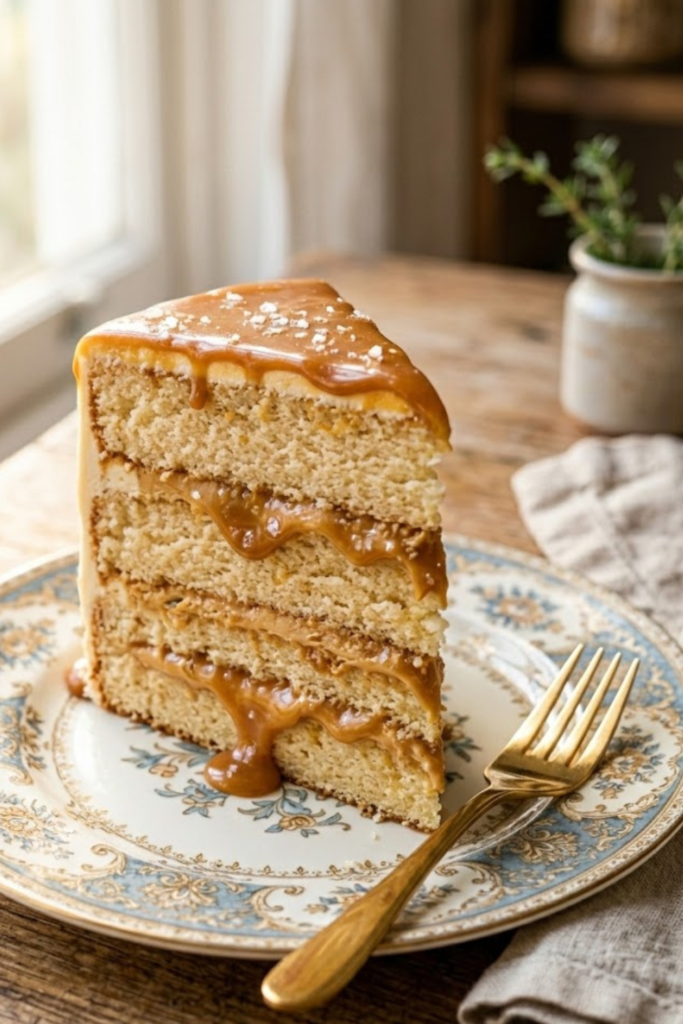
Making a salted caramel drip cake is a big project, but it is one of the most rewarding things you can do in your kitchen. From melting that golden sugar to watching the perfect drips fall down the sides, it’s a total blast. I hope my stories about my own kitchen fails help you feel better about trying it yourself. Remember, even if it isn’t perfect, it’s still going to taste amazing! If you found these tips helpful, please save this post and share it on Pinterest so your friends can try making one too!