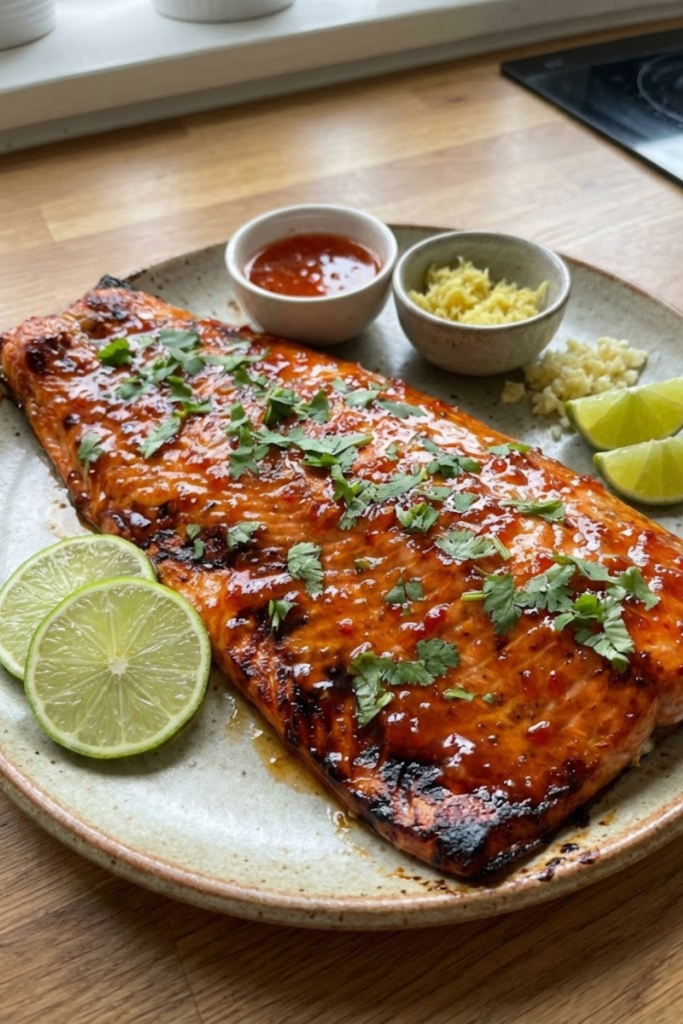
Did you know that nearly 80% of people feel intimidated by cooking fish at home because they fear it’ll turn out dry or “fishy”? I totally get it! For years, I was that person who only ordered seafood at fancy restaurants because I didn’t want to ruin a perfectly good piece of fish in my own kitchen. But let me tell you, once I discovered the magic of salmon with sweet chili glaze, everything changed! This recipe is my absolute go-to when I want something that looks gourmet but takes less effort than making a sandwich. The combination of the fatty, rich salmon and that zesty, Thai-inspired kick is just out of this world! You’re going to love how the sugars in the glaze caramelize under the heat, creating those crispy little edges we all crave. Let’s get cooking!
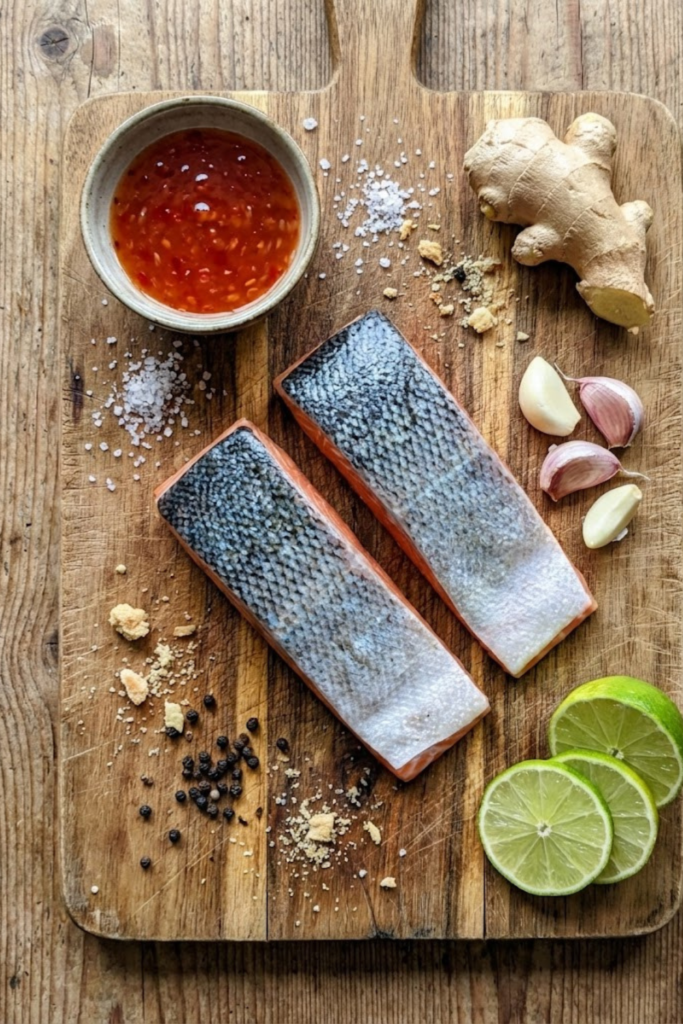
What You’ll Need: Ingredients for Success
Alright, class, let’s get our supplies ready. You wouldn’t show up to a math test without a pencil, right? Cooking this salmon with sweet chili glaze is the same way. You need the right stuff on your counter before you even turn on the stove. I’ve learned the hard way that running to the pantry with a hot pan in your hand is a recipe for disaster—and maybe a fire alarm. Trust me, I’ve been there! Getting everything set out makes the whole process feel way less stressful. Here is exactly what you need to grab from the store for our 2026 dinner.
Picking the Best Salmon Fillets
The most important part is the fish itself. I usually look for fillets that are about six ounces each. If you can find wild-caught salmon, that’s great because it has a really deep flavor, but farmed Atlantic salmon works just fine too because it’s a bit fattier and harder to dry out. Look for a bright, vibrant color. If it looks pale or smells “fishy” before you even cook it, put it back! You want it to smell like the ocean, not like an old pier. I like keeping the skin on because it helps the fish stay together while it cooks, plus it gets real crispy if you sear it right.
The Sauce: Sweet, Salty, and Tangy
Now, the star of the show is the Thai sweet chili sauce. You can find this in almost any grocery store aisle these days. It’s got that perfect balance of sugar and a tiny bit of red pepper heat. But don’t just pour it straight from the bottle! We are going to mix it with some low-sodium soy sauce to add a bit of salt. I also grab a fresh lime. The juice from that lime is going to cut through the sugar so the dish doesn’t taste like candy. If you want a little extra zing, a splash of rice vinegar is a good trick I use when I want to impress my neighbors.
Don’t Forget the Fresh Aromatics
Listen, I know it’s tempting to use the garlic powder from the back of the cabinet, but please don’t do that here. Grab a real head of garlic and a knob of fresh ginger. Peeling ginger with a spoon is a neat trick I teach my students—it’s way safer than a knife! Grating these fresh into your salmon with sweet chili glaze mixture makes the smell in your kitchen absolutely incredible. It adds a layer of flavor that the dried stuff just can’t touch. Finally, get some green onions and sesame seeds for the top. It makes the plate look like it came from a fancy bistro instead of your own kitchen.
The Secret Technique: Pan-Searing vs. Baking
So, you have your fish and your sauce ready to go. Now we have to decide how we are actually going to cook this salmon with sweet chili glaze. There are two main ways I do this, and honestly, it depends on how much energy I have after a long day at school. If I want that crispy, crunchy skin that tastes like a potato chip, I go for the pan. If I am feeling a bit lazy or I am cooking for the whole family, I just toss it in the oven. Both ways are great, but they feel a little different when you eat them.
Why I Love the Pan-Sear
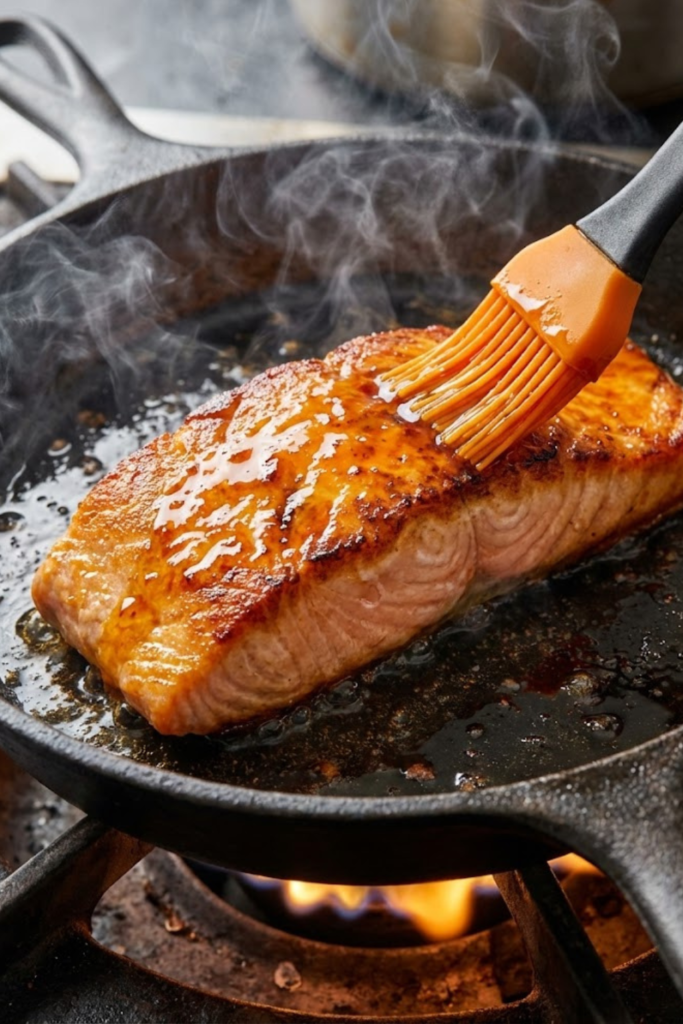
Pan-searing is my favorite for when I am just cooking for myself or my partner. You get the pan really hot with a little bit of oil—not too much, or you will have a greasy mess! Lay the fish down skin-side first and just leave it alone. Don’t touch it! I used to try and flip it too early and the skin would stick to the pan, which is so frustrating. Once it gets crispy, you flip it and brush on that salmon with sweet chili glaze. The sauce starts to bubble and get thick right in the pan. The only bad part is that your stove might get some oil spots on it, so have some paper towels ready to wipe up after you finish.
The Easy Way: Baking in the Oven
Now, if you hate cleaning up oil splatters, baking is your best friend. I usually line a sheet pan with parchment paper or foil. This is a huge time saver because you just throw the paper away when you are done. Put your fillets on the tray, brush on a good layer of the salmon with sweet chili glaze, and let the oven do the work. About halfway through, I like to add a little more sauce to keep it moist. The trick to making baked fish taste just as good as fried fish is using the broiler at the very end. Turn that broiler on for the last sixty seconds and watch the sauce turn into a sticky, dark glaze. Just stay right there and watch it, because it can go from perfect to burnt real fast!
Knowing When It’s Done
No matter which way you pick, the goal is to not turn your dinner into a piece of wood. Like I mentioned before, use a thermometer if you can. You want the middle to be just barely cooked through. If you press on the top of the fish with your finger, it should feel firm but still have a little give to it. If it feels hard, you probably went too long. But don’t worry, the salmon with sweet chili glaze is very forgiving! The sauce hides a lot of mistakes and keeps things tasting good even if you leave it in a minute too long. Just keep practicing and you will get the hang of it soon.
Flavor Pairings: What to Serve with Your Salmon
I tell my students all the time that balance is the most important thing in any project. If you write a story that is all action and no quiet moments, it gets exhausting to read. Food is exactly the same! Since the salmon with sweet chili glaze is so bold, sticky, and full of flavor, your side dishes need to be a little more “quiet” so they don’t fight for attention. I remember one time I tried to serve this with a heavy cheesy potato dish because I was just using up leftovers. It was a total mess! The flavors were clashing like two kids arguing over a crayon. Now, I have a few go-to sides that make the whole meal feel like it belongs in a five-star restaurant.
The Rice Situation: Coconut or Jasmine?
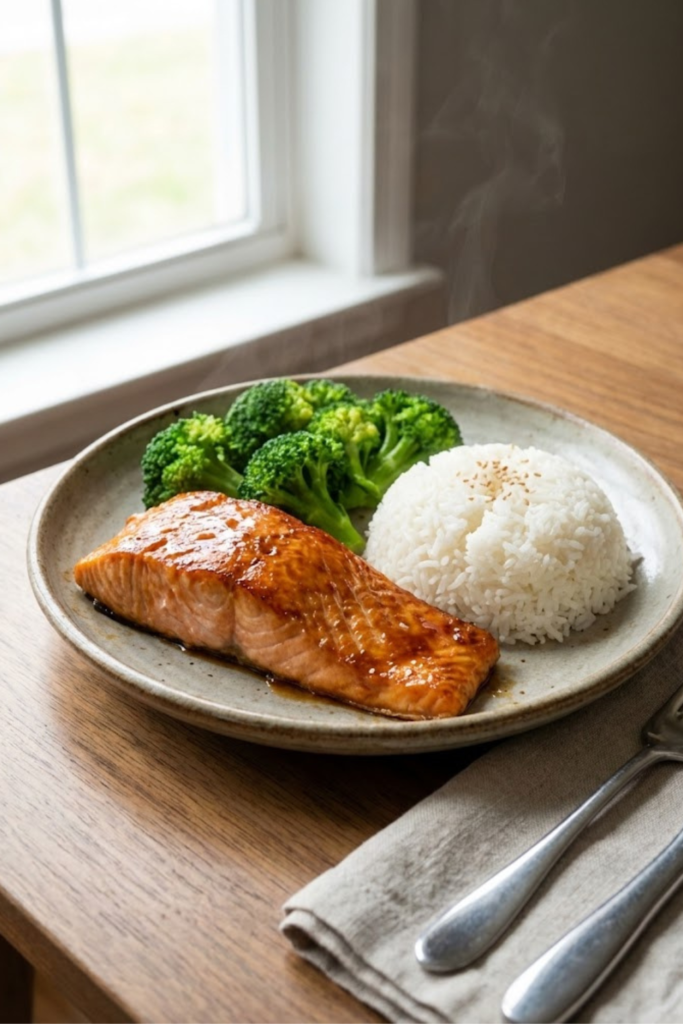
About the starch on your plate, you really can’t go wrong with white rice. It acts like a sponge for all that extra salmon with sweet chili glaze that drips off the fish. Most nights, I just use a simple Jasmine rice because it’s fast and smells like popcorn while it cooks. But, if I have an extra ten minutes, I make coconut rice. You just swap out some of the water for a can of coconut milk. It makes the rice so creamy and sweet, which goes perfectly with the spicy kick in the chili sauce. My neighbor actually asked for the recipe just for the rice! It’s that good. Just make sure you don’t let it sit too long or it gets a bit sticky.
Veggies to Balance the Heat
Green things make me feel like I’m being a responsible adult, even on a Tuesday. For this dish, I usually go with roasted broccoli or some quick Bok Choy. I like to toss the veggies in the oven at the same time the fish is cooking. If you put them on the same tray, the juices from the salmon with sweet chili glaze sometimes run over and flavor the vegetables, too. It’s a great little shortcut! The bitterness of the greens really helps cut through the sugar in the glaze. If you want a bit of crunch, you can even stir-fry them quickly in a pan with a little bit of sesame oil.
A Fresh Crunch on the Side
If you want to get really fancy, a cold cucumber salad is the way to go. I just slice up some cucumbers really thin and soak them in a little bit of rice vinegar and a pinch of salt. This adds a “bright” feeling to the meal. Since the salmon is quite rich and fatty, having something sour and crunchy really cleans your palate between bites. It’s a trick I learned from a cooking show years ago, and it really works. Plus, it looks really pretty on the plate next to the bright orange fish. Your family will think you spent way more time on dinner than you actually did!
Pro Tips: How I Finally Stopped Overcooking Salmon
Listen, I have a big confession to make. I used to be the absolute worst at cooking fish. My poor family had to sit through years of what I called “salmon jerky” because I was so scared of it being raw. It was honestly embarrassing for a teacher who is supposed to know things! One time, I even served a piece of salmon with sweet chili glaze that was so dry, it practically bounced off the plate. We ended up ordering pizza that night, and I felt like a total failure in the kitchen. Here is how I finally fixed my mistakes so your dinner turns out perfect.
The “Flake Test” Is Kind Of A Lie
I used to read those old cookbooks that said to just “wait until it flakes with a fork.” Well, news flash: by the time it flakes easily, it is already overdone! The heat keeps cooking the fish even after you pull it out of the pan. This was a huge “aha!” moment for me during a summer BBQ a few years ago. I realized that salmon with sweet chili glaze needs to come off the stove when it still looks a little bit translucent in the very center. It feels a bit scary at first, like you are breaking a safety rule, but it is the only way to get that buttery texture we all want. If it is already flaking while it’s still in the pan, it is going to be dry by the time you sit down to eat.
Why I Bought A Cheap Thermometer
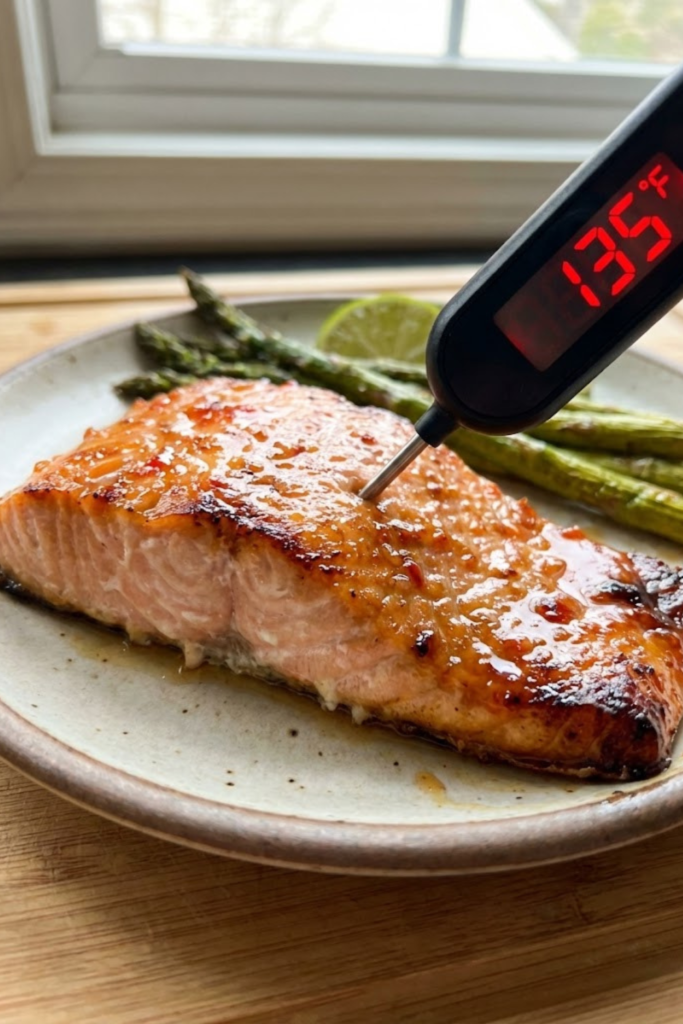
If you do not have a digital meat thermometer yet, go get one right now. It is the only way to be sure about your food without hacking your beautiful fish to pieces to look inside. I aim for about 135°F for my salmon with sweet chili glaze before I let it rest. Resting the fish is just as important as the cooking part, I promise. Just five minutes on a plate makes the juices stay where they belong instead of running all over the tray. It is like a little nap for the fish before it hits your belly. It makes a massive difference in how the meal tastes.
Handling The Sticky Sugar Glaze
The chili sauce has a lot of sugar, which is why it tastes so good. But sugar burns faster than a toddler runs toward a mud puddle! I made the mistake of putting the glaze on too early once and ended up with a black, charred mess. Now, I sear the fish first, then add the salmon with sweet chili glaze in the last two minutes of cooking. This lets the sauce get thick and sticky without turning into charcoal. It is a simple change, but it saved my sanity and my dinner. Just keep a close eye on it during those last few minutes!
Bringing It All Together
Well, there you have it! We have covered everything from picking out the best fish at the store to making sure you don’t burn the house down with that sugary glaze. I really hope this guide helps you feel more like a pro in your own kitchen. For me, cooking salmon with sweet chili glaze was the first time I felt like I actually knew what I was doing with seafood. Before this, I was just guessing and hoping for the best, which usually ended up with me eating a bowl of cereal instead of a real dinner. Now, I can get this on the table in about twenty minutes, and my kitchen doesn’t even smell like a fish market afterward! It is such a relief to have a recipe that works every single time without any stress.
As a teacher, I know that the best way to learn is by doing. You might mess up the first time—maybe the rice is a bit mushy or the fish stays in the oven a minute too long—but that is okay! Each time you make this salmon with sweet chili glaze, you are going to get a little better at timing everything. You will start to see exactly when the sauce is thick enough and when the fish is just right. And honestly, even the mistakes usually taste pretty good when they are covered in that spicy-sweet sauce. My students always say that the best part of any lesson is the “tasty” part, and I think that applies to home cooking just as much as it does to school.
I want to encourage you to give this a try tonight or later this week. You don’t need any fancy tools or a degree from a cooking school to make a meal that looks and tastes like it cost forty dollars at a restaurant. Just remember the big things: don’t overcook the fish, watch the sugar so it doesn’t burn, and pick a side dish that keeps things simple. If you enjoyed following along with me today, please share this on Pinterest! It helps other busy people find easy recipes that actually work. I’d love to see photos of how your dinner turned out, so don’t be shy about sharing your success. Happy cooking, and I’ll see you in the next lesson!