I used to think cooking fish was scary, but boy, was I wrong!. Did you know that nearly 60% of home cooks avoid salmon because they fear overcooking it?. Honestly, I’ve ruined my fair share of fillets, but this salmon with creamy tuscan sauce is totally foolproof.
It’s a thick, silky sauce that hugs the fish perfectly. You get that punch from the sun-dried tomatoes and the earthy vibe of the spinach. I made this for my neighbor last week, and they thought I went to culinary school!. It’s fast, it’s fresh, and it’s going to be your new favorite weeknight win.
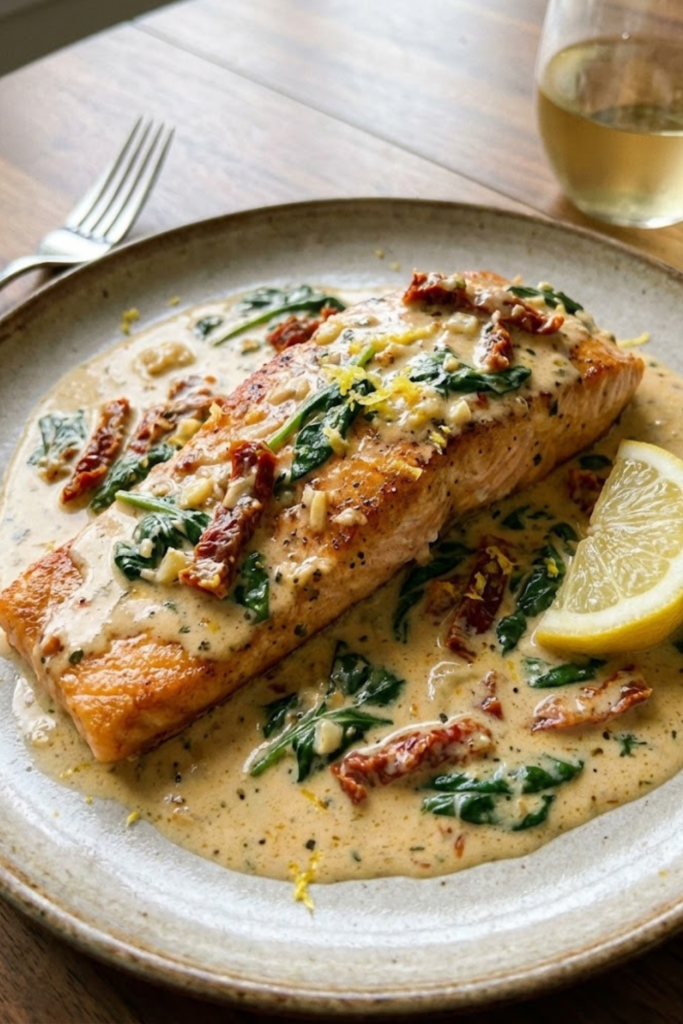
Picking the Best Salmon Fillets for Your Skillet
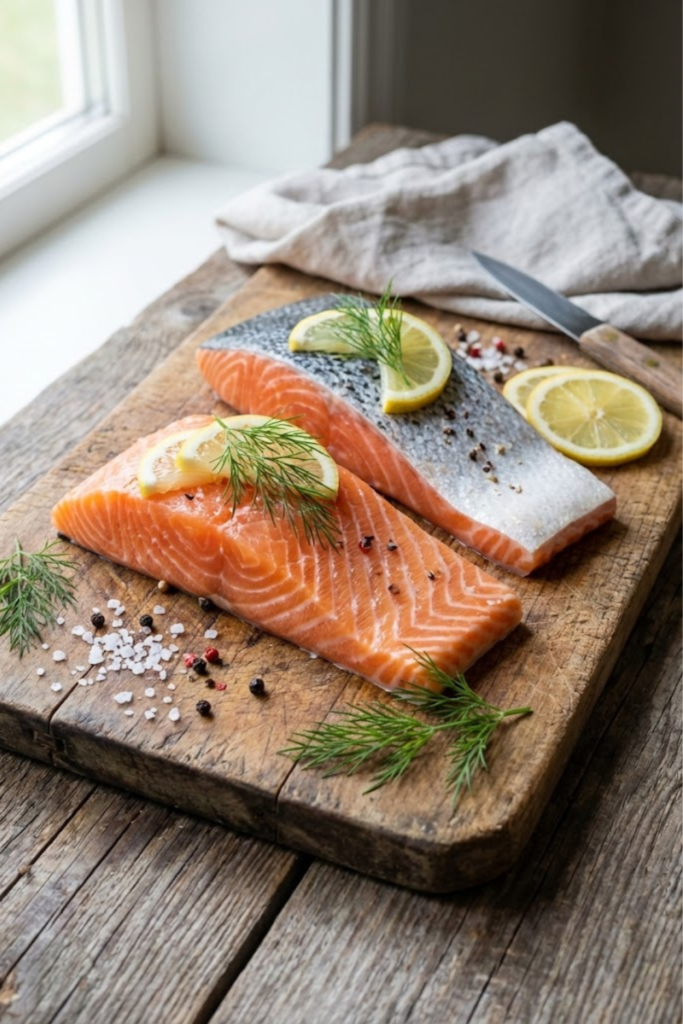
I’ve spent years teaching my kids that you can’t build a good house on a bad foundation. Cooking is exactly the same way. If you start with fish that’s been sitting in the back of the store for a week, your salmon with creamy tuscan sauce is going to taste… well, fishy. I want you to have that “wow” moment when you take your first bite, so let’s talk about what to look for when you’re at the grocery store. It can be a bit confusing with all the labels and different types, but I’ll make it simple for you. You don’t need to be an expert to find a good piece of fish.
Wild-Caught vs. Farmed: What’s the Deal?
This is the big debate, right? Personally, I usually go for wild-caught salmon like Sockeye or King salmon. These fish swim more, so they are more lean and have a deep orange color that looks amazing on the plate. They have a stronger flavor that stands up really well to a heavy cream sauce. Now, farmed salmon is usually fattier and has a milder taste. If you like a softer texture that melts in your mouth, farmed is okay. Just check the label to see where it came from. I’ve found that wild-caught fish holds its shape better in the skillet and doesn’t fall apart as easily when you’re flipping it.
Why You Should Keep the Skin On
Don’t let the skin scare you off!. I always buy fillets with the skin still attached. Even if you don’t plan on eating the skin later, it acts like a little heat shield for the meat. It helps the salmon stay juicy while you’re trying to get that golden crust on the other side. Plus, when that skin gets crispy in the pan, it adds a whole new layer of texture that is just incredible. If you really hate it, you can peel it off easily with a fork after it’s cooked. Trust me, keeping it on during the cooking process makes a huge difference in the final result.
The Freshness Finger Test
When I’m at the fish counter, I use my eyes and my nose. The salmon should look bright and moist, not dry or brownish around the edges. If there’s a lot of milky liquid in the package, that’s usually a bad sign. Also, it shouldn’t smell like “fish.” It should smell like the ocean—salty and clean. If the person behind the counter lets you, give the meat a little poke with your finger. It should be firm and spring back quickly. If your fingerprint stays there like a dent, it’s been sitting out too long. Picking the right piece is half the battle won!.
Prepping the Garlic and Sun-Dried Tomato Base
I honestly believe the sauce is what makes or breaks this meal. You can have the best fish in the world, but if your base is bland, the whole thing falls flat. This part of the recipe is where the magic really happens. It’s that mix of salty, sweet, and creamy that makes people want to lick the plate clean. I remember the first time I tried making a cream sauce; I was so nervous it would turn out lumpy or tasteless. But once you get the hang of these few steps, you’ll be making it like a pro every single time. It’s all about building layers of flavor in your pan before the fish even goes back in.
The Flavor Is in the Jar
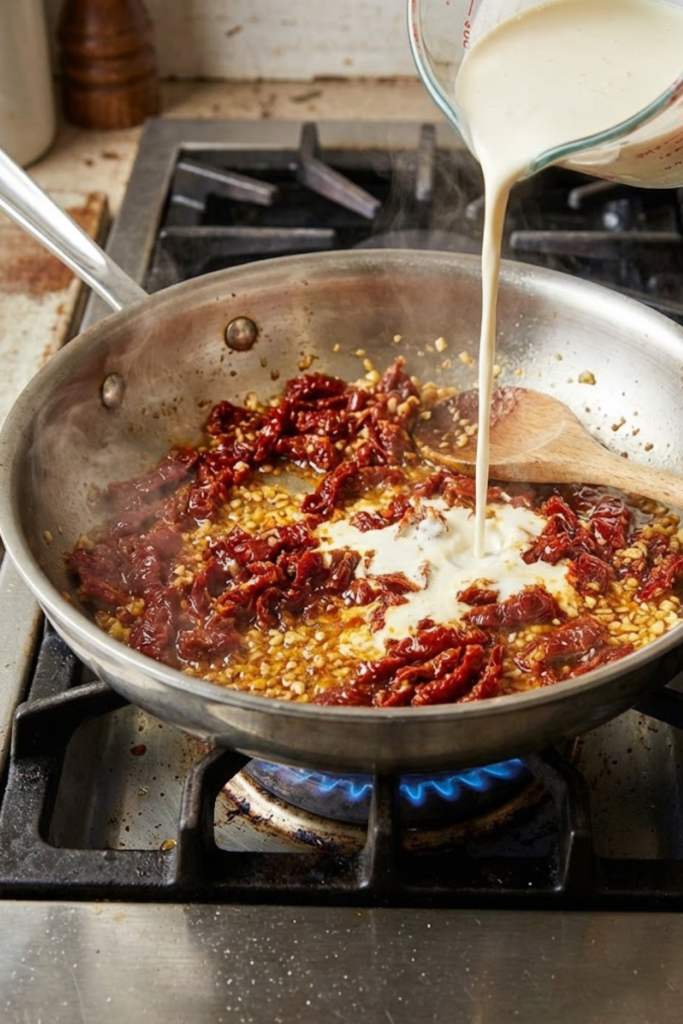
Here is a little trick I learned from a friend who cooks way better than I do. When you open your jar of sun-dried tomatoes, don’t throw away that oil! Most people just drain it into the sink, but that oil is liquid gold. It’s already packed with all that tomato and herb flavor. I use a tablespoon or two of that oil to sauté my veggies instead of just plain butter or regular olive oil. It gives the whole dish a head start on flavor. Just toss your chopped tomatoes in there and let them get soft and fragrant. It smells so good your family will probably come running into the kitchen to see what’s for dinner.
Watch Your Garlic Like a Hawk
Garlic is a tricky little thing. It adds so much flavor, but it can turn bitter in a heartbeat if you overcook it. I’ve ruined a whole pan of sauce by walking away for just thirty seconds to answer the phone. My advice? Chop your garlic small but don’t add it until your tomatoes are already soft. You only need about thirty to sixty seconds of cooking time for garlic. As soon as you can smell it really strongly, it’s time to move to the next step. If it turns dark brown or black, just toss it and start over. It’s worth the extra five minutes to get it right.
Getting That Silky Texture
Now, let’s talk about the cream. I always tell people to use heavy cream for this. I know we all try to be healthy, but milk just doesn’t cut it here. The acid in the sun-dried tomatoes can make milk separate and look curdled, which isn’t very appetizing. Heavy cream stays smooth and gets thick and luxurious. Once that’s bubbling, toss in your baby spinach. It looks like a huge mountain of greens at first, but it wilts down to almost nothing in about a minute. This keeps it bright and fresh instead of turning into a dark, soggy mess. Keeping the heat on medium helps everything stay together perfectly.
Searing Techniques for That Perfect Golden Crust
I used to be absolutely terrified of putting fish in a hot pan. I always thought it was going to stick to the bottom and I’d end up with a pile of shredded salmon instead of a pretty dinner. But honestly, getting that crispy, golden crust is the best part of the whole meal. It’s that texture that makes people think you’ve been cooking for years. If you follow a few simple rules, you can get it right every single time without making a huge mess of your kitchen. It really just takes a little bit of patience and some high heat to make the magic happen.
Heat Control is Everything
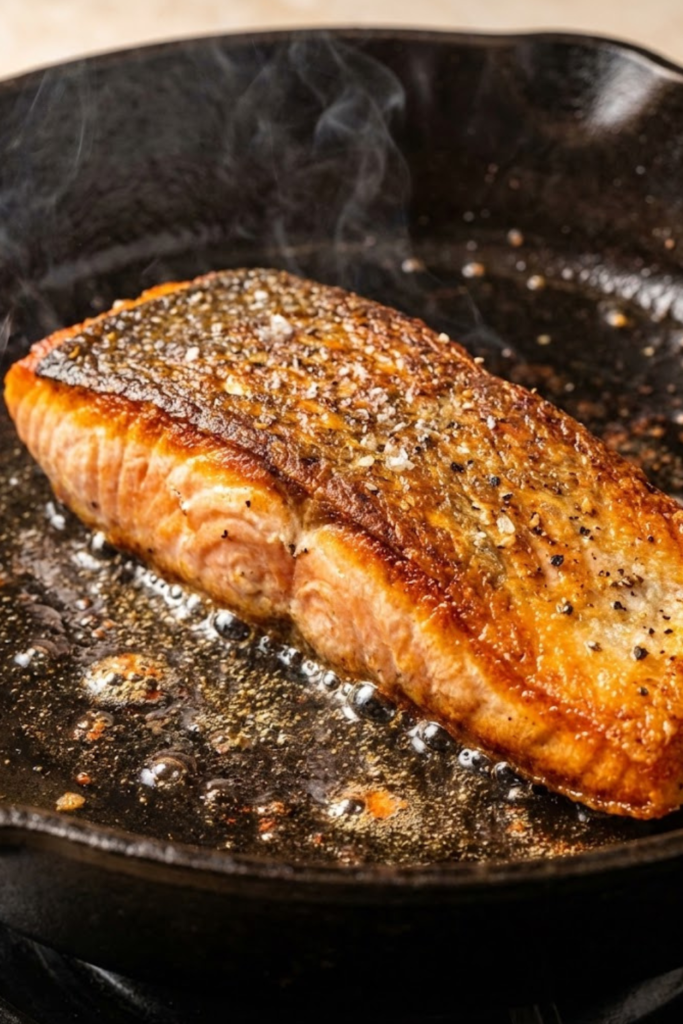
The biggest mistake I see people make is being too shy with the heat. You really want that pan to be hot before the salmon ever touches it. I usually turn my stove to medium-high and wait for the oil to start shimmering. If the oil is just sitting there, the fish will just soak it up and get greasy. You want to hear a loud “psst” sound the second the salmon hits the skillet. That sound means the outside is sealing up and creating that crust we want. I usually use a cast-iron skillet if I have one handy because it holds onto the heat so well, but any good heavy pan will do the job just fine.
The Golden Rule: Don’t Touch It!
This is the hardest part for most home cooks, including me! Once you put that salmon down, you have to leave it alone. I’ve noticed that if you try to peek or move it too soon, the crust hasn’t formed yet and the fish will stick. Give it about four or five minutes of quiet time. You’ll see the color of the fish start to change from the bottom up. Once it looks cooked about halfway through, it should release from the pan easily with a spatula. If it feels stuck, it’s usually the fish telling you it needs another minute. Just trust the process and let it do its thing.
How to Tell When It’s Done
Nobody likes a piece of salmon that’s dry and chalky on the inside. I always keep a meat thermometer in my kitchen drawer because it takes away all the guessing. You’re looking for an internal temp of about 145 degrees. If you don’t have a thermometer, you can just use a fork to gently press on the top of the fillet. If it starts to flake apart easily, it’s ready to come out. Remember, the fish keeps cooking for a minute or two even after you take it out of the pan, so don’t be afraid to pull it off the heat just a tiny bit early. It’ll stay juicy and perfect that way.
Serving Ideas to Make it a Full Meal
I’ve always said that a great main dish is only half the battle. You really need some good sides to turn this salmon with creamy tuscan sauce into a real dinner that fills everyone up. There’s so much extra sauce in the pan, and it would be a total crime to let even a drop of it go to waste. Over the years, I’ve tried a dozen different ways to serve this, and some work much better than others. It really depends on if you want a heavy, comforting meal or something a bit lighter for a weeknight. You don’t want to spend all that time on the fish and then have nothing to eat with it!
The Classic Pasta Route
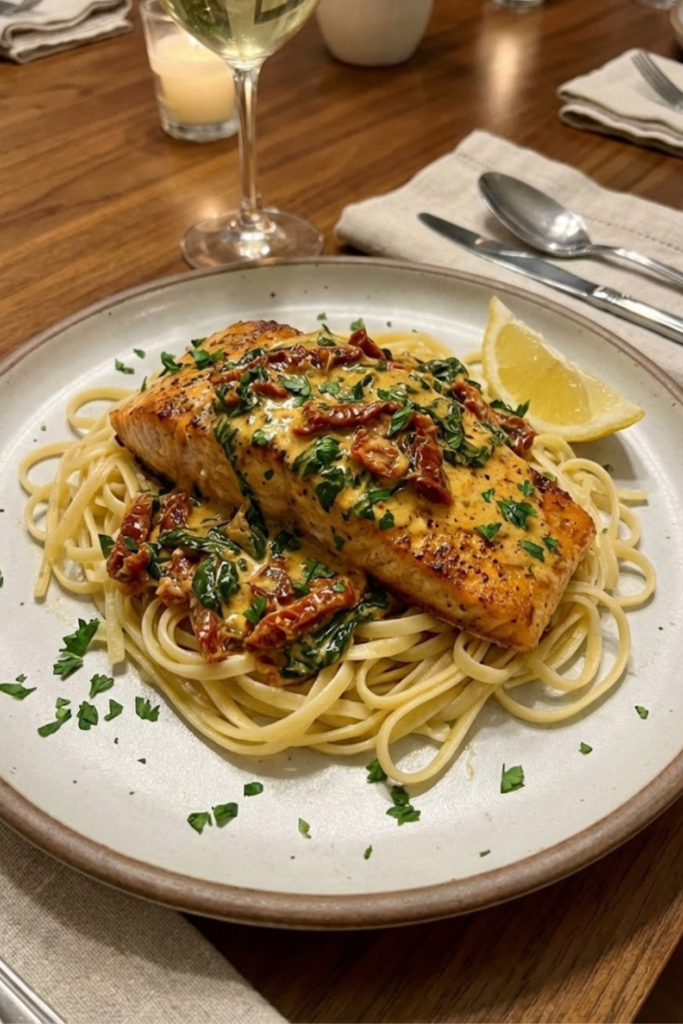
If you ask my kids, they’ll tell you that pasta is the only way to go. I usually boil up some fettuccine or linguine while the fish is searing in the other pan. Once the salmon is done and resting, I toss the cooked noodles right into the skillet with that creamy sauce. It coats the pasta so well! The sun-dried tomatoes and spinach get tangled up in the noodles, and it’s honestly just as good as the fish itself. If you do this, maybe save a little bit of the pasta water to thin out the sauce if it gets too thick while you’re mixing everything together.
Keeping it Light and Low-Carb
Sometimes I’m just not in the mood for a heavy carb-load, and that’s okay too. This salmon with creamy tuscan sauce is actually really keto-friendly if you pick the right sides. I love serving the fillets over a big pile of roasted asparagus or even some zoodles (zucchini noodles). The sauce is so rich that you don’t even miss the grain. One time, I even served it over a bed of mashed cauliflower, and my husband didn’t even realize it wasn’t potatoes! It’s a great way to sneak in some extra veggies without feeling like you’re on a boring diet.
The Mandatory Bread Factor
Listen, if you don’t have a loaf of crusty bread on the table, you’re doing it wrong. You need something to soak up that leftover cream on the bottom of your plate. I usually just grab a cheap baguette from the store and toast it with a little butter and garlic. There is nothing better than dipping a piece of warm bread into that savory, garlic-filled sauce. It’s the best part of the whole meal for me. It’s an easy way to make the dinner feel a bit more fancy without doing much extra work.
A Squeeze of Freshness
Right before I bring the plates to the table, I always add a few final touches. A big sprinkle of fresh parsley makes the dish look like it came from a restaurant. And don’t skip the lemon! A fresh squeeze of lemon juice right over the top of the fish cuts through all that heavy cream and brings the whole thing to life. It’s like a little wake-up call for your taste buds. It’s funny how such a small thing can make the flavors pop so much more. Don’t be afraid to be generous with the herbs!
Wrapping It All Up: You’ve Got This!
Well, there you have it! I really hope this helps you feel a bit more brave when you stand in front of your stove tonight. Making salmon with creamy tuscan sauce isn’t about being a fancy chef with a tall hat; it’s just about taking your time and enjoying the process. I remember when I first started cooking, I’d get so stressed out if a single thing went wrong. Now, I realize that even if the sauce is a little too thick or the fish is a tiny bit over, it’s still going to taste better than some frozen meal because you made it with your own hands. That’s the most important part of being a home cook, at least in my book.
We talked about a lot of stuff today, from picking out the fish at the store to getting that perfect crunch on the skin. If you remember nothing else, just remember the “no-touch” rule in the pan and to watch that garlic like a hawk. Those two things alone will save you so much trouble. And please, don’t be afraid to experiment! If you want to add some mushrooms or maybe a little bit of red pepper flakes for some heat, go for it. Cooking is like teaching—you have to be willing to change your plan if things aren’t going exactly how you thought they would. That’s how you find your own “secret” version of a recipe.
I’d love to hear how your dinner turned out. Did your family love it? Did you manage to get that golden crust? It makes my day to hear when these tips actually work out in a real kitchen. If you found this helpful, please save this post and share it on Pinterest so other folks can find it too. It really helps me out, and I want as many people as possible to see that cooking fish doesn’t have to be a scary thing. Go grab your skillet, put on some music, and have some fun with it. You’re going to do great! Happy cooking, and I’ll see you in the next recipe!