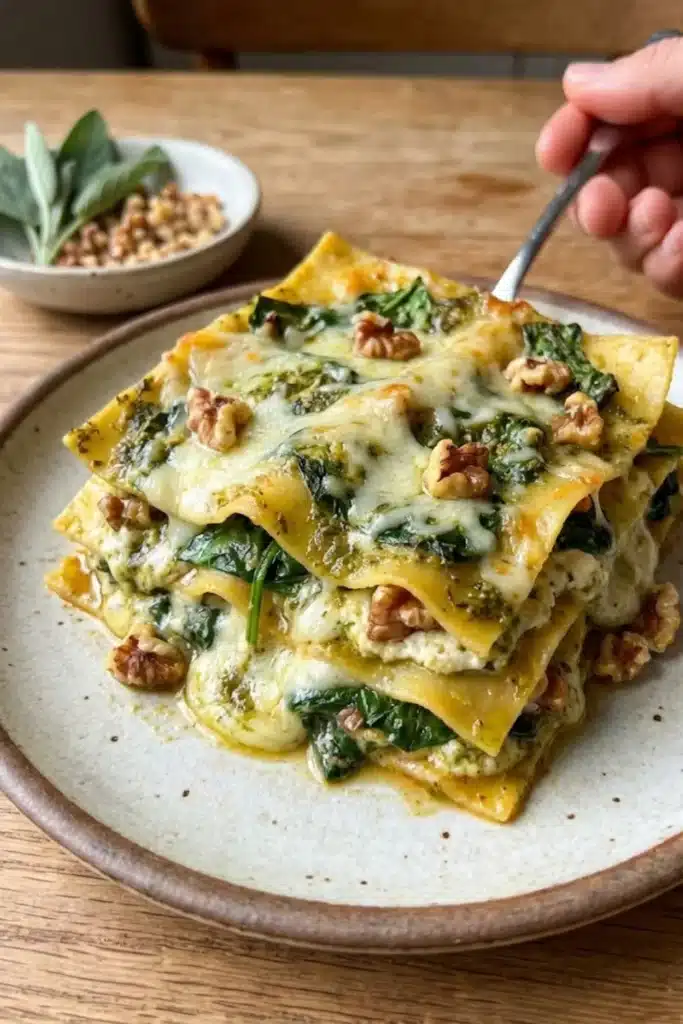
Did you know that lasagna is one of the oldest pasta shapes known to history, dating back to ancient Greece? I still remember the first time I ditched the traditional red sauce for something greener; it was a total revelation! This Sage Pesto Florentine Lasagna isn’t just dinner; it is a warm hug on a plate. We are talking about earthy sage, vibrant spinach, and enough cheese to make anyone smile. I’m telling you, once you try this nutty, savory twist, you might never go back to marinara! Let’s get cooking!
Essential Ingredients for Your Vegetarian Lasagna
I have to be honest with you; the first time I tried to make a fancy vegetarian lasagna, I totally botched the shopping trip. I thought I could just grab whatever looked okay on the shelf and throw it together. Big mistake. My lasagna turned into a soup, and not the good kind.
Through a lot of trial and error (and a few pizza deliveries when dinner failed), I learned that the ingredients you pick make or break this dish.
The Greens Matter
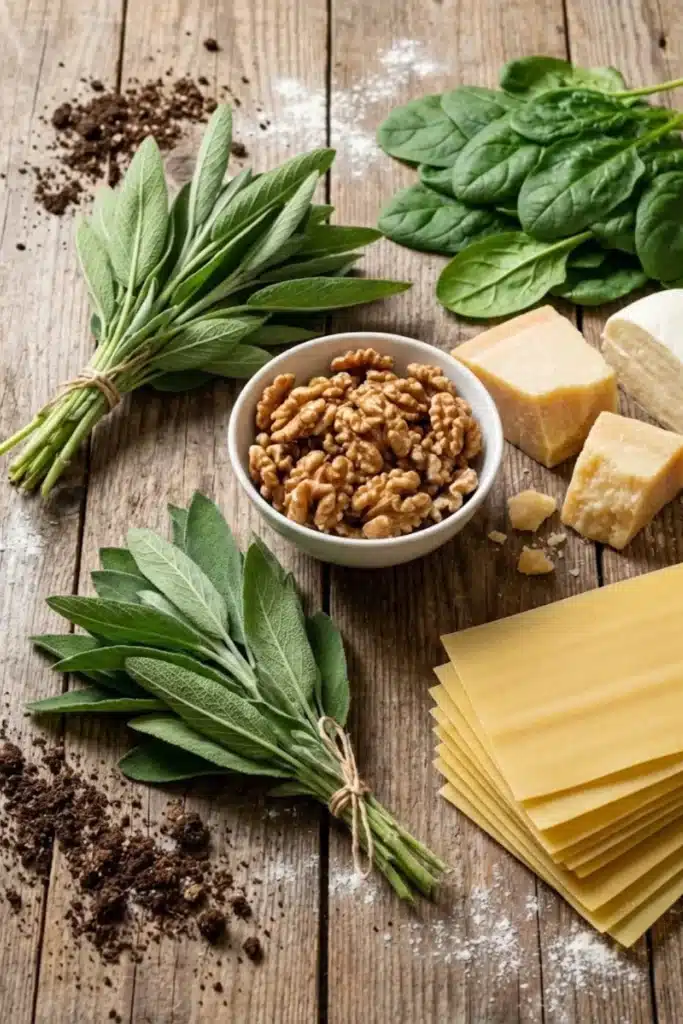
When you are making a Sage Pesto Florentine Lasagna, fresh produce is your best friend. I used to use dried sage from the back of my spice cabinet. It tasted like dust. Do yourself a favor and get fresh sage leaves. They should be fuzzy and smell earthy, kind of like a cozy winter sweater.
For the spinach, I know frozen is cheaper. I’ve used it plenty of times. But for the Florentine part of this recipe, fresh baby spinach is just better. It doesn’t release as much water, so your layers stay distinct. If you do use frozen, you have to squeeze the life out of it. Seriously, wring it out until your hands hurt, or you’ll end up with a watery mess like I did back in 2015.
The Cheese Situation
Okay, let’s talk cheese. Please, I am begging you, do not use the parmesan cheese from the green shaker can. That stuff is basically sawdust.
You need a block of real Parmesan cheese that you grate yourself. It melts better and has that salty kick that cuts through the rich sauce. For the ricotta, always go for whole milk. I tried to be healthy once and used skim milk ricotta. It was grainy and sad. Whole milk ricotta makes the filling creamy and luxurious.
To Boil or Not to Boil?
The pasta aisle can be confusing. For years, I was a die-hard fan of boiling my noodles. I felt like a real chef fishing them out of the boiling water. But honestly? It’s a pain.
Lately, I’ve been using oven-ready noodles for my Sage Pesto Florentine Lasagna. They soak up the moisture from the sauce perfectly. However, if you like a bit more chew—what fancy people call al dente—stick to the traditional boiled noodles. Just don’t overcook them! I usually pull them out a minute early because they keep cooking in the oven.
A little tip I learned: if you use boiled noodles, lay them flat on a towel so they don’t stick together. I learned that the hard way after creating a giant pasta ball that I had to throw away. It was frustrating, but hey, we live and we learn!
Mastering the Homemade Sage Walnut Pesto
I used to be totally intimidated by the idea of making my own pesto. I thought you needed a fancy mortar and pestle and the arm strength of an Italian grandmother to pull it off. For years, I just bought the jarred stuff. But let me tell you, store-bought pesto tastes nothing like the real thing. It’s like comparing a photocopy of a painting to the original masterpiece.
When I finally decided to tackle a homemade sage pesto, I made a huge mess. I threw everything into the blender at once and hoped for the best. The result? A weird, oily gray paste that tasted like lawn clippings. It was discouraging, to say the least. But I’m stubborn, so I kept trying until I figured out the tricks that actually work.
The Toasting Trap
Here is where I messed up the most in the beginning. I didn’t toast the nuts. I thought, “Who has time for that?” You do. You have time.
Using raw walnuts gives you a bitter, tannin-heavy flavor that fights with the sage. You need that deep, nutty pesto flavor to stand up to the cheese in this lasagna. I put my walnuts in a dry skillet over medium heat. Do not walk away! I once went to check my email and came back to a kitchen full of black smoke and burnt nuts. It smelled awful.
You want them just golden brown. As soon as you can smell that toasted aroma, get them off the heat immediately. They keep cooking if you leave them in the hot pan, so dump them onto a plate. It makes a world of difference.
Pulse, Don’t Puree
Another lesson learned the hard way: texture matters. The first time I made this for my Sage Pesto Florentine Lasagna, I blended the sauce until it was perfectly smooth. It looked like green baby food. When I baked the lasagna, that smooth sauce just slid right out of the layers. It was a disaster to cut.
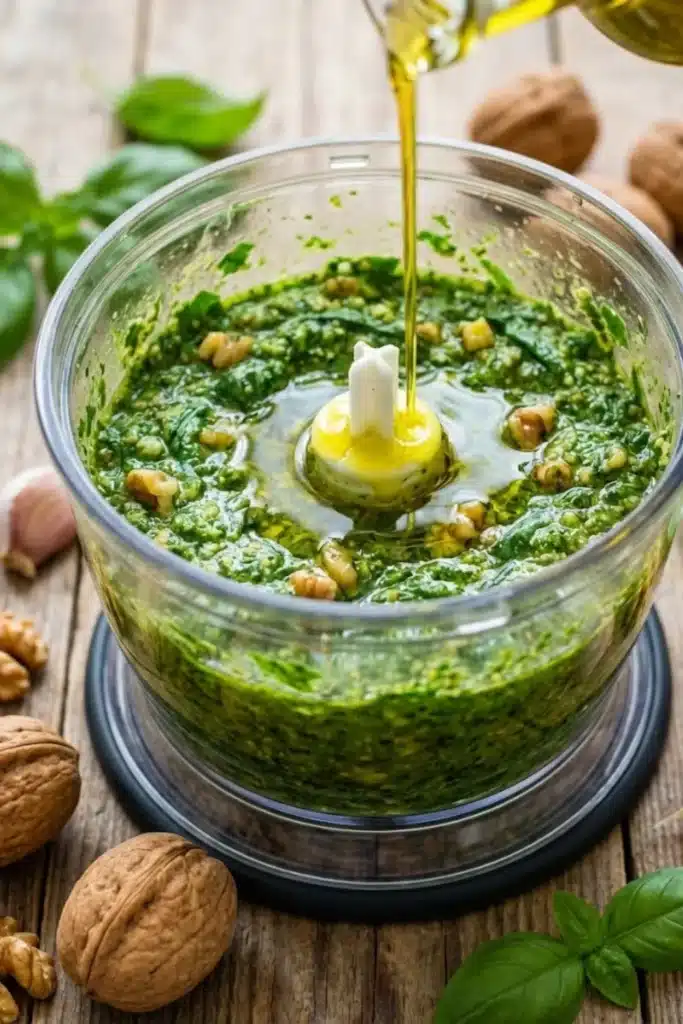
Now, I use a food processor, and I am careful. I toss in the garlic and the cooled walnuts first. I pulse them until they are crumbly. Then I add the fresh sage leaves and cheese.
When you add the oil, don’t just dump it in. Stream it in slowly while you pulse. You want a chunky, rustic texture. It grabs onto the noodles better. If you blend it too long, the olive oil can actually turn bitter from the heat of the blades. I learned that tip from a cooking show at 2 AM, and it saved my sauce.
Storing Your Liquid Gold
If you are making this ahead of time (which is a smart move), you have to be careful with storage. Pesto turns brown faster than a sliced apple. It’s oxidation, and it looks pretty gross, even if it still tastes okay.
I used to scrape the top layer off and throw it away, which is a waste. The trick is to put the pesto in a jar and smooth the top flat. Then, pour a thin layer of garlic infused oil or just regular olive oil right on top. It acts like a seal against the air.
I felt like a total genius when I figured this out. You can keep it in the fridge for a few days like this. Just stir the oil in before you use it. It adds even more richness to your walnut pesto recipe. It’s these little wins that make cooking fun, right?
Preparing the Creamy Spinach Florentine Filling
I have a confession to make. The first time I tried to pull off a Sage Pesto Florentine Lasagna for a dinner party, I served soup. Seriously, it wasn’t a solid casserole; it was a cheesy, green pond on a plate. It was humiliating watching my guests try to eat lasagna with a spoon.
I learned the hard way that the filling is where the battle for a good texture is won or lost. You can have the best noodles in the world, but if your filling is watery, you are toast.
The Watery Spinach Nightmare
The culprit of my soup disaster was the spinach. Whether you are using frozen bricks or fresh baby spinach, this vegetable holds water like a camel. I used to just sauté the fresh leaves and dump them into the bowl. Big mistake.
Here is the truth: you have to squeeze it. It is my least favorite kitchen task. It feels gross, like squeezing a wet sponge. But you have to do it.
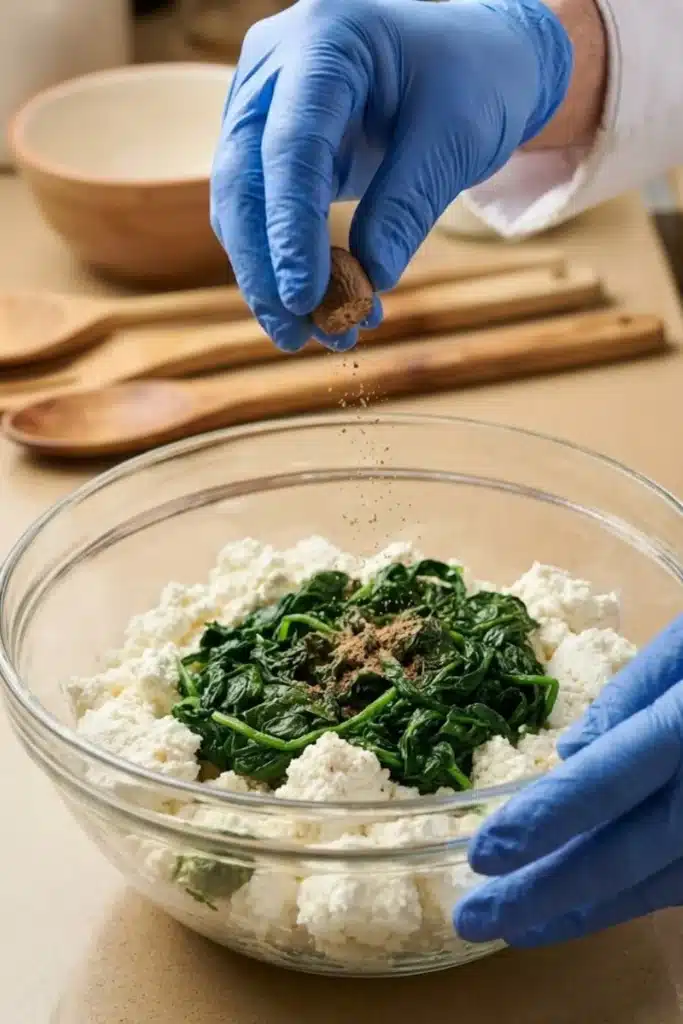
After I wilt the spinach in a pan, I let it cool down so I don’t burn my hands. Then, I grab a handful and squeeze until literally no more liquid comes out. You will be shocked at how much water is hidden in there. If you skip this, that water ends up in your baking dish, ruining your spinach ricotta filling.
Spicing Up the White Stuff
Ricotta cheese on its own is pretty bland. It’s basically just a texture. I used to think the sauce did all the work, so I never seasoned my cheese. It tasted like nothing.
To get that restaurant-quality flavor, you have to dress up the ricotta cheese mixture. I dump the tub of whole milk ricotta into a bowl with my dry, squeezed spinach. Then I add plenty of salt and black pepper.
But here is the secret weapon I learned from an old cookbook: nutmeg seasoning. Just a tiny pinch! It sounds weird to put a baking spice in dinner, right? But it adds a warmth that goes so well with the dairy. Just don’t go crazy, or your dinner will taste like eggnog. I also grate in some fresh lemon zest seasoning. It brightens up the heavy cheese and makes the whole dish pop.
The Glue That Holds It Together
For the longest time, I didn’t understand why recipes called for an egg in the cheese mixture. I thought it was unnecessary, so I just left it out.
The result? When I cut into the lasagna, the cheese oozed out everywhere like a landslide. It looked messy.
The egg is the binder. It cooks and solidifies, giving the creamy spinach florentine filling some structure. Now, I always whisk an egg and fold it into the cheese and spinach. It ensures that when you slice your masterpiece, the layers actually stay put. It turns a messy pile of pasta into a beautiful, structured slice of comfort food.
Assembly and Baking for the Perfect Golden Crust
I used to build my lasagna like I was packing a suitcase for a weekend trip: just jamming everything in wherever it fit. It was a chaotic mess. I’d cut a slice, and the layers would slide apart like they were trying to escape my plate. It was embarrassing serving a pile of slop to friends who were expecting a nice dinner.
After reading way too many food blogs, I realized that assembly is actually engineering. You have to be strategic if you want that picture-perfect slice.
The Layering Strategy
First things first, grab your favorite ceramic baking dish. I made the mistake once of greasing the pan but forgetting to put sauce down first. The bottom noodles turned into hard, inedible crackers that were glued to the dish.
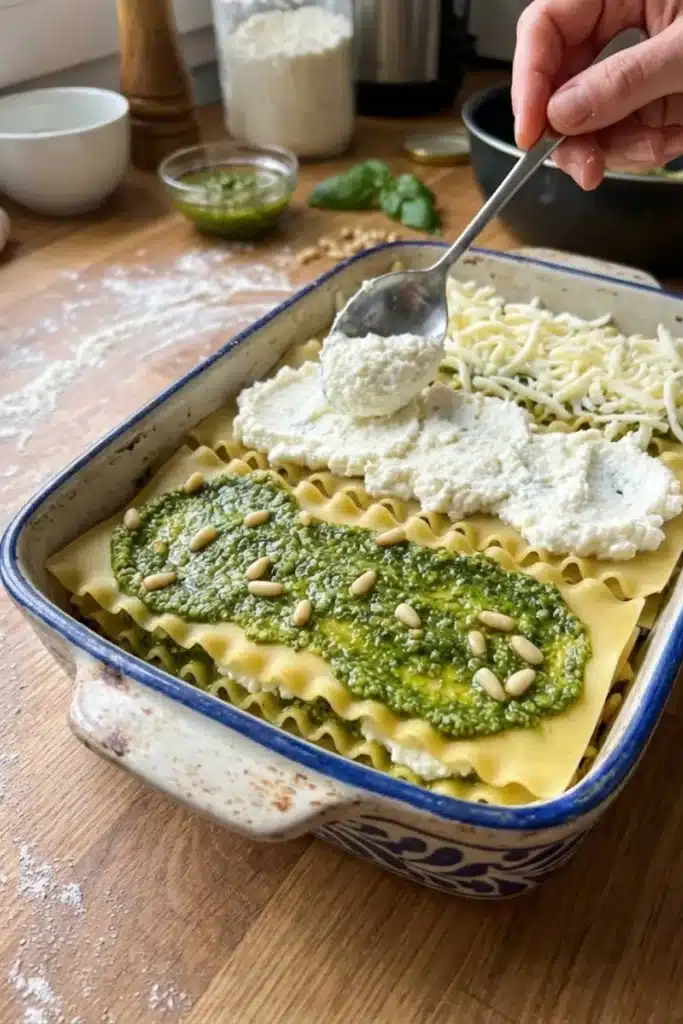
So, here is my rule: always start with a thin layer of sauce on the bottom. Since this is a Sage Pesto Florentine Lasagna, I usually do a little smear of pesto mixed with a splash of water. Then, lay down your noodles.
Next comes the ricotta cheese mixture. Don’t just plop it in the middle! I use a spatula to spread it to the edges, creating a seal. Then I drizzle the pesto over the white layer. Top that with a handful of shredded mozzarella. Repeat until the dish is full. It’s tedious, sure, but this lasagna assembly guide is the only way to get those distinct, beautiful stripes when you cut it.
The Tinfoil Tent
Here is where I have ruined perfectly good dinners. I used to just shove the uncovered dish into the oven and walk away. By the time the middle was hot, the top layer of cheese was burnt black. It looked like a meteor had hit it.
You have to protect your masterpiece. Tear off a piece of foil and spray the underside with cooking spray so the cheese doesn’t stick to it. Cover the dish tightly.
I bake mine at 375°F for about 45 minutes. This foil covered baking method steams the noodles (especially if you use the oven-ready kind) and melts everything together without burning the top. It takes patience, but it’s worth it.
The Broil for Glory
Once the lasagna is bubbly and cooked through, take the foil off. This is the moment of truth. The lasagna will look pale and kind of sad. It needs a tan.
Switch your oven to broil. This is the secret to that irresistible golden brown crust that everyone fights over. But listen to me: do not leave the kitchen!
I once walked away to pour a glass of wine and came back two minutes later to a smoke alarm. The mozzarella cheese melt goes from perfect to charcoal in seconds. Stand there and watch it bubble. When it’s spotty and brown, pull it out. The smell of toasted cheese and sage filling the kitchen is basically the best air freshener in the world.
Serving Suggestions and Wine Pairings
I used to think that when you make lasagna, the lasagna is the meal. I’d plop a giant square on a plate and call it a day. But about halfway through eating, I’d hit a wall. It was just so much cheese and pasta. I felt heavy, like I needed a nap right at the dinner table.
That is when I realized that a rich dish needs friends on the plate to lighten the mood. You need something crisp to wake up your palate.
The Green Relief
If you serve this Sage Pesto Florentine Lasagna by itself, you are asking for a food coma. I learned that the hard way after falling asleep during a movie night immediately after dinner. The richness of the walnut pesto recipe and the creamy ricotta needs some acid to cut through it.
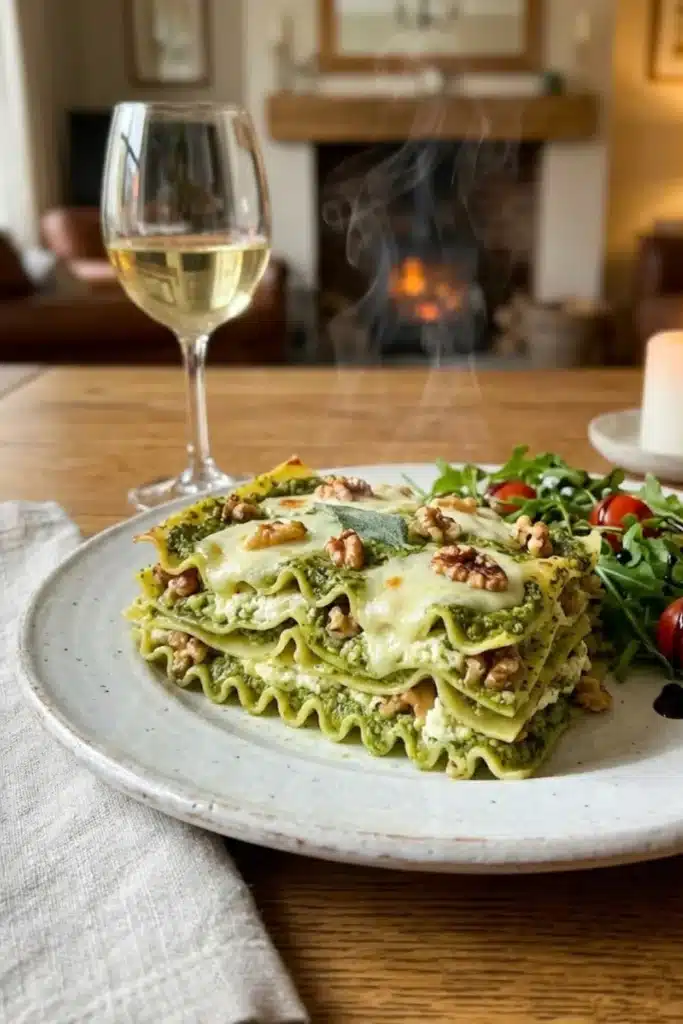
My go-to now is a simple arugula salad pairing. I toss fresh arugula with lemon juice, olive oil, and shaved parmesan. The peppery bite of the greens balances the heavy, cheesy pasta perfectly. It makes you feel a little less guilty about the second slice you are definitely going to eat.
And look, I know it’s carb-on-carb, but a garlic bread side is non-negotiable in my house. I use it to sop up any extra pesto on the plate. Just don’t go overboard with the butter on the bread, or you’ll defeat the purpose of the salad!
Red or White?
I am not a sommelier. For years, I drank big, heavy red wines with everything Italian because I thought that was the rule. I tried a Cabernet with this lasagna once, and it was a disaster. The tannins in the red wine completely killed the delicate herbal flavor of the sage. It tasted metallic.
You actually want a crisp white wine pairing for this. Trust me on this one. A cold glass of Sauvignon Blanc or Pinot Grigio is magic here. The acidity in the wine acts like a palate cleanser. It washes away the richness of the creamy spinach florentine filling so every bite tastes as good as the first one. If you absolutely have to drink red, go for something super light, like a Pinot Noir, but white is really the winner.
The Magic of Leftovers
Honest opinion? This lasagna tastes better the next day. The flavors have time to get to know each other in the fridge. But reheating it can be tricky. I used to zap it in the microwave until the cheese exploded and the noodles got rubbery.
To keep that gourmet lasagna texture, you should use the oven or a toaster oven. I put a splash of water in the dish and cover it with foil again. This creates steam so the pasta doesn’t dry out while it warms up.
It takes about 15 minutes at 350°F, but it comes out tasting like you just baked it fresh. It makes for the best work lunch ever, even if your coworkers get jealous of the smell.
Conclusion
Well, we made it to the end. I know it might seem like a lot of steps just for a pasta dish. I used to look at recipes like this Sage Pesto Florentine Lasagna and immediately turn the page to find something that took twenty minutes. I get it. We are all busy.
But I have to tell you, the effort is so worth it. There is something really special about pulling a bubbling, golden brown crust out of the oven and knowing you made every layer from scratch. It’s not just dinner; it’s an accomplishment.
Worth the Mess
I won’t lie to you; your kitchen might look like a disaster zone when you are done. My counter is usually covered in flour, and I always manage to get ricotta cheese mixture on my shirt. Every single time.
But when you sit down and take that first bite? The way the nutty pesto flavor cuts through the rich creaminess is just unbeatable. It makes all those frozen lasagnas I used to buy taste like cardboard. This is real food. It’s comforting, it’s hearty, and it’s honestly one of the best vegetarian main course options I have ever served. Even my friends who swear they need meat at every meal go back for seconds of this.
Make It Your Own
Don’t be afraid to experiment a little, either. I’ve messed this recipe up plenty of times and still eaten it happily. Maybe you want more garlic (always a good idea) or you want to try mixing in some kale with the fresh baby spinach. Cooking should be fun, not stressful.
This dish has become my go-to for Sunday night dinner because it feeds a crowd and leaves everyone feeling happy and full. Plus, as we head into 2026 food trends, moving towards more plant-based comfort foods feels right, doesn’t it? It’s modern but feels like a classic.
Let’s Stay Connected
If you actually made it this far and are ready to get cooking, I am cheering for you! I really hope this recipe brings a little bit of warmth to your kitchen.
If you loved this comfort food dinner idea, do me a huge favor. Go ahead and pin this recipe to your “Vegetarian Dinners” board on Pinterest. It helps other people find the recipe, and it helps me keep the lights on around here. Plus, you’ll know exactly where to find it when that craving for cheesy, sage-filled goodness hits you again. Happy cooking, my friends!