Hey friends! Have you ever stared at a plain white head of cauliflower in the grocery store and thought, “How do I make this actually taste amazing?” I’ve been there! For the longest time, I thought boiled, mushy veggies were the only option—gross, right? But let me tell you, this Roasted Cauliflower with Turmeric and Spring Onions completely changed the game for me. It’s crispy, golden, and packed with earthy flavors that dance on your tongue!
Did you know that turmeric has been used for medicinal purposes for nearly 4,000 years? It’s not just a trend; it’s a powerhouse spice. In this post, we are going to turn that humble vegetable into a star side dish that will have your family fighting for the last floret. Let’s get roasting!

Why This Turmeric Roasted Cauliflower is a Health Powerhouse
I used to think that “healthy food” meant boring salads and bland steamed veggies that tasted like wet cardboard. Honestly, it was a struggle. I remember looking at a head of cauliflower in the supermarket a few years back and thinking, “What on earth am I supposed to do with this besides drowning it in cheese sauce?” But then I started reading up on anti-inflammatory foods because my knees were giving me grief (getting older is fun, right?). That’s when I stumbled onto the magic of turmeric.
This isn’t just about making your dinner look pretty and yellow. This roasted cauliflower with turmeric and spring onions is legitimately good for you. It’s become my go-to “medicine” on a plate.
The Anti-Inflammatory One-Two Punch
So, here is the deal with turmeric. It contains this compound called curcumin. It’s super powerful for fighting inflammation. I read somewhere that it’s been used for thousands of years, which is wild to think about. But here is the mistake I made for the first six months of using it: I wasn’t adding black pepper.
I felt so silly when I found out.
Basically, your body is terrible at absorbing curcumin on its own. It just passes right through you. But if you add fresh cracked black pepper, the absorption shoots up by like 2000%. It’s a chemical reaction with the piperine in the pepper. So, when you make this roasted cauliflower, do not skimp on the pepper grinder! You are literally unlocking the health benefits by doing that one simple step.
Not Just Empty Calories
We need to talk about the cauliflower itself. A lot of people think white vegetables don’t have nutrients, but that is totally false. Cauliflower is packed with Vitamin C. In fact, a single cup gives you nearly all the Vitamin C you need for the whole day.
It’s also got a ton of Vitamin K, which is great for your bones. I had a doctor tell me I needed more Vitamin K, and I was dreading eating kale every day. Finding out I could get it from crispy, salty roasted cauliflower was a total win. Plus, the spring onions aren’t just a garnish; they add a nice hit of prebiotic fiber which helps your gut health.
It Fits Everyone’s Diet
One of the most annoying things about hosting dinner is trying to please everyone. My sister is vegan, my best friend is doing Keto, and my neighbor is gluten-free. Usually, I have to make three different meals.
This dish saves my sanity.
Because it’s just veggies, oil, and spices, it hits every checkmark. It’s naturally low-carb (great for the keto folks), has zero animal products, and obviously no gluten. It’s rare to find a side dish that is this flavorful but doesn’t rely on butter or breadcrumbs. You can just throw the baking sheet on the table and everyone can dig in without asking a million questions about the ingredients. It’s a relief, honestly.
Essential Ingredients for Golden Roasted Cauliflower
You might think roasting veggies is as simple as tossing them in the oven, but I’ve learned that the ingredients you pick make a huge difference. I used to just grab whatever was in the fridge, and my results were… well, inconsistent. Sometimes soggy, sometimes burnt. It took me a while to figure out the right combination.
Here is exactly what you need to make this dish work.
Choosing the Right Cauliflower
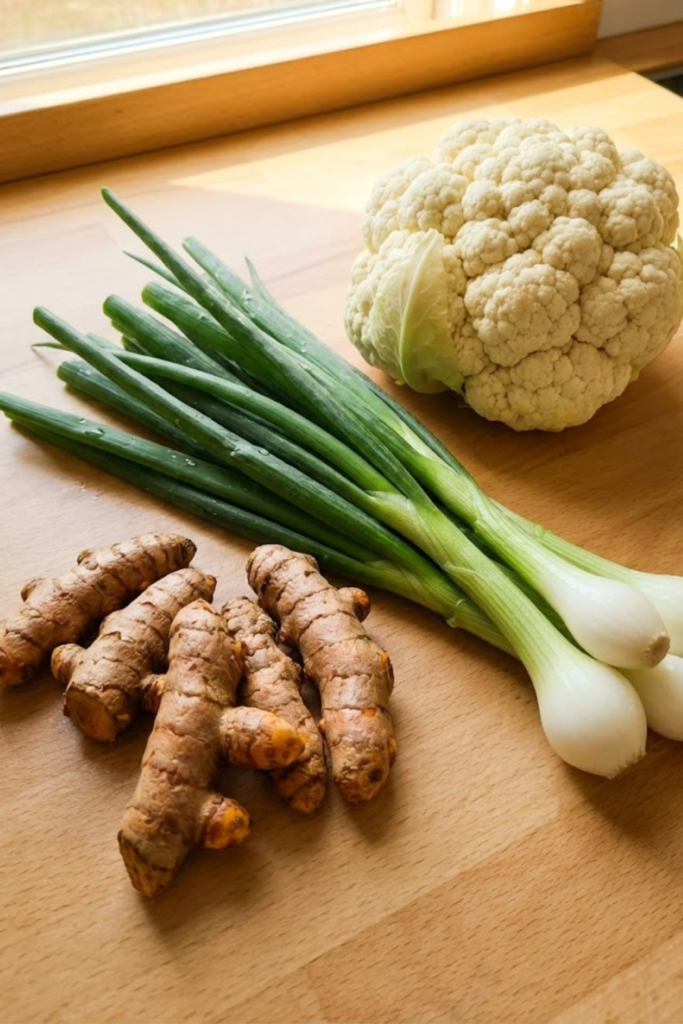
It starts with the vegetable itself. When you are at the store, don’t just grab the first head you see. You want a head of cauliflower that feels heavy for its size. That means it’s fresh and full of moisture, which helps it roast without drying out into tough little nuggets.
Look for florets that are tightly packed together. If they are separating or look loose, it’s probably old. And check for brown spots. A few tiny ones are okay (you can cut them off), but if it looks like a Dalmatian, put it back. You want that bright, creamy white color.
The Spice Blend
This is where the magic happens. Obviously, you need turmeric. Just a warning from personal experience: turmeric stains everything. I ruined a good white shirt once, so maybe wear an apron!
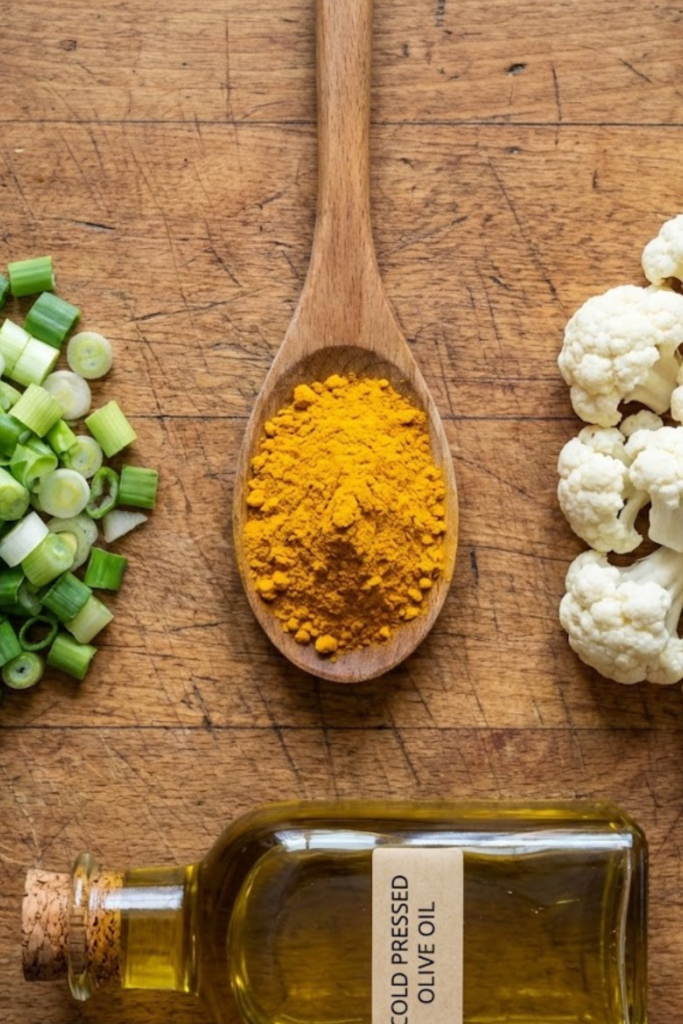
But you need more than just turmeric. I always add cumin. It adds this earthy warmth that smells amazing when it hits the heat. I also use garlic powder instead of fresh garlic. Why? Because fresh garlic tends to burn and turn bitter at the high temperatures we need for roasting. Powder stays sweet and savory.
And like I mentioned before, fresh cracked black pepper is non-negotiable. It gives it a little kick and helps with the turmeric absorption.
Spring Onions vs. Scallions
People ask me all the time if these are different. Honestly, they are pretty much the same thing in most grocery stores. You might see them labeled as green onions, scallions, or spring onions.
For this recipe, I like to use the whole thing—the white parts and the green parts. The white parts get sweet like a regular onion when they roast, and the green tops get crispy and almost taste like onion chips. If you can find the ones with slightly larger bulbs at the bottom (actual spring onions), those are the best because they hold up better in the heat.
Picking the Best Oil
This is the biggest mistake I see people make. Do not use butter. It will burn before your cauliflower gets crispy.
You need an oil with a high smoke point. I switched to Avocado Oil a few years ago and haven’t looked back. It handles high heat really well and doesn’t have a strong flavor. If you don’t have that, regular Olive Oil (not Extra Virgin) works fine too. You want the oil to coat everything so the spices stick, but you don’t want the veggies swimming in grease. A few tablespoons is usually enough for a whole head.
Step-by-Step Guide to Roasting Cauliflower Perfectly
I used to think roasting vegetables was just “throw them in and hope for the best.” But my cauliflower always came out kind of sad and soggy. I finally figured out that there is actually a method to the madness. If you follow these steps, you’ll get those crispy brown edges that everyone fights over.
The Prep Work Matters
First off, how you cut the cauliflower is super important. I used to just hack away at the head, but that leaves you with tiny crumbles and giant chunks. The giant chunks stay raw in the middle, and the tiny bits burn to a crisp.
The trick is to flip the head upside down and cut the thick core out first. Once the core is gone, the florets basically fall apart on their own. You want to cut them into pieces that are all roughly the same size—about the size of a golf ball is good. This makes sure they all finish cooking at the same time.
Don’t Be Lazy with the Tossing
Okay, I am guilty of this. Sometimes I just dump the veggies on the baking sheet, drizzle oil on top, and try to mix it around with my hands. Don’t do this.
The spices, especially the turmeric, need to coat every single nook and cranny. If you do it on the pan, half the spice ends up stuck to the metal, not the food. Grab a big mixing bowl. Toss the cauliflower and the onions in there, pour your oil and spice mix over it, and use a spoon (or your hands if you don’t mind yellow fingers) to toss it really well. Every piece should be yellow.
Give Them Personal Space
This is the number one rule of roasting: Do not overcrowd the pan.
Vegetables release water when they cook. If all your cauliflower pieces are touching or piled on top of each other, that water has nowhere to go. It gets trapped and basically steams the veggies. You end up with mushy cauliflower.
Grab a large baking sheet—I use the big “half sheet” pans. Spread the florets out so there is a little bit of empty space around each one. If you have too much cauliflower, just use two pans. Trust me, it’s worth the extra dishwashing to get that crunch.
Temperature and Time
Low and slow does not work here. You want high heat to caramelize the natural sugars in the veg. I always set my oven to 400°F (200°C).
Put the pan in the oven and let it roast for about 20 to 25 minutes. About halfway through, I like to open the oven and give the pan a shake or flip a few pieces with a spatula. This helps them brown evenly on all sides. You’ll know they are done when the edges are dark golden brown and a fork slides easily into the stems.

Serving Suggestions and Flavor Pairings
Honestly, sometimes I just eat this cauliflower straight off the baking sheet while it’s still hot. It’s that good. But if you actually want to make a meal out of it, there are some combinations that work really well.
Main Dish Companions
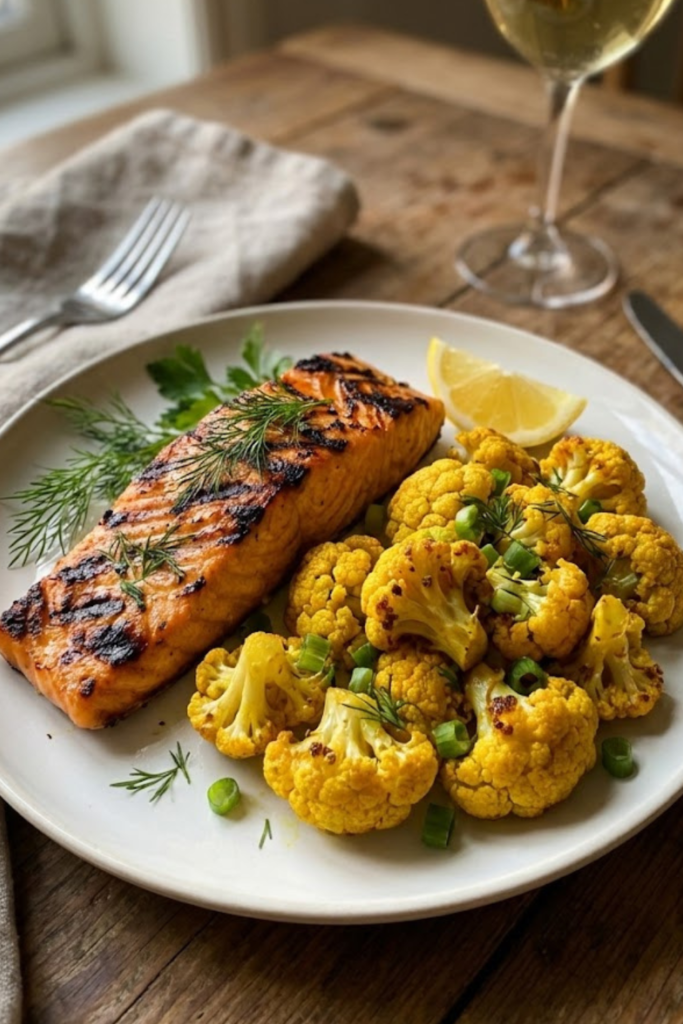
This is one of those side dishes that goes with almost everything. If you eat meat, it’s amazing next to a simple roasted chicken. The turmeric flavor really complements the chicken skin. I also love it with grilled salmon. The earthiness of the turmeric balances out the richness of the fish perfectly.
If you are doing a vegetarian night, try serving this over a bowl of lentils or quinoa. It turns a light salad into a hearty meal that actually keeps you full. I’ve even tossed it into a curry at the last minute just to add some texture.
Dipping Sauces
Okay, this might sound weird, but dipping roasted cauliflower is a game changer. My favorite is a quick Tahini Lemon Drizzle. I just mix some tahini paste with lemon juice, a little water, and a pinch of salt. It’s creamy and nutty and cuts through the spices.
If you want something cooler, plain Greek yogurt with mint is fantastic. It’s like a cooling cucumber sauce but without the cucumber. It really helps if you went a little heavy on the black pepper or added chili flakes.
Adding Some Crunch
Texture is everything for me. The cauliflower gets soft and the edges get crispy, but I like to add a little something extra on top right before serving.
Toasted pine nuts are my fancy option when I have guests. They are expensive, but you only need a handful. For a cheaper everyday option, toasted sesame seeds or even some crispy chickpeas work great. It just adds that little “pop” when you bite down.
Storage and Reheating Tips for Meal Prep
I am a huge fan of prepping my lunches on Sunday. It makes the school week so much easier. But roasted vegetables can be tricky because nobody likes eating soggy leftovers. Over the years, I’ve found a few ways to keep this cauliflower tasting fresh even a few days later.
Refrigerator Life
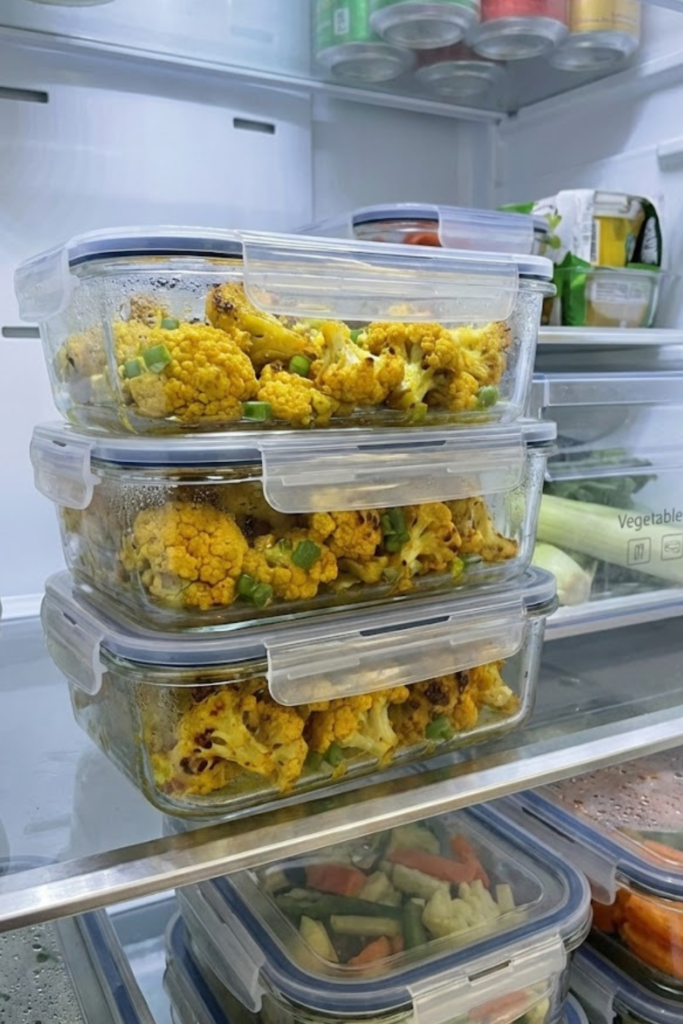
First things first: Turmeric stains plastic. I learned this the hard way and now I have a set of Tupperware that is permanently yellow. So, please use a glass container if you have one!
You can store the roasted cauliflower in an airtight container in the fridge for about 3 to 4 days. After that, it starts to get a little funky and loses all its texture. I usually roast a big batch on Sunday and eat it through Wednesday.
Reheating for Crispiness
Okay, here is the golden rule: Do not use the microwave.
I know, it’s fast. But the microwave steams the food again, which means all that nice crispy char you worked for completely disappears. It turns into mush.
If you have an air fryer, that is the best way to reheat this. Just pop it in at 350°F for about 3 or 4 minutes. It brings the crunch right back! If you don’t have one, the regular oven works too. Just put it on a baking sheet for 5 to 10 minutes until it’s hot. It’s worth the extra wait, I promise.
Can You Freeze It?
People ask me this a lot. Technically, yes, you can freeze roasted cauliflower. But should you? No.
Cauliflower has a lot of water in it. When you freeze it and then thaw it out, the cell structure breaks down and it becomes really watery and soft. It’s fine if you are going to blend it into a soup later, but if you want to eat it as roasted florets, freezing it just ruins the texture.
This Roasted Cauliflower with Turmeric and Spring Onions is truly a recipe you need in your weekly rotation. It’s fast, healthy, and incredibly flavorful. Whether you are a seasoned chef or a kitchen newbie, you can master this! Give it a try tonight and let your taste buds travel to the tropics. Don’t forget to pin this recipe to your favorite “Healthy Sides” board on Pinterest so you can find it later!