“They say the way to someone’s heart is through their stomach, and let me tell you, they weren’t lying!”
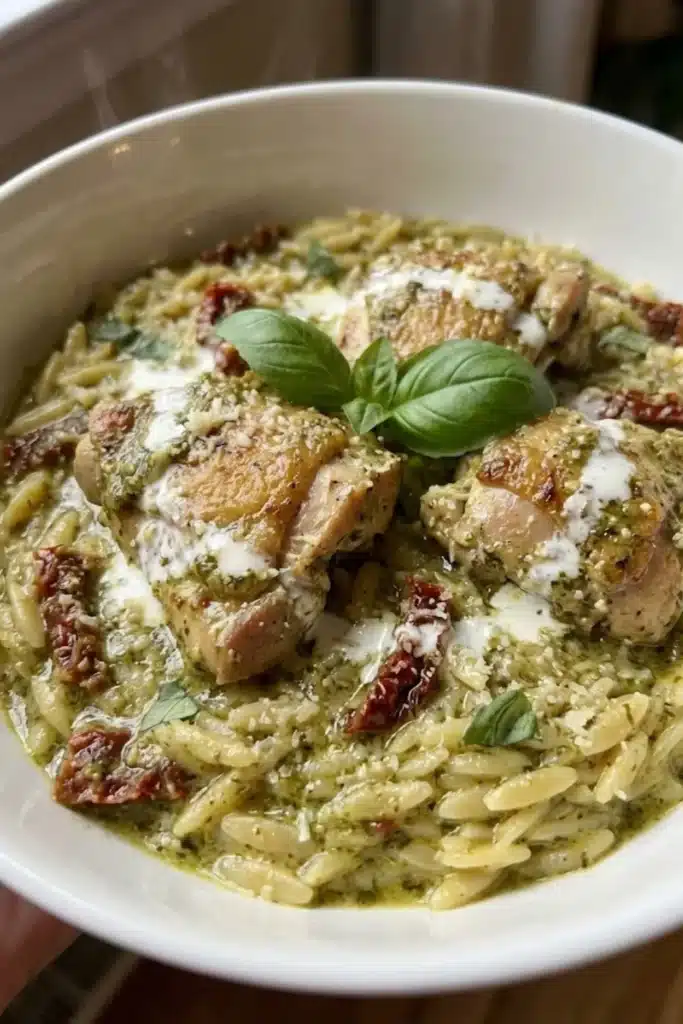
I still remember the absolute chaos of my first date night dinner attempt—let’s just say burnt garlic is not an aphrodisiac. But this recipe? This is different. This Pesto Marry Me Chicken and Orzo is the culinary equivalent of a warm hug. It’s creamy. It’s vibrant. It is ridiculously easy to make.
We are taking the viral “Marry Me” concept—usually loaded with sun-dried tomatoes and cream—and giving it a fresh, herbaceous twist with basil pesto. Whether you are looking to actually propose or just want a meal that tastes like you spent hours in the kitchen (when you really only spent 30 minutes), this dish delivers. Let’s dive into this creamy, dreamy skillet dinner!
Ingredients for the Perfect Pesto Chicken Orzo
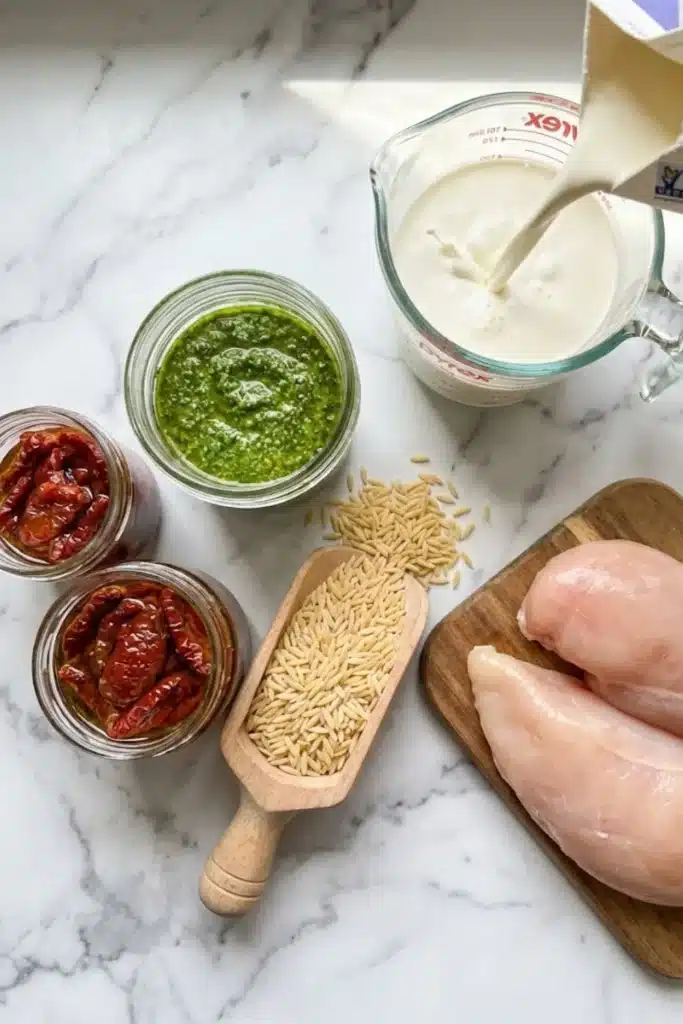
I have stood in the middle of the grocery store aisle staring at pasta shapes for way too long. Honestly, half the time I forget what I came in for. But when it comes to this pesto marry me chicken, the ingredient list is my holy grail.
I used to just grab whatever was cheapest, but I learned the hard way that quality matters here. You don’t need the most expensive stuff, just the right stuff. Let’s break down what you actually need to grab so you don’t end up with a bland skillet of sadness.
The Chicken Debate: Thighs vs. Breasts
Okay, I used to be a die-hard chicken breast loyalist. I thought they were “healthier” or whatever. But for this recipe? You really want boneless skinless chicken thighs.
Trust me on this one. Thighs stay juicy even if you accidentally leave them on the heat a minute too long (which I do constantly). If you absolutely must use chicken breasts, pound them thin so they cook fast. Otherwise, they get rubbery in the creamy pesto sauce, and nobody wants rubbery chicken.
Pesto: Jarred is Fine, Seriously
Look, if you have a garden full of basil and the energy to make fresh basil pesto on a Tuesday night, you are my hero. I am not that person.
I usually grab a high-quality jar from the store. It’s a total time-saver. Just make sure it’s a brand you actually like the taste of straight out of the jar. Since it’s the main flavor driver alongside the sun-dried tomatoes, a bad pesto can ruin the whole vibe.
The Flavor Bombs
Speaking of sun-dried tomatoes, do not buy the dry ones in the bag! You want the ones packed in oil.
The oil in that jar is pure gold. I actually use a spoonful of that red oil to sauté the chicken sometimes. It adds this insane depth of flavor that you just can’t get from regular olive oil. Also, fresh garlic is non-negotiable here. I tried using garlic powder once when I was lazy. It was a mistake. The dish felt flat. Chop the fresh cloves; your tastebuds will thank you.
Orzo and The Creamy Stuff
Cooking with orzo is funny because it looks like rice, but it cooks like pasta. Get a standard box of dry orzo.
For the creamy factor, heavy cream is the standard for a reason. I’ve tried subbing half-and-half to save calories, but the sauce just doesn’t thicken the same way. It gets kinda watery. Stick to the heavy cream and fresh grated parmesan cheese. The pre-shredded cheese has that weird anti-caking powder on it that stops it from melting smooth. Grate it yourself! It takes two minutes and makes the sauce silky smooth.
How to Make One-Pot Pesto Marry Me Chicken
Honest truth? The first time I tried to make a “one-pot” pasta dish, I was terrified. I thought the pasta would turn into a pile of mush or the chicken would be raw. But I really, really hate doing dishes. So, I forced myself to figure it out.
Now, this one-pot pesto marry me chicken is my go-to when I want to feel like a chef but have zero energy for cleanup. There is a rhythm to it, though. If you just dump everything in at once, you’re gonna have a bad time. Here is how I manage the chaos without losing my mind.
Searing the Chicken (Don’t Skip This!)
I used to rush this part because I was hungry. Big mistake. If you don’t get a good crust on the meat, the whole dish lacks flavor.
Heat your butter and olive oil in a large skillet—I use my beat-up cast iron—until it shimmers. Season your cutlets and lay them down. Then, do not touch them! I mean it. Let them sizzle for about 4-5 minutes per side.
You want that golden-brown color. That brown stuff stuck to the bottom of the pan? That is not burnt food; that is flavor. It’s called “fond,” and it’s going to make your sauce incredible later. Once they are browned, take them out and set them aside. They won’t be fully cooked yet, but that’s okay.
Toasting the Aromatics
Turn the heat down a notch. If the pan is dry, add a splash more oil. Toss in your chopped garlic and sun-dried tomatoes.
Here is where I have messed up before: garlic burns fast. Like, in thirty seconds fast. You are just toasting the aromatics to wake them up. As soon as you smell that amazing garlic smell, you are ready for the next step. If the garlic turns black, it’s going to taste bitter, and you might have to start over. I’ve been there, and it sucks.
Simmering the Orzo
This feels wrong, but trust the process. Pour the uncooked, dry orzo right into the skillet with the oil and garlic. Toast it for a minute. It gives the pasta a nutty flavor.
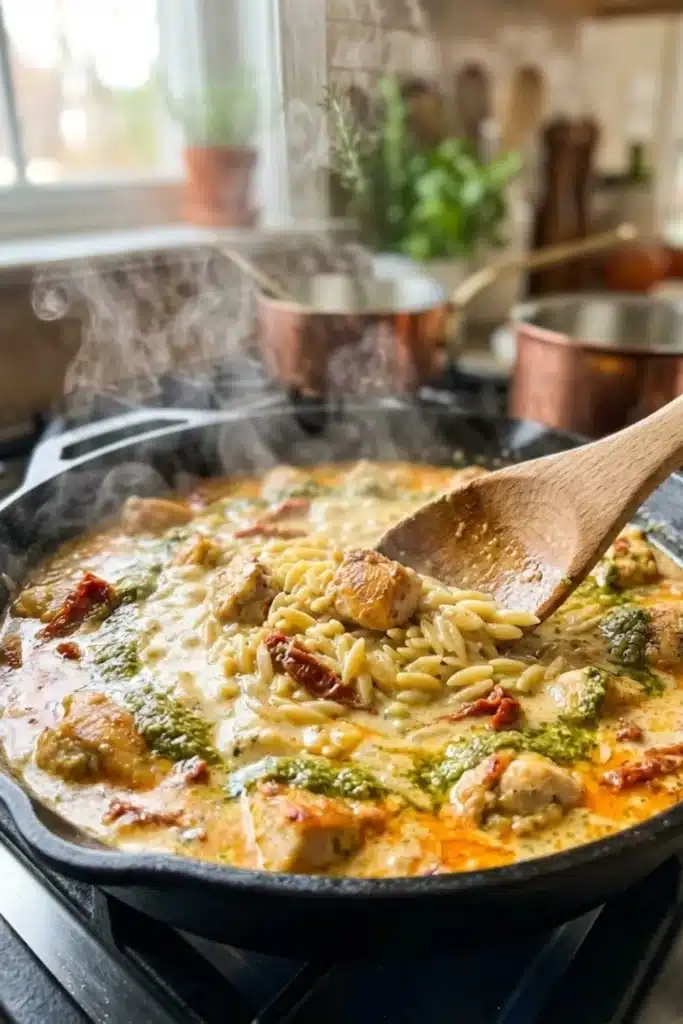
Then, pour in the chicken broth. It will hiss and steam—that’s good! Scrape the bottom of the pan with a wooden spoon to get all those brown chicken bits up. This is simmering the orzo 101. Bring it to a simmer, then nestle the chicken back in. It might look like too much liquid, but the pasta is thirsty. It will drink it all up.
Finishing the Sauce
Let it bubble gently for about 10-12 minutes. Stir it occasionally so the pasta doesn’t stick to the bottom. Once the liquid is mostly gone and the pasta is tender, turn the heat way down to low.
This is the most critical part: finishing the sauce. Do not add the heavy cream and pesto while the pan is boiling like lava. If you do, the oil in the pesto will separate, and you will have a greasy mess. I learned that the hard way. Stir in the cream and pesto gently while the pan is just warm.
Resting Time
The hardest part is waiting. Turn the heat off. Let the skillet sit there for 5 minutes.
During this resting time, the sauce thickens up and clings to the pasta. If you serve it immediately, it might be a little runny. Give it a minute to set. Sprinkle some fresh basil on top, maybe some extra parmesan, and you are done. Dinner is served, and you only have one pan to scrub. Victory!
Tips for Preventing Orzo from Sticking
I have a love-hate relationship with orzo. When it’s good, it is straight-up comfort food heaven. But when it goes wrong? It is a solid brick of starch that you could probably build a house with.
I cannot tell you how many times I have scraped a layer of burnt, gluey pasta off the bottom of my favorite pan while questioning my life choices. Orzo is tricky because it releases a ton of starch while it cooks. If you aren’t careful, that starch acts like superglue. But don’t worry, I have messed this up enough times to figure out the hacks for preventing orzo from sticking.
Watch Your Liquid Ratios
My biggest mistake starting out was eyeballing the liquid. I’d think, “Eh, that looks like enough broth.” It was never enough.
Liquid ratios are super important here because the pasta absorbs water like a sponge. If there isn’t enough liquid, the grains get cozy way too fast and clump together. For this recipe, I found that you need a little more liquid than you think. If the pan looks dry halfway through, don’t be afraid to splash in a little extra water or broth. It’s better to have a slightly saucier dish than a gummy mess.
The Art of Frequent Stirring
I am the type of cook who likes to walk away and scroll on my phone while dinner cooks. You can’t do that here.
Frequent stirring is the only way to keep those little pasta grains from bonding. The starch settles at the bottom of the pan really fast. If you let it sit for more than a minute or two without moving it, it’s game over. I treat it like risotto. You don’t have to stir constantly, but you definitely need to check in on it and give it a good swirl every couple of minutes to keep things moving.
Heat Management is Key
Another thing I learned the hard way is that high heat is the enemy. I used to crank the burner up to get it done faster.
All that did was burn the outside of the pasta while the inside was still crunchy. Heat management keeps the cooking even. You want a gentle simmer, not a rolling boil. If the bubbles are too aggressive, the liquid evaporates before the pasta is cooked, and then you are back to the sticky problem. Keep it low and slow.
The Oil Coating Trick
This is a little trick I picked up recently. Before you add the liquid, make sure the dry pasta gets a good oil coating.
When you toss the dry orzo in the pan with the sun-dried tomatoes and garlic, make sure every grain looks shiny. That layer of oil acts like a little raincoat. It helps keep the grains separate once the water hits them. It’s a small step, but it honestly makes a huge difference in the final texture.
Variations and Substitutions
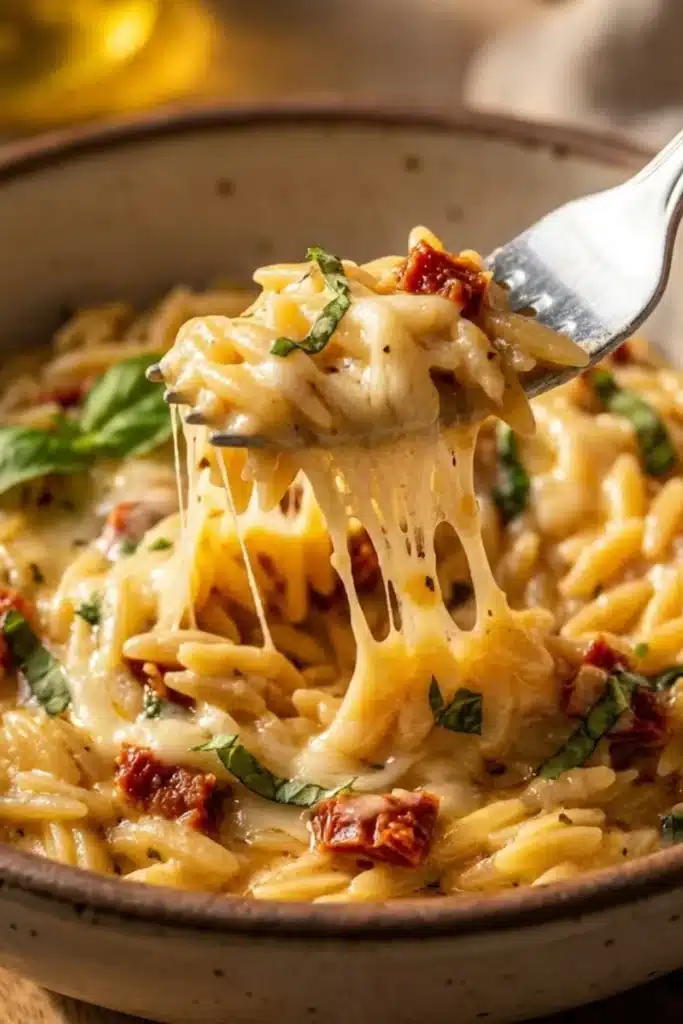
I am the queen of looking at a recipe, realizing I am missing half the stuff, and then winging it. Sometimes it works, and sometimes… well, we order pizza. But the beauty of this pesto marry me chicken is that it is surprisingly forgiving.
You don’t have to follow the rules exactly to get a great dinner. Over the last year, I have tweaked this recipe a dozen times—sometimes on purpose, sometimes because I forgot to go to the store. Here are the swaps that actually taste good and won’t ruin your dinner.
Dairy-Free Options That Don’t Suck
Cooking for friends with dietary restrictions used to stress me out. I once tried to make this with almond milk, and let me tell you, it was watery and sad. Do not do that.
If you need dairy-free substitutions, your best bet is full-fat canned coconut milk. I know what you are thinking—”Will it taste like a pina colada?” A little bit, yeah. But the basil pesto is strong enough to mask most of it. If you really hate coconut, cashew cream is a solid alternative. It gives you that thick, luxurious texture without the dairy bellyache. just soak the cashews beforehand, or it’ll be gritty.
Protein Swaps for the Win
Look, I love chicken thighs, but sometimes I just forget to take them out of the freezer. It happens to the best of us.
When I’m in a pinch, I’ve used shrimp, and it is honestly a game changer. Just remember that shrimp cooks way faster than chicken. Throw them in during the last 5 minutes of cooking the orzo, or they will turn into rubber balls. I have also tried this with Italian sausage, which adds a nice savory punch. If you go the sausage route, drain the grease before adding the broth, or the final dish will be way too oily.
Sneaking in the Greens
I am always trying to trick myself into eating more vegetables. It’s a struggle. But this sauce is so rich and creamy that you can hide a lot of healthy stuff in there.
Adding greens is the easiest upgrade. I usually grab a handful of fresh baby spinach or kale and toss it in right at the end. The residual heat wilts it down in seconds. It adds a pop of color so the dish isn’t just beige and green, and it makes me feel slightly better about eating a bowl of cream sauce. Just don’t use frozen spinach unless you squeeze all the water out first, or you’ll water down your sauce.
Adjusting the Spice Level
My partner loves spicy food; I am a bit of a wimp. We have had discussions about the amount of red pepper flakes in this dish.
If you want to kick the spice level up a notch, add a teaspoon of Calabrian chili paste with the garlic. It adds a smoky heat that hits different than dried flakes. On the flip side, if you are feeding kids who think black pepper is “spicy,” just leave it out entirely. The pesto has enough flavor on its own to carry the dish without the heat. You can always sprinkle the spice on your own bowl later.
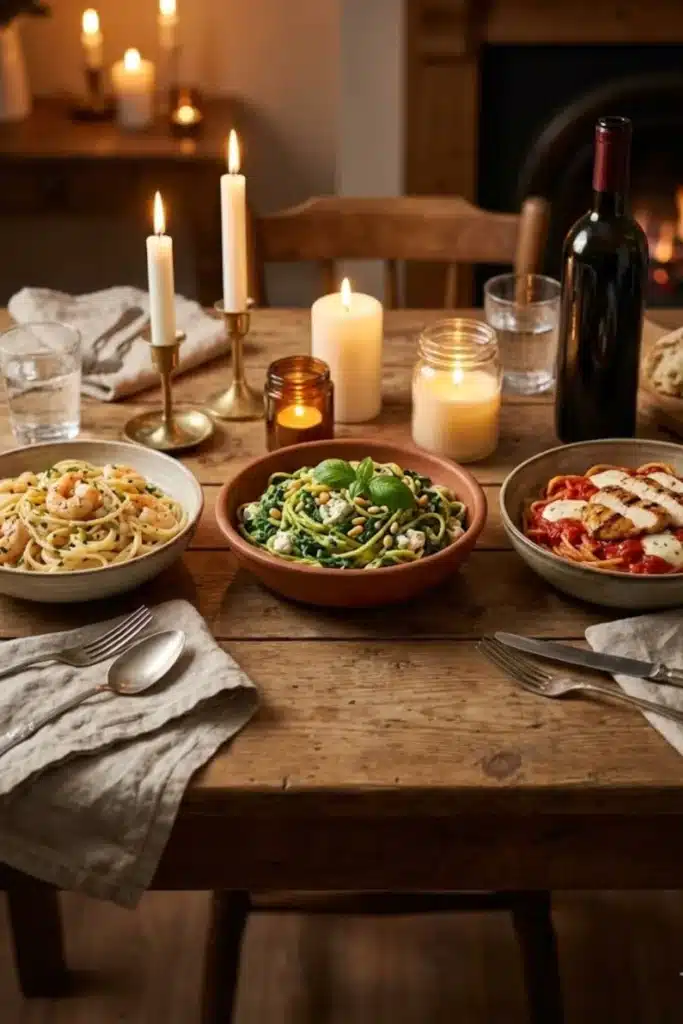
I have to admit, by the time Friday rolls around, my brain is usually fried. I want something that tastes amazing, but the idea of washing a mountain of pots and pans makes me want to cry. That is exactly why this pesto marry me chicken has earned a permanent spot in my rotation.
It is one of those easy weeknight dinners that tricks everyone into thinking you worked way harder than you actually did. I remember serving this to my in-laws last month. They thought I had spent the afternoon slaving away over the stove. I didn’t have the heart to tell them it took me thirty minutes and one skillet.
Leftovers are Gold
If you are lucky enough to have leftovers—which is rare in my house because my family inhales this—they keep pretty well.
I usually store the chicken and orzo skillet in an airtight container in the fridge for up to three days. The sauce will get super thick when it’s cold, almost like a paste. Don’t panic. When you reheat it, just splash a little water or extra broth in the bowl to loosen it up again. It brings that creamy pesto sauce right back to life.
Give it a Try
Honestly, cooking doesn’t have to be complicated to be good. We get so caught up in trying to make “perfect” meals that we forget the best food is usually the simplest.
So, grab your skillet and give this a shot. Whether you are looking for comfort food ideas or just need to feed a hungry crew without losing your mind, this recipe has your back. And hey, if you burn the garlic the first time? Just scrape it out and start over. We have all been there.
Did you love this recipe? Don’t forget to pin this image to your Dinner Ideas board on Pinterest so you can find it later!