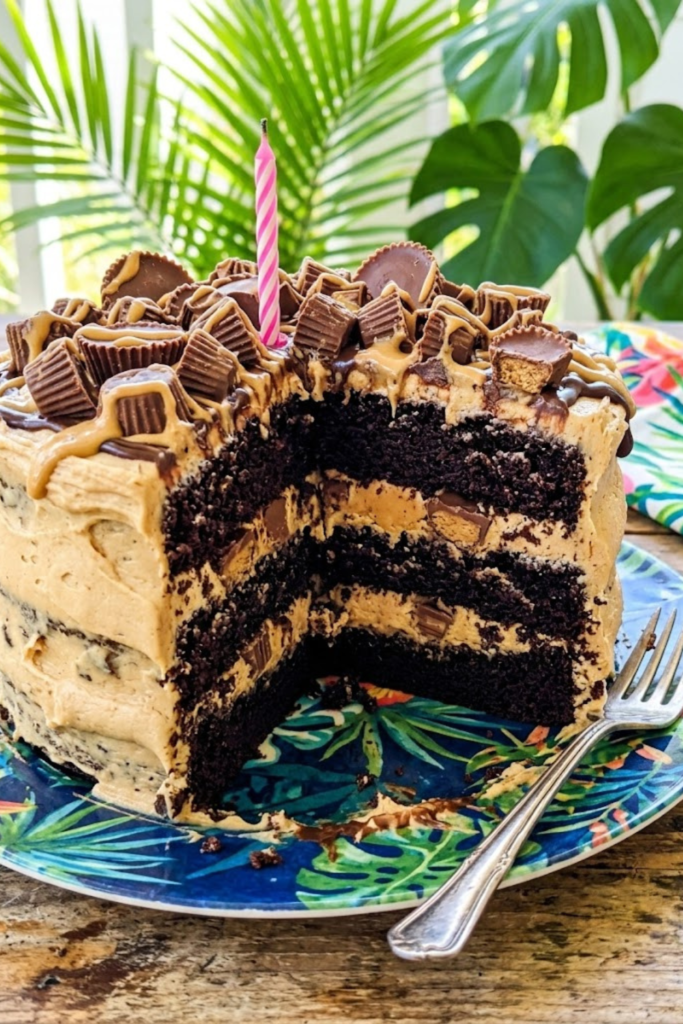
Did you know that over 350 million pounds of peanut butter are consumed in America every single year? That is a lot of jars! I’ve always been one of those people who keeps a jar and a spoon right by the bed for “emergencies.” When it comes to a birthday, there is nothing—and I mean nothing—that beats a peanut butter cup birthday cake! It’s the perfect mix of salty and sweet that makes everyone at the party do a little happy dance. Whether you are a pro baker or this is your first time turning on the oven in 2026, I am going to help you nail this! Let’s get baking!
Gathering the Goods: Ingredients for the Ultimate Cake
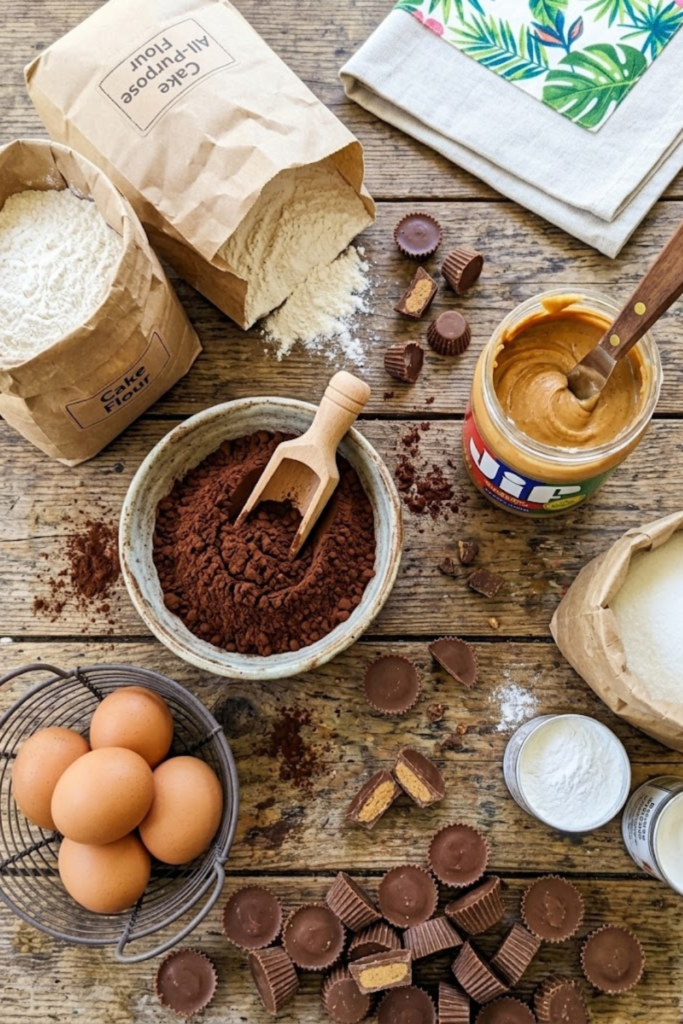
Let me tell you, there is nothing worse than being halfway through mixing your batter and realizing you are out of eggs. I did that once for a neighbor’s party and had to run to the store in my pajamas with flour all over my face! It was pretty embarrassing. To make a cake that people actually want to eat, you have to start with the right stuff. You can’t just grab whatever is on the shelf and hope for the best. I’ve spent years trying different brands, and I’ve found that the quality of your cocoa and your peanut butter really changes how the dessert turns out. Making sure you have everything on the counter before you start is the best way to keep things simple and fun.
The Chocolate Foundation
For the chocolate base, I always go for Dutch-processed cocoa powder. It is darker and less acidic than the regular kind you find in the baking aisle. This cocoa gives the cake that deep, almost black color that looks so good against the tan frosting. You also need a good all-purpose flour. Some people say you should use cake flour, but I think all-purpose holds up better when you are piling on heavy peanut butter frosting. Don’t forget the baking soda and a bit of salt. Salt is actually super important because it makes the chocolate taste more like chocolate. If you skip the salt, the cake just tastes flat and sugary.
Dairy and Moisture Secrets
Now, let’s talk about the moisture. I like to use a mix of unsalted butter and vegetable oil. Butter gives it that rich taste we all love, but oil keeps the cake moist even if you put it in the fridge overnight. If you use just butter, the cake can get kind of hard when it’s cold. I also swear by buttermilk. It’s thick and tangy, and it reacts with the baking soda to make the cake rise up nice and fluffy. If you don’t have buttermilk at home, you can just put a spoonful of lemon juice in regular milk and let it sit for five minutes. It works like magic!
The Peanut Butter Essentials
This is the most important part! For the frosting and the filling, skip the natural “oils-on-top” kind of peanut butter. You want the creamy, shelf-stable peanut butter that stays smooth. It blends better with the butter and sugar without separating into a greasy mess. And of course, you need a big bag of mini peanut butter cups. I usually buy two bags because I end up eating half of one while I’m waiting for the oven to preheat. It happens to the best of us! Having plenty of candies for the top makes the cake look like it came from a fancy bakery.
The Secret to Fluffy Chocolate Sponge
Nobody likes a birthday cake that feels like a dry sponge you’d use to wash the dishes. Trust me, I’ve made plenty of those in my time! One year, I made a chocolate cake for a school fundraiser and it was so tough you could probably use it as a brick to build a shed. I was so embarrassed when I saw people trying to saw through it with plastic forks. But after years of trial and error in my own kitchen, I found a few easy tricks to make sure your chocolate cake stays light and fluffy. It is really all about how you handle the ingredients before they even hit the oven heat.
Sifting Out the Lumps
The first thing you have to do is sift that cocoa powder. Cocoa is famous for having these tiny little balls of powder that just won’t break apart on their own. If you don’t sift them through a mesh strainer, you’ll end up with little pockets of bitter, dry powder in the finished cake. That is not the kind of surprise anyone wants at a birthday party! I just use a basic fine-mesh strainer and tap it gently against my hand over a big bowl. It takes an extra minute of your time, but it makes the batter so much smoother and helps the dry stuff mix in evenly without leaving clumps behind.
The Power of Acid and Heat
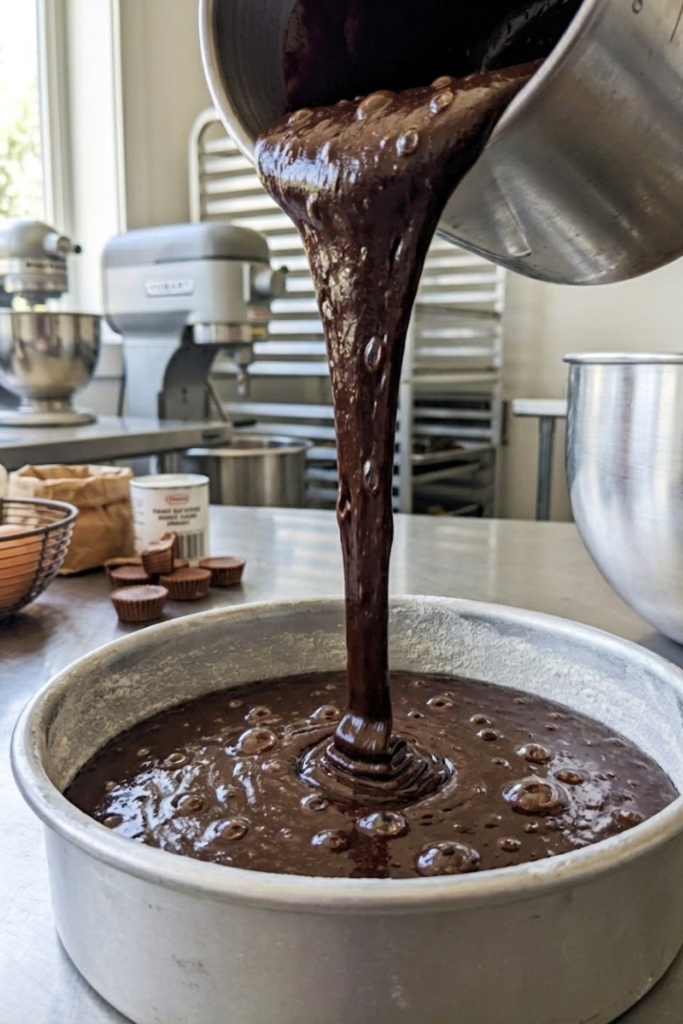
I mentioned buttermilk earlier, but I really can’t say enough good things about it. It is the secret to a tender crumb. The acid in the buttermilk works to break down the tough gluten strands in the flour. This is how you get a cake that stays soft instead of feeling like a piece of bread. I also like to add a cup of very hot coffee or water right at the end of mixing. The hot liquid “blooms” the cocoa powder, which basically just means it wakes up the chocolate flavor and makes it much more intense. Don’t worry if the batter looks very thin after adding it; that’s actually exactly what you want for a moist result.
Don’t Overwork the Batter
Finally, you have to be careful with your mixer. Once you add the flour to the wet ingredients, turn that mixer down to the lowest speed possible. If you mix it too long or too fast, you develop too much gluten. That is great if you are making a loaf of crusty sourdough, but it is a disaster for a birthday cake. I usually stop the mixer when I still see a few white streaks of flour and finish the job by hand with a big rubber spatula. It’s much better to be gentle with the batter than to end up with a cake that is hard as a rock.
Whipping Up the Dreamiest Peanut Butter Buttercream
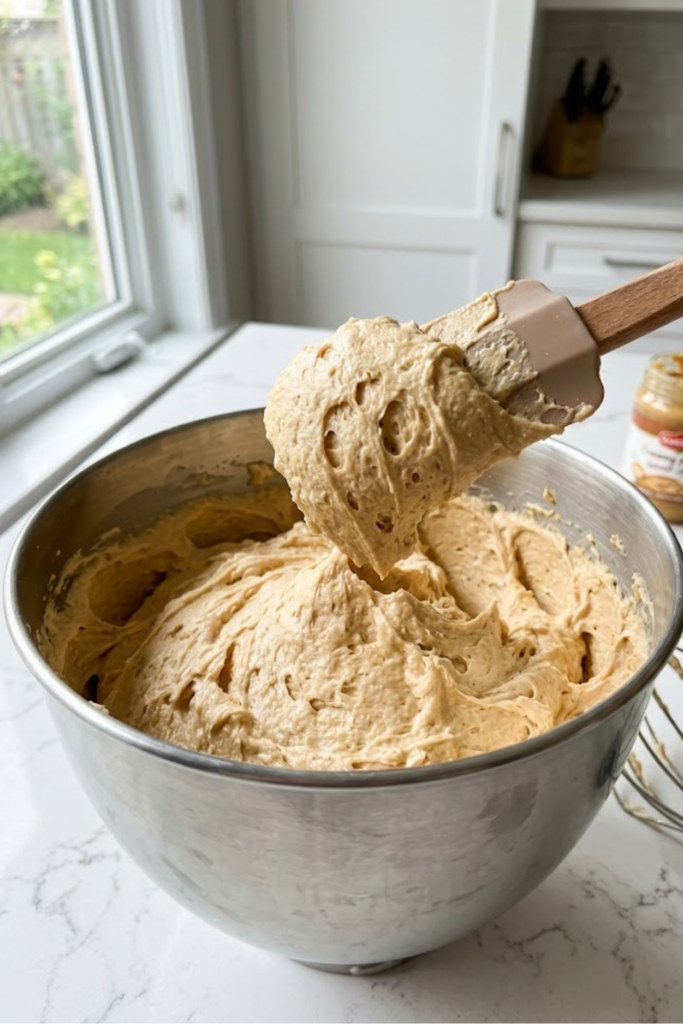
If you ask me, the frosting is the most important part of any birthday cake. You can have a decent cake, but if the frosting is bad, the whole thing is a flop! I remember making a cake for my cousin’s graduation and I tried to use that fancy natural peanut butter where the oil sits at the top. I thought I was being healthy, but it was a total disaster. The frosting never got fluffy; it just looked like greasy soup. I ended up having to run to the store at ten at night to buy a regular jar of the creamy stuff. It was a lesson I will never forget! To get that perfect, cloud-like texture that tastes just like the inside of a peanut butter cup, you have to follow a few simple rules.
Use the Right Peanut Butter
I cannot stress this enough: stay away from the “natural” or “organic” peanut butter that you have to stir. Those are great for toast, but they are terrible for baking. The oils separate too easily and will make your buttercream break. You want the standard, creamy peanut butter from a big brand. These have stabilizers that help the frosting stay thick and smooth. Also, make sure your peanut butter is at room temperature. If it’s cold from the fridge, it will cause your butter to clump up, and you’ll have a lumpy mess that is hard to spread.
The Butter and Sugar Balance
To start, you need your unsalted butter to be soft but not melting. I usually leave mine on the counter for about two hours before I start mixing. Beat the butter and peanut butter together until they look like one smooth, tan cream. Then, add your powdered sugar one cup at a time. I suggest starting your mixer on the lowest setting so you don’t get a face full of sugar dust! If the frosting feels too stiff, add a tablespoon of heavy cream. This makes it silky and easy to pipe through a bag.
Getting That Salty-Sweet Flavor
The secret to making this taste like a real Reese’s candy is a pinch of salt. Even though there is salt in the peanut butter, adding a tiny bit of fine sea salt helps cut through all that sugar. It makes the flavor much deeper. I also like to add a teaspoon of vanilla extract. It might seem strange to put vanilla in peanut butter frosting, but it really rounds out the taste. Once it’s all mixed, whip it on high for about three minutes. This beats in air and makes it light and fluffy. If you follow these steps, your frosting will be so good you might want to eat it with a spoon right out of the bowl!
Assembly Time: Layering and Ganache Drips
Putting a cake together is basically the final exam of the baking process. I always get a little bit of stage fright right before I start stacking the layers. One time, I was in such a hurry that I didn’t wait for my cakes to cool down all the way. As soon as I put the frosting on, the layers started sliding around like they were on ice skates! It was a total mess, and I ended up having to hold the top layer in place with chopsticks while I cried into my apron. Since then, I’ve learned that patience is the most important tool in your kitchen. If you take your time, your peanut butter cup birthday cake will look like it belongs in a bakery window.
Leveling Your Layers
Before you even touch the frosting, you have to make sure your cake layers are flat. Most cakes come out of the oven with a little dome on top. If you try to stack those domes, your cake will be wobbly and might fall over. I use a long serrated knife—like a bread knife—to gently saw off the rounded top of each cake. It’s better to do this while the cake is cold because it crumbles less. And the best part? You get to eat the scraps! I usually dip the warm cake “domes” into the leftover frosting while I work. It’s the baker’s reward for doing a good job.
The Important Crumb Coat
If you want your cake to look smooth, you have to do a crumb coat. This is just a very thin layer of frosting that you spread over the whole cake to “trap” the crumbs. Without this, you will get little dark specks of chocolate cake mixed into your pretty tan peanut butter frosting. After you put on this thin layer, pop the cake into the fridge for about twenty minutes. This sets the frosting and makes a firm surface. After that, you can put on a thicker layer of frosting and it will look perfectly clean. I use a small offset spatula to get the sides as smooth as I can.
Adding the Chocolate Drip
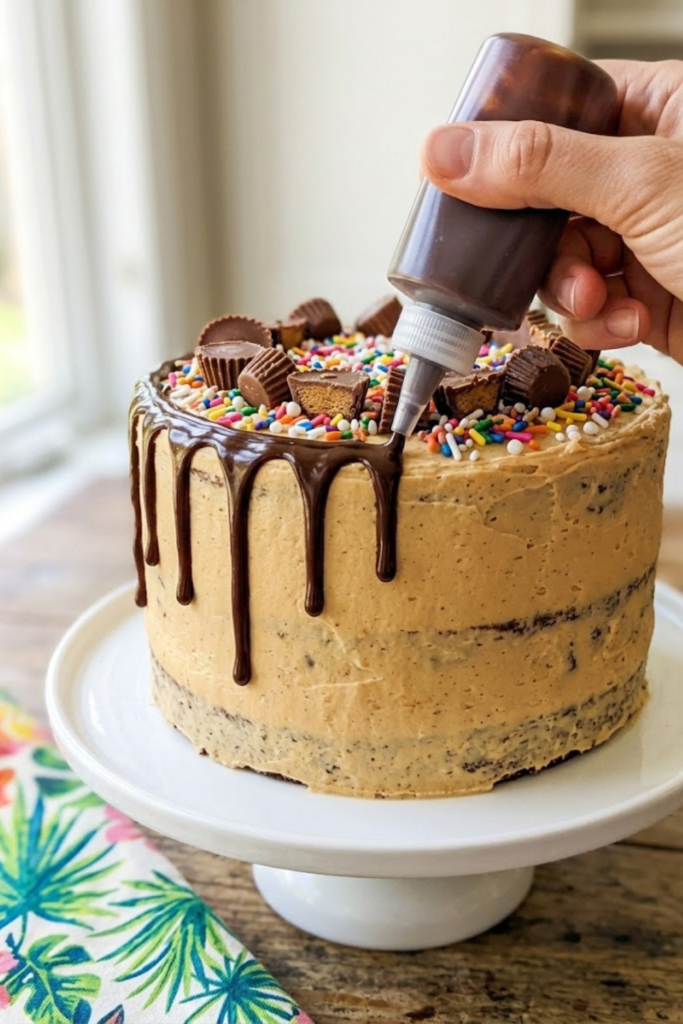
The chocolate drip is what really makes people go “wow.” I make mine by melting semi-sweet chocolate chips with a little bit of heavy cream. You want it to be warm, but not hot. If it’s too hot, it will melt your peanut butter frosting and run all the way down to the plate. I like to use a squeeze bottle to do the drips because it gives me more control. Just go around the edge of the cake and let a little bit spill over every inch or so. Once the drips are done, fill in the top with more chocolate and then pile on those peanut butter cups before the chocolate hardens. It looks amazing every single time!
Serving and Storing Your Masterpiece
Once you have finally finished decorating your peanut butter cup birthday cake, you are going to want to show it off to everyone. I usually take about twenty pictures of mine from every angle before I let anyone near it with a knife. It is such a good feeling when you carry a tall, heavy cake into a room and everyone stops talking to look at it. One time, I made this cake for a backyard BBQ and I didn’t realize how fast the sun would melt the frosting. By the time we were ready for dessert, the cake was leaning a bit to the left! It still tasted great, but it taught me a big lesson about keeping things cool until the very last second.
How to Get the Perfect Slice
If you want those clean, professional-looking slices like you see in magazines, you need a tall glass of hot water and a sharp knife. Dip the knife in the hot water, wipe it dry with a towel, and then make your cut. The heat from the metal will slice right through the chocolate ganache and the peanut butter cups without smashing the cake down. You should clean the knife off after every single cut. It sounds like a lot of work, but it keeps the tan frosting from getting smeared with dark chocolate crumbs. Your guests will be so impressed when they see those perfect layers on their plates.
Storing the Leftovers
If you actually have any cake left over—which doesn’t happen very often at my house—you need to store it the right way. Because of the butter in the frosting, this cake can get a bit hard if you just stick it in the fridge without a cover. I like to use a cake carrier or a large bowl turned upside down over the plate. If you have already sliced it, you can press a piece of plastic wrap right against the cut sides to keep the air out. This stops the sponge from drying out. It will stay fresh for about four or five days in the fridge. Just make sure to let it sit on the counter for about thirty minutes before you eat it so the buttercream gets soft again.
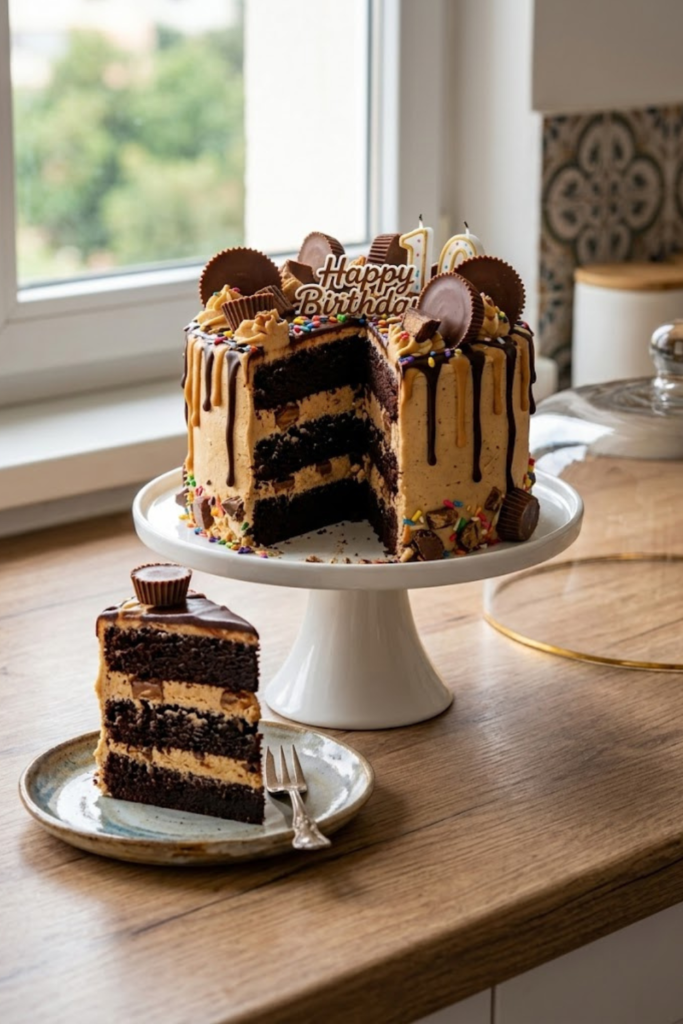
Making a peanut butter cup birthday cake is a big project, but it is so worth the effort. It is the kind of dessert that people talk about for weeks after the party is over. Whether you are making it for a kid’s birthday or a 40th anniversary, the mix of salty peanut butter and rich chocolate is always a winner. I hope these tips help you feel confident in your kitchen! If you tried this recipe and loved it, please share it on Pinterest so other bakers can find it too. Happy baking!