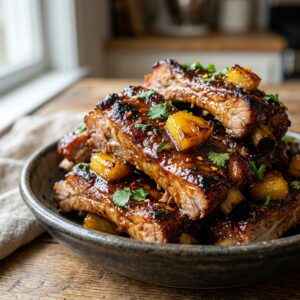
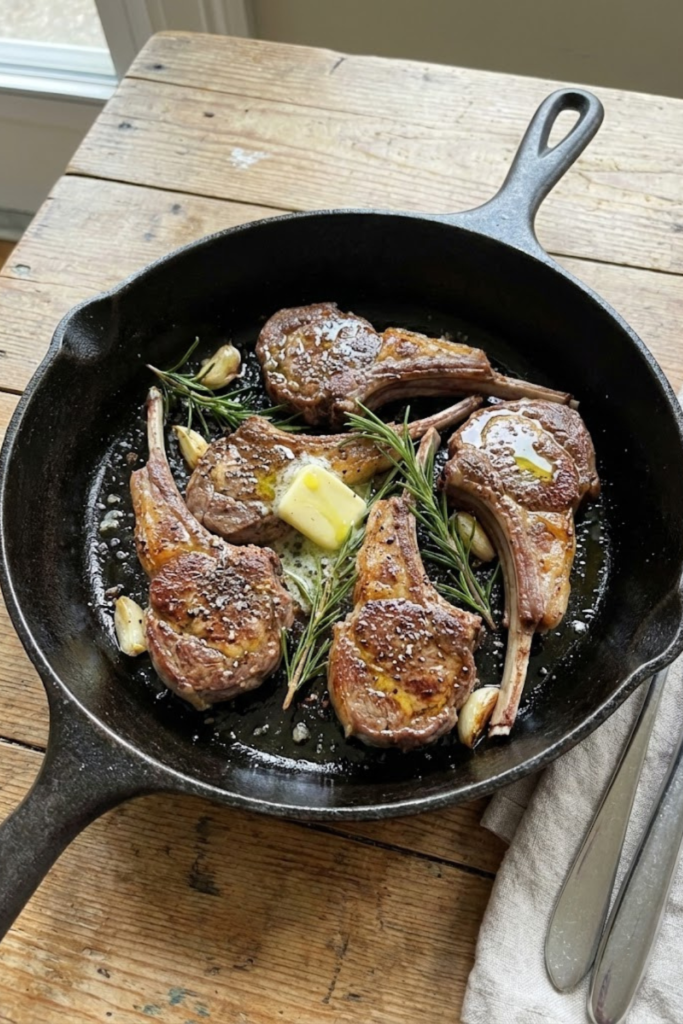
They say that “patience is a virtue, but hunger is a beast,” and nothing tames that beast quite like the sizzle of meat hitting a hot pan. Did you know that lamb consumption has jumped by 15% in 2026 as people look for richer, more sustainable protein alternatives? I remember the first time I tried making Pan-Seared Lamb Chops with Rosemary and Garlic; I was so nervous I’d ruin those expensive rib chops! But honestly, once you get the hang of the Maillard reaction and the smell of fresh rosemary hitting melted butter, there’s no going back. It’s fast. It’s fancy. It’s delicious!
Selecting the Best Lamb Rib Chops
Listen, I have bought a lot of bad meat in my life, and it’s a mistake that really stings when you realize you spent forty dollars on something that tastes like a damp sock. If you want your Pan-Seared Lamb Chops with Rosemary and Garlic to taste like a five-star meal, you have to start with the right stuff. It’s exactly like trying to build a sturdy house with rotten wood—no matter how good you are with a hammer, that house is going to fall down. I’ve spent a lot of time standing at the meat counter, and I’ve learned a few tricks that I tell all my students when we talk about cooking. You need to be picky. Don’t just grab the first package you see.
Look for the Right Color and Fat
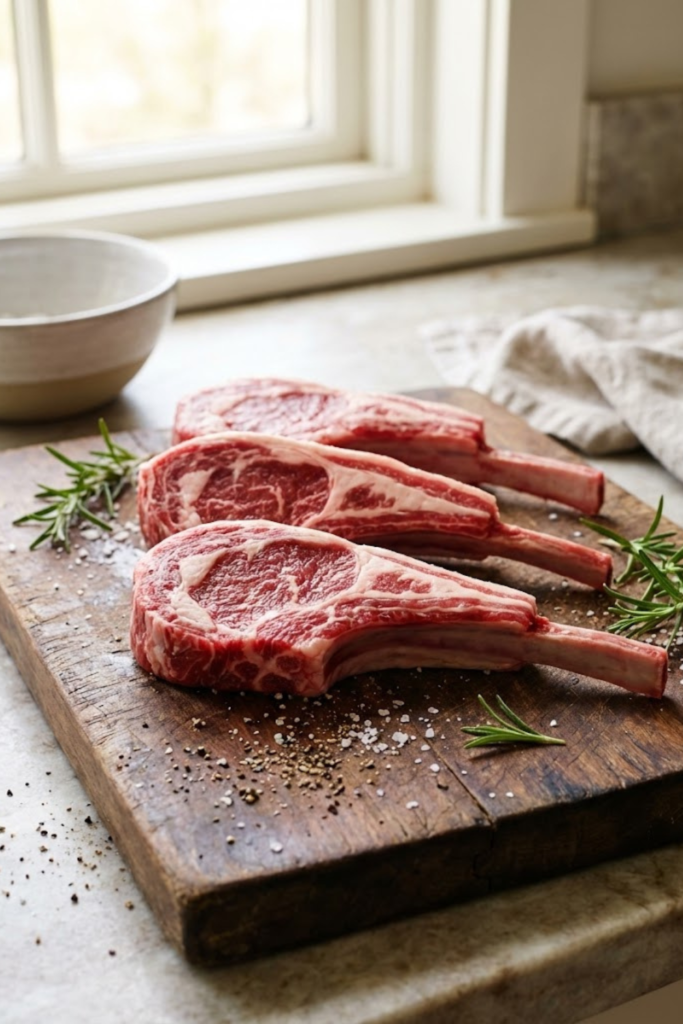
First off, you need to look at the color of the lamb. You want it to be a nice, bright pink or a light red. If the meat looks dark purple or has a brownish tint, it’s probably been sitting in that plastic wrap for way too long. I once bought some dark-looking chops because they were on a big sale, and let me tell you, they tasted way too “gamey.” It wasn’t a good experience! Also, look at the fat. It should be white and firm. If the fat looks yellow or feels greasy before it’s even hit the heat, leave it right there on the shelf. That white fat is what melts down and makes the meat juicy while it’s in your skillet.
Why Thickness Matters Most
This is where most people mess up their dinner. You want your chops to be at least one inch thick. I actually prefer an inch and a half if I can find them. Here’s why: if they are too thin, they will cook all the way through the middle before you even get a good brown crust on the outside. You’ll end up with gray, dry meat, and nobody wants to eat that. I always tell people to ask the butcher to cut them fresh if the ones in the case look too skinny. Don’t be shy! They are there to help you get the best meal possible.
To French or Not to French?
You might see “Frenched” lamb chops at the store. This just means the butcher took a knife and scraped the meat and fat off the bone so it looks like a little clean handle. It looks fancy for pictures and Pinterest, but it doesn’t change how the meat tastes. If you want to save a few bucks, get the regular ones. They taste just as good! Plus, the extra fat on the bone can actually add a bit more flavor to the pan while you cook. Just make sure the meat itself looks healthy and fresh.
The Secret to a Perfect Searing Temperature
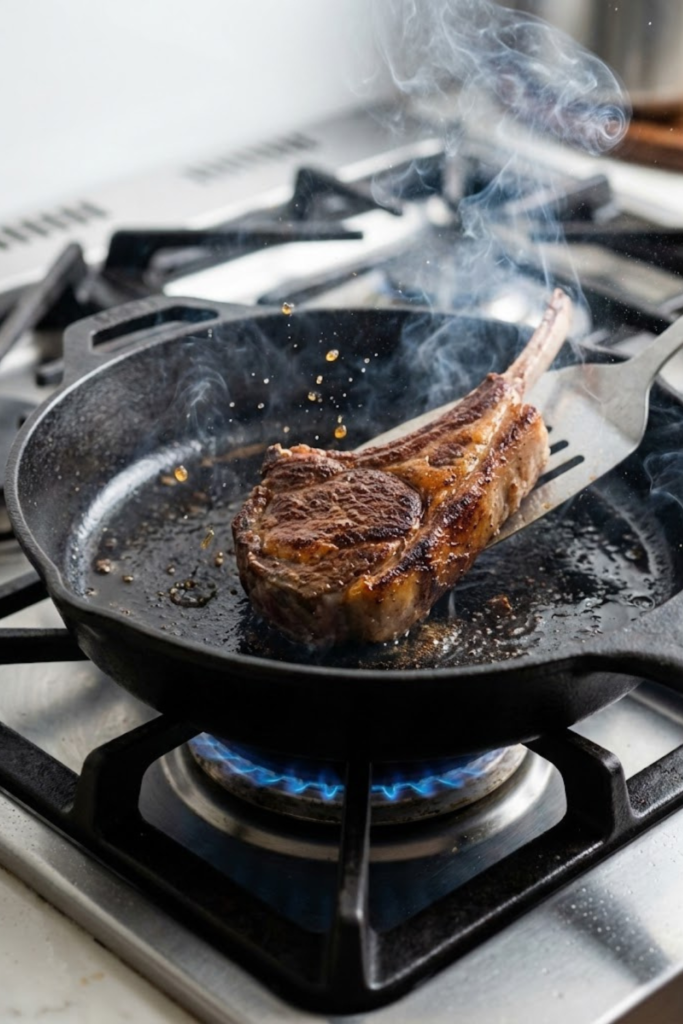
If you want that amazing crust on your Pan-Seared Lamb Chops with Rosemary and Garlic, you can’t be afraid of a little heat. I see people all the time who are scared to turn their stove up past “medium” because they think they’ll burn the house down. Look, I get it. Smoke can be annoying, but if you don’t hear a loud sizzle the second the meat touches the metal, you are just boiling your dinner. I remember my first time trying this; I was so impatient that I put the chops in a lukewarm pan. They came out looking like they had been steamed in a dishwasher. It was depressing, and I actually ended up ordering pizza instead because the texture was just so bad. To get that golden-brown goodness, you have to be brave and wait for the right moment.
The Magic of Cast Iron
I always tell people that if you only own one pan, it should be a heavy cast iron skillet. These things are literal tanks. They take a while to get hot, but once they are there, they stay hot. This is important because when you drop a cold piece of lamb into a light, cheap pan, the temperature of the pan drops immediately. That’s how you lose your sear! I’ve had my favorite skillet for years, and it just gets better with age. If you don’t have one, a heavy stainless steel pan works too, but stay away from those non-stick pans. They can’t handle the high heat we need for this recipe, and you’ll just end up ruining the coating on the pan and your lamb at the same time.
Keep the Meat Bone-Dry
Here is a tip that sounds simple but changes everything: use paper towels. I’m serious! Water is the enemy of a good sear. If there is moisture on the surface of your lamb, the heat from the pan has to evaporate that water before it can start browning the meat. By the time the water is gone, the inside of your lamb is already overcooked. I usually pat mine down at least three times. I want them to feel almost sticky because they are so dry. It makes a huge difference in how fast that crust forms. Plus, it stops the oil from popping and splashing all over your shirt, which is a nice bonus if you forgot to put on an apron.
Listen for the Sizzle
Before you put the meat in, add a little oil and wait until it starts to shimmer. If it starts to smoke just a tiny bit, you are ready to go. Place the chops in carefully—away from you so you don’t get burned—and then leave them alone! Don’t keep flipping them over like you’re playing a game. Let them sit there for about three or four minutes so the heat can do its job. When you see a deep brown color creeping up the sides, that’s when you know you’ve nailed the sear. It’s a beautiful sound, like applause for your cooking skills. This is how you make sure the flavor stays locked inside.
Infusing Rosemary and Garlic: Timing is Everything
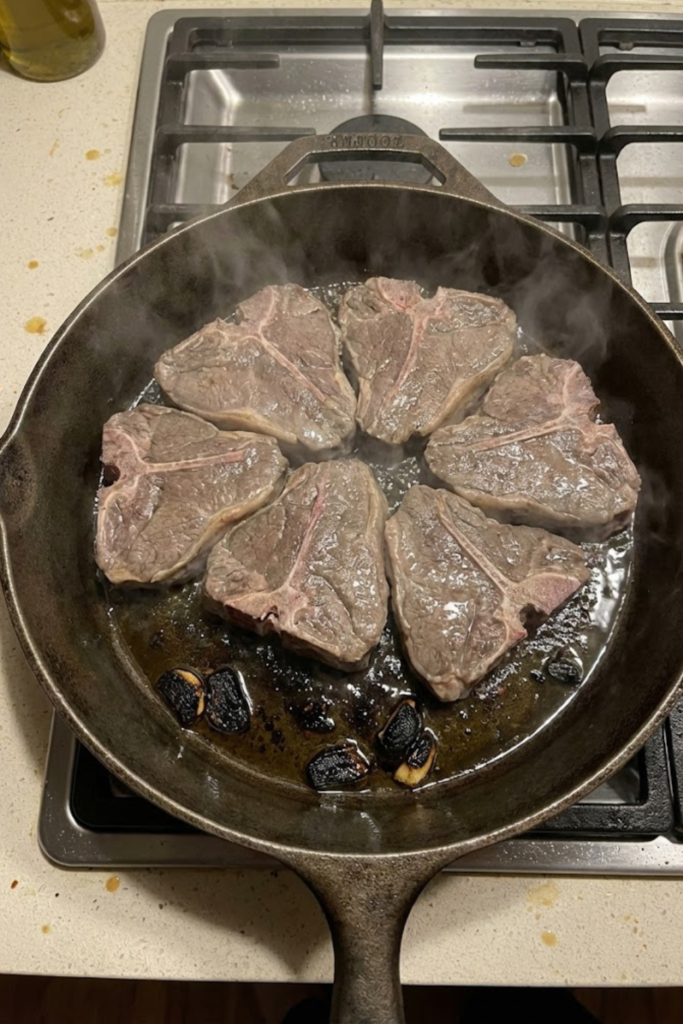
Adding the rosemary and garlic is easily my favorite part of the whole process because the entire kitchen starts to smell like a fancy steakhouse. But I have to give you a big warning: I have messed this up more times than I’d like to admit. If you toss your garlic in the pan right at the start when the oil is smoking hot, that garlic is going to be black and bitter by the time the lamb is done. It completely ruins the vibe of the meal. I learned this the hard way when I was trying to cook a nice anniversary dinner; the garlic burnt so bad it tasted like charcoal, and we ended up scraping the outside of the meat off just to eat it. You have to wait until those last few minutes to bring in the aromatics.
Don’t Let the Garlic Burn
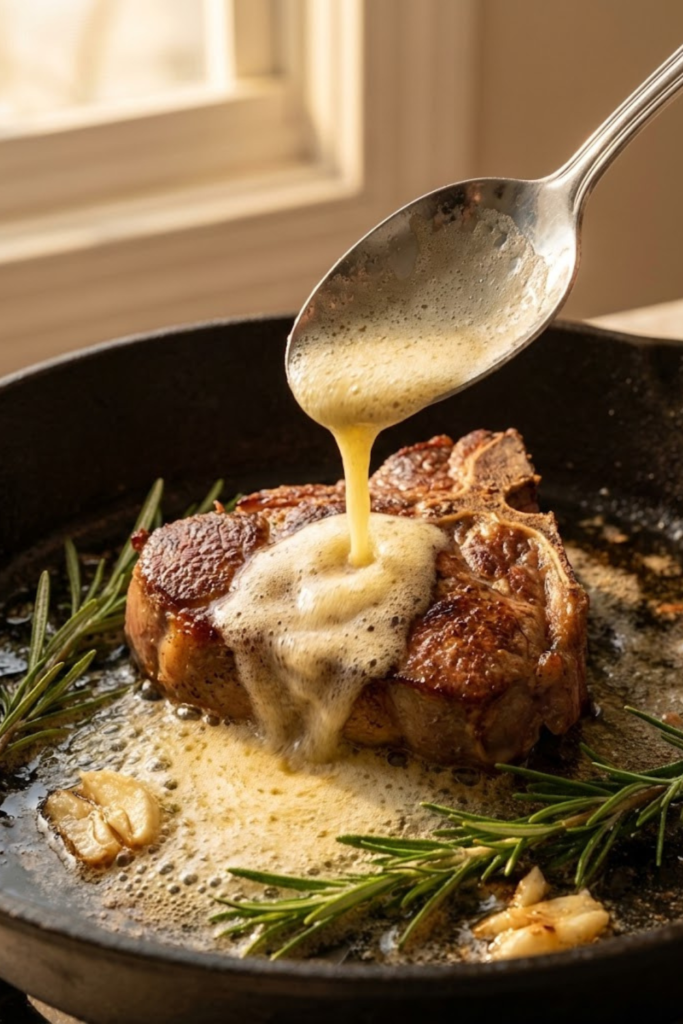
Timing is really the most important thing here. You want to add your garlic and rosemary about two or three minutes before the lamb is finished. I like to take the garlic cloves and just smash them a little bit with the flat side of my big knife. You don’t even need to chop them up! Just peel them and give them a good whack. This lets the oils out without making the pieces so small that they burn instantly. When you drop them into the hot butter, they should sizzle and turn a light golden brown. If they start turning dark brown or black, get them out of there fast!
The Magic of Butter Basting
This is the trick that makes you look like a pro chef. Once you add your rosemary and garlic, throw in a big hunk of butter. As it melts and starts to foam up, tilt your pan slightly so the butter pools at the bottom with the herbs and garlic. Take a big spoon and just keep pouring that hot, flavored butter right over the top of the lamb chops. This is called “basting,” and it adds so much flavor and moisture. Plus, the smell of the rosemary hitting that hot butter is just incredible. My kids always come running into the kitchen when they smell this part. It makes the crust even better and helps the meat stay tender.
Fresh Herbs Make the Difference
I know it’s tempting to just grab that jar of dried rosemary from the back of the pantry, but please don’t do it. Dried herbs just don’t work for this. They turn into little hard needles that get stuck in your teeth, and they don’t have that bright, piney flavor we want. Buy a small pack of fresh rosemary sprigs. You just toss the whole branch into the pan. The heat pulls the flavor out of the leaves and into the butter. It’s a lot easier to pull a whole branch out of the pan than it is to pick out hundreds of tiny dried pieces. Trust me, the fresh stuff is worth the extra couple of dollars at the store.
Resting Your Meat: Why it Matters for Juicy Results
Now, I know what you are thinking. You’ve got these beautiful Pan-Seared Lamb Chops with Rosemary and Garlic sitting there, and they smell like heaven. Your stomach is probably growling loud enough for the neighbors to hear it. But if you take a knife to that meat the second it leaves the pan, you are going to ruin all your hard work. I’ve done it! I remember being so excited for a meal that I just dug in immediately, and my plate looked like a red lake. The meat was tough and dry, and I felt like a total failure. Resting is the most important step that people skip because they are just too hungry to wait five minutes.
The Science of Why We Wait
Think about it like this: when that lamb is in the hot pan, the heat makes the muscle fibers squeeze together really tight. Imagine you are outside in the freezing cold and you shrug your shoulders up to your ears—that is what the meat is doing. All the juice gets pushed toward the middle because it has nowhere else to go. If you cut it while it’s still “stressed,” all that juice just squirts out onto your plate. But if you give it five or ten minutes on a plate, the fibers start to relax. They loosen up and soak those juices back in. It’s the difference between a piece of meat that melts in your mouth and one that tastes like a rubber band.
The Foil Tent Trick
You don’t want to just leave the meat out in the cold air while it rests, though. I usually move my chops to a warm plate and then grab a piece of aluminum foil. I make a little “tent” over the top. You don’t want to wrap it up tight like a burrito! If you do that, the steam will get trapped inside and make that crispy crust we worked so hard on get all soggy. Just lay the foil over it loosely so the heat stays in but the air can still move a little bit. It’s a simple trick that makes a huge difference in keeping your dinner warm while the juices settle.
Checking the Temperature
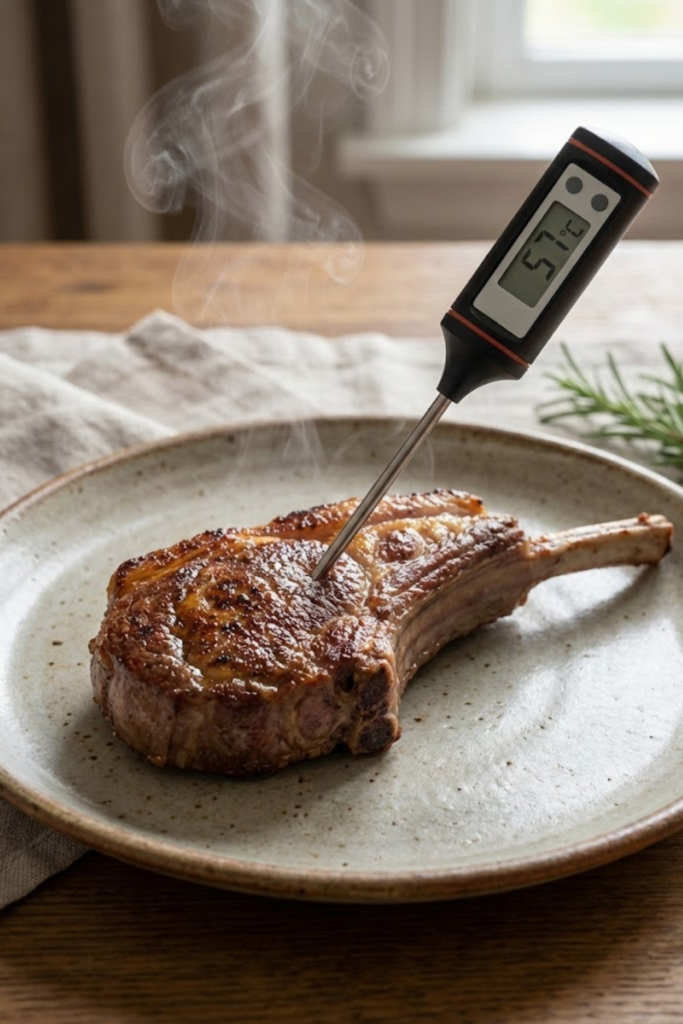
While the meat is resting, the temperature actually keeps going up a few degrees. This is called “carryover cooking.” I always pull my lamb off the stove when my thermometer says about 130°F. By the time it’s done resting for five minutes, it hits 135°F, which is a perfect medium-rare. If you wait until it’s 145°F in the pan, it’s going to be way overcooked by the time you actually take a bite. Always use a thermometer so you don’t have to guess. Don’t be the person who ruins a great meal just because they were too impatient to wait five more minutes. Trust me, your taste buds will thank you for being patient!
Common Mistakes to Avoid with Lamb Chops
Even if you follow every step perfectly, there are a few “hidden traps” that can trip you up when you are making Pan-Seared Lamb Chops with Rosemary and Garlic. I’ve seen my students make these mistakes over and over, and honestly, I’ve made them myself when I’m in a rush. It’s easy to get distracted by a phone call or the TV and suddenly your dinner is ruined. Cooking is a lot like taking a math test—if you skip one small part of the problem, the whole answer comes out wrong. Let’s talk about how to avoid those annoying errors so your meal turns out great every single time.
Crowding the Pan is a Big No-No
One of the biggest mistakes I see is people trying to cook all their meat at once. I get it; you’re hungry and you want to sit down and eat. But if you put six lamb chops into a skillet that only has room for three, the temperature of the pan is going to drop way too fast. Instead of searing, the meat will start to release its juices and essentially boil in its own liquid. You’ll end up with gray, rubbery meat that looks nothing like the photos you see online. Cook in batches! It might take ten extra minutes, but the difference in flavor and texture is huge. Put the first batch on a plate in a warm oven while you finish the rest.
Using the Wrong Kind of Oil
I’ve seen people try to sear meat using extra virgin olive oil because they think it’s healthier. While I love olive oil for salads, it’s a terrible choice for high-heat searing. It has a low “smoke point,” which means it starts to burn and taste bitter before the pan is even hot enough to brown the meat. Plus, it fills your whole house with a nasty-smelling smoke that stays in your curtains for days. Use an oil with a high smoke point, like avocado oil or even just regular vegetable oil. These oils can handle the heat without breaking down. Save the fancy olive oil for drizzling on top right before you serve the food.
Seasoning Too Early (or Too Late)
If you salt your meat an hour before you cook it and leave it on the counter, the salt will pull moisture out of the meat. You’ll end up with a wet surface that is impossible to sear. I always tell people to salt their lamb immediately before it goes into the pan. This way, the salt stays on the surface and helps create that delicious crust. On the flip side, don’t be afraid to use enough salt! Lamb is a rich meat, and it needs a good amount of seasoning to bring out the flavor. If you under-salt it, the meat will just taste bland and boring, no matter how much rosemary and garlic you use. Be bold with your seasoning, but be smart about the timing.
Best Side Dishes to Pair with Your Lamb
Listen, a great main dish is only half the battle. You can’t just serve these amazing Pan-Seared Lamb Chops with Rosemary and Garlic by themselves on a big empty plate. That’s like wearing a fancy tuxedo with flip-flops—it just doesn’t look right, and you are going to feel like something is missing. When I am teaching my cooking classes, I always tell my students that side dishes are like the backup singers in a band. They need to be really good, but they shouldn’t take the spotlight away from the lead singer, which is definitely the lamb in this case. You want things that soak up that extra garlic butter and help balance out the rich, fatty flavor of the meat.
The Power of Creamy Mashed Potatoes
In my house, we almost always go with mashed potatoes. Why? Because that rosemary and garlic butter left in the pan is liquid gold. You want something on the plate that can act like a sponge. I like to make mine extra smooth with plenty of butter and a splash of heavy cream. If you really want to be a hero, mix in some of the roasted garlic you used while searing the chops. It ties the whole plate together. I remember one time I tried serving this with just a plain salad, and my kids looked at me like I had forgotten how to cook. They wanted those potatoes to mix with the lamb juices! It’s a classic for a reason.
Roasted Veggies for a Little Crunch
If you want to keep things a bit lighter, roasted vegetables are the way to go. I usually grab a bunch of asparagus or some thin carrots. Toss them in a little bit of the same oil you used for the lamb and roast them in the oven while the meat is resting. The earthy taste of the asparagus goes perfectly with the piney flavor of the rosemary. Plus, it adds some nice color to the plate. In 2026, everyone is looking for more “garden-to-table” vibes, so using fresh, seasonal veggies is a smart move. It makes the meal feel more complete and healthy without being boring.
Why a Zesty Salad Works
Sometimes, lamb can feel a little heavy because it has a lot of fat. To fix that, I like to serve a small side salad with a sharp lemon dressing. The acid in the lemon cuts right through the richness of the meat and cleans your palate between bites. I usually just use some arugula or spinach with a simple vinaigrette. Don’t go overboard with a bunch of heavy ranch dressing; keep it simple and bright. It’s a trick I learned from a chef friend of mine who said that every plate needs “fat, salt, and acid” to be perfect. Once you try it, you’ll see exactly what he meant. It makes the next bite of lamb taste even better.
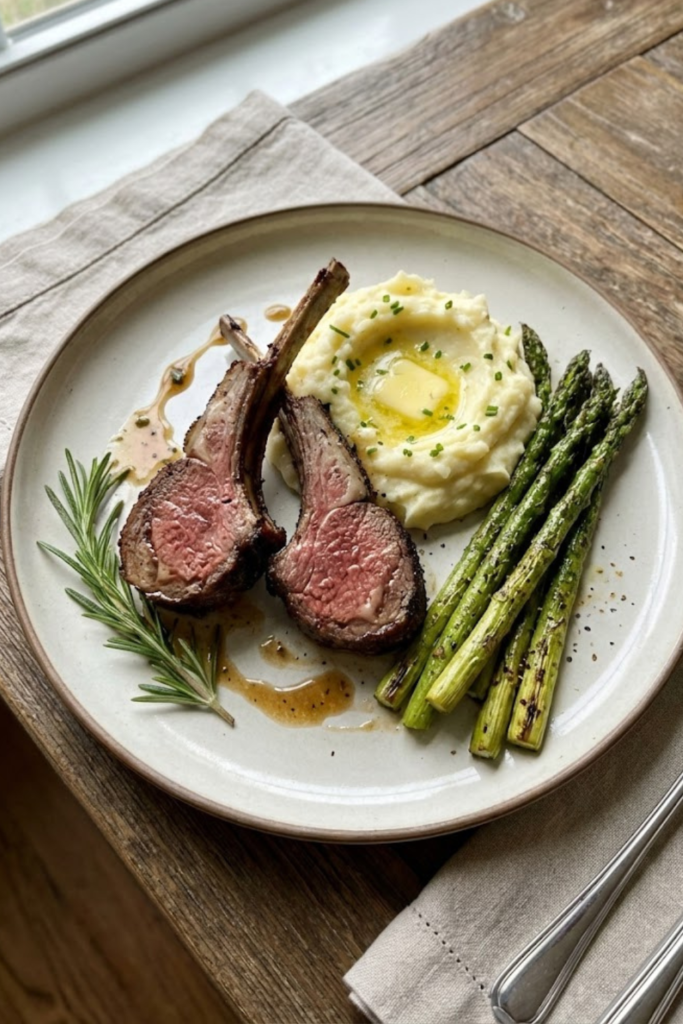
At the end of the day, making Pan-Seared Lamb Chops with Rosemary and Garlic is all about having fun in the kitchen and feeding people you love. It might seem a little scary at first when the pan starts smoking and the butter starts bubbling, but that is where the magic happens! I hope these tips about choosing the right meat, hitting the right temperature, and letting things rest help you feel like a pro. Don’t worry if it isn’t perfect the very first time—my first few tries were pretty messy too! Just keep practicing and enjoy the process. Please share this recipe on Pinterest so your friends can try making this delicious meal at home too!