Have you ever spent hours separating eggs and measuring flour, only to pull a dry, crumbly sponge out of the oven? It is absolutely heartbreaking! I have been there more times than I care to admit. But after years of testing (and tasting!), I have finally cracked the code to the holy grail of baking: a truly moist white cake that stays soft for days. This isn’t just another recipe; it is a masterclass in achieving that velvety, melt-in-your-mouth texture that we all dream about. Whether you are baking for a wedding or just a Tuesday night craving, this vanilla cake uses a specific method to ensure a tender crumb every single time. Get your mixer ready, because we are about to bake the best cake of your life!
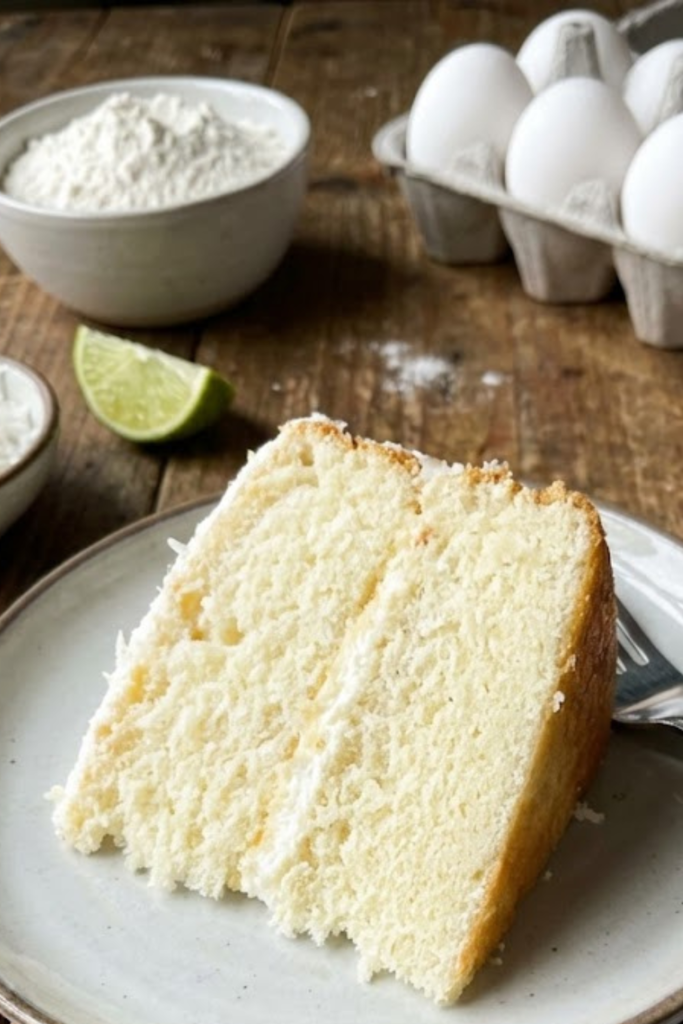
The Science Behind the Perfect White Cake Texture
I used to think baking was just pure luck. Honestly, I’d throw ingredients into a bowl, cross my fingers, and pray to the oven gods that something edible would pop out. Spoiler alert: it usually didn’t.
I remember this one time I tried to make a moist white cake for my niece’s christening. I wanted it to be stark white, like a cloud. I used whole eggs because, well, eggs are eggs, right? Wrong. It came out looking like a yellow cornbread and tasted dry as a bone. I was so embarrassed I almost bought a grocery store cake and switched the boxes! But that failure forced me to dig into the nitty-gritty of why ingredients act the way they do. Once you get the science, you stop guessing and start winning.
Why You Gotta Ditch the Yolks
Here is the thing I learned the hard way. If you want that snowy, pristine look, you have to separate your eggs.
Egg yolks are fat and color. While fat is usually good, the yolk makes the cake dense and yellow. We want light and airy here. By using strictly egg whites, you are building a structure that is delicate. It’s like the difference between a heavy wool blanket and a silk sheet. Plus, whipping those whites adds air, which helps give us that lift we are desperate for.
Cake Flour is Non-Negotiable
For years, I stubbornly used all-purpose flour for everything. Cookies, bread, cakes—it didn’t matter. I figured flour was just white powder.
Big mistake. All-purpose flour has a higher protein content, which creates gluten. Gluten is great for chewy bread, but it is the enemy of a tender crumb. When I finally switched to cake flour, it was a total game changer. The lower protein means less gluten forms, so your fork just glides through the slice. It literally melts in your mouth. If you don’t have it, don’t try to wing it with the regular stuff. The texture just won’t be the same.
The Sour Cream Secret
Okay, this might sound weird if you haven’t tried it. Putting sour cream in a cake?
Yes, absolutely. This is my secret weapon for keeping things from drying out. I used to rely solely on milk, but milk is mostly water. Water evaporates. Fat, however, stays put. The acidity in the sour cream actually tenderizes the gluten strands (science is cool, right?) and adds a richness that milk just can’t compete with. It doesn’t taste sour, I promise. It just tastes like the best bakery cake you’ve ever had.
Temperature Tantrums
Here is where I messed up the most often. I’d be in a rush and grab cold butter and eggs straight from the fridge.
Do not do this. When you mix cold eggs with room temperature butter, the batter curdles. It looks separates and gross, kind of like cottage cheese. That’s a broken emulsion. When your batter is broken, it can’t trap air bubbles properly. That means your cake won’t rise right and it’ll be dense.
I learned to set my ingredients out on the counter at least an hour before I start. It’s annoying to wait, I know. But patience pays off with a smooth, velvety batter that bakes up perfectly. Trust me, your patience will be rewarded with the best texture imaginable.
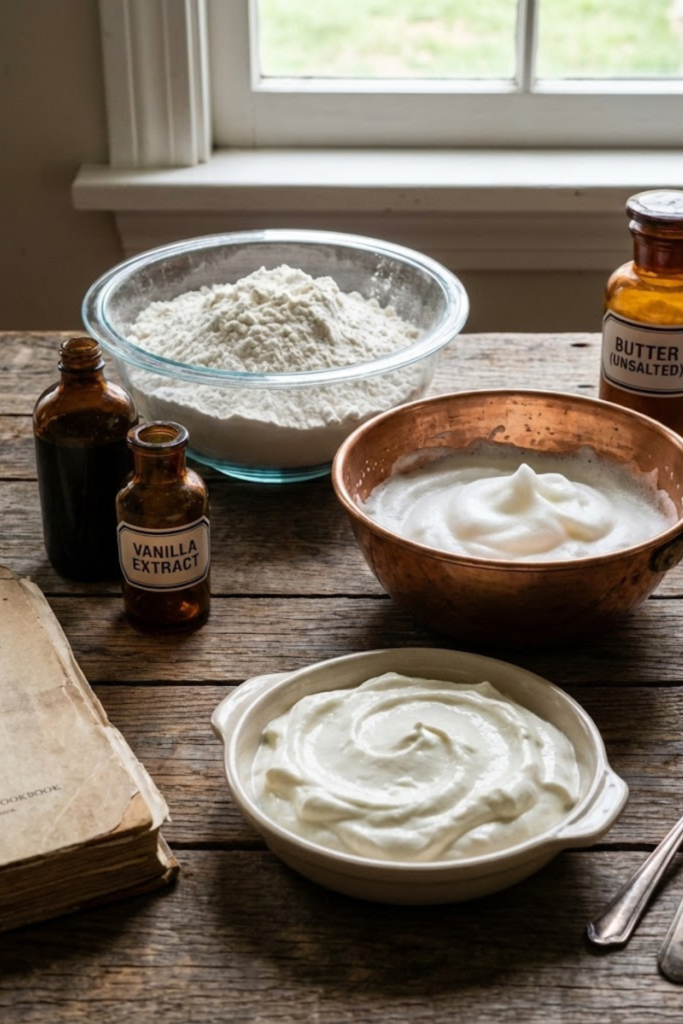
The Reverse Creaming Method Explained
I have to be honest with you; the first time I read about this method, I thought it was a typo. Seriously. Every recipe I had ever made started with “cream butter and sugar until fluffy.” It was drilled into my head like the ABCs.
So, when I saw a recipe that told me to dump the butter directly into the flour, I hesitated. It felt like I was breaking a sacred baking law. I stood in my kitchen, staring at my mixer, thinking I was about to waste perfectly good ingredients. But I did it anyway. And let me tell you, that moment changed my baking life forever.
What on Earth is Reverse Creaming?
If you are used to the traditional method, this is gonna feel weird. Basically, instead of beating sugar and butter first, you mix the dry ingredients (flour, sugar, baking powder) and then beat in the soft butter.
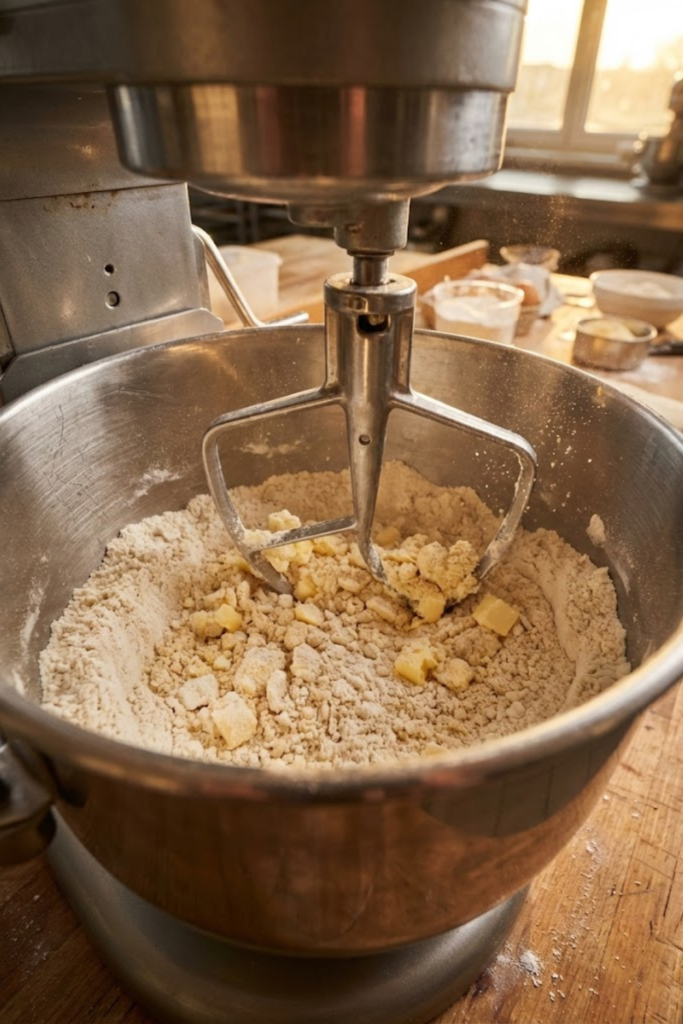
You keep mixing until the flour is coated in fat. It ends up looking like wet sand or coarse crumbs. I remember looking at the bowl thinking, “There is no way this turns into a cake.” It looked like a crumble topping gone wrong. But this step is the magic trick. By coating the flour particles with butter fat, you are essentially waterproofing them.
Stopping Gluten in Its Tracks
Here is why that “waterproofing” matters. We talked about gluten formation earlier, right? Gluten gets tough when flour meets liquid.
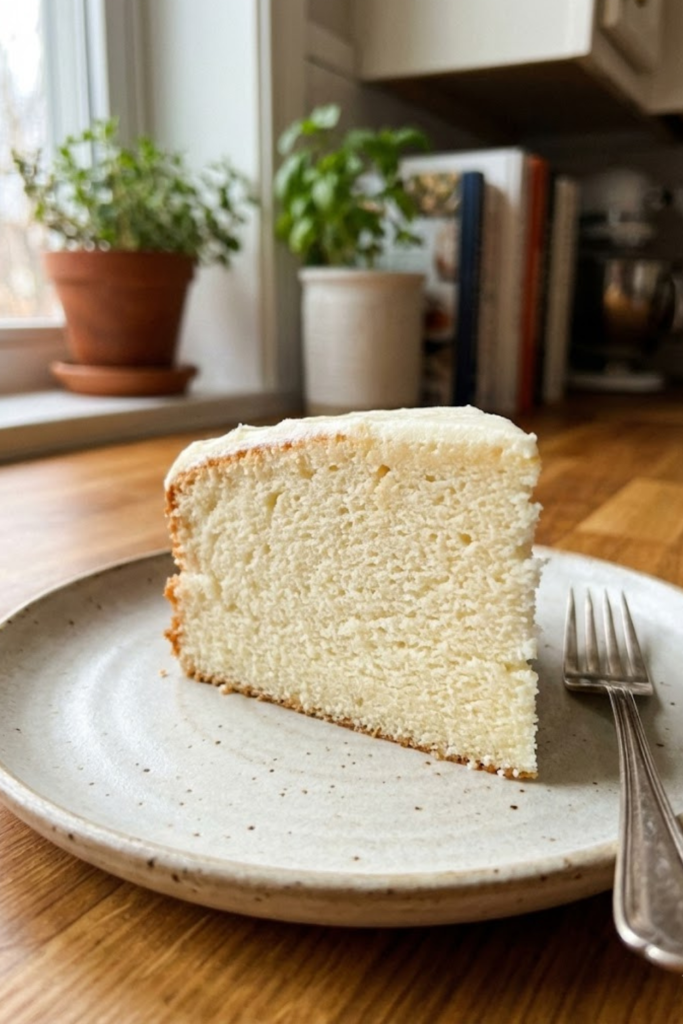
In the reverse creaming method, because the flour is coated in fat first, it can’t absorb the liquid as quickly when you add the milk and eggs. This means less gluten is formed. The result? You get this incredibly velvety crumb that is sturdy but melts in your mouth. It isn’t chewy like bread. It’s soft, like a cloud. I was shocked the first time I tasted it; the texture was just… superior.
Goodbye, Domed Tops
Another thing that used to drive me crazy was the dome. My cakes would always rise like a volcano in the middle. I’d have to slice off the top to stack them, which meant wasting cake (or eating the scraps, which isn’t the worst thing, I guess).
But with this method, the cake bakes up almost perfectly flat. It’s amazing for layer cakes. You don’t have to worry about your tower leaning over or sliding around. The structure is just better. It holds up heavy frostings without squishing the bottom layer, yet it stays soft inside.
What to Look For
When you are mixing, don’t rush the sandy stage. You want to make sure those chunks of butter are gone and everything looks uniform before you add the wet ingredients.
I usually let my mixer run on low for a couple of minutes. Once it looks like sandy rubble, you’re good to go. Then, you pour in the liquid slowly. It might look a little lumpy at first, but give it a minute. It will smooth out into a thick, glossy batter that looks totally different from what you’re used to. It’s a bit scary the first time, but trust the process!
Step-by-Step Instructions for Baking Success
I used to think that as long as I had the ingredients, the hard part was over. Boy, was I wrong. The actual execution is where the battle is won or lost.
There is nothing worse than doing all the prep work, spending money on expensive vanilla, and then ruining it because you skipped a tiny step in the instructions. I’ve cried over spilled milk—literally—and sunk cakes. So, let’s walk through this so you don’t have to have a mental breakdown in your kitchen like I did that one Easter.
The Prep Work I Used to Ignore
Okay, raise your hand if you’ve ever just sprayed a pan with non-stick spray and prayed for the best.
I am guilty as charged. And I paid for it when half my cake stayed in the pan while the other half crumbled onto the cooling rack. It was a disaster. Now, I never, ever bake a layer cake without parchment paper. I trace the bottom of my cake pans on the paper and cut out perfect circles. It takes five extra minutes, but it saves your sanity.
Also, turn your oven on early! I used to wait until I started mixing to hit preheat. By the time my batter was ready, the oven wasn’t hot enough. Putting a cake into a cold oven is a death sentence for the rise. It needs that blast of heat immediately to activate the baking powder.
The Mixing Zone (Don’t Splash!)
When you are adding your liquids, you need to have a gentle hand.
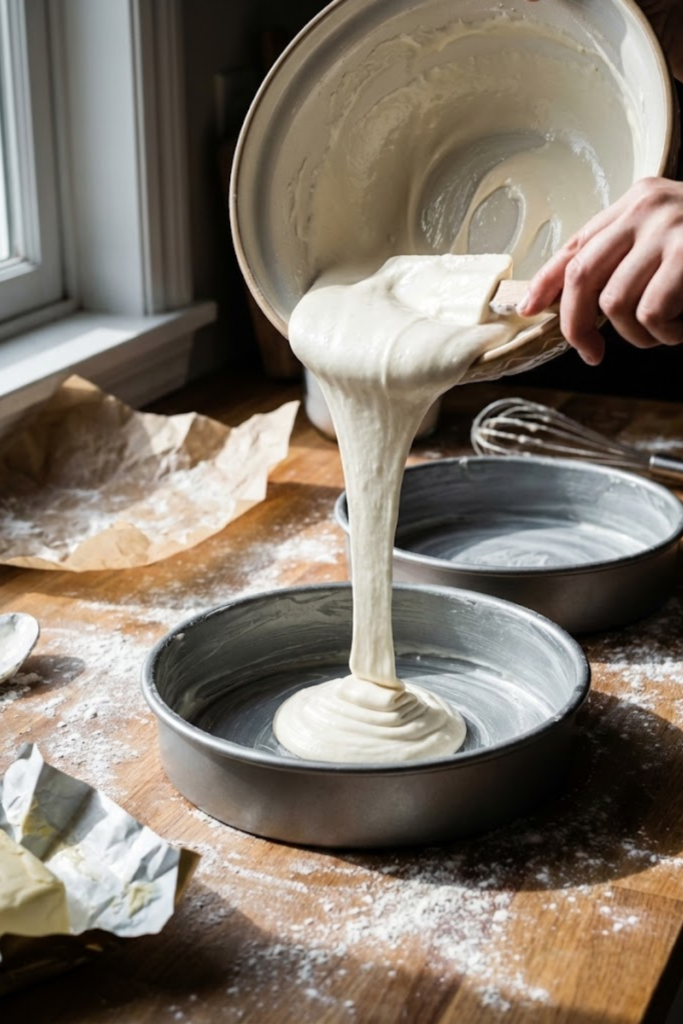
I remember one time I just dumped the milk and vanilla extract mixture into the bowl all at once while the mixer was running. It splashed everywhere. I had milk in my hair and on the cabinets. But worse than the mess, it ruined the batter. The flour couldn’t absorb the liquid fast enough, and the whole thing turned into a soupy, lumpy mess that never came together right.
You gotta pour the liquid in a slow, steady stream. Give the batter time to drink it up. If you see it starting to look separated or curdled, stop! You might have added it too fast or your ingredients were too cold. Just keep mixing on low; it usually comes back together if you are patient. We are looking for a smooth emulsion, not a chunky soup.
The Toothpick Truth
Knowing when to take the cake out is terrifying.
If you pull it too early, the center sinks. If you leave it too long, you lose that moist cake texture we worked so hard for. I used to rely on the timer alone, but ovens are liars. My oven runs hot, so if I follow the recipe time exactly, I burn things.
You need to use the toothpick test, but here is the trick. You don’t want the toothpick to come out totally clean. If it’s clean, the cake is already overdone. You want to see a few moist crumbs clinging to it. That means it’s fully baked but still hydrated.
Also, resist the urge to open the oven door constantly! Every time you peek, you let heat escape. I wrecked a perfectly good sponge once because I opened the door every five minutes to “check on it.” The temperature dropped, and the cake collapsed in the middle. It was tragic. Trust your nose—when you can smell the vanilla flavor wafting through the house, it’s getting close.
Handling the Layers
Once they are out, don’t touch them.
Seriously, let them sit in the pans for about 10 to 15 minutes. If you try to flip them out while they are piping hot, they will fall apart. They are super fragile right now. I learned this when I tried to rush a birthday cake and ended up with a pile of hot crumbs instead of a layer. After they cool a bit, run a knife around the edge and flip them onto a wire rack. Treat them like babies!
Troubleshooting Common White Cake Mistakes
Look, I wish I could say every cake I bake turns out perfect. But that would be a huge lie. I have thrown more cake layers in the trash than I want to count.
There is nothing more frustrating than pulling a pan out of the oven, thinking you nailed it, only to cut into a disaster. I remember baking a birthday cake for my best friend a few years ago. I was so confident. But when we sliced it, the thing was full of giant holes and tasted like sawdust. I wanted to crawl under the table. Baking is science, but sometimes it feels like it’s just out to get you. If you are struggling, don’t worry. I’ve made every mistake in the book so you don’t have to.
Why Does It Taste Like Sand?
If your cake is dry, I’m willing to bet money on one thing: you used a measuring cup.
I used to do the “scoop and sweep” method for years. I’d jam my cup into the flour bag and level it off. The problem? I was packing way too much flour into that cup. A cup of flour should weigh about 120 grams, but my heavy-handed scoop was closer to 150 grams. That extra flour sucks up all the moisture.
My cakes were dense bricks until I finally bought a cheap digital scale. Kitchen scale baking changed my life. Seriously, just weigh your ingredients. It’s the only way to get it right. Also, check your oven temp. My old oven ran 25 degrees hot, so I was accidentally scorching everything. An oven thermometer is like five bucks—get one!
The Mystery of the Big Holes
You know when you cut a slice and it looks like Swiss cheese? That is called tunneling.
This happens when you get too aggressive with the mixer. I used to think I had to beat the batter into submission to make it smooth. Wrong. When you overmix, especially after adding the flour, you develop too much gluten and trap big air bubbles that can’t escape.
I learned to stop the mixer the second the flour disappears. If there are still a few streaks of flour, I grab a spatula and fold them in by hand. Avoid overmixing batter at all costs if you want that tight, tender crumb.
Help, My Cake Sank!
The dreaded sunken center. It’s the worst feeling seeing a beautiful rise just collapse in the last five minutes.
Usually, this is because of expired leaveners. I once used a can of baking powder that had been in my pantry since who knows when. The cake rose, then fell flat as a pancake. Baking powder vs baking soda matters, but fresh ingredients matter more. They lose their potency over time.
Also, stop opening the oven door! I know you want to look. I want to look too. But that rush of cold air shocks the cake before the structure is set. It’s like popping a balloon.
keeping It Bright White
If your “white” cake looks kinda beige, check your vanilla.
I love pure vanilla extract, but it is brown. If you put brown liquid into white batter, it’s gonna tint it. For weddings or when I want that stark, snowy look, I switch to clear vanilla flavoring. It’s artificial, yeah, but it keeps the color pristine. Also, use egg whites only—no yolks allowed! Yolks are delicious, but they will turn your masterpiece yellow in a heartbeat.
Best Frosting Pairings for Vanilla Cake
You know that feeling when you have the perfect outfit, but you ruin it with the wrong shoes? That is exactly what happens when you pair this delicate cake with the wrong frosting.
I learned this lesson hard at my sister’s bridal shower. I made this airy, cloud-like white velvet cake, but I decided to smother it in a heavy, dense fudge frosting. It was a disaster. The cake was too delicate to hold the weight, and the chocolate completely overpowered the subtle vanilla flavor. It tasted fine, I guess, but it felt wrong. It was like wearing combat boots with a silk dress. Since then, I’ve become pretty picky about my pairings.
Swiss Meringue Buttercream: The Classy Choice
If you want to feel like a professional pastry chef, you have to try Swiss meringue buttercream.
I used to be terrified of it. Cooking egg whites and sugar over a double boiler sounded like a science experiment gone wrong. But the first time I nailed it, I felt like a wizard. This frosting is silky, buttery, and not too sweet. It is the perfect match for a moist white cake because it mimics that light texture.
Unlike American buttercream, it doesn’t form a crust. It stays soft and glossy. It is a bit of a project, I won’t lie. You have to whip it until your arm falls off (or your mixer overheats), but it is worth every second. It elevates a simple cake into something fit for a wedding.
Classic American Buttercream: The Nostalgic Pick
Sometimes, though, you just want that sugar rush.
Classic American buttercream is what we all grew up eating at birthday parties. It is sweet, it is sturdy, and it is incredibly easy to make. Just butter, powdered sugar, and a splash of milk. But here is my tip: whip the butter for at least five minutes before adding the sugar.
If you don’t, you get that gritty texture that feels like sand between your teeth. Nobody wants that. I also like to add a tiny pinch of salt to cut through the sugar. It pairs beautifully with vanilla cake if you are feeding a crowd of kids (or adults who act like kids). It holds its shape perfectly for piping roses or borders.
Adding a Zesty Twist with Fruit
If I am feeling fancy, or if it is summer, I love adding a fruit filling.
A plain white cake is basically a blank canvas. It begs for a pop of color and flavor. My go-to is a tart lemon filling for cake or a sharp raspberry coulis. The acidity cuts right through the sweetness of the frosting and the richness of the butter.
I usually pipe a “dam” of buttercream frosting around the edge of the layer to hold the filling in. I learned that trick after my raspberry jam leaked out the sides and stained my pristine white icing pink. It looked like a crime scene. A simple dam keeps everything neat and tidy inside.
Don’t Skip the Crumb Coat!
Okay, let’s talk about decoration. I used to be so impatient. I would slap the frosting on right away and end up with cake crumbs mixed into my beautiful white icing.
It looked speckled and messy. You have to use the crumb coat technique. It sounds technical, but it’s just a thin layer of frosting that locks in the crumbs. You spread it on, then chill the cake in the fridge for 20 minutes.
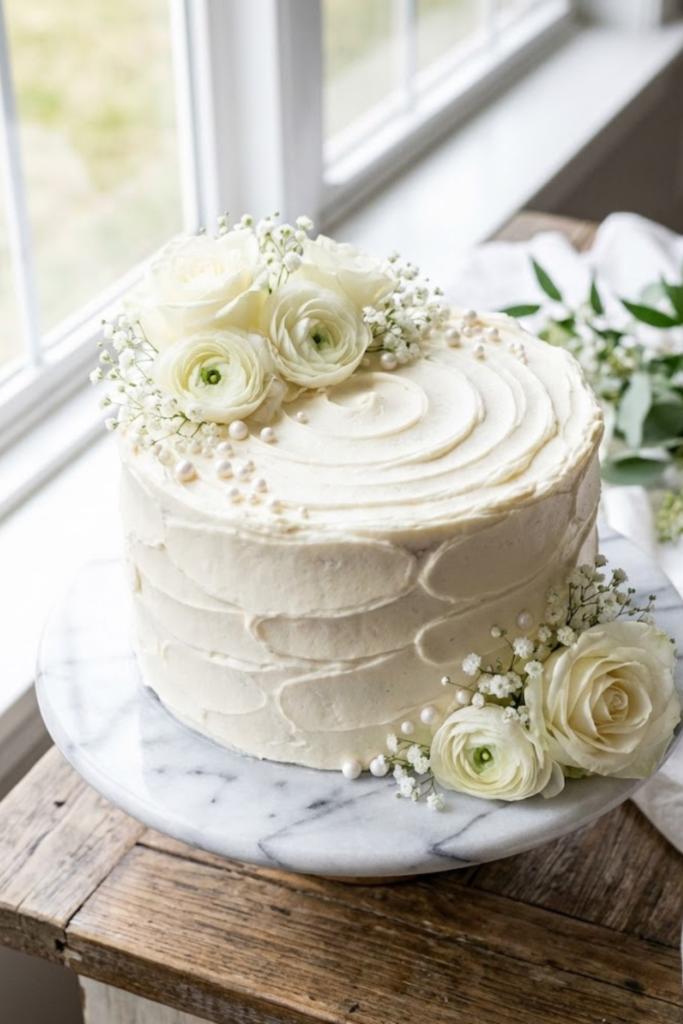
Once it’s hard, you can put your final layer of frosting on top, and it will be smooth as glass. It takes extra time, but it makes the difference between a homemade-looking cake and a bakery-style stunner. Don’t rush the process!
I honestly didn’t think I would ever stop using box mixes. There was a comfort in knowing exactly what I was going to get, even if it tasted a little bit like chemicals. But this journey to finding the perfect moist white cake changed my mind completely.
It wasn’t an overnight success. I ate a lot of dry, crumbly mistakes before I figured out the magic of the reverse creaming method. It sounds fancy and intimidating, but really, it is just mixing things in a different order. Once you see that velvety batter come together, you will understand why bakeries guard their secrets so closely. It is satisfying in a way that tearing open a plastic bag just isn’t.
The Final Verdict on Flavor
This isn’t just about texture, though. The flavor of a homemade vanilla cake made with real butter and high-quality vanilla is unmatched.
It is the kind of cake that doesn’t need a mountain of frosting to hide behind. It stands on its own. Whether you are making a teetering wedding cake recipe or just some cupcakes for a Tuesday night, this base recipe is solid. It is sturdy enough to stack but soft enough to melt on your tongue. And remember, the sour cream is the MVP here. Don’t skip it. It is the insurance policy against a dry sponge.
Get Baking!
So, what are you waiting for? It is 2026, and we are done with dry cakes.
Grab your cake flour, separate those eggs (save the yolks for custard!), and preheat your oven. Don’t let the fear of failure stop you. Even my “failures” still tasted pretty good with enough ice cream. Baking is supposed to be fun, messy, and delicious. If you follow these steps and treat your ingredients with a little respect, I promise you will be pulling the best bakery style cake out of your own oven in no time.
If you loved this recipe and want to save it for your next celebration, please pin this image to your Cake Recipes board on Pinterest!