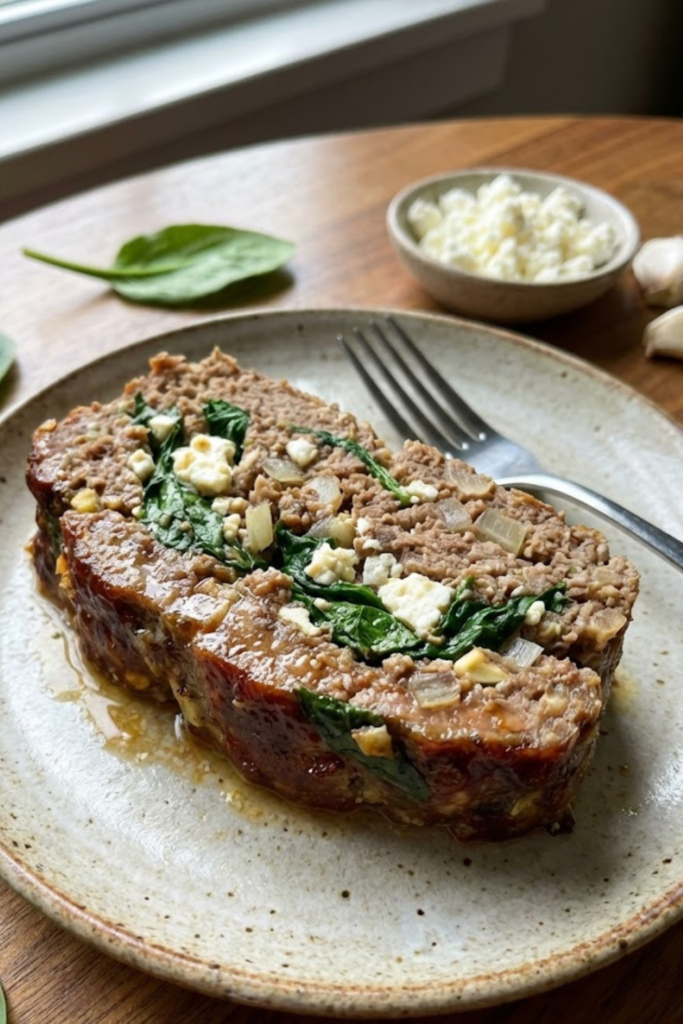
Did you know that meatloaf is consistently ranked as one of the top five most-searched comfort foods in the world? Honestly, I used to think meatloaf was just a boring, dry brick of meat that my grandma used to serve with a side of lumpy mashed potatoes. But boy, was I wrong! Adding fresh greens and tangy cheese completely changes the game. This meatloaf with spinach and feta is basically a Mediterranean vacation on a plate, and it’s become my absolute favorite way to get some veggies into a hearty dinner. It’s juicy, it’s savory, and that feta just melts into little pockets of salty goodness. Trust me, once you try this version, the old-school ketchup-topped loaf will be a thing of the past!
Why This Recipe is My Go-To for Picky Eaters
I have spent about fifteen years teaching middle schoolers, and if there is one thing I know, it is how to deal with stubbornness. My kids at home are just as bad as my students when it involves green stuff in their food. I remember this one time I tried to just serve a side of sautéed spinach. It sat on their plates like a sad, soggy pile of seaweed. They wouldn’t touch it! That is when I realized I had to be a bit sneaky. I decided to chop that spinach up tiny and fold it right into a meatloaf with spinach and feta. I didn’t tell them what was inside at first, I just called it “special cheesy meatloaf” and hoped for the best.
The Struggle with the “Green Bits”
The first time I made it, I was so nervous they would spot the green bits and stage a protest. Usually, if my kids see anything that looks like a vegetable, they treat it like a hazard. But because the spinach is chopped small and mixed with the ground beef, it doesn’t stand out as much. I usually use about 1.5 pounds of ground beef—I like the 80/20 mix because fat equals flavor, folks—and about two cups of packed spinach. If you use lean meat, your loaf is going to be as dry as a desert. I found that if I cook the spinach down just a little bit first, it blends in even better. It is all about the disguise.
Why Feta is the Real Hero
The feta cheese is the real MVP here. It is so flavorful that it distracts them from the fact that they are eating actual nutrients. Feta doesn’t just melt away and disappear like cheddar or mozzarella does. It stays in these little white, salty pockets. When a picky eater takes a bite, they get that hit of salt and creaminess first. By the time they notice there is spinach in there, they already like the taste! I used to worry about the salt, but since I don’t add much extra salt to the meat mixture, the feta balances everything out. It gives the meat a tang that you just don’t get with a regular meatloaf.
Texture is Everything for Kids
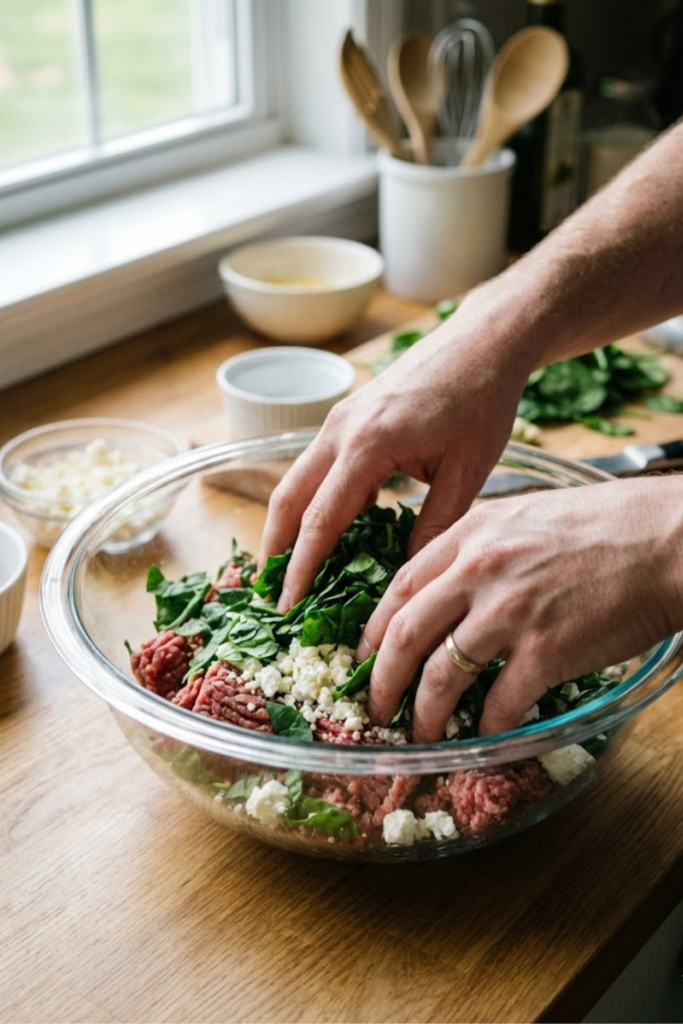
One thing I learned the hard way? Do not over-mix the meat. I used to just mash it all together like I was kneading bread. Big mistake! Over-working the beef makes the proteins get all tight and tough. Now, I just use my hands to gently toss it together until it just barely holds. It is a bit messy, but it is the only way to keep it light. My students always tell me I’m too “extra” about my food, but when they come over for the end-of-year potluck, this is the dish they ask for. It is funny how a little cheese can make a huge difference in how people view “healthy” food.
The Big Mistake I Made with Frozen Spinach
Listen, I am all for shortcuts. I am a busy teacher, and sometimes I just do not have time to wash and chop fresh greens after a long day of grading papers. So, one Tuesday night, I grabbed a bag of frozen chopped spinach for my meatloaf with spinach and feta. I thought, “Hey, it is already chopped! This is going to be so fast!” I just thawed it out in the microwave and dumped it right into the bowl with the beef and the eggs.
That was the worst idea ever. Frozen spinach holds a crazy amount of water that you cannot see at first. Because I did not squeeze it out properly, my meatloaf turned into a weird, beefy soup. It did not even hold a shape; it just kind of slumped in the pan like it had given up on life. We ended up eating it with spoons like a chunky chili. Talk about a fail! If you are going to use frozen, you have to wrap it in a clean kitchen towel and squeeze it until your arms hurt. You want it bone-dry before it touches that meat.
Why the Water Content Ruined Everything
When you buy frozen spinach, it is usually blanched and then frozen. This process breaks down the cell walls of the plant. When it thaws, all that internal moisture leaks out. If you put that straight into your meat mixture, you are basically adding a half cup of water to your beef. This makes the meat fibers separate instead of sticking together. It makes the whole thing feel soggy and heavy. Regarding the texture, it just feels wrong. I learned my lesson the hard way that moisture is the enemy of a firm, sliceable loaf.
Choosing Fresh Spinach for Better Texture
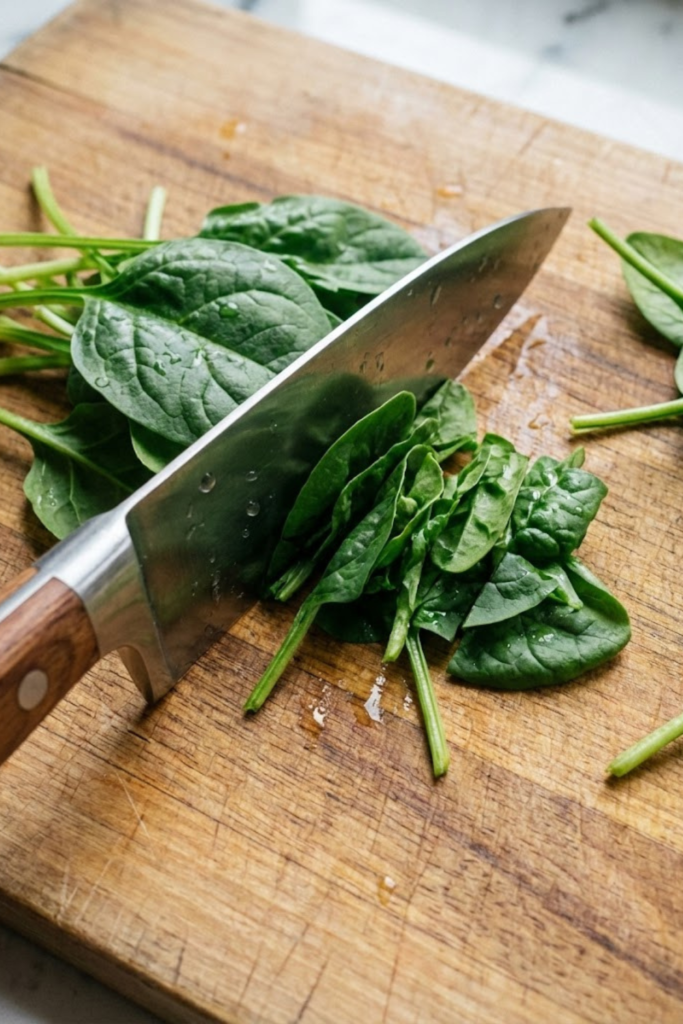
These days, I mostly stick to fresh baby spinach. I give it a quick rough chop so the pieces are not too long. Fresh spinach has a bit of “loft” to it. It creates tiny air pockets inside the meatloaf as it wilts while it is baking in the oven. This makes the final loaf much lighter and less dense than the traditional version. When I used the frozen stuff, even after squeezing it, the texture was a bit mushy. With fresh, you get these beautiful green flecks that still have a bit of character. Plus, fresh spinach tastes much cleaner.
Using a Panade to Save Your Loaf
I also like to add a half-cup of panko breadcrumbs soaked in a little milk. This is a pro-tip I learned from an old cooking show. The “panade”—that is the fancy word for the bread-milk mush—helps keep the moisture locked in while it bakes. It is not just filler; it is a structural necessity for a good loaf. It acts like a sponge that holds onto the beef juices so they do not run out on the tray. If your meatloaf is falling apart, you probably skipped this step or did not use enough. Between the fresh spinach and the panade, your meatloaf will stay juicy without being watery.
How to Pick the Best Feta for Your Meatloaf
Not all cheese is created equal, my friends. When you are making meatloaf with spinach and feta, the kind of cheese you buy actually matters a lot. I used to just buy the pre-crumbled stuff in the plastic tub because it was easy and I did not want to get my hands messy after a long day at school. But then I noticed something weird. Those crumbles are coated in this white powder to keep them from sticking together. That powder prevents the cheese from melting nicely into the meat. It stays kind of dry and chalky, which is definitely not what you want in a juicy dinner.
Why Block Feta Wins Every Time
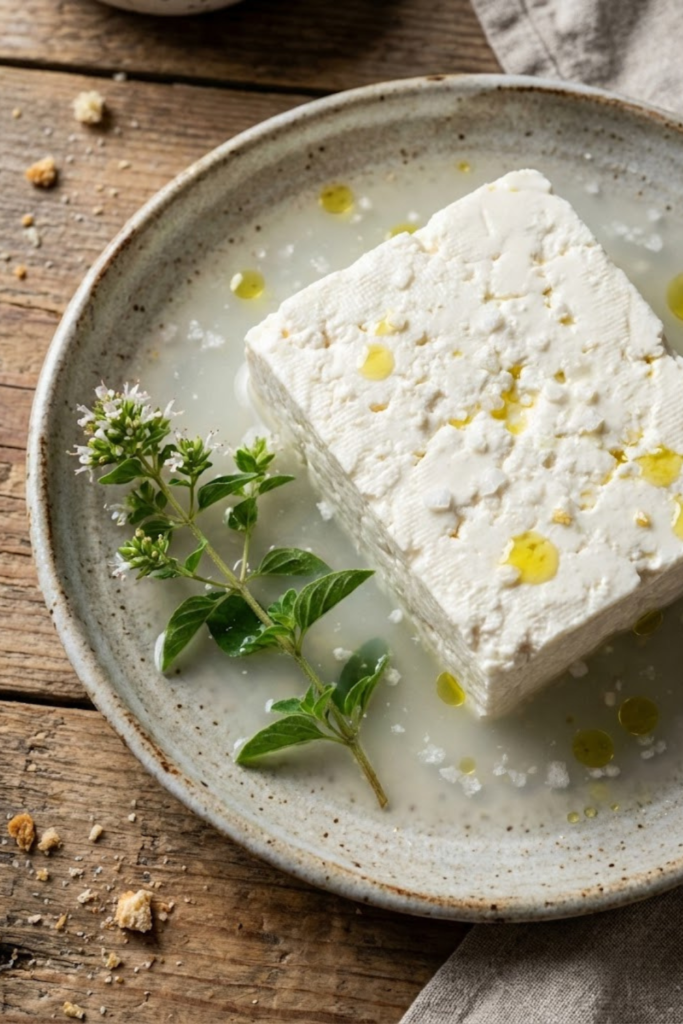
Now, I always buy the block of feta that comes in the brine. Yes, it is a little more work to crumble it yourself, but the flavor is way more punchy. It is saltier and creamier. I usually go for the Greek feta made from sheep’s milk if I can find it on sale at the store. It has this sharp tang that cuts right through the richness of the ground beef. It makes the whole meal feel a bit more fancy without actually being hard to make. When you crumble it yourself, you get these big, irregular chunks that look beautiful when you slice the loaf open. It makes it look like you spent hours on it, even if you just threw it together between grading essays.
Sheep’s Milk vs. Cow’s Milk Feta
You might notice that some feta is made from cow’s milk and some from sheep or goat milk. The cow’s milk version is usually cheaper and milder, but it can be a bit rubbery. For a meatloaf with spinach and feta, I really recommend the sheep’s milk version. It has a much richer texture that softens up perfectly in the oven. It does not disappear like goat cheese would, but it also does not stay hard. It creates these little creamy pockets of joy. I remember one time I tried to use a low-fat feta because I was trying to be “healthy,” but it was a total disaster. It did not melt at all and felt like eating little bits of pencil eraser. Stick to the full-fat stuff; your taste buds will thank you.
Balancing the Salt and Flavors
Since feta is already pretty salty, I am careful about how much extra salt I put in the beef mixture. Instead, I load up on other flavors that play well with the cheese. I always throw in some dried oregano and a bunch of minced garlic. About four cloves should do it. Do not be shy with the garlic; your breath might stink the next morning when you are talking to your students, but your stomach will be happy. I also like to add a little bit of lemon zest to the meat. It brightens up the heavy beef and makes the feta pop. It is all about creating those layers of flavor so every bite is interesting and delicious.
My Secret Trick for a Juicy Finish
I remember when I first started making meatloaf back in my early twenties. I used to just jam the meat into a rectangular tin and hope it didn’t come out like a dry brick. But after years of trial and error in my own kitchen, I found a few small changes that make a massive difference. If you want your meatloaf with spinach and feta to be the star of the show, you have to think about how the heat actually hits the meat. It is not just about the ingredients; it is about the physics of the oven. My students probably wouldn’t believe I’m talking about science, but cooking is basically just delicious experiments!
Why the Pan Matters for Texture
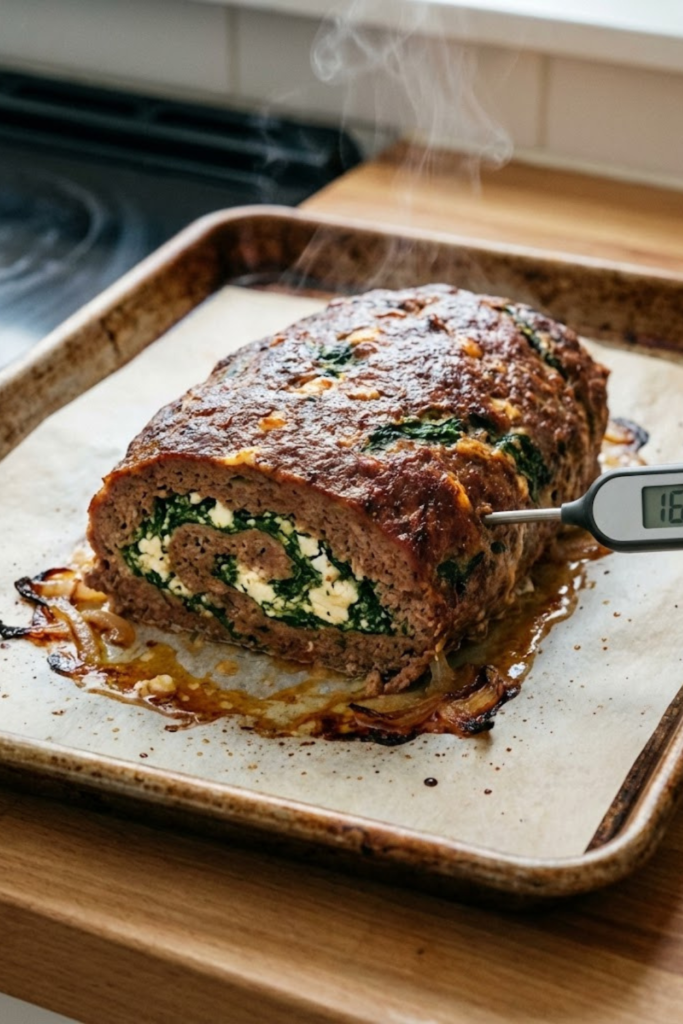
The biggest fear people have with meatloaf is that it will turn out like a dry piece of cardboard. I have a trick that I swear by. Most people put their meatloaf in a deep loaf pan. While that gives it a nice shape, the meat basically ends up boiling in its own grease and steam. Instead, I shape mine by hand on a baking sheet lined with parchment paper. This lets the hot air move all around the meat, which gives you a much better crust on the outside. You get those crispy edges that everyone fights over at the table. Plus, the extra fat can actually drain away instead of soaking back into the loaf and making the bottom soggy.
The Magic of the Meat Thermometer
Also, you really have to use a meat thermometer. I cannot say this enough! I used to just poke the loaf with a fork and hope for the best, which led to many overcooked, sad dinners. You are looking for an internal temperature of exactly 160 degrees Fahrenheit. Once it hits that, pull it out of the oven immediately. If you wait until it looks “done” on the outside, the inside is probably already way past its prime. The carryover heat will finish the cooking process perfectly while it sits. It is the most reliable way to make sure the spinach stays green and the feta stays creamy instead of getting hard or rubbery.
Don’t Skip the Rest Period
But here is the most important part that people always forget: let it rest! If you cut into it right away, all those delicious juices will just run out all over your counter. You worked hard to get that moisture in there with the spinach and the panade, so don’t waste it. Wait at least 10 minutes before you even think about grabbing a knife. Use that time to finish your grading or pour yourself a glass of cold water. When you finally slice it, the meat will be firm but juicy, and the feta will be perfectly set. It makes for the best cold sandwiches the next day, too!
Bringing it All Together for Your Best Dinner Yet
Well, there you have it. That is my whole journey with the meatloaf with spinach and feta. I know that some people think of meatloaf as a boring “yesterday” food, but I really believe it is one of the most versatile things you can make. As a teacher, I am always looking for ways to make life simpler while still feeling like I am doing a good job for my family. This recipe hits that sweet spot. It is hearty, it is healthy because of those greens, and it is honestly pretty hard to mess up if you just follow those few rules about moisture and temperature. I have made this for school potlucks and even for neighbors who just had a baby, and it is always a hit.
Why This Recipe Stays on My Rotation
I keep this recipe in my regular rotation because it is just so reliable. When I have a fridge full of spinach that is about to go bad, I know exactly what to do with it. It makes me feel better knowing that I am not wasting food. Plus, the combination of the salty feta and the savory beef is just something I never get tired of. I have tried other variations, like adding olives or sun-dried tomatoes, but I always come back to this simple version. It is the one my kids actually ask for by name. It is a great feeling when you put a plate down and don’t hear any complaining!
Leftover Magic for a Busy Teacher
One of my favorite things about this meatloaf with spinach and feta is how it tastes the next day. Being a teacher means I usually have about twenty minutes to eat my lunch while I am trying to organize my desk for the afternoon. I love having a cold slice of this meatloaf on some sourdough bread with a bit of spicy mustard. The flavors actually have more time to meld together in the fridge overnight. It doesn’t get soggy like a regular sandwich would because the meatloaf is so sturdy. Sometimes I even crumble a cold slice over a salad if I am trying to be extra good with my calories. It is like a gift to my future self on a busy Wednesday.
Final Thoughts on Getting Creative
Don’t be afraid to make this recipe your own as you get more comfortable with it. While I love ground beef, I have seen friends use ground turkey or even a mix of pork and veal. Just remember that if you go with a leaner meat, you really have to watch that internal temperature so it doesn’t dry out. Cooking should be fun, not a chore. I hope this helps you get a delicious meal on the table tonight. If you decide to give it a try, I would love to hear how it went for you! If you enjoyed this recipe, please save it to your “Healthy Dinners” board and share it on Pinterest so other busy families can find it too!