Did you know that lemon-flavored desserts are searched over 500,000 times a month during the spring? Honestly, I totally get it! I’ve been baking for twenty years, and nothing beats the bright, happy vibe of a lemon poppy seed layer cake. I used to think layer cakes were just for professional pastry chefs with fancy degrees, but I was so wrong.
Early on, I made some pretty embarrassing mistakes—like the time I forgot the baking powder and served my family a lemon-flavored brick. It was a total disaster! But through those “learning moments,” I figured out the tricks to getting that perfect, soft texture. This recipe is all about that sunny citrus flavor and the satisfying crunch of poppy seeds. Let’s get baking and turn your kitchen into a sweet-smelling bakery!
Choosing the Right Ingredients for Your Cake
When you decide to bake a lemon poppy seed layer cake, the first thing you have to do is head to the grocery store. I’ve spent way too many hours walking up and down those aisles, and I’ve learned that what you pick off the shelf really changes how your cake turns out. It’s not just about grabbing the first thing you see. You want stuff that’s going to work together to make that perfect bite. I remember when I first started, I thought all flour and all lemons were basically the same thing. Boy, was I wrong! Let me share what I’ve picked up over the years so you don’t make the same mistakes I did.
Fresh Lemons are the Only Way
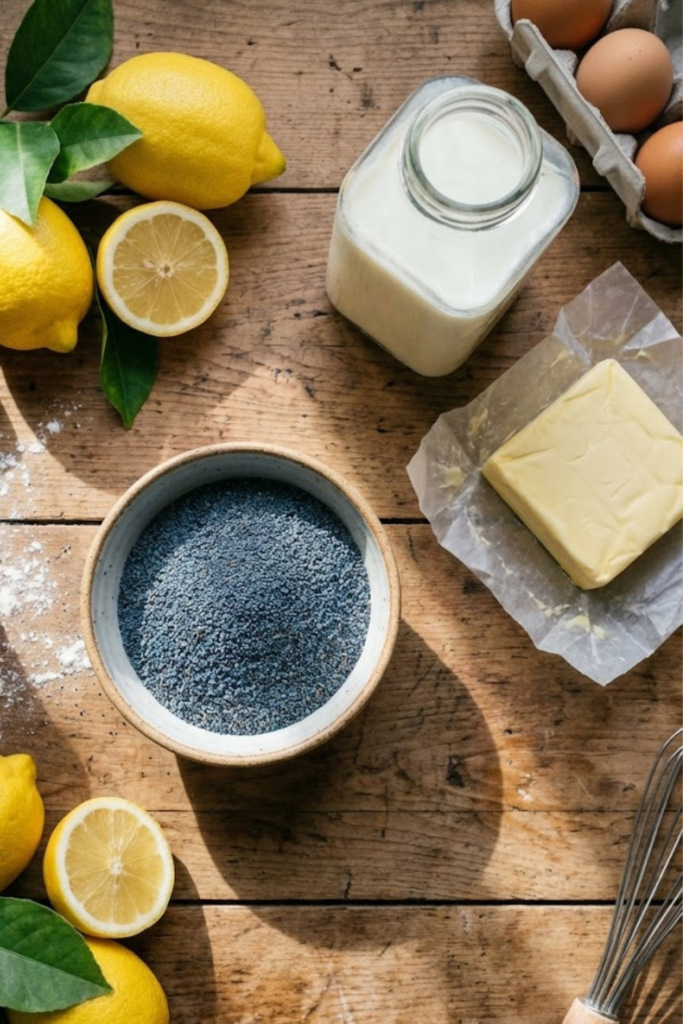
I can’t say this enough: please stay away from that little plastic lemon bottle in the produce section. It might seem easy, but it tastes like chemicals and it will totally ruin your lemon poppy seed layer cake. You need real, fresh lemons. I usually grab about four or five big ones. You’ll need the juice, but the real flavor is in the skin—the zest. When you grate the lemon, make sure you stop when you hit the white part under the yellow skin. That white part is super bitter and gross. Also, try to find lemons that feel heavy for their size because they usually have more juice inside.
Why Buttermilk is a Game Changer
A lot of people ask me if they can just use regular milk. You could, but your cake won’t be as soft. Buttermilk has a little bit of acid in it. This acid works with the baking soda to make the cake rise up nice and tall. It also makes the “crumb” or the inside of the cake really tender. If you don’t have buttermilk, you can make a fake version by putting a tablespoon of lemon juice in a cup of regular milk and letting it sit for five minutes. It’s not quite as good as the real stuff, but it works in a pinch!
Don’t Use Old Poppy Seeds
Poppy seeds have a lot of oil in them, which means they can actually go bad and taste like old cardboard if they sit in your pantry for too long. I always take a little sniff of them before I dump them into my batter. If they smell a bit dusty or sour, throw them away and go buy a new jar. You want that tiny little crunch to be clean and nutty. It makes the lemon poppy seed layer cake look so pretty when you cut into it, like little polka dots everywhere.
The Butter vs Oil Debate
For this specific recipe, I really like using unsalted butter. It gives the cake a rich flavor that oil just can’t match. Make sure you leave it out on the counter for a few hours so it gets soft. If you try to cream cold butter with your sugar, it’s going to be a lumpy mess. I usually get the butter out right when I wake up so it’s ready by the time I’ve had my coffee and I’m ready to bake. Using unsalted butter is also better because you can add your own pinch of salt to the mix, so you know exactly how it’s going to taste. High-quality butter really makes the difference between a “good” cake and a “wow” cake!
The Secret to a Moist and Fluffy Cake Crumb
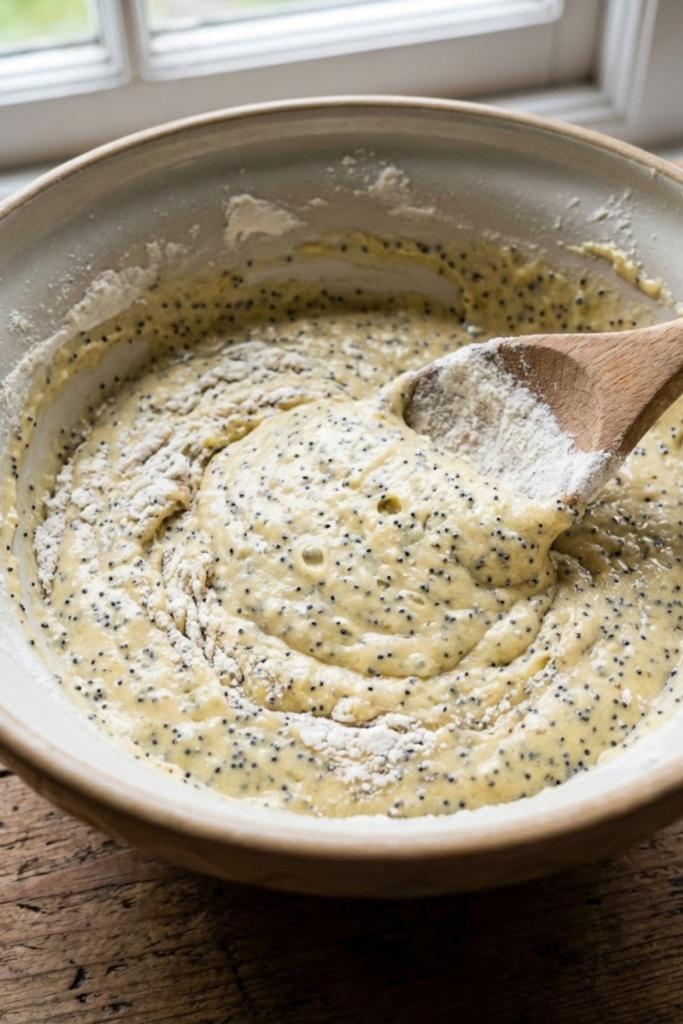
I have a big confession to make: I used to be a chronic over-mixer. I’d stand there with my hand mixer, humming a tune, and just keep going until the batter looked like smooth silk. The result? A lemon poppy seed layer cake that felt more like a bagel than a dessert. It was tough and chewy, and I felt like such a failure the first time I served it to my neighbors. One of the best things I learned is that “less is more” when you add the dry stuff to the wet stuff. You want to fold it in until just combined. If you see a few tiny streaks of flour left, that’s actually okay! It stops the gluten from getting all tough and angry.
Why Over-Mixing is Your Biggest Enemy
Like I said, over-mixing is the fastest way to ruin a good cake. When you mix flour with wet ingredients, gluten starts to form. For bread, you want a lot of gluten so it’s chewy. For a lemon poppy seed layer cake, you want the opposite. You want it to melt in your mouth. I tell my students to put the mixer away and use a rubber spatula for the last part. Just a few gentle folds until the flour disappears. This keeps those little air bubbles inside, which makes the cake rise and stay fluffy. If you use the machine too long, you’ll pop all those bubbles and end up with a flat, heavy cake.
The Magic of Room Temperature Stuff
This is another thing I used to ignore because I’m impatient. When your eggs and buttermilk are cold, they don’t mix right with the creamed butter. The batter ends up looking curdled, which is super annoying. If you’re in a rush, just put your cold eggs in a bowl of warm water for five minutes. It works like a charm! Using room temp ingredients helps the fats and liquids blend together. This means a better bake and a much better texture. It’s a simple step, but it really makes the cake feel professional instead of like a box mix.
Why You Need to Weigh Your Flour
I once measured by “vibes” and ended up with an extra half-cup of flour. It was basically a lemon-flavored rock. Now, I always weigh my flour to exactly 300 grams for this lemon poppy seed layer cake. Scooping flour with a cup often packs it down too much, and that extra flour makes the cake dry. Dry cake is the worst! If you don’t have a scale, at least fluff the flour with a spoon before you scoop it into the cup. It’s a simple trick that makes a huge difference in how moist the cake stays.
Watching the Clock (But Not Too Much)
Getting the bake time right is the final hurdle. Every oven is a little different and can be a bit of a jerk sometimes. I usually start checking my lemon poppy seed layer cake at the 25-minute mark. A toothpick should come out with just a few moist crumbs. If it’s totally clean, you might have gone too long. Trust your nose, too; when you can smell the lemon from the next room, it’s usually close to done. Don’t leave it in there just because the timer hasn’t beeped yet! Take it out and let it cool on a wire rack.
Mastering the Zesty Lemon Buttercream Frosting
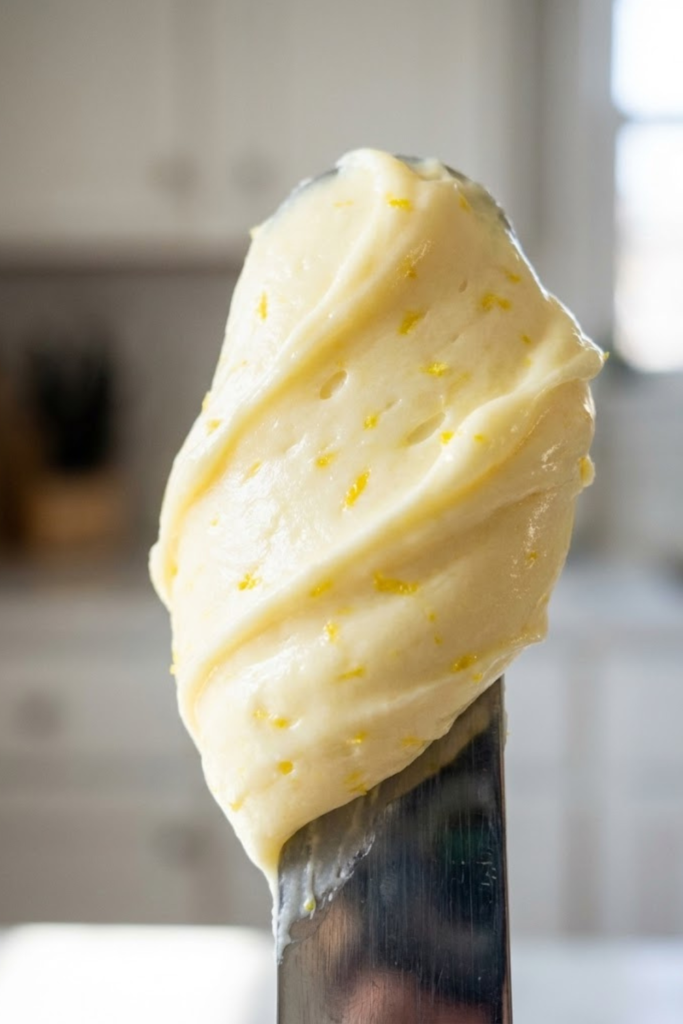
If the cake is the body, then the frosting is definitely the crown. I used to think buttercream was just sugar and butter whipped together until my arm hurt, but there is actually a bit of a trick to it. My first few tries at making frosting for a lemon poppy seed layer cake were pretty bad. One time, it was so runny it just slid right off the sides like a slow-moving yellow waterfall. My kids thought it was funny, but I was so frustrated! I’ve learned that getting the right texture is all about patience and watching your temperatures. You want something that’s stiff enough to hold up those heavy cake layers but soft enough to spread without tearing the cake apart.
The Butter Temperature Rule
The biggest mistake people make is using butter that is too soft. If your kitchen is warm and the butter is almost melting, your frosting will never be fluffy. I like to use butter that is still a little bit cool to the touch. When you press it with your finger, it should leave a mark but not feel oily. If you use butter that’s too cold, you’ll get little yellow chunks in your white frosting, which looks kind of gross. I usually take my butter out of the fridge about 45 minutes before I start. This gives it just enough time to soften up without losing its structure.
Zest Over Juice for Big Flavor
When you want your lemon poppy seed layer cake to taste like real lemons, you have to use the zest. I used to just dump a ton of lemon juice into my powdered sugar, but that makes the frosting get way too thin way too fast. Instead, I rub the lemon zest into the sugar first. This releases all those citrus oils and makes the whole kitchen smell like a dream. Then, I only add a tablespoon or two of juice at the very end. This way, you get that sour punch without making the frosting soupy. It’s a total game-changer for the flavor!
Balancing the Sweetness with Salt
American buttercream can be really, really sweet. Sometimes it’s so sugary it makes your teeth ache! To fix this, I always add a good pinch of fine sea salt. It sounds weird to put salt in frosting, but it actually makes the lemon taste even brighter. It cuts through all that heavy sugar and butter. If your frosting feels too thick, I usually add a splash of heavy cream instead of more juice. The cream makes it super smooth and gives it a professional look that makes everyone think you bought the cake at a fancy bakery down the street.
Fixing a “Broken” Frosting
If you notice your frosting looks curdled or grainy, don’t panic and throw it away! Usually, it just means the butter and the liquid aren’t playing nice together. I just keep the mixer going on medium-high for another three or four minutes. Most of the time, it will suddenly “snap” back together and become smooth again. If it’s too soft, just pop the whole bowl in the fridge for ten minutes and then whip it again. It’s almost always fixable if you stay calm and don’t give up on it!
Assembly and Crumb Coating Tips for Beginners
Okay, so you’ve got your cakes baked and your frosting is ready. Now comes the part that used to make my hands shake: stacking them. I remember the very first time I tried to build a lemon poppy seed layer cake for my sister’s birthday. I just piled the frosting on and stuck the layers together. By the time we got to the party, the top layer had slid halfway off! It looked like a leaning tower of lemon. I felt so embarrassed, but that’s how I learned that you can’t just wing it. Stacking a cake is like building a house; you need a good foundation.
Leveling Your Layers for Stability
One big mistake I made for years was trying to stack cakes that had big domes on top. Cakes naturally puff up in the middle while they bake. If you leave that bump there, your cake will be wobbly and might even crack. I use a long bread knife—the one with the little teeth—to gently saw off the very top of the cake until it’s flat. Don’t throw those scraps away, though! My kids usually hover around the kitchen waiting for the “cake tops” because they’re the best part to snack on. Having flat layers makes the whole process of frosting your lemon poppy seed layer cake much easier.
The Magic of the Crumb Coat
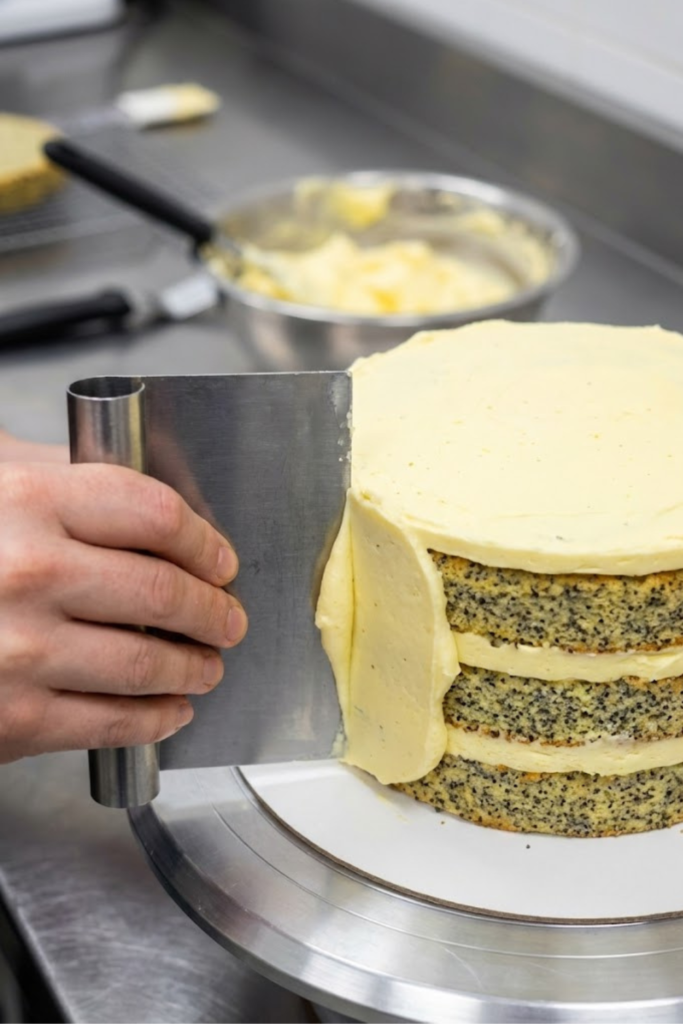
Have you ever seen a cake where the frosting is full of little yellow crumbs? It looks kind of messy, right? Well, the secret to avoiding that is called a crumb coat. It’s basically just a very thin layer of frosting that you spread all over the cake. Think of it like a primer for paint. It traps all those loose poppy seeds and crumbs so they don’t get into your final layer of icing. I usually do this and then put the cake in the fridge for about twenty minutes. This “glue” layer gets firm, and then you can put the real frosting on top without any trouble.
Why the Fridge is Your Best Friend
My kitchen can get pretty warm, especially in the summer. If you notice your frosting is getting a bit soft while you’re working, just stop and put the cake back in the fridge. I used to try to power through it, but that just leads to a messy lemon poppy seed layer cake. Giving the cake a little “time out” in the cold helps everything stay stable. It’s way better to take a break and have a glass of water than to watch your hard work slide onto the counter. Patience is really the main ingredient here.
Simple Decorating Ideas
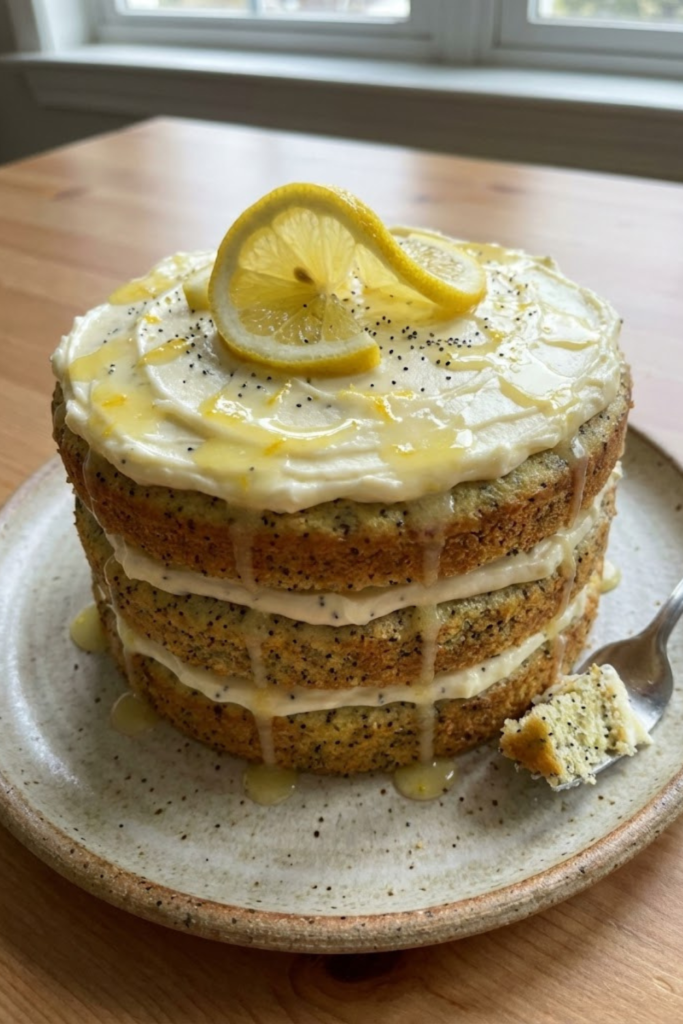
You don’t need fancy piping bags or professional tools to make this look great. I actually like the rustic look. You can just use the back of a spoon to make pretty swirls in the frosting. Sometimes I’ll take a few thin slices of lemon and lay them on top or sprinkle some extra poppy seeds around the bottom edge. It’s simple, it’s clean, and it lets everyone know what flavor they’re about to eat. Your lemon poppy seed layer cake doesn’t have to look like it came from a TV show to be the star of the party!
Well, we’ve finally made it to the end of our baking lesson! I know that making a lemon poppy seed layer cake might seem like a lot of work when you first look at all the different steps. But I really hope you can see now that it’s totally something you can handle in your own kitchen. I’ve spent so many Saturday mornings with flour on my face and lemon zest in my hair, and I promise you, that first bite of a fresh cake is always worth the cleanup. It’s about taking it one step at a time and not rushing the process.
Let’s do a quick recap of the most important bits we covered. First, those fresh lemons are your best friend. Don’t even think about using the bottled juice if you want that real punch! And make sure your poppy seeds are fresh so they don’t taste like old dust from the back of the pantry. We also talked about being very gentle with your batter. Treat it nicely and don’t over-mix it once the flour goes in. Using room-temperature eggs and buttermilk is a small step that makes a huge difference in how the cake feels. If you can, use a kitchen scale to weigh your flour so your cake stays nice and moist instead of turning into a brick.
For that tangy frosting, keep an eye on your butter temperature. If it gets too soft and starts to slide, your fridge is there to help you out. And remember, that tiny pinch of salt in the buttercream really makes the lemon flavor pop! Even if your layers are a little bit crooked or your frosting isn’t as smooth as a magazine photo, don’t sweat it. Baking is about the joy of making something from scratch and sharing it. Your friends and family are going to love it because you made it for them. My own family still laughs about my “leaning” cakes from years ago, but they always finish every single crumb!
I truly hope you feel ready to get your whisk out and start baking. There’s something so calm and happy about the smell of lemons filling up your house on a sunny afternoon. If you found these tips helpful for your next lemon poppy seed layer cake, please do me a big favor and share this on Pinterest! It helps other home bakers find these tricks, and it lets me keep sharing my kitchen stories with you all. I’d love to hear how your cake turns out and if you added any of your own special touches. Happy baking, and enjoy every zesty bite!