I’ll never forget the time I dropped a freshly baked Italian cream sheet cake right onto the kitchen floor—my dog thought it was the best day of his life, but I was absolutely crushed! After wiping up the mess and crying over wasted buttermilk, I vowed to nail this recipe, and folks, I finally did. This isn’t just another dessert; it’s a nutty, coconut-packed hug that totally avoids the headache of stacking wobbly layers. We’re talking plenty of toasted pecans and a tangy cream cheese frosting that’s dangerous enough to eat straight off the spoon. Seriously, don’t skimp on the toast for those nuts. Trust me, once you bring this beauty to a potluck, you aren’t leaving without an empty pan.
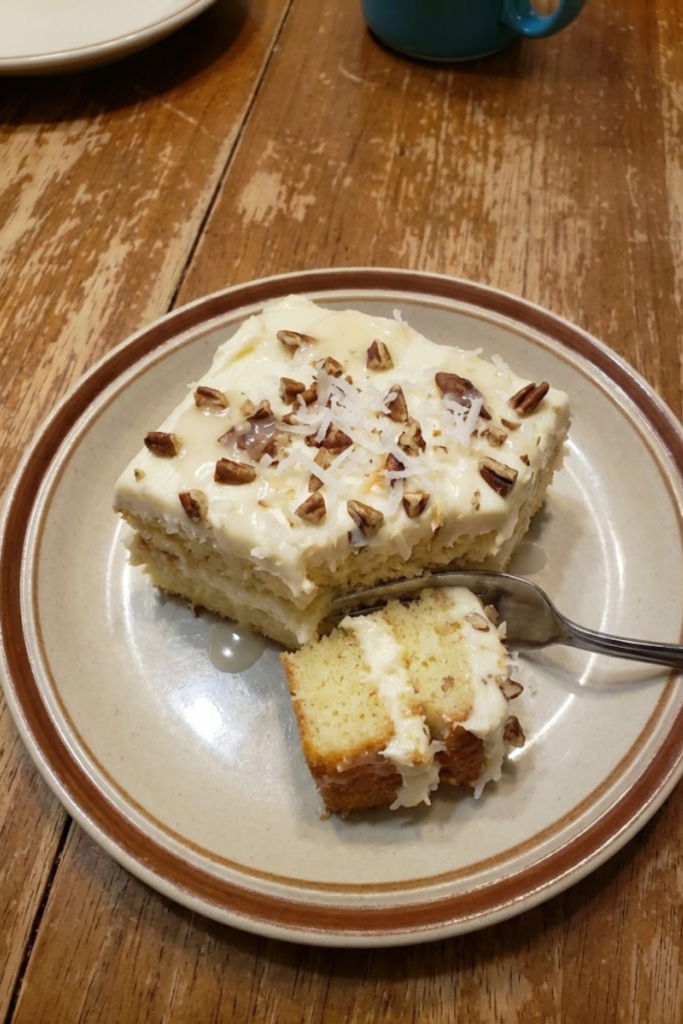
Why This Italian Cream Sheet Cake is the Best You’ll Ever Bake
I have to be honest with y’all—layer cakes are my nemesis. I once spent three hours baking, cooling, and stacking a three-layer beauty for a friend’s birthday, only to watch it slowly slide apart like a delicious Leaning Tower of Pisa in the backseat of my car. I cried. I really did. That’s why this Italian cream sheet cake is my absolute go-to now. It gives you all that fancy flavor without the stress of structural engineering.
It is just so much easier to handle. You literally pour the batter into a pan, bake it, and slather frosting on top. No leveling, no dowels, no prayers required.
Texture That Changes Everything
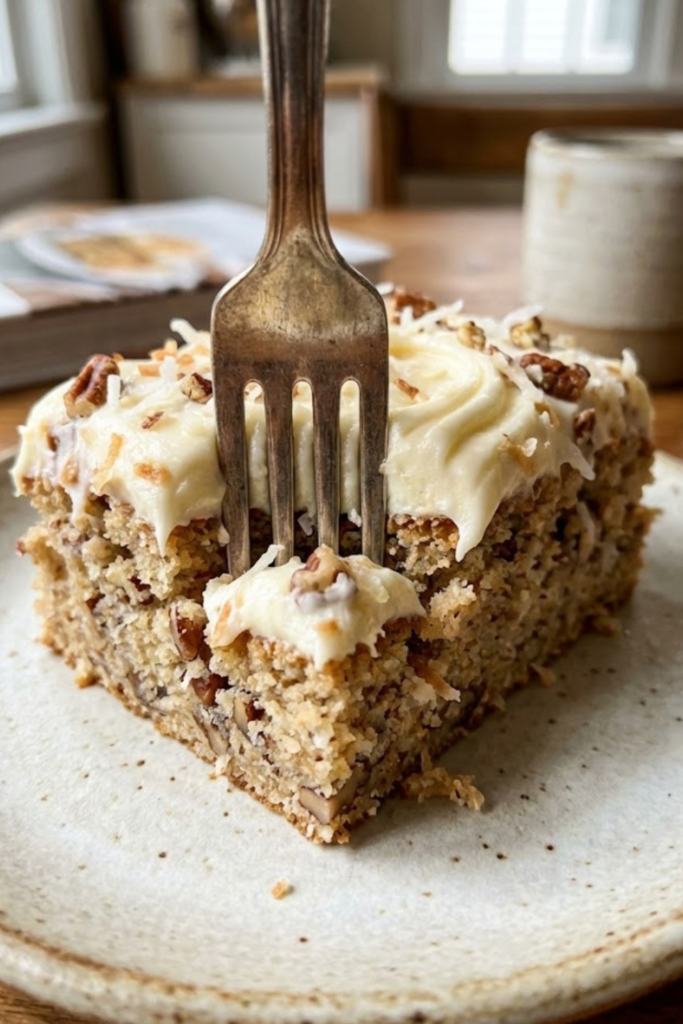
The thing about this cake is the texture. Most sheet cakes are just soft sponges, but this one has personality. The batter is loaded with sweetened shredded coconut and chopped nuts, which gives every bite a little bit of chew and crunch.
I used to think I didn’t like coconut in cake. I was wrong. The secret is that the coconut softens up while baking, becoming part of the moist crumb rather than just stringy bits. And when you pair that with the crunch of toasted pecans, it’s a party in your mouth.
No Dry Cakes Allowed Here
We have all eaten that dry, sad wedding cake that tastes like cardboard, right? This recipe fixes that problem with one superstar ingredient: buttermilk.
The acid in the buttermilk breaks down the gluten, making the cake incredibly tender. I’ve forgotten to buy buttermilk before and tried the milk-and-vinegar hack, but honestly, it’s not the same. Go get the real stuff. The fat content in the buttermilk and the butter guarantees a moist cake recipe that stays fresh for days.
Actually, it might even taste better on day two if it lasts that long.
The Frosting Ratio is Perfection
Here is a controversial opinion: sometimes layer cakes have too much frosting. Yeah, I said it. But with a sheet pan dessert, you get the perfect ratio of cake to frosting in every single slice.
The tangy cream cheese frosting cuts right through the sweetness of the sugar and the richness of the nuts. I’ve learned the hard way that you must let the cake cool completely before frosting it. I was impatient once and ended up with a soup of melted cream cheese sliding off the edges. It was tragic, but still tasty.
Perfect for Transporting
If you are the person who always brings dessert to the family reunion, this is a lifesaver. You can just leave it in the pan!
No need to worry about a cake carrier or sliding layers. Just cover the pan with foil (use toothpicks so the frosting doesn’t stick) and you are good to go. It travels like a champ. Plus, cutting squares is way easier than trying to slice perfect wedges from a round cake.
Essential Ingredients for a Moist Crumb
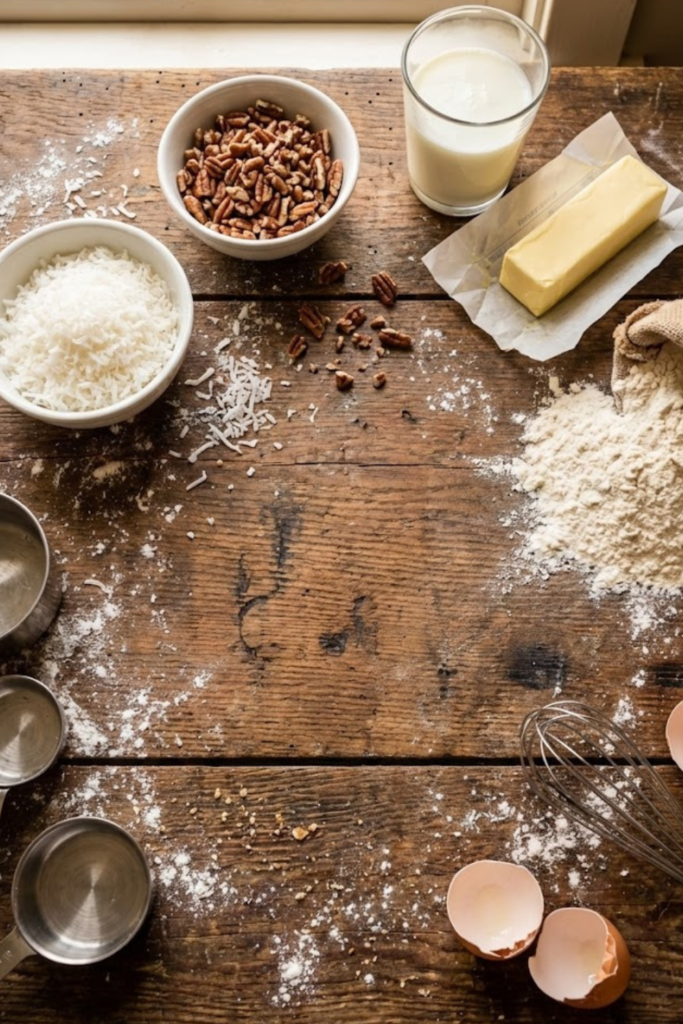
I used to think baking was just throwing stuff in a bowl and hoping for the best. Big mistake. I remember one specific disaster where I tried to substitute regular milk for buttermilk because I didn’t feel like running to the store. The cake came out flat and tasted weirdly like a biscuit. I learned my lesson that day: specific ingredients exist for a reason, especially with this Italian cream sheet cake.
If you want that melt-in-your-mouth texture, you have to pay attention to the details. It’s not hard, but it matters.
The Real MVP: Buttermilk
I cannot stress this enough—do not skip the buttermilk. It is the secret weapon for a tender crumb. The acid in the buttermilk reacts with the baking soda, which gives the cake its lift and fluffiness.
If you don’t have any, you can make a substitute with milk and vinegar, but honestly? The real stuff is thicker and richer. It adds a tang that balances the sugar perfectly. I always buy the full-fat version because, let’s be real, we aren’t eating cake to be healthy.
Butter vs. Shortening: The Great Debate
Okay, here is where I might lose some baking purists. I use a mix of unsalted butter and vegetable shortening. I know, I know—shortening gets a bad rap.
But hear me out. Butter gives you that incredible flavor we all love. Shortening, however, traps air bubbles better than butter does, which means a higher rise and a lighter texture. I’ve tried using all butter, and while it tasted good, the cake was a bit heavy. The combo is the sweet spot. Just make sure your butter is at room temperature so it creams properly; cold butter is a nightmare to mix.
The Crunch Factor: Pecans and Coconut
You need sweetened shredded coconut for this recipe. Unsweetened just ends up tasting like dry grass, and we don’t want that. The sugar in the coconut helps keep the cake moist as it bakes.
Then there are the nuts. Please, I am begging you, toast your pecans. I skipped this step for years thinking it didn’t matter. Then I accidentally toasted some for a salad and threw the extras in a batter. My mind was blown.
Toasting them releases the oils and makes them crunchier and nuttier. Just throw them in a dry pan for 5 minutes until you smell them. Don’t walk away, though—I have burned more nuts than I care to admit because I got distracted by my phone.
The Egg Situation
Traditionally, Italian cream cakes ask you to separate the eggs and fold in the stiff whites at the end. It makes the cake super light, like an angel food cake hybrid.
But sometimes? I just don’t have the energy for three extra bowls. I have found that for a sheet cake, you can often get away with adding whole eggs if you beat the batter really well. However, if you want to impress your mother-in-law, separate them. The extra effort does give it that “bakery quality” fluffiness.
Step-by-Step: Mixing and Baking Your Sheet Cake
I used to think that “mixing” just meant stirring until the white powder disappeared. Boy, was I wrong. I remember the first time I made an Italian cream cake; I just dumped everything into the bowl at once like I was making a boxed brownie mix. The result? A dense, rubbery brick that my kids refused to eat. It was humiliating.
Baking this Italian cream sheet cake isn’t rocket science, but the order you put things in actually matters. You have to be patient, or you’ll end up with a sad cake.
The Creaming Phase is Non-Negotiable
First off, grab your mixer. You need to beat the butter, shortening, and sugar until it looks pale and fluffy. I’m talking about letting that mixer run for a good 4 to 5 minutes.+1
I once burned out the motor on my cheap hand mixer because I was trying to rush this part with cold butter. Don’t do that. Make sure your fats are at room temperature so they blend easily. This step forces air into the batter, which is what gives you that light lift later on. If you skip this, your cake will be heavy, and nobody wants that.
Alternating is Key
Here is the part where I always used to mess up. You have to alternate adding the dry ingredients and the buttermilk.
Start with the flour, then add some milk, then flour, then milk. I usually do it in three batches. Why? If you dump all the liquid in at once, the batter can separate and look curdy. If you dump all the flour in, you get a giant cloud of dust in your face—happened to me last Thanksgiving, and I looked like a ghost.
Also, mix on low speed just until the flour disappears. Overmixing develops gluten, and we are making cake, not bread.
Prep That Pan Correctly
Since we are making a sheet cake, you need a standard jelly roll pan (usually 10×15 inches). Please, for the love of baking, grease it well.
I like to use a baking spray that has flour in it, or you can go old school with butter and a dusting of flour. There is nothing more heartbreaking than baking a perfect cake and then having half of it stick to the pan when you try to serve it. It makes you want to scream.
The Bake and The Check
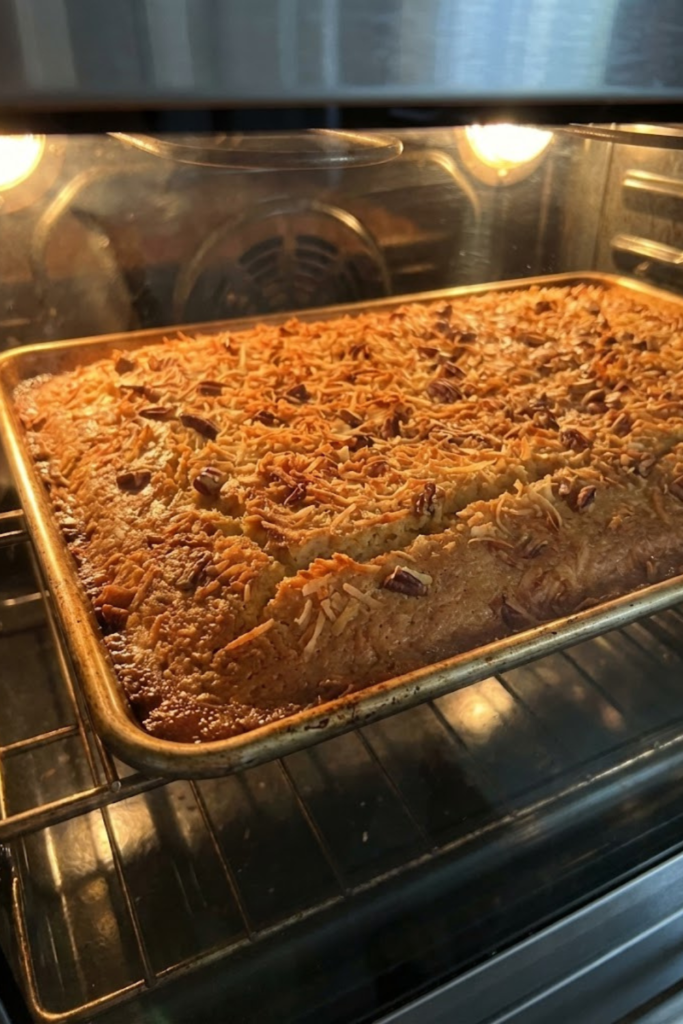
Slide that pan into the oven. The smell of toasting pecans and coconut will fill your kitchen in about ten minutes, and it is heavenly.
Keep an eye on it around the 20-minute mark. Ovens are liars; mine runs hot, so I always check early. You are looking for a nice golden brown color. The real test is the toothpick test—stick it in the center. If it comes out with wet batter, give it more time. If it has a few moist crumbs, pull it out immediately! It will finish cooking slightly on the cooling rack.
Mastering the Cream Cheese Frosting
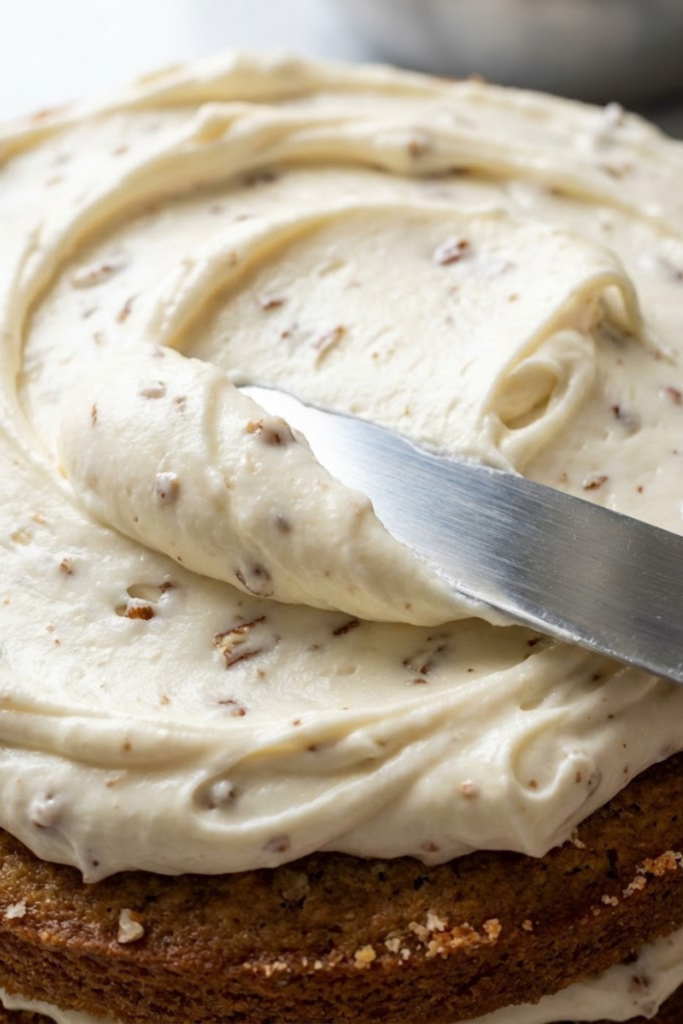
Let’s be real for a second: the cake is just a vehicle for the frosting. I have definitely been caught standing in my kitchen, eating this cream cheese frosting straight out of the mixing bowl with a spatula. No shame. But getting that frosting to be silky smooth instead of a lumpy mess took me years of trial and error. I remember one Thanksgiving where I tried to rush the process, and my frosting looked more like cottage cheese than a smooth topping. My aunt asked if it was “textured on purpose.” I wanted to crawl under the table.
Making the perfect frosting is easy, but you have to follow a few rules, or it will turn into a disaster.
Temperature is Everything
This is the hill I will die on. Your butter and cream cheese must be at room temperature. Not “I microwaved it for 10 seconds” soft, but genuinely sitting on the counter for a couple of hours soft.
If the cream cheese is too cold, you will get tiny little lumps that refuse to blend out no matter how long you beat it. On the flip side, if you get impatient and melt the butter in the microwave (we have all done it), your frosting will be a runny soup that won’t hold its shape. You want it soft enough to leave a thumbprint in, but not greasy.
The Sifting Struggle
I hate sifting. It’s messy, and powdered sugar gets all over my black leggings every single time. But for a truly smooth frosting, you have to sift the powdered sugar.
If you skip this, you’ll end up with little balls of sugar that clog up your piping bag or crunch when you eat them. That is not the vibe we are going for. I usually toss the sugar through a fine-mesh strainer right over the bowl. It takes two minutes, and it makes a huge difference in the final texture.
Don’t Overbeat It
Once you add the sugar to the creamed butter and cheese mixture, slow down. I used to crank my mixer up to high thinking it would make it fluffier.
Actually, overbeating cream cheese can break down its structure and make it runny. It’s weird science, but it happens. Mix just until the sugar is incorporated and the frosting is creamy. Also, throw in a pinch of salt and a generous splash of vanilla extract. The salt cuts through that intense sweetness so your teeth don’t hurt after one bite.
The Waiting Game
Here is the hardest part of the entire recipe. You have to wait for the cake to cool completely before you frost it.
I learned this the hard way when I was running late for a party. I slapped the frosting onto a warm cake. Within five minutes, the butter in the frosting melted, and the whole topping slid off the side of the cake like a landslide. It was tragic. Put the pan on a wire rack and walk away. Go fold laundry or watch an episode of your favorite show. Touch the center of the cake with the back of your hand; if it feels even slightly warm, do not touch that frosting bowl.
Storage, Freezing, and Serving Tips
There is nothing worse than going to grab a slice of leftover cake only to find it stale or tasting like the onions you have in the fridge. I have committed many crimes against leftover desserts in my time, mostly because I was too lazy to wrap them up properly. But this Italian cream sheet cake deserves better. Because of that rich cream cheese frosting, you can’t just leave it on the counter for days like a standard brownie.
The Fridge Rule
Here is the deal: cream cheese is dairy, and dairy goes bad. You need to store this cake in the refrigerator. I know, I know—cold cake can taste a bit solid.
But if you leave it out in a warm kitchen, the frosting can spoil. I usually cover the pan tightly with plastic wrap or transfer slices to an airtight container. It will stay fresh in the fridge for about 5 days. Though, let’s be honest, it never lasts that long in my house. My teenagers act like they have never seen food before.
Freezing for Later
Did you know you can freeze this cake? It is a total game-changer. I like to cut the leftovers into squares and wrap them individually in plastic wrap, then shove them into a freezer bag.
It keeps for up to 3 months! I once found a slice in the back of my freezer from Easter when it was already July. I let it thaw on the counter for an hour, and it tasted just as fresh as the day I baked it. It was like finding a twenty-dollar bill in an old coat pocket.
Serving it Right
If you serve this cake straight from the fridge, it will be dense. The butter in the cake solidifies when cold.
For the absolute best experience, pull the cake out of the fridge about 20 to 30 minutes before you want to eat it. This lets the crumb soften up and the frosting get creamy again. I love serving it with a hot cup of black coffee to cut the sweetness. Or, if you are feeling wild, add a scoop of vanilla bean ice cream. But honestly? It’s rich enough on its own.
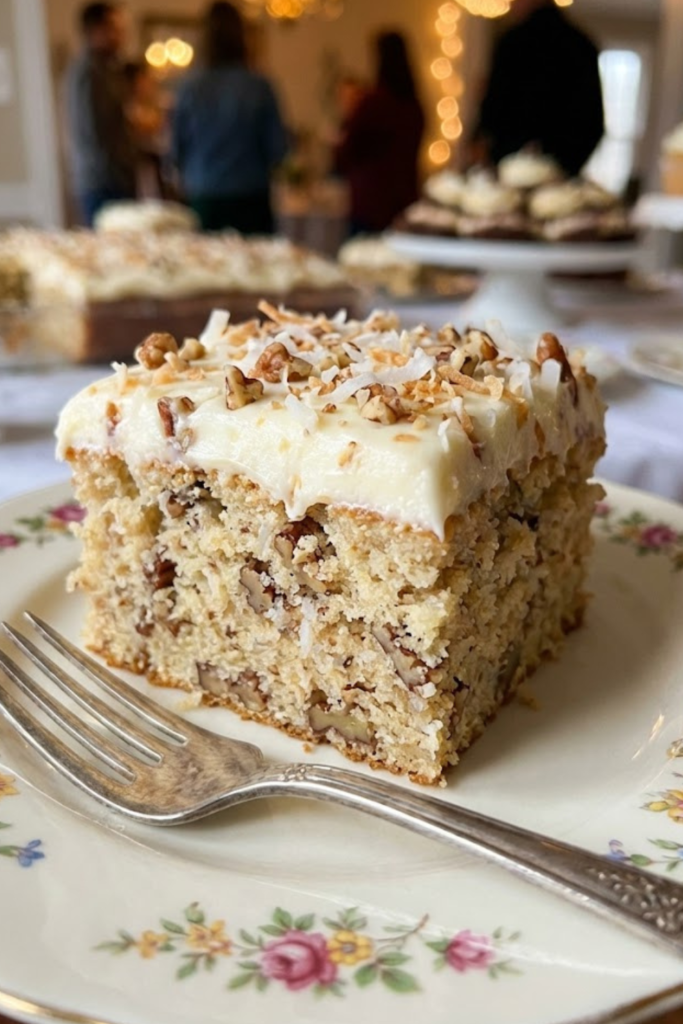
So there you have it—the Italian cream sheet cake that finally made me stop dreading baking for a crowd. It’s got that perfect mix of crunchy toasted pecans, sweet coconut, and tangy frosting without the nightmare of stacking layers. I’m telling you, this recipe is a keeper. It’s messy, it’s sweet, and it’s exactly the kind of comfort food we all need right now.
Give this recipe a shot this weekend. Even if you mess up and burn the nuts once (it happens to the best of us), the result is worth it. Ready to be the star of your next potluck? Bake this today and don’t forget to pin this recipe to your Dessert board on Pinterest!