I honestly think I’ve spent half my life standing over a smoky grill, and let me tell you, nothing beats the smell of fresh herbs hitting hot coals! Did you know that chicken is still the most consumed protein in the world as of 2026? It’s a staple for a reason, but it is so easy to dry it out until it feels like you’re chewing on a shoe.
I used to be terrible at this, honestly. I’d char the outside and leave the middle raw, or worse, serve up bland, flavorless meat that needed a gallon of sauce to be edible. But once I figured out the magic of Grilled Chicken Skewers with Lemon and Oregano, everything changed. It’s all about that bright, zesty citrus and the earthy punch of oregano. This recipe is a total game-changer for your backyard cookouts!

Selecting the Best Chicken Cuts for Juicy Skewers
Picking the right meat is the first big step for making great Grilled Chicken Skewers with Lemon and Oregano. If you start with the wrong stuff, no amount of lemon or spices will fix it. I’ve spent years trying different parts of the chicken in my kitchen, and I’ve finally figured out what works best. Most people just grab whatever package is on sale, but if you want that juicy bite every time, you have to be a bit pickier. It’s like choosing the right paper for a drawing; the base matters!
Why I Always Go for Thighs
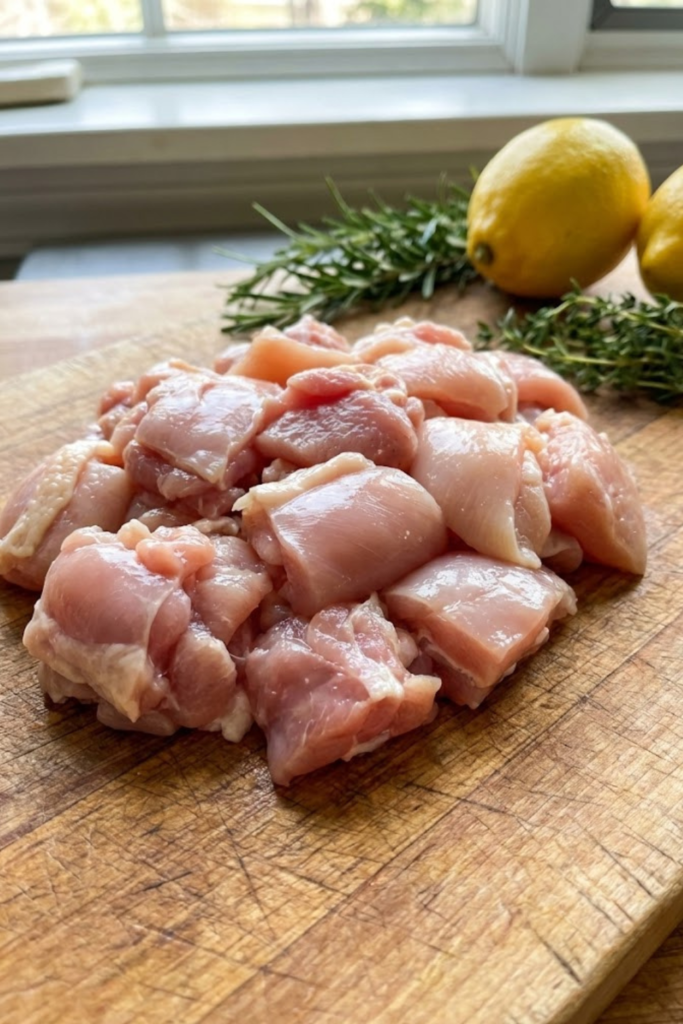
In my opinion, boneless, skinless chicken thighs are the MVP for any grill master. I tell my students all the time that fat is your friend on the BBQ. Thighs have a little more dark meat and fat than other parts. This is great because it keeps the meat from drying out when the grill gets really hot. Even if you get distracted for a minute talking to a neighbor, the thighs stay moist. They also soak up the lemon and oregano flavors much better than white meat. Just trim off any big chunks of hanging fat, and you are good to go.
The Trick with Chicken Breasts
I know a lot of folks like chicken breasts because they are healthy and lean. You can definitely use them for Grilled Chicken Skewers with Lemon and Oregano, but you have to be careful. Since they don’t have much fat, they can turn into dry cardboard really fast. To keep them juicy, make sure you don’t cut the pieces too small. You want big, 1-inch cubes. If they are tiny, the middle will be done way before you get those nice charred marks on the outside. Try to keep all the pieces the same size so they cook evenly.
What to Look for at the Store
When you are picking out your chicken, look at the color first. You want a soft pink color. If the meat looks a bit grey or yellow, it’s probably been sitting there too long. Also, look at the bottom of the package. If there is a ton of liquid, the meat might be a bit old or was frozen and thawed. I always try to find the “plumpest” looking cuts. Firm meat is fresh meat. If it feels mushy, it won’t have a good texture after it’s cooked. Taking an extra minute to check the dates and the color will make your skewers taste way better!
Crafting the Perfect Lemon and Oregano Marinade
Making the right soak for your Grilled Chicken Skewers with Lemon and Oregano is really the part that makes or breaks the whole meal. I’ve been teaching folks how to cook for a long time now, and the one thing I see people mess up the most is the marinade. I remember one time I was in a huge rush for a family BBQ and I just dumped a whole bottle of lemon juice over my chicken and let it sit all day. Man, that was a huge mistake! The chicken came out with a texture like wet chalk because the acid was way too strong. Now, I always tell my students to respect the lemon—it’s powerful stuff!
The Secret Ratio for Success
You really gotta find that sweet spot between the oil and the lemon juice. If you use too much lemon, the meat gets weird and soft in a way that isn’t very tasty. If you use too much oil, the flavor just slides right off and the chicken tastes greasy. I usually go with a ratio of about three parts oil to one part lemon juice. This mix keeps the meat happy and juicy. I like to use extra virgin olive oil because it has a bit of a peppery taste that works great with the chicken. Don’t worry about being too perfect with your measuring, just eyeball it until it looks like a nice, thick salad dressing.
Getting the Best from Your Oregano
Oregano is really the star of the show here. If you have a garden, go grab some fresh stuff! It smells like heaven when you chop it up. But if you’re like me and sometimes forget to water the plants, dried oregano from a jar works just fine too. One trick I learned from an old friend is to rub the dried herbs between your palms before you put them in the bowl. It “wakes up” the herbs and releases the oils so the smell gets way stronger. It’s a small thing, but it really makes the flavors pop once the meat hits the heat.
Garlic and Salt Tips
When it comes to the garlic, don’t just chop it into tiny bits. I like to take the flat side of my big kitchen knife and give the cloves a good whack to smash them. This lets all the garlic juice mix into the oil without the little pieces burning on the grill later. And please, don’t be afraid to use salt! Chicken is a bit of a blank canvas, and it needs a good amount of salt to make that lemon zing really stand out. Just throw everything into a big plastic bag with your chicken cubes and give it a good squish. I usually let it sit in the fridge for about two hours. That’s just enough time for the flavor to get deep inside without ruining the meat.

Pro Skewering Techniques and Grilling Gear
Getting your chicken onto the sticks might seem like the easiest part of making Grilled Chicken Skewers with Lemon and Oregano, but honestly, this is where a lot of my students get frustrated. I remember one time I was trying to teach a class, and half the students had their meat sliding around like a slip-and-slide. It was a mess! You really have to know which tools to use and how to stack the meat so it doesn’t just spin around when you try to flip it. If you do it wrong, you just end up with one side burnt and the other side totally raw.
Metal vs. Wood: Which One is Better?
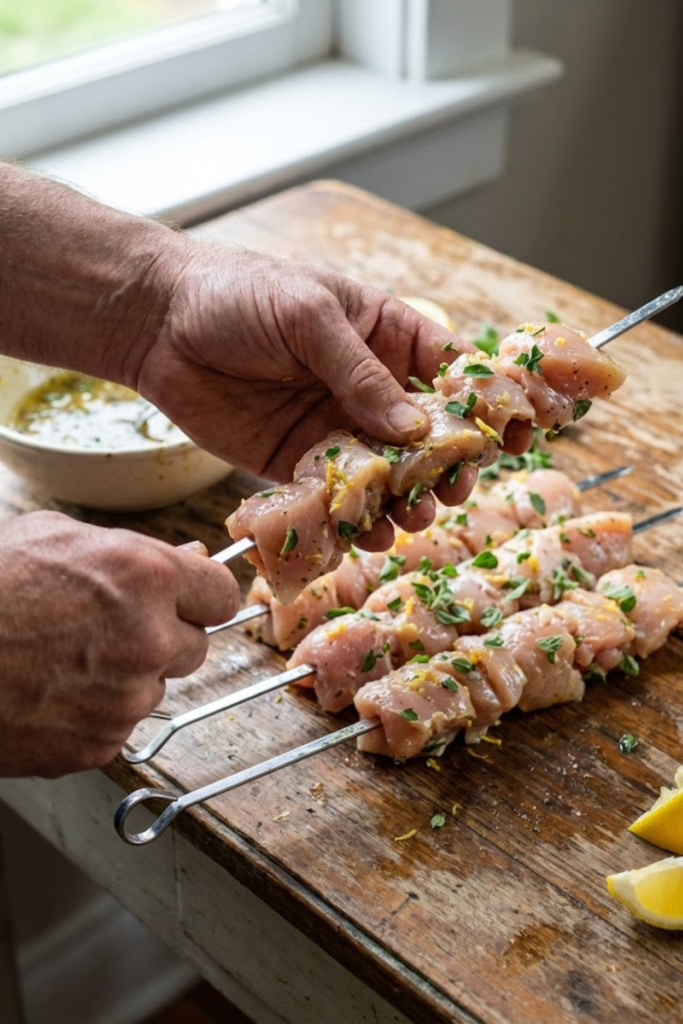
I get asked this all the time: “Should I buy the fancy metal ones or just use the cheap wood sticks?” To be honest, both work fine, but they have different rules. If you use wood or bamboo sticks, you have to soak them in water for at least 30 minutes before you use them. If you don’t, they will catch on fire and turn to ash before your chicken is even warm. I’ve seen it happen a dozen times! Metal skewers are great because they get hot in the middle and help cook the meat from the inside out. Plus, you can just wash them and use them again, so you aren’t throwing money away every time you have a BBQ.
Don’t Crowd the Stick
The biggest mistake I see folks make is packing the chicken too tight on the skewer. I know you want to fit as much meat as possible on there, but if you smash the pieces together, the heat can’t get between them. You’ll end up with burnt outsides and raw insides. I always tell people to leave just a tiny bit of space—maybe a finger’s width—between each piece of chicken. This lets the hot air move around and gives you those nice crispy edges that everybody loves. Think of it like a crowded elevator; nobody is comfortable if you’re too close to each other!
Getting the Grill Ready
Before you even think about putting your Grilled Chicken Skewers with Lemon and Oregano on the heat, you have to make sure your grill is clean and hot. I always use a wire brush to scrub the grates while they are warming up. If you put meat on a cold, dirty grill, it’s going to stick, and you’ll end up leaving half your dinner on the metal bars. I usually rub a little oil on the grates using a paper towel and some tongs right before I put the skewers down. It makes a world of difference. Your chicken should sizzle the second it touches the grill. If it doesn’t, it just isn’t hot enough yet!
Mastering Heat and Timing
Grilling can be a little scary because things happen so fast once the fire is going. I remember when I first started, I would just crank the heat up and hope for the best. I’d end up with chicken that looked great on the outside but was still basically raw in the middle. It’s a common mistake, and honestly, I still do it sometimes if I’m not paying attention. Getting your Grilled Chicken Skewers with Lemon and Oregano just right is all about controlling that heat so the outside gets crispy while the inside stays soft and juicy.
The Two-Zone Grilling Trick
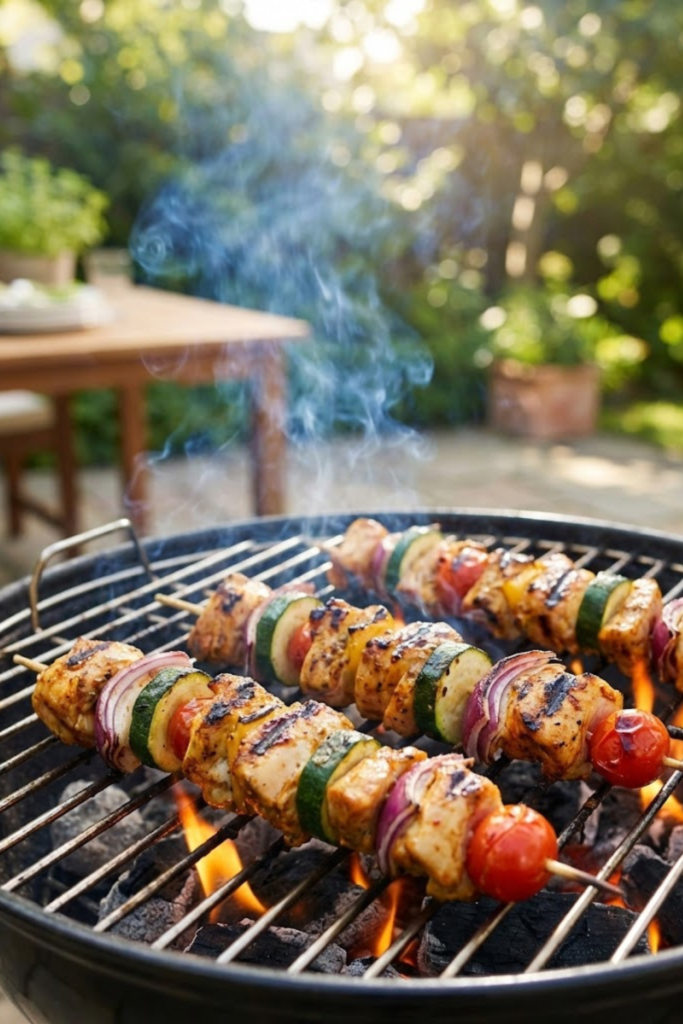
One of the best things I ever learned was the “two-zone” method. Basically, you want one side of your grill to be really hot and the other side to be much cooler. On a gas grill, you just turn off half the burners. On charcoal, you push the hot coals to one side. I start my skewers on the hot side to get those pretty grill marks and a bit of char on the lemon and oregano. But you can’t leave them there too long or the herbs will burn and taste bitter! Once they look good, move them over to the cool side. This lets the chicken finish cooking without burning the surface.
Why 165 Degrees is the Magic Number
If you want to stop guessing if your chicken is done, you need a digital meat thermometer. I used to try the “finger poke” test, but I was always wrong. Now, I just poke the thermometer into the thickest part of the meat. You are looking for 165°F (74°C). This is the safe number that keeps you from getting sick but keeps the meat from turning into a dry brick. If you go much higher than 170°F, you might as well be eating a paper towel. It only takes a second to check, and it saves you from serving a bad dinner.
Give Your Chicken a Little Nap
This is the hardest part for me because I’m usually starving by the time the food is done. But you have to let those skewers rest for at least five minutes after you take them off the grill. When meat is hot, all the juices are running around and trying to escape. If you bite into it right away, the juice just runs out on your plate. If you let it sit for a bit, the juices settle back into the meat. I usually just throw a piece of foil over the plate while I get the salad and pita bread ready. Trust me, that five-minute wait makes the chicken way more tender.
Wrapping Up Your Grilling Adventure
I really hope this guide helps you feel more confident the next time you fire up the grill for some Grilled Chicken Skewers with Lemon and Oregano. It took me a long time to figure out these little tricks, and honestly, I probably burnt enough chicken to feed a small army before I got it right. But that’s the beauty of cooking! You learn as you go. When you finally pull those skewers off the heat and see everyone reaching for seconds, all the prep work and the smoke in your eyes feels totally worth it.
Why These Tips Matter
If you take away anything from our chat today, remember that the best food starts with how you treat the ingredients. Whether you chose the juicy chicken thighs or the lean breasts, giving them that 3-to-1 marinade bath is what makes the magic happen. I’ve seen so many people skip the resting phase or crowd their skewers, and it breaks my heart because they are so close to a perfect meal! By giving your chicken a little space on the stick and letting it “nap” for five minutes after grilling, you are making sure every single bite is as good as it can be. It’s those small steps that turn a regular Tuesday night dinner into something people talk about all week.
What to Serve on the Side
Whenever I make these for my family, I like to keep the sides pretty simple so the lemon and oregano can really shine. A big bowl of yellow rice or some warm, fluffy pita bread is always a hit. I also love to whip up a quick cucumber and yogurt sauce—you know, like a tzatziki—to dip the chicken in. The cool yogurt goes so well with the charred bits of chicken. Sometimes I’ll even throw some extra veggies like bell peppers or onions on their own skewers and grill them right alongside the meat. It makes the whole plate look like a rainbow, and it’s a great way to get the kids to eat their greens without a fuss.
Share the Grilling Love
I am so glad I got to share these stories and tips with you. Cooking is all about sharing, after all! If you decided to try this recipe and your family loved it, please do me a huge favor. Please share it on Pinterest so other home cooks can find these tips and avoid the “rubbery chicken” disaster I went through years ago! Seeing people share my recipes really makes my day and keeps me motivated to keep teaching. Now, grab your tongs, get outside, and show that grill who’s boss. I can’t wait to hear how your Grilled Chicken Skewers with Lemon and Oregano turned out!