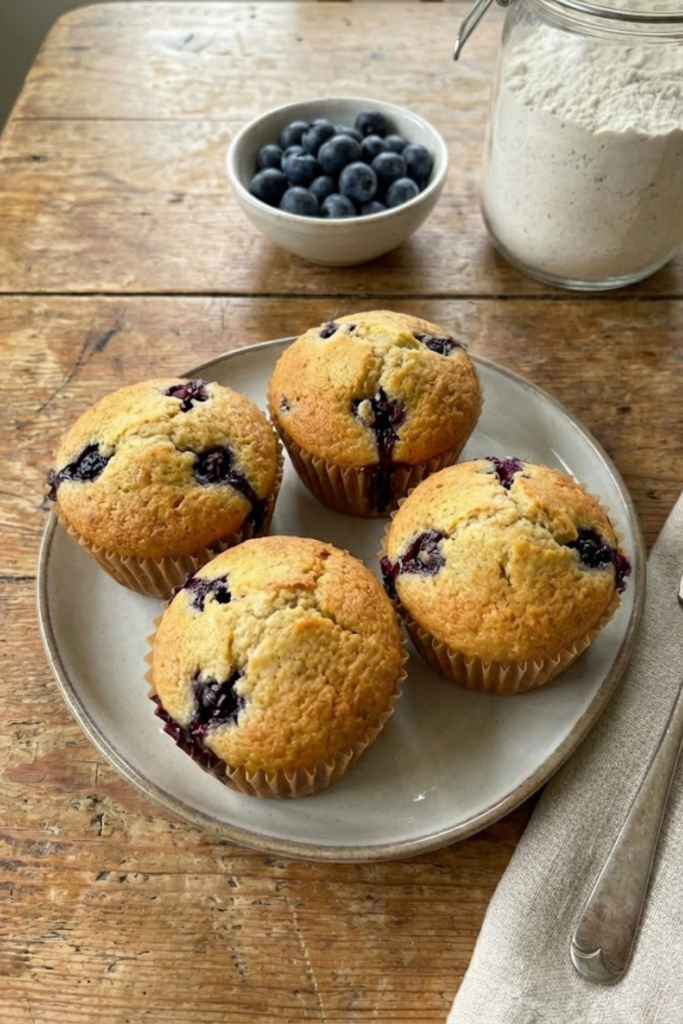
I used to think “gluten-free” meant “flavor-free.” Boy, was I wrong! After baking about a dozen batches that turned into hockey pucks, I finally cracked the code. These gluten free blueberry muffins are tall, tender, and absolutely packed with fruit. Did you know that over 30% of families are now trying to reduce gluten in their diets? You are definitely not alone in this journey! I’m going to walk you through exactly how to get that perfect “muffin top” without the wheat. Trust me, your kitchen is about to smell amazing. Let’s get baking!
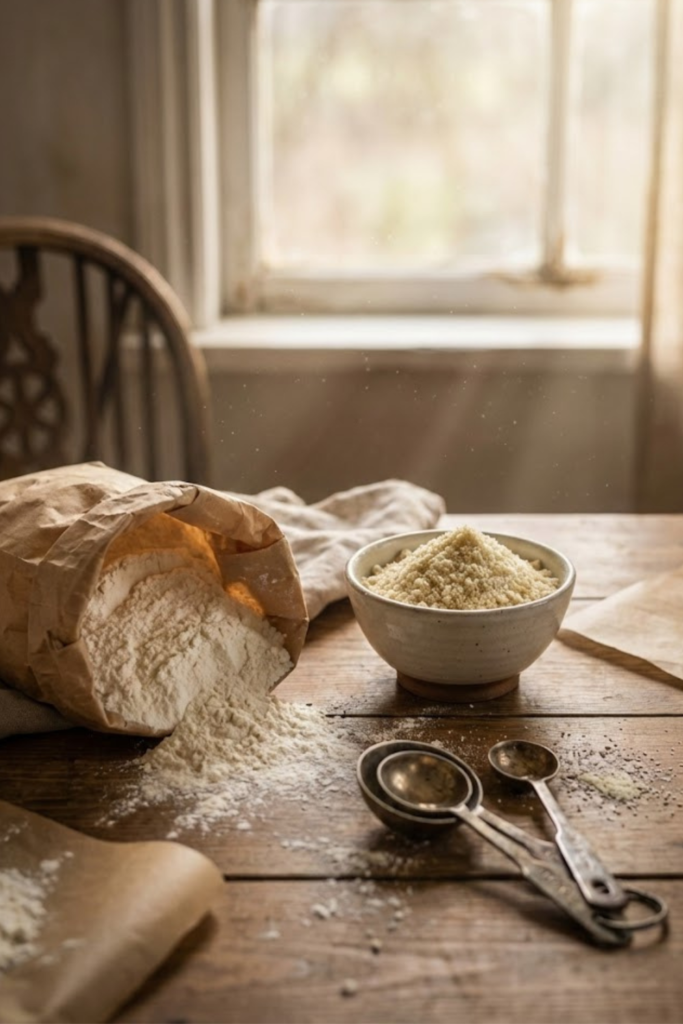
Choosing the Right Gluten Free Flour Blend
I remember the first time I tried to bake without wheat. I stood in the grocery store aisle, staring at about fifty different bags of white powder, feeling totally lost. I eventually grabbed a bag of pure rice flour, went home, and tried to make gluten free blueberry muffins for my family. Let me tell you, it was a total flop.
The muffins came out hard as rocks and tasted gritty, like I was eating sweetened sand. I actually cried a little bit because those ingredients aren’t cheap! But over the years, I’ve learned that gluten-free baking is more like a science experiment than regular baking. You can’t just swap one flour for another and hope for the best.
Understanding the 1:1 Mix
Here is the biggest lesson I learned: you need a blend. A single type of gluten-free flour just can’t do the same job as wheat flour. Wheat has protein and starch naturally balanced.
When you bake gluten-free, you have to recreate that balance yourself.
I highly recommend starting with a high-quality “1:1” or “measure for measure” baking blend. These blends usually contain rice flour, potato starch, and tapioca flour. They are designed to mimic the texture of all-purpose flour. Using a pre-made blend saves you from having to buy five different bags of starch just to make breakfast. It’s a serious game changer for your sanity.
The Secret Ingredient: Xanthan Gum
If you look at the back of your flour bag, check for an ingredient called Xanthan gum. It sounds like something from a chemistry lab, I know. But it is absolutely essential.
Gluten is what makes dough stretchy and holds it together. Without it, your muffins will crumble into a sad pile of crumbs the second you bite into them. Xanthan gum acts as the “glue” that replaces the gluten.
If your flour blend doesn’t have it listed, you need to buy a small bag and add about 1/4 teaspoon per cup of flour. I learned this the hard way after a batch of cookies fell apart in my hands.
Almond Flour for Texture
One trick I’ve picked up is swapping out a tiny bit of the all-purpose blend for almond flour. Just a quarter cup makes a huge difference.
Gluten-free flour can sometimes be a bit dry or “squeaky” on your teeth. Almond flour adds natural fats and moisture. It helps give the muffin that tender, soft crumb that we all miss from bakery treats. Just be careful if you are baking for school, as many places are nut-free zones.
Stop Scooping Your Flour!
This is the mistake I see most people make. When I was younger, I used to take my measuring cup, jam it into the bag, and scoop up a mountain of flour.
Do not do this!
When you scoop, you pack the flour down. You might end up with 20% more flour than the recipe calls for. In gluten free baking, too much flour equals dry, heavy bricks.
Instead, use the “spoon and level” method. Use a spoon to fluff up the flour in the bag first. Then, gently spoon it into your measuring cup until it’s overflowing. Finally, use the back of a knife to scrape off the excess.
It feels a bit tedious at first, but it makes your baking consistent. I want you to have fluffy muffins every single time, not just when you get lucky. Trust me, getting the flour right is half the battle won.
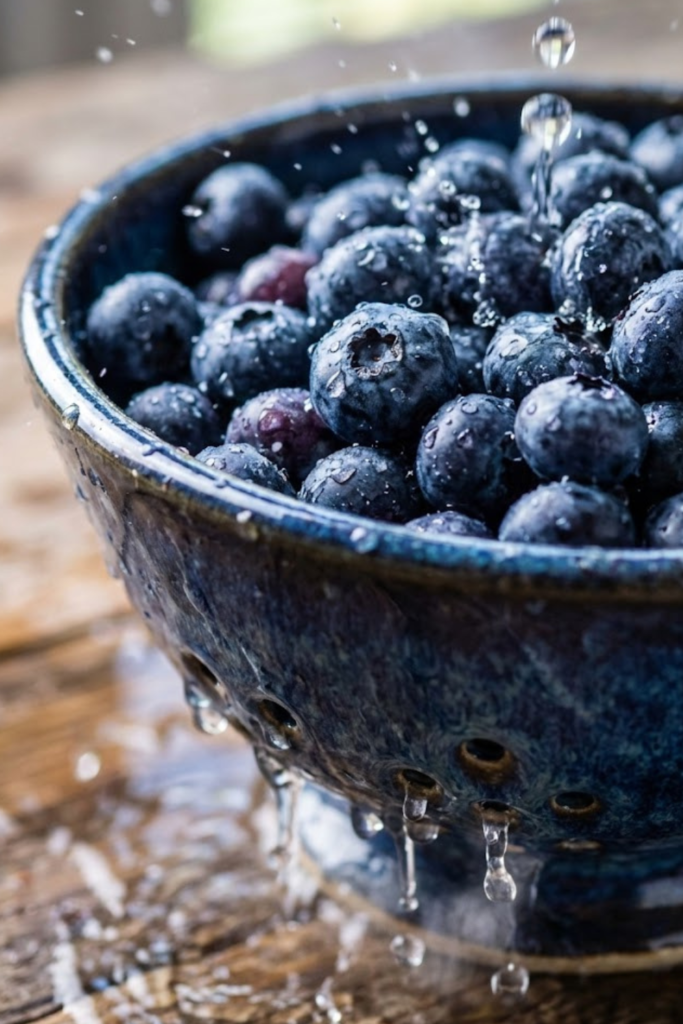
Preparing Your Fresh or Frozen Blueberries
I have to confess something slightly embarrassing. The first time I baked muffins for a church potluck, they looked absolutely beautiful from the outside. But when people bit into them, there wasn’t a single berry until the very bottom.
It was just a mouthful of plain cake followed by a soggy layer of fruit sludge at the base. I was mortified. The fruit had sunk like stones. Since then, I’ve learned a few tricks to make sure every bite of my gluten free blueberry muffins is perfect.
Fresh vs. Frozen: The Great Debate
People always ask me which is better. Honestly? It depends on your budget and the season. Fresh berries are amazing when they are in season, but they can cost a fortune in December.
Frozen berries are a fantastic, budget-friendly alternative. However, there is one golden rule: do not thaw them.
If you let frozen berries thaw, they release a ton of juice. This juice will bleed into your batter and turn your lovely golden muffins a weird, unappetizing shade of grey-purple. Keep them in the freezer until the absolute last second before mixing.
The Life Jacket Trick
To stop that sinking disaster I mentioned earlier, you need to give your berries a little “grip.” I take a tablespoon of my gluten-free flour blend and toss the berries in it before adding them to the bowl.
It sounds too simple to work, but it does. The flour coating creates friction against the batter, holding the berries in suspension while they bake. It’s like putting a life jacket on your fruit.
Watch Out for Water
If you are using fresh berries, you obviously need to wash them. But please, dry them off completely.
I usually roll mine around on a paper towel. Excess water throws off the liquid ratio in your recipe. Gluten-free flour is already finicky about hydration; adding extra water from wet berries can make the inside of the muffin gummy or raw.
Gentle Folding is Key
When it’s time to combine everything, ditch the electric mixer. Grab a rubber spatula instead.
You want to fold the berries in gently. If you are too rough, the berries will burst prematurely, and you’ll lose those nice pockets of jammy fruit. Just turn the batter over a few times until they are incorporated. It doesn’t have to be perfect.
Mixing the Batter for Maximum Fluffiness
I used to think that once I had the right ingredients, I could just dump everything into a bowl, stir it like a maniac, and be done with it. That approach resulted in gluten free blueberry muffins that had the texture of a rubber boot. It was so frustrating!
I wasted so much money on expensive flour just to throw the whole batch in the trash. It turns out, how you mix is just as important as what you mix.
The Temperature Trap
This is the number one thing I used to ignore because I’m impatient. I would grab eggs straight from the fridge and butter that was hard as a rock. Big mistake.
If your ingredients are cold, they don’t play nice together. Cold eggs will cause your room temperature butter to seize up and curdle. It looks gross, like curdled milk soup.
You want a smooth emulsion so the air gets trapped inside. If I forget to take my eggs out early (which happens, let’s be real, almost every time), I put them in a bowl of warm water for five minutes. It works like a charm.
Creaming is Critical
Don’t just melt the butter and dump it in. You need to cream the softened butter and sugar together first. I use a hand mixer for this part.
You are literally beating air bubbles into the fat. These little bubbles expand in the oven and give you that lift. If you skip this, your muffins will be flat and dense. I usually let the mixer run for a good 3 minutes until the mixture looks pale and fluffy.
The Overmixing Myth
You might have heard that you can’t overmix gluten-free batter because there’s no gluten to get tough. Well, that is sort of a lie.
While you don’t have gluten, you do have xanthan gum or other binders. If you beat the batter to death, those gums can become too tight. The result is a gummy, chewy texture that sticks to the roof of your mouth.
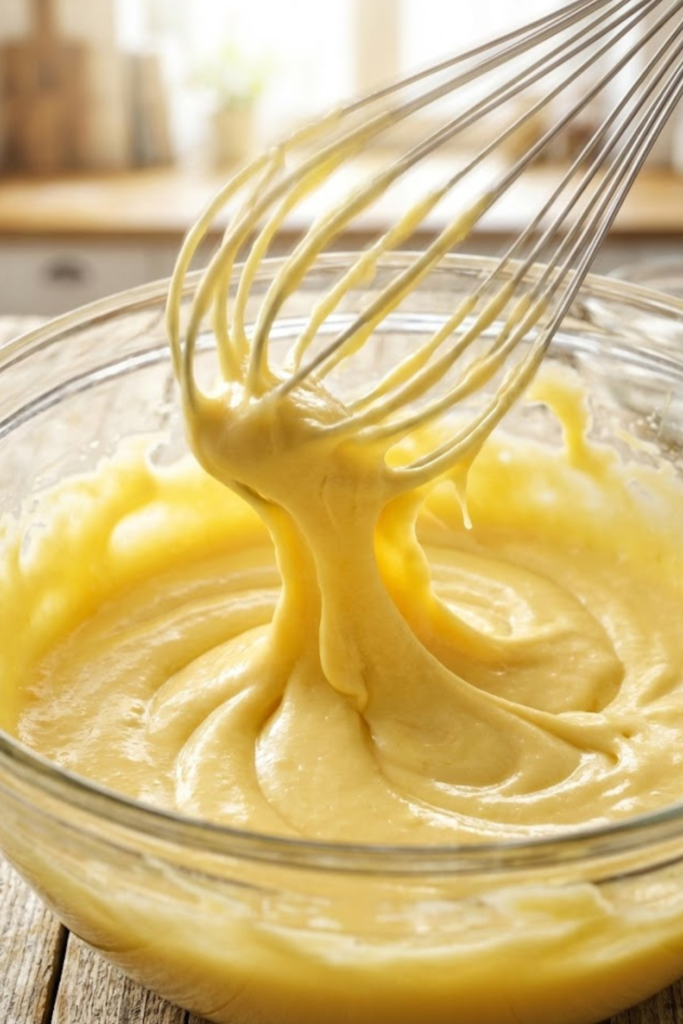
Once I add the dry ingredients to the wet, I switch to a spatula. I mix just until the flour disappears. It’s okay if it looks a little lumpy!
The Power of “The Rest”
This is the weirdest tip, but it changed my life. After you mix the batter, walk away. seriously.
Let the bowl sit on the counter for about 15 to 20 minutes before you scoop it. Rice flour, which is in most blends, takes longer to absorb liquid than wheat flour.
If you bake it immediately, the flour might taste gritty. Letting it rest allows the flour to fully hydrate and soften. It makes the final gluten free blueberry muffins so much moister. It requires patience, which I struggle with, but the difference is night and day.
Baking Tips for the Perfect Dome
I used to look at those muffins in the Starbucks display case and wonder, “How on earth do they get them that tall?” My homemade gluten free blueberry muffins usually looked sad and flat, kind of like little hockey pucks that had given up on life. I felt like a total failure in the kitchen.
But after reading way too many food science blogs at 2 AM, I finally figured it out. Getting that bakery-style “muffin top” isn’t magic; it’s just manipulating heat. And honestly, once you nail this, you’ll feel like a professional baker.
The High-Heat Hustle
Here is the trick that changed everything for me. Most recipes tell you to bake at 350°F the whole time. Boring!
If you want that impressive, tall dome, you need to shock the batter with high heat right at the start. I preheat my oven to 425°F. I put the muffin tin in and let it bake at that high temperature for exactly 5 minutes.
This blast of heat causes the baking powder to react instantly, forcing the batter to shoot up rapidly before the crust sets. After those 5 minutes are up, keep the oven door closed (don’t peek!) and turn the dial down to 375°F for the rest of the baking time. It works every single time.
To Line or Not to Line?
I have a love-hate relationship with paper liners. There is nothing worse than peeling the paper off and taking half the muffin with it. It’s a waste of perfectly good cake!
Since gluten-free baked goods are more delicate, they tend to stick more. I’ve started using parchment paper “tulip” liners. They look fancy, but more importantly, nothing sticks to them.
If you don’t have liners, grease your pan generously. And when I say generously, I mean it. I usually use a paper towel to rub butter into every single corner. If you miss a spot, that muffin is never coming out in one piece.
The Toothpick Test 2.0
Checking if gluten free blueberry muffins are done is tricky. Sometimes they look brown on top but are raw in the middle.
I use the classic toothpick test, but with a caveat. When you pull the toothpick out, you don’t want it to be bone dry. If it’s clean, you might have already overbaked them.
You actually want to see a few moist crumbs clinging to the stick. That means they are fully cooked but still hydrated. If you see wet batter, they need another few minutes. Be patient, but check often near the end.
The Sweaty Bottom Problem
This sounds gross, but it’s a real issue. Once you take the pan out of the oven, you need to move fast.
If you leave the muffins in the hot tin for more than 5 minutes, steam gets trapped underneath them. This causes the bottoms to become soggy and wet, which is definitely not the vibe we are going for.
I burn my fingers almost every time I do this, but I carefully pop them out onto a wire cooling rack immediately. This lets air circulate all around them, keeping the outside crisp while the inside stays soft. It’s a small step that makes a huge difference in texture.
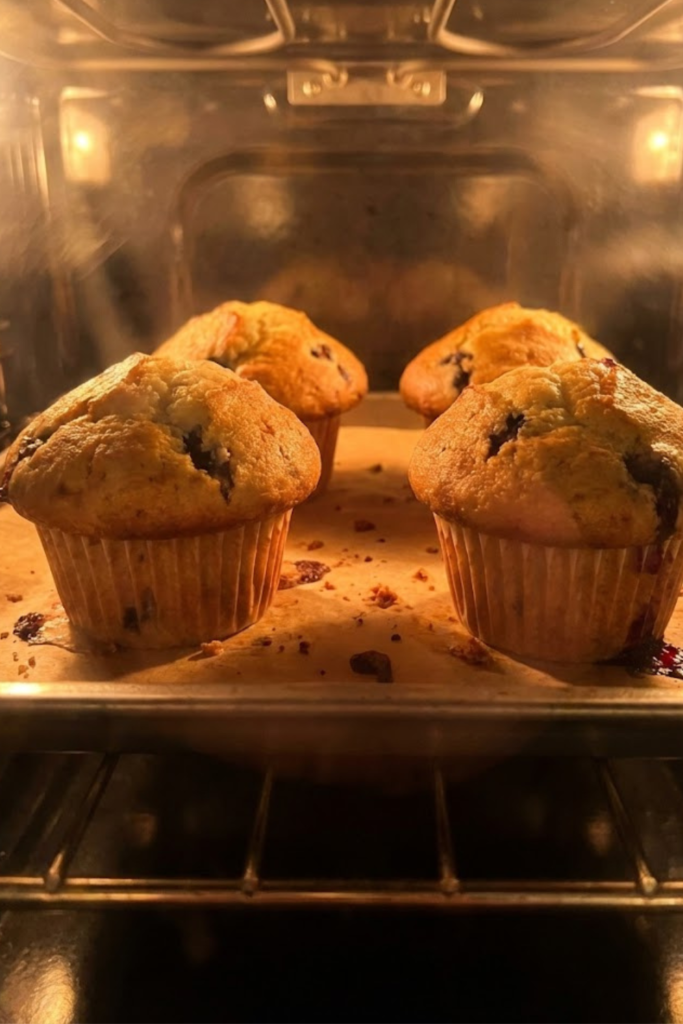
So there you have it, the ultimate guide to conquering gluten free blueberry muffins without the fear of baking bricks. I used to think I was doomed to a life of dry, crumbly snacks, but honestly, once you respect the xanthan gum and nail that high-heat oven trick, you’ll never look back. It’s amazing how a simple rice flour blend can turn into such a fluffy, bakery-style treat when you just give it a little patience and a proper rest. I really hope you whip up a batch of these moist blueberry muffins this weekend; your family is going to be seriously impressed (and probably won’t even guess they’re wheat-free!). If you found these tips helpful, please pin this to your Gluten Free Breakfast board on Pinterest and tag me so I can see your beautiful creations—happy baking!