I used to think making a good risotto was some kind of dark art only professional chefs in fancy hats could pull off. Honestly, my first attempt back in the day was basically a bowl of crunchy rice soup—it was a total disaster! But as a teacher, I know that even the toughest lessons lead to the best results. A famous chef once said that “risotto is about patience, not just rice,” and boy, was he right!
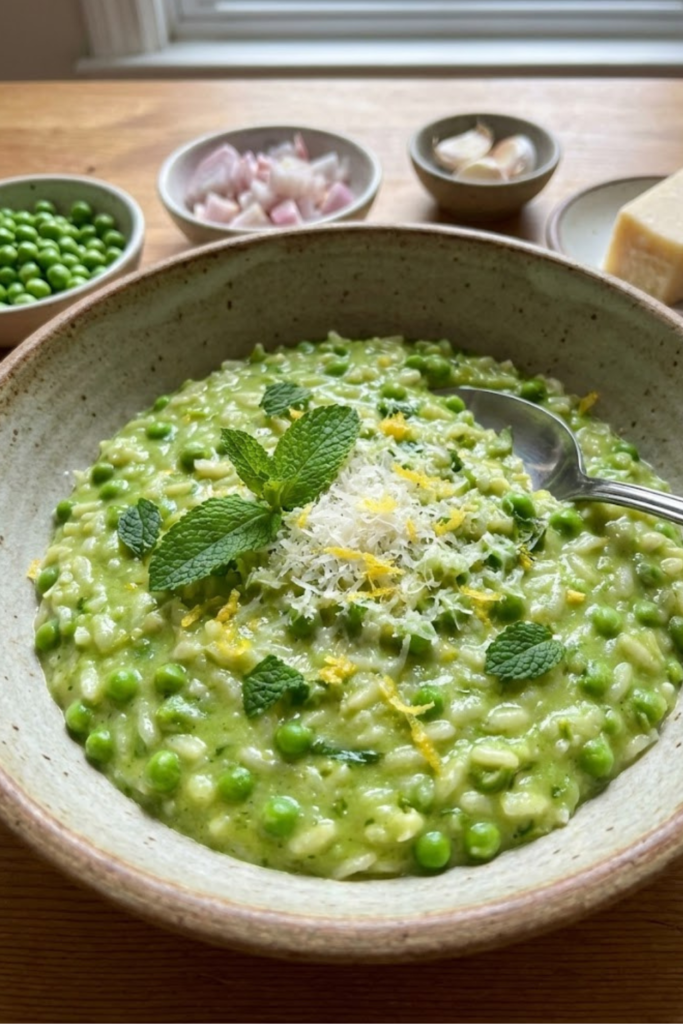
There is something so special about a Fresh Green Pea and Mint Risotto. The bright green color is just beautiful on the plate. My kids actually call it “shrek rice,” which I find hilarious, even if it sounds a bit unappetizing to adults. But once they take a bite of that creamy, buttery goodness, they forget the name and just start shoveling it in!
You don’t need a culinary degree to master this. You just need a wooden spoon and a bit of focus. Today, I’m going to walk you through how to get that perfect texture without losing your mind in the kitchen. Let’s get cooking!
Selecting the Right Rice for Your Risotto
You can’t just grab any old bag of rice from your pantry and expect a miracle to happen in the pan. Trust me, I have tried using regular long-grain white rice before because I was too lazy to drive to the store. It turned out like a weird, watery porridge that nobody wanted to eat. It was a total mess! For a good Fresh Green Pea and Mint Risotto, you need a specific kind of rice that can handle all that stirring without falling apart into a mushy pile.
The King of Risotto Rice: Carnaroli
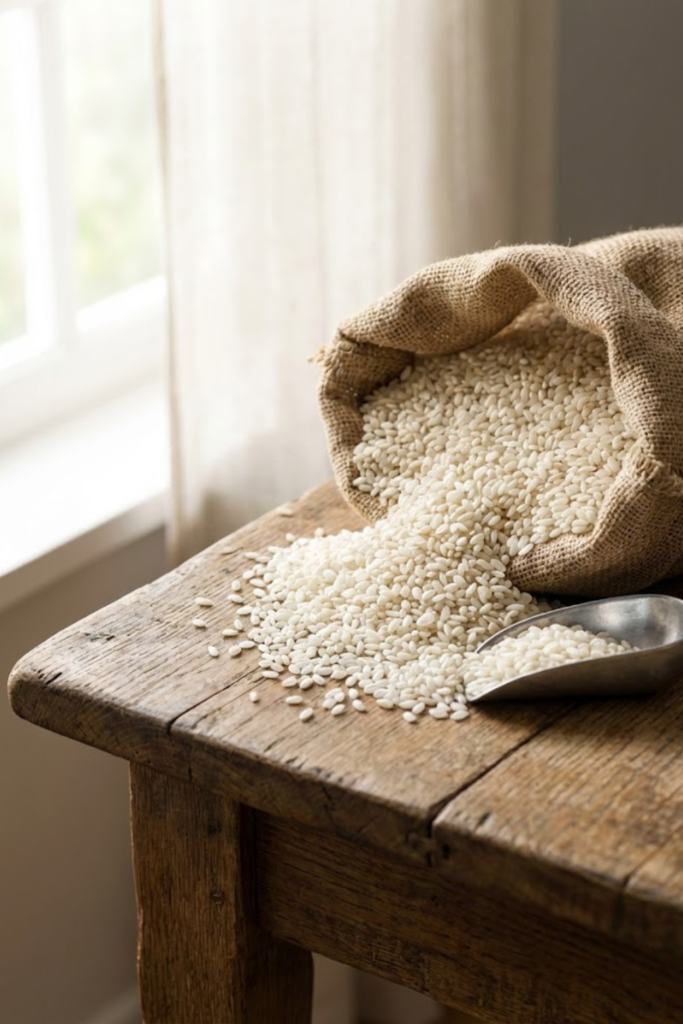
If you want to cook like a real pro, you should look for Carnaroli rice. A lot of famous chefs call this one the “king” of Italian rice. It has a very high starch content, but the grain itself is actually quite tough. This is great because it stays firm in the middle even while the outside gets all creamy and delicious. I usually find it in the specialty aisle or at a local Italian market. It costs a few extra cents compared to the stuff in the giant bags, but it makes a huge difference in how the final dish feels in your mouth. You want that “bite” in your rice.
The Reliable Choice: Arborio
Now, if you can’t find Carnaroli, do not panic. Arborio is the one you will see in almost every grocery store across the country. It is the most common choice for home cooks and it works great for this recipe. It is a short, fat grain that releases a ton of starch as it hits the hot pan. This starch is what gives the risotto that famous “sauce” without you having to add a bunch of heavy cream. Just keep a close eye on it while you cook. Arborio can get overcooked a bit faster than the fancy stuff, so you have to stay on top of your stirring game and taste it often.
Why Short-Grain Rice is the Winner
The reason we use these specific types is all about the science of starch. There is a type of starch called amylopectin inside the grain. When you stir the rice and add your warm broth bit by bit, that starch rubs off the grains and creates a thick, silky liquid. Long-grain rice, like Basmati or Jasmine, just doesn’t have enough of this stuff. If you use those, you will just end up with separate grains of rice swimming in a broth soup. That is not what we are looking for here! You want a short-grain or medium-grain rice so you get that classic, sticky texture that makes risotto the ultimate comfort food. Look for grains that look pearly and round. If the bag says “superfino,” that is a good sign you have the right stuff for your dinner.
Prepping Your Vibrant Pea and Mint Purée
If you want your Fresh Green Pea and Mint Risotto to look like those beautiful pictures in magazines, you can’t just toss frozen peas into the rice at the end and hope for the best. I remember one time I just dumped a whole bag of peas straight from the freezer into the pot. They turned this sad, muddy brown color that looked like something you’d find at the bottom of a lake. My students would have definitely made fun of it! To get that bright, “wow” green color, you have to do a little bit of prep work first. It’s not hard, but it makes a huge difference in how the dish looks and tastes.
The Magic of Blanching (Keeping it Green!)
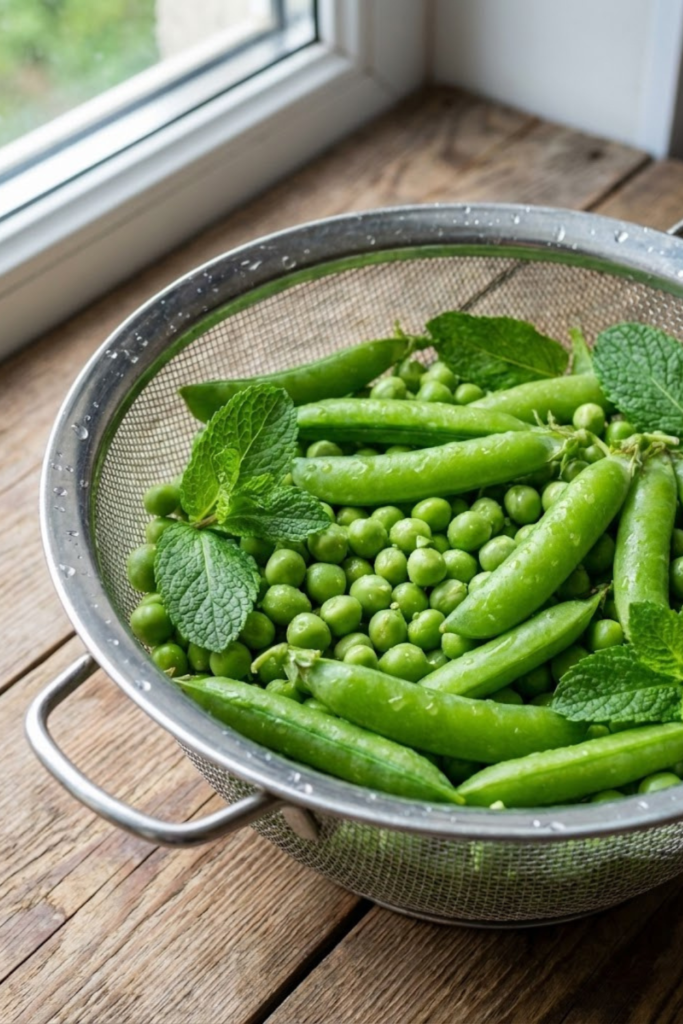
The secret to that vibrant green is a technique called blanching. Basically, you want to cook the peas really fast in boiling water and then stop the cooking immediately. I usually get a pot of salted water boiling and drop the peas in for just about two minutes. You want them tender but still bright. As soon as those two minutes are up, you have to drain them and throw them into a big bowl of ice water. This “shocks” the peas. It stops the heat from cooking them further and locks in that beautiful color. If you skip the ice bath, the carry-over heat will turn them that dull olive color we are trying to avoid. It’s a simple step, but it’s one of those things that separates a “meh” meal from a great one. Don’t be lazy here!
Getting the Mint Balance Just Right
Now, let’s talk about the mint. Mint is a very loud herb. If you use too much, your dinner will end up tasting like a bowl of toothpaste, and nobody wants that! I like to use about a handful of fresh leaves for every two cups of peas. When you blend the peas into a purée, the mint gets really incorporated into every bite. You want a hint of freshness that cuts through the rich rice, not something that takes over the whole show. I always tell people to start with a little bit, taste it, and then add more if they think it needs it. You can always add more, but you can’t take it out once it’s in there!
Deciding on Your Texture
When it’s time to make the purée, I usually take about two-thirds of the blanched peas and put them in a blender with the mint and a little splash of broth. I blend it until it’s really smooth. This gives the risotto a beautiful green base. But here is my favorite tip: keep the rest of the peas whole! Adding those whole peas back in at the very end gives the dish a nice “pop” and some extra texture. It makes the meal feel more interesting to eat. Plus, it looks great when you see those whole, bright green circles mixed in with the creamy rice. It’s all about making the food look as good as it tastes. This extra effort will make your family think you spent hours in the kitchen!
Mastering the Toasting and Liquid Stage
I remember when I first started cooking, I was always in a rush. I thought I could just boil rice in broth and call it risotto. I was so wrong! Making a great Fresh Green Pea and Mint Risotto is all about the “tostatura” and the way you add your liquid. If you try to skip these parts, you will end up with a bowl of soggy rice that has no flavor. My students always ask why we have to stand there and stir for twenty minutes, and I tell them that the best things in life take a little bit of work. It’s like studying for a big test—you can’t cram it all in at once! You have to be patient to get that perfect result.
Why Toasting the Rice is a Must
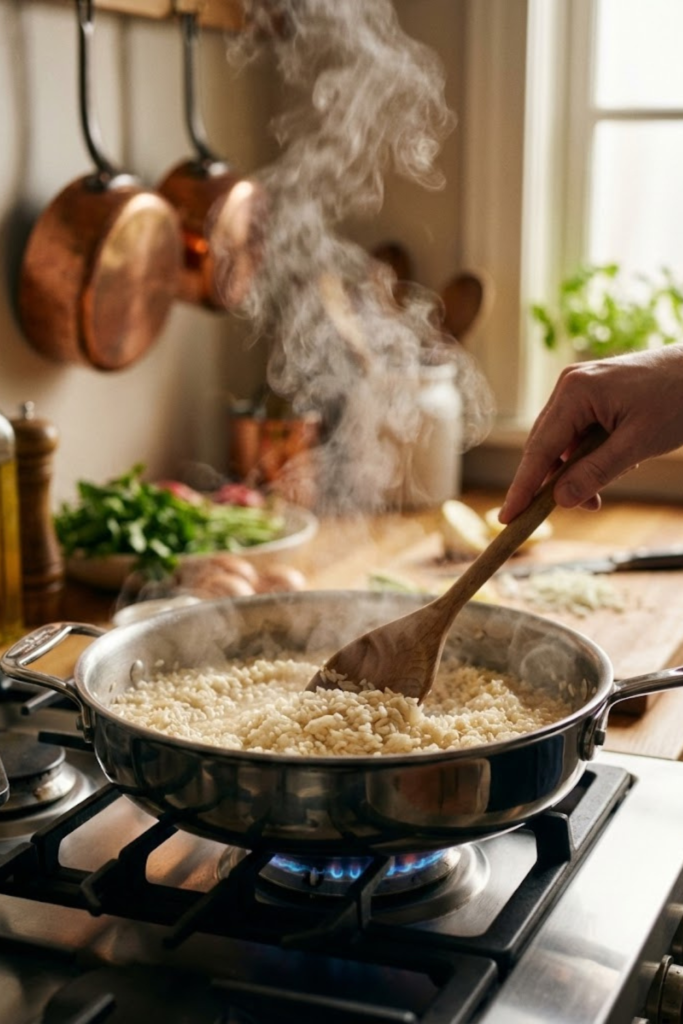
Before you add a single drop of liquid, you have to toast your rice in the pan with your butter and aromatics. I usually sauté my shallots first until they are soft, then I dump in the rice. You want to stir it around for about two or three minutes until the edges of the grains start to look a bit see-through, but the middle is still white. You will smell this amazing nutty aroma filling up your kitchen. This step is super important because it creates a little shell around each grain. This helps the rice stay firm while the starch comes out into the sauce. If you don’t toast it, the rice just drinks up the liquid too fast and gets mushy. I learned this after serving a “risotto” that looked more like baby food!
The Rule of the Warm Broth
Here is a big tip: keep your vegetable stock in a separate pot on a low simmer right next to your rice. Never add cold stock to a hot pan. I did this once because I was being lazy, and it completely stopped the cooking process. The rice grains actually cracked because of the temperature change. It was a disaster! By keeping the broth warm, you keep the heat in the risotto pan steady. This helps the starch release perfectly. You want to add just one ladle at a time. Wait until the rice has soaked up almost all the liquid before you add more. This slow process is what makes the dish so creamy.
The Rhythm of Stirring and Tasting
You don’t have to stir every single second, but you should stay close. I like to give it a good stir every minute or so. This movement is what rubs the grains together to create that silky sauce. After about 15 to 18 minutes, start tasting it. You are looking for “al dente,” which means it has a little bit of a firm bite in the middle. It shouldn’t be crunchy, but it shouldn’t be soft like boiled rice either. If you run out of broth and the rice is still too hard, you can use a little bit of warm water. It happens to the best of us! Just keep going until the texture feels right. Make sure you don’t overcook it while you are waiting for the peas!
Finishing Touches: Butter, Cheese, and Zest
We have finally made it to the best part of the whole process. Your kitchen probably smells like a garden right now, and you might be tempted to just start eating right out of the pot. But wait! If you stop now, you are missing out on the part that actually turns this from a pot of rice into a real Italian masterpiece. In my house, we call this the “magic minute” because this is when the texture goes from “okay” to “restaurant quality.” As a teacher, I always tell my students that the last five percent of effort is what makes the grade go from a B to an A, and it is exactly the same with this Fresh Green Pea and Mint Risotto.
The Art of the Mantecatura
This is a big, fancy word that just means finishing the dish to make it creamy. Once your rice is al dente and you’ve stirred in that bright green pea purée, take the pan off the heat. This is very important! You don’t want to keep cooking it while you do this. Now, drop in a few big chunks of cold, unsalted butter. It has to be cold! When the cold butter hits the hot rice and you stir it vigorously, it creates a creamy emulsion. It’s like a fun science experiment in your kitchen. Then, throw in a generous handful of freshly grated Parmesan cheese. Don’t use the stuff from the green can; get a real block and grate it yourself. The way the cheese melts into the butter and the rice starch is what gives you that silky, flowing texture that everyone loves.
Lemon Zest Magic
Now, here is a little trick I learned after years of making this. Pea risotto can be very rich and heavy because of all that butter and cheese. To balance it out, you need some acid. I like to grate the zest of one whole lemon right over the pot. It adds this amazing brightness that makes the peas taste even fresher. It’s like turning on a light in a dark room! Be careful not to get the white part of the lemon skin, though, because that can be bitter. A little squeeze of the juice is good too if you like things a bit tangy. This is the step that usually makes my friends ask me what my secret ingredient is. It just makes the whole thing feel lighter and more like a spring day.
Plating and Serving Your Creation
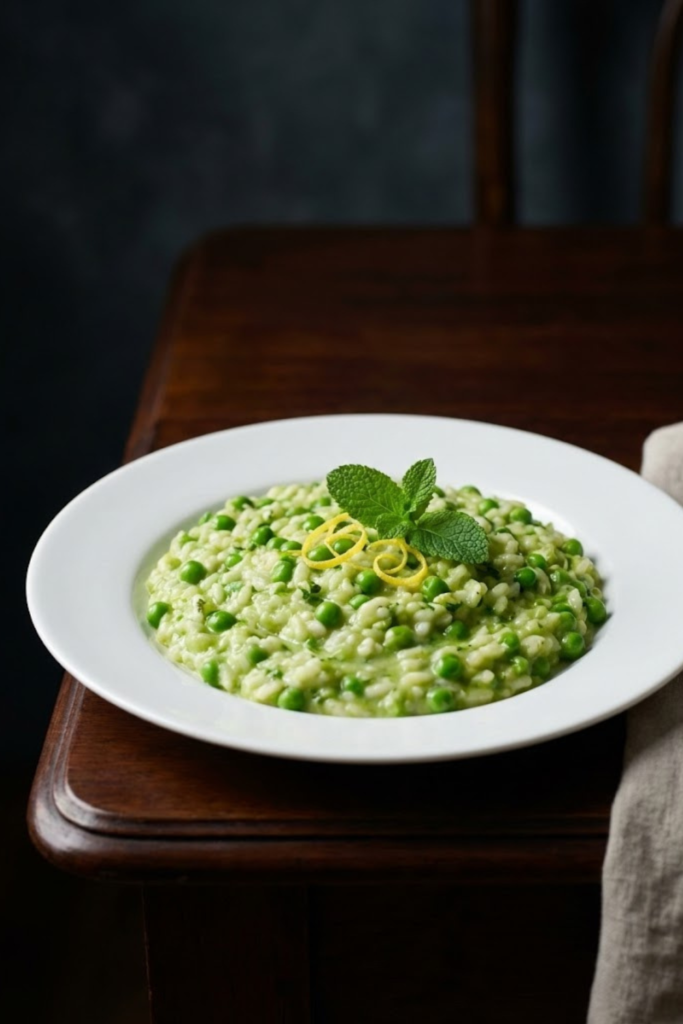
About the serving part, remember that risotto should be “all’onda,” which means it should move like a wave when you shake the plate. If it sits there in a stiff pile, it’s too dry! Add a tiny splash of broth if you need to loosen it up right at the end. I like to serve it in wide, shallow bowls. Top each bowl with those whole peas we saved earlier, a few tiny mint leaves, and maybe some extra cheese. It looks so professional that nobody will believe you made it on a weeknight! My family usually dives in before I can even get the forks on the table. It is the ultimate way to celebrate the arrival of spring. Just make sure you eat it while it’s hot!
Making this Fresh Green Pea and Mint Risotto is honestly such a rewarding experience. It reminds me that good things take time, just like a slow-cooked meal or a well-behaved classroom! I hope you feel confident enough to grab your favorite pan and give this a shot tonight. Your kitchen will smell amazing, and your family will think you’re a genius!
If you loved this recipe and want to keep it for your next spring dinner party, please share it on Pinterest! It helps me keep sharing these lessons with all of you. Happy cooking!