Is there anything better than waking up to the smell of garlic and onions sizzling in the kitchen? I don’t think so! Growing up, Sunday wasn’t just a day of rest; it was a day of feasting. We’re talking about that deep, red, “cook all day” gravy that clings to your pasta like a warm hug. It’s not just food; it’s an event!
Today, I’m sharing my absolute favorite method for making this classic: crockpot sunday sauce. Why the crockpot? Because let’s be honest, we want that slow-simmered flavor without being chained to the stove for eight hours. This guide will walk you through selecting the best San Marzano tomatoes, browning your meats, and achieving that velvety texture that only low and slow cooking can provide. Get your crusty bread ready, because you’re going to want to sop up every drop!
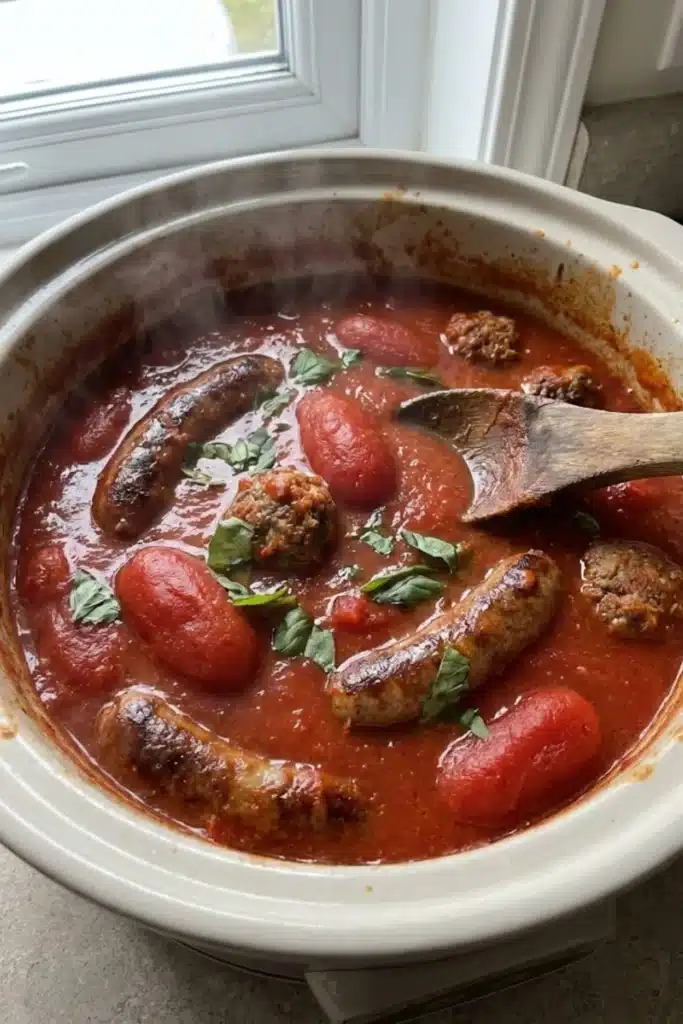
Selecting the Best Ingredients for Your Sunday Gravy
I have to make a confession. When I first started trying to cook authentic Italian food, I thought all canned tomatoes were created equal. I’d grab the cheapest generic can on the bottom shelf, dump it in the pot, and wonder why my sauce tasted like a metallic penny. It was frustrating! I spent hours cooking, but the result was just… sad.
It took a stern talking-to from my friend’s Nonna to set me straight. She looked at my pantry, shook her head, and told me, “You can’t build a palace on a swamp.” She was right.
The Tomato Trap
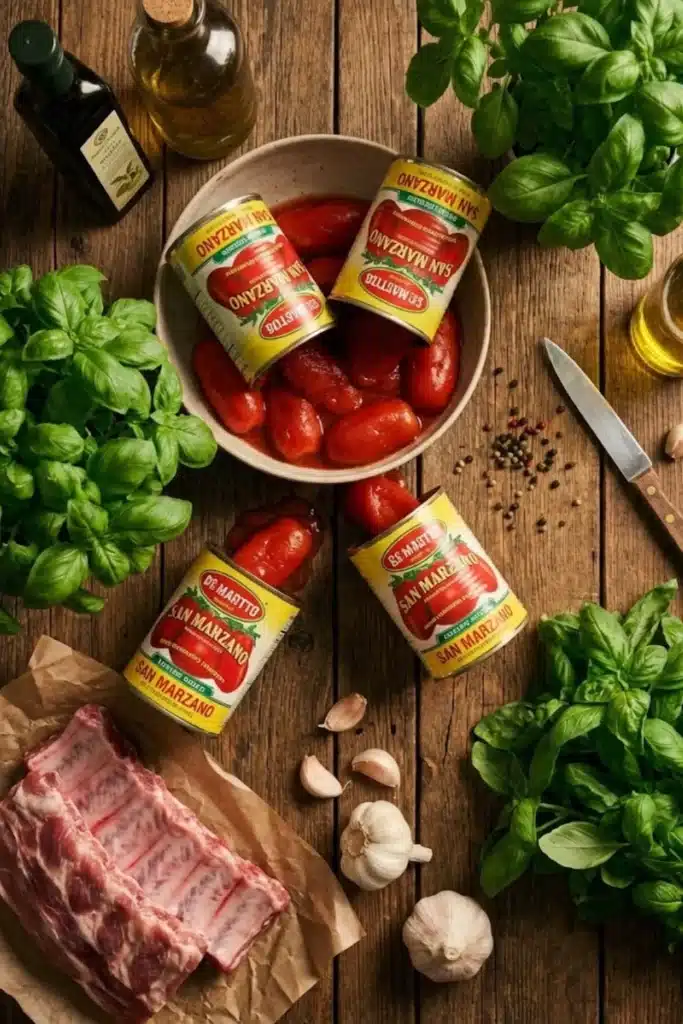
If you want a crockpot sunday sauce that tastes like it came from a restaurant, you have to buy San Marzano tomatoes. No exceptions. Real San Marzano tomatoes are grown in the volcanic soil near Mount Vesuvius, and they have a sweetness that regular plum tomatoes just don’t have.
Look for the “D.O.P.” seal on the can. It certifies they are the real deal. I once bought “San Marzano Style” tomatoes by mistake, and let me tell you, the acidity was off the charts. It ruined the whole pot. Spending the extra two dollars a can is the best investment you’ll make for this meal.
The Holy Trinity of Meats
Now, let’s talk about the meat, because this is where the magic happens. You aren’t just making a meat sauce; you are making a gravy that’s been infused with animal fats for eight hours.
I usually stick to the holy trinity: pork ribs, Italian sausages, and meatballs.
For the ribs, get country-style pork ribs or spare ribs with the bone in. The bone is crucial because it releases marrow and gelatin into the sauce as it cooks, giving you that velvety texture we all crave. If you use boneless meat, the sauce can end up feeling a bit thin.
For the sausages, I prefer sweet Italian sausage with fennel seeds. The fennel adds a nice aromatic pop that cuts through the heaviness of the tomato. Prick them with a fork before browning so they don’t explode!
Don’t Skimp on the Green Stuff
Finally, we need to talk about herbs. Dried oregano is fine—actually, it’s great—but fresh basil is non-negotiable.
I remember one time I was too lazy to go to the store, so I used dried basil from a jar that had been in my cupboard since 2018. The sauce tasted dusty. It was a rookie mistake.
Add a whole sprig of fresh basil right into the crockpot at the beginning, stem and all. Then, stir in some chopped fresh leaves right before you serve. It wakes the whole dish up. Fresh parsley is also a winner here.
Getting the right ingredients might seem like a hassle, but trust me, your Sunday dinner depends on it. You can’t fake quality when there are only five or six ingredients in the pot.
Preparing and Browning Meats for Maximum Flavor
Okay, look. I know exactly what you are thinking. You bought a slow cooker so you wouldn’t have to stand over a hot stove, right? I used to feel the same way. The first time I tried to make crockpot sunday sauce, I just threw raw sausages and ribs directly into the cold tomato sauce. I thought I was being smart.
I was wrong. The meat came out grey, rubbery, and sad. It looked like it had been boiled in water. It was a total disaster, and my family was polite, but I saw them pushing the meat to the side of the plate.
If you want that restaurant-quality depth, you have to get your hands dirty before the slow cooker does the work.
The Maillard Reaction is Your Friend
You need to sear your meats. It’s called the Maillard reaction, which is just a fancy science term for “brown food tastes good.”
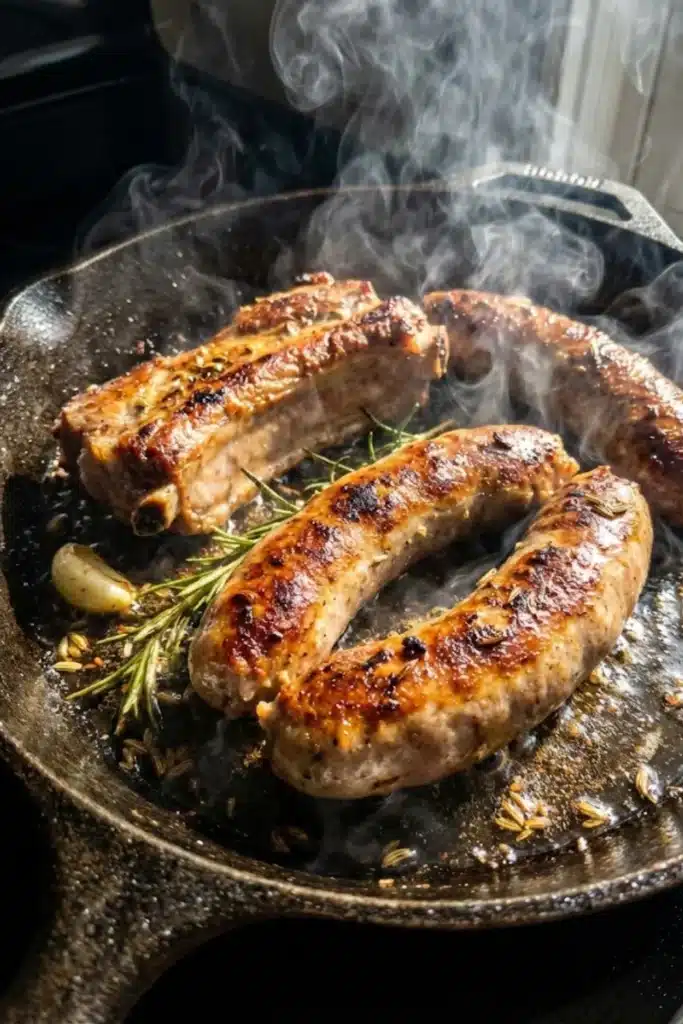
Grab a heavy skillet—cast iron is my go-to—and get it ripping hot with a little olive oil. You want to sear the pork ribs and sausages until they have a deep, golden-brown crust. We aren’t trying to cook them through; we just want that color.
This step creates a caramelized flavor that permeates the entire sauce later on. If you skip this, your sauce will lack that rich, savory punch. It takes ten minutes, but it changes everything.
The Meatball Situation
Meatballs are tricky in a slow cooker. If you drop them in raw, they might break apart and turn your sauce into a meat mush. Some people swear by poaching them in the sauce, but I’ve had too many fall apart on me.
I prefer to bake my meatballs on a sheet pan at 400°F for about 15 minutes before they go into the pool. This sets the shape and gets some excess grease out. Plus, you get those crispy edges that everyone fights over.
Don’t Waste the “Fond”
Here is a pro tip I learned the hard way after washing a lot of flavor down the drain. After you brown your meats, look at the bottom of your skillet. See those stuck-on brown bits? That is called “fond,” and it is pure flavor gold.
Do not wash that pan! Pour a splash of red wine (or beef broth if you don’t drink) into the hot skillet. Scrape up those bits with a wooden spoon. Let it bubble for a minute, then pour that dark, rich liquid right into your crockpot. This is the secret weapon for a crockpot sunday sauce that tastes like it’s been simmering in an Italian grandmother’s kitchen for days.
Layering Matters
Finally, don’t just dump everything in willy-nilly. Put the tough meats, like the pork ribs, at the very bottom where the heat is most direct. Put the sausages in the middle, and gently nestle the meatballs on top so they don’t get crushed.
It’s a little extra work upfront, I know. But when you taste that first bite, you’ll know it was worth every second.
Mastering the Slow Cook Time and Temperature
I used to be incredibly impatient in the kitchen. I’m the type of person who stares at the microwave while the popcorn pops, willing it to go faster. So, naturally, when I first started making crockpot sunday sauce, I thought I could cheat the system.
I cranked the dial to “High” thinking I could get it done in four hours instead of eight. I mean, heat is heat, right?
Big mistake. Huge. The sauce bubbled too hard, the bottom scorched, and the pork ribs were tough as shoe leather. It was a tragedy. I learned the hard way that you can’t rush a good thing.
The Patience Game: Low vs. High
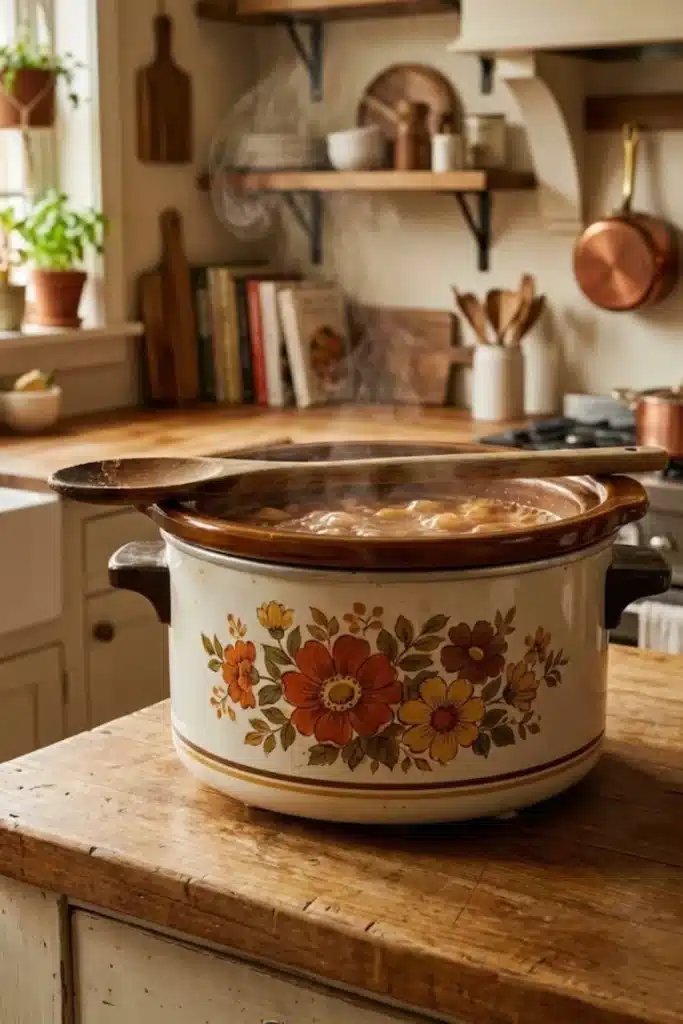
If you want that meat to fall off the bone—and I mean really fall off, so you don’t even need a knife—you have to cook on “Low.”
Set your slow cooker to “Low” for 6 to 8 hours. This low temperature allows the connective tissues in the pork and the collagen in the bones to break down slowly. This is what gives the gravy that sticky, lip-smacking texture. Cooking it on high just boils the meat, making it tight and chewy.
Treat this as a weekend cooking project. Get it started in the morning, go run your errands or take a nap, and let the machine do the heavy lifting.
The Watery Sauce Panic
Here is a moment of frustration almost everyone has with slow cookers: you lift the lid after six hours, and your sauce looks like soup. It’s watery and thin. I’ve been there, standing in the kitchen almost in tears because my “gravy” looked like tomato juice.
Don’t panic! Slow cookers trap moisture, so unlike a pot on the stove, the liquid doesn’t evaporate.
If your sauce is looking thin, just take the lid off. Let it cook uncovered on “High” for the last 45 minutes to an hour. This lets the excess water steam off and thickens everything up beautifully.
Fixing the Acid
Sometimes, after cooking all day, you taste the sauce and it’s… sharp. It hits you right in the back of the jaw. That’s the acidity from the tomatoes.
I used to try adding more salt, but that just made it salty and sour. The trick is to balance it out. My grandmother used to drop a whole peeled carrot into the sauce while it cooked to soak up the acid (discard it before serving).
If you don’t have a carrot, a teaspoon of sugar works wonders. It doesn’t make the sauce sweet; it just rounds out the edges. Taste as you go. It’s your sauce, so make it taste good to you!
To Stir or Not to Stir?
There is a big debate about this. Some folks say “if you’re looking, you ain’t cooking.” Every time you lift the lid, you lose heat, and the slow cooker has to work hard to get back up to temp.
However, since this sauce is thick and has sugar in the tomatoes, it can burn. I usually give it a gentle stir halfway through, maybe around the 4-hour mark. Just be quick about it! Don’t stand there gazing at your beautiful creation. Stir it, cover it, and walk away.
Serving Suggestions and Perfect Pasta Pairings
I’ll never forget the first time I served my famous Sunday gravy to my in-laws. I had spent all day perfecting the sauce, but when it came time to eat, I made a critical error. I served this heavy, meaty sauce over delicate angel hair pasta.
It was a tragedy. The noodles turned to mush instantly under the weight of the pork and sausages. It looked like a red sludge on the plate. I was mortified! I wanted to crawl under the table.
I learned a valuable lesson that day: the pasta isn’t just a sidekick; it’s the partner. If you don’t pick the right shape, you’re disrespecting the sauce.
Pick a Pasta That Can Fight Back
For a hearty crockpot sunday sauce, you need a noodle that can stand up to the meat. You want something with ridges and holes to trap that liquid gold.
My absolute favorite is rigatoni. Rigatoni meat sauce is just classic. The tubes are sturdy enough to hold their shape, and the sauce gets inside the noodle, so every bite is explosive.
Paccheri is another great option—they are like giant, floppy rigatoni tubes that collapse when you bite them. Or, if you want long noodles, go for pappardelle. These wide, flat ribbons are like edible conveyor belts for sauce. Just please, keep the spaghetti for a lighter marinara.
The “Marriage” of Sauce and Pasta
Here is the biggest mistake I see home cooks make. They drain the pasta, dump it naked onto a plate, and then ladle a scoop of sauce on top.
Stop doing that! The sauce slides right off, and you end up with a puddle of red water at the bottom of your bowl. It drives me crazy.
You have to “marry” the pasta and sauce. When your pasta is al dente (that means it still has a little bite), drain it, but save a cup of that starchy pasta water. Put the pasta back in the pot, add a few ladles of sauce, and splash in a little pasta water.
Stir it over high heat for one minute. The starch helps the sauce cling to the noodles. The pasta actually absorbs the flavor. It makes a huge difference.
The Cheese Debate: Pecorino vs. Parmesan
Now, let’s talk cheese. Most people grab the green shaker of Parmesan, and that’s fine in a pinch. But if you want to elevate this dish, get a block of Pecorino Romano.
Pecorino is made from sheep’s milk, and it’s much saltier and tangier than Parmesan. Because this sauce is sweet from the tomatoes and rich from the pork fat, the sharp kick of Pecorino cuts right through it. It wakes up your palate.
Grate it fresh right at the table. It makes everyone feel special, like they’re at a fancy trattoria.
Serving It Family Style
In my house, we don’t pile the meat on top of the pasta. We serve family style meals.
I take all those beautiful meats—the ribs, the sausages, the meatballs—and arrange them on a big separate platter. I ladle a little extra sauce over them so they glisten. Then, I serve a big bowl of just the pasta.
This way, everyone can pick exactly what they want. Uncle Joe can take three sausages, and my niece can just eat the pasta. It feels like a feast. It turns dinner into an event.
And don’t forget the crusty bread sides. You need something to “fare la scarpetta”—that’s Italian for making the little shoe, or wiping the plate clean with bread. Leaving sauce on the plate is a crime in my house!
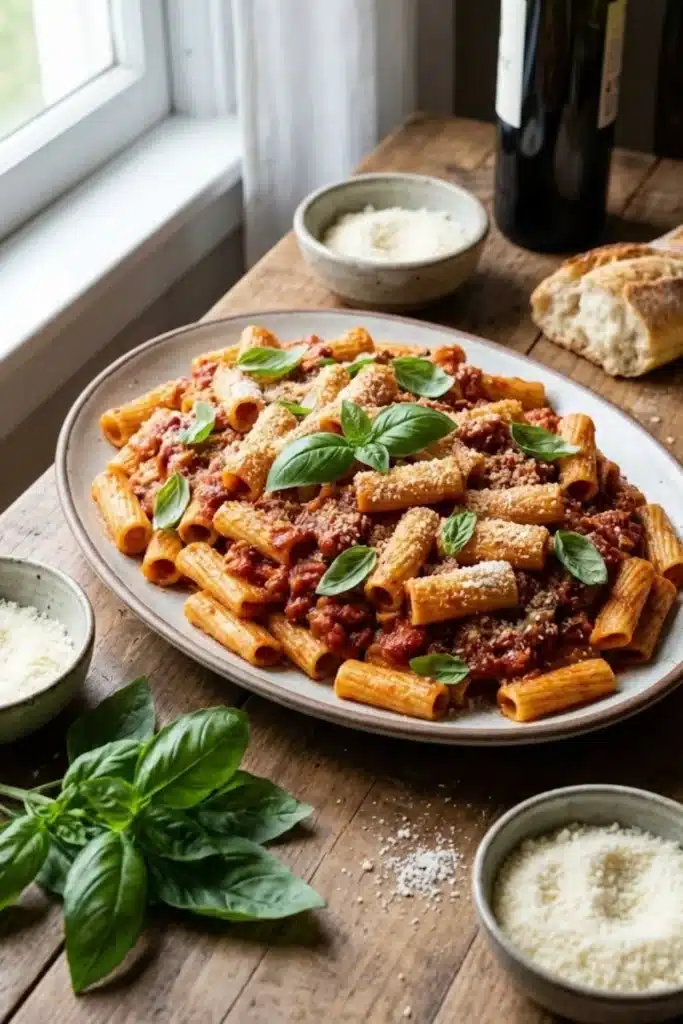
I’m usually in a total food coma by the time the dishes are finally done. But honestly, that heavy, happy feeling is the best part of my week. Making crockpot sunday sauce has become a ritual for me that I wouldn’t trade for anything.
It’s wild to think that a few simple ingredients can create something so powerful. We started with cold cans of San Marzano tomatoes and raw meat, and ended up with a masterpiece. It just goes to show that good things really do take time.
If you tried this recipe, I hope you didn’t skip the searing step! I know I harped on it earlier, but that brown crust on the Italian sausage is where the flavor lives. And please, tell me you used the fresh basil.
Don’t beat yourself up if it wasn’t perfect the first time. Cooking is messy and personal. My first batch was a disaster, but now my family begs me to make this slow cooker bolognese every weekend.
It brings everyone to the table, phones down, actually talking to each other. That’s the real win here.
If you loved this recipe, do me a huge favor. Pin this to your “Sunday Dinner” board on Pinterest! It helps other home cooks find us and keeps the gravy train rolling.
Now, go grab a piece of bread and wipe that pot clean. You earned it.