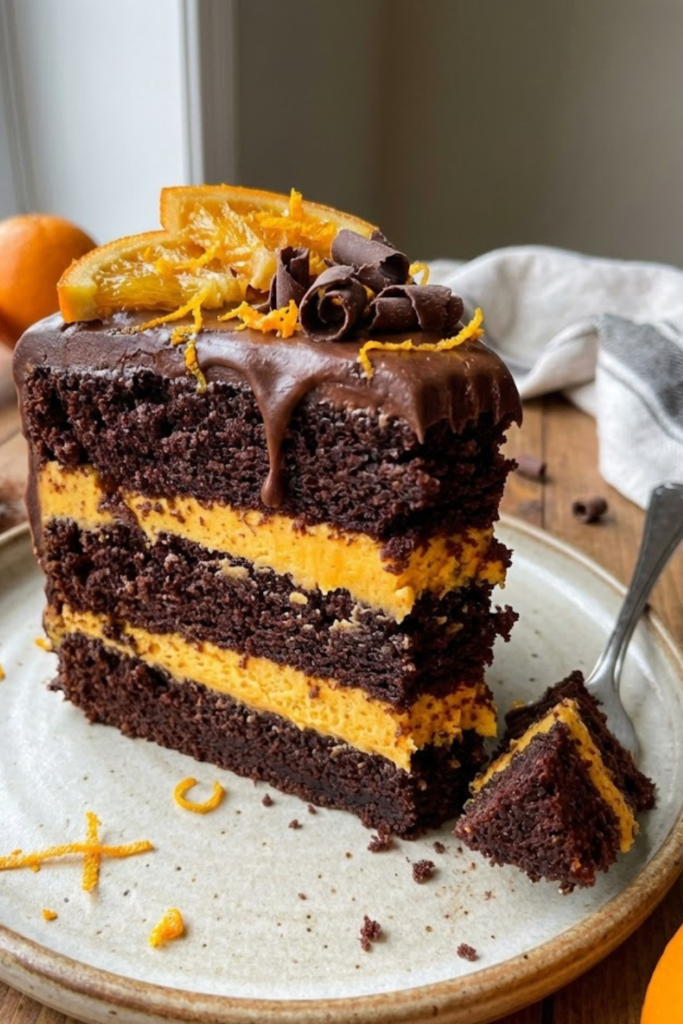
Did you know that over 60% of home bakers claim that getting the right balance between citrus and chocolate is their biggest kitchen struggle? I totally get it! For years, I tried to make a chocolate orange layer cake that didn’t just taste like a plain sponge with a hint of perfume. It was honestly so frustrating! But after a lot of trial and error in my own kitchen, I finally cracked the code for 2026. This cake is rich, zingy, and honestly, it’s the best thing you’ll put on your table this year! We are going to dive into the textures and the smells that make this dessert a total legend.
Choosing the Best Cocoa Powder for Deep Flavor
I remember the first time I tried to bake a big chocolate cake for a school fundraiser. I just grabbed the cheapest tin of cocoa powder I could find at the corner shop. I thought, “Hey, cocoa is cocoa, right?” Well, I was totally wrong! That cake came out looking pale brown and tasted like dry toast. It was so embarrassing to see the other teachers biting into it and trying to be polite. Since then, I’ve learned that the cocoa you pick is basically the soul of your chocolate orange layer cake. If you get the chocolate part wrong, even the best oranges in the world can’t save your dessert.
Natural vs. Dutch-Processed Cocoa
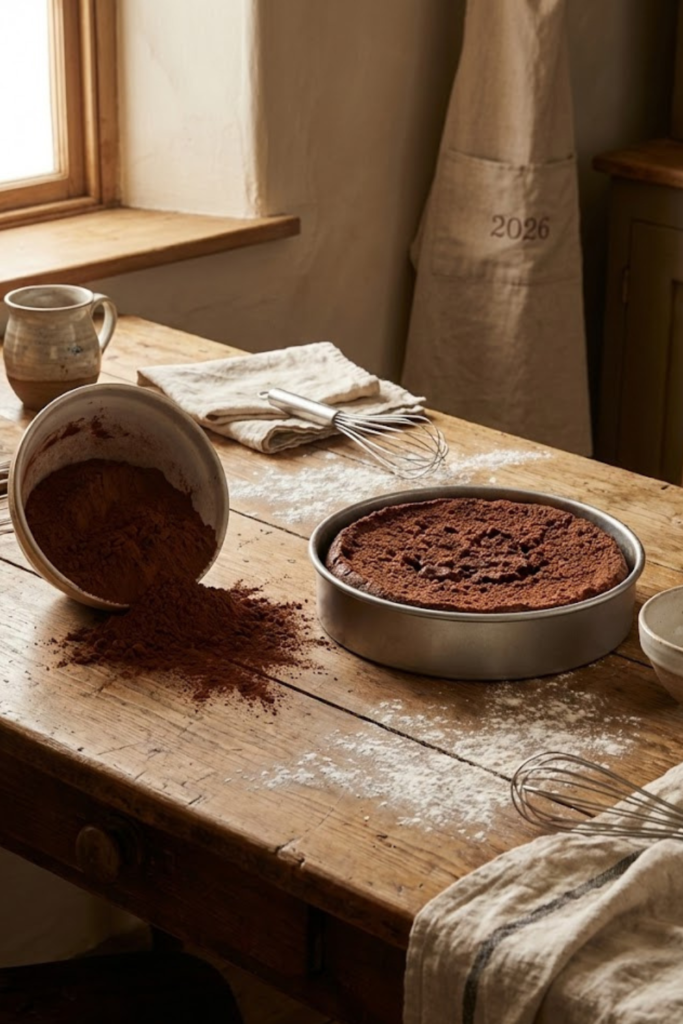
The biggest thing you need to know is the difference between natural and Dutch-processed cocoa. Natural cocoa is very acidic. It’s what you usually see in the baking aisle in those big brown tubs. Because it’s acidic, it reacts with baking soda to help the cake rise. But for a chocolate orange cake, I almost always go for Dutch-processed.
Dutch-processed cocoa has been treated to take away that extra acid. This makes the flavor much smoother and the color way darker. When you have those dark, almost black cake layers, the bright orange frosting looks incredible. It’s like a sunset against a night sky! Just remember, if your recipe calls for one type, you have to be careful about switching them because it might mess up how the cake rises in the oven.
Why Fat Content Is Your Best Friend
Most people don’t look at the back of the cocoa tin, but you really should. You want to find a cocoa powder that has a high fat content. Look for something that says it has at least 20% to 22% fat. A lot of the cheap brands strip the cocoa butter out, which leaves you with a powder that makes your cake feel like a sponge you’d use to wash dishes.
High-fat cocoa makes the crumb feel velvety and moist. It also helps the orange oils from the zest really stick to the chocolate flavor. I’ve found that when I use the good stuff, the cake stays fresh for three or four days, while the low-fat stuff gets crumbly by the next morning.
Getting that Deep, Dark Color
If you want that “Terry’s Chocolate Orange” look, you want a deep color. Some people even use a bit of “black cocoa” which is even more processed. I like to mix a little bit of that in with my regular Dutch cocoa. It makes the cake look professional, like you bought it at a fancy bakery in the city. Just don’t go overboard, or it can taste a bit like a charcoal cracker! Stick to the high-quality Dutch stuff for the best balance.
Assembling the Perfect Layer Cake Without the Mess
Let’s talk about the part that used to give me actual nightmares. Putting the cake together! I can’t tell you how many times I’ve had a chocolate orange layer cake end up looking like the leaning tower of Pisa. One time, for my nephew’s birthday, the top layer just slid right off the side because the frosting was too warm. It was a chocolatey disaster on the kitchen floor and I almost cried! But after years of teaching and baking at home, I found some tricks that make it way easier. You don’t need to be a pro, you just need a bit of patience.
Leveling Your Layers for Stability
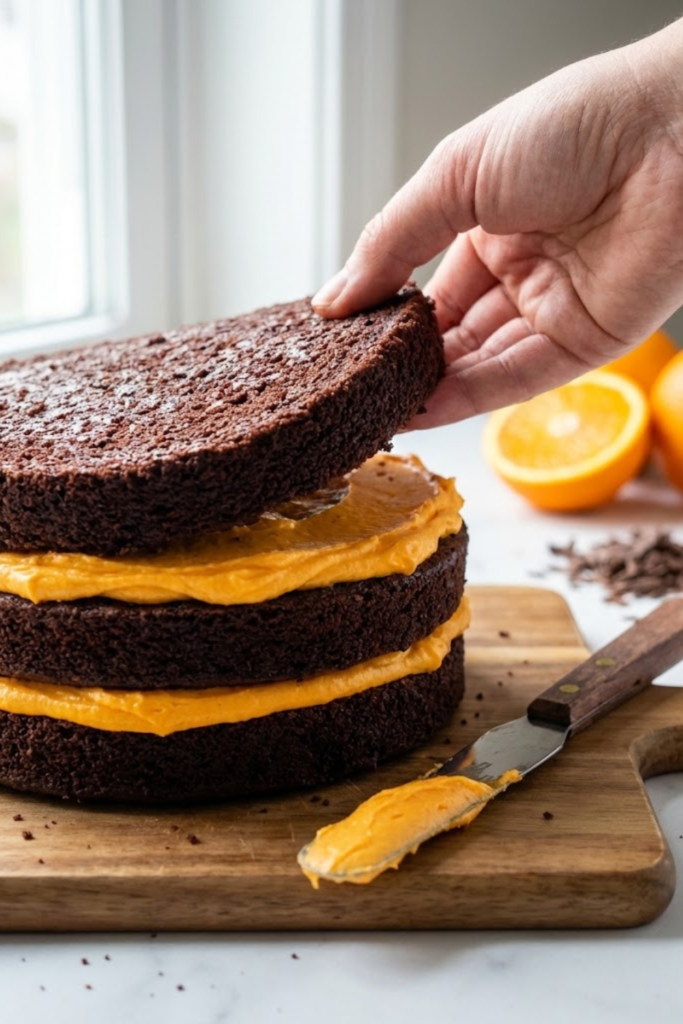
First off, you gotta make sure your cake tops are flat. Most cakes come out of the oven with a little dome on top. If you try to stack those domes, your cake is gonna wobble and eventually tip over. I use a long bread knife—the one with the teeth, called a serrated knife—to gently saw off the rounded top.
I always do this once the cake is totally cold. If you try to do it while it’s even a little bit warm, the cake just falls apart into a million pieces. Plus, the best part is that you get to eat the scraps! Those chocolatey, orange-scented scraps are the baker’s prize, right? It’s the only way to check if the flavor is right before you serve it to guests.
The Magic of the Crumb Coat
This is the most important step that most people skip because they are in a hurry. You need to do a “crumb coat.” This is just a super thin layer of orange frosting all over the cake. It looks kind of messy and ugly at first, but it acts like glue. It traps all those little dark chocolate crumbs so they don’t get mixed into your beautiful final layer of frosting.
Without this step, your bright orange frosting will have little brown dots all over it, and it won’t look very appetizing. Just spread it thin and don’t worry about it being pretty yet. We are just setting the stage here.
Why You Must Chill
Once that thin layer is on, put the whole thing in the fridge for about 20 or 30 minutes. This makes the frosting get firm. If your kitchen is hot, this step is a total lifesaver. It keeps the layers from sliding around while you put the final thick layer of chocolate ganache on. I used to be too impatient for this, but trust me, it makes the whole job way less of a headache. You won’t be fighting the cake anymore, and it will actually stay where you put it!
Silky Dark Chocolate Ganache vs. Orange Buttercream
When I first started making my chocolate orange layer cake, I had a huge argument with my sister about what goes on top. She wanted a super sweet orange buttercream, like the kind you get on supermarket cupcakes. I wanted a thick, dark chocolate ganache that was so rich it made your teeth hurt (in a good way!). We actually ended up making two mini cakes to see who was right. After a lot of tasting, I realized that the choice really changes the whole mood of the dessert. In 2026, people seem to really like that balance of bitter and sweet, so let’s look at how to choose.
Finding the Right Texture Balance
If you go with an orange buttercream, the cake feels lighter and more like a birthday party treat. It’s fluffy and sweet, which is great if you used a very dark, bitter cocoa in the sponge. But if you want something that feels like a fancy dessert from a high-end restaurant, ganache is the way to go.
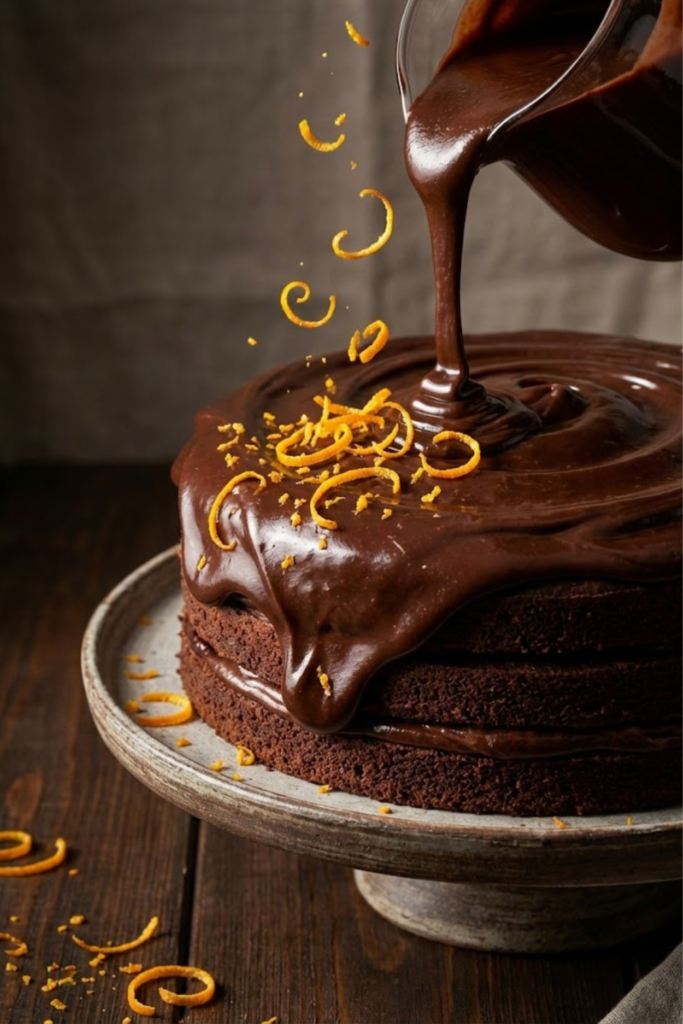
I found that a mix is actually the best “secret” trick. I put a thick layer of orange buttercream in the middle of the layers to give that citrus kick, and then I pour the dark chocolate ganache over the top. It gives you the best of both worlds! When you take a bite, you get the creamy orange fluff and then the smooth, heavy chocolate. It’s like a party in your mouth where everyone is invited.
Mastering Temperature Control
Ganache is basically just chocolate and heavy cream, but it can be a real pain if you don’t watch the temperature. I used to just pour it on while it was hot, and it would just run right off the cake and make a giant puddle on the counter. My kitchen looked like a chocolate swamp!
You have to wait until it reaches what I call “peanut butter consistency.” It should be thick enough to hold its shape but soft enough to spread. If it gets too hard, just pop it in the microwave for five seconds. If it’s too runny, let it sit on the table for a bit. Don’t put it in the fridge to cool down fast, or it might get lumpy and lose that beautiful shine.
Garnishing for 2026
To make it look really modern, I like to use candied orange slices. I just simmer some thin orange rounds in sugar water until they look like stained glass. It takes about forty minutes, but it’s so worth it. I also like to sprinkle a little bit of sea salt on top of the ganache. The salt makes the chocolate taste “more” like chocolate and really brings out the zing of the orange. It’s a small touch, but it makes a huge difference in how the flavors pop! Don’t be afraid to get messy with the drips—a “naked” look with chocolate running down the sides is very popular right now.
The Secret to Intense Orange Flavor (Zest vs. Extract)
I have to tell you, I learned the hard way that orange flavor is a very tricky thing to get right. One time, I thought I was being really smart and dumped a whole tablespoon of orange extract into my chocolate orange layer cake batter. My house smelled like a cheap citrus candle for three whole days! It was so gross that even my dog wouldn’t touch a crumb of that cake. This is such a common mistake for bakers who are just starting out. You think more liquid means more flavor, but with citrus, it is actually all about the oils hidden in the skin of the fruit.
Why Zest is the Real Star
When you use a grater to get the zest off an orange, you are releasing tiny pockets of natural oil. This oil is where the real “punch” comes from. If you just use juice, the flavor usually gets lost once it hits the heat of the oven. But the zest stays strong and keeps its personality! I always tell my students to be super careful not to grate the white part of the orange, though. That white part is called the pith, and it tastes like bitter medicine. It can totally ruin your cake if you get too much in there. You just want that thin, bright orange outer layer.
The Sugar Rubbing Trick
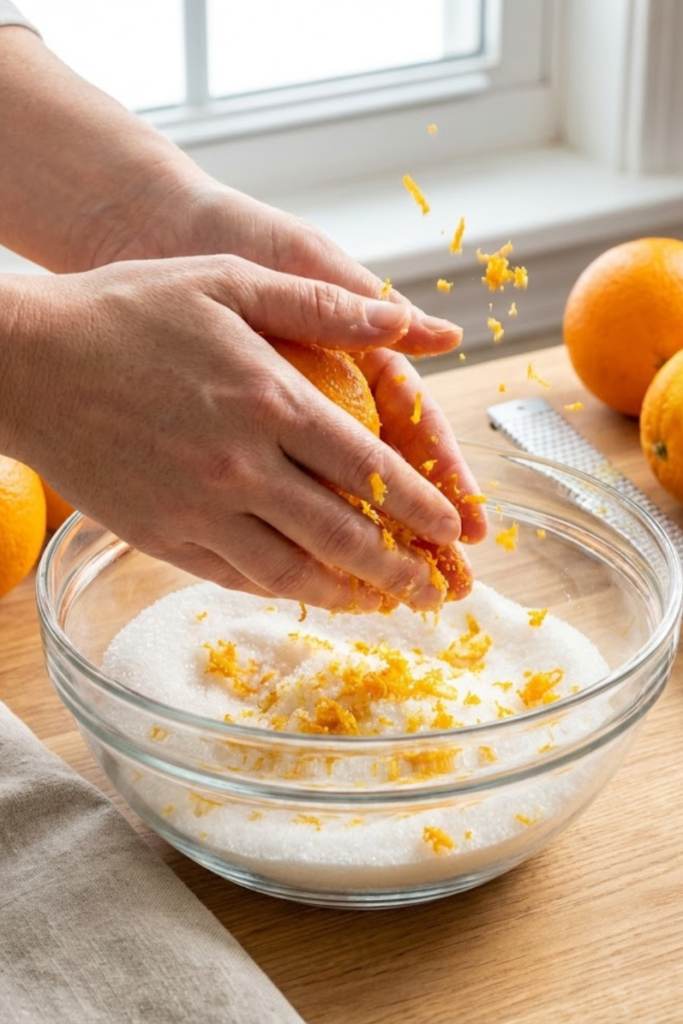
Here is a trick I learned from an old baking book that changed everything for me. Before you mix your wet and dry ingredients, put your white sugar and your fresh orange zest in a small bowl together. Then, use your clean fingers to massage the zest into the sugar. It feels a bit weird at first, kind of like playing with wet sand at the beach. But after a minute, the sugar turns a beautiful light orange color and smells incredible. Doing this helps the orange flavor spread through the whole cake instead of just being stuck in little clumps. It makes certain that every single bite has that zingy taste you are looking for.
Balancing with Extract
Now, I’m not saying that orange extract is evil or something you should never use. It can really help boost the flavor if your oranges aren’t very ripe or juicy. But you should only use a tiny bit. I usually go for about half a teaspoon at the most. Think of it like salt—it should make the other flavors better, but it shouldn’t be the main event. If you use too much, the cake starts to taste fake or like candy. In 2026, people want their desserts to taste real and fresh, so let the fruit do the heavy lifting for you. It takes a few more minutes to zest three oranges, but your friends will definitely notice the difference!
Time to Bake!
Wow, we have covered a lot of ground today! I really hope you feel like you can go into your kitchen right now and knock this chocolate orange layer cake out of the park. It might seem like there are a lot of steps, but once you get started, it all flows together pretty well. Just think about that amazing smell that is going to fill your whole house. It is way better than any candle you can buy at the store!
A Quick Recap for Success
To make sure your cake is a total hit, just keep the main things we talked about in your head. First, don’t skimp on the cocoa powder. Get that high-fat Dutch-processed stuff so your cake is dark and moist. Second, remember my little trick about rubbing the orange zest into the sugar. It’s a small thing that makes a massive difference in how the citrus flavor hits your tongue. Third, be patient with the assembly. Do that crumb coat and let the cake chill in the fridge so it doesn’t slide around. Finally, decide if you want the sweetness of buttercream or the richness of a dark chocolate ganache. You really can’t go wrong either way!
How to Store Your Masterpiece
If you actually have any leftovers (which rarely happens at my house!), you need to know how to keep them fresh. I usually keep mine in a cake carrier on the counter if I’m going to finish it the next day. But if it’s really warm in your kitchen, put it in the fridge. Just remember to take it out about an hour before you want to eat it. Cold chocolate cake can taste a bit like a brick, and we want it to be soft and velvety. A little tip from my classroom: if the cake starts to get a bit dry, you can zap a slice in the microwave for five seconds. It wakes up the chocolate and makes the ganache all gooey again.
Share the Love
I would absolutely love to see how your cake turns out! If you take a photo of your beautiful creation, please share it on Pinterest so other bakers can see what you’ve made. It helps our little baking community grow, and it’s so fun to see the different ways people decorate their layers. Now, go grab your apron and some oranges and get baking. You’ve got this!