You know, after teaching for twenty years, I’ve realized that kids and adults alike can never agree on much, except for one thing. Everyone seems to love the mix of chocolate and mint, and it’s always a top request in my house during the holidays. I’ve spent a long time trying to get my chocolate mint layer cake just right so it isn’t dry as a bone or too crumbly. At first, my frosting tasted like toothpaste, which was a total disaster during the school bake sale a few years back. But I finally figured out the trick to making it fudgy and cool at the same time without making a huge mess. I’m gonna walk you through it so you can make a real showstopper for your family without getting stressed out.
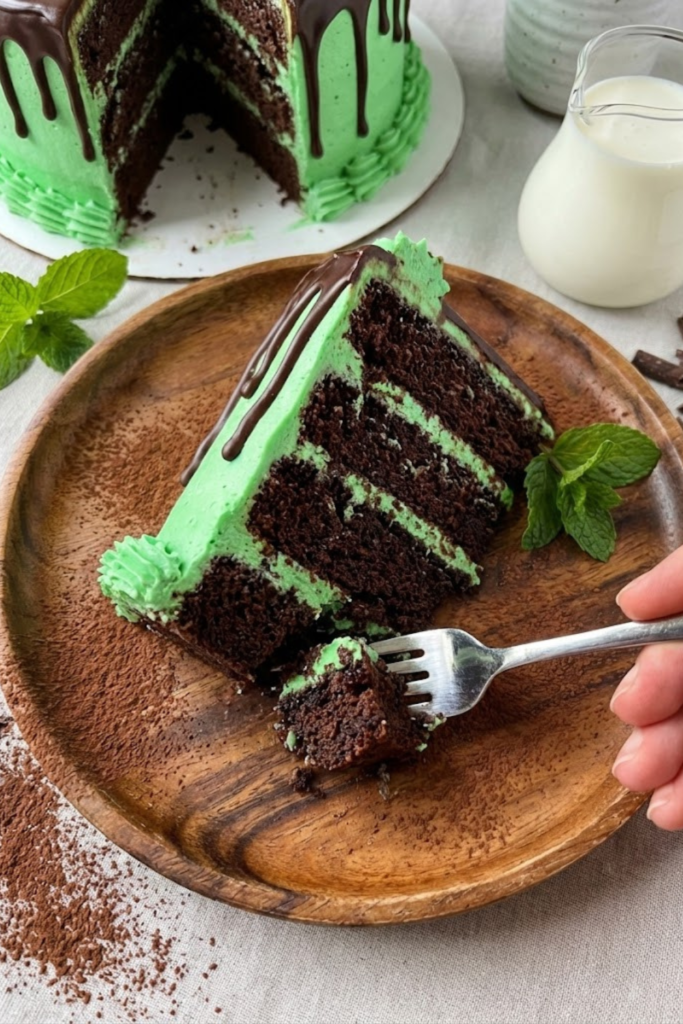
The Secret to a Moist Chocolate Sponge Every Time
You know, after years of baking for school fairs and family birthdays, I’ve learned that a dry cake is basically a crime. I remember one time, I made this big chocolate mint layer cake for my cousin’s wedding rehearsal. It looked great, but when people started eating, it was so dry they were reaching for their water glasses like they’d been stuck in a desert. It was honestly pretty embarrassing! That’s when I realized I needed to change my approach and stop doing things the old-fashioned way just because that’s how I was taught.
Why Oil Beats Butter for Texture
Most folks think butter is the best because it tastes so rich. But for a chocolate mint layer cake, oil is actually the real winner. Oil stays liquid even when the cake cools down or sits in the fridge, which keeps the sponge feeling soft and moist for days. When you use butter, the cake can get a bit hard or crumbly once it’s chilled. Since mint cakes usually have a creamy frosting that needs to stay cool, using oil is a smart move to keep that texture perfect every time you take a bite. I usually go with a simple vegetable oil because it doesn’t change the flavor, letting that cocoa really shine.
The Magic of Hot Coffee
This sounds a bit weird if you haven’t tried it, but I always add a cup of hot coffee to my chocolate batter. You won’t actually taste the coffee at all, I promise! The heat from the liquid helps the cocoa powder “bloom.” This just means it wakes up the cocoa and brings out all that deep, dark chocolatey goodness that makes the cake taste expensive. It also makes the batter very thin and watery, which used to scare me. I thought I’d messed up the recipe! But that thin batter is exactly what creates a really light and airy crumb that stays hydrated while it bakes in the oven.
Stop Mixing So Much!
One big mistake I see my students make in class is mixing the batter until it’s perfectly smooth. If you stir it too much, you develop the gluten in the flour, and then your cake turns out tough like a piece of bread instead of a dessert. I always tell them to just stir until the white streaks of flour are gone. A few small lumps are totally fine and will disappear while baking. This keeps the cake tender and prevents it from getting that rubbery feel. Just take it slow, use a spatula to fold things in gently, and trust that it’s going to turn out great.
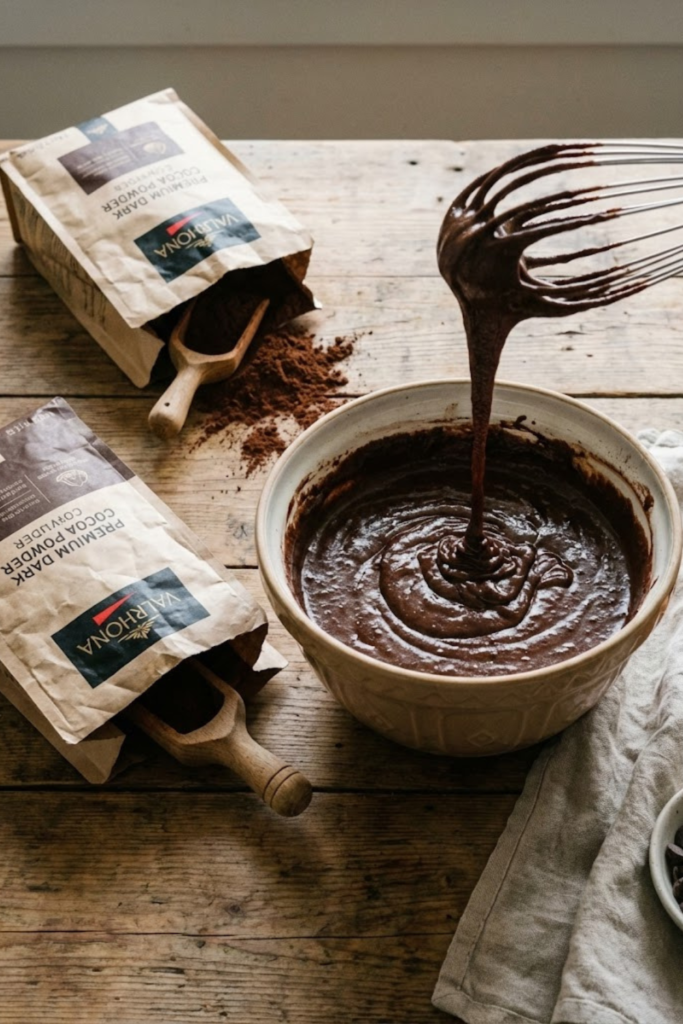
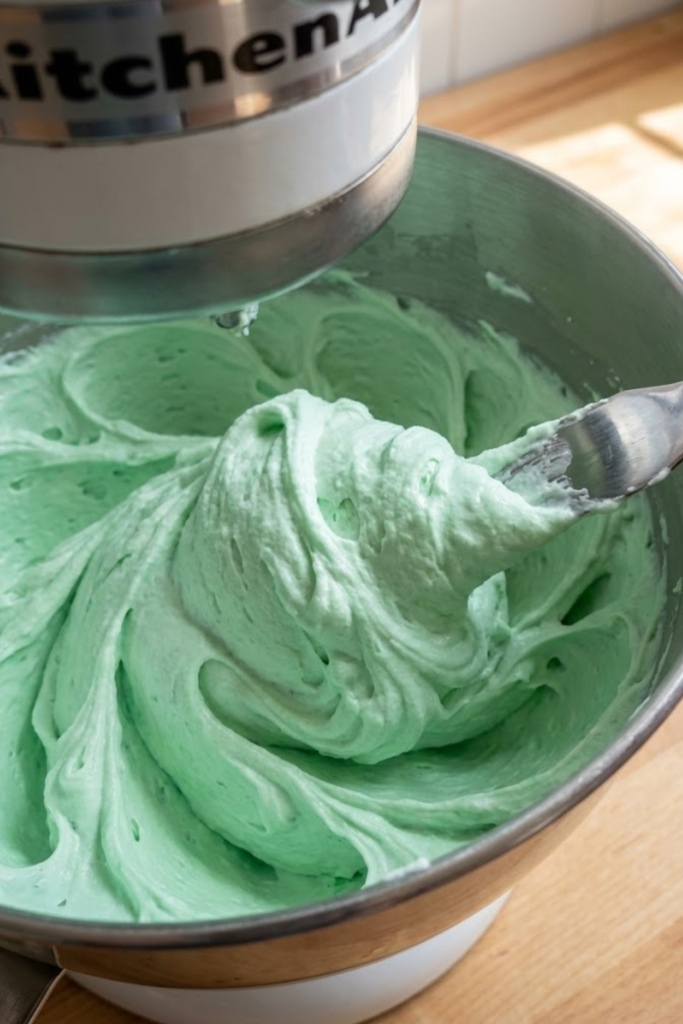
Whisking Up the Dreamiest Peppermint Buttercream
Now, we have to talk about the part that really makes a chocolate mint layer cake stand out: the frosting. If the cake is the foundation, the buttercream is the personality. I’ve seen so many people spend hours on their sponge only to slap on some store-bought stuff that tastes like plastic. Trust me, making your own peppermint frosting is way easier than you think, and the taste difference is like night and day. When I first started teaching my baking elective at school, the kids would always go overboard with the mint. We ended up with cakes that tasted like a tube of Crest! It took some trial and error, but I finally found the sweet spot.
Getting the Color Just Right
When you’re making a chocolate mint layer cake, you want that iconic pale green color. But here is the thing: a little bit of food coloring goes a long way. I usually tell my students to use gel colors instead of the liquid ones you find in the grocery store aisle. The liquid stuff can thin out your frosting and make it runny. Just take a toothpick, dip it in the green gel, and swirl it into the butter. You want it to look like a soft mint leaf, not a neon sign. If you accidentally go too dark, just add more white frosting to tone it down. It’s a simple fix that saves you from starting over.
The Trick to the Perfect Mint Balance
The biggest worry with peppermint is that it can get overwhelming fast. Peppermint extract is very strong—way stronger than vanilla. For a standard batch of buttercream, I usually start with just half a teaspoon. Taste it, then add a tiny bit more if you really want that kick. You want people to feel a cool sensation, but you still want to taste the sugar and the butter. I also like to add a pinch of salt. It sounds weird for a sweet frosting, but it actually helps cut through the heavy sugar and makes the mint taste much cleaner.
Keeping it Fluffy and Smooth
To get that bakery-style look, your butter has to be at room temperature. Not melted, and not cold. If it’s too cold, you’ll get lumps that look like cottage cheese. I usually let my butter sit out on the counter for about two hours before I start mixing. Beat the butter by itself for a good five minutes before you even think about adding the powdered sugar. This beats air into it and makes the frosting light as a cloud. If it feels too stiff to spread on your chocolate mint layer cake, just add a tablespoon of heavy cream. It makes the texture so silky that it practically glides onto the cake.
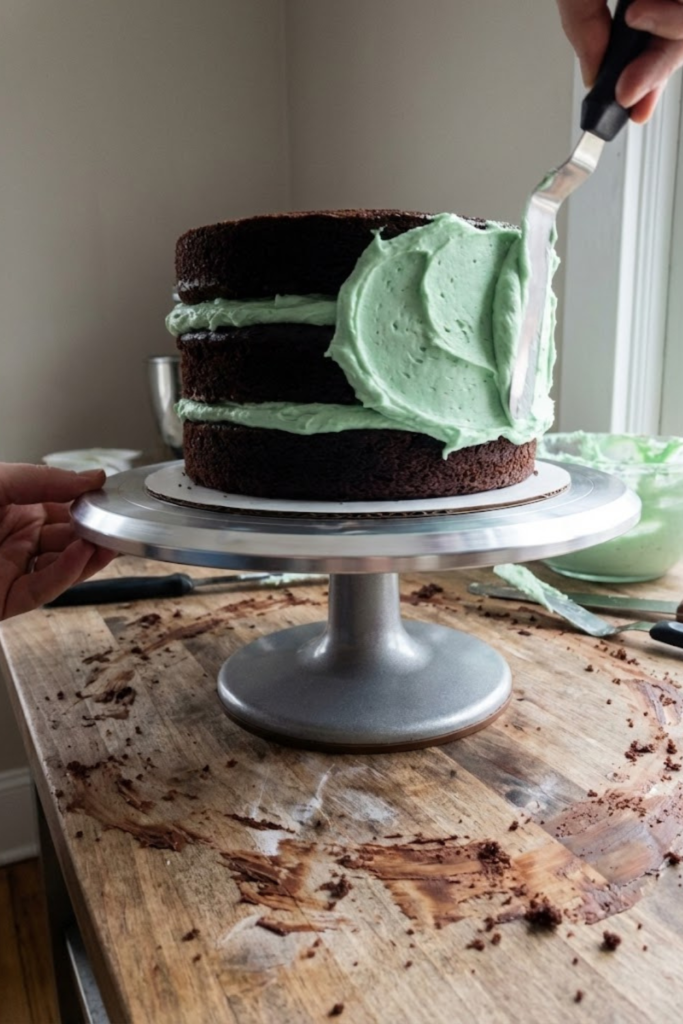
Pro Tips for Layering and Frosting Without the Mess
I’ll be the first to admit that for a long time, I was terrified of stacking cakes. I used to think that as long as the cake tasted good, it didn’t matter if it looked like the Leaning Tower of Pisa. But then came the year I made a chocolate mint layer cake for my daughter’s graduation. I was in such a rush that I didn’t let the layers cool properly. Halfway through the party, the top layer literally slid off the base and landed with a thud on the table. It was a chocolatey disaster! Since then, I’ve learned a few tricks that make the whole process way less stressful and a lot cleaner.
Cold Cake is Your Best Friend
The biggest mistake people make is trying to frost a cake that is still even a little bit warm. If there is any heat left in that sponge, your beautiful peppermint buttercream will turn into a soupy mess. I’ve found that the best way to handle this is to wrap your cooled layers in plastic wrap and stick them in the freezer for about thirty minutes. You don’t want them frozen solid, just firm. A cold cake doesn’t crumble as much when you’re spreading the frosting, and it stays put while you’re working. It’s a total game changer for keeping those layers straight and tall.
Don’t Skip the Crumb Coat
If you’ve ever seen dark brown crumbs stuck in your pretty green frosting, you know how frustrating that can be. This is where the “crumb coat” comes in. It’s just a very thin layer of frosting that you spread over the entire cake to trap all those loose bits. It doesn’t have to look pretty—in fact, bakers often call it a “dirty icing” layer. Once you’ve got that thin coat on, pop the whole chocolate mint layer cake back in the fridge for twenty minutes. This sets the frosting like a shield. When you go back to do the final thick layer of minty goodness, your spatula will glide right over it without picking up a single crumb.
The Parchment Paper Trick
I used to get so much frosting on my serving plate that it looked like a toddler had been playing in the kitchen. Then an old friend showed me a trick with parchment paper. Before you put your first layer down, take four strips of parchment paper and lay them in a square on your plate or cake board. Set the cake right on top of the edges of the paper. Now, you can be as messy as you want with your frosting! Once you’re finished decorating, you just gently pull the strips out from under the cake. You’re left with a perfectly clean plate and a professional-looking chocolate mint layer cake that’s ready for its close-up.
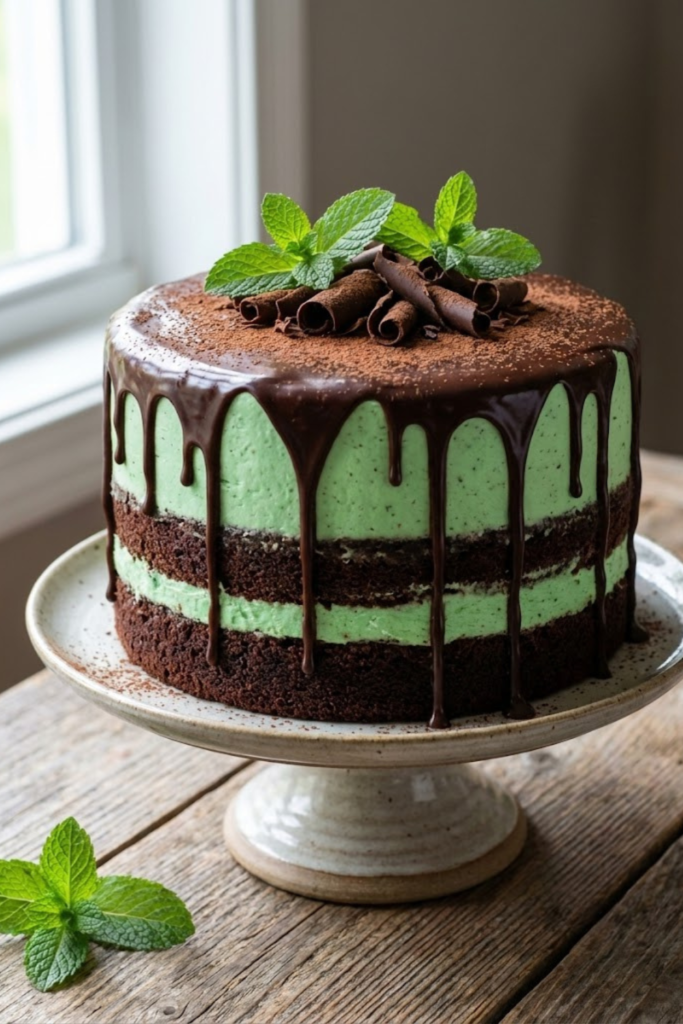
Decorating Your Masterpiece: Ganache Drips and Bark
This is the part where you finally get to be an artist. My students always love this step the most because it’s when the chocolate mint layer cake starts to look like something you’d see in a fancy bakery window downtown. I used to be so scared of doing a “drip” cake. I thought it required some kind of magic or really expensive tools that I didn’t have in my kitchen. But honestly? It’s mostly just about patience and getting the temperature right. I remember the first time I tried it, the chocolate was way too hot and it just melted my green frosting right off the sides. It looked like a swampy mess! But once you get the hang of it, you’ll want to put a chocolate drip on every single thing you bake.
The Easy 2-Ingredient Ganache
You don’t need anything fancy for a great ganache. I just use dark chocolate chips and heavy cream. The trick is to heat the cream until it’s just about to boil, then pour it over the chocolate and let it sit. Don’t stir it right away! Let it sit for five minutes so the chocolate melts naturally. When you finally stir it, it turns into this glossy, beautiful liquid. If it looks a bit dull, a tiny splash of corn syrup can make it shine, but it isn’t necessary. I usually make this while my chocolate mint layer cake is chilling in the fridge after the final coat of frosting so the ganache has time to cool down to room temperature.
Timing Your Drip Just Right
The most important thing is that your cake is cold and your ganache is barely warm. If the ganache is too hot, it runs all the way to the bottom of the plate. If it’s too cold, it won’t run at all and just sits there in big clumps. I usually do a “test drip” on the back of a spoon first. When I’m ready, I use a small squeeze bottle or even just a teaspoon to gently push the chocolate over the edge of the cake. Start at the back of the cake so you can practice your technique before you get to the front. It’s okay if the drips aren’t all the same length—that actually makes it look more “handmade” and charming.
Toppings for That Extra Crunch
To finish it off, I love adding some texture to the top. While the ganache is still a little wet, I sprinkle on some crushed peppermint candies or those little Andes mints you can buy at the store. It gives people a hint of what’s inside. If you want to get really fancy, you can melt some white chocolate with a drop of green coloring, spread it thin on parchment paper, and let it harden. Then you just break it into “bark” pieces and stick them into the top of the frosting. It adds a lot of height and makes your chocolate mint layer cake look like a real showstopper for the family.
Bringing Your Chocolate Mint Masterpiece to the Table
Well, we have covered a lot of ground today! From the very first stir of the batter to that final, glossy chocolate drip, making a chocolate mint layer cake is a journey that is well worth the effort. I know it can seem like a lot of steps, but if you take it one piece at a time, you will find that it is much easier than it looks. I’ve spent years making mistakes in my own kitchen so that you don’t have to, and I really believe that anyone can bake a cake that looks like it belongs in a bakery window.
The most important thing to remember is the balance of flavors. You want that deep, rich chocolate from the oil-based sponge to sit right next to the cool, refreshing peppermint frosting. By using the hot coffee trick and being careful with your extract, you’ve created a dessert that isn’t too sweet or too heavy. It is the kind of treat that people will keep coming back for, slice after slice. I’ve seen it happen at every school bake sale and family reunion I’ve ever been to—this flavor combo is a crowd-pleaser every single time.
If you happen to have any leftovers, which doesn’t happen often in my house, make sure to store them in an airtight container. Since the frosting is made of real butter, it is best to keep the cake in the fridge. However, for the best taste, I always tell my friends to let their slice sit on the counter for about twenty minutes before eating. This lets the buttercream soften up just enough to melt in your mouth. You can even freeze individual slices for up to a month! Just wrap them tightly in plastic wrap so they stay fresh for whenever you need a quick sugar fix.
I really hope this guide helps you feel more confident when you step into your kitchen. Baking is a wonderful way to show people you care about them, and there is nothing quite like the feeling of pride when you finish a tall, beautiful cake. If you found these tips helpful, please save this recipe to your Pinterest boards! Sharing it helps other home bakers find these tricks and keeps our baking community growing. I can’t wait to hear how your chocolate mint layer cake turns out!