They say you can’t buy happiness, but you can buy the ingredients for a caramel brownie cheesecake, and honestly? That is pretty much the same thing! If you have ever been torn between baking a batch of fudgy brownies or a smooth cheesecake, this recipe is going to be your new best friend. I remember the first time I tried to combine these two—it was a messy kitchen disaster, but the taste? Absolutely unforgettable. In this guide, we are going to master the art of the perfect dessert mashup. Get your springform pan ready, because we are diving into layers of chocolatey goodness that will impress everyone at your table!
Why This Brownie Bottom Cheesecake is the Ultimate Dessert
I still remember the first time I brought a dessert to the school district potluck. I thought a healthy fruit salad would be a hit. Boy, was I wrong. It sat there, sad and untouched, while a store-bought cake got devoured in minutes. That was a hard lesson learned: people want the good stuff. That is exactly why this caramel brownie cheesecake has become my secret weapon. It is basically a cheat code for winning over any crowd.
The Best of Both Worlds
Most desserts are kind of one-note. You either get a soft cake or a crunchy cookie, right? But this recipe changes the game. You start with a dense, fudgy brownie bottom that is chewy and rich. Then, you stack a smooth, creamy cheesecake layer right on top of it.
It creates this texture contrast that is honestly addictive. I used to think mixing these two was too much work. I mean, who has time for two batters? But once I tasted how the dense brownie supports the light cheesecake, I knew I couldn’t go back. It is worth the extra bowls to wash, I promise.
Flavor That Hits Different
Let’s be real for a second. Sometimes, a plain cheesecake is just too tangy for people. And sometimes, a brownie is just way too sweet and heavy. By putting them together, they actually balance each other out perfectly.
The tang from the cream cheese cuts right through the sugar of the chocolate. Then, when you drizzle that salted caramel topping over the whole thing? It is over. That sweet and salty dessert combo triggers something in the brain that just makes you happy. I actually caught my neighbor licking her plate the last time I made this. It was hilarious, but I totally get it.
A Real Crowd Pleaser
If you are stressed about what to bring to a family gathering or a holiday party, this is it. It looks super fancy, like you bought it from a bakery. My friends always ask for the recipe, assuming it was super hard to make.
I usually just smile and say, “Oh, it was a labor of love.” (Even though the brownie base recipe is actually pretty straightforward). It is the perfect rich chocolate flavor for birthdays or when you just need to impress your in-laws. Just a heads up, though—don’t expect to take any leftovers home. This thing disappears fast.
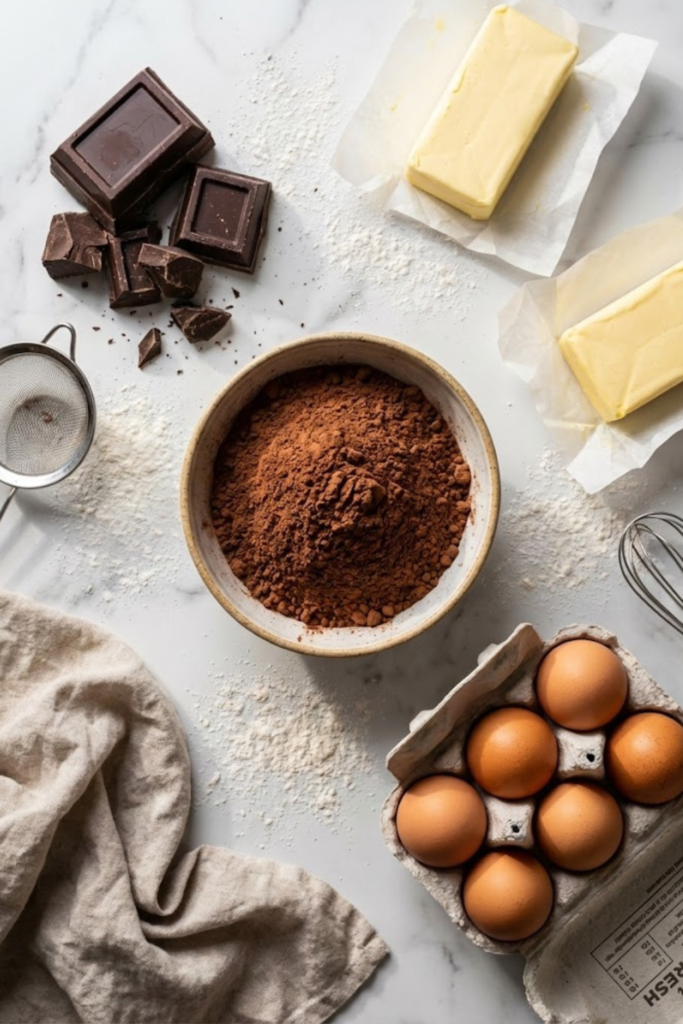
Ingredients You Need for the Fudgiest Brownie Base
I used to think baking was just throwing things in a bowl and hoping for the best. I remember standing in the baking aisle years ago, staring at the cocoa powder. I grabbed the cheapest generic brand I could find because, hey, chocolate is chocolate, right?
That was a huge mistake. The brownies came out tasting like sad, dusty cardboard. When you are making a caramel brownie cheesecake, the base is literally the foundation of the whole dessert. If the foundation is weak, the whole house crumbles.
Over the years, I have learned—mostly through trial and error and a few kitchen disasters—that specific ingredients matter. You don’t need the most expensive stuff from a specialty shop. But you do need to know what to look for at your local grocery store.
Cocoa Powder vs. Melted Chocolate
This is the great debate in the baking world. Some recipes swear by melted chocolate for that fudgy texture, while others say cocoa gives a deeper flavor. Personally, I found that using just melted chocolate can sometimes make the base too hard once it is chilled in the fridge.
For this recipe, I lean heavily on a high-quality cocoa powder. It gives you that intense chocolate hit without making the brownie rock-hard under the cheesecake layer. I usually reach for Dutch-processed cocoa because it is less acidic and has a darker color. It makes the fudgy brownie base look amazing against the white cheesecake.
Butter Quality Matters
I know it is tempting to use whatever butter is in the fridge. I have definitely been guilty of using salted butter because I was too lazy to go to the store. The problem is that different brands add different amounts of salt.
If you use salted butter, you lose control over the flavor. You might end up with a base that is way too salty, especially since we are adding a salted caramel topping later. Stick to unsalted butter so you can control the salt level yourself. It really does make a difference in the final taste.
The Sugar Ratio Secret
Here is a little trick I picked up after baking way too many dry brownies. Don’t just use white granulated sugar. White sugar is great for that crinkly top we all love, but it doesn’t do much for moisture.
You need to add brown sugar into the mix. Brown sugar has molasses in it, which adds moisture and creates that chewy texture we are after. I usually do a mix of both. If you use all white sugar, you risk the base being too cakey. We want fudgy, not cakey.
Room Temperature Eggs
This is the one step I used to skip all the time. Who has time to wait for eggs to warm up? Well, I learned my lesson when my batter curdled and looked like a science experiment gone wrong.
Cold eggs hit that warm melted butter and shock it, causing the fat to seize up. It ruins the emulsion. Just set your eggs on the counter about 30 minutes before you start. If you forget (which I do constantly), just put them in a bowl of warm water for 5 minutes. It is a lifesaver and helps you get that smooth, glossy batter for the perfect caramel brownie cheesecake.
Secrets to a Crack-Free Cheesecake Filling
There is nothing—and I mean nothing—more heartbreaking in the kitchen than pulling a gorgeous cheesecake out of the oven, only to see a massive crack running right down the center. I used to call it the “Grand Canyon” effect. My early attempts at baking were full of these disasters. I would try to cover the cracks with huge mounds of whipped cream or fruit, hoping nobody would notice. But deep down, I knew.
It took me years to realize that a smooth, perfect top isn’t just about luck. It’s about science, and honestly, it’s about patience. If you want that bakery-style cheesecake without cracks, you have to treat the batter with a little bit of respect. It’s not a race.
The Cream Cheese Trap
Here is a mistake I made way too many times: buying the wrong cream cheese. I used to grab the tubs of spreadable cream cheese because they were on sale. Big mistake. Those tubs have extra air and water whipped into them, which messes with the structure of the cake.
You absolutely need to use brick-style cream cheese. It has the density you need to hold everything together. Also, don’t even think about using the low-fat stuff. We are making a caramel brownie cheesecake here, not a salad. The fat is what gives you that silky, luxurious mouthfeel. If you cut corners here, the texture will be rubbery, and nobody wants that.
Stop Beating It to Death
When I got my first stand mixer, I was obsessed with the high-speed setting. I thought, “The faster I mix, the smoother it will be, right?” Wrong.
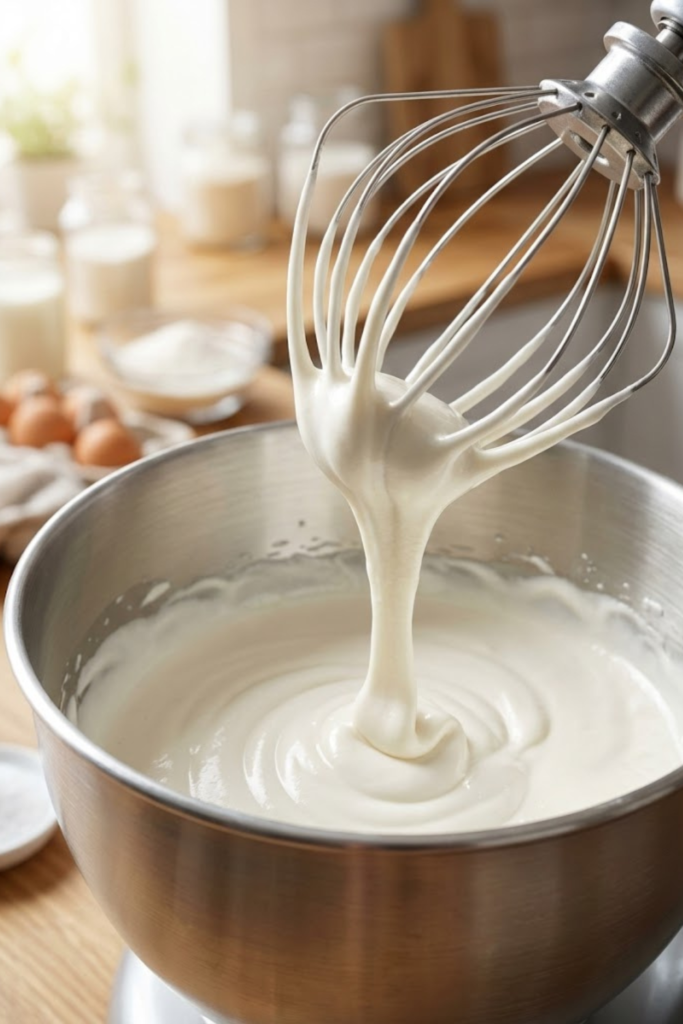
When you mix the batter on high speed, you are forcing air bubbles into the mixture. Those bubbles get trapped. Then, when the cheesecake bakes, those bubbles expand and burst, causing the surface to crack.
I learned to keep my mixer on the lowest speed possible. It feels agonizingly slow, but it works. You just want to combine the ingredients, not whip them. This is crucial for getting that dense, creamy cheesecake filling that looks professional.
The Magic of Sour Cream
For the longest time, I just used cream cheese and eggs. It was fine, but it felt a little heavy. Then a friend told me to add sour cream. I was skeptical, but I tried it.
The difference was night and day. Sour cream (or even heavy cream) breaks up the density of the cheese just enough to make it smooth. It adds a slight tang that balances the sugar in the brownie bottom cheesecake. Plus, the extra fat helps keep the cheesecake moist, which stops it from drying out and cracking in the oven.
Flavor Infusion
Since we are keeping the filling relatively simple to contrast with the brownie and caramel, the flavor needs to be pure. I stopped using the cheap imitation vanilla extract years ago. It tends to bake out and leave a weird aftertaste.
If you can, grab some vanilla bean paste. Seeing those little black specks in the white batter makes it look so fancy, and the flavor is way more intense. It elevates the whole dessert from “good” to “wow, did you make this?”
Homemade Salted Caramel Sauce vs. Store-Bought
I used to be absolutely terrified of making caramel. It felt like this high-stakes chemistry experiment where one wrong move could ruin the pan—and probably my day. For years, I just grabbed those jars of caramel sauce from the ice cream aisle. You know the ones. They are super thick and taste… fine?
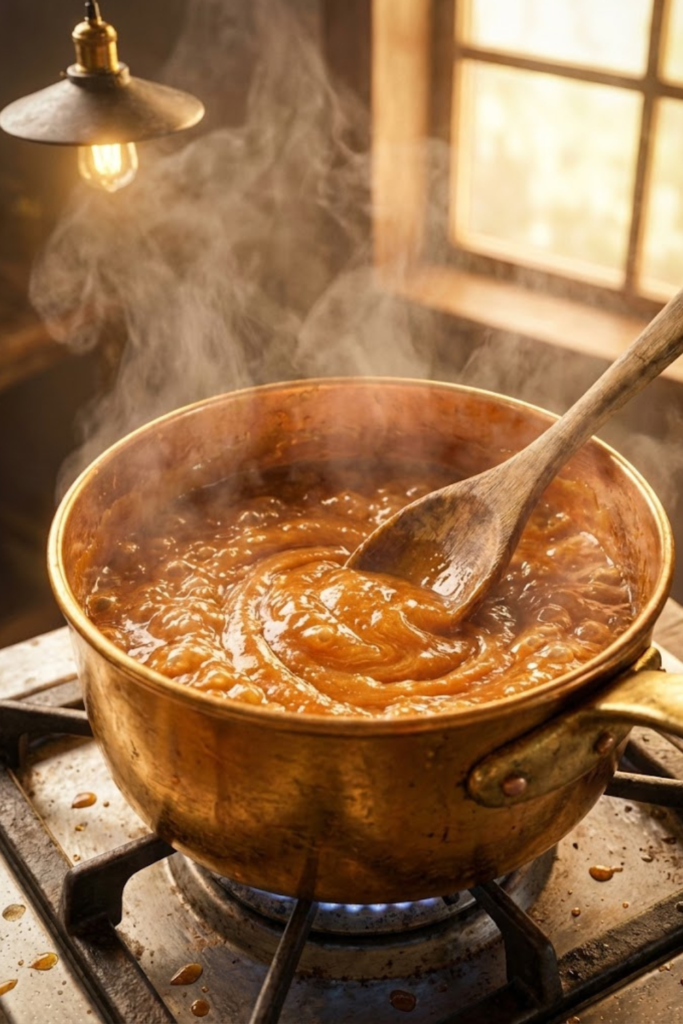
But “fine” doesn’t cut it for a caramel brownie cheesecake. Once I finally worked up the courage to make it from scratch, I realized what I had been missing. The difference is honestly shocking. Store-bought sauce is usually just corn syrup and artificial vanilla. It tastes sweet, but flat. Homemade caramel sauce, on the other hand, has this deep, nutty, buttery flavor because you are actually caramelizing the sugar. It adds a complexity that makes the dessert taste expensive.
The Taste Test
If you do a side-by-side taste test, you will never go back. I remember making a batch for a bake sale, and I ran out of my homemade stuff, so I used a jar for the last few slices. I tasted the difference immediately. The jarred stuff was cloyingly sweet and had a weird chemical aftertaste.
The homemade version has those slightly bitter, burnt sugar notes that pair so well with the rich chocolate flavor of the brownie. It is not just about sweetness; it is about depth. It takes about 15 minutes to make, and trust me, your tastebuds will thank you.
Safety First (Learn from My Burns)
Okay, real talk: boiling sugar is dangerous. I call it “kitchen napalm.” I learned this the hard way when I tried to lick a spoon too early. Do not do that. It sticks to your skin and burns like crazy.
When you are making the caramel, use a bigger pot than you think you need. When you add the heavy cream to the hot sugar, it is going to bubble up violently. If your pot is too small, it will overflow onto your stove, and cleaning hardened cement-sugar off a burner is a nightmare I wouldn’t wish on anyone. Also, wear long sleeves. A stray splatter is no joke.
Getting the Consistency Right
The trickiest part is getting the right caramel sauce viscosity. You want it to be pourable but not so thin that it runs right off the cheesecake and pools on the plate.
I usually let my caramel cool down to room temperature before pouring it. If you pour it hot, it will melt the top of your cheesecake. If it gets too thick in the jar, you can just zap it in the microwave for ten seconds. You want that slow, sexy drip down the side of the slice.
The Finishing Touch
This is where the magic happens. You have to finish it with sea salt flakes. Don’t mix the salt into the sauce (okay, maybe a pinch), but the real flavor comes from sprinkling flaky salt on top right before serving.
That little crunch of salt against the smooth cream cheese and sticky caramel? It is the best bite in the world. It cuts the sweetness perfectly. If you skip this, it might just be too sweet for some people.
Step-by-Step Assembly and Baking Guide
Putting this beast together is where things get real. I remember the first time I tried to layer these two batters. I was impatient (shocking, I know) and just dumped the cheesecake filling right onto the raw brownie batter.
Big mistake. The cheesecake sank right into the brownie, and when I cut into it later, it was a total mush-fest. The layers were undefined, and the texture was all wrong. Assembly is not just about stacking; it is about timing. If you want that picture-perfect definition between the dark chocolate and the white filling, you have to follow a specific order of operations.
Par-baking the Brownie
This is the step you cannot skip. You need to bake the brownie base by itself for about 20 to 25 minutes first. You aren’t trying to bake it all the way through, just enough to set the top crust.
This creates a barrier. When you pour the creamy cheesecake layer on top later, it will sit pretty right on the surface instead of sinking. It also helps avoid that dreaded soggy bottom. I’ve ruined enough desserts to know that nobody likes a wet crust. Let it cool for about 10 minutes before adding the filling.
The Water Bath Method
Okay, I know. The words “water bath” make every home baker want to run for the hills. It sounds complicated and risky. But for a baked cheesecake texture that is silky smooth, it is non-negotiable.
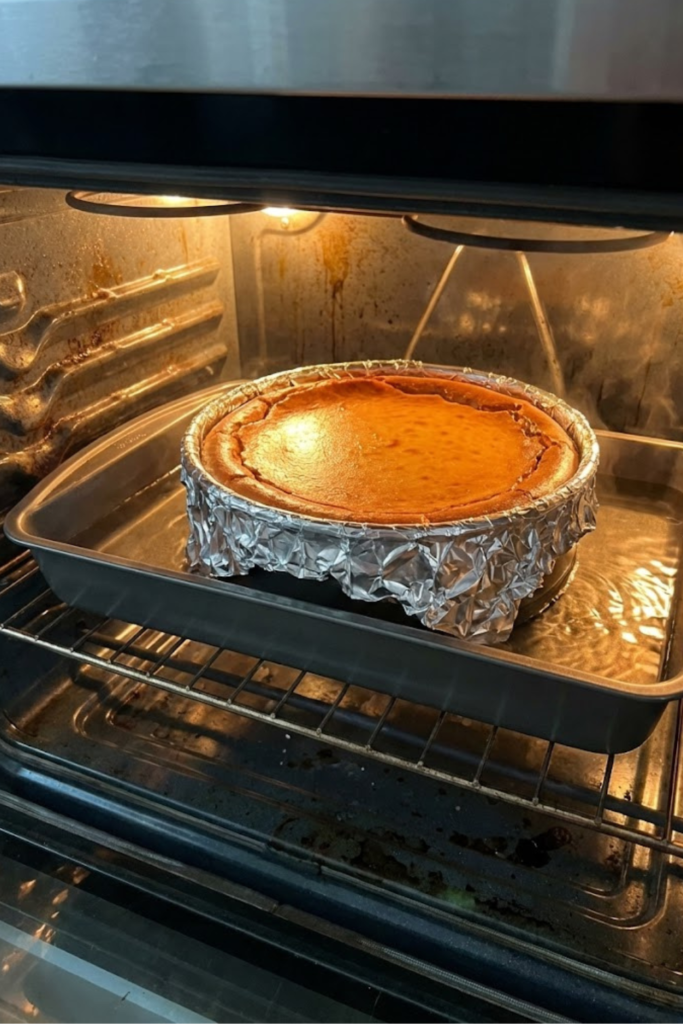
Here is my trick: buy the extra-wide heavy-duty foil. Wrap the bottom of your springform pan in at least three layers of foil. I am paranoid about water leaking in and ruining the brownie, so I go overboard with the foil. Then, place the pan in a large roasting pan and fill the roasting pan with hot water about halfway up the side of the cheesecake pan. The steam keeps the oven moist and cooks the eggs gently.
The Jiggle Test
Knowing when a cheesecake is done is actually kind of an art form. You can’t stick a toothpick in it like a regular cake. If you wait until it looks completely solid, you have overbaked it.
You are looking for the “jiggle.” When you gently shake the pan, the edges should be set and puffy, but the center should still wobble a bit, kind of like Jell-O. It looks undercooked, but it isn’t. It will firm up as it cools. If the top starts turning brown, you have gone too far.
The Cooling Process
The hardest part of this recipe is not eating it immediately. Once the timer goes off, turn the oven off but leave the cheesecake inside. Crack the oven door open about an inch (I stick a wooden spoon in the door to hold it).
Let it sit there for an hour. This prevents “thermal shock.” If you pull it out into a cold kitchen too fast, it will crack. After that, it needs to chill in the fridge for at least 6 hours, but overnight is better. The flavor needs time to settle. Trust me, the wait makes the first bite of caramel brownie cheesecake taste even better.
So, Is It Worth the Hype?
Look, I am not going to lie to you. This caramel brownie cheesecake is not a 30-minute recipe. It is not something you whip up on a random Tuesday night when you are tired from work. It takes time, it makes a mess of your kitchen, and waiting for it to cool in the fridge is practically torture .
But is it worth it? Absolutely. 100%.
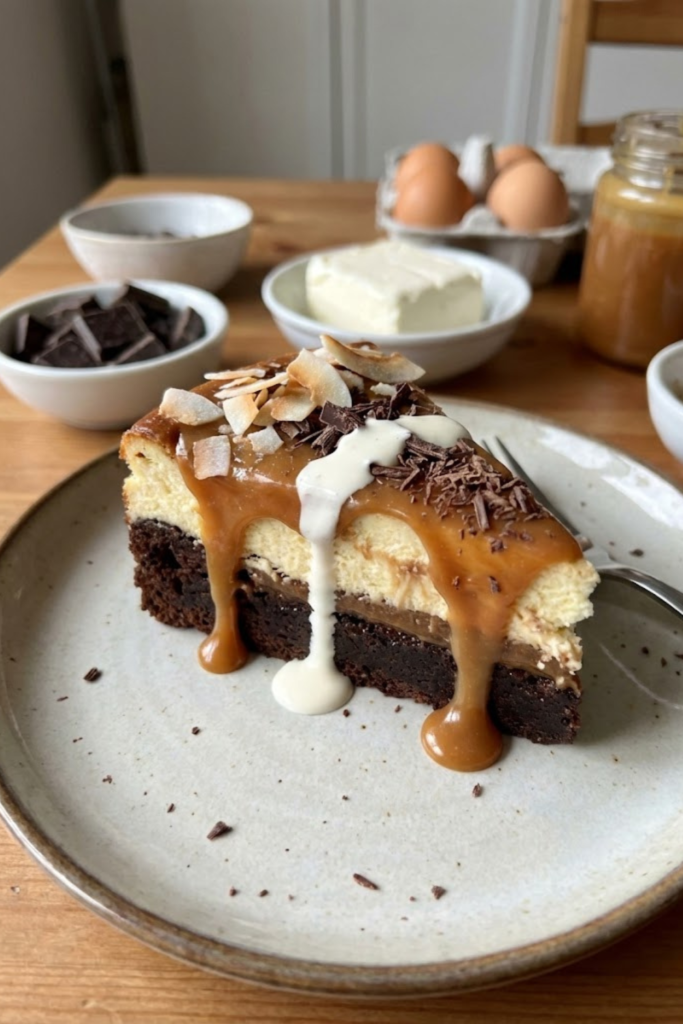
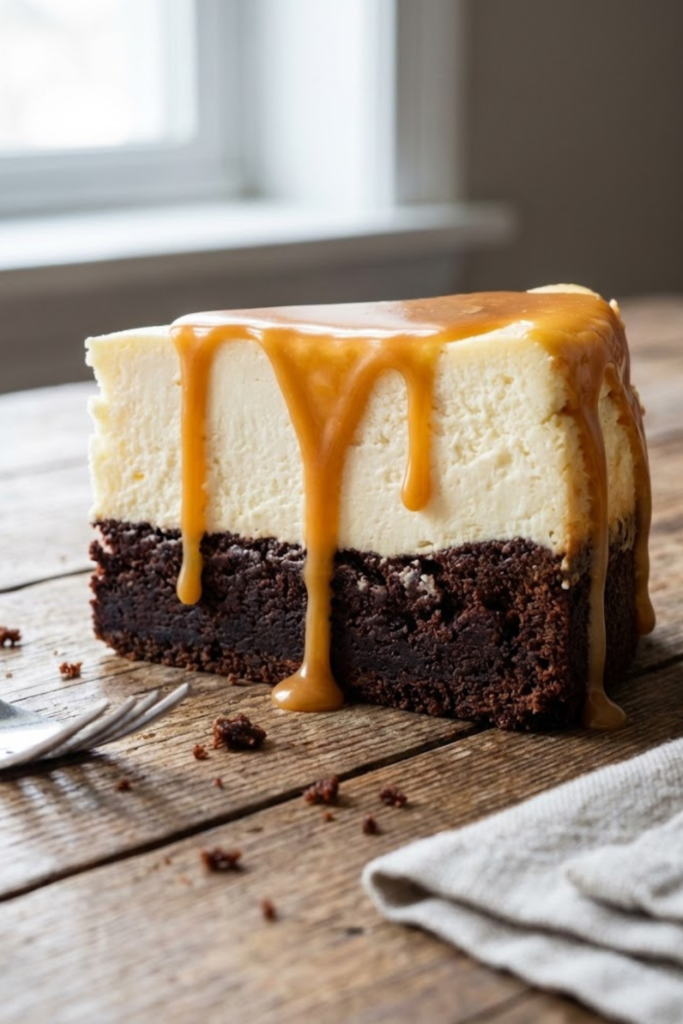
When you finally slice into it and see those distinct layers—the dark, fudgy brownie bottom, the white creamy cheesecake filling, and that golden drip of homemade caramel sauce—you feel like a rockstar. It is the kind of decadent chocolate treat that makes people stop talking and just make “mmm” noises. That is the best compliment a baker can get.
A Labor of Love
I remember feeling so intimidated by cheesecakes. I thought they were only for professional bakers with fancy equipment. But really, if you just follow the steps and respect the process (especially that water bath!), you can do this.
It is okay if your first attempt isn’t perfect. My first one had a soggy crust, and we still ate every single bite. It is all about the flavor combination. That mix of tangy, sweet, and salty is just unbeatable. It is the best cheesecake 2026 has to offer in my book .
Share the Sweetness
If you make this, you are going to be the most popular person at the party. It is the ultimate crowd pleaser. Just don’t blame me when your friends start asking you to make it for every single birthday and holiday moving forward. It happens!
I would love to see how yours turns out. Did you go heavy on the salt? Did you add extra chocolate chips? Let me know!
Do me a huge favor: If you loved this recipe, please pin this image to your Dessert Board on Pinterest! It helps other people find the recipe and saves it so you don’t lose it for next time. Happy baking, my friends!