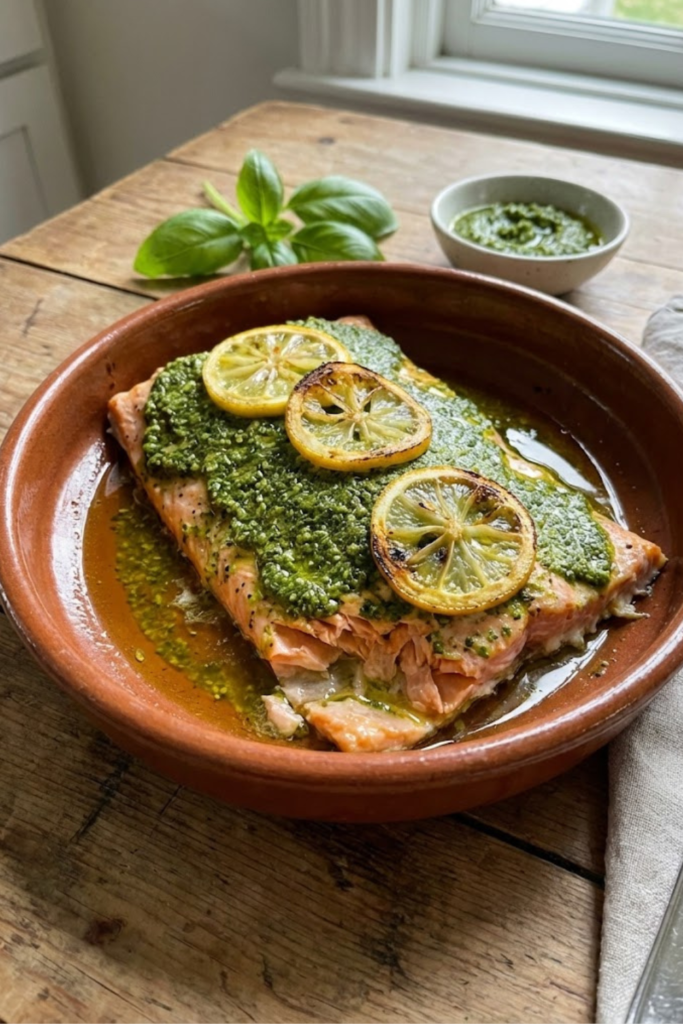
Did you know that salmon is the second most popular fish in America, but nearly 40% of home cooks admit they are afraid of overcooking it? I used to be one of them! For years, my fish ended up as dry as a chalkboard eraser. It was embarrassing, especially since I like to think I know my way around a kitchen. But then I discovered how Baked Salmon with Pesto and Lemon Slices changes the game. The pesto creates a protective barrier that keeps the oils in, while the citrus adds a bright pop that makes the whole dish sing. It’s fast. It’s fresh. Honestly, it’s the kind of meal that makes you feel like a pro even when you’ve had a long day at school.
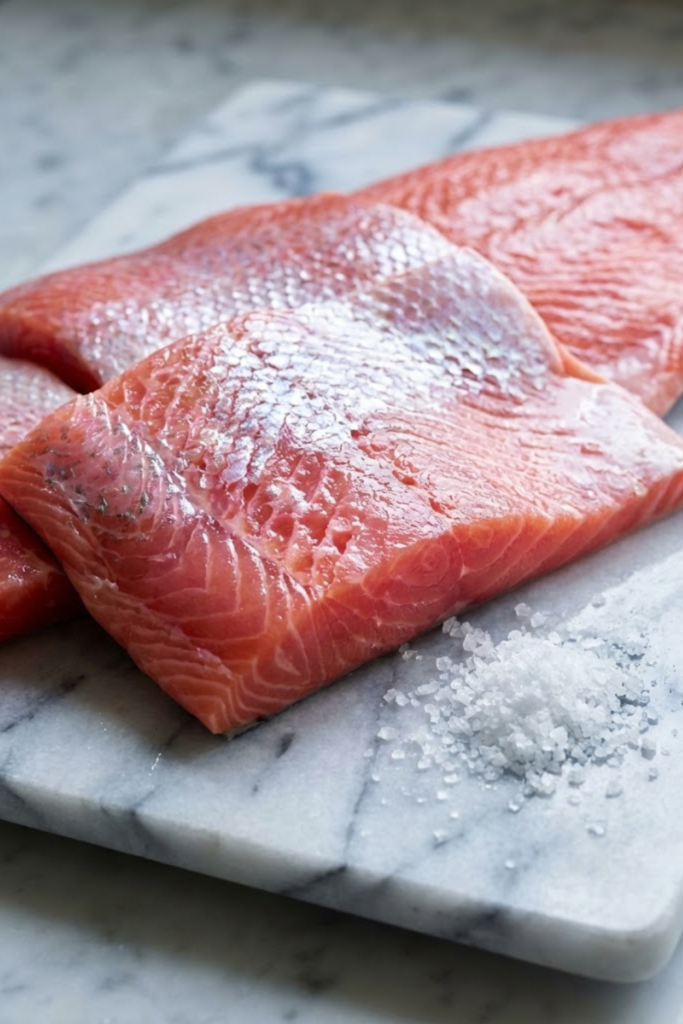
Choosing the Freshness: Wild-Caught vs. Farmed
I remember the first time I tried to make a “fancy” dinner for my family. I went to the store and just picked up the cheapest salmon I could find in the plastic wrap. I thought, “Hey, I’m just putting pesto on it, so who cares?” That was a big mistake. My whole house ended up smelling like a wet dock, and the fish was mushy and gross. After teaching middle schoolers for twenty years, you’d think I’d know better than to take shortcuts! Picking the right fish is the most important part of making Baked Salmon with Pesto and Lemon Slices. If the fish is bad, no amount of lemon is gonna save your dinner.
Wild-Caught: The Lean and Mean Choice
Wild salmon is what I usually look for when I want that deep, bright red color. These fish are basically athletes. They spend their whole lives swimming against cold currents in the ocean, so they are very lean. Because they don’t have a lot of fat, they cook incredibly fast. If you get distracted by a student’s email or a phone call for five minutes, you might come back to a piece of dry wood. It has a very strong, “real” fish flavor. I like using it because the pesto and lemon slices really balance out that “wild” taste. It feels like a real treat when you get it right.
Farmed Salmon: The Rich and Fatty Route
Now, don’t let people tell you farmed salmon is always bad. It’s actually great for beginners because it is very hard to mess up. It has a lot more fat, which you can see in those little white lines throughout the meat. That fat makes the fish very forgiving in the oven. If you leave it in for two minutes too long, it’s still going to be juicy. Plus, it’s usually much cheaper, which helps if you’re trying to stick to a teacher’s budget. I just try to look for brands that don’t use a lot of dyes to make the fish look pink.
The Finger and Nose Test
At the grocery store, don’t be shy. If the fish is in a case, ask the person behind the counter if you can smell it. It should smell like a fresh ocean breeze. If it smells “fishy” or sour, walk away fast! Also, look at the flesh. It should be firm and shiny. If you poke it and your finger leaves a dent that doesn’t go away, it’s not fresh. You want it to be bouncy. Getting the freshest fish makes the whole cooking process way easier and way more delicious. It really makes the difference between a meal people talk about and a meal people just push around their plate.
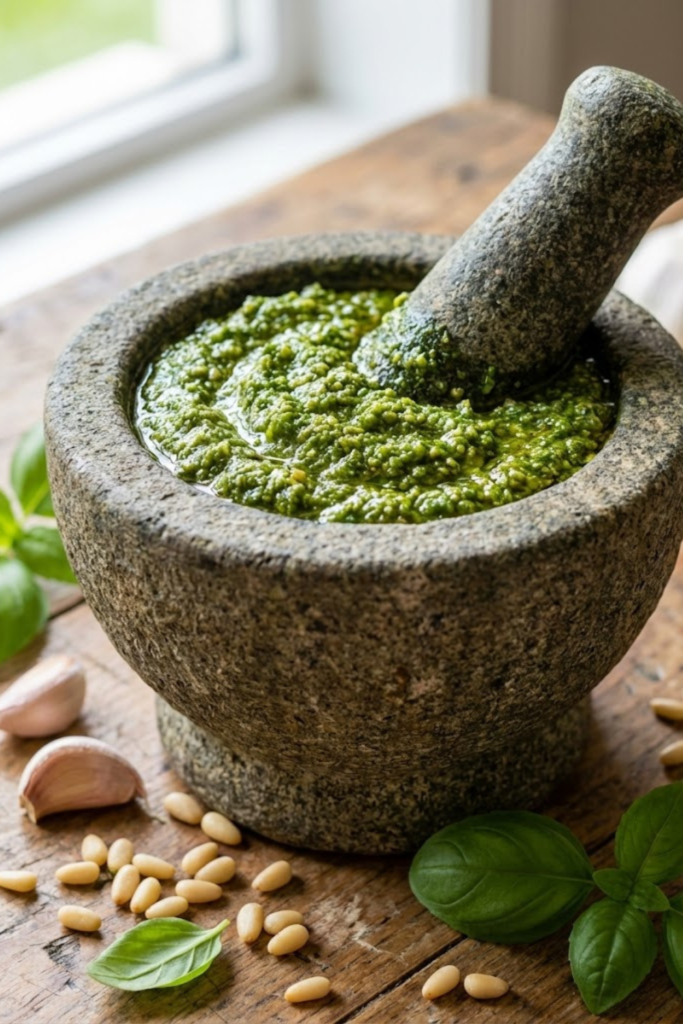
The Pesto Power-Up: Homemade or Jarred?
When I first started making Baked Salmon with Pesto and Lemon Slices, I thought I had to be a superhero in the kitchen. I tried to make my own pesto from scratch every single time. I’d be there with my old food processor, trying to get the pine nuts and basil to blend just right while my cat was meowing for dinner and I still had three sets of history papers to grade. It was a lot of work! Sometimes, though, you just don’t have the energy to be a gourmet chef. I’ve learned that whether you make it yourself or grab a jar from the store, the goal is the same: getting that herb-filled coating to stay on the fish so it tastes amazing.
The Homemade Magic
If you do have a little extra time on a Sunday afternoon, making your own pesto is pretty cool. You just need fresh basil, some garlic cloves, olive oil, parmesan cheese, and pine nuts. I usually throw a little extra garlic in mine because I like that kick. The best part about doing it yourself is that you can control how thick it is. For this Baked Salmon with Pesto and Lemon Slices, you want a thick paste. If it’s too runny, it just slides right off the salmon and ends up as a puddle on your baking sheet. That’s a total waste of good sauce! I always tell my students that balance is key, and it’s the same with pesto.
The Store-Bought Shortcut
Now, let’s be real. Most Tuesdays, I’m reaching for a jar. There is no shame in that game! But here is a little trick I figured out: most store-bought pestos have way too much oil sitting on top. Before I spread it on my fish, I usually drain a bit of that oil out or stir in a spoonful of extra parmesan cheese to thicken it up. This helps it stick to the salmon like glue. I’ve tried the cheap brands and the fancy ones, and honestly, as long as it’s bright green and smells like fresh herbs, it’s going to work out just fine for your dinner.
Why Pesto is the Secret Weapon
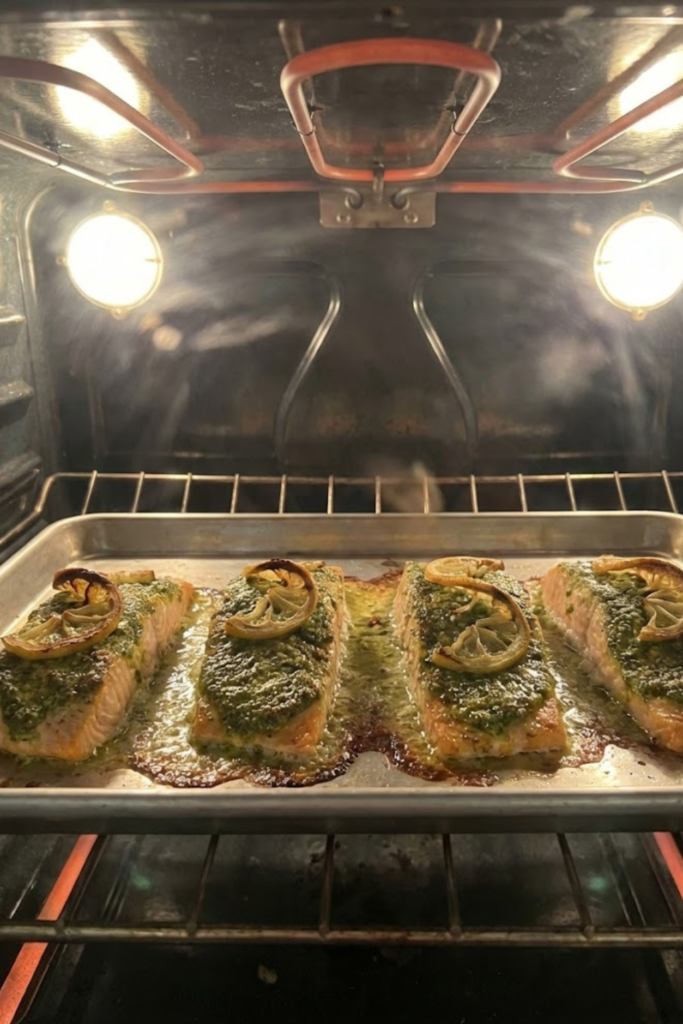
The reason I love using pesto for this recipe is because it acts like a little blanket. Salmon can get dry so fast if you aren’t careful. But when you slather on that layer of green goodness before you put it in the oven, it seals the moisture inside. It’s like how I tell my kids to wear a coat at recess so they don’t lose their body heat. The pesto keeps the oils in the fish from escaping. By the time you take your Baked Salmon with Pesto and Lemon Slices out of the oven, the fish is flaky and the pesto has formed this delicious, savory crust that is just out of this world.
Slicing Lemons for Maximum Flavor
You might think that slicing a lemon is the easiest part of making Baked Salmon with Pesto and Lemon Slices. I certainly did. When I first started cooking, I would just grab a knife and hack away at a lemon like I was trying to get through a stack of old cardboard. I’d end up with these giant, uneven chunks that looked more like doorstops than garnish. It wasn’t until I ruined a perfectly good dinner for my friends that I realized the lemon isn’t just there to look pretty—it’s a huge part of the flavor process. If the slices aren’t right, the whole dish feels a bit off-balance.
Thin is In for Better Baking
If your lemon slices are too thick, they won’t get soft and sweet in the oven. They’ll just sit there, cold and sour, and they won’t release enough juice to help the fish. But if you cut them too thin, they turn into little burnt crisps that taste like charcoal. I try to get mine about an eighth of an inch thick. Think of it like the thickness of a nickel. If you have a really sharp knife, it makes this whole thing way easier. I remember trying to use a dull butter knife once—talk about a nightmare! It was like trying to cut through a rubber ball. Now, I always check my tools before I even touch the fruit to make sure I get those perfect rounds.
Watch Out for the Sneaky Seeds
One thing that really bugs me is biting into a seed. It’s a bitter surprise that can ruin a perfectly good bite of fish. When I’m prepping my Baked Salmon with Pesto and Lemon Slices, I spend an extra minute or two poking out the seeds with the tip of my knife. It’s a bit of a chore, but it’s worth it. My kids used to complain all the time about finding seeds in their dinner, so now I make it a habit to clear them out before I lay the slices on top of the pesto. It makes the final meal feel much more professional, even if you’re just eating at the kitchen counter.
The Science of Citrus Balance
The lemon juice works with the pesto to make everything taste much brighter. Salmon is a very oily fish, and the acid from the lemon cuts right through that richness. It’s a bit like how a good school assembly needs a few jokes to break up the long, boring speeches. Without the lemon, the dish can feel a bit heavy or too salty from the parmesan in the pesto. When you bake the lemon slices right on top of the fish, the heat makes the juice soak into the meat while the peel gets slightly sweet. It really pulls the whole meal together.

Step-by-Step Baking for Flaky Perfection
I’ve sat through a lot of high-stakes testing in my classroom over the years, but nothing makes me sweat quite like the timer on my oven. When you are making Baked Salmon with Pesto and Lemon Slices, those last few minutes are everything. I used to be so afraid of undercooking the fish that I’d leave it in until it was basically a brick. My poor family had to chew through it like it was dry beef jerky. It took me a long time to realize that the oven is a tool, not something to be scared of. You just have to know the signs of when the fish is ready to come out and take a rest.
Prep Your Pan and Heat
First things first, get that oven up to 400 degrees Fahrenheit. I like a higher heat because it cooks the fish quickly without drying out the middle. While that’s warming up, grab some parchment paper. This is my biggest secret for a happy life. I hate doing dishes after a long day of grading, and parchment paper means I can just crumble it up and throw it away when I’m done. No scrubbing baked-on pesto for twenty minutes! Lay your fish on the paper, skin side down, and you are ready to go. It’s much better than using foil which can sometimes stick to the skin.
Avoiding the “White Stuff”
Have you ever seen that weird white goop that leaks out of the sides of the fish? It’s called albumin. It’s actually just protein, so it won’t hurt you, but it looks a bit messy. It usually happens when the muscle fibers contract and push that protein out. To keep your Baked Salmon with Pesto and Lemon Slices looking like a picture from a magazine, watch the clock. Most fillets only need about 12 to 15 minutes. If you see that white stuff start to pop out in big globs, that is your signal to get the fish out of the heat immediately!
The Simple Fork Test
I don’t usually use a thermometer because I can never find where I put the batteries. Instead, I use a fork. Just take a fork and gently press it into the thickest part of the salmon. If the meat flakes apart easily along those natural lines, it is done. If it still looks a bit translucent or “wet” in the middle, give it another two minutes. Don’t forget that the fish keeps cooking for a little bit after you take it out of the oven. I always let it sit for five minutes before we eat. It helps the juices stay inside the fish so every bite is perfect.
Bringing it All Together
Well, there you have it. You’ve gone from staring at a cold piece of fish to serving up a plate of Baked Salmon with Pesto and Lemon Slices that looks like it belongs on the cover of a magazine. I know it can feel like a lot of steps when you first read through a recipe, but once you get that fish in the oven, you’ll see how simple it really is. It’s funny how a few basic ingredients like basil and citrus can make you feel like a total pro. I remember when I first started out, I would get so nervous that I’d forget to even salt the water for my pasta! But with this salmon, the pesto does most of the heavy lifting for you. It carries all that flavor so you don’t have to stress about seasoning every single inch of the fillet yourself.
I really hope this guide helps you feel more confident next time you’re standing in the seafood aisle. Whether you chose the wild-caught stuff for that lean protein or the farmed version because you wanted something juicy and easy, you’ve made a great choice for your health and your taste buds. My favorite part of the whole process is that moment when I take the pan out of the oven and the smell of toasted garlic and warm lemon fills up the kitchen. It’s the kind of smell that makes everyone in the house wander into the kitchen to see what’s for dinner. Even my cat starts acting extra nice when he catches a whiff of that salmon!
If you have any leftovers, don’t you dare throw them away! I love flaking the cold Baked Salmon with Pesto and Lemon Slices over a big bowl of greens the next day for lunch. It’s way better than any sad sandwich I could pack for my lunch break at school. It keeps really well in the fridge for about two days, though in my house, it usually disappears way before then. Just make sure you wrap it up tight so the fridge doesn’t start smelling like a harbor.
I’m so glad I could share my little kitchen wins with you today. If this recipe worked out for you, please pin it to your Pinterest boards! It helps other home cooks find easy, healthy meals that don’t take all night to make. Sharing is caring, as I always tell my 8th graders, and I’d love to see more people enjoying this zesty salmon. Happy cooking, and I hope your next dinner is a total home run!