You can’t catch a fish without getting your line wet,” my grandfather used to say, but luckily, you don’t need a fishing pole for this! I remember the first time I tried cooking fish; I was terrified I’d dry it out. It felt like such a gamble! But then I discovered the magic of foil packets.
Did you know that salmon is packed with Omega-3s that are amazing for your brain? In this post, we are going to master the art of baked salmon in foil garlic rosemary. It is incredibly easy, mess-free, and honestly, the smell of garlic and rosemary wafting through the kitchen is just heavenly! Let’s get cooking.
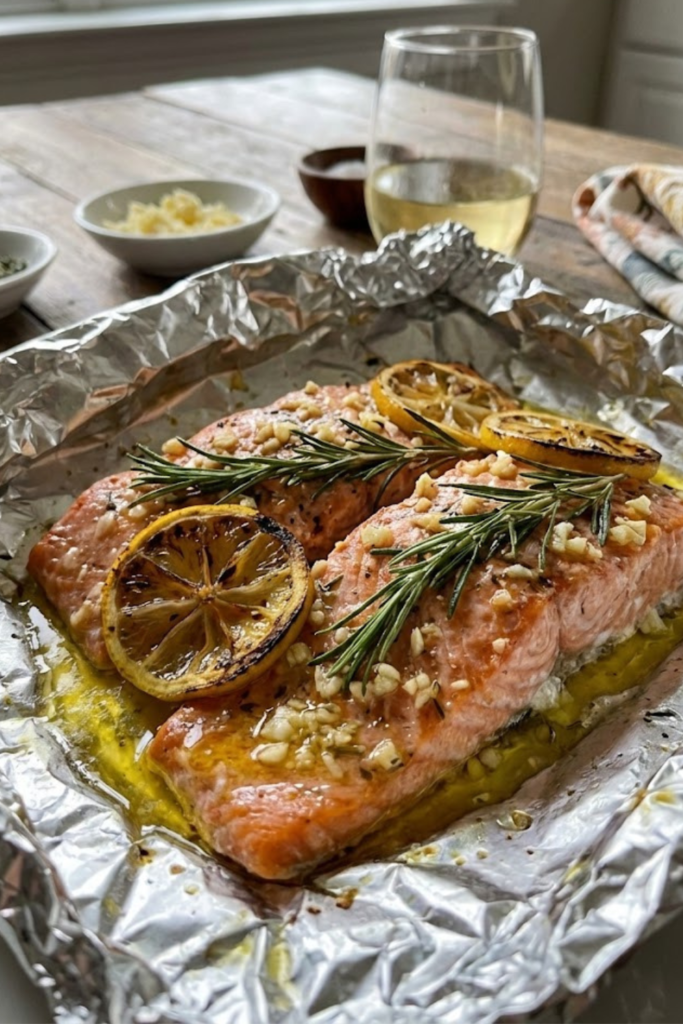
Selecting the Freshest Salmon Fillets
Honestly, I used to just grab whatever package was closest to the front of the display case. I figured the grocery store knew what they were doing, right? That was a huge mistake. I once brought home a fillet that smelled so funky my cat wouldn’t even walk into the kitchen. It was a total dinner disaster.
Learning how to actually pick good fish was a game changer for my cooking. It makes the difference between a meal that’s just “meh” and one that tastes like a restaurant quality dish. You don’t need to be an expert fishmonger to get this right. You just need to know what to look for.
The Nose Knows
First things first, don’t be shy about asking to smell the fish. If the person behind the counter gives you a weird look, ignore ’em. Fresh salmon should smell like the ocean, salty and clean. It shouldn’t smell “fishy” or like ammonia.
If you get a whiff of something sour, walk away. I learned this the hard way when I tried to mask a bad smell with extra lemon. It didn’t work. The smell of the raw fish is your biggest clue about how it’s going to taste when it’s baked.
Wild-Caught vs. Farm-Raised
This is where people usually get confused. I used to think wild-caught salmon, like Sockeye or King, was the only way to go. It definitely has a deeper red color and a stronger flavor. But it can be pricey and leaner, meaning it dries out faster if you aren’t careful.
Farm-raised salmon (usually Atlantic) is often fattier and more forgiving if you accidentally leave it in the oven a minute too long. For this baked salmon in foil garlic rosemary recipe, that extra fat actually helps keep things juicy. It really comes down to your budget and taste preference. Both can be delicious if they are fresh.
Check the Bounce
When you look at the meat, it should look firm. If you press it with your finger, it should spring back, not leave a dent. I once bought a piece that was mushy, and the texture was just awful after baking.
Also, look for separation in the muscle fibers. If the meat is already gapping or pulling apart while it’s raw, it’s not fresh. You want the fillet to look tight and shiny, not dull or matte.
Skin On or Off?
I always buy my fillets with the skin on. Even if you don’t plan on eating the skin, it acts like a little heat shield for the meat. It protects the delicate flesh from getting too tough while it bakes in the foil. Plus, it’s way easier to just slide the meat off the skin after it’s cooked than to try and skin it raw yourself. Trust me, I’ve butchered enough fish trying to remove skin to know it’s not worth the hassle!

Preparing the Garlic Rosemary Butter Sauce
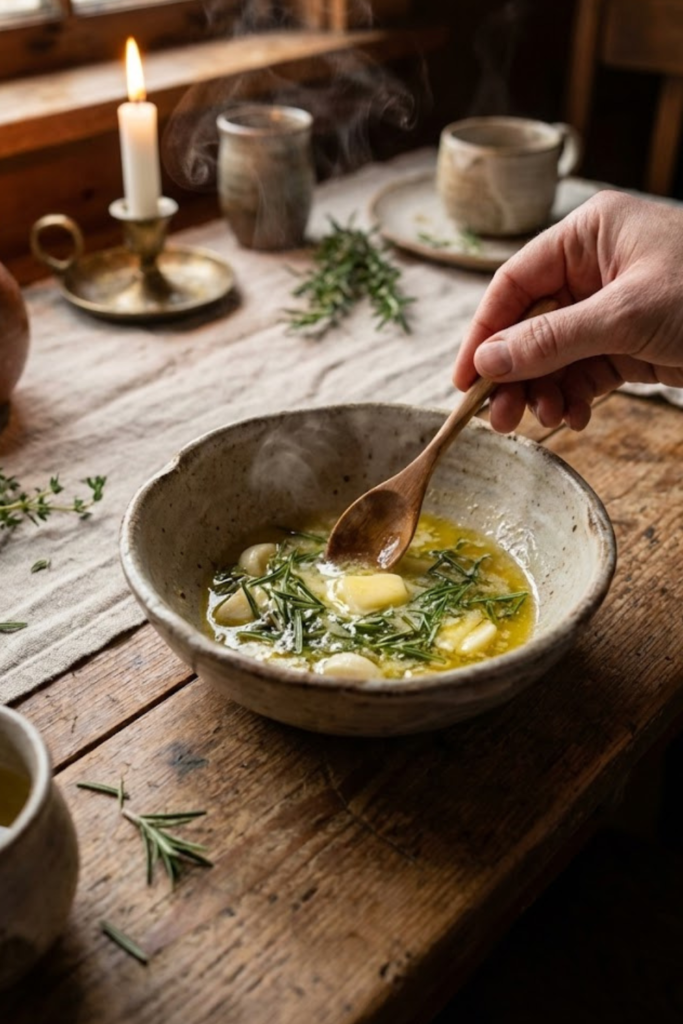
You might think the fish does all the heavy lifting here, but the sauce is honestly the soul of this dish. I remember the first time I tried to wing a marinade. I just melted a stick of butter, threw in some dried herbs from the back of my cupboard, and poured it over the fish.
The result? A greasy, bland mess. The butter separated, and the dried herbs tasted like hay. It was a total letdown. I learned that taking five minutes to really prep your lemon garlic sauce makes or breaks the final meal.
Ditch the Jarred Stuff
I’m going to be a bit bossy here: please put down the jar of pre-minced garlic. I know it saves time, and I’ve definitely used it when I’m in a rush for spaghetti sauce. But for this recipe, it just doesn’t cut it.
Jarred garlic often has a weird, vinegary preservatives taste that stands out too much against the delicate fish. Fresh garlic has that spicy, sticky kick that mellows out perfectly in the oven. Smash those cloves with the flat of your knife and mince them up yourself. Your hands will smell for an hour, but your taste buds will be happy.
Dealing with Fresh Rosemary
Working with fresh herbs can be a little intimidating if you usually stick to the shakers. I used to hate stripping rosemary because the leaves are so tough. But here is the trick: hold the sprig at the top and pull your fingers down the stem in the opposite direction of growth. The needles pop right off.
Chop them up finely. You don’t want big chunks of rosemary in your teeth. This is one of the best fresh rosemary uses because the oils infuse into the fat while it bakes. It smells like a fancy spa in your kitchen, which is a nice bonus.
The Golden Ratio
Here is a mistake I made for years: using only butter. Butter tastes amazing, but it has a low smoke point and can burn or separate weirdly in the high heat of the oven.
To get the perfect consistency for our baked salmon in foil garlic rosemary, you need a mix. I do about 60% melted butter and 40% good quality olive oil.
- The butter gives that rich, creamy flavor we crave.
- The olive oil keeps the sauce stable and prevents burning.
Whisk them together while the butter is still warm.
The Acid Kick
Finally, you have to cut through that fat. Squeeze fresh lemon juice right into the bowl. Don’t use the little plastic lemon bottle; it tastes metallic.
I usually add a pinch of salt, plenty of cracked black pepper, and sometimes a few red pepper flakes if I’m feeling spicy. Taste the sauce with your pinky finger before you pour it. If it tastes good on its own, it’s going to taste amazing on the salmon.
Wrapping the Foil Packets for Maximum Moisture
I used to think wrapping food in foil was just about keeping the pan clean. I’d basically just scrunch the foil around the fish like I was wrapping a last-minute Christmas present. It was a disaster. The first time I tried this, the butter leaked out, burned on the bottom of the oven, and set off the smoke detector while I frantically waved a kitchen towel around. Not exactly the relaxing evening I had planned.
Getting the fold right is actually more important than you’d think. If you seal it too tight, the fish steams too fast and gets mushy. If you leave it too loose, the moisture escapes, and you end up with dry, sad salmon. It took me a few tries to find the sweet spot for foil packet recipes.
Don’t Skimp on the Foil
Here is a tip I learned the hard way: buy the heavy-duty aluminum foil. The cheap stuff tears way too easily. There is nothing worse than assembling a perfect packet of baked salmon in foil garlic rosemary only to have the foil rip when you move it to the baking sheet.
Cut a piece that’s about 12 to 14 inches long. You want enough excess to fold over comfortably without squishing the ingredients. I usually double check the length by holding it up to the baking sheet first.
The Layering Strategy
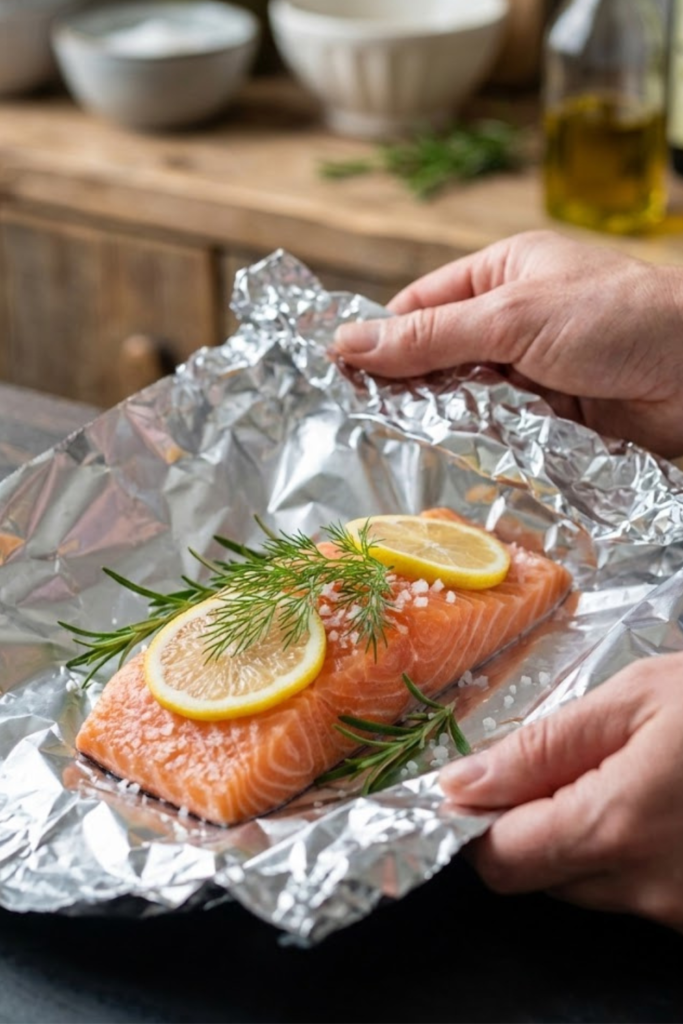
Before you even think about folding, pay attention to how you stack your food. I always place the lemon slices down first, right in the center of the foil.
- They act as a little rack or heat shield for the fish.
- They prevent the salmon skin from sticking to the foil.
- The juice cooks up into the meat.
Place your salmon fillet on top of the lemons. Then, pour that liquid gold (the garlic butter mixture) over the fish. This method is the secret to no mess cooking because everything stays contained.
The Tent Method
Now, let’s wrap it up. Bring the two long sides of the foil up to meet in the middle above the salmon. Fold the edges over each other twice to create a seal.
Here is the important part: leave a little space between the fish and the foil at the top. You want to create a “tent” or a pocket of air. This allows the heat to circulate and steam the fish gently.
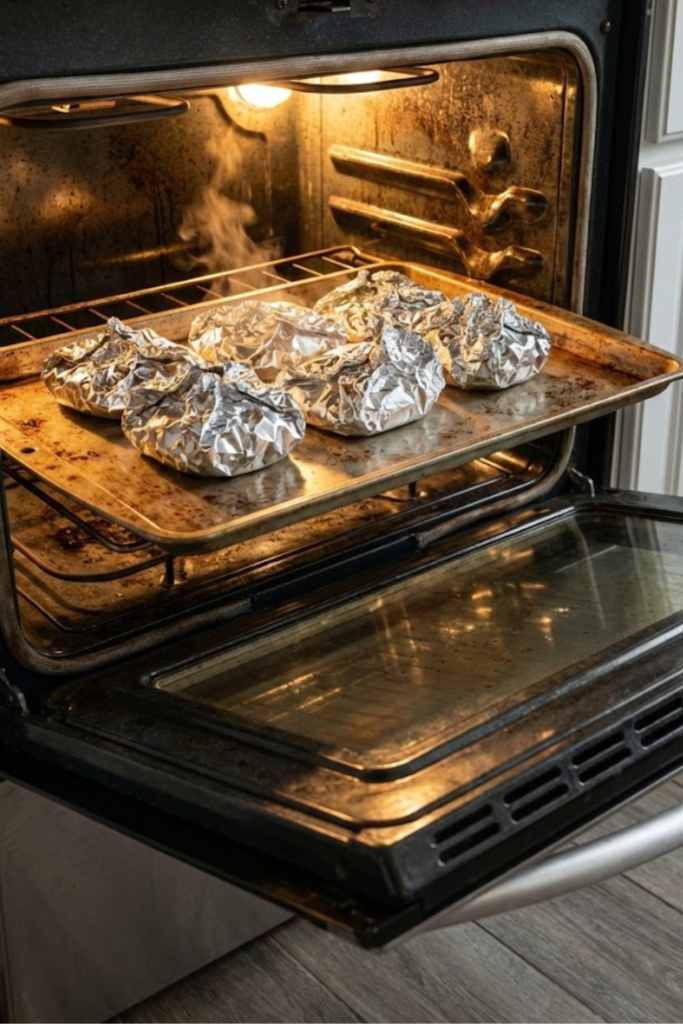
Finally, crimp the open ends shut tightly. You want to trap all that steam inside so the steamed fish in foil cooks in its own juices. It’s this trapped steam that makes baked salmon in foil garlic rosemary so incredibly tender. If you do it right, the packets should look like little silver pillows puffed up with air.
Baking Times and Temperatures for Perfection
I have a confession to make. For years, I treated cooking times like they were non-negotiable laws written in stone. If a recipe said “bake for 20 minutes,” I baked for exactly 20 minutes, even if my piece of fish was half the size of the one in the picture.
And guess what? We ate a lot of dry, chewy salmon that required gallons of water to swallow. It was basically expensive cat food.
Cooking fish isn’t about watching the clock; it’s about watching the fish. Getting the salmon fillet cooking time right is actually more of an art than a science. But don’t worry, I’ve figured out the cheat codes so you don’t have to suffer through cardboard dinner like I did.
Finding the Right Heat
I used to crank my oven up to 400°F or even 425°F because I was impatient. I just wanted dinner on the table, fast.
But here is the thing about baked salmon in foil garlic rosemary: you are essentially steaming the fish inside that silver packet. If the heat is too high, the butter garlic sauce can burn before the fish is cooked through.
I’ve found that 375°F (190°C) is the best temperature for salmon in foil. It’s hot enough to cook it efficiently but gentle enough to keep the flesh tender. It gives the flavors time to meld together without nuking the herbs.
The Thickness Rule
Size matters here. A thin tail piece is going to cook way faster than a thick center-cut fillet.
A good rule of thumb I use is to estimate about 12 to 15 minutes of bake time for every inch of thickness. But please, treat this just as a guideline!
If you have a massive, thick slab of King salmon, it might take 18 minutes. If you have skinny little sockeye fillets, check them at 10 minutes. I once ruined a beautiful piece of sockeye by treating it like Atlantic salmon, and it was heartbreaking.
Stop Guessing, Start Measuring
If you take only one piece of advice from me today, let it be this: buy an instant-read meat thermometer. I resisted this for years because I thought “real cooks” just knew by touch. That is total nonsense.
The FDA says the safe internal temp for fish is 145°F (63°C). However, I usually pull my oven baked fish out when it hits about 140°F.
Why? Because of “carryover cooking.” The fish keeps cooking for a few minutes after you take it out of the oven while it sits in the hot foil packet. If you wait until it hits 145°F in the oven, it might be overdone by the time you sit down to eat.
The Broil Finish
One complaint people have about foil packets is that the fish doesn’t get that nice, caramelized color. It can look a bit… pale. If looks are important to you (and hey, we eat with our eyes first), here is a trick.
Once the salmon is almost done, carefully open the foil packets. Be careful of the steam—it burns!
Switch your oven to broil and let the fish cook exposed for 2-3 minutes. This crisps up the garlic and gives the salmon a lovely golden finish. Just don’t walk away, or you’ll burn your how to cook salmon masterpiece in seconds.
Pairing Side Dishes with Your Salmon
I used to be terrible at multitasking in the kitchen. There were so many times I would pull a beautiful main dish out of the oven, only to realize I hadn’t even started the rice. We’d end up eating cold fish while waiting for the water to boil. It was frustrating and totally avoidable.
Over time, I learned that the best sides for baked salmon in foil garlic rosemary are the ones that don’t fight for your attention. You want things that are either hands-off or can be made ahead of time.
Use That Oven Heat
Since your oven is already hot, it makes zero sense to dirty a frying pan on the stove. I’m all about easy cleanup meals. Whenever I make this recipe, I grab a second baking sheet for veggies.
Asparagus is my go-to roasted vegetables side. It cooks in about the same time as the fish.
- Snap the woody ends off.
- Toss them with a little olive oil, salt, and garlic powder.
- Throw them in the oven on the rack below the salmon.
Broccoli florets work great too, but they might need a few extra minutes. Just don’t crowd the pan, or they will steam instead of roast. Nobody likes soggy broccoli.
Soaking Up the Sauce
You are going to have a lot of that delicious garlic butter sauce at the bottom of the foil packet. It is a crime to let that go to waste! You need a starch to soak it up.
If I’m feeling fancy, I’ll do garlic mashed potatoes. It’s the ultimate comfort food. But honestly, on a busy Tuesday, I usually just toss some jasmine rice in the rice cooker. It takes zero effort.
Quinoa is another solid option if you want to keep things healthy. It has a nice nutty flavor that pairs well with the rosemary. Plus, it cooks super fast, so it fits perfectly into a quick weeknight dinner rotation.
Cutting the Richness
Salmon is a fatty fish. That’s why it tastes so good! But sometimes, all that rich butter and fish oil can feel a bit heavy. You need something bright and acidic to balance it out.
I love serving this with a simple arugula salad. I don’t even buy dressing anymore. I just whisk together some lemon juice, olive oil, and parmesan cheese. The peppery bite of the arugula cuts right through the richness of the salmon. It makes the whole meal feel lighter and fresher.
A Little Sip on the Side
Now, I’m not a sommelier, but I do enjoy a glass of wine with dinner. The old rule says “white wine with fish,” and honestly, it exists for a reason.
A heavy red wine, like a Cabernet, will totally overpower the delicate flavor of the fish. It just clashes. For a solid white wine pairing, go with a Sauvignon Blanc or a Pinot Grigio. They are crisp, acidic, and refreshing. They act kind of like a squeeze of lemon, cleansing your palate between bites. If you don’t drink alcohol, a sparkling water with a twist of lime hits the same spot.
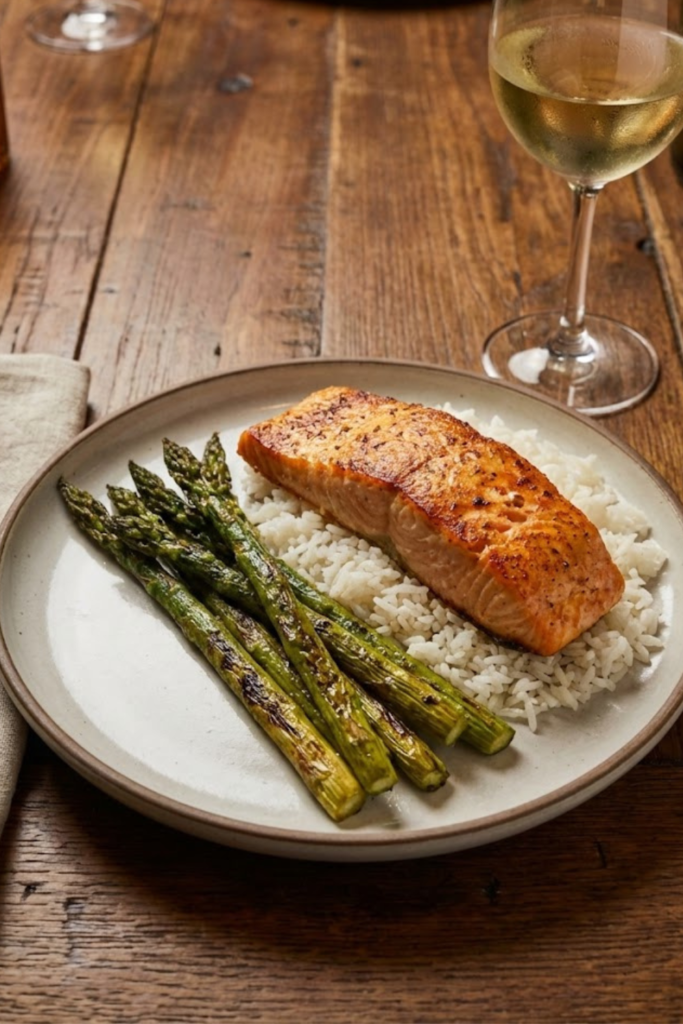
Making a healthy dinner doesn’t have to be a headache. I remember looking at fancy food magazines and thinking those meals were impossible for a regular Tuesday night. But this baked salmon in foil garlic rosemary is proof that simple ingredients often make the best meals.
The fish comes out flaky, juicy, and packed with flavor every single time. Plus, let’s be real, throwing away the foil packet instead of scrubbing a baking dish is the best feeling in the world. It’s a total win-win. I really hope you give this a try this week—your family will thank you!
Don’t forget to save this recipe on Pinterest so you can find it later!.