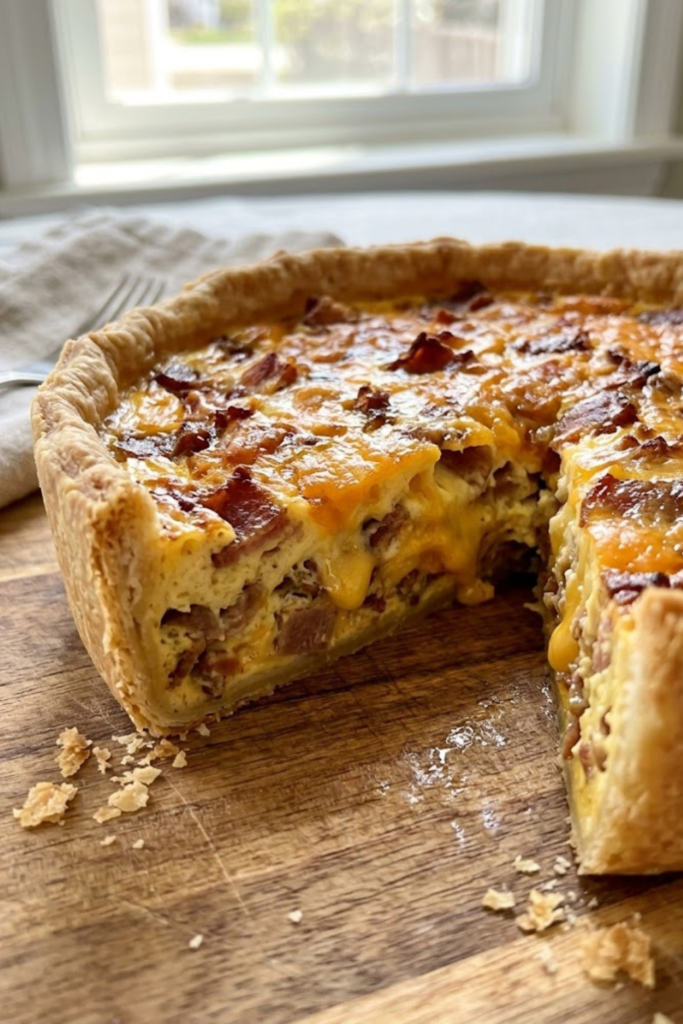
I’ve spent years hovering over an oven, waiting for that perfect jiggle in the center of my breakfast. Did you know that quiche is actually one of the top-searched brunch items globally, with interest spiking by 25% every spring? Honestly, I used to be terrified of making one! I thought the crust would be a soggy mess or the eggs would turn into rubber. But after a decade of teaching and a whole lot of trial and error in my own kitchen, I’ve realized that a bacon cheddar quiche is the ultimate “I’ve got my life together” meal. It’s salty, it’s cheesy, and it’s surprisingly hard to mess up once you know the secret egg-to-cream ratio! Let’s get into how to make this showstopper today.
Picking the Best Bacon and Sharp Cheddar
I have spent many Saturday mornings at the grocery store staring at the meat counter, trying to figure out which package would make the best Sunday brunch. Honestly, I used to just grab whatever was on sale because I thought bacon was just bacon. But after making dozens of these pies for school potlucks and family gatherings, I realized the ingredients really do make or break the dish. For a bacon cheddar quiche, you need components that can stand up to the heavy eggs and cream. If you pick the wrong ones, your breakfast ends up tasting like a bland, greasy sponge. I’ve made that mistake more than once!
Why Thick-Cut Bacon Wins Every Time
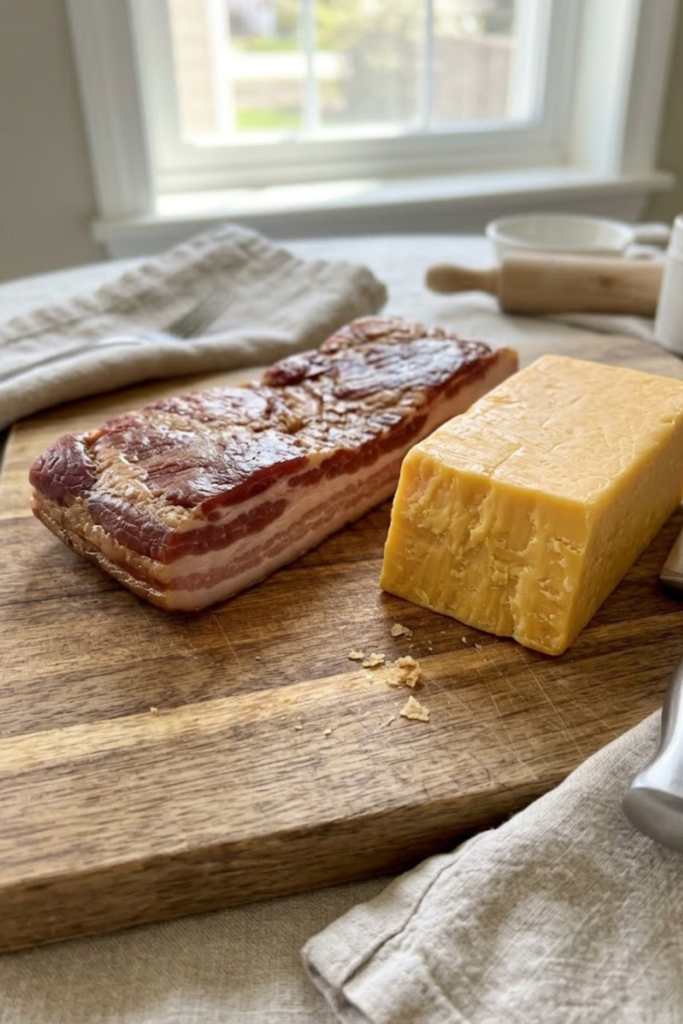
In my early cooking days, I bought the thin, bargain-bin bacon. I thought it would get crispier and be easier to bite. But what actually happened was it just shriveled up into tiny salty bits that you couldn’t even find once the eggs puffed up. It was like a game of hide-and-seek where the bacon always won by disappearing. Now, I tell all my students to get thick-cut bacon. It has more meat on it and holds its shape better. When you fry it up before putting it in the crust, it keeps a bit of a chew. You want to feel that smoky, salty bite against the soft eggs. I usually bake my bacon on a sheet pan in the oven first. It keeps the strips flat and cooks them even. Just make sure you drain the grease off really well on some paper towels. You don’t want a pool of oil sitting on top of your beautiful meal.
Stop Buying Pre-Shredded Cheese
This is probably the biggest mistake I see people make in the kitchen. I get it, shredding cheese is a boring chore and I hate cleaning the grater just as much as you do. However, those bags of shredded cheese have potato starch or cellulose on them. The companies put it there to keep the pieces from sticking together in the bag. When you bake that in a custard, it doesn’t melt right. It makes the texture feel a little gritty or sandy, which is not what we want. For a silky quiche, buy a big block of sharp cheddar and do the work yourself. It melts into the cream much better and gives you that gooeyness we all love.
The Power of Extra Sharp Flavor
Regarding the flavor, I usually reach for the “extra sharp” label. Since eggs and cream are very neutral and mild, they can easily wash out the flavor of a regular mild cheddar. You need a cheese that is strong enough to fight back! An aged cheddar has a bit of a tang that really highlights the saltiness of the bacon. Sometimes I mix in a little bit of white cheddar too if I’m feeling fancy. It makes the dish look a bit more professional without any extra effort. Just make sure the cheese is at room temperature before you stir it in so it doesn’t clump up in the cold egg mixture. Getting these two things right is the first step to a perfect meal.
The Secret to a Flaky, No-Soggy-Bottom Crust
There is nothing worse than pulling a beautiful bacon cheddar quiche out of the oven, letting it cool, and then realizing the bottom is basically raw dough. I remember making my first quiche for a church brunch. It looked great on top, but when people tried to lift their slices, the crust just stayed stuck to the pan! It was embarrassing. I felt like I failed the whole class. Since then, I’ve figured out that the crust needs a little extra love before the liquid eggs ever touch it. You can’t just throw it all in and hope for the best if you want that perfect crunch.
The Magic of Blind Baking
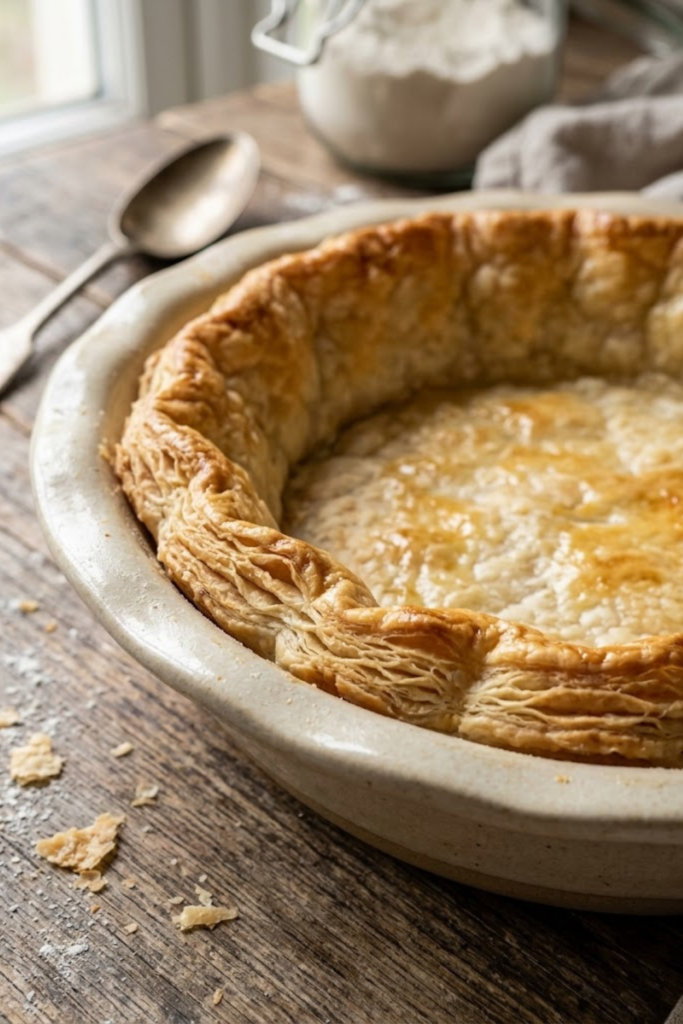
You have to pre-bake the crust. I know it feels like an extra step that takes too long, but you can’t skip it. If you pour that wet custard into a raw shell, the dough just soaks it up like a sponge. I usually line my crust with parchment paper and fill it with dried beans or those fancy ceramic pie weights. Bake it for about 10 or 15 minutes. This sets the shape so it doesn’t shrink down the sides of the pan. It gives the pastry a head start so it can actually get crispy. If you want a crust that actually snaps when you bite it, this is the way to go.
Creating a Waterproof Barrier
Here is a trick I learned from an old neighbor who was a master baker. After you take the weights out, brush the inside of the crust with a little bit of beaten egg. Then, put it back in the oven for two minutes. This ‘paints’ a waterproof seal over the dough. It stops the bacon cheddar quiche filling from seeping in. It’s like putting a raincoat on your pie! This tiny step is what makes the difference between a soggy mess and a professional-looking slice. I do this every single time now, and I haven’t had a wet bottom in years.
Keep That Butter Cold
Don’t overwork the dough. If your hands are too warm or the kitchen is hot, the butter melts before it even hits the oven. You want little chunks of cold butter visible in the dough. When they bake, they create steam, and that steam is what makes those flaky layers we all love. I sometimes put my flour and bowl in the fridge for ten minutes before I start. It might seem like a lot of work, but for a solid bacon cheddar quiche, it’s worth the effort. Just keep it cold and don’t stress too much!
Mastering the Perfect Custard Ratio
I’ve graded thousands of papers in my time, but teaching someone to make a perfect custard is actually way harder than explaining long division. For a bacon cheddar quiche, the filling is what makes people go back for seconds. If you get it wrong, it’s either a runny mess or it feels like eating a giant pencil eraser. I’ve definitely had those “oops” moments in my own kitchen where I overcooked the eggs and they got all watery on the plate. It’s a sad sight! The goal we are aiming for is a silky, velvety texture that almost melts in your mouth.
Finding the Golden Ratio
Most people just wing it and crack some eggs into a bowl, but there is a bit of math involved here. The rule of thumb I always tell my students is one large egg for every half-cup of dairy. If you use too much milk, the quiche won’t set up and you’ll be eating egg soup with a spoon. If you use too many eggs, it gets rubbery and tough. I always prefer using heavy cream because it makes the bacon cheddar quiche feel much more indulgent and rich. You can use half-and-half if you want to be a bit healthier, but stay away from skim milk. It just doesn’t have the fat needed to hold the structure together.
Don’t Forget the Nutmeg
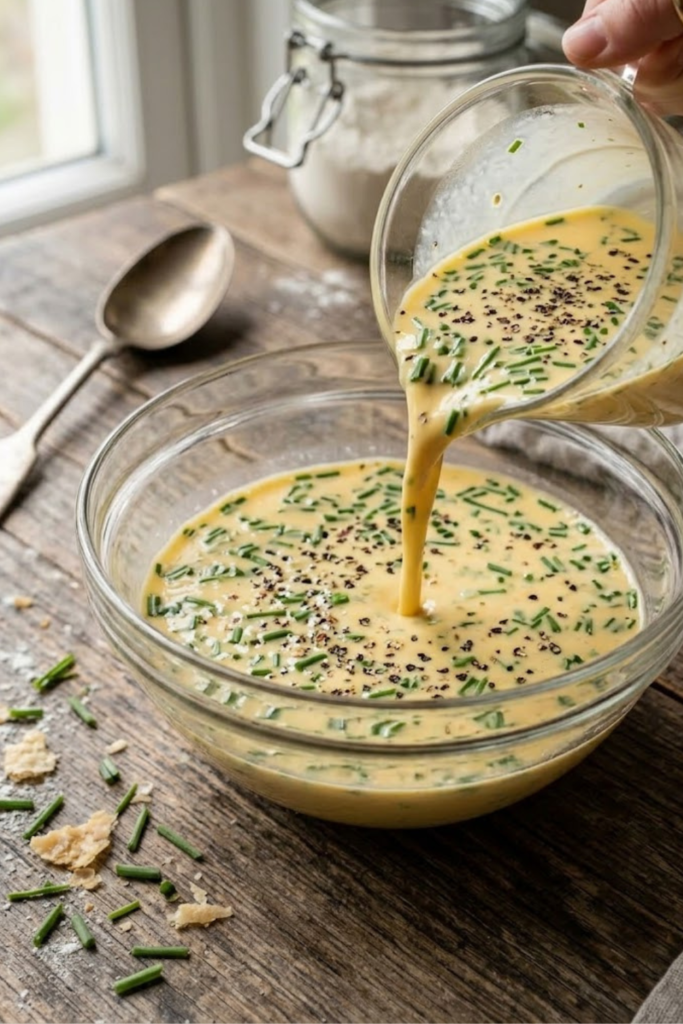
This sounds a bit weird, I know. Why would you put a “Christmas spice” in a savory breakfast dish? But a tiny pinch of nutmeg is the secret ingredient that makes people ask, “What is that amazing flavor?” It doesn’t make the eggs taste like a cookie; it just brings out the richness of the cheese and the saltiness of the bacon. I also add a good amount of fresh cracked black pepper. Be careful with the salt, though! Since the bacon and the sharp cheddar are already pretty salty, you don’t need to go overboard. I usually just add a small pinch and call it a day.
Whisking Gently
When you are mixing your eggs and cream, don’t go crazy with the whisk. You aren’t making a meringue or a birthday cake. If you beat too much air into the mix, the quiche will puff up like a giant balloon in the oven and then collapse into a wrinkled, sad mess when you take it out. Just whisk it until the yolks and whites are combined with the cream. You want it smooth, not foamy. I usually use a fork or a hand whisk and just take my time. It’s more about being gentle than being fast. Once it’s mixed, you are ready to pour it over your toppings.
Bringing It All Together for the Perfect Brunch
Well, there you have it! I’ve spent a lot of time over the years trial-and-erroring my way through various breakfast disasters, but I promise if you stick to these few simple rules, your bacon cheddar quiche will be the star of the show. It’s funny, I used to think that making a quiche was something only fancy chefs in tall hats did, but it’s really just about being patient and using good ingredients. Once you get that first flaky, cheesy bite, you’ll realize why I’m so obsessed with getting the bacon and the crust just right. It’s a total game-changer for a lazy Sunday morning or even a busy Tuesday when you need leftovers for lunch.
One last thing I should tell you—and I learned this the hard way after burning my tongue too many times—is that you have to let the quiche rest. I know, it smells amazing and you want to dive in right away. But if you cut it the second it comes out of the oven, the custard will just run all over the plate. Give it at least fifteen or twenty minutes to firm up. This lets the eggs finish setting and makes it much easier to get those perfect, clean slices. I usually spend that time cleaning up the flour on my counters or pouring another cup of coffee.
I really hope this guide helps you feel more confident in the kitchen. Cooking shouldn’t be scary or stressful; it should be about making something tasty for the people you care about. Whether you’re making this for a big holiday or just because you had some extra bacon in the fridge, I’m sure it’s going to turn out great. Don’t worry if your crust isn’t perfectly straight or if you accidentally get a little extra pepper in the eggs. Those “flaws” are just proof that it was made with love by a real person!
If you enjoyed this recipe and found my tips helpful, please save this to your “Brunch Goals” or “Breakfast Recipes” board on Pinterest! It helps more people find these easy tips, and I’d love to see how your quiches turn out. Happy baking!