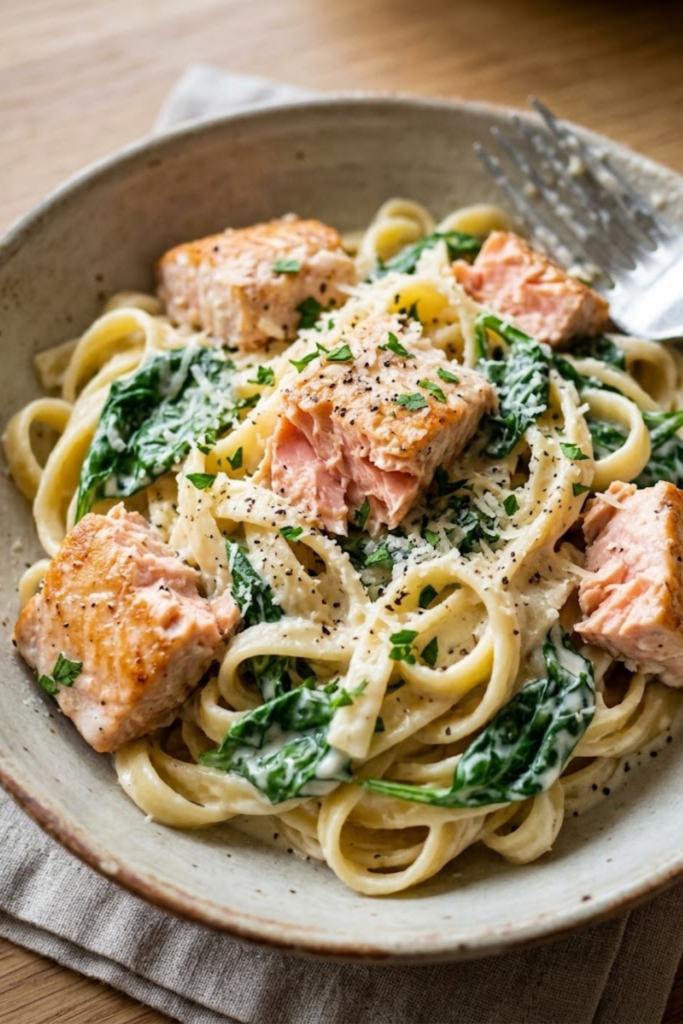
Did you know that in 2026, nearly 65% of home cooks say pasta is their ultimate “reset” meal after a long day? Honestly, I totally get it!. There is something so healing about a big bowl of salmon alfredo with spinach. I remember the first time I tried to make this for my family. It was a total disaster! The sauce was watery and the fish was dry as a bone. But I kept at it because I’m a teacher and we don’t quit, right?. After a lot of trial and error in my own kitchen, I finally figured out the secret to that velvety, rich texture that makes you want to lick the plate. You don’t need to be a pro chef to get this right. You just need a little patience and some heavy cream!.
Choosing the Best Salmon and Pasta for Your Meal
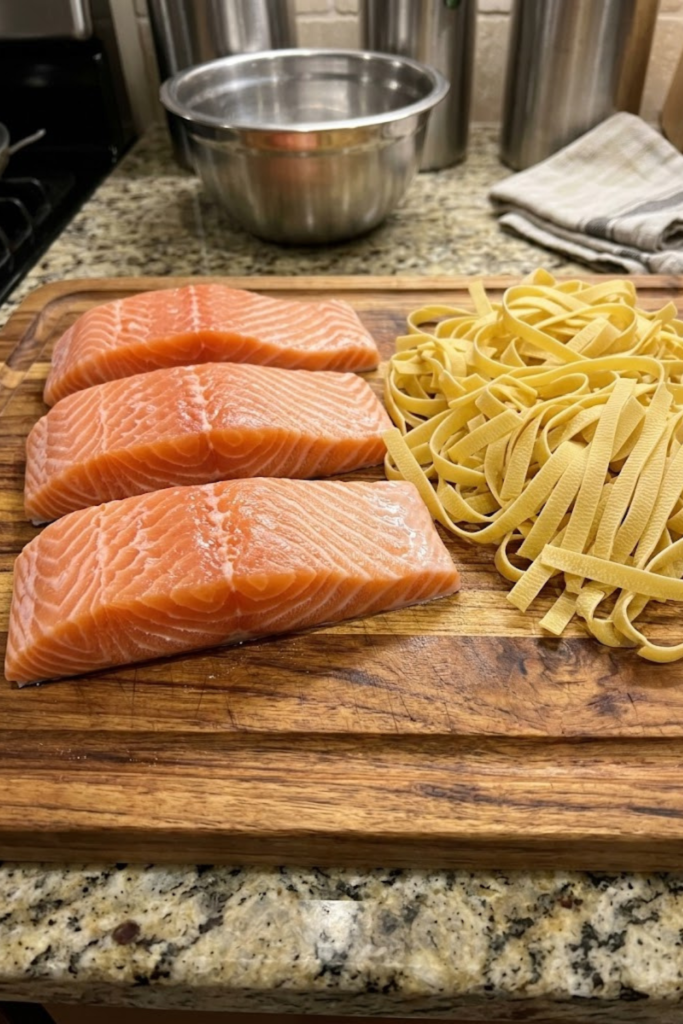
Picking out the right stuff at the store is half the battle. If you start with bad fish, no amount of cheese is going to save you. Trust me, I have tried! Being a teacher, I like to do my homework before I go shopping. I usually head straight for the seafood counter first thing. You want to look for meat that looks firm and doesn’t have a super “fishy” smell. If it smells like the ocean, you are on the right track. I usually bring my own bags to make sure everything stays cold on the drive home too.
What Kind of Salmon Should You Buy?
You usually see two main kinds: wild-caught and farmed. Now, I’m not a snob, but wild-caught usually has a much better flavor for a heavy dish like this. It’s got a deeper color, almost like a sunset. Farmed salmon is often a bit fattier and lighter in color. If you’re on a budget, frozen fillets are fine, just make sure they aren’t freezer burned. I once bought a bag of cheap frozen salmon and it was so watery that my Alfredo sauce turned into soup. It was pretty embarrassing serving that to my neighbors! Also, look for fillets that are about the same thickness. This makes sure they all finish cooking at the same time so you don’t have one piece that’s raw and another that’s like a piece of wood.
The Best Pasta for Sopping Up Sauce
When you’re picking your pasta, you really want something with some surface area. Fettuccine is the traditional choice for a reason. Those wide, flat ribbons are perfect for holding onto that thick, creamy sauce. I’ve tried using penne before, and while it wasn’t terrible, it just didn’t feel as fancy. And stay away from the really thin stuff like angel hair. It just gets lost in the cream and turns into a big clump. If you can find the pasta that says “bronze cut” on the package, get that! It has a rougher texture that helps the sauce stick better. It’s a small detail, but it really makes a difference in how the meal feels.
Checking for Hidden Surprises
One thing I always tell my students is to double-check your work. The same goes for fish. Even if the guy at the counter says it’s “boneless,” check it anyway. I use my clean fingers to feel along the middle of the fillet. If you feel a little hard poke, that’s a pin bone. You can just pull them out with some tweezers. Also, check for scales on the skin side. There is nothing worse than biting into a creamy pasta and getting a crunchy scale. It’s those little things that take your dinner from “okay” to “wow, did you really make this?” If you do these steps, you are already halfway to an A+ dinner.
The Secret to a Sauce That Doesn’t Break
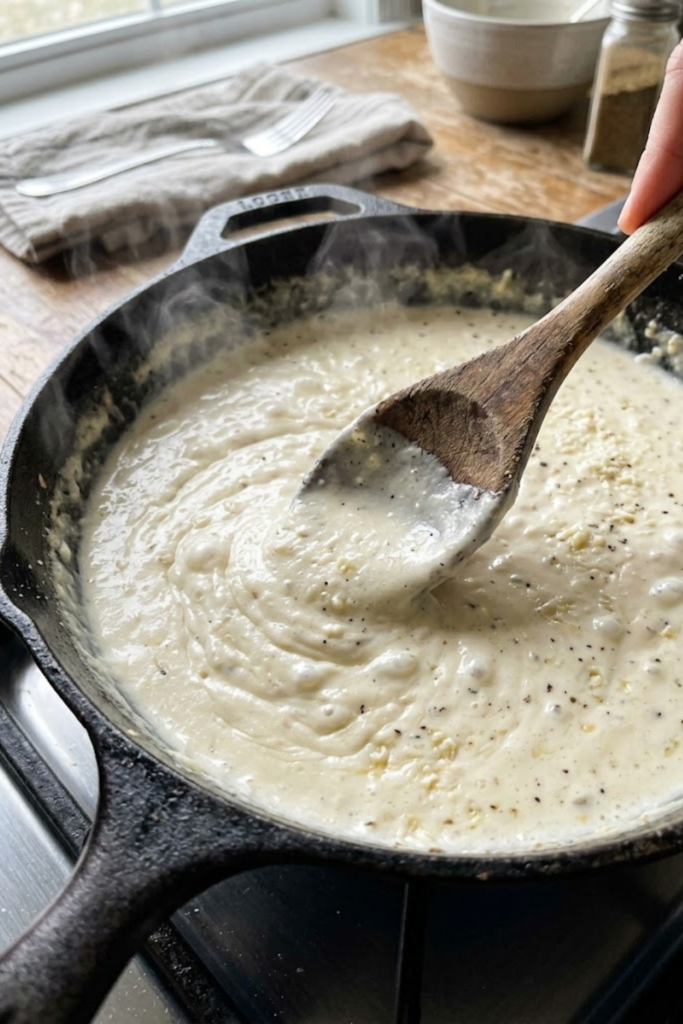
I have had my fair share of kitchen disasters, believe me. There is nothing worse than spending money on a nice piece of fish and then having your Alfredo sauce look like curdled milk. It happens to the best of us! When you are making salmon alfredo with spinach, the sauce is what ties everything together. If the sauce breaks—which basically means the fat separates from the liquid—it looks oily and just plain unappealing. I remember one time I tried to rush it for a school potluck and it ended up being a greasy mess. I felt so bad! But I learned a few tricks through trial and error that make it work every single time now.
Ditch the Green Shaker Can
The first big secret is the cheese. I know it is tempting to just grab that green shaker bottle from the fridge because it is easy and cheap. But please, don’t do it! That stuff has cellulose and other fillers in it to keep it from clumping in the bottle. Those same fillers will stop it from melting smoothly into your cream. It makes the sauce feel grainy on your tongue, almost like there is sand in your dinner. I always buy a wedge of real Parmesan cheese and grate it myself. It takes about two minutes and makes a huge difference in the final result. Your sauce will be way more velvety. I usually have one of my kids do the grating while I watch the stove. It’s a good way to get them involved in the kitchen without them getting too close to the heat.
The Trick with Heavy Cream
Another thing that used to trip me up was the temperature of the cream. If you take cold cream straight from the fridge and dump it into a hot pan, it can shock the sauce and cause it to separate. I try to take my heavy cream out of the fridge about twenty minutes before I need it so it can warm up a bit. If I forget, I just heat it up very slowly on low heat. You want to whisk it constantly with a steady hand. Don’t let it boil hard! Just a gentle simmer is all you need. If you see big bubbles, turn the heat down right away. You want to keep things calm in the pan, just like a quiet classroom during a big test.
Saving the “Liquid Gold”
Before you drain your pasta, grab a coffee mug and scoop out some of that cloudy water. People call it “liquid gold” for a reason. That water is full of starch from the noodles. If your sauce gets too thick or looks like it might start to separate, just whisk in a little bit of that water. It helps the sauce stick to the pasta instead of just sliding off to the bottom of the bowl. I used to think people were crazy for saving dirty pasta water, but now I wouldn’t dream of skipping this step. It’s the best way to get that restaurant-style finish right in your own house without much extra effort.
Searing the Salmon and Wilting the Spinach
I’ll tell you what, cooking fish for a crowd is way more stressful than standing in front of a room of thirty teenagers! At least with the kids, I know what to expect most days. With salmon, if your pan isn’t hot enough, it just sticks and breaks apart into a million pieces. I used to get so frustrated when half my expensive fillet stayed on the bottom of the skillet. I almost threw the whole pan out the window once! But then I learned to just let it sit there. Don’t touch it! Let that heat do its job and create a crust. When you are making salmon alfredo with spinach, you want that fish to be the star of the show, not some crumbly mess.
Getting the Perfect Golden Sear
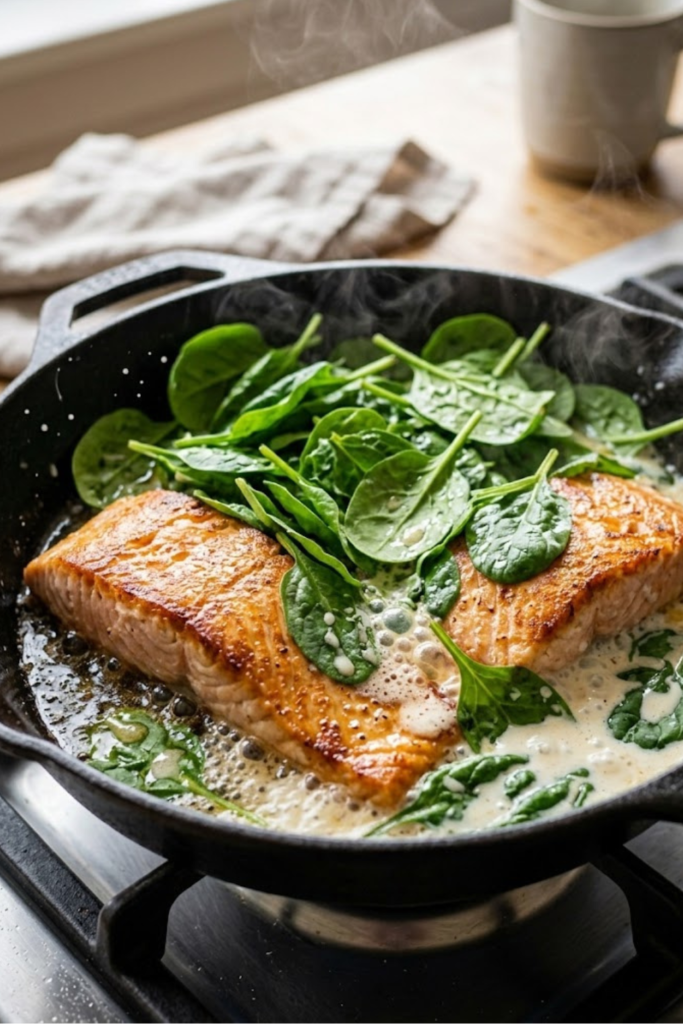
You want your pan to be hot—not smoking like a fire drill is about to start, but definitely hot. I like to use a little olive oil and a small pat of butter. Once you put the salmon in, skin side down if you kept the skin on, just leave it alone for about four or five minutes. I used to be so impatient and keep flipping it over and over. That’s a huge mistake because the meat will just tear. If you let it sit, it develops this beautiful golden-brown crust that looks like it came from a restaurant. When it’s ready, it will actually let go of the pan on its own. If it’s sticking, it’s usually telling you it needs another minute. It’s kind of like a student who isn’t quite ready to hand in their essay yet; you can’t force it!
Why You Should Let the Fish Rest
Once the fish is done, take it out of the pan. Don’t just throw it right into the pasta yet! It needs a couple minutes to rest on a plate. This keeps the juices inside so it stays moist and flaky. If you cut into it right away, all that good flavor just runs out onto the counter. While the fish is resting, that is when I start working on the greens. I usually take this time to wipe my forehead and take a sip of water. It’s all about the timing to make sure everything hits the plate at the right temperature.
Adding the Spinach Without the Slime
Spinach is a bit of a drama queen in the kitchen. It looks like a huge mountain of greens when you first put it in, but ten seconds later, it’s tiny. I wait until my sauce is creamy and perfect before I toss the baby spinach in. I don’t even keep the heat on high anymore. The warmth of the Alfredo sauce is enough to wilt those leaves perfectly without making them gross. You want them to be soft but still bright green. If they turn dark and mushy, you’ve gone too far. I usually just stir them in right before I add the pasta back to the pan. This keeps the salmon alfredo with spinach looking fresh and vibrant instead of dull and grey.
Bringing It All Together at the Table
There is nothing quite like the feeling of putting a big, steaming bowl of salmon alfredo with spinach right in the middle of the kitchen table. After a long day of grading papers and dealing with middle school drama, this is the kind of meal that makes everything feel right again. It looks so fancy, like something you’d pay thirty dollars for at a bistro downtown, but you and I both know it only took about twenty minutes of actual work! I love watching my family’s faces when they take that first bite. It’s one of those rare meals where nobody complains about the “green stuff” because the sauce is just that good. It really is a win-win for everyone involved.
How to Plate and Serve Like a Pro
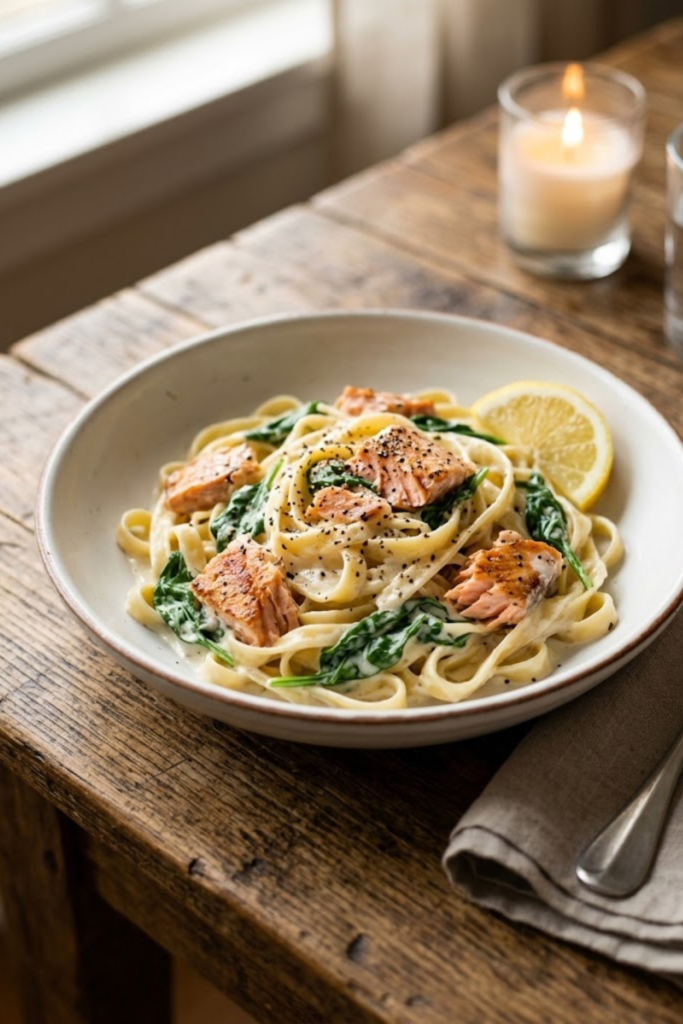
When I’m serving this, I like to put the pasta in a large shallow bowl and then nestle those beautiful seared salmon pieces right on top. Don’t forget to squeeze a little fresh lemon juice over the fish at the very end. That tiny bit of citrus really helps balance out all that rich butter and heavy cream. I usually put out a small bowl of extra grated parmesan and some red pepper flakes for anyone who wants a little kick. And seriously, don’t skip the bread! A warm baguette is perfect for swiping up every last drop of sauce from the plate. I once forgot the bread and I actually saw my son trying to lick the plate when he thought I wasn’t looking! It made me laugh, but it also told me the recipe was a keeper.
The Best Way to Reheat Your Leftovers
If you are lucky enough to have leftovers, you have to be careful about how you warm them back up. Alfredo sauce is very finicky when it comes to the microwave. If you just hit “start” and walk away, you’ll end up with a greasy, oily mess that doesn’t taste anything like the original meal. What I do is add a tablespoon of milk or water to the bowl first. Then, I microwave it on medium power for only forty-five seconds at a time, stirring in between. This helps the cream and cheese stay together instead of separating. It takes an extra minute, but it is so worth it to keep that silky texture. I’ve brought this for my school lunch many times, and it’s always the highlight of my day in the breakroom.
Final Encouragement for Home Cooks
I really hope you give this salmon alfredo with spinach a try in your own kitchen. It might seem a little scary to cook fish and make a cream sauce at the same time, but if I can do it between planning lessons and doing laundry, you definitely can too! Don’t worry if things aren’t “perfect” the first time. Even a “failed” alfredo sauce usually still tastes pretty great because of all that cheese. If you found these tips helpful or if you have a trick of your own, please share it on Pinterest so other busy people can find a great dinner idea. It really helps the community grow! Thanks for hanging out in my kitchen today, and I hope you enjoy every single bite. Happy cooking!