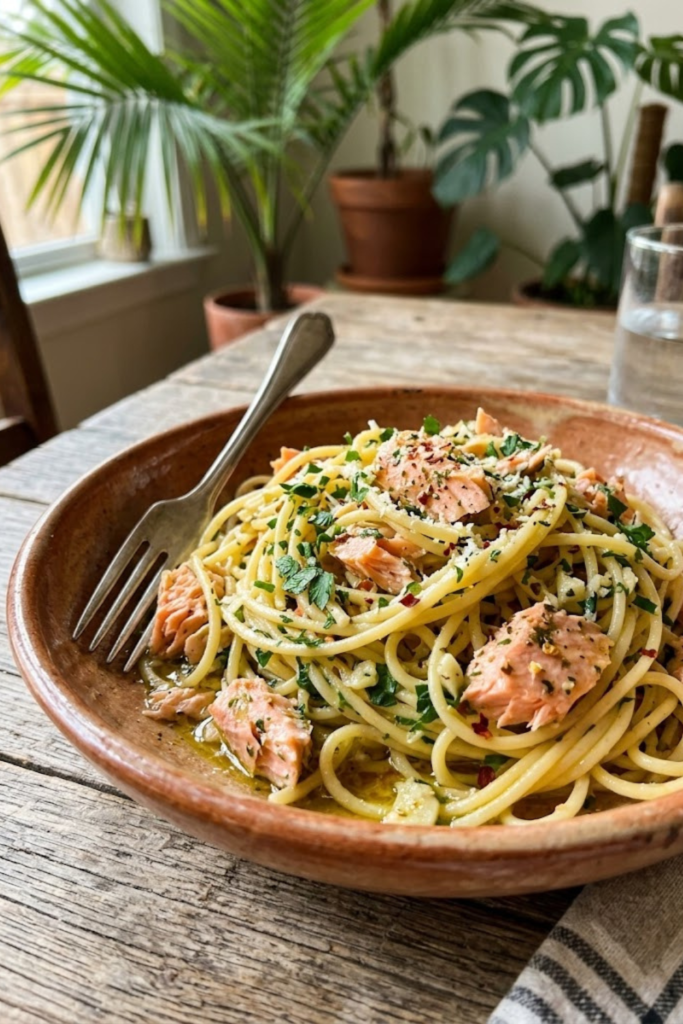
James Beard once said, “Food is our common ground, a universal experience.” I really feel that every time I’m standing over my stove! Lately, everyone is looking for meals that are fast but don’t taste like cardboard. In 2026, we are all about that Mediterranean lifestyle. Honestly, nothing beats a bowl of salmon pasta with garlic olive oil when you’ve had a long day at work. It’s simple. It’s light. It’s got those omega-3s your doctor is always nagging you about! I remember the first time I tried making this; I actually burnt the garlic so bad the smoke alarm went off! But after years of teaching and cooking, I’ve got the rhythm down. Let’s get into how you can make this restaurant-quality dish in your own kitchen without the stress.
Choosing the Best Fresh Salmon for Your Pasta
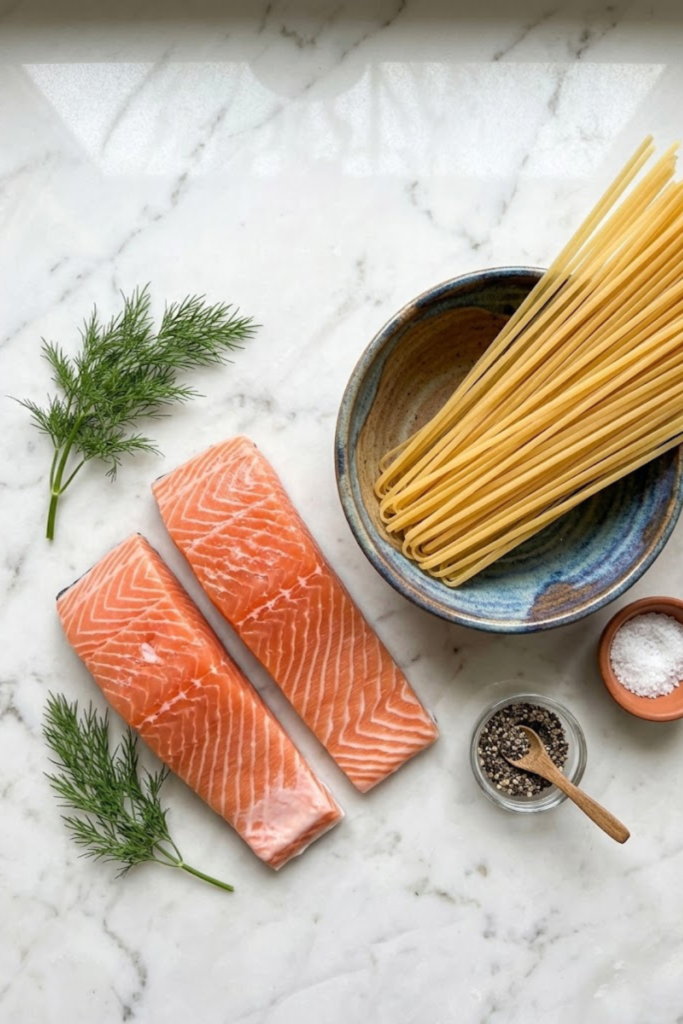
Listen, as someone who has been teaching for over twenty years, I’ve seen people make some really weird choices at the grocery store. I remember one time I was at the market and saw a former student of mine picking up a piece of salmon that looked almost grey. I actually had to step in and stop them! You just can’t make a good salmon pasta with garlic olive oil if the fish is bad from the start. I used to think all pink fish was basically the same thing when I was younger, but I learned the hard way that is just not true. One time I bought some salmon that was on a “super sale,” and the smell was so bad that my cat wouldn’t even come into the kitchen. It was a total waste of ten bucks and a ruined dinner.
Atlantic vs. Sockeye Varieties
When you are standing at the fish counter, you usually see two main types. Atlantic salmon is the one I usually grab for my pasta recipes. It has a lot more fat, which helps it stay juicy even if you accidentally overcook it for a minute while you’re distracted by the kids. Sockeye is much leaner and has a really dark, deep red color. If you use Sockeye, you have to be really careful because it gets dry faster than a piece of toast. Since we are tossing this in oil and garlic, that extra fat in the Atlantic version really helps the flavors blend together. It’s like the difference between a juicy burger and a dry turkey sandwich; both are fine, but one is definitely more satisfying!
The Poke and Sniff Test
You really have to use your senses here. First, look at the color. It should be bright and look “happy,” not dull or brownish around the edges. If you see any weird liquid or white slime in the package, just put it back and walk away. Also, if the person behind the counter lets you, give the fish a quick poke through the plastic. The meat should spring back immediately. If your finger leaves a dent that stays there, that fish is old. And the smell is the biggest clue. It should smell like a fresh ocean breeze or nothing at all. If it smells “fishy” or like ammonia, don’t buy it. I always tell my students: if you are questioning if it’s fresh, it probably isn’t.
Why I Always Go Skinless
For a pasta dish, I always ask the butcher to take the skin off for me. I tried doing it myself once with a dull knife and ended up losing half the meat. It was a total mess and I felt so frustrated. Having it skinless makes it way easier to cut the fish into small, bite-sized cubes. That way, every single forkful of pasta has a little bit of salmon attached to it. Also, don’t be afraid of the frozen bags in the freezer aisle. A lot of that fish is flash-frozen right on the boat, which makes it fresher than the “fresh” fish that has been sitting on ice for four days at the store. Just make sure you thaw it in the fridge the night before!
The Secret to a Perfect Garlic and Olive Oil Sauce
Making the sauce for your salmon pasta with garlic olive oil is where most people start to sweat. I get it. It is basically just a few things in a pan, so if you mess up one part, the whole dinner is basically trash. I’ve been teaching cooking for a long time, and this is the part where my students usually hold their breath. I remember one class where a guy named Steve tried to be a hero and turned his burner up to high. In about thirty seconds, his kitchen smelled like a tire fire because he burnt the garlic to a crisp. We had to throw the whole pan out! The secret isn’t being a fancy chef; it’s all about being patient and using your eyes.
Infusing the Oil Without the Burn
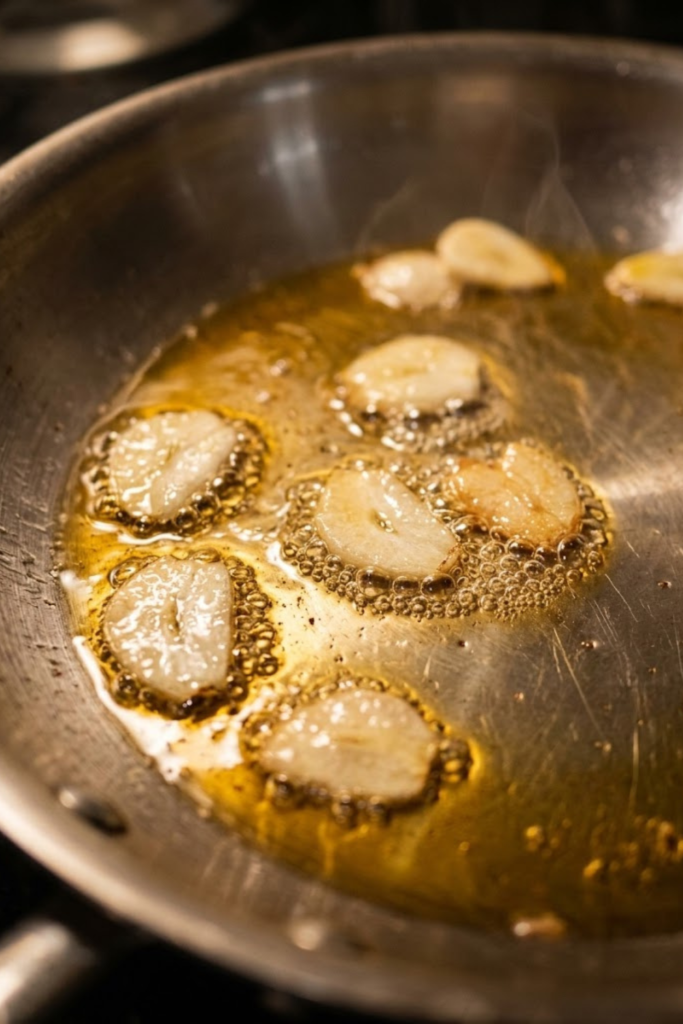
The biggest mistake people make is putting garlic into a hot pan with oil. That’s a one-way ticket to Bitter-town. I always start with a cold pan. I pour in my extra virgin olive oil and then toss in my thin slices of garlic. Only then do I turn the heat to medium-low. This lets the garlic flavor slowly seep into the oil like a tea bag in water. You want the garlic to turn a pale, golden color. If it starts looking like a dark penny, you’ve gone too far! I usually add a pinch of red pepper flakes right at the end of this process. It gives the sauce a tiny “zing” that really wakes up the salmon. It’s about flavor, not just making it spicy.
Why Pasta Water is Liquid Gold
Now, here is the real “aha!” moment. Before you drain your noodles, you have to save some of that cloudy water. I usually use a coffee mug to scoop some out. This water is full of starch from the pasta. When you mix a splash of that water with the garlic oil in the pan, it creates an emulsion. This means the oil and water actually stick together instead of separating. It makes a silky sauce that coats every single strand of pasta. Without it, the oil just pools at the bottom of your bowl and your pasta ends up feeling greasy and dry at the same time. It’s a total game changer, I promise.
Choosing Quality Ingredients
Since this sauce is so simple, you can’t hide behind a bunch of heavy cream or red sauce. This is why using a good olive oil really matters. You don’t need the most expensive bottle on the shelf, but don’t use the stuff that comes in a giant plastic jug either. A decent extra virgin olive oil has a peppery finish that makes the salmon taste even better. I also like to add a little bit of lemon zest right at the very end. The acid from the lemon cuts through the fat of the fish and the oil, making the whole dish feel light and fresh.
Tips for Perfectly Al Dente Pasta Every Time
If there is one thing that really gets under my skin after all my years in the kitchen, it is mushy pasta. I’ve seen so many of my students turn a beautiful bag of noodles into something that looks like it belongs in a baby food jar. My middle schoolers know I am a total stickler for “al dente.” That is just a fancy Italian way of saying “to the tooth.” It means when you bite into the noodle, it should still have a little bit of a firm center. If it’s soft and falling apart, you’ve gone too far and there is no coming back from that! For a great salmon pasta with garlic olive oil, the pasta needs to be strong enough to hold up against the chunks of fish.
The Importance of Salting Your Water
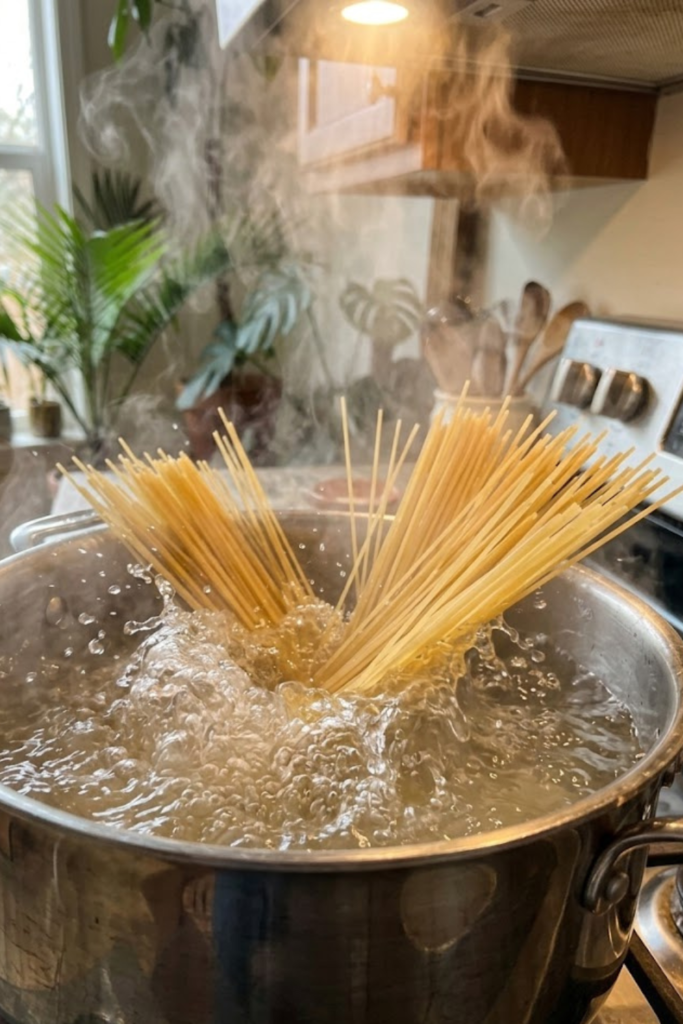
First off, you need to use a much bigger pot than you think. Pasta needs room to move around and dance while it’s boiling. If the pot is too small, the noodles will just stick together in a big clump and you’ll have a gummy mess. And please, for the love of good food, salt your water! I always tell people it should taste like the ocean. This is literally the only time you get to season the actual inside of the noodle. I usually throw in about two big tablespoons of kosher salt once the water is at a rolling boil. Don’t worry, most of that salt goes down the drain when you’re done, so it’s not like you’re eating it all.
Timing is Everything
Watch that timer like a hawk. I usually look at what the box says and then I set my timer for two minutes less than that. Why? Because the pasta is going to keep cooking for another minute or two when you toss it into the hot pan with your salmon and garlic oil. If you cook it all the way to “soft” in the water, it will be overcooked by the time it hits your plate. I usually pull a noodle out with tongs and bite it to check. If I see a tiny white dot in the middle, it’s perfect. Also, never, ever rinse your pasta with cold water. That washes away all that lovely starch we need to make our sauce stick to the noodles.
Choosing the Right Shape
I personally think long, thin noodles work best for this. Spaghetti is the classic choice, but I really love using Linguine because it’s a bit flatter and catches the oil better. You want something that flows well. I wouldn’t use giant shells or chunky rigatoni for this specific recipe because the salmon flakes are delicate and might get lost inside the big holes. You want the salmon and the noodles to weave together on your fork. If you follow these simple steps, your salmon pasta with garlic olive oil will taste like it came out of a professional kitchen instead of just a regular Tuesday night at home.
Bringing it All Together and Adding that Final Kick
I remember the first time I tried to put everything together for this dish. I had the pasta boiling in one pot and the oil sizzling in another, and honestly, I felt like I needed four hands just to keep up! It was a total mess and I ended up dropping a whole lemon on the floor. But don’t worry, it gets a lot easier once you find your rhythm. After you have your garlic oil ready and your salmon is all prepped, the real magic happens. This is the part of the lesson where my students usually get the most excited because the kitchen starts to smell like a five-star restaurant. It’s funny how just a few simple things can make you feel like a pro chef in your own house.
Combining the Salmon and the Sauce
Once your garlic is that perfect light golden color, you want to gently add your salmon cubes into the pan. If you cut them small like I suggested before, they are going to cook incredibly fast. We are talking maybe three or four minutes total. You just want them to turn from that bright raw pink to a nice, opaque light pink. I usually use a wooden spoon to move them around very gently. You don’t want to smash the fish into mush! You want those nice, chunky flakes to stay mostly whole so you can actually see them in your bowl. If you see the fish starting to fall apart too much, just turn the heat down a little bit. It’s all about being gentle with the ingredients.
The Big Toss and the Pasta Water
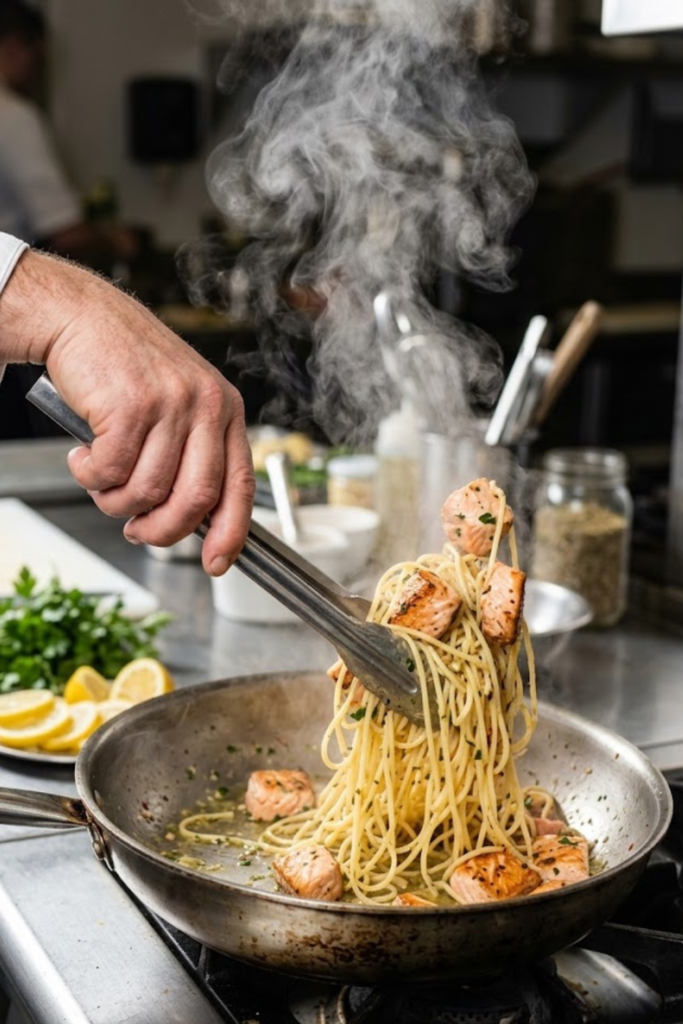
Now, this is the part where that mug of pasta water we saved earlier comes into play. Turn your heat up just a tiny bit and throw your cooked pasta right into the pan with the salmon and the garlic oil. Pour in about half of that pasta water and start tossing everything together. I like to use a pair of tongs for this because it helps me lift the noodles and coat them evenly. You’ll see the water and oil start to mix together and create a creamy-looking sauce that isn’t actually made of cream. It’s a neat little science trick that I love showing people. If the pasta looks a little dry, just add another splash of that water until it looks shiny and delicious.
The Final Flavor Flourish
Before you call everyone to the table, you have to add the “bright” flavors. I always squeeze half a fresh lemon over the whole pan right at the end. The acid from the lemon really cuts through the fat from the salmon and the oil, making everything taste much lighter. Then, I throw in a big handful of chopped fresh parsley. Don’t use the dried stuff in the little glass jar; it tastes like grass clippings. Get the fresh stuff! If you want to get really fancy, you can grate some fresh parmesan cheese over the top. I know some people say you shouldn’t put cheese on fish, but I think those people are missing out. A little salty cheese makes everything better in my book!
Common Mistakes to Avoid with Salmon Pasta
I have seen it all in my twenty years of teaching home ec and cooking classes. Even the smartest people can get a bit mixed up when they are trying to multitask with a hot pan and boiling water. I’ve had students who could solve high-level math problems but would still end up with a pile of grey fish and sticky noodles! Usually, it’s because they are trying too hard or they aren’t paying attention to the small things. If you want your salmon pasta with garlic olive oil to turn out great every single time, you need to watch out for these traps that I’ve fallen into myself more than a few times.
Don’t Overcook the Salmon
The biggest mistake is definitely overcooking the fish. Salmon is a bit like an egg; it keeps cooking for a minute even after you take it off the heat. If you leave it in the pan until it looks completely “done,” it’s going to be dry and chalky by the time you sit down to eat. I tell my students to look for that moment when the fish just starts to flake apart. If it’s turning white on the outside and is still a tiny bit translucent in the very center, that is when you throw the pasta in. The heat from the noodles will finish the job. I once let a piece of salmon sit too long because I was busy looking for a clean fork, and it tasted like a pencil eraser. Don’t be like me!
The “Too Much Oil” Trap
Another thing I see a lot is people using way too much oil. They think because it’s a “garlic olive oil” sauce, the pasta should be swimming in it. But if you add too much, the dish feels heavy and makes your stomach feel kind of gross afterward. You want enough to coat the noodles so they shine, but you shouldn’t have a puddle of yellow liquid at the bottom of your bowl. This is why we use that pasta water I mentioned earlier! The water helps the oil spread out so you can use less of it while still getting that rich flavor. It’s a balance, like trying to get the right amount of glue on a school project—too much and it’s a mess, too little and nothing stays together.
Adding the Garlic Too Early
I know I talked about this before, but it bears repeating because it’s the number one way to ruin the flavor. If you put the garlic in while the oil is screaming hot, it will burn before you can even get your salmon out of the fridge. Burnt garlic doesn’t just look bad; it tastes bitter and can actually ruin the whole batch of oil. If you smell something acrid or see black bits, just stop. Wash the pan and start over. It only takes two minutes to redo the oil, and it’s much better than eating a dinner that tastes like a campfire. Taking a deep breath and keeping the heat low will save you a lot of headache.
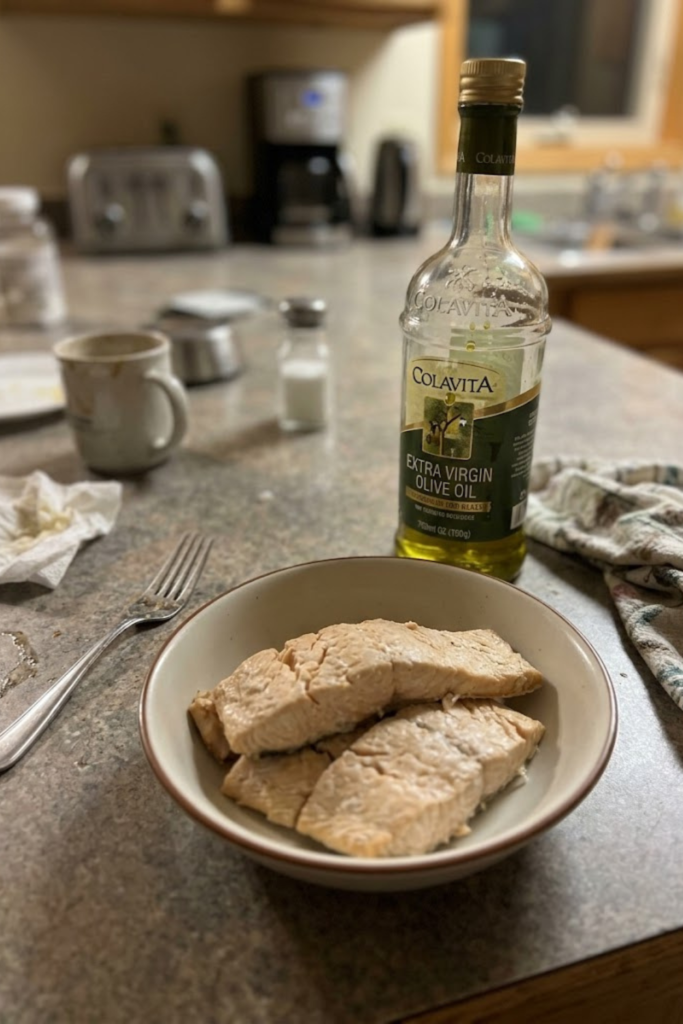
Making a great salmon pasta with garlic olive oil is something anyone can do if they just slow down a little bit. I really love this recipe because it reminds me that you don’t need fifty ingredients to make a meal that feels special. You just need some fresh fish, decent oil, and a bit of patience with your garlic. Whether you are cooking for a date or just trying to feed the kids something that isn’t chicken nuggets for the third time this week, this dish is a winner. I hope these tips help you feel more confident in your kitchen! If you enjoyed this guide, please save it to your “Healthy Dinners” board on Pinterest so you can find it later!