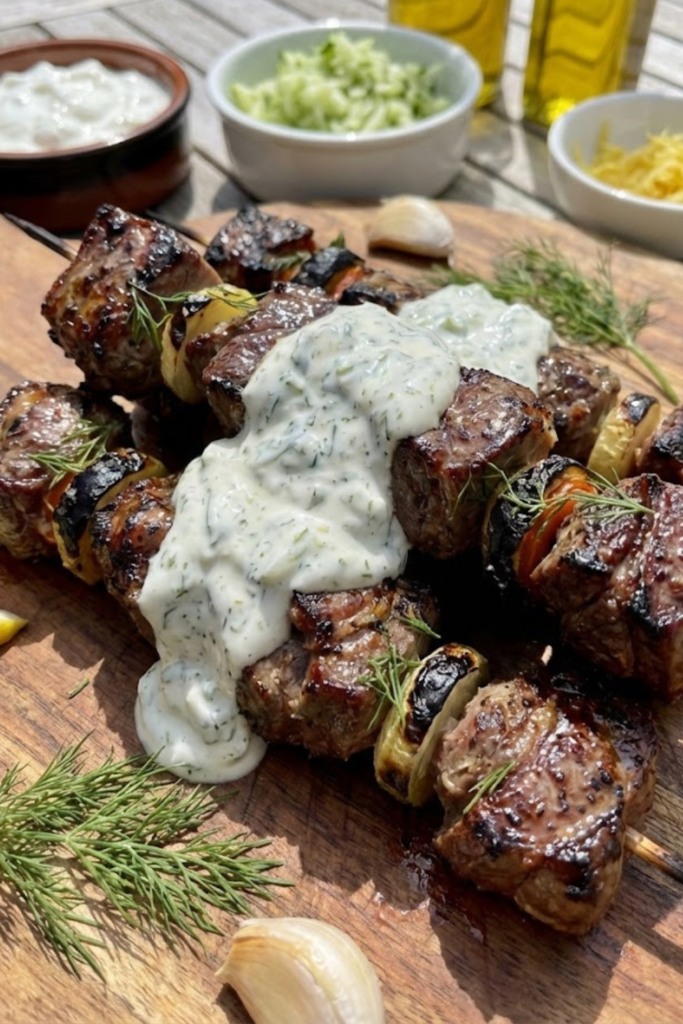
Have you ever bitten into a piece of lamb that was so tough it felt like chewing on a rubber tire? I have, and let me tell you—it’s a barbecue tragedy! But when done right, lamb is arguably the king of the grill. We are talking about Grilled Lamb Kabobs with Lemon Tzatziki Sauce that are so tender they practically melt in your mouth.
In this guide, I’m going to walk you through the exact steps to achieve that smoky, charred perfection paired with a cool, creamy sauce that cuts right through the richness. Whether you’re a seasoned pitmaster or lighting up the coals for the first time in 2026, this recipe is going to change your summer dinner rotation forever! Get your skewers ready, because we are bringing a taste of the Mediterranean straight to your backyard.
Choosing the Best Cut of Lamb for Kabobs
I have to be honest with you, I used to think all lamb was created equal. Years ago, I just walked into the grocery store and grabbed the first package that said “lamb stew meat” because it was already cut up and I was feeling lazy. That was a huge mistake. We sat down to eat, and it was like chewing on a leather boot. My jaw actually hurt by the end of the meal, and my kids just kind of pushed the meat around their plates. It was pretty embarrassing.
Since that disaster, I’ve learned a thing or two about choosing the best cut of lamb.
Why Leg of Lamb Wins Every Time
If you want tender meat that doesn’t fight back when you bite it, you gotta go with a boneless leg of lamb.
The shoulder is great if you are slow-cooking it for six hours, but on a grill? It’s just too tough. The leg muscles get used differently by the animal, so they are lean but still have enough fat to keep things juicy. When you use the leg, you get that perfect balance of flavor and texture that makes grilled lamb kabobs actually enjoyable.
Don’t Fear the Butcher
I know it can be intimidating to talk to the guy behind the counter. But you really should.
Sometimes I just buy the whole boneless leg and cut it myself. It is usually cheaper that way. But if you are pressed for time, ask the butcher to butterfly it for you. Just make sure you aren’t buying the pre-cut “stew meat” unless you know for a fact it’s from the leg. Most of the time, that stuff is the scraps from the tougher parts of the animal.
The Battle with Silver Skin
Here is the part that is a bit of a pain. You have to trim the meat.
There is this layer called silver skin—it’s that shiny white connective tissue. It does not melt like fat does. If you leave it on, it snaps tight when it hits the heat and squeezes the juices right out of your kebab. It’s super annoying.
- Get a sharp knife.
- Slide it under the silver skin.
- Angle the blade up and slice it off.
I usually leave a little bit of the white fat, though. Fat is flavor, right? You just don’t want the gristly bits.
Size Matters
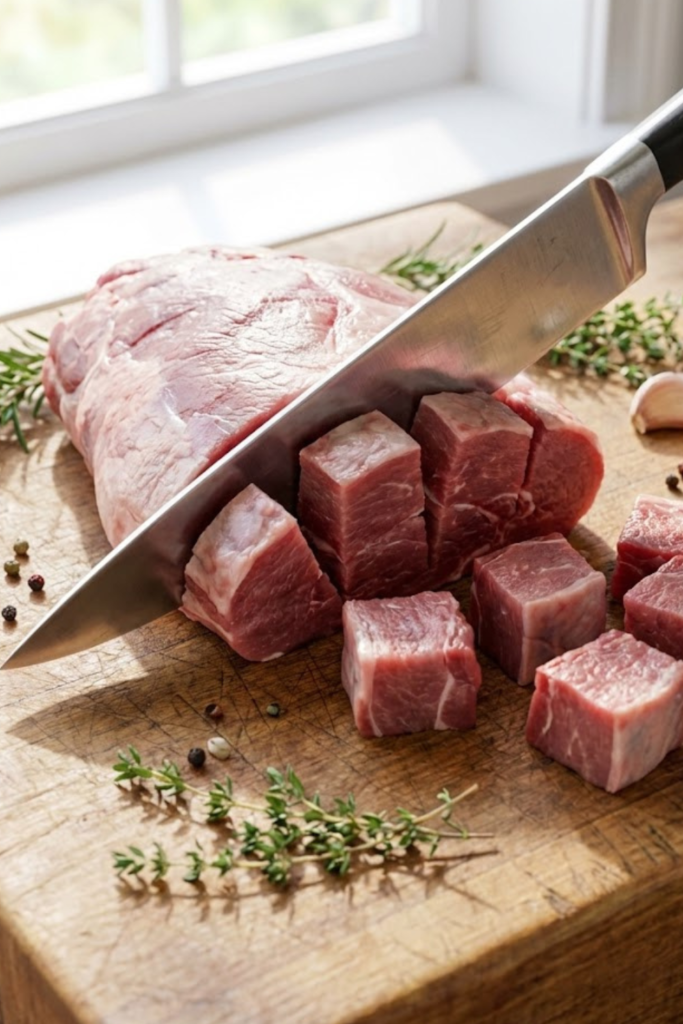
When you start cutting your lamb cubes, don’t just hack at it. I aim for about 1.5-inch chunks. If they are too small, they dry out before they get a nice char. If they are too big, the outside burns before the inside is cooked.
It takes a little practice to get them all the same size, but it’s worth it. When they are uniform, they cook evenly. No one wants a raw kebab while the person next to them is eating a piece of charcoal.
Grass-Fed or Grain-Fed?
People ask me this a lot. Grass-fed lamb tends to have a stronger, gamier flavor. Some people love that earthy taste. Grain-fed lamb is usually a bit milder and fattier.
Honestly? I buy whatever looks freshest. Look for meat that is a bright, rosy pink. If it looks dull or brownish, just walk away. It’s not worth the money. And since lamb isn’t exactly cheap these days, you want to make sure you’re getting the good stuff.
The Secret to a Flavorful Mediterranean Marinade
I used to think marinating meat was just tossing some Italian dressing in a bag and calling it a day. But after a few bland dinners, I realized that if you want your grilled lamb kabobs to actually taste like something, you have to put a little more thought into it. The marinade isn’t just for flavor; it actually changes the texture of the meat.
Here is what I have learned works best.
The Acid is Your Best Friend
You need acid. It’s what breaks down the tough fibers in the meat so it doesn’t feel like chewing gum.
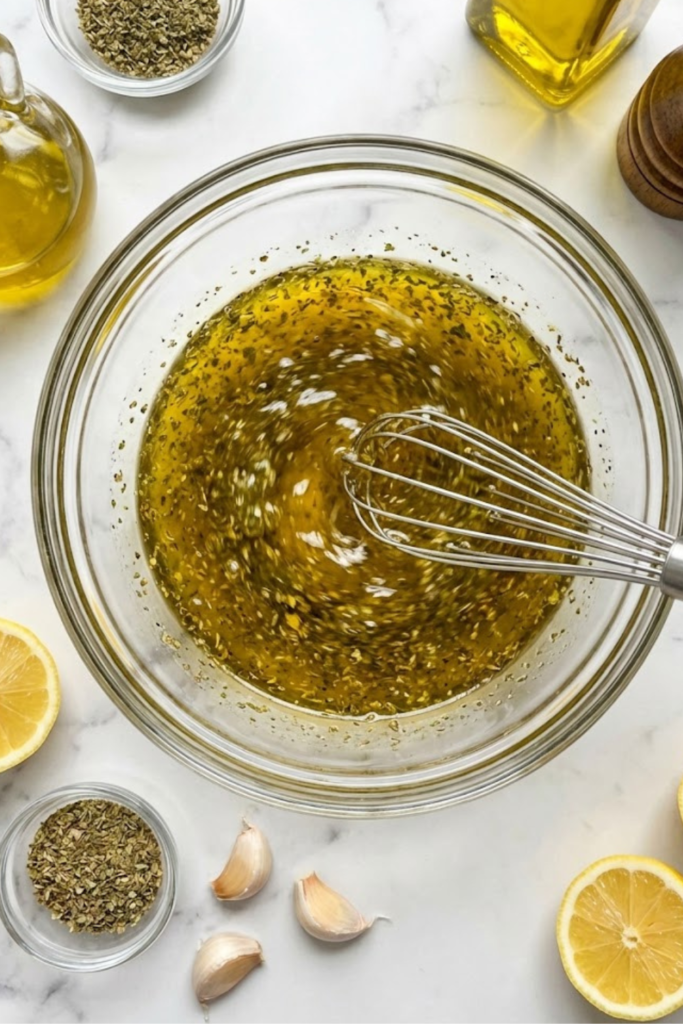
For this recipe, I use a mix of fresh lemon juice and red wine vinegar. I’ve tried just using vinegar, but it tastes too sharp. The lemon juice adds this brightness that really wakes up the heavy flavor of the lamb. But be careful—if you leave it too long, the acid will turn the meat mushy. Nobody wants mushy meat.
Garlic, Garlic, and More Garlic
I am a huge garlic fan. I don’t think you can have too much of it.
For the marinade, I mince up about 4 or 5 cloves. Don’t use the jarred stuff if you can help it. It just doesn’t have the same punch. When you grill the kabobs, those little bits of garlic get crispy and sweet, and it is honestly the best part. I also throw in a ton of dried oregano. It’s classic Greek flavor. Fresh herbs are nice, but dried oregano holds up better to the heat of the grill.
Don’t Skimp on the Oil
You might be tempted to cut back on the oil to save calories. Don’t do it.
You need a good amount of olive oil to carry all those flavors into the meat. Plus, it helps keep the lamb from sticking to the grill later. I usually go for about a half cup. It seems like a lot, but most of it stays in the bag anyway.
The Waiting Game
This is the hardest part. You have to wait.
I usually mix everything in a big Ziploc bag, throw the meat in, and squish it around until every piece is coated. Then I toss it in the fridge.
- Minimum: 2 hours. If you do less than this, the flavor just sits on the surface.
- Maximum: 24 hours. Any longer and the lemon juice starts to ruin the texture.
I usually try to prep it the night before or first thing in the morning. That way, when dinner time rolls around, all the hard work is already done. You just have to thread the skewers and grill.
Preparing Your Skewers and Veggies
Putting meat and veggies on a stick seems like the easiest job in the world, right? Well, that is what I thought until I set my skewers on fire.
Yeah, you read that right. I was using wooden skewers and didn’t soak them. About five minutes into grilling, the ends turned into little torches. I spent the rest of the cookout trying to flip them without burning my fingers.
Wood vs. Metal
If you are using bamboo or wooden skewers, you have to soak them in water first. I usually fill a tall glass or a baking dish with water and let them sit for at least 30 minutes while I prep the veggies. It keeps them from burning up.
If you have metal skewers, you are good to go. Just remember they get super hot. I can’t tell you how many times I’ve grabbed a metal end without a glove and regretted it instantly.
Picking the Right Veggies
You want vegetables that cook at roughly the same speed as the lamb.
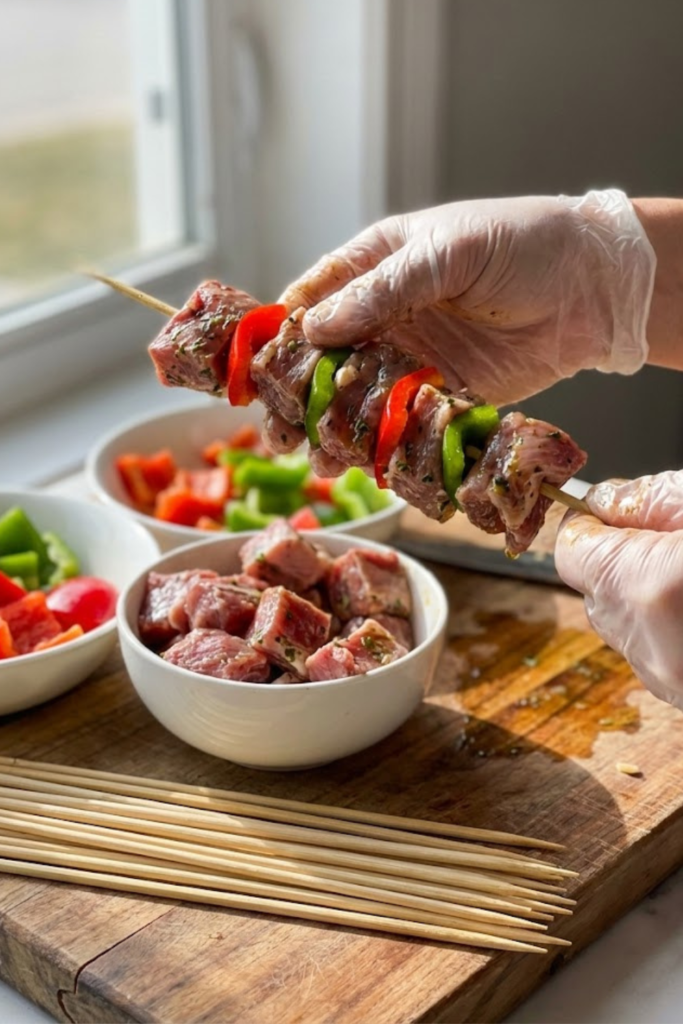
My go-to mix is red onions and bell peppers. They stay crunchy and sweet. Zucchini is okay, but cut it thick. If you slice it too thin, it gets mushy and falls right off the stick into the coals. Mushrooms are tricky too—they tend to break when you shove the skewer through.
Don’t Pack Them Tight
This is the number one mistake I see people make. They jam the meat and veggies together like sardines in a can.
If you pack them too tight, the heat can’t get in between the pieces. Instead of grilling, the meat just steams in its own juices. You end up with grey, rubbery lamb.
Leave a tiny bit of space between each piece. You want the heat to circle around the meat so it gets that nice, brown crust on all sides.
Veggies Need Flavor Too
Don’t forget to season the vegetables!
I used to just thread raw peppers on there, and they tasted… well, like raw peppers. Now, I toss my veggie chunks in a bowl with a little olive oil, salt, and pepper before I start skewering. It makes a huge difference. You want the whole bite to taste good, not just the meat.
Grilling Techniques for Juicy Kabobs
Now comes the fun part, or at least the part where you get to stand by the fire and feel like a chef. Grilling lamb is a little different than burgers or hot dogs. If you treat it the same, you’re gonna have a bad time.
I remember the first time I tried this. I cranked the heat all the way up, threw the skewers on, and walked away to grab a drink. By the time I came back, they were black on the outside and completely raw in the middle. It was a disaster.
Getting the Heat Right
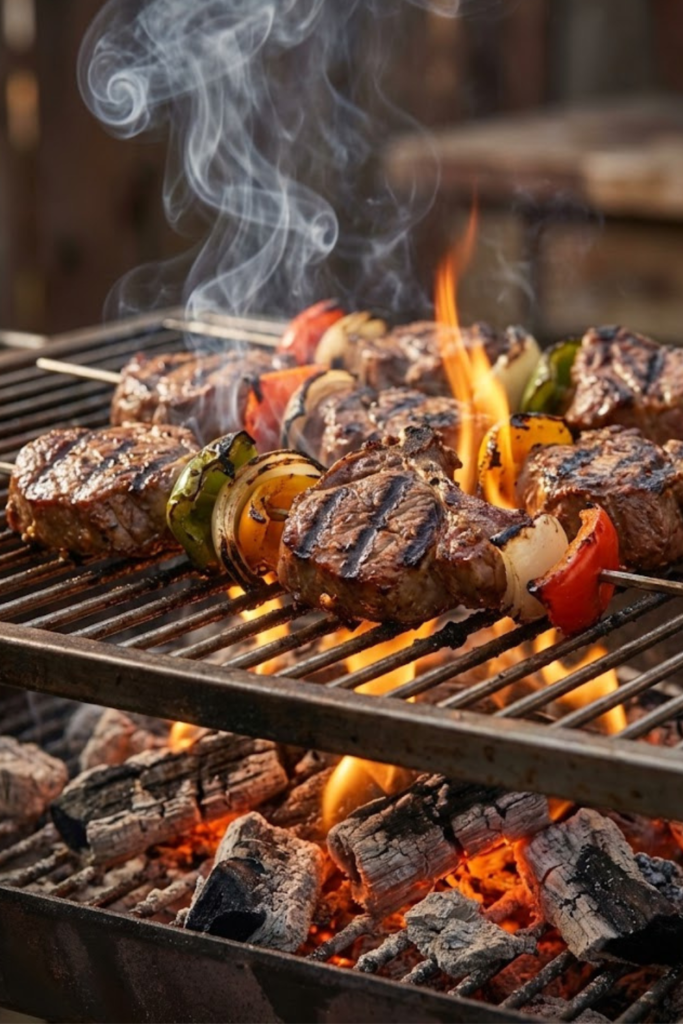
You want medium-high heat. If you can hold your hand over the grate for about 3 or 4 seconds before it hurts, that’s about right.
If the grill is too hot, the outside burns before the inside cooks. If it’s too cool, you don’t get those nice grill marks, and the meat just looks gray and sad. I usually let my gas grill preheat for a solid 10 minutes. If you’re using charcoal, wait until the coals are covered in gray ash.
Don’t Let It Stick
This is super important. Lamb is lean, which means it loves to stick to metal.
Before you put anything on, scrub the grates really well. Then, take a paper towel wad, dip it in a little vegetable oil, and use tongs to rub it all over the bars. If you skip this, you’re going to leave half your dinner stuck to the grill when you try to flip it.
The 3-Minute Rule
Once the skewers are on, don’t mess with them. Let them sit.
I usually do about 2 to 3 minutes per side. You have four sides on a cube, so you have to keep turning them. It takes a bit of patience. If you try to turn it and it feels stuck, it’s not ready. Give it another minute. The meat will release when it has a good sear.
Use a Thermometer (Seriously)
I used to think I could tell if meat was done just by poking it. I was wrong. My finger is not a thermometer.
Invest in a cheap digital meat thermometer. It saves so much guessing.
- 130°F for medium-rare (pink and juicy).
- 140°F for medium (a little less pink).
Don’t go over 145°F or the lamb starts to get tough and dry. Remember, the temp will go up a few degrees after you take it off the grill, so pull it a little early. Trust me, dry lamb is the worst.
Making the Creamy Lemon Tzatziki Sauce
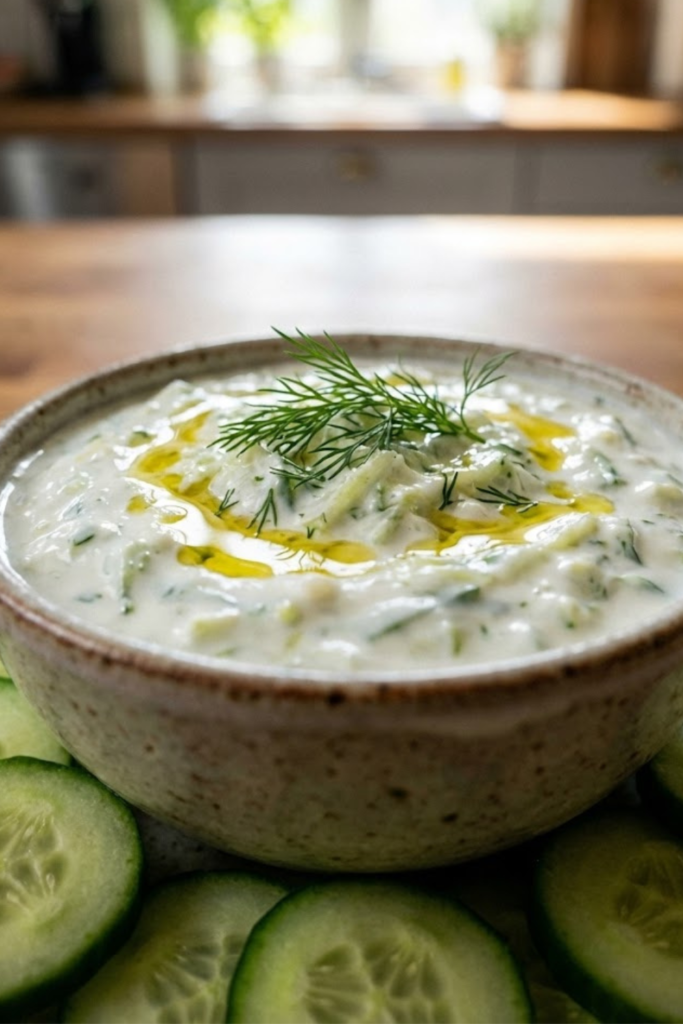
I used to just buy that little tub of Tzatziki from the deli section because I thought making it was too hard. Spoiler alert: it’s not hard, but my first try was a total flop. It was so watery it ran right off the plate. I had no idea what went wrong until I realized cucumbers are basically just crunchy water.
Squeeze the Life Out of It
This is the step you cannot skip. You have to drain the cucumber.
After you grate the cucumber (don’t bother peeling it, the skin adds color), put the shreds in a clean kitchen towel or a cheesecloth. Then, squeeze. And I mean really squeeze. You will be shocked at how much liquid comes out. If you don’t do this, that water seeps out later and turns your nice thick sauce into soup. It’s gross.
The Right Yogurt Matters
Go get the full-fat Greek yogurt.
Please don’t use the non-fat or “light” versions. They are too thin and they have this weird, chalky aftertaste. You need that fat to balance out the strong garlic and lemon. It makes the sauce rich and creamy, just like the stuff you get at a restaurant.
Garlic and Dill
I like my breath to smell like garlic for days, so I put in two big cloves. Mash them up really fine so you don’t bite into a big chunk of raw garlic.
Then, add a ton of fresh dill. Dried dill is okay in a pinch, but fresh dill just tastes like summer. Stir in a squeeze of lemon juice and a little drizzle of olive oil.
Patience is a Virtue
Here is the hard part again. You have to let it sit.
Mix it all up and put it in the fridge for at least an hour. If you eat it right away, it just tastes like yogurt with cucumbers in it. The flavors need time to mix together. I usually make the sauce before I even start the fire for the grill. By the time the lamb is done resting, the sauce is perfect.
So, there you have it. That is pretty much everything I know about making Grilled Lamb Kabobs with Lemon Tzatziki Sauce.
Honestly, the first time I made these, I was terrified I’d ruin the meat. Lamb isn’t exactly cheap, and I didn’t want to serve my family a plate of burnt rubber. But once you get the hang of the marinade and keep an eye on the grill time, it is actually really simple. The lemon and garlic do most of the work for you.
When you pull these off the grill and dip that first piece of hot, juicy meat into the cold, creamy sauce… oh man. It is just so good. It tastes like something you would pay a lot of money for at a restaurant, but you made it right in your own backyard.
Give this recipe a try this weekend. I bet it will become a regular thing at your house just like it did at mine. And hey, if you end up making it, let me know how it turned out!
If you liked this recipe, do me a huge favor and share it on Pinterest. It helps other people find it, and I’d love to see your grilling photos!