I still remember the first time I tried making an Asparagus and Goat Cheese Quiche with Flaky Crust for my family. I was so worried the bottom would be soggy, and honestly, it kind of was because I forgot to bake the crust first! But we all laughed about it while eating every single bite. This quiche is one of those meals that just feels like a warm hug on a Sunday morning. The creamy goat cheese mixed with fresh asparagus is just so good together. I’ve spent years figuring out how to get that crust just right, and I’m excited to share what I’ve learned with you. It’s not as hard as it looks, I promise!
Why This Asparagus and Goat Cheese Quiche Works
I have taught plenty of cooking classes over the years, and if there is one thing I’ve learned, it is that brunch is the most important meal to get right. People always ask me what the secret is to a great morning spread. To me, this Asparagus and Goat Cheese Quiche with Flaky Crust is the perfect answer. It works so well because it doesn’t try too hard to be fancy. You just have these simple, fresh ingredients that really like each other. I remember a student named Sarah who told me she hated asparagus. She said it tasted like grass! I talked her into trying a small slice of this quiche, and she ended up taking the whole leftovers box home.
The Magic of Tang and Earth
The main reason this dish is a total winner is the contrast in flavors. Asparagus has a very deep, green, earthy taste that can sometimes be a bit much if you eat it plain. But then you bring in the goat cheese. That cheese is creamy and has a sharp “zing” that cuts right through the richness. When they bake together in the egg mixture, they balance out in a way that is hard to beat. I always tell my class to look for the thinner asparagus spears at the store. They stay tender and don’t get “woody” or tough while the eggs are setting. If you use the giant ones, you might end up chewing for a long time, which isn’t very fun.
Why the Custard Texture Matters
The eggs and cream are basically the glue that holds all the goodness together. A lot of folks try to use 2% milk to save some calories, but honestly, that is a big mistake. You really want that rich, heavy cream for this recipe. It creates a texture that is soft and silky, almost like a savory pudding. If you use milk, the quiche often gets watery, and that water leaks out and turns your crust into a soggy mess. Nobody wants to eat a wet pie! When you bite through that flaky crust and hit the soft center, it feels really special.
Looking Good on the Table
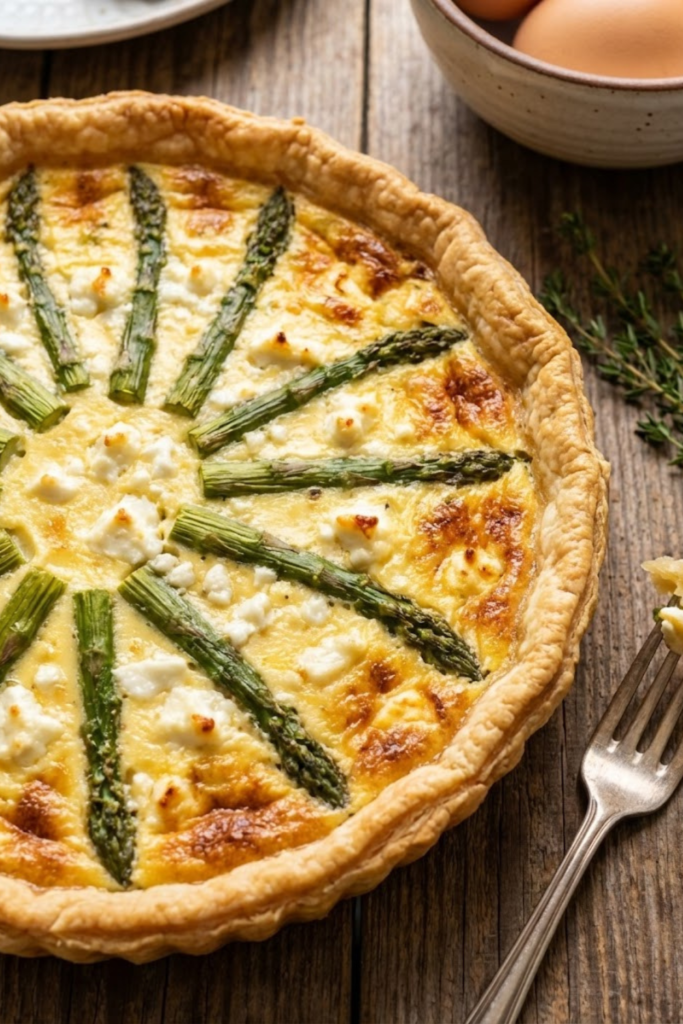
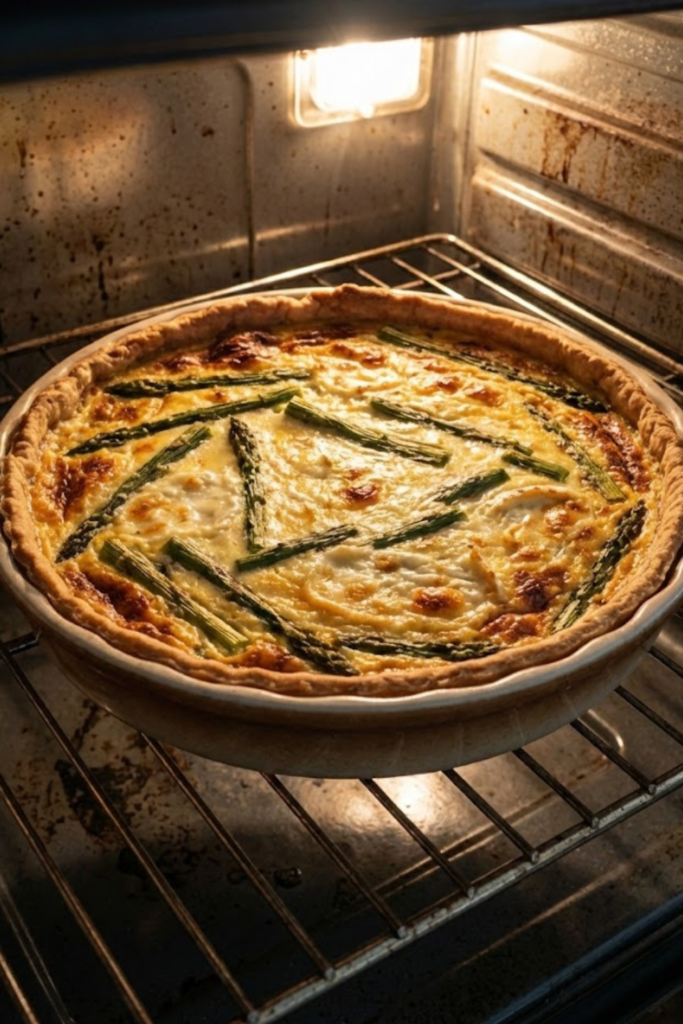
We all eat with our eyes first, right? This quiche looks like a million bucks but is actually pretty easy to assemble. The bright green tips of the asparagus poking through the golden-brown top look so pretty. Plus, goat cheese doesn’t just melt away into a puddle; it stays in these little white pockets of flavor. It’s great for a family breakfast because it even tastes good if it sits on the counter for a few minutes while you finish the coffee. My family gobbles it up every single time because it is just simple, honest food that tastes like spring.
Essential Ingredients for a Savory Custard
I always tell my students that you can’t build a house on a weak foundation. For our Asparagus and Goat Cheese Quiche with Flaky Crust, the custard is that foundation. If your ingredients are cheap or wrong, the whole thing falls apart. I remember one time I was at the grocery store and I saw a woman buying that egg-in-a-carton stuff for her quiche. I almost wanted to tap her on the shoulder and say, “Please, don’t do it!” Real eggs are just so much better. They have a flavor that the carton stuff just can’t copy. I usually go for the large brown eggs because the yolks seem a bit richer to me, though white eggs work just fine if that’s what you have in the fridge.
Why Heavy Cream is Your Best Friend
A lot of people think they can just use whatever milk is in the fridge. I used to think the same thing until I had a very watery quiche disaster at a potluck. It was embarrassing! You really need heavy cream to get that restaurant-quality feel. If you use 1% or skim milk, the custard won’t set up firmly. It ends up feeling like scrambled eggs that are sitting in a puddle. The fat in the cream is what makes it feel like silk. I also like to add a little pinch of nutmeg. You won’t really taste “nutmeg,” but it makes the cream taste deeper and more savory. It’s a little trick my grandmother taught me, and I’ve used it ever since. It really helps the flavors pop.
Fresh Asparagus vs Frozen
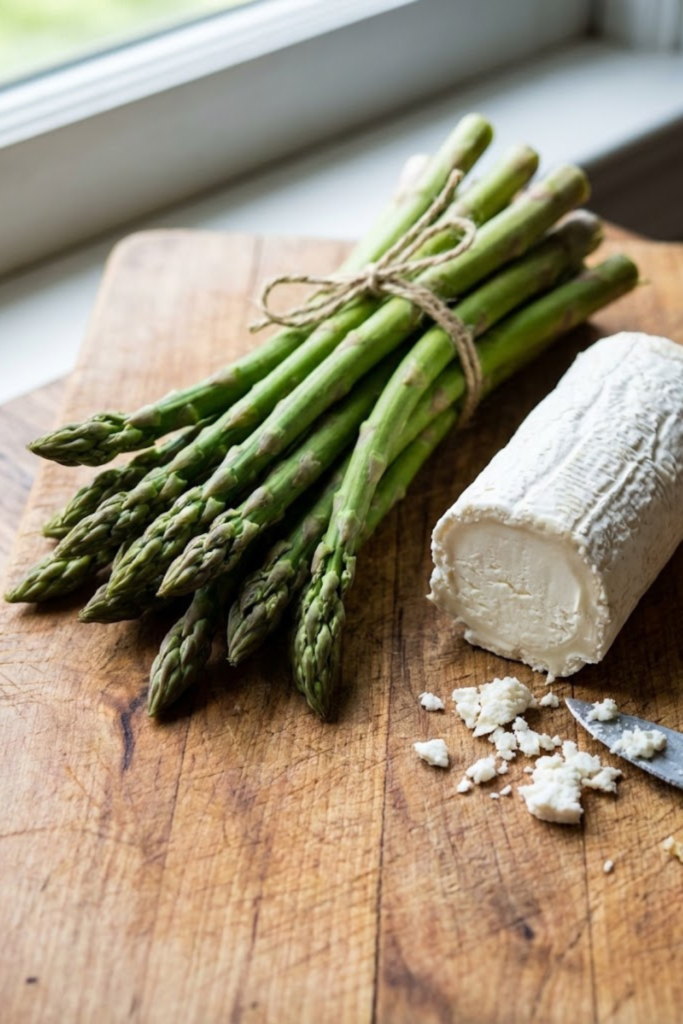
Now, about the greens. I always suggest using fresh asparagus for this. When you buy them, look for the ones that have tight tips. If the tops look like they are starting to flower or get mushy, put them back! I like to snap the woody ends off by hand. If you bend the stalk, it naturally breaks where the tough part ends. I tried using frozen asparagus once when I was in a hurry, and it made the whole quiche turn a weird shade of green because of the extra water. Stick to the fresh stuff from the produce aisle; your taste buds will thank you. It’s also much crunchier and tastes like real food should.
Picking the Best Goat Cheese
For the cheese, I usually buy a log of plain goat cheese, or “chèvre.” You can buy the pre-crumbled kind, but I think the log stays creamier. I just pinch off little pieces with my fingers and drop them into the custard. Don’t over-mix it! You want those little pockets of tangy cheese to stay whole so you get a surprise in every bite. Sometimes I find a goat cheese with herbs on the outside, and that works great too if you want extra flavor. Just make sure it’s fresh. If it smells too “funky,” it might be past its prime. Good cheese makes a huge difference. If you pick the right cheese, your friends will think you are a pro.
Secrets to a Perfectly Flaky Pie Crust
I have seen so many people get really nervous when they have to make a pie crust from scratch. They think they are going to mess it up, so they just buy the frozen ones from the store. I used to do the same thing! But once you taste a homemade crust on your Asparagus and Goat Cheese Quiche, you won’t want to go back to the store-bought kind. It’s all about the temperature. I tell my students that your kitchen might be warm, but your ingredients need to be ice cold. One time, I tried making dough on a really hot summer day with no air conditioning. The butter melted right into the flour before I even got it in the oven. It tasted okay, but it wasn’t flaky at all. It was just flat and kind of greasy.
Keep Your Butter Ice Cold
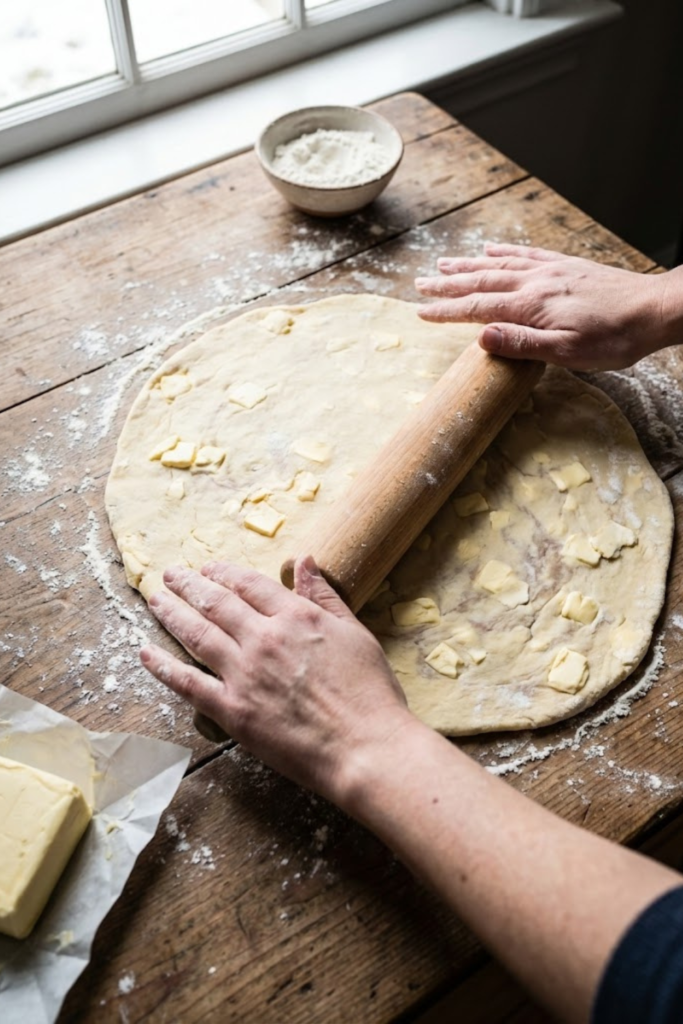
The big secret is the butter. You want to see actual chunks of butter in your dough. I like to cut my butter into little cubes and then put them in the freezer for about ten or fifteen minutes. When you mix it with the flour, you should use a pastry cutter or even just two forks. You are looking for pieces that are about the size of peas. This matters because when those little cold butter bits hit the hot oven, they melt and create steam. That steam is what pushes the layers of flour apart and makes those flaky layers we all love. If you mix it too much and the butter disappears, you get a crust that is more like a hard cookie. It’s still good, but it’s not right for a savory quiche.
Don’t Be Too Rough
Another thing I see beginners do is work the dough too much. I call it “fiddling” with the food. When you add your ice water—and it really must be ice water—only add a little at a time. You want the dough to just barely come together. If you knead it like bread, you develop gluten. Gluten is great for chewy pizza, but it’s the enemy of a flaky crust. It makes the pastry tough and chewy. I usually just give it a few quick folds and then wrap it up and let it sit in the fridge. That rest time is super important because it lets the flour soak up the water and lets the butter get cold again.
The Magic of Blind Baking
Finally, you have to blind bake. This just means baking the crust by itself before you add the eggs. If you skip this, the liquid from the eggs will soak into the raw dough and you’ll get a “soggy bottom.” I usually put some parchment paper inside the crust and fill it with dried beans or little ceramic pie weights. Bake it until it looks dry and just slightly golden. I remember skipping this once because I was in a big rush for a brunch party. My husband took one bite and asked why the bottom of the pie was “squishy.” It was so embarrassing! Now, I always take the extra twenty minutes to bake it first. It’s the only way to get that perfect crunch.
Step-by-Step Assembly and Baking Tips
When you finally have your par-baked crust ready and your veggies chopped, it is time for the fun part. Putting together your Asparagus and Goat Cheese Quiche with Flaky Crust is almost like a craft project. I remember the first time I let my youngest son help me with this part. He wanted to put all the cheese in one corner and all the asparagus in the other! We had to have a little talk about “flavor distribution,” which is just a fancy teacher-way of saying that everyone deserves a bit of everything in their slice. You don’t want one person getting a mouthful of cheese and the next person getting nothing but plain eggs.
Layering Like a Pro
The way you put the ingredients into the shell actually matters a lot. If you just dump the egg mixture over the veggies, sometimes the asparagus floats to the top and burns, or the cheese stays stuck at the bottom. I like to lay my asparagus spears down first in a pretty pattern—sort of like spokes on a wheel. Then, I drop those little pinches of goat cheese in the gaps. After that, I slowly pour the custard over the top. This way, the liquid fills in all the cracks and keeps everything where it belongs. I once saw someone blend the cheese into the eggs with a mixer, and it just turned the whole quiche a weird grey color. Don’t do that! You want those white clouds of cheese to stay separate.
The Famous “Jiggle” Test
Knowing when to pull your quiche out of the oven is the hardest part for most folks. If you cook it until it’s hard in the middle, it will taste like a rubber sponge once it cools down. You want to look for the “jiggle.” When you give the pan a tiny shake with your oven mitt, the edges should be set and firm, but the very center should still move a little bit like Jell-O. That’s because the heat trapped inside will keep cooking the eggs even after you take it out. This is a trick I tell all my friends who think they can’t bake. If it looks totally dry on top, you’ve probably gone too far, but don’t worry—it will still taste fine with enough hot sauce!
The Five-Minute Rule (Or Longer!)
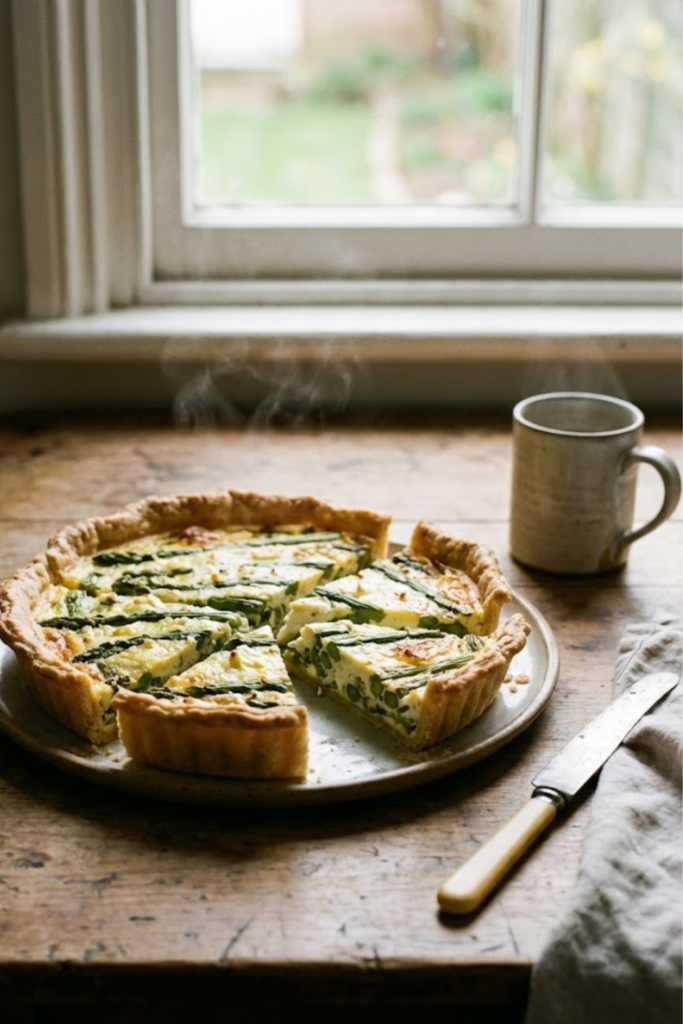
The biggest mistake you can make is cutting into the quiche the second it comes out of the oven. I know it smells amazing and you are hungry, but you have to wait. If you cut it too soon, all the steam escapes and the custard will collapse. It might even run all over the plate. I usually let mine sit on the counter for at least fifteen minutes. This gives the eggs time to firm up so you get those clean, sharp slices that look so good in pictures. While you wait, you can finish setting the table or making a little side salad. Trust me, the wait is worth it for that perfect bite.
Bringing It All Together
Well, we have covered a lot of ground today! Making a Asparagus and Goat Cheese Quiche with Flaky Crust might seem like a big project when you first look at the recipe, but it is really just a bunch of small, simple steps. If you take your time and don’t rush the process, you are going to end up with a breakfast that people will talk about for weeks. I still think back to that one brunch I hosted where I finally got the crust perfect—the sound of that first crunch when the knife went through was better than music to my ears. It made all that time spent chilling the butter totally worth it.
How to Store and Enjoy Your Leftovers
If you actually have any quiche left over (which doesn’t happen often at my house!), you want to make sure you store it the right way. I usually just wrap the slices in some foil or put them in a plastic container once they are totally cold. Don’t put a hot quiche in the fridge, or the steam will get trapped and turn that crust we worked so hard on into a mushy mess. When you want to eat it the next day, try to avoid the microwave if you can. It makes the eggs rubbery. Instead, put a slice in a toaster oven or the big oven at a low heat for about ten minutes. It crisps the bottom back up and makes it taste like it was just baked.
Final Thoughts from the Kitchen
The most important thing I want you to remember is that cooking should be fun. If your crust isn’t perfectly round or if your asparagus spears aren’t perfectly straight, who cares? It is still going to taste amazing because you made it with real, fresh ingredients. I’ve been a teacher for a long time, and I always tell my students that the “secret ingredient” is just being patient. Don’t be afraid to try this even if you have never made a pie before. You might surprise yourself with how good you are at it!
Share the Love!
I really hope you give this recipe a shot next time you have a free Saturday morning. It is the kind of meal that brings people together around the table, and that is what cooking is all about. If you enjoyed this guide, please save it to your “Brunch Ideas” board and share it on Pinterest! It really helps me out, and I love seeing when people try my recipes. If you make it, let me know how it turned out! I bet your kitchen smells incredible right now just thinking about it. Happy baking!