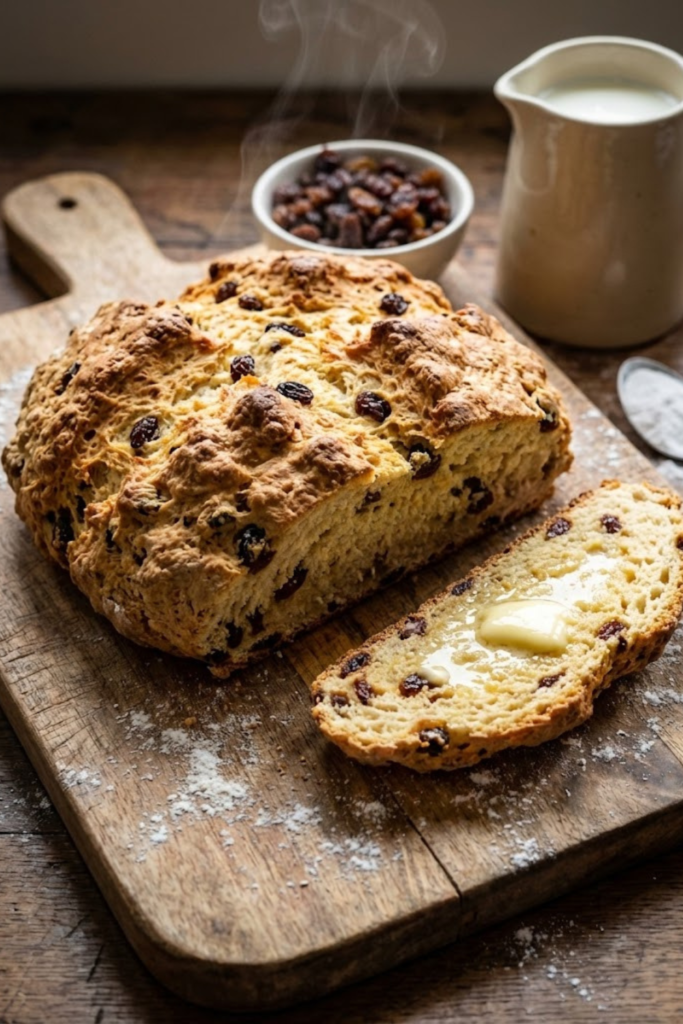
“There is no love sincerer than the love of food,” or so they say, but I think they specifically meant the smell of Traditional Irish Soda Bread with Buttermilk and Raisins wafting through a cold kitchen! Did you know that back in the day, the “cross” cut into the top wasn’t just for decoration? It was actually to “let the fairies out,” though scientifically, it just helps the bread expand without cracking. I remember my first loaf looked more like a prehistoric rock than food, but man, that tangy buttermilk scent had me hooked immediately! Let’s dive into this rustic, bubbly, and slightly sweet world of Irish baking together.
The Magic of Buttermilk and Baking Soda
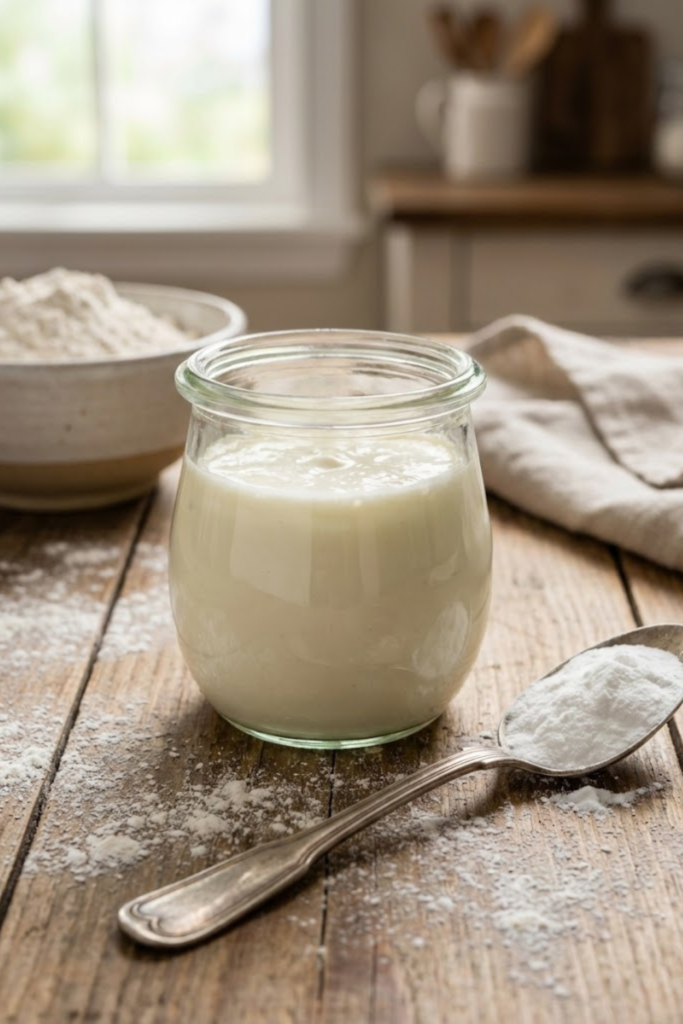
I’ve spent years in my kitchen trying to figure out why some breads feel like bricks and others feel like clouds. With Traditional Irish Soda Bread with Buttermilk and Raisins, the whole secret is just two ingredients working together. Most bread needs hours of waiting for yeast to grow, but this is fast. It’s perfect for people like me who forget to start dinner until it’s almost too late! I remember the first time I made this, I was so worried because I didn’t see any rising in the bowl. I thought I broke it! But that’s the thing about this recipe—the magic happens once that heat hits the pan.
How the Bubbles Get Made
So, here is the science part, but I’ll keep it easy. Baking soda is what we call a “base.” On its own, it doesn’t do much except sit there in the box. But when you add buttermilk—which is full of lactic acid—they start a tiny war. They create carbon dioxide gas. These little bubbles get trapped in the flour and push the dough up. This is why you have to get the bread into the oven fast. If you let the dough sit on the counter for twenty minutes while you talk on the phone, the bubbles will pop and your bread will be flat. I’ve done that before, and let me tell you, it makes a great doorstop but terrible toast!
Why the Acid Matters for Texture
The buttermilk does more than just make bubbles. It actually breaks down some of the tough parts of the flour. This makes the bread really tender. If you used regular milk, the bread would be way too hard. I always tell my friends that if they don’t have buttermilk, they can squeeze some lemon juice into regular milk and let it sit. It’s a good trick, but real buttermilk from the store always gives me that better tang that I love.
Don’t Overwork the Dough
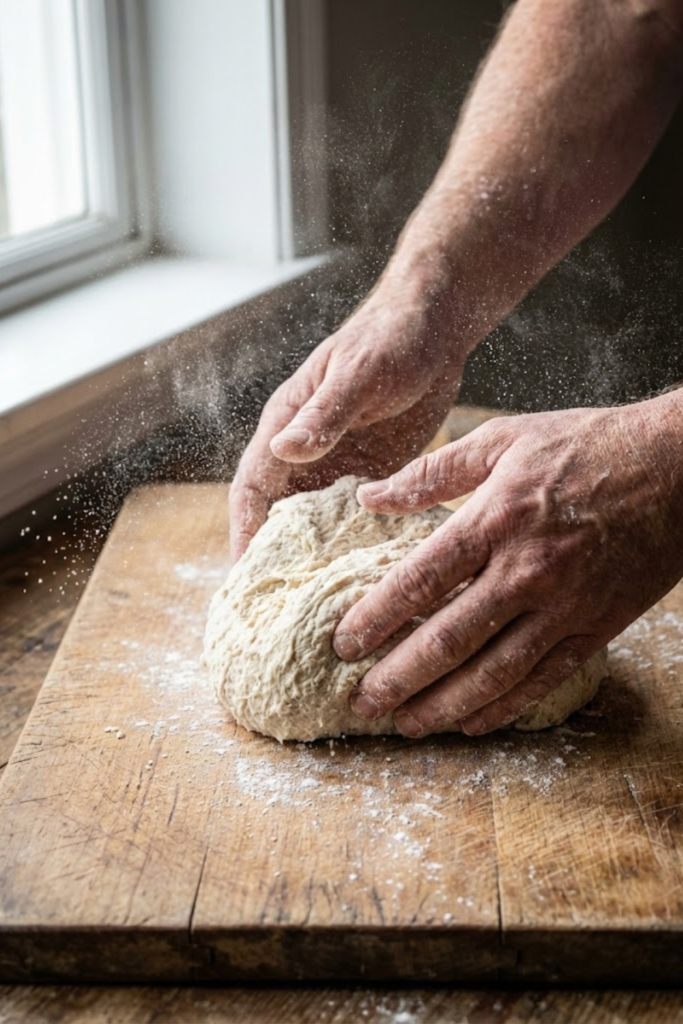
The biggest mistake I see people make is treating this like pizza dough. You don’t want to knead this a lot. If you play with it too much, you’ll squeeze out all that gas we just talked about. I usually just stir it until it looks like a “shaggy mess” and then stop. It should look a little ugly before it goes in. That’s how you get those craggy, crispy edges that catch all the butter later. Just give it a few gentle turns and let the oven do the hard work for you. Make sure you don’t overthink it; simple is always better with this bread.
Choosing the Best Raisins for Your Loaf
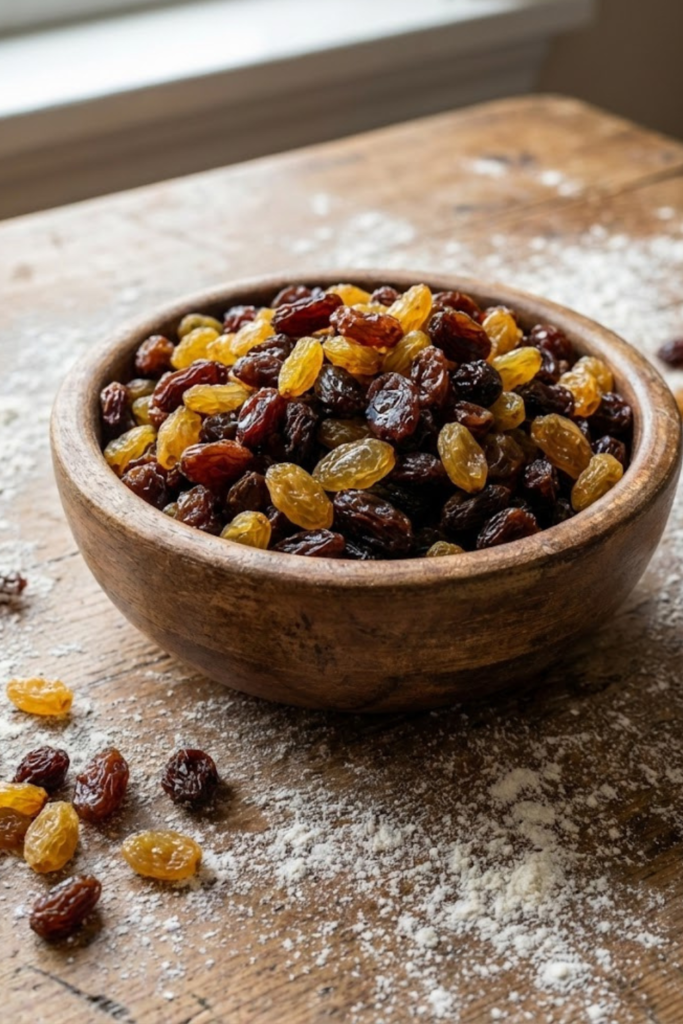
Let’s talk about the fruit. I’ve seen people throw in any old box of dried grapes they found in the back of the cupboard from three years ago. Please don’t do that! The raisins are the little pops of sweetness in your Traditional Irish Soda Bread with Buttermilk and Raisins, so they need to be good. I used to think all raisins were basically the same. Boy, was I wrong. Using the wrong kind can make your bread feel dry or even a bit bitter if they get too scorched in the oven. I once made a loaf with old, shriveled raisins and it felt like I was eating tiny little pebbles.
Finding Your Favorite Variety
When you go to the store, you’ll see a few different kinds. Thompson seedless are the ones in the red box we all grew up with. They are fine, but they can be a bit small and tough. I really like Sultanas, which are often called golden raisins. They are a bit juicier and have a lighter flavor that doesn’t take over the whole loaf. If you want something bold, Flame raisins are big and dark. I usually mix a couple of kinds together because it looks pretty when you slice the bread. My neighbor used to pick them out, but once I switched to the better quality ones, she started asking for extra slices!
The Secret to Juicy Fruit
Here is a trick I learned from a fellow baker years ago. If your raisins feel hard or rubbery, you should soak them before you put them in the dough. I put mine in a bowl of warm water for about ten minutes. If I’m feeling fancy, I might even use a bit of orange juice or a tiny splash of whiskey! It makes them plump up so they stay soft while the bread bakes. Just make sure you drain them really well and pat them dry with a paper towel. If they are too wet, they will make the dough around them soggy, and nobody wants a mushy spot in their bread.
Keeping Them from Sinking
The last thing you want is a loaf where all the raisins are sitting at the bottom like a heavy layer of lead. To fix this, I toss the raisins in a little bit of the flour before I add the buttermilk. This helps them “stick” to the dough instead of sliding down to the bottom of the pan. When you fold them in, do it gently with your hands. You want them spread out so every single slice has a good amount of fruit. It’s all about making sure every bite is just as good as the first one. Don’t worry if a few pop out of the top; they just get extra caramelized and delicious.
Mastering the “No-Knead” Technique
If you are used to making sourdough or sandwich bread, you might think kneading is the most important part of the job. I used to think that too. I’d spend twenty minutes pushing and pulling the dough until my arms hurt. But for Traditional Irish Soda Bread with Buttermilk and Raisins, kneading is actually your enemy. If you treat this dough like a workout, you’ll end up with a loaf that’s as hard as a brick. I learned this the hard way after making a batch that was so tough we couldn’t even slice it. My husband joked we should use it for home repairs! The trick is to be lazy. Yes, you heard me right. The less you do, the better it turns out.
Using the “Claw” Method
When I mix my ingredients, I don’t use a heavy machine. I just use my hand. I shape my fingers like a big claw or a rake. I stir the buttermilk into the dry stuff in a circular motion. This keeps the dough light and airy. You just want to bring everything together until there are no more dry spots of flour. If you see a few lumps, leave them alone! Those little bits are what give the bread its rustic look and also help the crust get crunchy. I usually find that it takes less than a minute to get the right feel. It’s a very satisfying, messy process that makes me feel like a real old-school baker.
Embrace the Sticky Mess
One thing that scares new bakers is how sticky this dough is. It’s going to get all over your fingers, and that’s okay. In my early days, I kept adding more and more flour because I thought it was “too wet.” Don’t do that! That extra flour makes the bread heavy and dry. You want a “shaggy mass.” It should look a bit like a damp, lumpy cloud. If it’s sticking to the bowl a little bit, you’re on the right track. I just dust my hands with a tiny bit of flour at the very end so I can move it onto the baking sheet without leaving half the dough stuck to my skin.
Shaping the Perfect Round
Once it’s out of the bowl, just give it two or three very gentle turns. You’re not trying to build up the dough strength here; you’re just tucking the edges under to make a nice round shape. It doesn’t need to be a perfect circle. In fact, if it looks a little rough, it will have a better crust. I always feel a bit of pride when I see that shaggy ball sitting on the tray, ready for the oven. It’s the simplest way to make something beautiful. Try to stay calm and just let the dough be what it wants to be. It might be messy, but the taste is worth it.
Scoring the Cross and Letting the Fairies Out
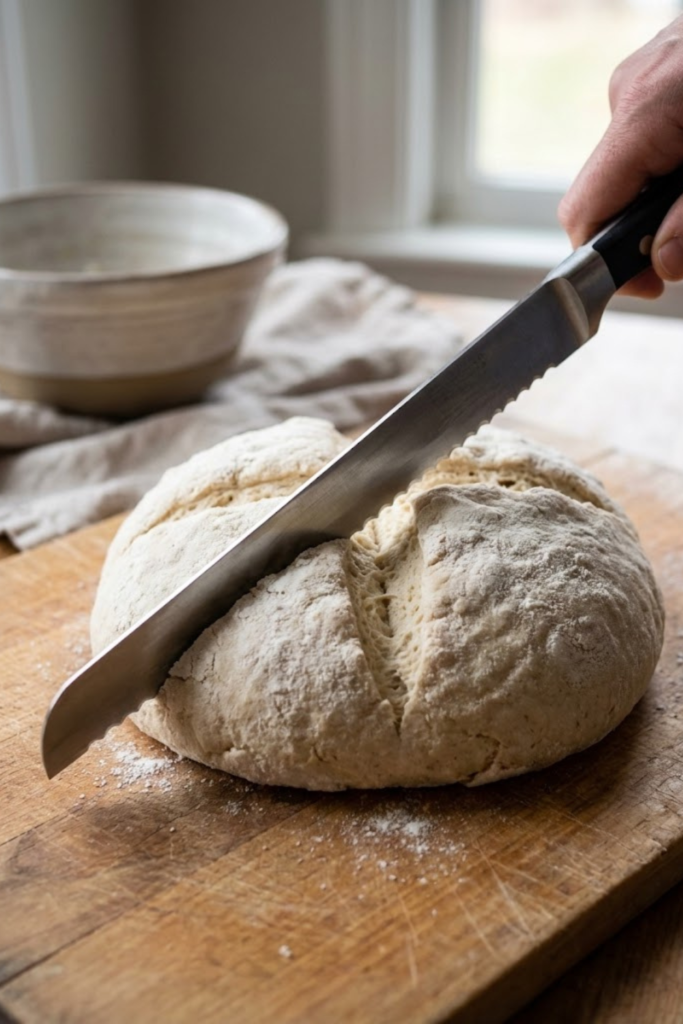
I used to think that cutting a cross into the top of my bread was just to make it look fancy. I mean, it does look great, like something you’d see in a professional bakery window. But my grandmother always told me that we had to cut the bread to “let the fairies out.” She was dead serious about it! She said if you didn’t do it, the fairies would get trapped inside and curse the bread to be heavy and sad. While I’m not totally sure about the fairy part, I do know that skipping this step is a recipe for disaster. This is the exact moment where your Traditional Irish Soda Bread with Buttermilk and Raisins goes from a lumpy ball of dough to a beautiful, proud loaf.
The Reason for the Deep Cut
Beyond the fun stories about Irish folklore, there is a very practical reason to score the dough. Because this bread rises so fast once it hits the heat, the steam needs a place to escape. If you don’t give it a path, the bread will just burst out the sides in a weird, lopsided way. I use a sharp serrated knife and I go deep—about an inch into the dough. You want to see the “insides” a bit. Don’t be shy! I was way too timid the first time I tried this and the bread ended up looking like a giant, cracked potato. Now, I make sure that cross goes almost from edge to edge. It helps the center cook through properly so you don’t end up with a raw, gummy middle that nobody wants to eat.
Picking the Right Pan
What you bake the bread on is just as important as how you cut it. For a long time, I just used a flat cookie sheet. It works okay, but if you want that real, thick crust, you need something that holds a lot of heat. I eventually switched to using a preheated cast-iron skillet, and I never looked back. The bottom of the bread gets so crispy it almost sounds like a drum when you tap it. If you don’t have a skillet, a heavy Dutch oven works wonders too. Just try to make sure whatever you use is nice and hot before the dough even touches it. That initial blast of heat is what creates the “oven spring” that makes the loaf grow tall instead of spreading out flat.
The Hollow Tap Test
How do you know it’s actually finished? I don’t always trust my kitchen timer because every oven is a little bit different. My old oven used to run hot on the left side, so I always had to rotate my bread halfway through the baking time. The best way to check is the “hollow tap.” I take the loaf out—using a heavy oven mitt, of course!—and flip it over. I give the bottom a good thump with my thumb. If it sounds hollow, like a wooden box, it’s ready to come out. If it sounds thuddy or soft, it needs another five or ten minutes. I usually aim for a dark, golden-brown color. Don’t be afraid of a little bit of dark color on the edges; that’s where all the best flavor lives!
Serving and Storing Your Irish Masterpiece
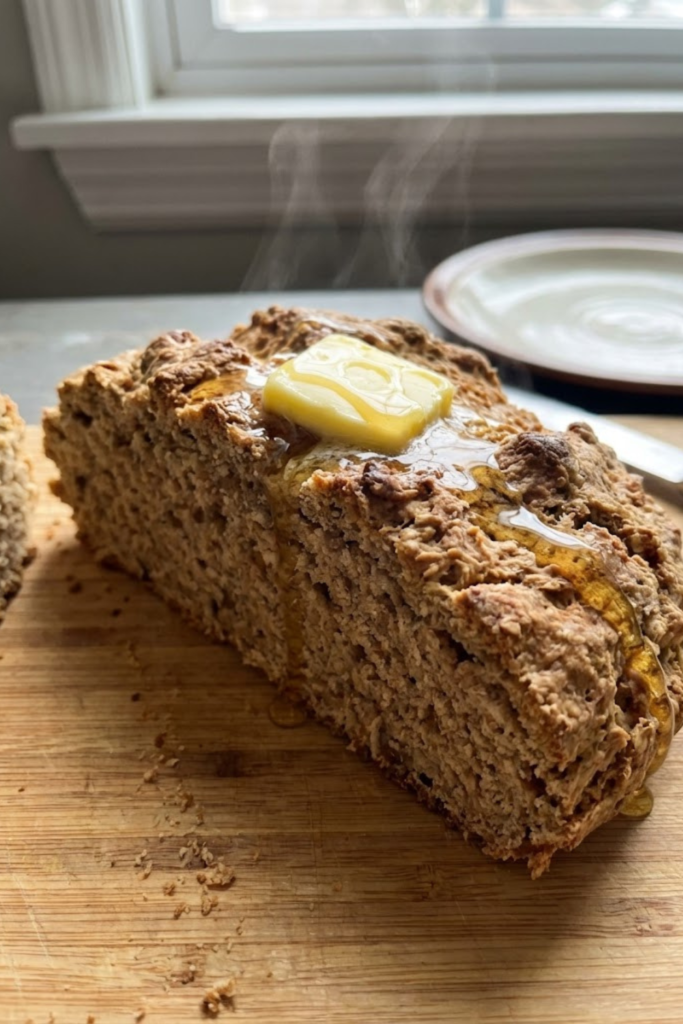
I’ll never forget the first time I pulled a loaf of Traditional Irish Soda Bread with Buttermilk and Raisins out of my oven and tried to wait for it to cool down. I failed. I lasted about three minutes before I was sawing off a thick slice. The steam coming off that bread was like a warm hug. If you’ve followed my steps, you now have a kitchen that smells like a dream and a crusty loaf that looks like it belongs in a professional bakery window. But how you serve it and keep it is just as important as how you bake it. If you treat it right, this loaf can provide comfort for days.
The Butter Rule
In my house, there is a very strict rule: you don’t eat soda bread without plenty of butter. And I don’t mean the cheap stuff from the big tub. To really honor this bread, you need a high-quality salted butter. I usually go for Irish butter because it’s extra yellow and creamy. There is something almost spiritual about watching a thick slab of cold butter hit a hot slice of bread. It melts into those craggy holes and mixes with the sweetness of the raisins. Sometimes I add a tiny drizzle of honey if I’m having a rough morning, but usually, just the salty butter and the sweet bread are plenty. Its the kind of snack that makes you want to close your eyes and just enjoy the moment.
The Freshness Window
Here is the honest truth: this bread is at its absolute peak about twenty minutes after it comes out of the oven. Because there is no yeast and no preservatives, it starts to get a bit firm fairly quickly. By the second day, it might feel a little dry if you leave it on the counter. But don’t you dare throw it away! Day-old soda bread makes the best toast in history. I love to slice it thin and put it in the toaster until the edges get really dark and crispy. The heat brings those raisins back to life and softens the crumb. It’s my favorite way to start a Tuesday.
Storing and Freezing
If you have leftovers that you aren’t going to eat by the next morning, you need to store them carefully. I usually wrap my loaf in a clean tea towel first, then put it in a plastic bag. This keeps the crust from getting too soft while keeping the inside from turning into a rock. If you want to save it for a special occasion, this bread actually freezes beautifully. I slice it up first, then freeze the slices with little pieces of parchment paper in between. That way, I can just grab one piece, pop it in the toaster, and have a fresh-tasting snack in minutes. It makes me feel like I have a secret stash of happiness in my freezer for those days when I’m too busy to bake. Everyone should have a loaf ready to go!
Time to Get Baking Your Own Irish Classic
I really hope you feel ready to get your hands messy and try making this Traditional Irish Soda Bread with Buttermilk and Raisins. Writing this out has made me so hungry that I’m probably going to go whip up another loaf as soon as I’m done here! It’s funny how such a simple thing—just some flour, a bit of soda, and some fruit—can make a whole house feel so much warmer. I’ve made this bread for school bake sales, for sad neighbors who needed a pick-me-up, and for plenty of Sunday breakfasts with my own family. Every single time, people act like I’ve performed a magic trick, but now you know the truth: the ingredients do all the hard work for you.
Why This Recipe is a Keeper
I love this recipe because it doesn’t ask for much. You don’t need a fancy mixer that costs more than a car, and you don’t need to spend five hours waiting for dough to rise. In a world where everything feels like it takes way too long, having a bread you can make in under an hour is a total win. I’ve taught this to my kids, and even they can’t really mess it up (though we did have one “salty” incident when my son got confused with the measurements!). It’s the kind of recipe you print out and stick on the inside of your cupboard because you’ll be reaching for it every time the weather gets a little chilly or St. Paddy’s Day rolls around.
Your New Favorite Tradition
Don’t be afraid if your first loaf looks a little bit like a bumpy rock. That’s actually how it’s supposed to look! The craggy bits are the best part because they get so crunchy in the oven. Just remember to be gentle with the dough, keep your oven hot, and don’t forget the “cross” to let those fairies out. Once you taste that first warm slice with a bit of melting butter, you’ll see why this has been a staple in Irish kitchens for hundreds of years. It’s honest food that fills your belly and makes your kitchen smell like a dream.
Share the Love on Pinterest!
If you enjoyed this guide and your bread turned out great, I would love it if you shared the joy! Please save this post to your “Baking” or “Bread Recipes” board on Pinterest. It really helps other home bakers find easy, dependable recipes that actually work. Plus, it’s a great way to keep this recipe handy for the next time you have a craving for something warm and comforting. Happy baking, and I hope your kitchen is filled with the smell of fresh bread very soon!