I still remember the first time I baked a red velvet cake from scratch—it was a total disaster of dry crumbs and runny icing. But after years of tweaking, I’ve found the magic formula! Did you know that the chemical reaction between vinegar and buttermilk is what originally gave red velvet its signature texture? It’s true! In this post, I’m sharing my fool-proof method for a Red Velvet Birthday Cake with Cream Cheese Frosting that is lusciously moist and incredibly vibrant. Whether you are a baking novice or a pro, get ready to impress your guests with a dessert that tastes as good as it looks!
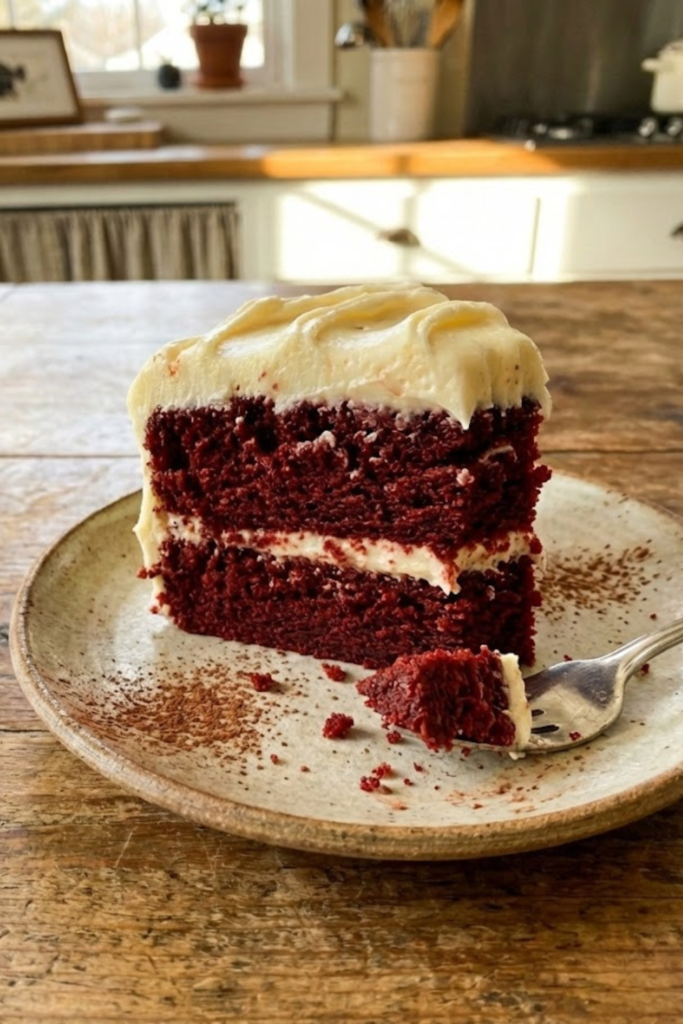
Selecting the Best Ingredients for a Moist Red Velvet Cake
I can’t tell you how many times I’ve seen people grab the first bag of flour or carton of milk they see and then wonder why their cake tastes like a dry sponge. Baking is a lot like the science experiments I used to help my students with in middle school. If you don’t get the basics right, the whole thing just falls flat. To make a red velvet birthday cake with cream cheese frosting that people actually want to eat, you have to be picky about what goes in the bowl. It’s about the chemistry between the acid and the fat. Here is what I’ve learned from years of trial and error in my own kitchen.
The Magic of Real Buttermilk
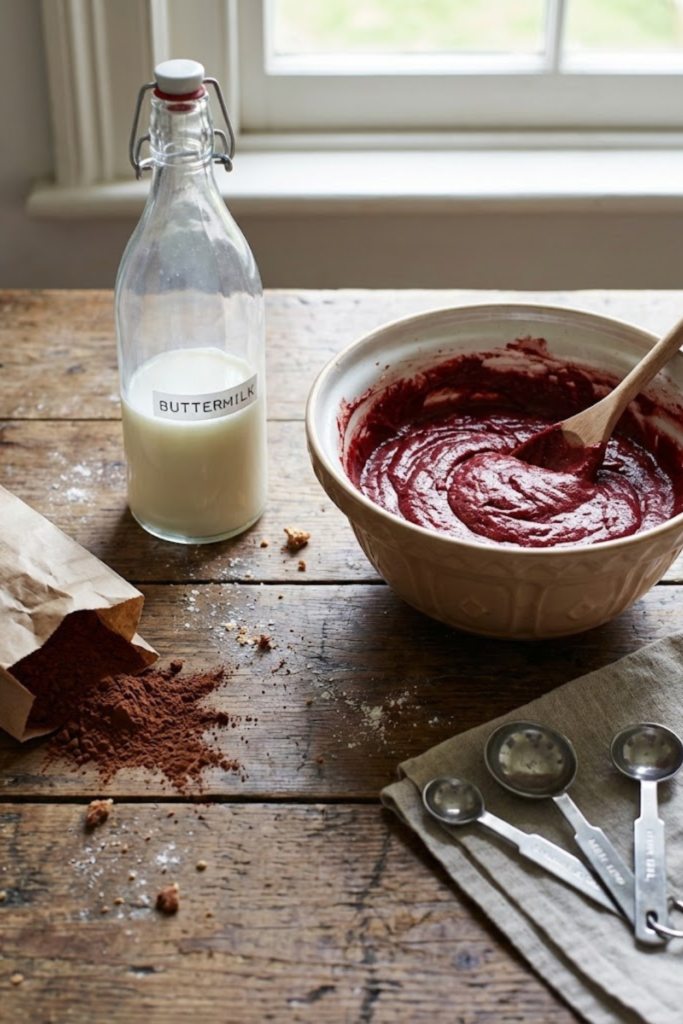
If there is one thing you shouldn’t skip, it is real, full-fat buttermilk. I once tried to use regular milk with a squeeze of lemon because I was too lazy to go to the store, and let me tell you, it wasn’t the same. Buttermilk does something special. It has acid that breaks down the tough gluten in the flour. This is what makes the cake feel “velvety” instead of just like a regular chocolate cake. It also helps the baking soda do its job so the cake rises high and stays fluffy. If you want that moist texture everyone talks about, go buy the real stuff in the carton.
Choosing the Right Cocoa Powder
A lot of people think red velvet is just a chocolate cake with dye, but that’s not really true. It only has a little bit of cocoa. You want to look for “Natural” cocoa powder, not the “Dutch-processed” kind. Natural cocoa is more acidic. That acid reacts with the vinegar and buttermilk to give the cake a deep flavor and helps the red color pop. Dutch cocoa is neutralized, so it can actually make your cake look kind of muddy or brown, which is a real bummer when you want a bright red velvet birthday cake with cream cheese frosting.
Gel Coloring vs. Liquid
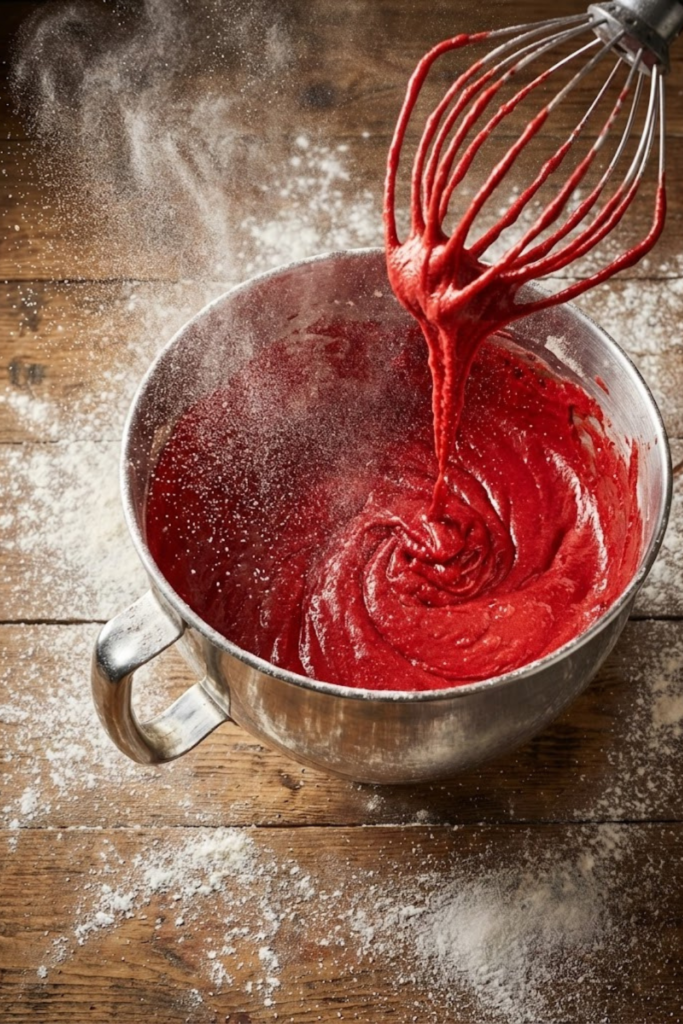
When you are trying to get that bright, iconic red color, the type of dye matters. I always tell my friends to use gel food coloring. Liquid dye from the grocery store is mostly water. If you add enough to make the cake truly red, you end up changing the liquid balance of your batter, and your cake might come out runny or weird. A tiny bit of gel gives you a huge punch of color without messing up the recipe.
The Vinegar and Baking Soda Reaction
This part always reminds me of those volcano projects! At the very end, you usually mix a little white vinegar with baking soda. It bubbles up right away. You have to fold that into your batter fast. This reaction creates tiny air bubbles that make the cake light. Without this, your red velvet could end up being way too heavy. Make sure your baking soda isn’t expired, or you’ll just have a flat, red pancake. Always check the date on the bottom of the box before you start mixing!
Mastering the Batter: Mixing Techniques for Perfect Texture
Getting the ingredients is just the start. The way you put them together is what makes a cake feel professional or like a dry brick. I’ve had my fair share of “bricks” over the years, mostly because I was in a rush and didn’t follow the steps. If you want your red velvet birthday cake with cream cheese frosting to have that perfect crumb, you have to be patient with your mixer. It is about how you build the structure of the cake. If you go too fast, you lose all that soft texture that makes this recipe famous.
Start With Creaming
The first step is always the butter and sugar. I tell people to let the mixer run longer than they think. You want it to look pale and fluffy, almost like a cloud. This traps air in the fat, which helps the cake rise in the oven. If you just mix it until it’s combined, your cake will be heavy and flat. I usually set a timer for three minutes and go fold some laundry while the mixer does the hard work. You want to see the color change from yellow to a light cream.
Eggs and Temperature
One thing I learned the hard way is that cold eggs are the enemy. If you drop a cold egg into room-temperature butter, the butter will clump up. It looks like curdled milk, and it’s hard to fix. I always put my eggs in a bowl of warm water for a few minutes before I start. This keeps the batter smooth and even. You want to add them one at a time, making sure each one is fully mixed in before adding the next. It takes a little more time, but it makes a big difference in how the cake feels in your mouth.
The Alternating Method
This is a trick most professional bakers use to keep the cake light. You want to add your flour mixture and your buttermilk mixture in turns. Start with some flour, then add half the buttermilk, then more flour, the rest of the buttermilk, and finish with flour. If you dump all the liquid in at once, the batter can separate. If you dump all the flour in, you’ll have to mix it way too much to get the lumps out. This way, the flour absorbs the liquid slowly. It keeps the batter happy.
Watch the Speed
Once the flour hits the wet stuff, you need to slow down. If you keep the mixer on high, you’ll develop too much gluten. That’s great for bread, but it makes a cake tough. I usually turn my mixer to the lowest setting or even finish mixing by hand with a big spoon. You just want to mix until you don’t see any more white streaks of flour. As soon as it’s smooth, stop! This is the best way to get a soft cake that melts in your mouth. Over-mixing is the most common reason for a tough birthday cake, so be careful.
Baking and Cooling: Keeping Your Cake From Falling Apart
So, you’ve got your batter ready. It looks bright red and smells like a lovely mix of chocolate and vanilla. This is the part where most people get nervous. I used to stare through the oven glass like it was a favorite TV show, just hoping the cakes would rise. But baking isn’t just luck. It’s about being careful with the heat and your pans. If you rush this part, you might end up with a cake that sticks to the bottom or falls apart when you try to stack it. And believe me, trying to glue a broken cake back together with frosting is not a fun way to spend a Saturday afternoon!
Getting Your Pans Ready
Before you even turn the mixer on, you should get your pans ready. I’ve found that just rubbing butter on the bottom isn’t enough for a red velvet birthday cake. This batter is heavy. I always use a bit of butter, then a sprinkle of flour, and then—the most important part—a circle of parchment paper at the bottom. The parchment paper is a lifesaver. It makes the cake slide right out without any fighting. If you don’t have parchment, you are taking a big risk. I’ve seen many “birthday disasters” happen because the middle of the cake stayed in the pan while the edges came out.
The Truth About Oven Temps
Most people just turn the dial to 350°F and think they are good to go. But ovens are liars. My oven at home is actually twenty degrees colder than the dial says! I tell everyone to buy a cheap oven thermometer. You just hang it on the rack. This makes sure your cake cooks evenly. If the oven is too hot, the cake will hump up in the middle and crack. If it’s too cold, it will be gummy. You want a flat, even top so you don’t have to cut off too much of that delicious red cake later.
Knowing When It Is Done
Don’t just go by the timer. Every kitchen is different. I start checking my cakes about five minutes before the timer goes off. I use the old toothpick trick. Stick a wooden toothpick right in the center. If it comes out with wet batter, it needs more time. If it comes out with a few dry crumbs, it is perfect! Take it out right then. If you wait until the toothpick is totally clean, you might have overbaked it, and nobody wants a dry birthday cake.
Why You Must Wait to Frost
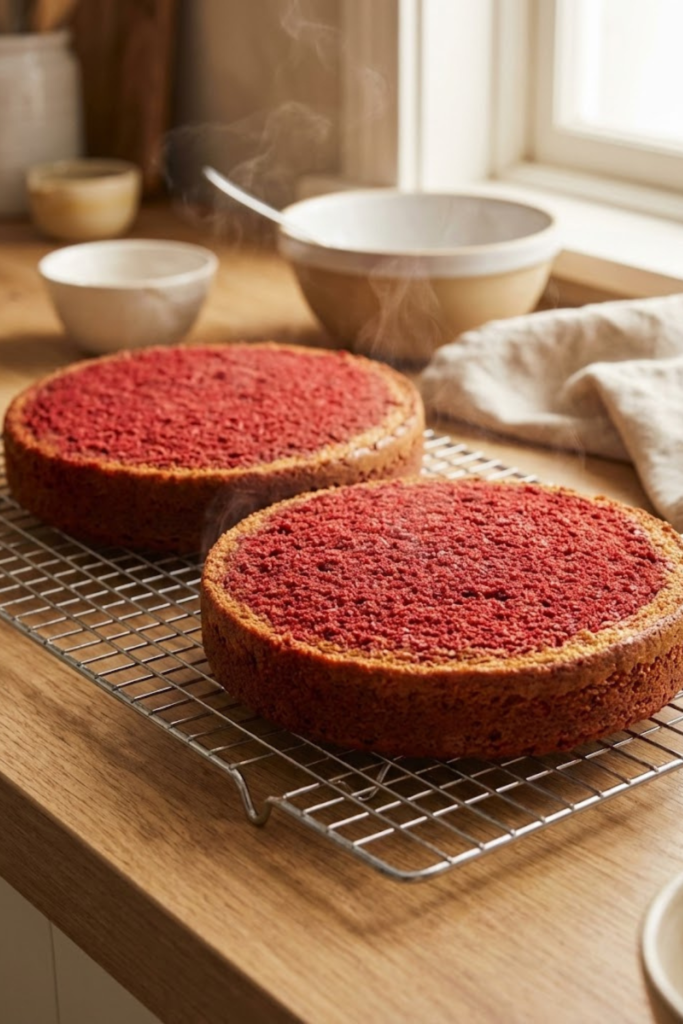
This is the hardest part for me because I’m impatient. You have to let the cakes cool in the pan for about ten minutes, then flip them onto a wire rack. Let them get completely cold. I mean room temperature! If the cake is even a little bit warm, your cream cheese frosting will melt into a sugary puddle. I usually bake my layers the night before and wrap them in plastic once they are cool. This actually makes the cake easier to handle and keeps it moist for the big party.
Whipping Up the Tangiest Cream Cheese Frosting
I honestly believe that the frosting is the best part of the whole dessert. You can have a great cake, but if the icing is bad, the whole thing is ruined. For a red velvet birthday cake with cream cheese frosting, you need that specific tangy kick. It shouldn’t just be sweet; it needs to have some personality! I’ve made this frosting hundreds of times for school bake sales, and I’ve learned a few tricks to make sure it doesn’t turn into a runny mess that slides off the sides.
The Cheese Choice Matters
First off, you have to buy the right kind of cheese. Go for the bricks of full-fat cream cheese. Do not get the stuff in the plastic tub that you spread on your morning bagel. The tub kind has more air and water in it, which makes your frosting way too soft. If you use the tub kind, your cake will look like it’s melting before you even finish putting the candles on. I always leave the blocks out on the counter for a couple of hours so they get soft. If they are still cold, you will get little white lumps that look like polka dots in your icing.
Getting the Ratio Right
People always ask me how much butter to use. I like a ratio that favors the cheese. If you put in too much butter, it just tastes like regular buttercream. You want that tang! I usually use two parts cream cheese to one part butter. This gives you a sturdy frosting that still has that sharp flavor that pairs so well with the cocoa in the red velvet cake. Mix the butter and cheese together until they are totally smooth before you even look at the sugar.
Sifting Is Worth the Effort
I know, sifting is a pain. I used to skip it because I thought it was a waste of time. But powdered sugar usually has hard little rocks in it. If you don’t sift it, those rocks stay in the frosting, and it feels gritty when you eat a piece. I use a fine mesh strainer and just shake the sugar through it. It makes the frosting feel like silk. It is a small step that makes a huge difference in how professional the cake feels.
The Secret Ingredients
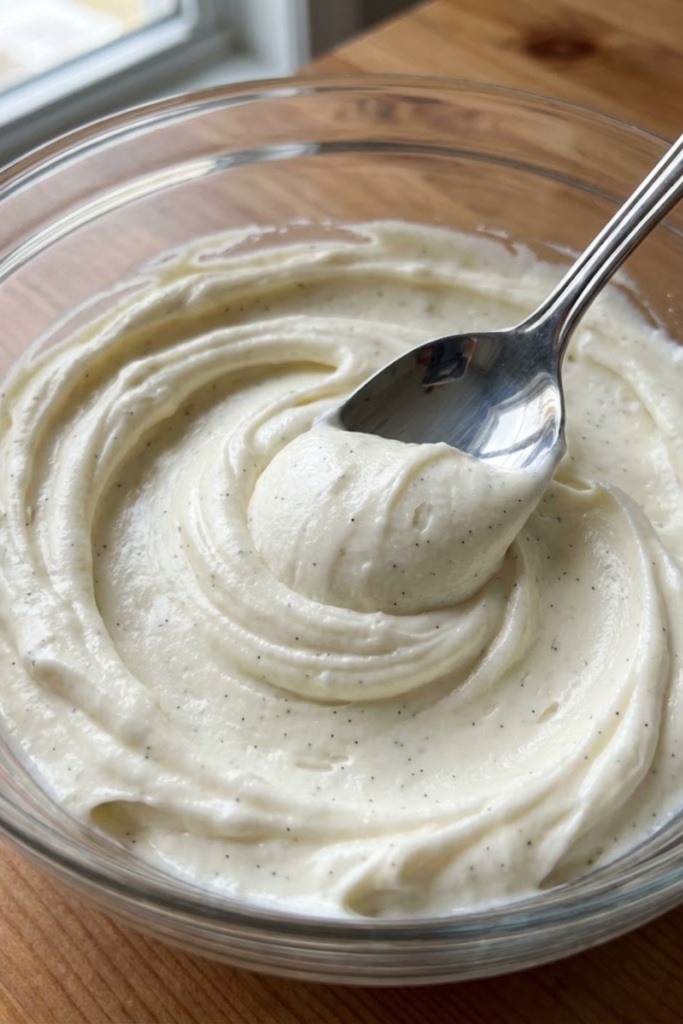
Last, don’t forget the salt and vanilla. A tiny pinch of salt actually makes the frosting taste less sugary and more like “cream cheese.” I also use a good splash of vanilla extract. If you want it to stay bright white, you can use clear vanilla, but I don’t mind a little off-white color for the taste of the real stuff. Just whip it all together until it’s fluffy. Try not to eat the whole bowl with a spoon before it actually gets on the cake!
Assembling and Decorating Your Red Velvet Masterpiece
Putting a cake together is like finishing a big puzzle. You have all these separate parts, and now you have to make them look like a real red velvet birthday cake with cream cheese frosting. I remember one time I tried to stack my layers while they were still just a tiny bit warm. The middle layer slid right out like it was on a waterslide! It was a total mess, but I learned that patience is your best friend during this step. If you take your time, you’ll end up with something that looks like it belongs in a bakery window.
Leveling the Cake Layers
Most cakes come out of the oven with a little dome or a “hump” on top. If you try to stack those, your cake will look like a leaning tower and might even fall over. I use a long bread knife with teeth—they call it a serrated knife—to saw off the bumpy tops. Don’t throw those red scraps away! I usually put them in a bowl for my family to snack on, or I crumble them up to use for decorating later. Having flat layers makes the whole structure stay much more stable when you start adding the heavy frosting.
The Magic of the Crumb Coat
This is the most important part when you have a bright red cake and white frosting. If you just start glopping on the icing, the red crumbs will get mixed into the white, and it will look pink and messy. I put a very thin layer of frosting all over the cake first. This is what we call a “crumb coat.” It acts like a trap for all those loose pieces of red cake. Once that thin layer is on, I put the cake in the fridge for twenty minutes. This makes the frosting get firm and “locks” the crumbs in place so they don’t move when you put the final thick layer on.
Stacking and Filling Properly
When you put the first layer down on the plate, put a little dot of frosting under it first. This keeps the cake from sliding around while you work. I put a big scoop of frosting in the middle and spread it out to the edges with a flat spatula. Make sure it is even! Then, I put the second layer on top, but I flip it upside down. The bottom of a cake is always the flattest part, so putting it on top gives you a perfect, smooth surface for your final decorations.
Final Decorating Touches
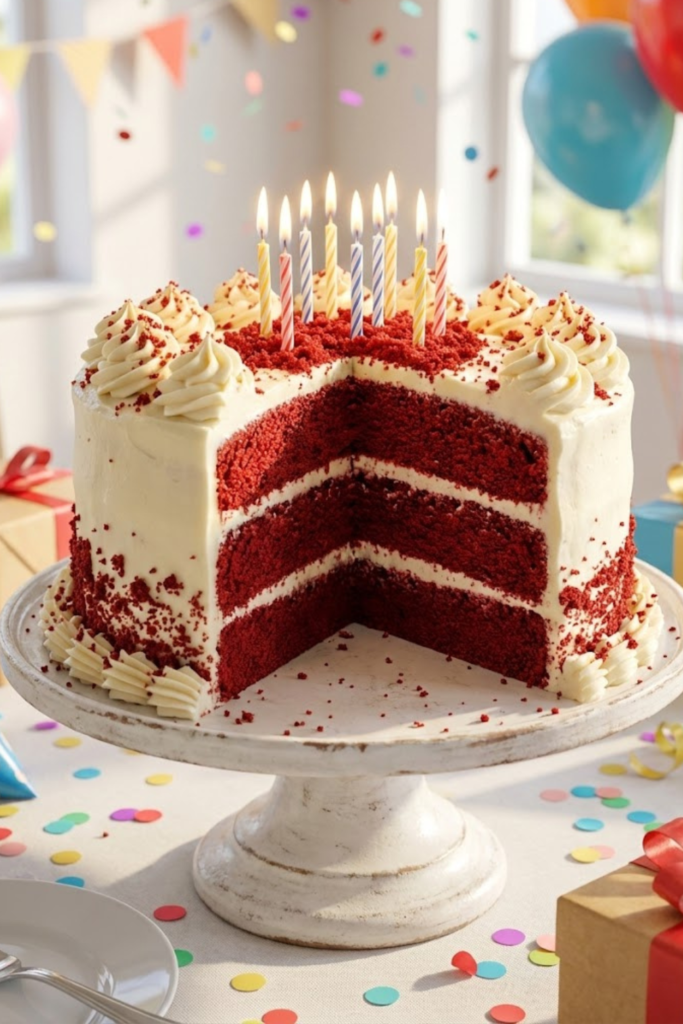
Now you can get creative. I like to take some of those crumbs I saved from leveling the cake and sprinkle them around the bottom edge. It gives the cake a nice pop of color. If you have a piping bag, you can make little swirls or stars on top. It doesn’t have to be perfect. My students always say that as long as it tastes good, they don’t care if the swirls are a bit wobbly. A few fresh berries or even some white chocolate shavings can make your red velvet birthday cake with cream cheese frosting look absolutely stunning for the party.
Wrapping Up Your Red Velvet Birthday Celebration
I really hope you feel ready to tackle this red velvet birthday cake with cream cheese frosting now. It might seem like a lot of steps, but once you do it once, it becomes second nature. The most important things to remember are using real buttermilk and making sure your cake layers are totally cold before you even think about the frosting. If you follow those two rules, you are already ahead of most people! Baking for a birthday is special because it shows you put your time and heart into a gift. I’ve seen my kids’ faces light up more for a slightly crooked homemade cake than for a perfect one from a grocery store shelf.
Storing Your Leftovers
Because of the cream cheese in the frosting, you cannot leave this cake out on the counter overnight. I always put my leftovers in the fridge. I use a big plastic container or even just some toothpicks and plastic wrap to keep the air out. The cake actually stays moist for about three or four days if it is covered well. If you have a big party coming up, you can even make the cake layers a few days early and keep them in the freezer. Just wrap them tight in foil! It makes the birthday morning much less stressful when half the work is already done.
Why Homemade Is Always Better
You might be tempted to just buy a red velvet box mix, but the flavor is never quite the same. Box mixes often use a lot of artificial flavors that can taste a bit like chemicals. When you use real cocoa and vinegar, you get that authentic “tang” that makes red velvet so famous. Plus, you get to control how much red dye goes in. It is a great feeling when someone asks for the recipe and you can tell them you made it from scratch. It makes the birthday feel like a real event rather than just another day.
Share the Love on Pinterest
If you enjoyed this guide and your cake turned out great, I would love to hear about it! Taking a photo of your masterpiece is a great way to remember the day. Please save this post to your favorite baking board on Pinterest so you can find it next year when the next birthday rolls around. Sharing it helps other home bakers find these tips and avoid the same mistakes I made when I was starting out. Happy baking, and I hope the birthday boy or girl absolutely loves their red velvet treat!