Y’all, I have to confess something—I used to be terrified of making red velvet cake. I once made one that was so dry, my poor aunt actually asked for a glass of milk after one bite! It was humiliating. But that failure sent me on a mission to perfect the absolute southern red velvet cake.
This isn’t just chocolate cake with red food coloring; it’s a science. It’s that subtle dance between acidic vinegar, tangy buttermilk, and just a hint of cocoa that creates that signature flavor profile we all crave. In this guide, I’m sharing the exact method I use to get that velvety crumb every single time. Whether it’s Christmas or just a Tuesday, this cake is a showstopper. Let’s get baking!
The History and Science Behind Authentic Southern Red Velvet
I used to think southern red velvet cake was just a chocolate cake with a whole bottle of red food dye dumped in it. Man, was I wrong. I remember the first time I tried to make one from scratch for a church potluck. I didn’t have buttermilk, so I just used regular milk. The cake came out flat, dense, and a weird shade of muddy brown. It was embarrassing! I wanted to crawl under the table. But that failure taught me that this cake is all about chemistry, not just color.
It’s Not Just About the Dye
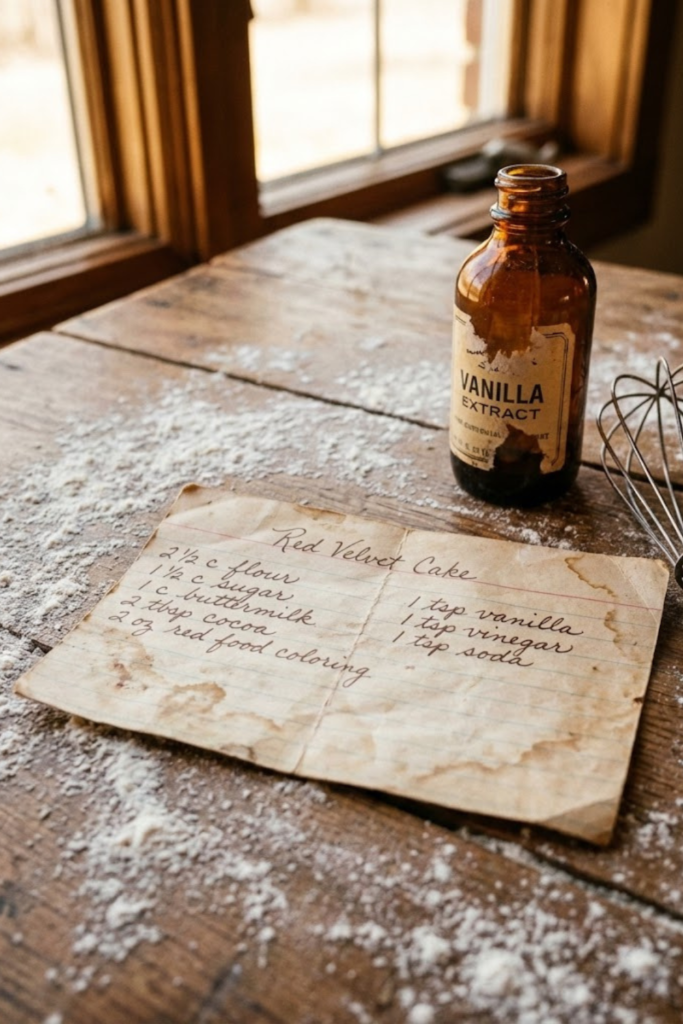
Back in the day, before we had those little plastic bottles of food coloring, the red color actually came from a chemical reaction. It sounds kinda nerdy, but stick with me. Unprocessed cocoa powder used to be more acidic than the stuff we buy now. When that old-school cocoa mixed with the acidic vinegar and buttermilk, it turned a reddish-brown hue.
Nowadays, most cocoa is processed (Dutch-processed), so we don’t get that same reaction. That’s why we gotta add the coloring to get that signature look. But the texture? That’s still all about the science.
The Magic of the Fizz
Here is the secret I learned the hard way: the vinegar isn’t there for flavor. It’s there for the lift! When you mix baking soda and vinegar, you get that volcano experiment we did in school, right? That same fizz happens in your batter.
- Tip: Don’t mix your vinegar and baking soda until the very last second before the cake goes in the oven.
If you wait too long, the bubbles pop, and your cake won’t rise. I’ve cried over flat cakes because I let the batter sit on the counter while I washed dishes. Don’t do that. That reaction creates the fluffy rise and the tender crumb that makes it “velvet.” Without it, you’re just eating red pound cake.
Why It Ain’t Just Chocolate Cake
A lot of folks get this twisted. A true southern red velvet cake only has a tiny bit of cocoa powder—usually just a couple of tablespoons. If you add too much, it overpowers that subtle tang we’re looking for. It’s supposed to taste like vanilla, butter, and a whisper of chocolate, all wrapped up in a tangy bite.
My first few attempts were way too chocolatey because I thought “more is better.” It wasn’t. It ruined the balance. You want just enough cocoa to give it depth, but not enough to make it taste like a brownie. Stick to the recipe on this one, guys. Trust the process.
Essential Ingredients for a Moist Red Velvet Cake
Listen, I used to think baking was just tossing stuff in a bowl and hoping for the best. I treated ingredients like they were mere suggestions. Big mistake. I remember one Christmas, I ran out of cake flour and just used the regular stuff from the pantry. The cake came out heavy as a brick; you could’ve used it as a doorstop.
To get that authentic southern red velvet cake texture, you have to be specific with what you buy. It matters.
The Fat Debate: Butter vs. Oil
This is where people get into fights. Some swear by butter for the flavor; others say oil is the only way to get a moist crumb. I’m here to tell you: use both.
When I used only butter, the cake tasted great but dried out by the next day. It was heartbreaking to throw away leftover cake. But if you use only oil, you lose that rich, buttery taste we all love. So, I split the difference. I use unsalted butter for flavor and a neutral vegetable oil to lock in the moisture. It’s the best of both worlds.
Temperature Matters, People!
I cannot stress this enough: your ingredients need to be at room temperature. I used to be impatient and crack cold eggs right into my creamed butter. The batter curdled instantly. It looked like gross, chunky cottage cheese.
When your baking ingredients are cold, they don’t emulsify or blend together smoothly. That leads to a dense, uneven cake. If you forget to take your eggs out (I do this all the time), just let them sit in a bowl of warm water for five minutes. It’s a total lifesaver.
Why You Need Cake Flour
Do not swap this out. Cake flour has less protein than all-purpose flour. Less protein means less gluten, which means a softer, more tender cake.
If you use regular flour, your red velvet will taste more like a muffin or cornbread. We want velvety, light, and airy. If you can’t find cake flour at the store, you can make a cake flour substitute with cornstarch, but the real stuff is always better.
Picking the Right Red
Finally, let’s talk about the color. I used to use those little tear-drop liquid bottles from the grocery store. I had to use two whole bottles to get a decent red, and it made the batter watery.
Switch to a concentrated gel food coloring. You use way less, and the color is vibrant and deep. Plus, it doesn’t mess with your liquid ratios. It’s a small change that makes a huge difference in your homemade red velvet cake.
Step-by-Step Instructions for the Perfect Crumb
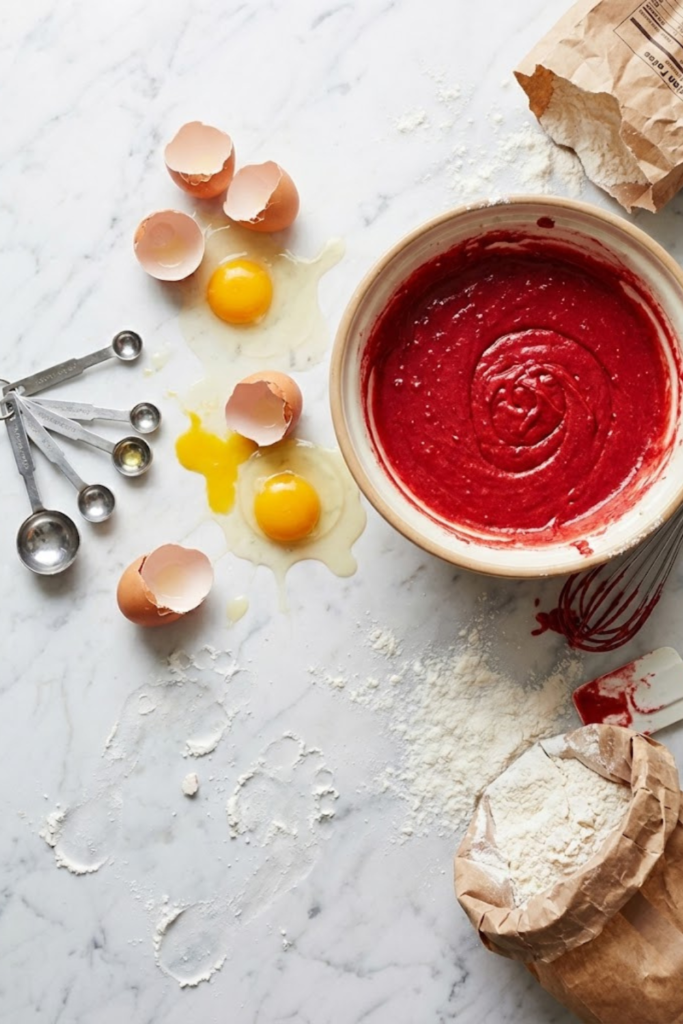
I’ve ruined more cakes than I care to admit. There was this one time I was in a total rush to get a southern red velvet cake in the oven for a birthday party. I dumped everything into the mixer at once and turned it on high. The flour exploded everywhere—it looked like a snowstorm in my kitchen. But worse? The cake came out tough and rubbery.
That’s when I learned that the method matters just as much as the ingredients. You can’t just throw it all in a bowl and pray.
Mixing: The Gentle Art
You have to alternate your ingredients. It feels like a pain, but it’s necessary. I usually add the dry ingredients in three parts and the buttermilk mixture in two, starting and ending with the dry.
If you dump it all in at once, you have to mix it longer to get the lumps out. That overworks the gluten. Overmixing batter is the enemy here. It turns your tender cake into a chewy loaf of bread. I literally mix on the lowest speed until the flour just disappears, then I stop.
The Vinegar Timing
Okay, remember that science stuff I talked about? This is where it happens. I used to mix the vinegar and baking soda way too early. By the time I got the pans in the oven, the fizz was gone.
Have your pans greased and ready before you do this step. Mix the vinegar and baking soda in a small cup, let it fizz up like a science project, and fold it quickly into the batter. Then get that batter into the pans immediately. Speed is your friend here.
Pan Prep and the Oven
Speaking of pans, do not trust “non-stick” sprays alone. I’ve had layers rip in half trying to get them out. Heartbreaking.
I always cut a circle of parchment paper for the bottom of my pans. It releases perfectly every time. Also, keep an eye on your oven. My oven runs hot, so I check my cakes five minutes early. Use the toothpick test—poke the center, and if it comes out with just a few moist crumbs, pull it. If it’s clean, it might be overbaked.
The Waiting Game
This is the hardest part for me. I am impatient. One time, I tried to frost a cake that was still slightly warm because I was running late. The frosting literally melted and slid right off the side of the cake. It was a disaster.
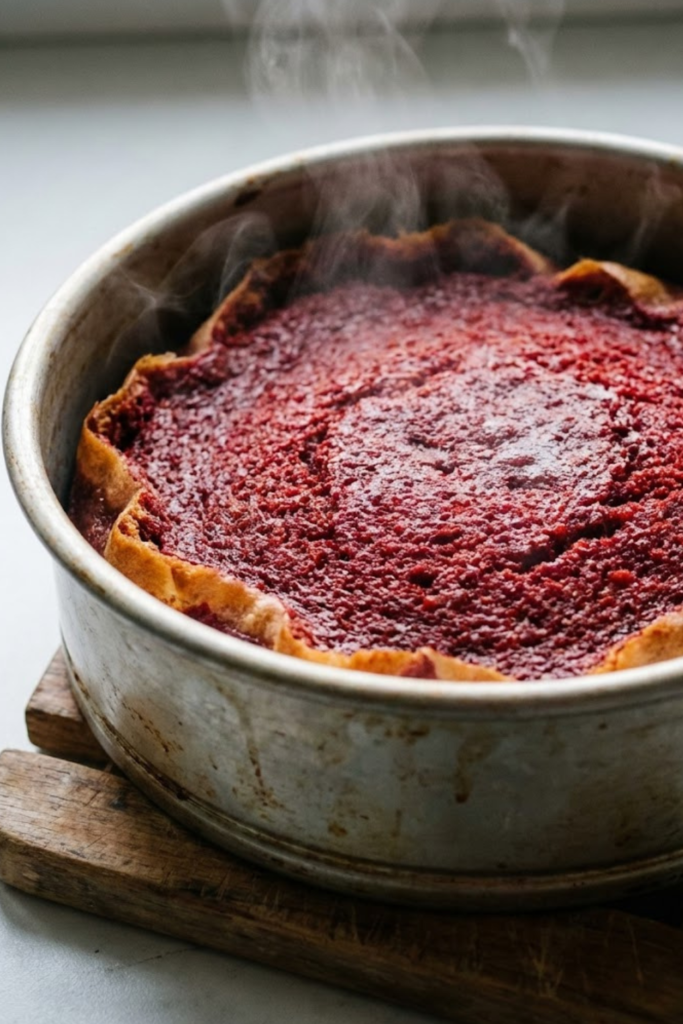
Let the layers cool in the pans for about 10 minutes, then flip them onto cooling racks. They need to be completely cold before you even think about frosting them. Go watch a show, fold some laundry, just stay out of the kitchen so you aren’t tempted to rush it.
Mastering the Tangy Cream Cheese Frosting
I have a confession to make: I used to hate making frosting. I would dread it. I remember making a southern red velvet cake for my sister’s baby shower years ago. I was so proud of the cake layers, but when I went to frost them, everything fell apart. The frosting was a runny, gloopy mess. It literally slid off the sides of the cake like a slow-moving landslide.
It was a total disaster. I tried to stick it in the fridge to harden it up, but it was too late. The cake looked like the Leaning Tower of Pisa. Since then, I’ve learned that a good cream cheese frosting isn’t just about mixing sugar and cheese. It’s about structure.
The Tub Trap: Don’t Do It
This is the number one mistake I see people make, and I made it too. Do not, under any circumstances, use the tub of cream cheese meant for bagels. I know it’s easier to scoop, but it’s a trap.
The spreadable stuff in tubs has extra water and air whipped into it to keep it soft in the fridge. If you use that for your cake, your frosting will never stiffen up. It will stay soupy no matter how much sugar you add. Always buy the full-fat block cream cheese. It’s the only way to get that stability you need for a tall layer cake.
The Lumpy Sugar Nightmare
I am lazy in the kitchen sometimes. I admit it. For the longest time, I refused to sift my powdered sugar. I thought, “The mixer will break up the lumps, right?” Wrong.
I ended up with these tiny, exploded powder bombs in my frosting. It made the texture gritty and gross. Now, I force myself to drag out the sieve. It makes a huge mess—sugar dust gets all over my counter—but it is 100% worth it for that silky smooth finish. If you want that professional bakery texture, you cannot skip this step.
Whip It Good (But Not Too Much)
Here is where it gets tricky. You want to beat your unsalted butter and cream cheese together until they are super light and fluffy. I usually let them go for about 3 to 5 minutes. This creates a nice base.
However, once you add the sugar, you have to be careful. If you overbeat cream cheese frosting once the sugar is in, it can actually break down and become runny again. It’s weird science, but it happens. Mix until the sugar is just incorporated and fluffy, then stop. Don’t walk away and leave the mixer running.
It Doesn’t Have to Be Perfect
I used to stress about getting my cakes perfectly smooth like those videos on Instagram. I’d spend an hour smoothing the sides, only to mess it up.
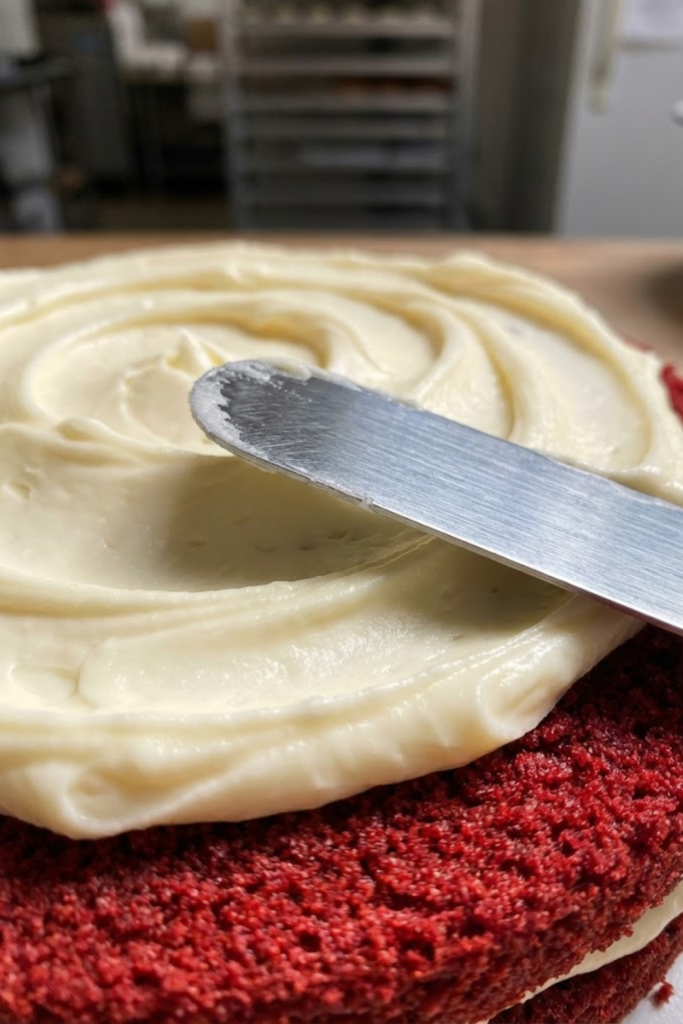
Then I realized something: tangy frosting tastes good no matter what it looks like. Now, I embrace the “rustic” look. I use an offset spatula or even the back of a spoon to make little swirls all over the cake. It hides imperfections beautifully. Plus, people actually like knowing a human made it, not a machine. So, slap that frosting on there and don’t worry if it’s a little crooked. It just adds character.
The Slice Worth Waiting For
Look, I get it. Baking a southern red velvet cake from scratch feels like a huge project. When I look back at my first attempt—that dry, sad little cake that needed a gallon of milk to wash down—I almost gave up. I thought, “Why not just buy a box mix?”
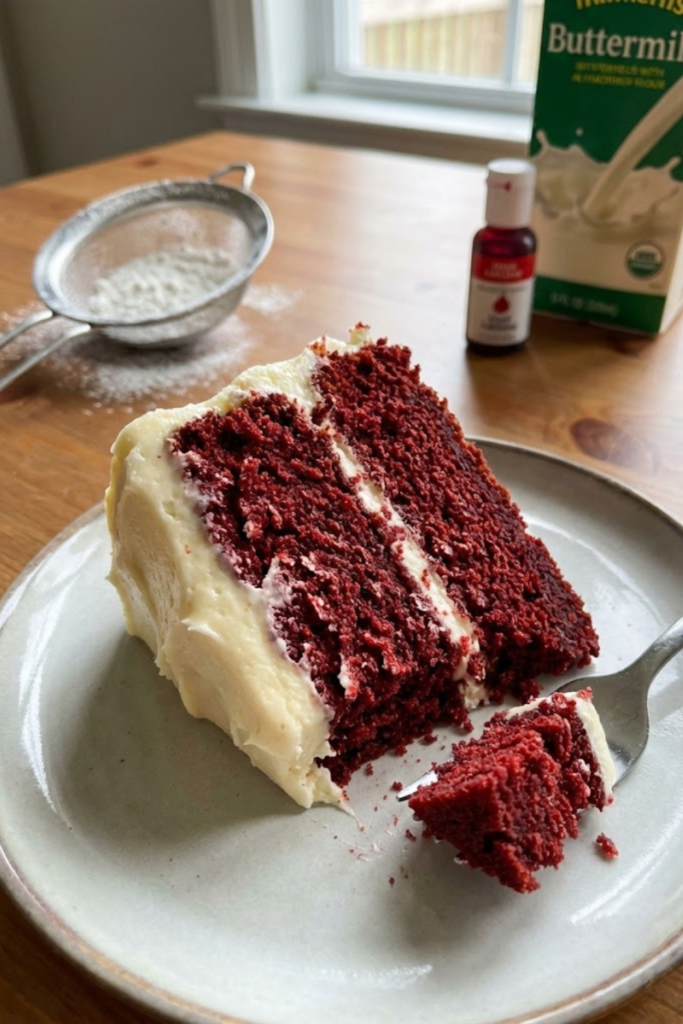
But then I finally nailed it. I remember cutting into that first successful cake. The knife slid through the layers like butter. The crumb was a deep, vibrant red, and it was so moist it practically melted on my tongue. The tangy frosting cut through the sweetness perfectly. My family went quiet for a solid minute while eating, which is a miracle in my house. That silence was the best compliment I’ve ever received.
It’s All About the Details
If you take anything away from this, remember that the little things matter.
- Don’t skip the buttermilk.
- Let that vinegar fizz.
- Be patient with your cooling racks.
These aren’t just fussy rules; they are the difference between a “meh” dessert and something your friends will talk about for weeks. I know it takes a little extra time to sift the flour or wait for the butter to soften, but trust me, the payoff is huge. You are creating a memory, not just a dessert.
Share the Love
There is nothing better than seeing a big red slice of cake on a white plate. It just screams “celebration.” Whether you are making this for Christmas, a birthday, or just because you survived a hard week, you got this.
If this guide saved you from a baking disaster or helped you finally conquer the classic southern dessert, do me a huge favor! Pin this recipe to your “Best Desserts” board on Pinterest. It helps other bakers find us and keeps this recipe safe for next time.
Happy baking, y’all!