Y’all ever have that moment where the doorbell rings and your stomach just drops? I’m talking about that sheer, cold panic when you realize folks are walking up the driveway and your kitchen counter is totally empty. That was me a few years back when my aunt decided to stop by unannounced.
I looked around my kitchen and felt like a total mess. I didn’t have any butter softened on the counter. I certainly didn’t have time to wait for a complicated layer cake to cool down.
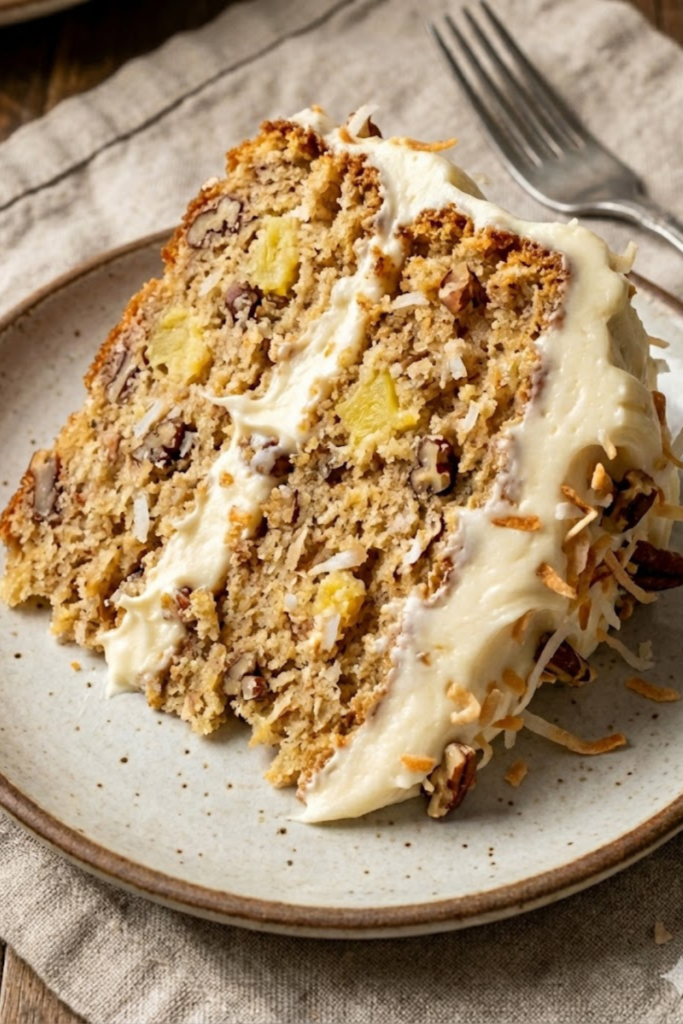
But then I remembered a recipe card I’d stuffed in the back of my junk drawer. It was for a preacher cake recipe, a classic savior for anyone caught off guard by unexpected company. Legend says it got the name because housewives could throw it together quickly when the preacher came calling.
Honestly, it saved my hide that day. It is a dense, spice-filled delight that rivals even the best southern dessert. If you want a moist cake without the fuss, this is it.
The History Behind the “Preacher Cake” Name
I have spent way too many hours digging through dusty boxes of community cookbooks at estate sales. You know the ones—those spiral-bound books put together by local groups in the 70s and 80s? That is where the real gold is hidden.
It was in one of those yellowed, grease-stained books that I first really understood the Southern heritage behind this cake.
A Panic in the Kitchen
The story goes that back in the day, preachers used to make home visits. And they didn’t always text you beforehand to say they were coming. They just showed up.
Now, in the South, if a guest walks in and you don’t have something sweet to offer, you might as well pack your bags. It was a matter of pride. But what happens when the pantry is running low on fresh ingredients like butter or eggs?
You improvise. The Preacher Cake was born out of that panic of unexpected guests.
It was designed to use things that were sitting on the shelf for months. Canned pineapple, a bag of nuts, some oil. It was the original “emergency dessert.” I can just picture my grandmother scrambling to mix this up before the preacher made it up the front porch steps.
Is It Just a Hummingbird Cake?
I made the mistake once of calling this a Hummingbird Cake in front of a serious baker. Let me tell you, I got an earful.
While they are definitely cousins in the cake world, they aren’t twins.
The Preacher Cake is simpler. It usually skips the bananas that make the Hummingbird cake so heavy. It relies entirely on the pineapple for that fruity punch.
It reminds me a lot of a depression era cake—recipes that were created when folks had to make do with what they had. There is something really humble about it. It doesn’t need fancy chocolate or expensive vanilla beans.
A Staple of the Church Potluck
If you grew up going to a church potluck, you have probably eaten this cake without knowing its name. It’s one of those vintage recipes that everyone’s auntie has memorized.
I remember bringing one to a gathering a few years back, thinking I was being clever with a “retro” dessert. Turns out, three other ladies had the same idea. We had a good laugh, but it just proves how reliable this recipe is.
It has survived decades of food trends. We went through the fat-free craze and the cupcake obsession, but people still make Preacher Cake.
Why? Because it works. It’s comforting, it’s sweet, and it connects us to a time when hospitality was the most important thing in the house. Plus, it tastes better than any store-bought mix ever could.
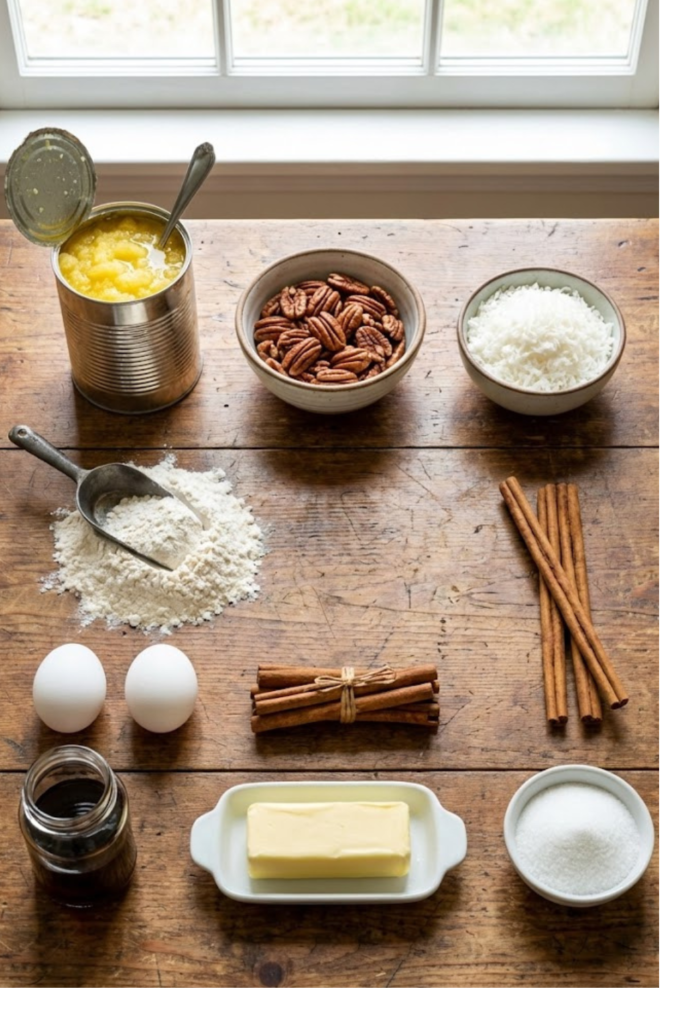
Essential Ingredients for a Moist Preacher Cake
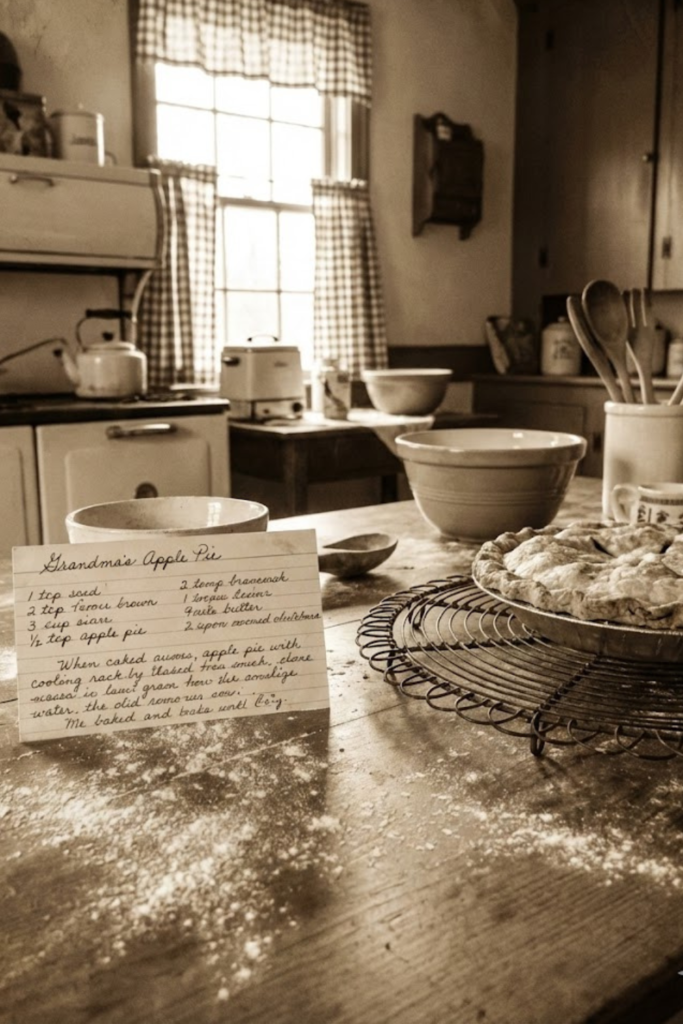
You can’t make something from nothing, but this cake comes pretty close. The ingredients list reads like a quick raid of your grandmother’s pantry. When I first looked at the recipe, I honestly thought something was missing. No milk? No butter in the batter?
But trust me, it works. The magic happens when you combine these specific pantry staples in just the right way.
The Pineapple Rule You Must Follow
If you take only one thing away from this page, let it be this: put the can opener down and step away from the strainer.
The most critical ingredient here is a twenty-ounce can of crushed pineapple.
Here is where I messed up big time in the past. I drained the liquid. I treated it like I was making a fruit salad. The result was a dry, crumbly mess that stuck to the roof of my mouth.
The juice in the can is actually the liquid for the batter. It reacts with the baking soda to give the cake its lift, and it provides all that incredible moisture. So, dump the whole can in, juice and all. It feels wrong, but it’s so right.
Why Oil Beats Butter
I am a butter girl. I put it on everything. But for this specific recipe, neutral oil is the undisputed champion.
Butter contains water, which evaporates during baking. Oil is pure fat.
Using vegetable or canola oil means the cake stays soft and moist for days sitting on the counter. I tried swapping it for melted butter once because I thought I was being fancy. The flavor was okay, but the texture just wasn’t the same. It got stale way faster.
Stick to the cheap stuff here; your cake will thank you.
The Crunch Factor
Texture is everything in a Preacher Cake. You need that contrast against the soft crumb.
I always use chopped pecans. It feels more authentic to the Southern roots of the recipe. However, I have used walnuts when the pecan prices were sky-high, and nobody complained.
Just toast them first. I know, it’s an extra step. But throwing raw nuts into a batter is a missed opportunity. Toasting them in a dry pan for five minutes wakes up the oils and makes them taste nuttier.
Then there are the sweetened coconut flakes.
I have a love-hate relationship with coconut. But in this cake, it kind of melts into the batter. It adds a chewiness that binds everything together. If you have guests who say they “hate coconut,” don’t tell them it’s in there. They probably won’t even notice the texture, but they will love the sweetness.
Spices and Basics
The rest is standard stuff: flour, sugar, eggs, and vanilla.
Don’t skimp on the cinnamon. I usually add a pinch more than the recipe calls for because I love that warm spice flavor kicking through the pineapple.
It really is that simple. No weird stabilizers or fancy flours needed. Just good, honest ingredients that transform into something incredible.
Step-by-Step Baking Instructions
Listen, I love my fancy stand mixer. I named her “Big Red,” and she usually gets front-row seats for any baking project. But for this recipe? She stays in the corner.
The absolute best thing about this cake is that it is a true one-bowl wonder. If you are dirtying more than one bowl and a wooden spoon, you are working too hard.
Prepping for Success
First things first, get that oven hot. Preheat it to 350°F (175°C).
I cannot tell you how many times I have mixed up a batter only to realize my oven was stone cold. It ruins the rise.
While that is heating up, grab your 9×13 pan. I prefer glass for this because I can see how the crust is browning, but metal works too. You need to grease it well. I usually just hit it with a generous amount of non-stick spray.
If you are feeling old-school, you can do the butter and flour method, but honestly, the spray works fine. We want to make sure every square comes out clean later.
The “Dump and Stir” Method
Here is where the magic happens. In a large bowl, whisk together your flour, sugar, baking soda, salt, and cinnamon. It is good to whisk it first to break up any clumps of flour.
Then, you just dump in the wet stuff. The eggs, the oil, the vanilla. And yes, the pineapple with the juice.
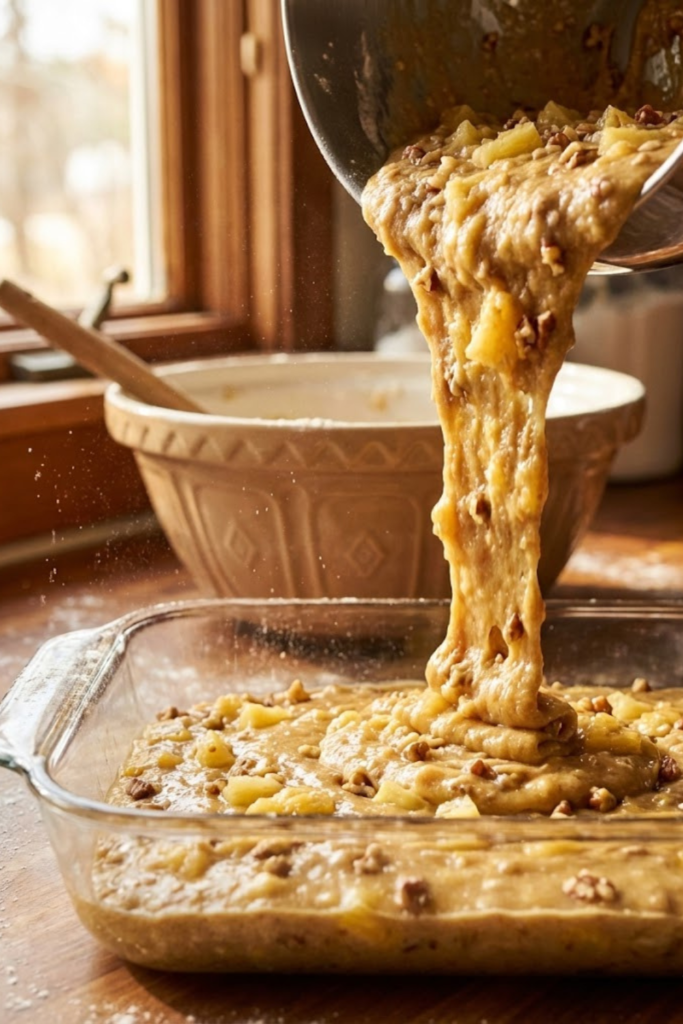
Start mixing batter by hand. I use a sturdy spatula or a wooden spoon.
I remember once I tried to be efficient and used an electric hand mixer. Bad idea. It shredded the pineapple bits into mush and the texture was all wrong. You want to keep those chunks intact.
Once the flour is mostly wet, fold in your nuts and coconut. Do not overmix! Stop as soon as you don’t see dry flour streaks.
Baking Time and the Sniff Test
Pour that glorious, chunky batter into your prepared pan and spread it out to the corners. Pop it in the oven.
The baking time is usually around 40 to 45 minutes, but every oven has a mind of its own. Mine runs hot, so I check it at 35 minutes.
You know it’s getting close when you can smell that cinnamon and toasted nut aroma wafting into the living room. That is the “sniff test,” and it rarely lies.
The Toothpick Test
To be absolutely sure, use the toothpick test. Insert a toothpick into the center of the cake.
If it comes out with wet batter, it needs 5 more minutes. If it comes out with just a few moist crumbs clinging to it, pull it out immediately!
If the toothpick is totally clean, you might have overbaked it slightly, but the oil in the recipe usually saves you.
The Hardest Part: Waiting
Now, take the pan out and set it on a cooling rack.
Here comes the torture. You have to let it cool completely. I mean completely.
I was impatient once and tried to frost it while it was still slightly warm. The frosting melted and slid right off the sides. It was a delicious disaster, but it looked terrible.
Go fold some laundry or walk the dog. Give it at least an hour before you even think about grabbing the frosting.
The Perfect Cream Cheese Frosting
Let’s be honest for a second. The cake part is good, but the frosting? That is the main event.
This cake is sweet. It’s got all that fruit and sugar packed into the batter. If you try to pair it with a standard vanilla buttercream or a sugary glaze, it’s just too much. It needs balance.
That is why a thick, tangy frosting made with cream cheese is the only acceptable option. It cuts through the sweetness and adds this creamy richness that makes you close your eyes when you take a bite. I refuse to eat this cake without it.
The Temperature Trap
Here is the biggest mistake people make, and I am guilty of it too. You decide to bake on a whim, so you pull your ingredients straight out of the fridge.
Do not do this.
I once tried to whip cold cream cheese because I was impatient. I thought my mixer was strong enough to beat it into submission. I was wrong.
I ended up with a bowl full of lumpy, sad frosting. No matter how long I beat it, those little tiny nuggets of cold cheese just wouldn’t blend. It ruined the smooth texture I was going for.
You have to use room temperature butter and cream cheese. I mean soft. If you press your finger into the wrapper, it should leave a deep dent easily. If it’s still cold, wait. It is worth the wait.
Mastering the Mix
Start by beating the butter and cream cheese together until they are completely combined. Do this before you add any sugar. You want that base to be velvety.
Then, add the vanilla and a pinch of salt. That salt is a secret weapon; it makes the flavors pop.
Now, for the powdered sugar. Add it slowly, about a cup at a time.
I remember one time I just dumped the whole bag in at once and turned the mixer on high. A giant white cloud exploded in my face. I was cleaning sugar dust off my kitchen cabinets (and my eyelashes) for days.
Mix it on low speed until the sugar is incorporated, then crank it up to whip it. You want it fluffy but stable.
The Frosting Technique
You don’t need to be a professional decorator here. This isn’t a wedding cake. It’s a sheet cake meant to be eaten with a fork on a paper plate.
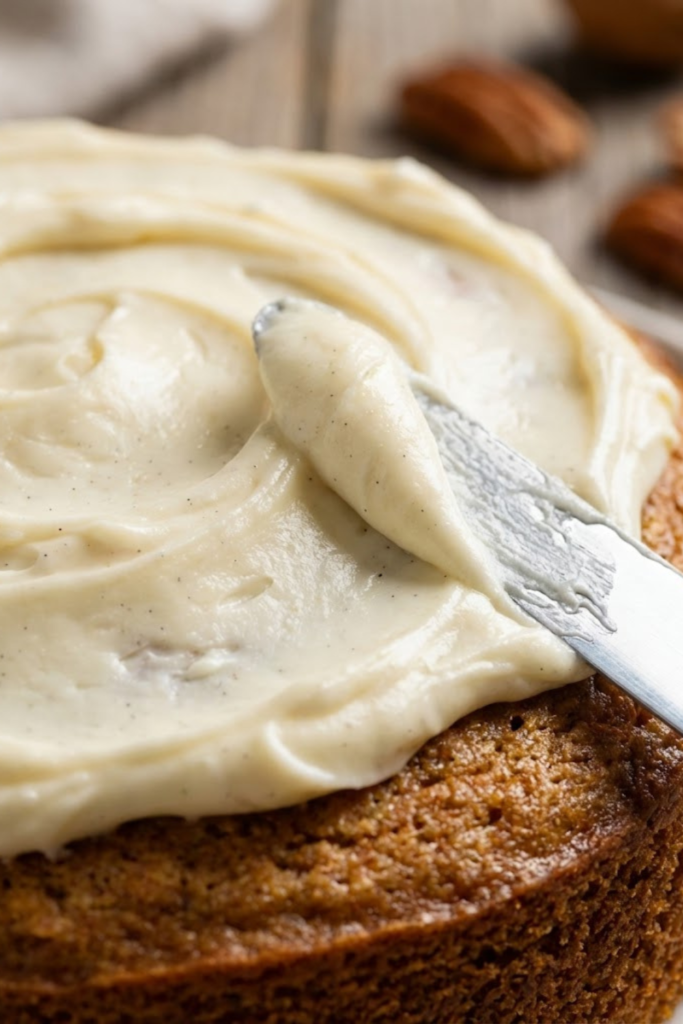
My frosting technique is pretty basic. I plop big dollops of frosting all over the cooled cake. Then, I use an offset spatula (or just a butter knife) to connect the dots.
Create some swirls. Make it look homemade.
If you are feeling fancy, sprinkle some toasted pecans on top while the frosting is still wet. It adds a nice crunch and looks pretty, but it’s totally optional. Just make sure you lick the beaters when you’re done. That’s the baker’s tax.
Storage and Freezing Tips
I wish I could tell you that I always have leftovers of this cake to store. The truth is, my family usually inhales it before it even has a chance to cool down completely. But on the rare occasion that we don’t polish off the entire 9×13 pan in one sitting, knowing how to keep it fresh is a game changer.
I have ruined a perfectly good cake by being lazy with storage, and I don’t want you to make the same mistake.
To Chill or Not to Chill
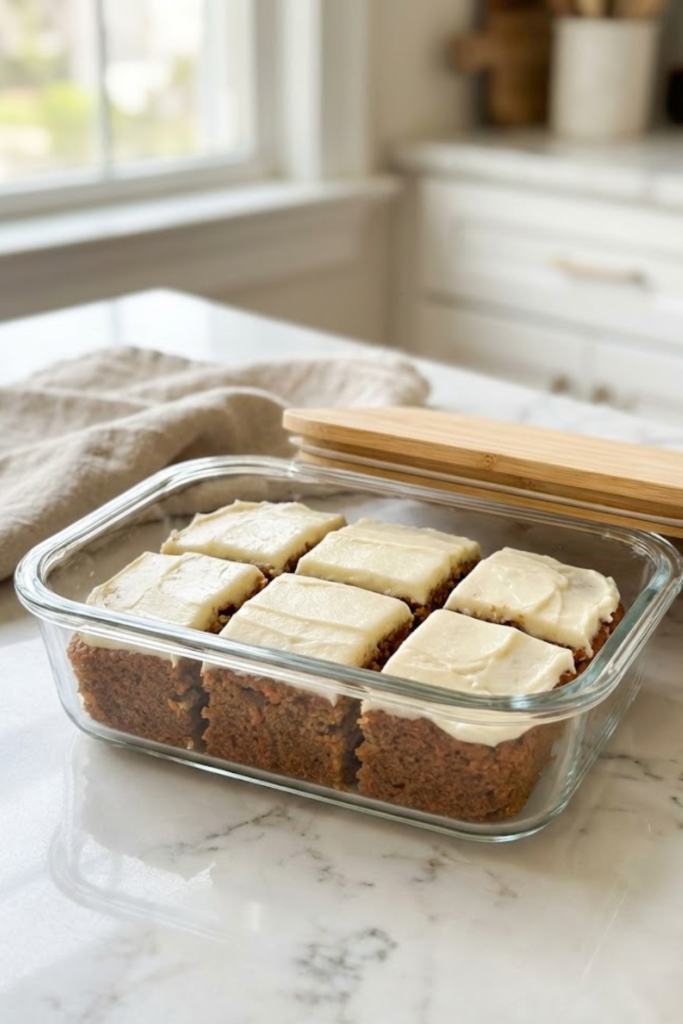
Here is the deal: because of that lush cream cheese frosting, this cake belongs in the fridge.
I learned this the hard way one humid July. I left the covered pan on the counter overnight, thinking the sugar would preserve it. By morning, the frosting looked sweaty and a little slid-off. I was too scared to eat it, so I had to toss the last three pieces. I was genuinely heartbroken.
Now, I always refrigerate it. But you have to be careful. The fridge is a dry environment, and it loves to suck the moisture right out of baked goods.
You need a serious airtight container. If you don’t have a lid that snaps onto your baking dish, use plastic wrap. But don’t just drape it over the top. Press it tight against the sides of the pan.
Also, be warned: if you don’t seal it up tight, your cake will absorb the smells of whatever else is in there. Nobody—and I mean nobody—wants a slice of pineapple cake that tastes like last night’s garlic pasta.
The Magic of Freezing
This is actually a fantastic make-ahead dessert. In fact, I would argue it tastes even better on day two after the spices have had time to hang out and get to know each other.
But my absolute favorite trick is freezing cake slices.
Sometimes I bake this when I’m stressed, but I obviously shouldn’t eat an entire sheet cake by myself. So, I slice it up into squares. I wrap each individual square in two layers of plastic wrap, then toss them all into a big freezer bag.
It is the best gift you can give your future self.
Shelf Life and Thawing
When a craving hits on a random Tuesday night, I just grab a frozen square. You can let it thaw on the counter for about twenty minutes if you have patience.
I usually don’t have patience. I zap it in the microwave for about fifteen seconds. The frosting gets a little melty and drippy, and the cake gets warm and soft. It is pure heaven.
As for shelf life, it stays good in the fridge for about five days. In the freezer, those little wrapped packages of joy will last for three months. Just make sure you label them, or you might find a mystery block of ice in six months and have no clue what it is.
A Slice of Southern Hospitality
It is funny how a recipe born out of panic can taste so much like peace. When I look back at that first time I scrambled to make this Preacher Cake recipe, I realize I wasn’t just making a dessert. I was learning a lesson in Southern hospitality.
You don’t need the most expensive ingredients or a culinary degree to show people you care. You just need a can of pineapple and a little bit of heart.
The Ugly Duckling of Desserts
I will be the first to admit it: this is not the prettiest cake in the world. It’s brown. The frosting is simple. It doesn’t have perfectly piped roses or gold leaf on top.
But you know what? That is exactly why I love it.
It is the “ugly duckling” of the baking world. It sits there on the table, looking humble and unassuming. But the second you take a bite, you get it. The moist crumb, the crunch of the nuts, the tang of the cream cheese—it all just works.
It is a reminder that the best things in life (and in the kitchen) don’t have to be flashy to be incredible. The proof is literally in the pudding—or in this case, the cake.
Your Turn to Bake
If you have been reading this and thinking, “I’m not a baker,” I want you to stop right there. This is the cake for you.
It is incredibly forgiving. If you mix it too little, it’s fine. If your oven is a little hot, the oil keeps it moist anyway. It is practically foolproof.
I encourage you to try it next time you have a free hour. Your house will smell amazing, and you will have a delicious dessert that tastes like it took all day to make. Plus, there is something really satisfying about using up those cans collecting dust in the pantry.
Share the Tradition
Recipes like this only survive if we keep making them and sharing them. It would be a shame to let this little piece of history fade away.
If you enjoyed this recipe or if it saved your tail when guests showed up unannounced, do me a huge favor. Pin this recipe to your “Southern Classics” or “Best Cake Recipes” board on Pinterest.
It helps other folks find it, and honestly, it helps me keep the lights on so I can keep digging up these vintage gems for you.
So go ahead, slice yourself a big piece. You deserve it.