There is an old saying that life is too short to stuff a mushroom. Well, I honestly think life is definitely too short to stand over a stove stirring rice for 45 minutes while your guests have all the fun. For years, I kept risotto on a pedestal, treating it like this high-maintenance diva of the culinary world that required my undivided attention and a prayer to the kitchen gods.
But then, everything changed. I had a block of leftover cheese and a craving for something rich, and that is when this brie risotto was born.
Let’s be real for a second. We all want that restaurant-quality dinner—you know, the kind with the creamy texture that coats the spoon—but nobody wants the arm cramp that usually comes with it. This recipe is my love letter to lazy cooks who still have high standards. By swapping out the traditional parmesan-heavy method for melting pockets of buttery brie, you get a richness that feels illegal. It is sophisticated enough for a date night but easy enough that I’ve made it in sweatpants while watching reality TV. If you are ready to impress yourself without the stress, you are in the right place.
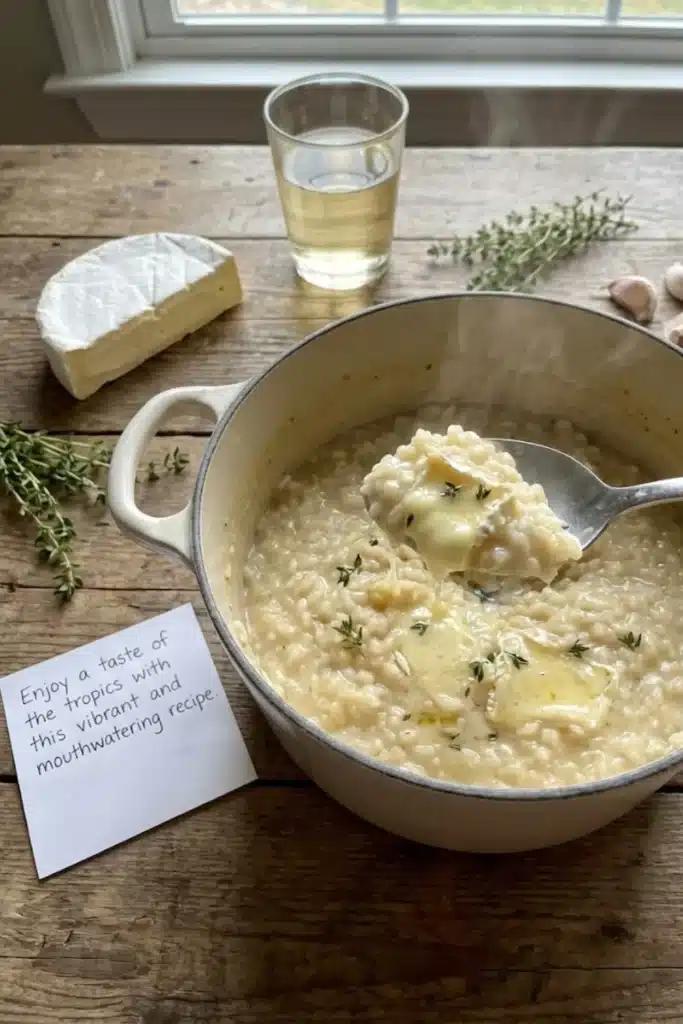
Why This Brie Risotto Changes Everything
I’ll be honest with you. The first time I tried to make traditional risotto for a dinner party, it was a total disaster. I was trying to be fancy for my in-laws. I stood there stirring that pot for what felt like an hour. My arm was cramping, and I missed the entire conversation happening in the living room. To top it off, I scorched the bottom of the pan because I stepped away for two minutes to grab a glass of wine. It was embarrassing.
That is exactly why this no stir brie risotto changes everything for me. It takes all the stress out of the equation.
The Magic of Melting Brie
Most people use parmesan for risotto, which is great. But have you ever seen what a wheel of brie does when it hits hot rice? It is a thing of beauty.
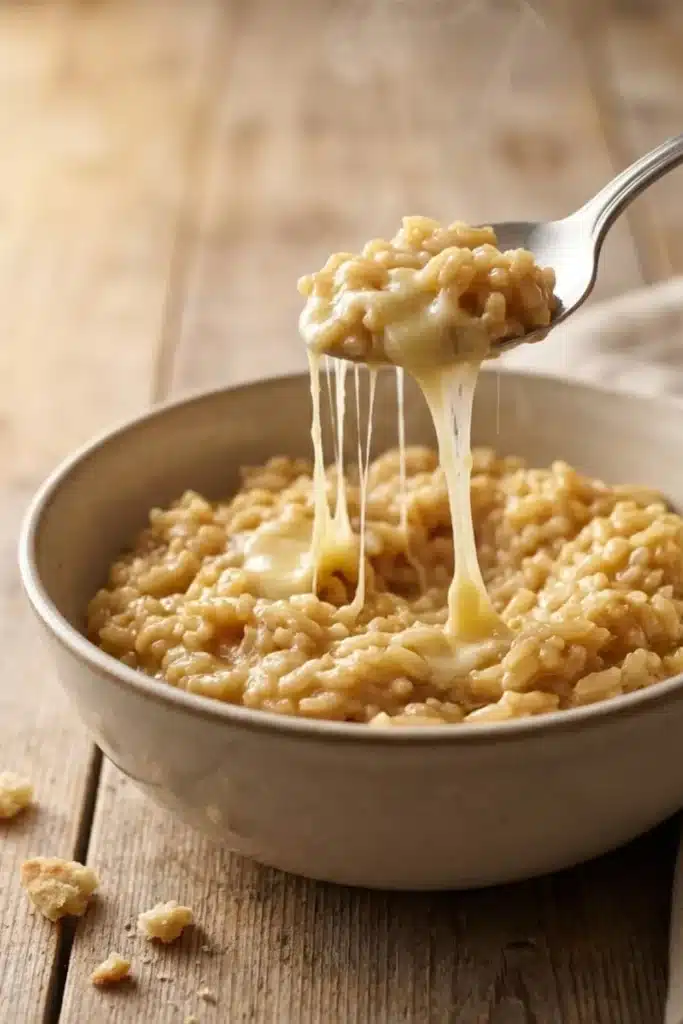
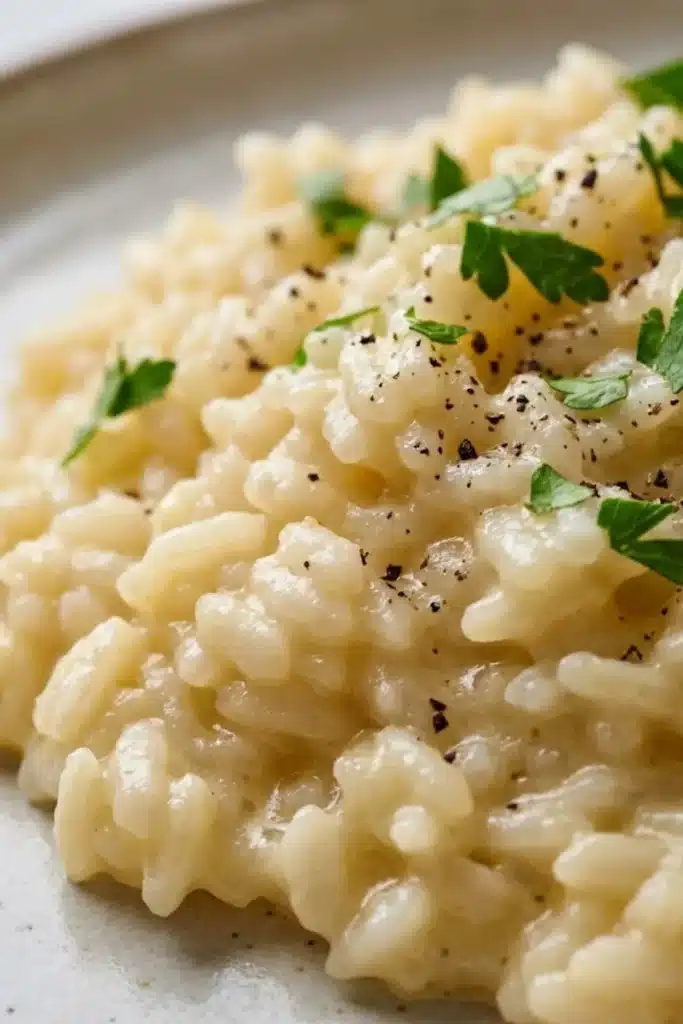
Brie creates this unbelievable creamy texture that you just can’t get with harder cheeses. It’s softer and richer. When you fold it in at the end, it turns into a thick, velvety sauce that coats every single grain of Arborio rice. It feels like you are eating at a five-star restaurant, but you are actually just in your pajamas.
I used to be scared of the rind. I thought it would be chewy or weird in the final dish. I was wrong. The rind actually dissolves a bit and adds this earthy, mushroom-y flavor that deepens the whole dish. It adds a layer of cheesy goodness that makes this true comfort food.
Taking Back Your Weeknight
As a teacher, by the time I get home, my brain is fried. The last thing I want to do is babysit a pot on the stove. This recipe gives me my time back.
You get the prep done, throw it in the oven (or let it simmer covered), and walk away. You can help with homework, fold a load of laundry, or just sit on the couch for twenty minutes. It’s fantastic.
The no stir method relies on the steam trapped in the pot to cook the rice evenly. It essentially steams the rice in the broth rather than boiling it violently. This keeps the grains intact but releases enough starch to get that classic sticky consistency.
This dish works perfectly as a main vegetarian dinner or a fancy side if you are grilling chicken. It is versatile, forgiving, and honestly, it just tastes better than the high-effort version. It feels like a cheat code for cooking.
Also, a little secret? Leftover risotto usually turns into a brick. But because of the high fat content in the brie, this version actually reheats pretty decently for lunch the next day. Just add a splash of water before you nuke it.
Ingredients You Need for Success
I used to think that cooking was 90% technique and 10% ingredients. Man, was I wrong. I remember trying to make this dish years ago with long-grain white rice because I was too lazy to run to the store. It was a watery, sad mess that looked more like chicken soup than a creamy Italian masterpiece.
When it comes to brie risotto, the ingredients you choose are basically your insurance policy. You don’t need the most expensive stuff on the shelf, but you can’t just throw whatever is in the pantry into the pot and hope for the best.
The Rice is Non-Negotiable
If there is one hill I will die on, it is this: you must use the right rice.
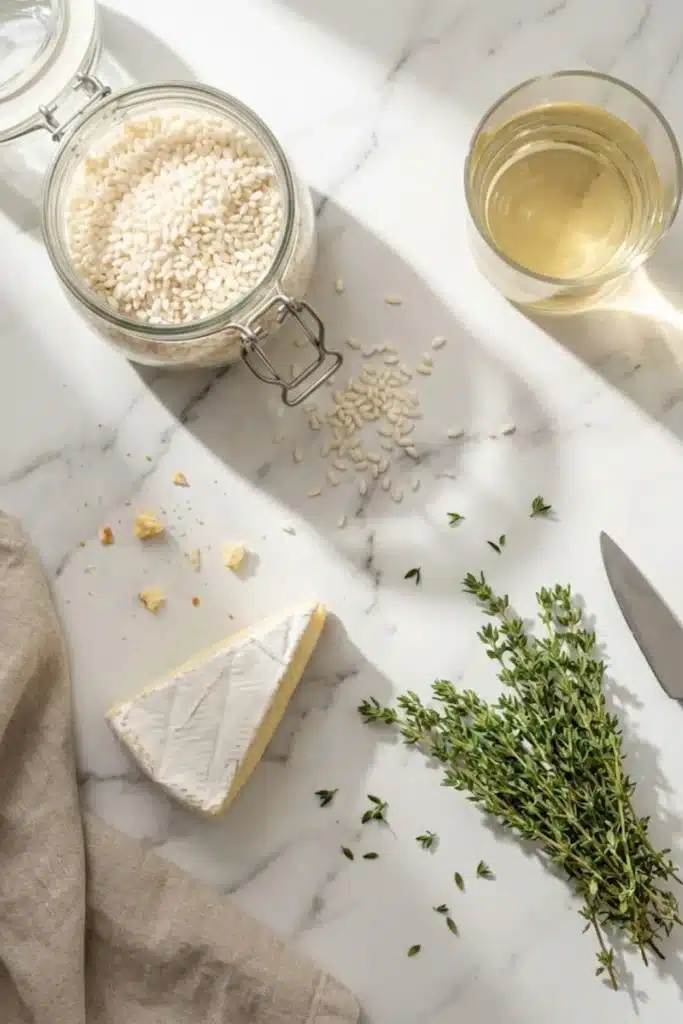
- Arborio Rice: This is the go-to for a reason. It is short, fat, and packed with starch. That starch is what rubs off during stirring to create the creamy sauce.
- Carnaroli: If you can find it, grab it. It’s often called the “king of rices” and holds its shape better than Arborio, but it can be harder to find.
Don’t ever use jasmine or basmati rice. I tried it once when I was broke and hungry. The result was just… crunchy pilaf. It was tragic. You need that high starch content for the creamy texture we are after.
The Liquid Liquid Gold
For the longest time, I used water or cheap bouillon cubes. My risotto tasted like salt and nothing else.
You really need a good quality chicken stock or vegetable broth. I prefer low-sodium store-bought brands if I don’t have homemade stock. Why low sodium? Because the cheese is salty! If you use full-salt broth, plus the brie, plus the parmesan, you’ll be chugging water all night. It’s better to control the salt level yourself at the end.
The Wine Dilemma
Here is a rule I learned from a chef friend after I ruined a pot with “cooking wine” from the vinegar aisle: If you wouldn’t drink a glass of it, don’t cook with it.
Cooking wine is loaded with preservatives and salt. It tastes awful. For this recipe, you want a dry white wine like a Sauvignon Blanc or Pinot Grigio. I usually buy a decent $12 bottle, use a cup for the recipe, and drink the rest while I stir. It makes the 20 minutes of standing at the stove go by way faster. The acid in the wine is crucial to cut through the heavy fat of the cheese.
The Cheeses
Obviously, brie cheese is the star here. You don’t need a triple-crème fancy wheel that costs $20. A standard double-crème brie works perfectly.
- Remove the rind? Like I said before, it is up to you, but if you leave it on, chop it small.
- Parmesan Cheese: You also need fresh parmesan. Please, I am begging you, do not use the green shaker can. That stuff has anti-caking agents that prevent it from melting properly. It ends up grainy. Buy a block and grate it yourself; it makes a huge difference in the mouthfeel.
The Aromatics
Finally, let’s talk about the base. I use shallots instead of onions. Shallots have a milder, sweeter flavor that doesn’t overpower the delicate taste of the brie. If you only have a yellow onion, it’s fine, but mince it super fine. And fresh garlic is a must. I once used jarred garlic, and it gave the dish a weird, metallic aftertaste.
Gathering these specific ingredients might seem like a pain, but it is the difference between a “meh” dinner and one that tastes like you paid $25 for it at a bistro.
How to Make No Stir Risotto (Step-by-Step)
Okay, listen. I used to be a total purist about this. I thought if I wasn’t sweating over the stove, stirring in figure-eights until my shoulder cramped, it wasn’t “real” food. Then I hosted a dinner party, got distracted by wine and conversation, and ruined the main course. That was the night I decided to give the no stir risotto method a shot.
Let me tell you, it is a total game changer. You get 95% of the results with about 10% of the effort. It feels like cheating, but honestly, nobody is going to know the difference once that melted brie hits their tongue.
Get The Right Gear First
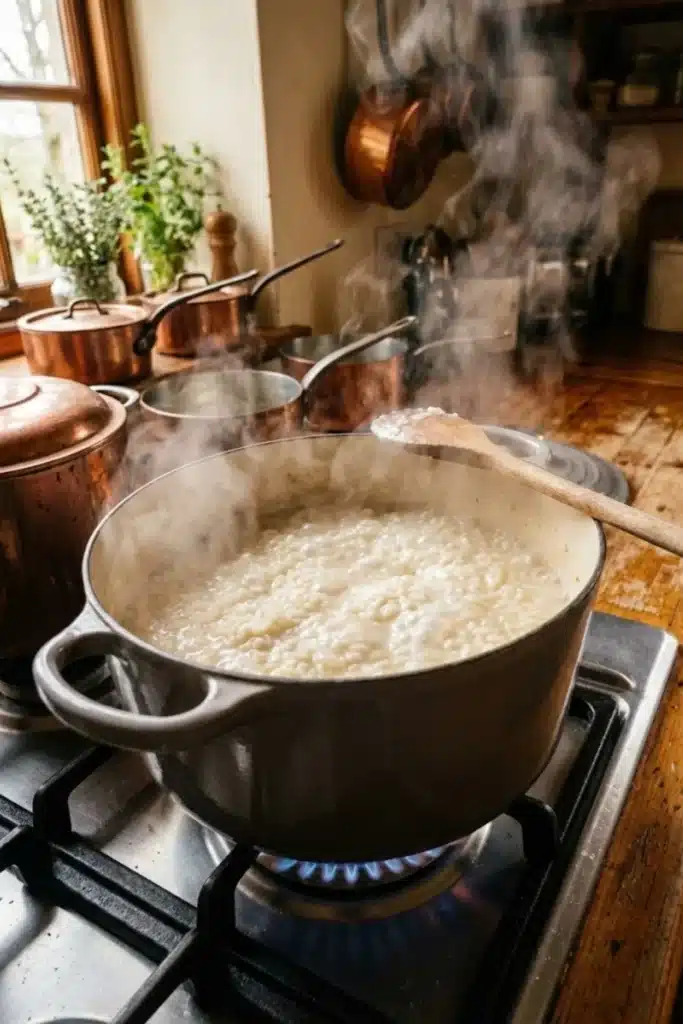
You can’t just do this in any old pan. You need a heavy pot with a tight-fitting lid, like a Dutch oven. If the lid is loose, all the steam escapes, and you end up with crunchy, unevenly cooked rice.
I made the mistake of using a flimsy saucepan with a glass lid once. The liquid evaporated way too fast, and I had to frantically add water at the end. It was stressful. Use the heavy stuff.
Start on the Stovetop
You still have to do a little work upfront. Preheat your oven to 350°F (175°C). While that heats up, put your pot on the stove over medium heat.
Melt your butter and sauté the shallots. Here is a tip I learned the hard way: don’t let the garlic brown. If garlic turns brown, it tastes bitter. Add it in the last 30 seconds of sautéing just to wake up the flavor.
The Vital Toasting Step
Dump in your Arborio rice. Do not add the liquid yet! You need to toast the rice grains in the fat for about 2 minutes.
I used to skip this when I was in a rush. Big mistake. Toasting creates a protective shell around the grain so it doesn’t turn into mush later. It also adds a nutty flavor that makes the no stir risotto taste professional. When the edges of the rice look translucent, you are good to go.
The “Set It and Forget It” Part
Pour in your white wine and let it bubble away until it’s mostly gone. Then—and this is the weird part—pour in all the hot chicken broth at once.
It goes against everything traditional recipes tell you. It feels wrong. Just trust me. Bring it to a boil, cover it with that heavy lid, and shove the whole pot into the oven.
The Aggressive Finish
Bake it for about 18 to 20 minutes. When you take it out, it might look a little soupy or wet. Don’t panic.
This is where the magic happens. You need to stir it vigorously for about two minutes. The agitation releases the starch and thickens the leftover liquid into a creamy sauce. Then, fold in your cubed brie and parmesan. The residual heat melts the cheese, and suddenly, you have perfect brie risotto without the arm workout.
Troubleshooting Common Risotto Mistakes
I used to think making risotto required some kind of magic touch that I just wasn’t born with. My first few attempts were inconsistent at best and inedible at worst. I’ve served rice that was hard as rocks in the middle and rice that was basically wallpaper paste.
If your brie risotto isn’t turning out quite right, don’t stress. I have made every mistake in the book so you don’t have to. Let’s look at what usually goes wrong and how to fix it without ordering pizza.
The “Rice Pudding” Effect
This is probably the most annoying mistake. You wanted a sophisticated Italian dinner, but you ended up with a gluey, mushy mess that sticks to the roof of your mouth. Ugh.
I used to think “creamier is better,” so I would stir the pot like a maniac for 40 minutes straight. Big mistake. Over-stirring breaks down the grains too much.
- The Fix: If you are using the stovetop method, stir often but give your arm a break. If you are doing the oven method, you barely stir at all.
- The Cause: Often, this happens because the heat is too low, and the rice sits in the liquid too long, soaking it up until it bursts. Keep things simmering!
Why Is It Still Crunchy?
Nothing kills the mood like biting into a grain of rice that cracks a tooth. I remember serving this to a date once—it was crunchy in the center. I tried to play it off as “ultra al dente.” It didn’t work.
This usually happens because you ran out of liquid before the rice was cooked. It can be tricky because different brands of Arborio rice absorb water differently.
- The Fix: Always keep an extra cup of warm broth or water on the stove.
- Pro Tip: If the liquid is gone but the rice is hard, add a ladle of water and keep cooking. Don’t serve it until it’s tender with a slight bite.
It Tastes Like… Nothing?
This one is heartbreaking. You used the wine, the expensive cheese, and the fresh herbs, but the final dish tastes flat. I’ve been there, staring at the pot wondering why it tastes like hot water.
Risotto needs a lot of salt. Rice is a flavor sponge. If you don’t season it throughout the process, adding salt at the end won’t fully fix it.
- The Fix: Taste your broth. If the broth tastes good, the rice will taste good.
- The Cheese Factor: Remember that brie cheese is mild. You might need an extra pinch of salt or a squeeze of lemon juice to wake up the flavors.
The Soupy Situation
Sometimes I open the pot and it looks like soup. Panic sets in. Did I measure wrong?
This is actually the easiest problem to fix. If there is too much liquid pooling around the rice, just put the pot back on medium heat. Stir it vigorously—chefs call this mantecatura. This agitation emulsifies the fat and liquid, turning that excess soup into a thick, creamy sauce. It’s not ruined; it’s just not finished yet.
Time to Get Cooking
Look, making brie risotto doesn’t have to be this scary, high-stakes event. We’ve gone over everything from picking the right Arborio rice to the lazy-genius move of baking it in the oven. Whether you are trying to impress a date or just want a bowl of creamy comfort food on a Tuesday, this recipe has your back.
I hope you give this a shot and realize that the secret ingredient isn’t magic—it’s just a wheel of cheese and a little bit of patience. It turns a basic pantry staple into something that tastes like a million bucks.
If you found this guide helpful (or just want to save it for when you finally buy that bottle of white wine), please pin this recipe on Pinterest! It helps me out huge, and it saves you from scrolling frantically through your history later. Happy cooking!